Some buildings in downtown San Antonio are older than the United States itself, and one of them still opens its doors every single day.
Its walls first rose in the 1730s, when Texas was a far-off corner of the Spanish empire.
A Mexican general once used it during the siege of the Alamo, and a pope later stood inside it. Then the sun goes down, and the whole front of the building turns into a giant screen for a free show about the city’s past.
Most people walk past it on their way to the River Walk without knowing any of this. Keep reading to learn its story, what to see inside, and how to plan the perfect day and night visit.
Where Texas History Took Root
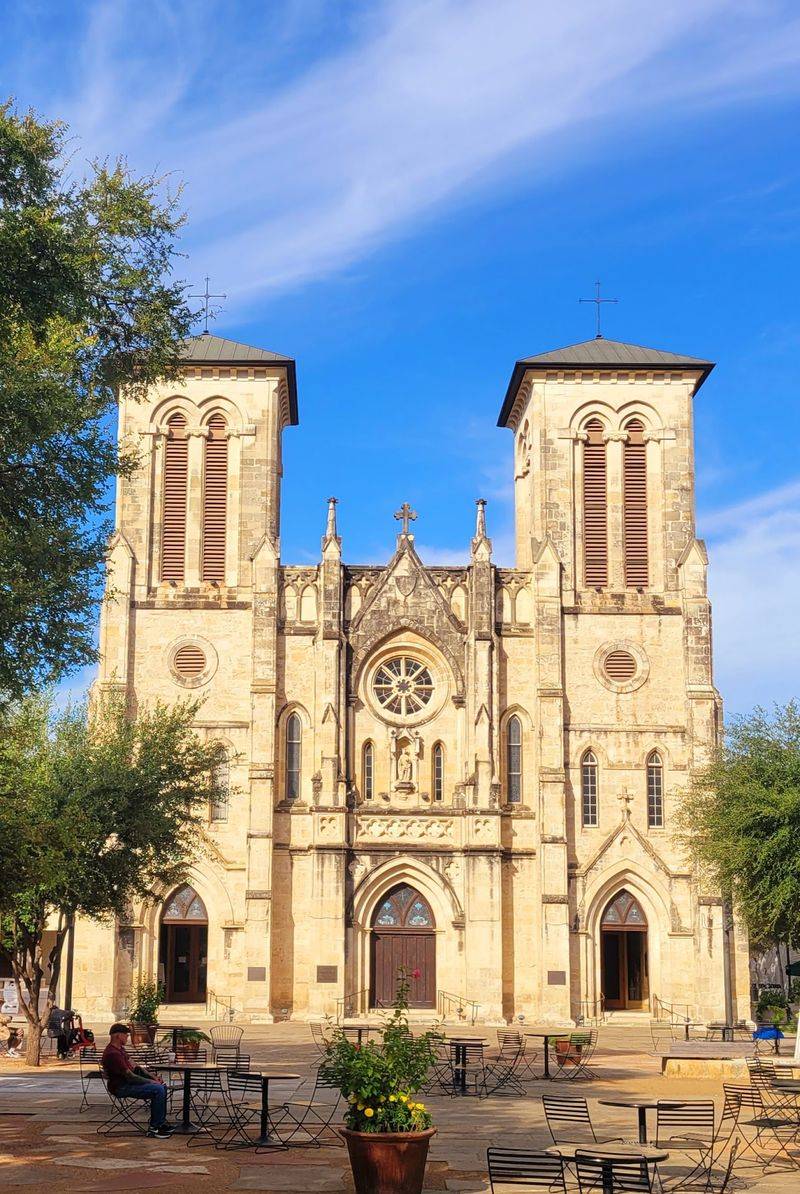
Right in the heart of downtown sits San Fernando Cathedral, at 115 S Main Plaza, San Antonio, TX 78205. It faces Main Plaza, one of the oldest public squares in the city.
Canary Islanders who settled here in 1731 helped found the parish. The first church building went up between 1738 and 1750, which makes this one of the oldest cathedrals in the United States.
Much of the original structure is still part of the building today. The back section, including the sanctuary area, holds walls that date back to that early Spanish colonial period.
In the 1870s, a larger Gothic Revival front was added. That is the tall, pointed design most people photograph today.
The cathedral is the mother church of the Archdiocese of San Antonio. It still serves as an active parish with Mass held throughout the week.
So when people call it a living landmark, they mean it. Families have gathered here for nearly three centuries, and the doors remain open for anyone curious enough to step through them.
A General Moved In
Few churches can say a famous military leader once took over their bell tower. In 1836, General Antonio López de Santa Anna arrived in San Antonio with his army.
The church stood close to the Alamo, and its tower was one of the tallest points in town. That made it a useful lookout spot during the siege.
Historians often note that a red flag was raised from the church. The signal meant no mercy would be given to the defenders inside the Alamo.
That moment tied the church forever to one of the most famous events in Texas history. It is a reminder that this building was not just a place of worship but also a witness to big turning points.
Today the scene is calm and peaceful. Locals pray, couples marry, and tourists snap photos where soldiers once kept watch.
Standing on the plaza, it is easy to see why the spot mattered. The Alamo is only a short walk away, so both sites fit into one afternoon.
The Marble Tomb by the Door
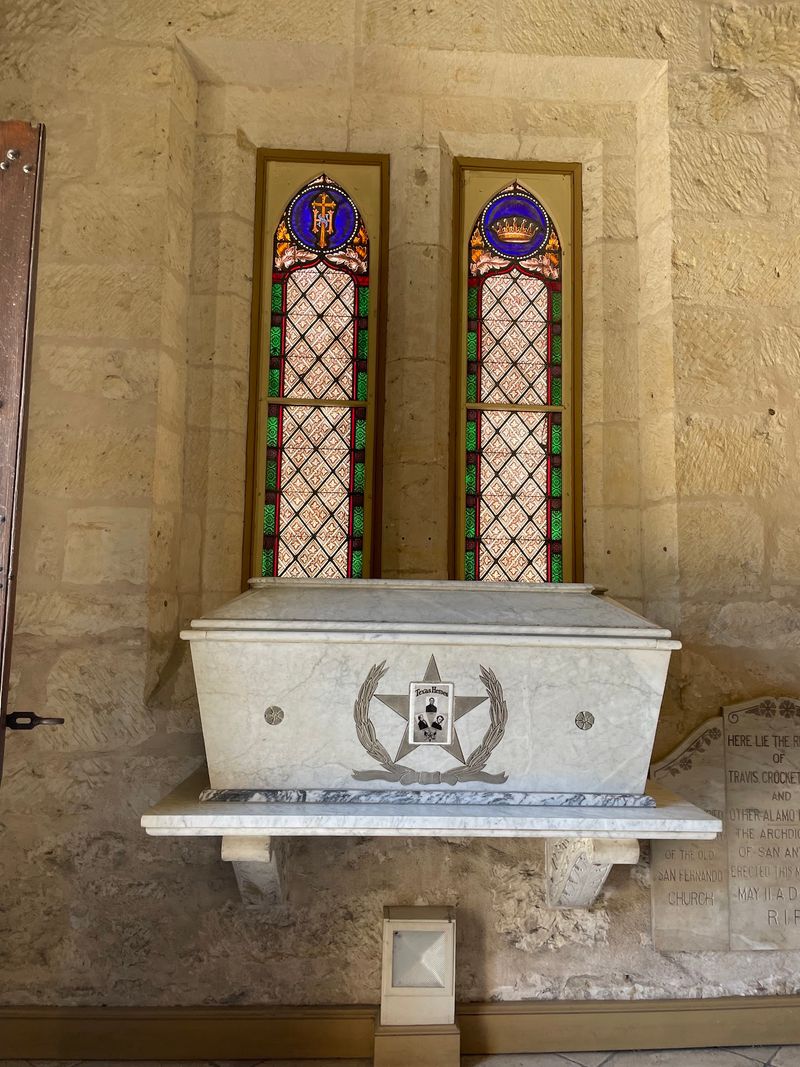
Just inside the entrance, on the left side, sits a white marble tomb that surprises many first-time guests. It is linked to the defenders of the Alamo.
The cathedral says remains believed to belong to Alamo defenders, including William Travis, James Bowie, and Davy Crockett, rest here. The remains were found in 1936 near the altar rail and placed in the tomb that same decade.
Some historians have debated the identity of the remains over the years. Even so, the memorial remains a strong symbol of the 1836 battle and its place in Texas memory.
The tomb is carved with names and decorative details. It is easy to miss if you rush straight to the main aisle, so slow down near the doorway.
Many people pair a visit here with a stop at the Alamo. Seeing both places on the same day helps the story come together in a clear way.
A quiet moment at the tomb is a respectful way to begin the tour inside.
Gold Behind the Altar
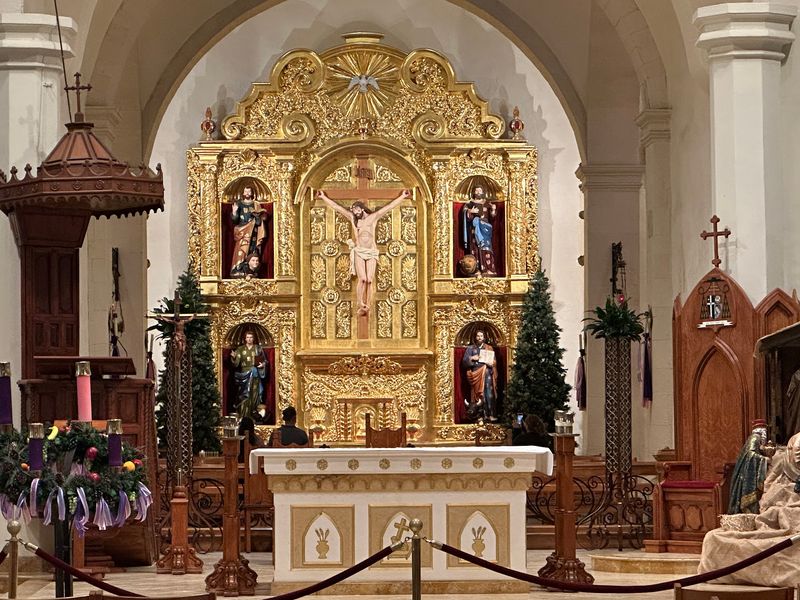
Your eyes will probably land on one thing first: the huge golden retablo behind the altar. It is the centerpiece of the sanctuary.
A retablo is a carved altarpiece common in Spanish and Mexican churches. This one was added during a major restoration completed in 2003, and it is covered in gold leaf.
At its center stands a figure of Jesus. Around him are the four Gospel writers: Matthew, Mark, Luke, and John.
The piece sits in the oldest part of the building. That means modern craftsmanship now shines inside walls built in the colonial era.
Quick tip: Respect the space if a service is going on. Quiet is requested inside so people can pray and read.
If no Mass is happening, there is usually time to look closely at the carving details. Bring a little patience, because every panel holds something worth noticing.
It is one of those sights that makes people stop mid-step and simply look up.
A Papal Visit to Remember
September 1987 brought a guest that San Antonio still talks about. Pope John Paul II visited the city, and San Fernando Cathedral was part of that historic trip.
The visit was a huge event for the local Catholic community. Thousands of people across the city turned out during his stay.
Today, the connection lives on inside the church. A relic of Saint John Paul II is kept here, and many people stop to pray near it.
For Catholics, this is a meaningful place to pause. For history fans, it is another layer in a building already packed with stories.
Not every famous visit leaves a mark you can still see. This one does, and that makes it feel personal.
Look for the relic area during your walk through the nave. Staff in the gift shop can often help point you in the right direction if you have questions.
From Spanish settlers to a modern saint, the timeline here stretches impressively far.
Showtime on the Facade
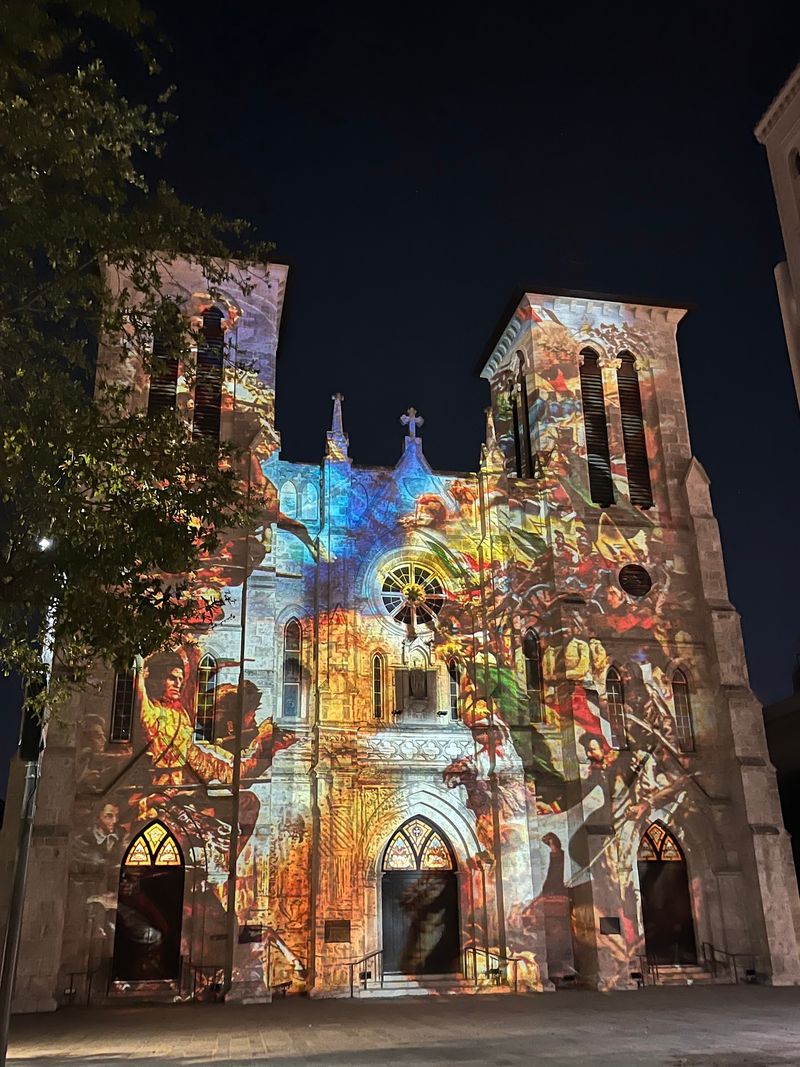
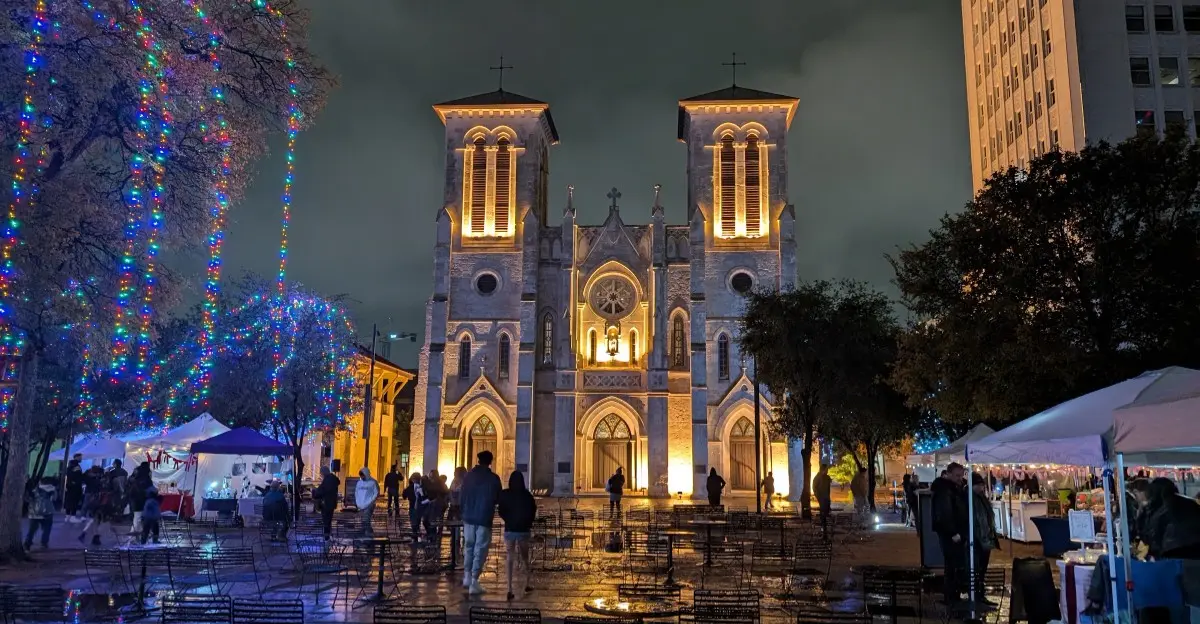
Here is the part that gives this cathedral its movie screen fame. On many evenings, the front of the building becomes the canvas for a free show called The Saga.
French artist Xavier de Richemont created the piece. It uses huge projections and music to tell the story of San Antonio and Texas.
The show starts at 9 p.m. on scheduled nights and lasts a little over 20 minutes. Colorful images move across the arches, windows, and towers as the story unfolds.
You will see scenes about Native peoples, Spanish missions, wildlife, and the city’s growth. It is history class with a lot more style.
Since showtimes can change, check the schedule before you go. The cathedral website and city listings are good places to confirm.
No tickets are needed, which makes it one of the best free things to do downtown. Families, couples, and solo travelers all fit right in.
Once the lights fade, the building looks ordinary again, until the next encore.
Grab a Good Spot Early
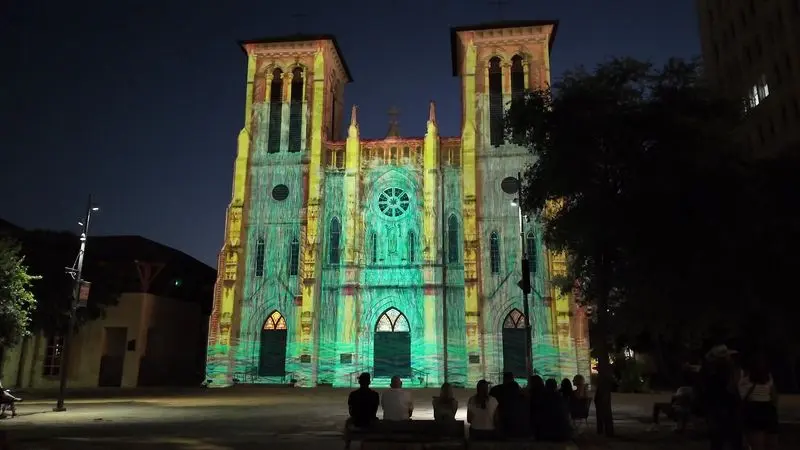
Seats go fast, so timing matters for The Saga. The church sets out some chairs on the plaza, but there are not enough for everyone.
Arriving early is the simplest fix. Getting there 20 to 30 minutes ahead gives you a better chance at a chair with a clear view.
Many people bring their own folding chair or a blanket. Sitting on the ground works fine, and plenty of folks simply stand along the edges.
Smart planning tip: Pair the show with an evening on the River Walk. The cathedral is only a short stroll away, so you can explore first and then head over before 9.
Some boat tour guides even mention the show to their passengers. That tells you how popular it has become.
Bring a light jacket in cooler months and water in the summer. A little preparation makes the wait easy.
With a good spot locked in, all that is left is to look up and let the story roll.
Inside During Daylight Hours
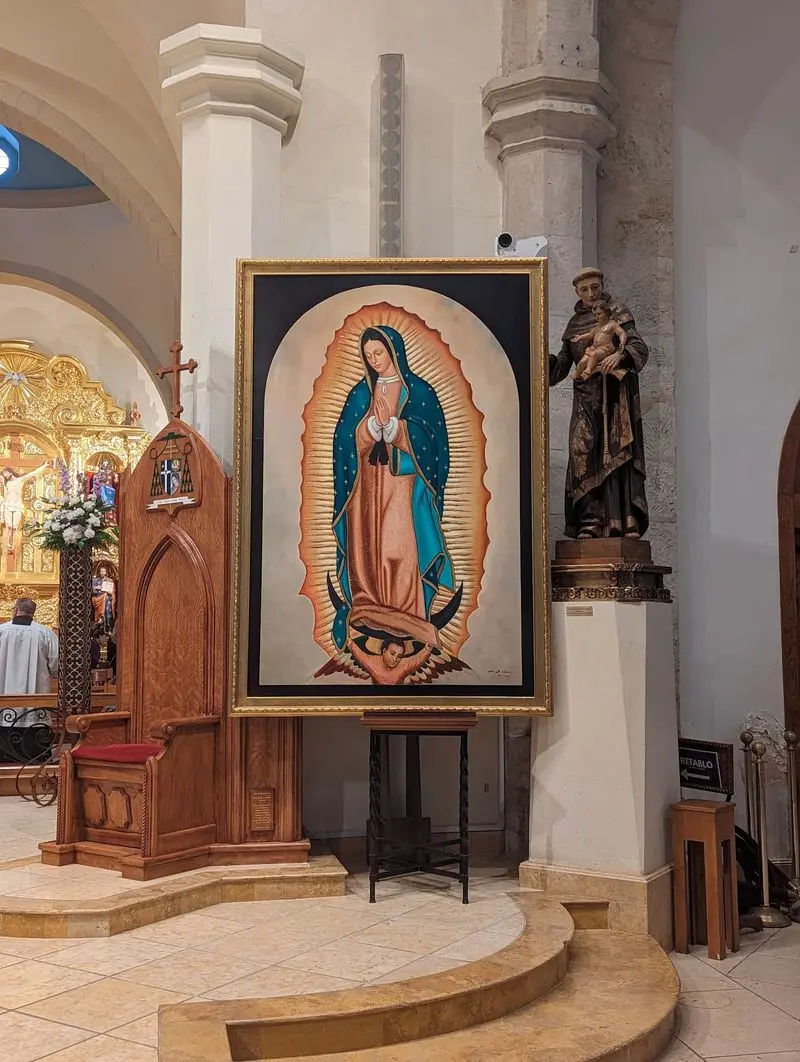
Daytime is when the inside tells its story. The light show happens outside at night, so anyone wanting to tour the interior needs to come earlier.
Hours run from 9 a.m. to 5 p.m. Monday through Friday.
Saturday hours stretch to 6 p.m., and Sunday runs from 8 a.m. to 6 p.m.
Entry is free every day. That makes it an easy stop between other downtown sights.
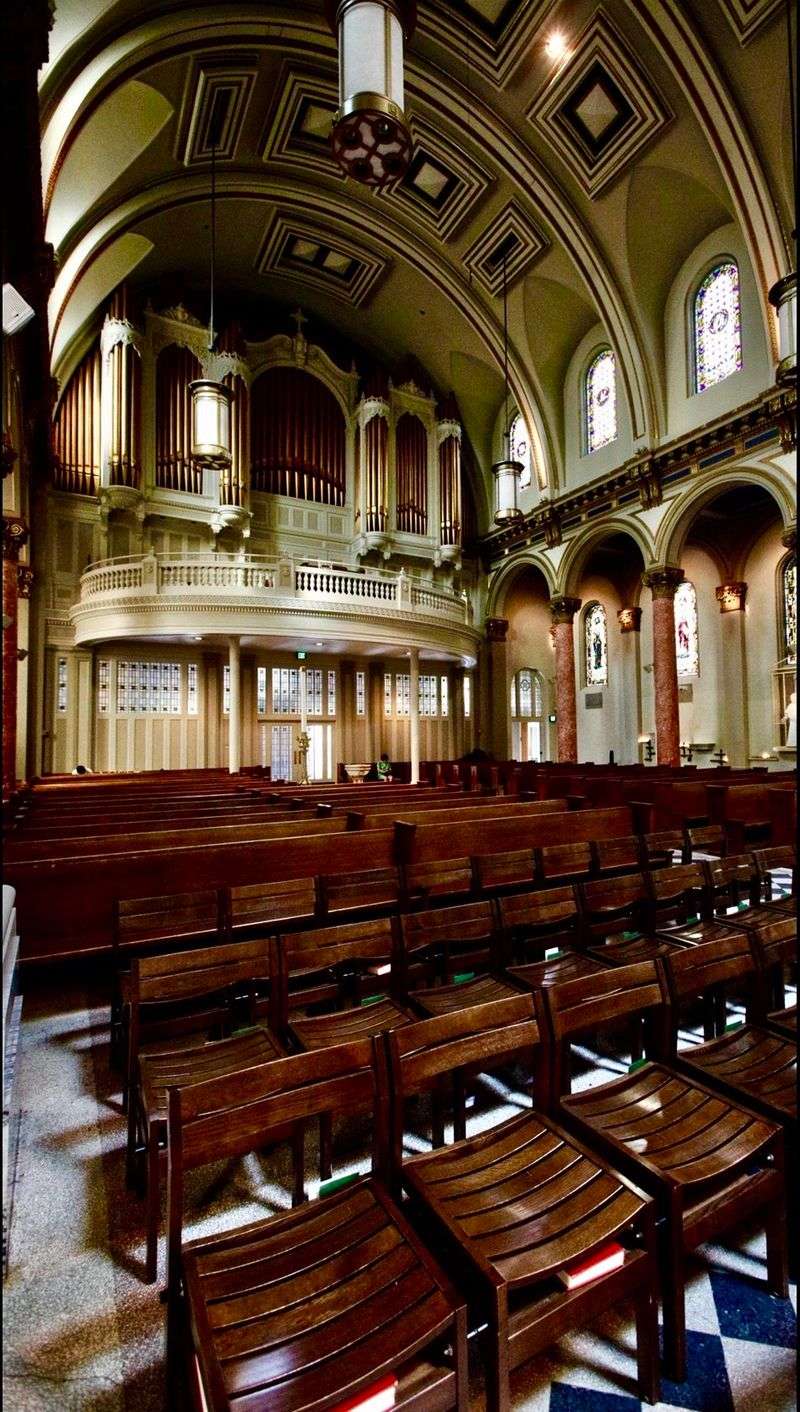
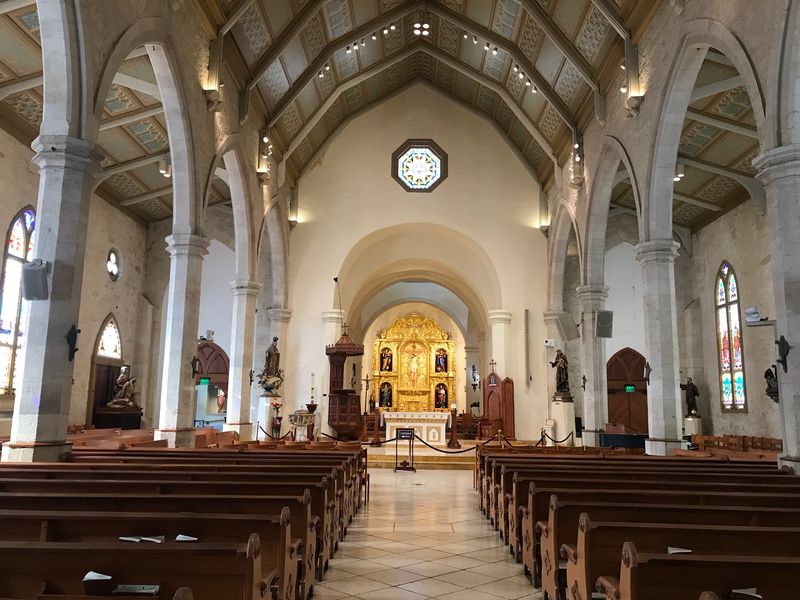
Inside, the space is clean, calm, and well kept. Statues line the walls, and the long nave leads your eyes toward the golden altar.
Mass may be going on when you arrive. Guests are welcome to stand quietly in the back, but photos and chatting should wait.
Parts of the building are sometimes closed for renovation work. If seeing a certain area matters to you, calling ahead or checking the website can save disappointment.
A daytime look plus an evening show gives you the full picture, inside and out.
Mass in Two Languages
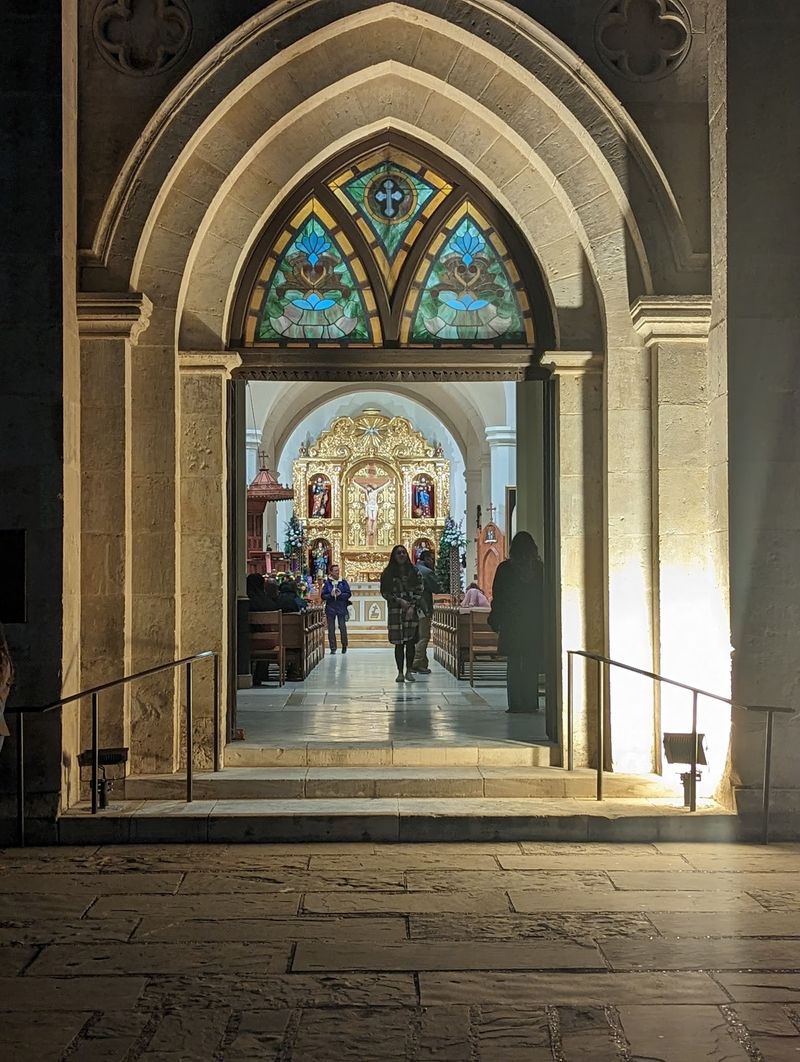
Worship is not a museum exhibit here. San Fernando Cathedral holds Mass several times a day, and services are offered in English, Spanish, and bilingual formats.
That mix reflects the deep Hispanic roots of San Antonio. Even guests who speak only a little Spanish can follow along with familiar parts of the service.
Music is a big part of the experience. Choirs often lead singing, and the cathedral’s acoustics carry the voices through the whole space.
On Sundays, speakers outside let people on the plaza hear the singing too. It is a welcoming touch for those passing by.
Services can get crowded, especially on weekends and holidays. Showing up a bit early helps if you want a seat.
Mass times are listed on the official cathedral website. Checking before your trip is the easiest way to plan.
For travelers who keep their faith on the road, few places offer this much history alongside a regular Sunday service.
Souvenirs, Plaza Time, and Parking
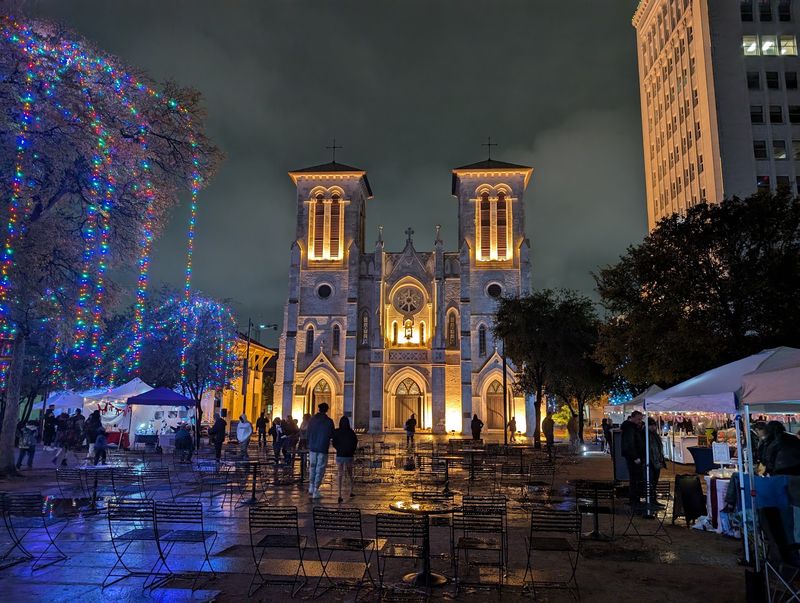
Before heading out, save a few minutes for the gift shop. It sits on the left side, outside the main church building.
Shelves hold books, religious medals, prayer cards, and other keepsakes. The staff are known for being friendly and helpful.
The cathedral is also the finishing point for the Camino de San Antonio, a walking pilgrimage route. Finishing there gives the trip a meaningful ending.
Main Plaza out front is worth some time too. It has seating areas, well-kept grounds, and statues near the building.
Food and drink trucks sometimes park nearby, which helps on show nights.
Parking note: Downtown spaces can be tricky to find. Paid garages and lots are scattered around the area, and walking from the River Walk is often easiest.
From colonial walls to a nighttime light show, this landmark packs nearly three centuries into one city block. Come for the history, stay for the glow, and leave knowing San Antonio a little better.