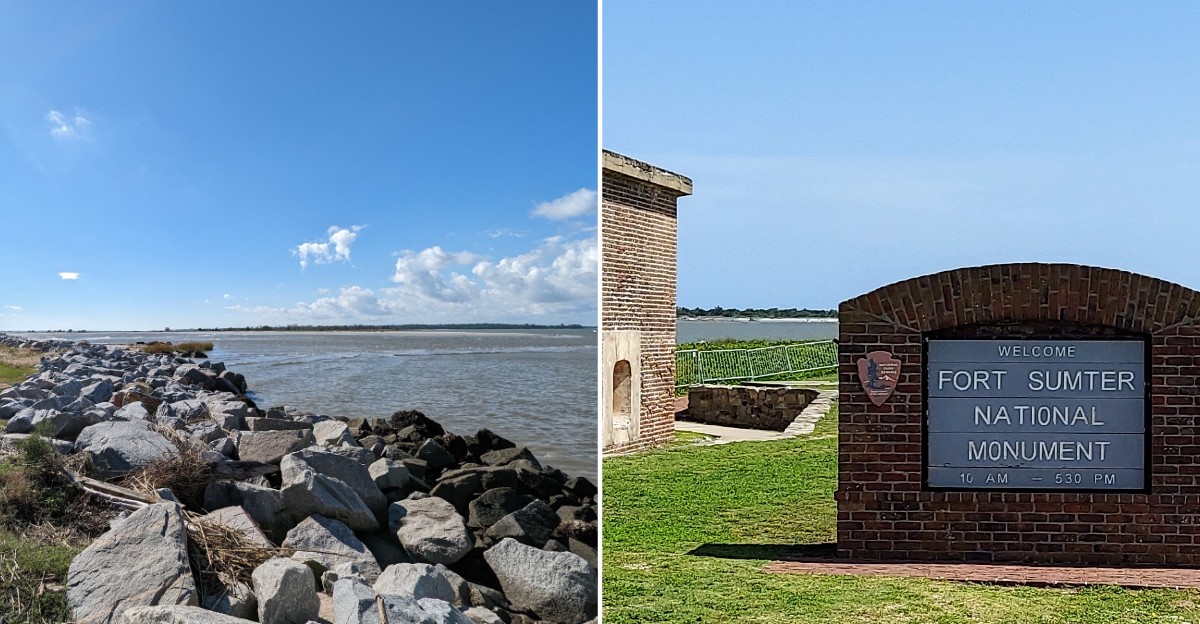
Some field trips stay inside a classroom, and some start with a boat ride across Charleston Harbor.
Out in the middle of the water sits a brick fort where the first shots of the Civil War were fired in April 1861.
Kids get to climb its old stairs, peek into cannon rooms, and stand on the spot where history turned a big corner.
Dolphins sometimes tag along with the ferry, and park rangers share stories that make the past feel close.
The best part is that young explorers can walk almost every open inch of the place.
Between the harbor views, towering cannons, and stories hidden in the brick walls, this historic island offers a family adventure that feels anything but ordinary.
Where This Brick Adventure Waits
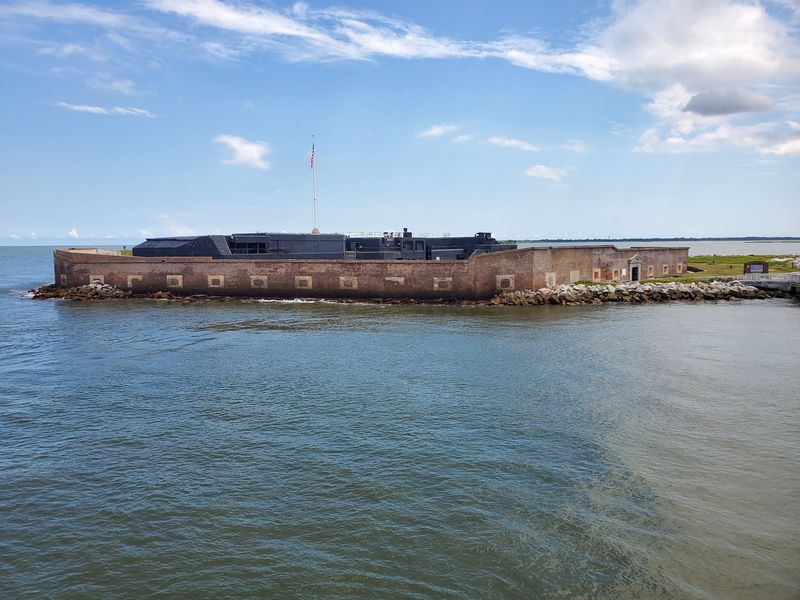
Out in the middle of Charleston Harbor, a small island holds one of the most famous forts in the country. Fort Sumter and Fort Moultrie National Historical Park is listed at South Carolina 29412, United States, and it is run by the National Park Service.
The park actually has two parts. Fort Sumter sits on its island and can only be reached by ferry, while Fort Moultrie stands on Sullivan’s Island, where families can visit by car.
Fort Sumter is located on an island in Charleston Harbor, South Carolina, and is managed by the National Park Service. Visitors can reach it by ferry from Liberty Square in downtown Charleston or Patriots Point in Mount Pleasant.
The Liberty Square Visitor Center is generally open from 9 AM to 4:30 PM, while visits to the fort follow scheduled ferry departures. The fort is closed on Thanksgiving, Christmas Day, and New Year’s Day.
Booking ahead is a smart move, especially during busy seasons. Popular departure times can fill up fast, and nobody wants a disappointed kid standing on the dock.
A Boat Ride Before the Climb
Half the fun starts before anyone touches a single step. The ferry ride to Fort Sumter takes roughly 20 to 30 minutes each way, and kids treat it like a mini cruise.
Along the way, the boat offers views of the Charleston skyline and the Ravenel Bridge. Riders leaving from Patriots Point also pass the USS Yorktown, a huge World War II aircraft carrier that looks even bigger from the water.
The ferry has restrooms, plus basic drinks and snacks for sale. That matters, because there are no restrooms on the fort itself.
Here is a helpful tip for families. The upper outdoor deck fills up first, so arrive early for boarding if your crew wants a seat up top.
Kids who get queasy on boats may do better toward the front. The lower indoor section can have fuel smells, so staying above usually works best for little travelers.
Dolphin Spotting on the Way
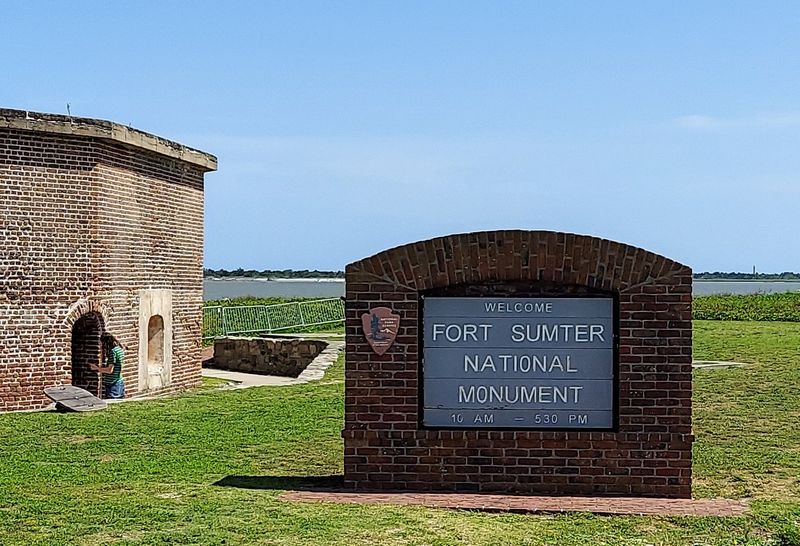
Ask a kid what they remember most from the trip, and the answer might surprise you. Plenty of young travelers rank the dolphins right up there with the fort.
Charleston Harbor is home to bottlenose dolphins, and they often pop up near the ferry. Sightings happen on both the trip out and the trip back, so keep watching even after the visit ends.
Turning it into a game works wonders. Give each child a job, like watching the left side or the right side, and see who spots the first fin.
Of course, wild animals keep their own schedules. Some rides have plenty of dolphin action, while others are quieter, so it helps to set expectations before boarding.
Either way, the search keeps restless kids busy during the crossing. A pair of small binoculars can make the hunt feel extra official, and that excitement carries right up the fort steps once the boat docks.
Steps That Lead Straight Into History
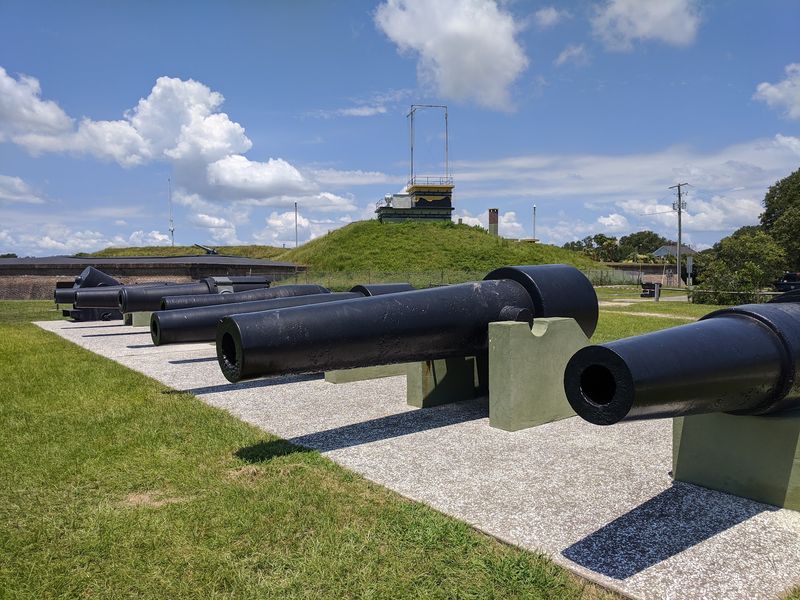
Old stairs have a way of turning any kid into an explorer. At Fort Sumter, the steps lead up to higher spots inside the fort, including the area near the flagpoles and the museum deck.
Climbing them feels like a mission. Each level gives children a new view of the walls, the cannons, and the harbor spreading out in every direction.
The fort is surprisingly open. Aside from a few blocked-off areas, such as places where ammunition was once stored, families can walk almost every part of the grounds.
That freedom is a big deal for curious kids. Instead of looking at history behind glass, they get to move through it on their own feet.
Parents should know that surfaces can be uneven. Comfortable shoes help a lot, and families with strollers or mobility needs should check access ahead of time, since lifts have sometimes been out of service.
Cannons Big Enough to Wow
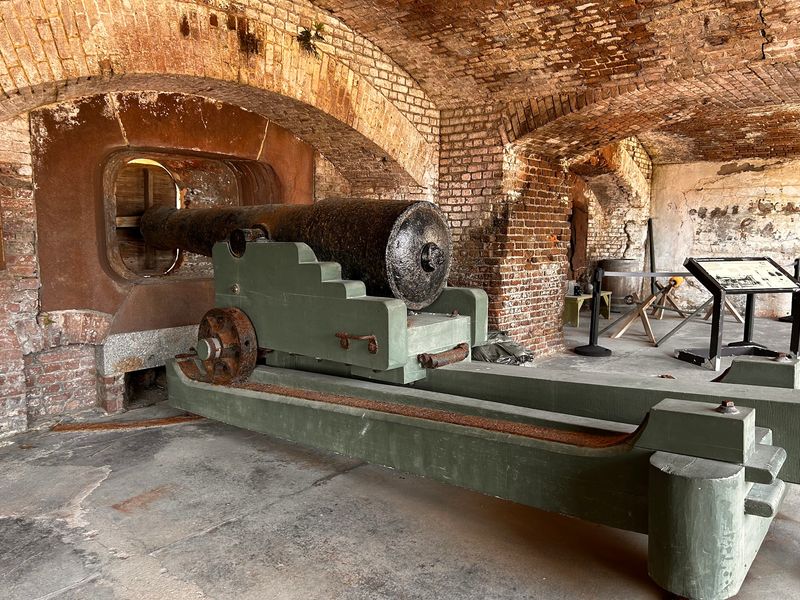
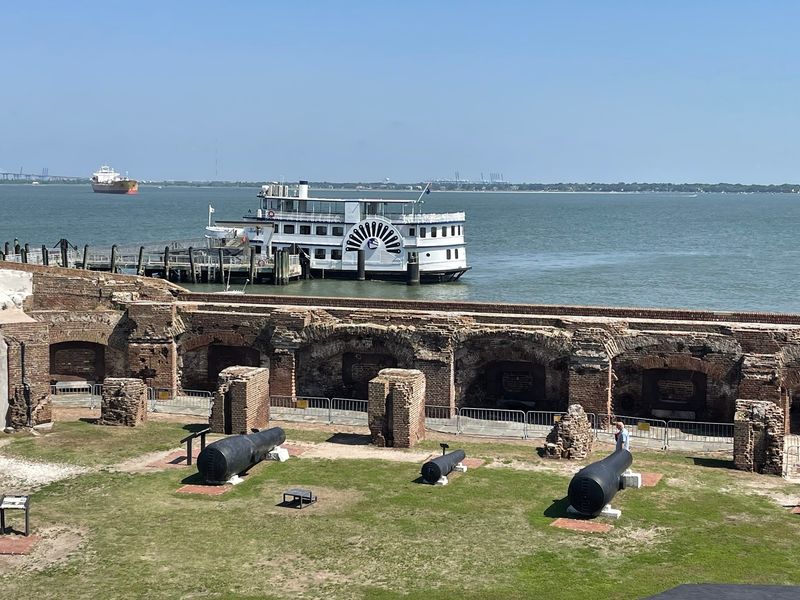
Few things grab a kid’s attention like a giant cannon. Fort Sumter has several on display, and they sit in places where young visitors can get a close look.
Some cannons rest along the walls, while others sit inside casemates. Those are the arched brick rooms where soldiers once aimed their guns out toward the water.
Kids love peeking through the openings to see what soldiers saw. It turns a history lesson into something they can stand inside and study.
Here is a fun fact to share. Fort Sumter was built after the War of 1812 to protect Charleston Harbor, and work on it was still not finished when the Civil War began in 1861.
Plaques and signs explain what each area was used for. Reading them together gives kids a chance to ask questions and connect the cannons to the bigger story of the fort.
Rangers Who Tell Great Stories
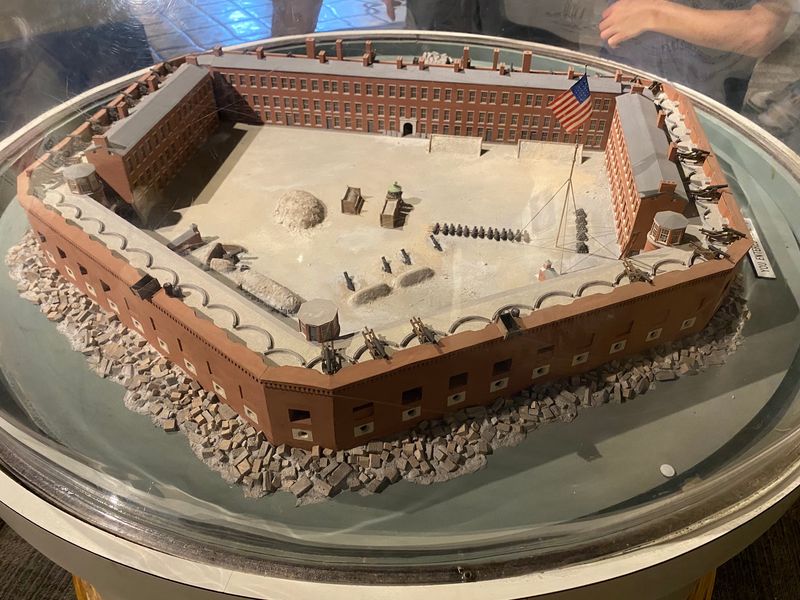
History can feel dull in a textbook, but a good storyteller changes everything. The park rangers at Fort Sumter are known for being friendly, knowledgeable, and great at answering questions.
Many families start with a ranger talk right after stepping off the ferry. It gives kids a quick picture of what happened here, so the walls and cannons make more sense afterward.
Rangers also share history during the boat ride. If the speaker is hard to hear on the middle level, moving to the top deck usually helps.
Kids should be encouraged to raise their hands. Questions about soldiers, cannons, or daily life at the fort often lead to the best answers of the day.
Volunteers are usually around too. Between rangers and helpers, there is almost always someone nearby who can turn a simple question into a story worth retelling at the dinner table.
Helping Raise the Flag
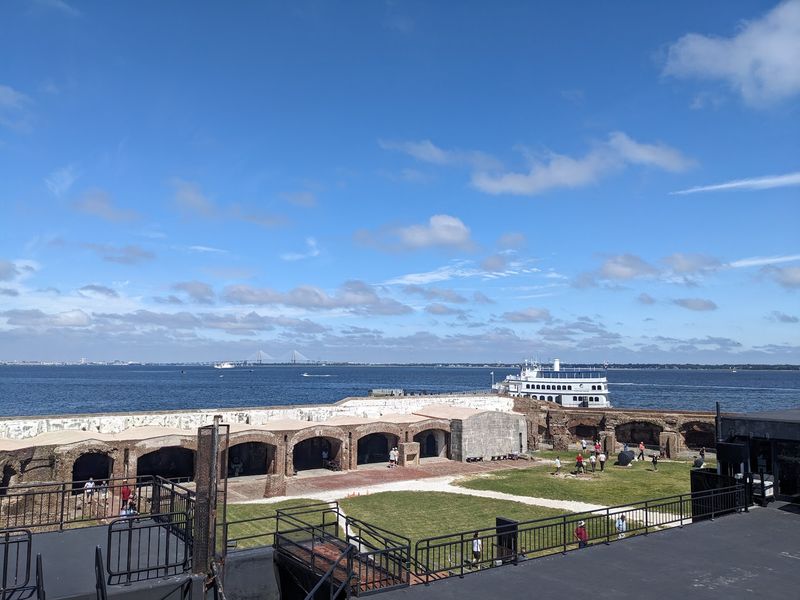
Some lucky kids get a job on arrival. On the first ferry of the day, families may have a chance to help with the flag-raising ceremony at Fort Sumter.
Rangers guide the process, and visitors can join in raising the flag over the fort. For a child, holding the rope at such a famous place can be a proud moment.
The ceremony connects to an important part of the fort’s past. Flags flew over Fort Sumter during the start of the Civil War, and the fort’s flag became a strong symbol across the country.
Not every trip includes this event. It usually happens with morning departures, so families who want a shot at it should book the earliest ferry they can.
Early mornings also tend to be cooler. That makes climbing the steps easier on young legs, and it leaves the rest of the day open for more Charleston fun.
A Small Museum With Big Stories
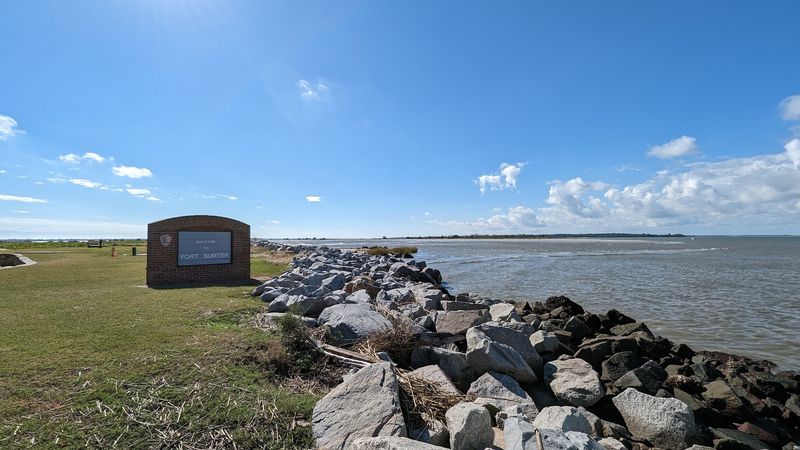
Tucked inside the fort is a small museum that packs in a lot. Families can see artifacts, flags, and exhibits about how the fort was built and what happened during the 1861 bombardment.
The exhibits also cover the long siege that followed. Kids often find the before and after pictures amazing, since they show how much the fort changed during the war.
For older children, the museum adds depth to everything they have already seen outside. Younger ones may enjoy picking out one object and learning its story.
A gift shop sits nearby as well. It can be a nice place to grab a small keepsake, like a book about the fort.
Families leaving from Liberty Square can also stop at the Visitor Education Center before boarding. Its free exhibits help set the scene, so kids arrive at the fort already curious about what comes next.
Fort Moultrie Across the Water
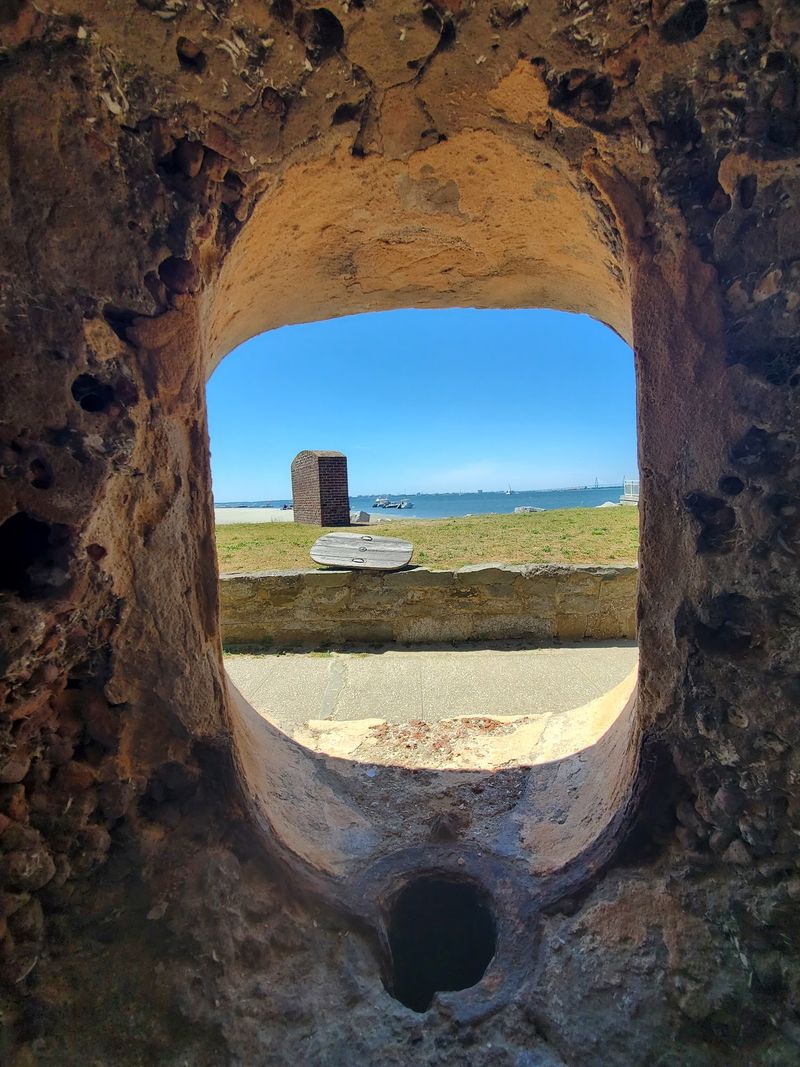
The adventure does not have to end at Fort Sumter. Across the water on Sullivan’s Island, Fort Moultrie is the second part of the park, and it can be reached by car.
Its story goes back to 1776. A fort built from palmetto logs stood here and helped turn back a British attack during the American Revolution.
The current fort shows features from different eras. Walking through it lets kids see how coastal defenses changed over many years.
Fort Moultrie is reasonably priced and easy to explore in about an hour. That makes it a handy add-on for families who want more history without a long day.
Here is a neat connection to share. Soldiers at Fort Moultrie moved to Fort Sumter in December 1860, shortly before the Civil War began, so the two forts are tied together in one big story.
Tips for a Smooth Family Trip
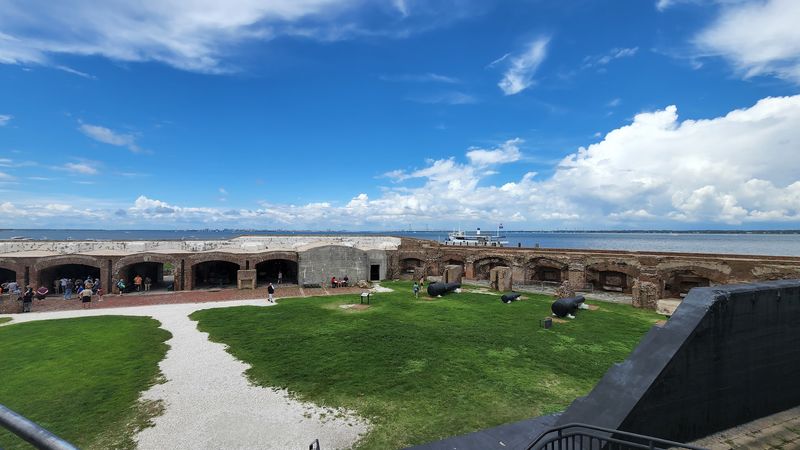
A little planning goes a long way here. The whole outing usually takes about two to two and a half hours, including roughly one hour on the island.
That hour moves fast. Families who want to see everything should head straight for the ranger talk, then explore the steps, cannons, and museum in a loose order.
Shade is limited at the fort. Hats, sunscreen, and water bottles are smart choices, especially on summer days out on the water.
Remember the restroom rule too. Since there are none at the fort, a quick stop on the ferry before landing saves a lot of trouble.
Ticket prices are lower for kids, and children under three ride free. Older kids and teens often get the most from the history, while younger ones may love the boat most of all, and that is perfectly fine for a memorable day in Charleston.