Most waterfalls make you earn the view with a long hike, sore legs, and a few wrong turns. One small cascade in the North Carolina mountains does the opposite and sits right beside the highway.
For years, this spot was famous because cars could roll on a curved road tucked behind the falling water. That old drive-through lane has a story, and today it has a twist that every trip planner should hear about before showing up.
The falls still let people get behind the water, just in a slightly different way. Parking is limited, the mountain road takes care, and the water level changes with the seasons.
Keep reading to learn how this roadside stop works now, what to expect, and why it makes a great first stop on a famous waterfall route near Highlands.
A Waterfall With a Highway Address
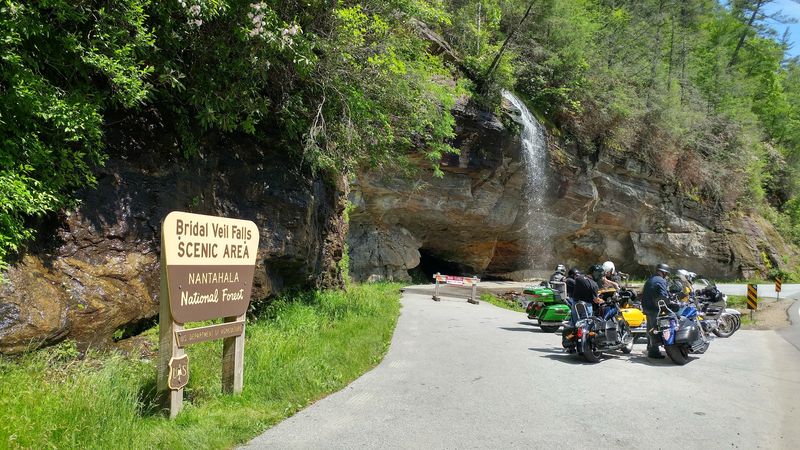
Some waterfalls hide deep in the woods, but this one practically has a mailbox. Bridal Veil Falls sits along US-64 just west of the town of Highlands, North Carolina 28741, in the mountains of the western part of the state.
The falls are part of the Nantahala National Forest area, and they are easy to spot from the road. Drivers heading from Highlands toward Franklin pass right by them.
That roadside spot is the whole reason this place became so well known. Very few waterfalls in the United States sit this close to a busy highway.
The water drops over a rocky ledge that hangs out above the ground. Because the rock sticks out, there is open space underneath where people can stand.
Getting here takes almost no effort once you reach the right stretch of road. The parking area is right next to the falls, so there is no trail to follow and no map to study.
Plug Highlands into your GPS, head west on US-64, and keep your eyes on the right side of the road.
The Old Road Behind the Curtain
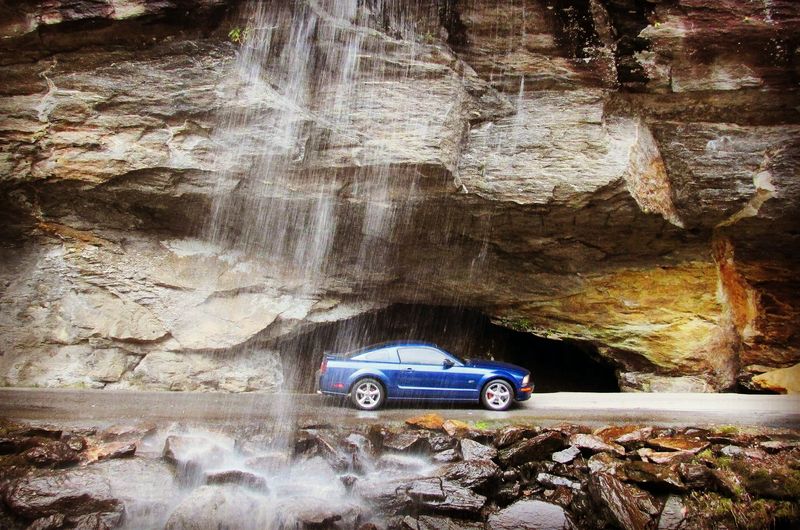
Here is the fun part of the story. Long ago, the main highway actually ran behind the falls, and cars passed under the overhanging rock as a normal part of the trip.
Later, the highway was moved so it would no longer go under the waterfall. The old section of road stayed in place as a small loop beside the new road.
For many years, drivers could turn onto that loop and roll slowly behind the falling water. It became one of the most famous drive-through waterfall experiences in the country.
Families would line up their cars to take photos with water falling in front of the windshield. It was quick, simple, and a little bit silly in the best way.
That old loop is the reason this little falls earned so much attention. A regular roadside cascade turned into a must-do stop thanks to a bit of road history.
So when someone says you can drive behind a waterfall in North Carolina, they are talking about this exact curve of pavement.
The Plot Twist About Driving
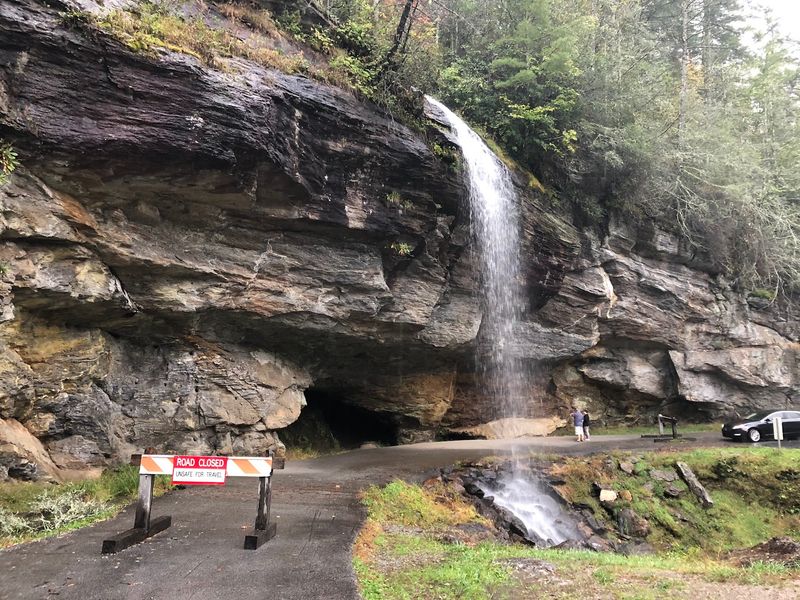
Now for the news that surprises a lot of people. The drive-behind lane is currently blocked off to cars.
Many travelers show up expecting to steer their car under the falls, only to find barriers at the entrance. Closures have happened for different reasons over time, including ice above the road and snow banks in winter.
Right now, the lane is closed to vehicles, so it is smart to plan for walking instead. Conditions can change, so checking with local sources before your trip is a good idea.
The good news is that the closure does not ruin the fun. The short paved road behind the falls is still open to people on foot.
You can stroll the same path the cars once used and stand under the rock ledge yourself. In some ways, it is even better, since you are not rushing past behind a steering wheel.
Think of it as trading a drive-through for a walk-through, with the same great view and fewer seatbelts.
Walking Under the Water
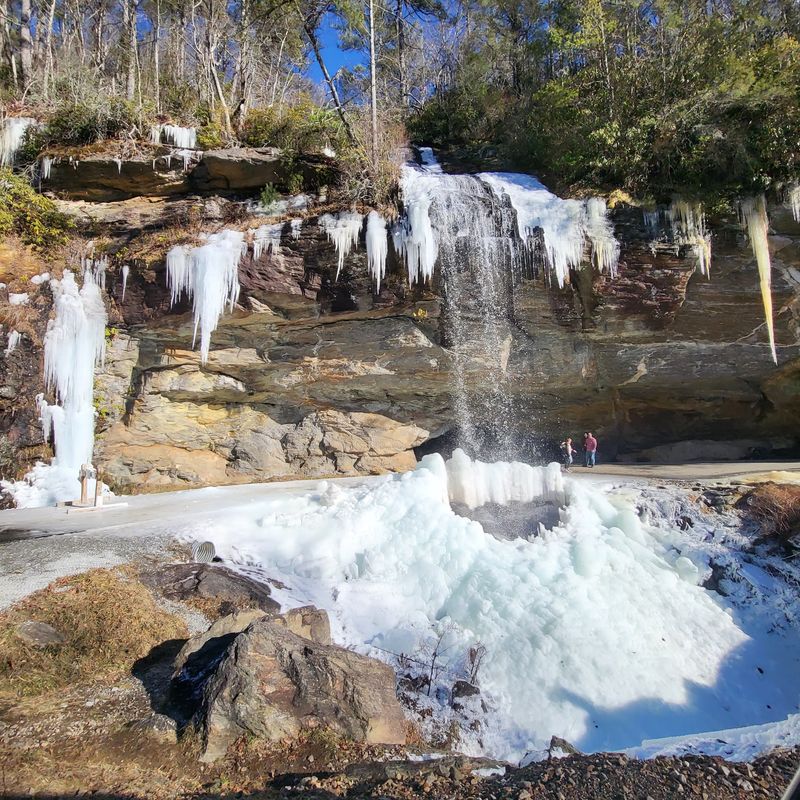
Walking behind a waterfall sounds like something from an adventure movie. At this stop, it takes about a minute and requires zero hiking boots.
From the parking area, you walk only about 20 to 30 feet to reach the falls. Some people take a few steps down to stand right behind the water.
The paved section curves under the overhanging rock, so you can walk under, around, and through the space. It feels interactive, which is why kids and grown-ups both enjoy it.
The view from behind is the real treat. You get a reverse look at the falls, with the water dropping in front of you and the road and trees beyond it.
This short walk works well for people who cannot handle long trails. Older family members and young kids can usually manage it without trouble.
Just watch your footing, because wet pavement near waterfalls can be slick. A slow and steady pace keeps the visit easy for everyone in your group.
Where the Name Comes From
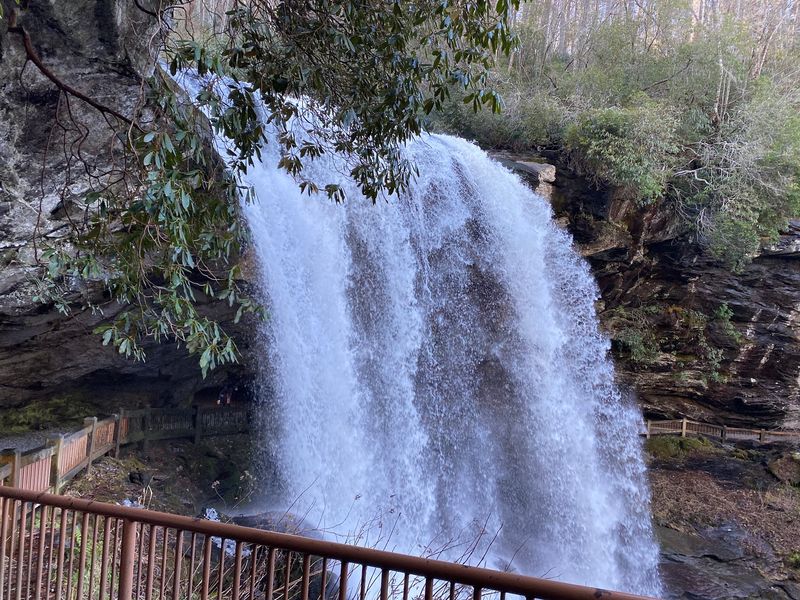
Names can tell you a lot, and this one is pretty honest. When the water flows over the ledge, it spreads out into a thin, flowing sheet.
That shape looks a lot like the lacy veil a bride might wear. Many waterfalls across the country share the same name for the same reason.
The height is often listed as around 45 feet, though some sources give a taller figure for the full drop. Either way, it is a modest size compared to giant falls.
On some days, the water is so thin it looks more like a ribbon than a curtain. That makes the veil name fit even better.
Here is a fun fact for your next road trip quiz. North Carolina has more than one waterfall called Bridal Veil Falls, including another in DuPont State Recreational Forest.
So when you tell friends you visited, mention Highlands and US-64. That little detail keeps everyone from getting their veils in a twist.
Rain Makes All the Difference
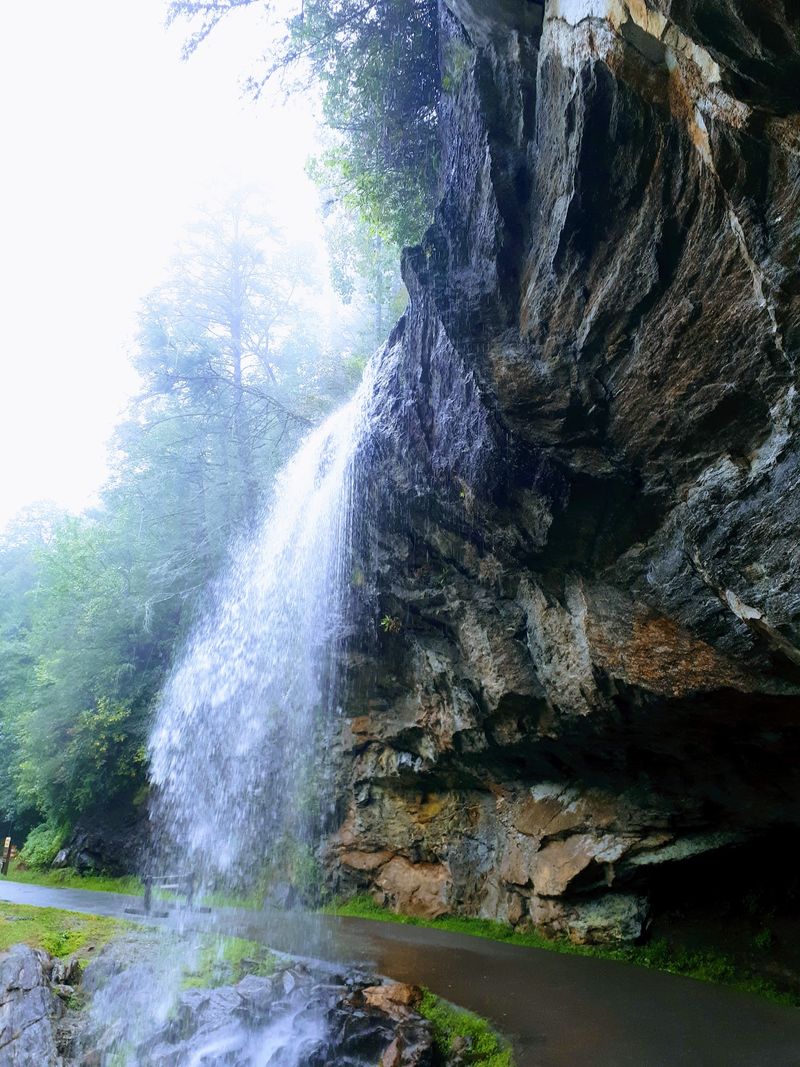
Timing your visit can change the whole show. This waterfall depends heavily on recent rain, so the flow goes up and down.
After a dry spell, the falls may be just a light trickle. Some travelers arrive to find only a thin stream dropping from the ledge.
After a good rain, the water spreads wider and looks much fuller. That is when the veil really lives up to its name.
Spring is often a strong season for waterfalls in the North Carolina mountains. Rain tends to be more steady, and the trees start turning green.
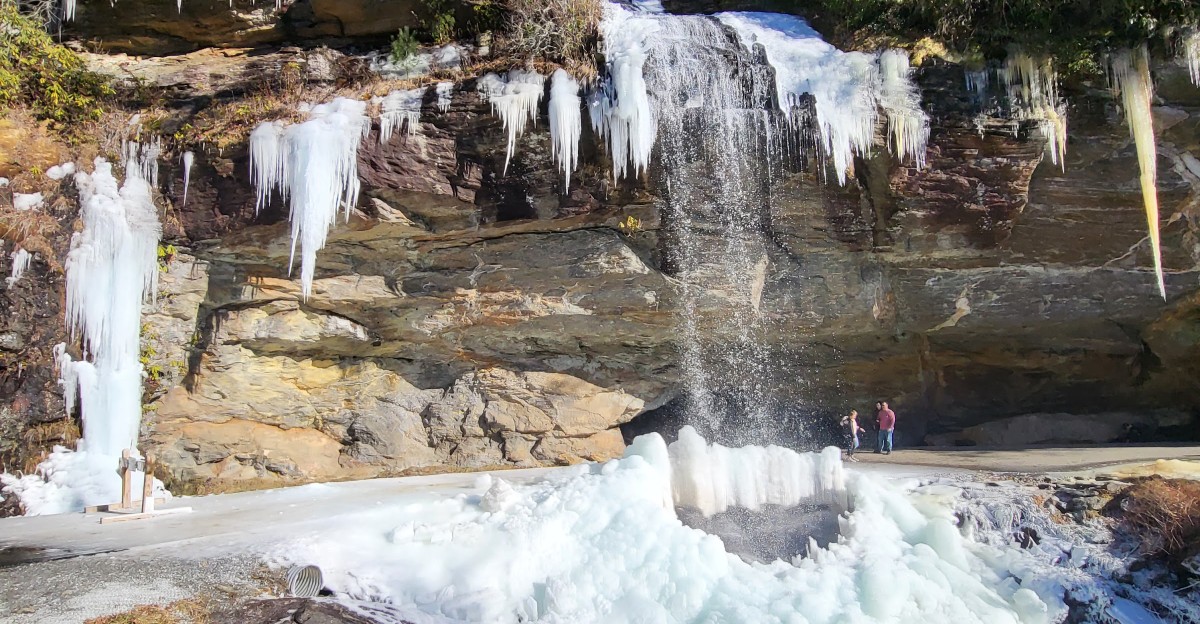
Winter brings a different look. Ice can form above the road, which is one reason the drive-through lane has been closed in cold months before.
A handy tip is to check the local weather from the past few days before you go. If it rained recently, you are likely in luck.
Even on a low-water day, walking behind the ledge is still fun and worth the short stop.
Parking Is a Tiny Puzzle
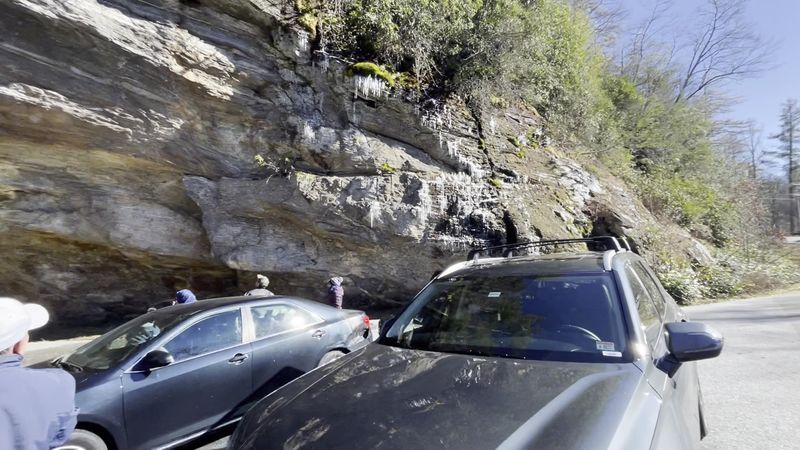
Space here is limited, so a little planning goes a long way. The pullout next to the falls only fits about six or seven cars.
Since there is no hike, most people stay for just a few minutes. That means spots usually open up pretty quickly.
If the lot is full, wait patiently or circle back after a short time. Do not stop in the travel lanes, because this is a busy highway.
Plenty of cars pass by all day, especially during warm months and fall color season. Pull in and out slowly and use your signals.
Visiting is free, so there is no ticket booth or entry fee. You simply park, walk over, and enjoy.
Early morning or later in the day can be calmer than midday. Weekdays are often easier than weekends too.
A quick stop works best here, so grab your photos, take your walk behind the water, and let the next car have its turn.
A Mountain Road Worth Respecting
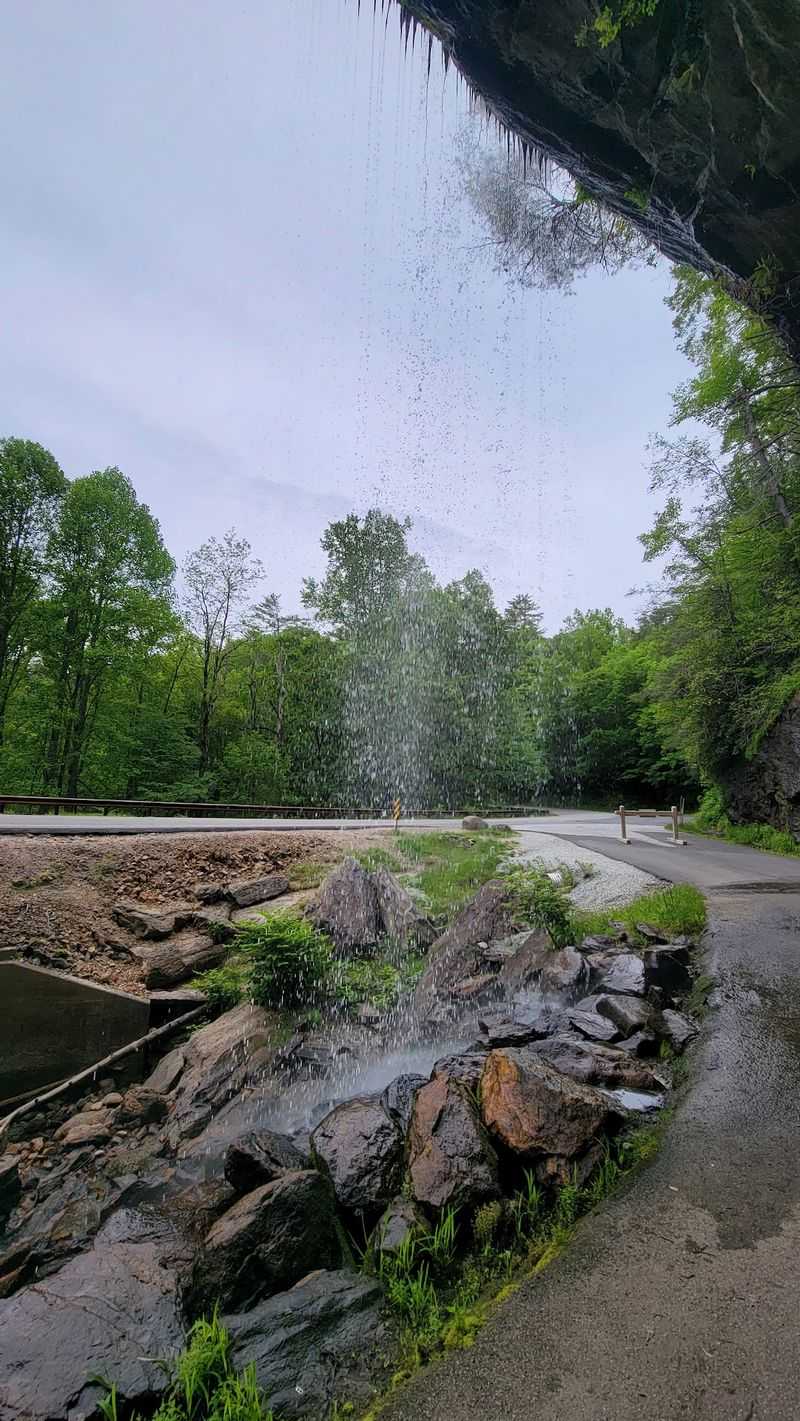
Getting to the falls is part of the adventure, and the road deserves your full attention. US-64 in this area twists and turns through steep mountain terrain.
Some stretches are narrow, with rock walls on one side and steep drops on the other. Nervous drivers may want to let someone else take the wheel.
The curves are also part of what makes the area so scenic. The views along the way into the gorge are a highlight on their own.
Keep your speed low and stay alert for cars stopping at overlooks. Many drivers here are tourists looking for the next waterfall.
Large vehicles like big RVs may find the turns tricky. Smaller cars tend to handle the route more comfortably.
Plan your trip during daylight if you can. Driving these curves in the dark or in bad weather is much harder.
Take it slow, enjoy the scenery from pullouts, and arrive at the falls calm and ready to explore.
Neighbors on the Waterfall Trail
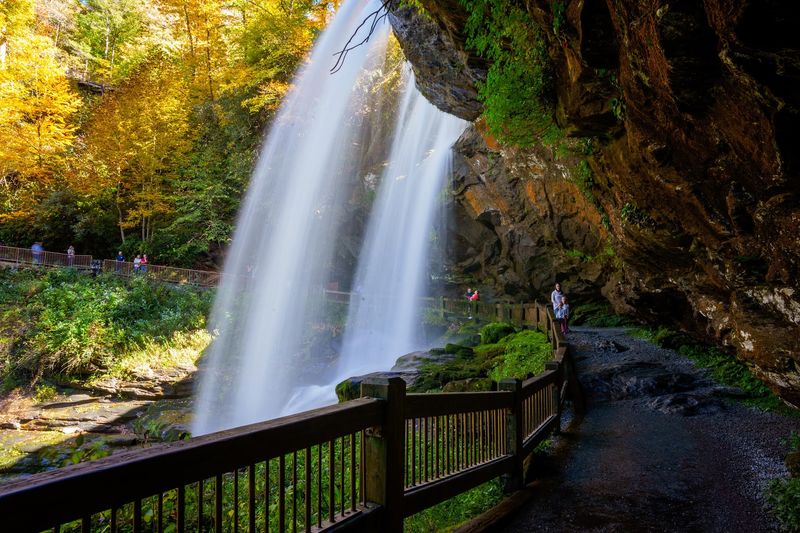
One waterfall is nice, but why stop there? Bridal Veil Falls sits along a stretch of US-64 often called the waterfall highway.
Dry Falls is just a few minutes down the road. It is larger and also lets you walk behind the water on a paved path.
Sequoyah Falls and Cullasaja Falls are nearby too. Cullasaja Falls is mostly seen from the roadside, so use care when stopping there.
Many travelers treat Bridal Veil as the opening act for the day. It is quick, easy, and gets everyone excited for the bigger falls ahead.
A simple plan is to start in Highlands and head west toward Franklin. Stop at each waterfall along the way and take your time.
Bring water, snacks, and comfortable shoes for the longer walks at other stops. Dry Falls has steps, so it takes more effort than Bridal Veil.
String these stops together, and a short drive turns into a full day of waterfall hopping.
Tips for a Smooth Quick Stop
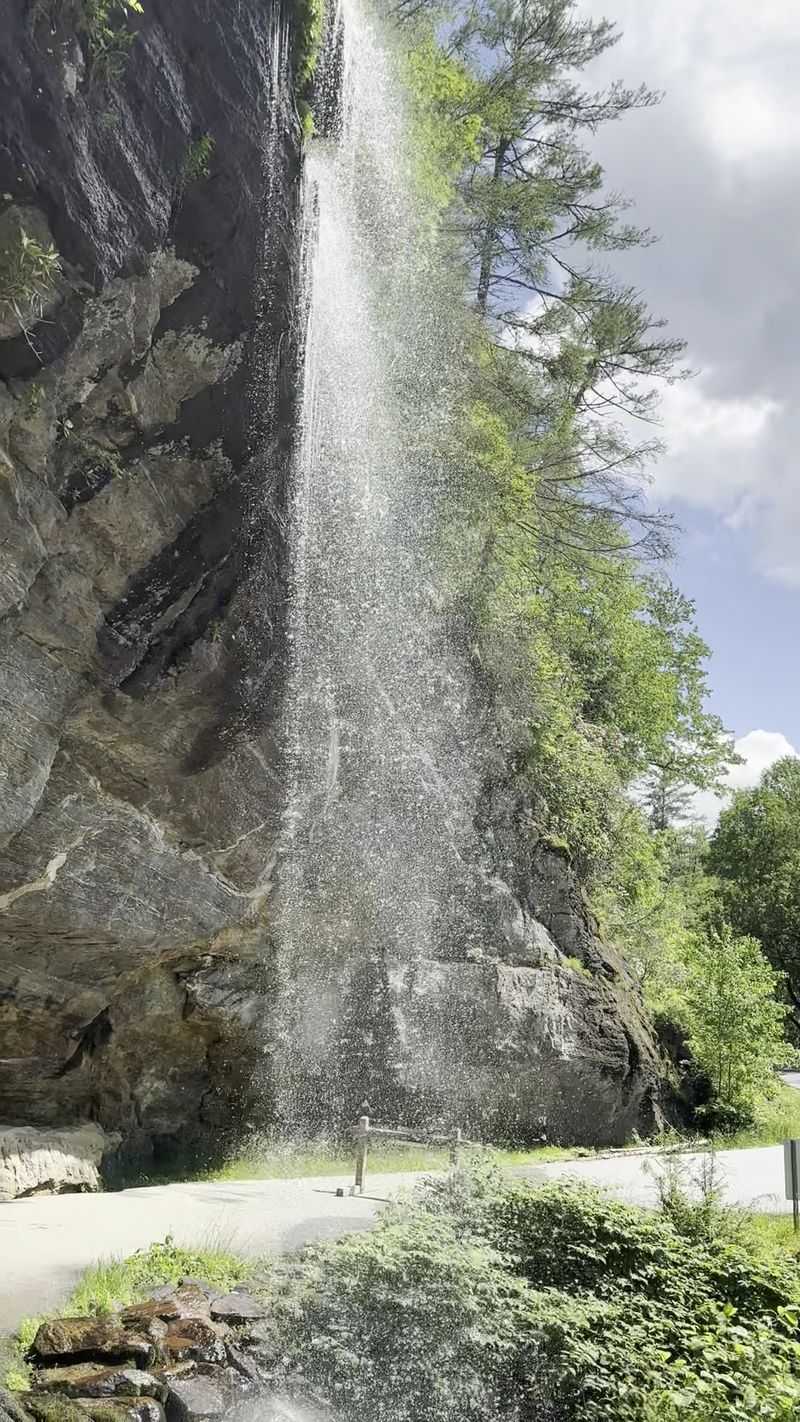
A great roadside visit comes down to a few smart moves. First, bring a phone or camera ready to go, since the stop is short.
Photos from behind the falls are the favorite shot. Try framing the water with the road and trees showing through it.
Wear shoes with good grip, because the ground near the water can stay wet. Flip-flops are not the best pick here.
Keep a close eye on kids near the road. Cars move quickly through this area, and the parking lot sits right beside traffic.
Pack a light jacket if you visit in cool months. The mountains around Highlands can feel chilly even when lower areas are warm.
Leave the spot as clean as you found it. There are no big facilities, so carry your trash out with you.
With those simple habits, your visit will be easy, safe, and fun. This little falls proves that some of the best memories need only a few minutes and a short walk.