Thousands of people walk past the Liberty Bell every day, snap a photo, and head off for a cheesesteak.
Very few of them glance across the street at a big old brick building and wonder what is inside.
That is a shame, because one of the most surprising works of art in America sits just beyond its doors.
It is made from about 100,000 pieces of glass, it took a famous painter and a famous glass studio to build it, and it once sparked a fight that pulled in the whole city.
Best of all, there is no ticket booth and no admission fee.
The lobby also holds a fountain, marble floors, and a long story about the magazines that shaped how Americans saw themselves.
Keep reading to learn where it is, what makes it so special, and how to plan a quick visit.
Right Across From the Liberty Bell
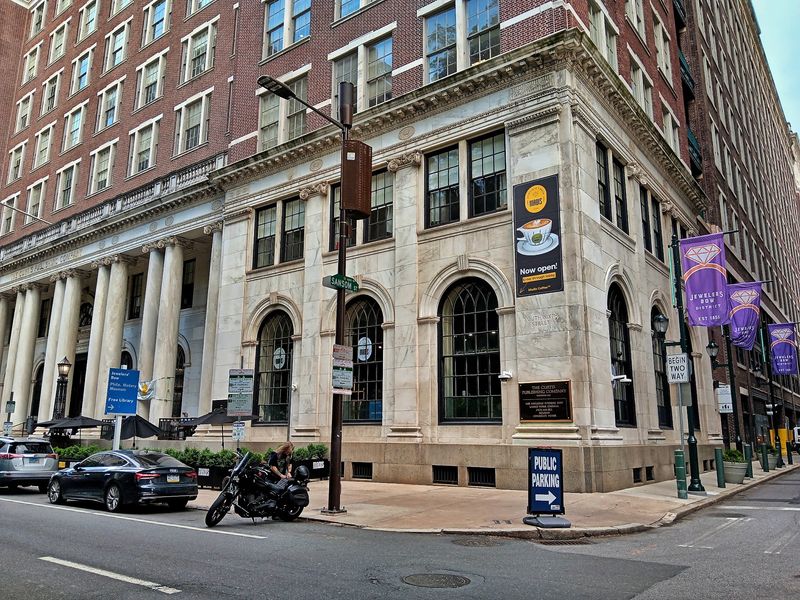
Some of the best surprises in Philadelphia sit in plain sight. The Curtis Publishing Company building, often called the Curtis Center, stands at 170 S Independence Mall W, Philadelphia, PA 19106, in the United States.
The location could hardly be easier to find. The building faces Independence Mall, which puts it within a short stroll of the Liberty Bell and Independence Hall.
It also sits near the corner of South Sixth and Walnut Streets, close to the Jewelers’ Row district.
That means it fits neatly into almost any day of sightseeing in the Old City area. Many people tour the big historic sites and never realize what waits just a few steps away.
The outside looks dignified and a little formal, built in a Georgian style with brick and stone. Nothing on the front shouts about the art inside, which is part of the fun.
A metal plaque on the side of the building lists the famous magazines once made here. Spot that plaque, and the treasure hunt has officially begun.
Meet The Dream Garden
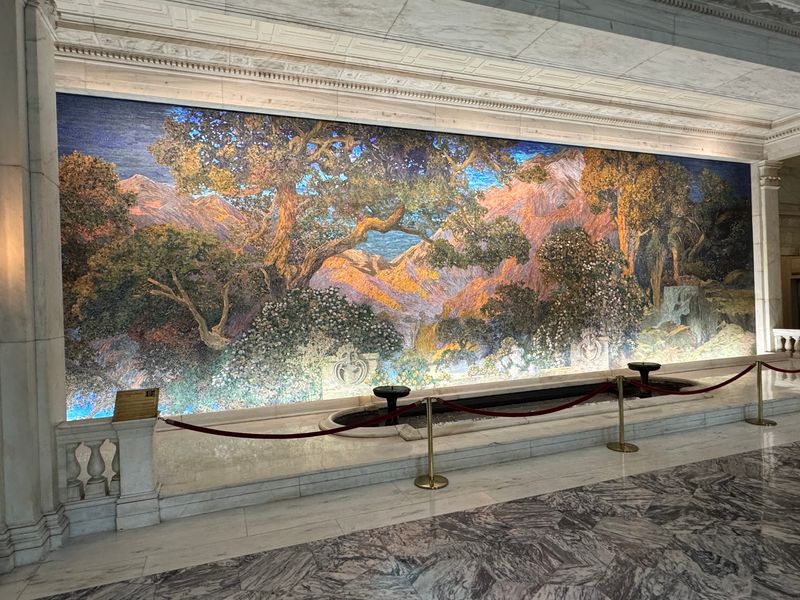
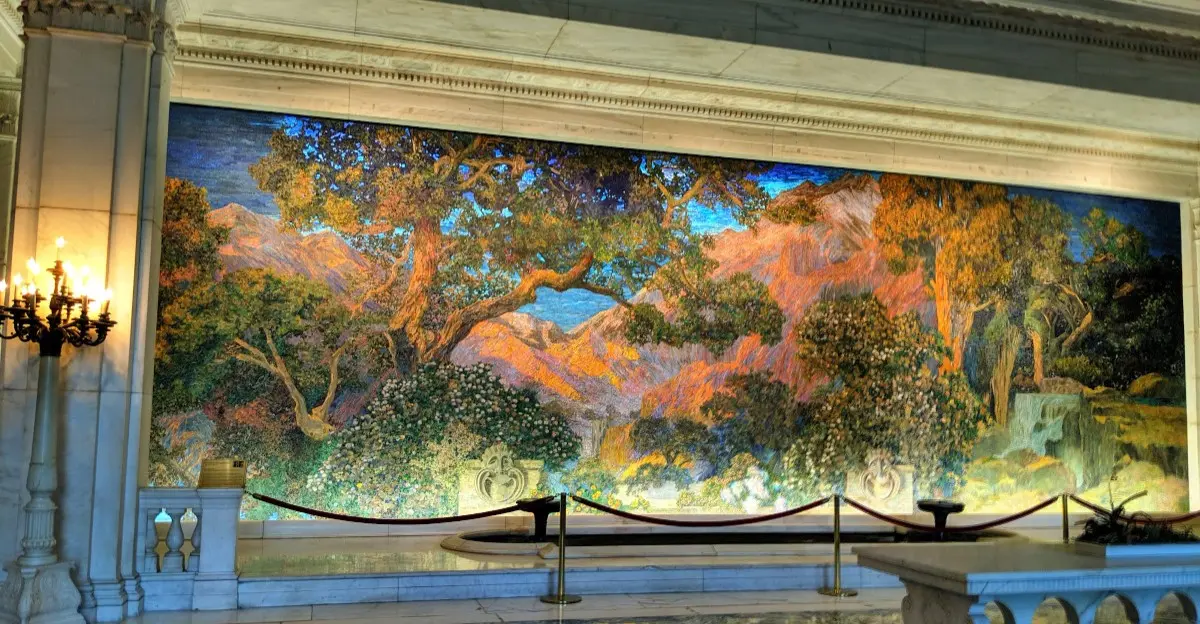
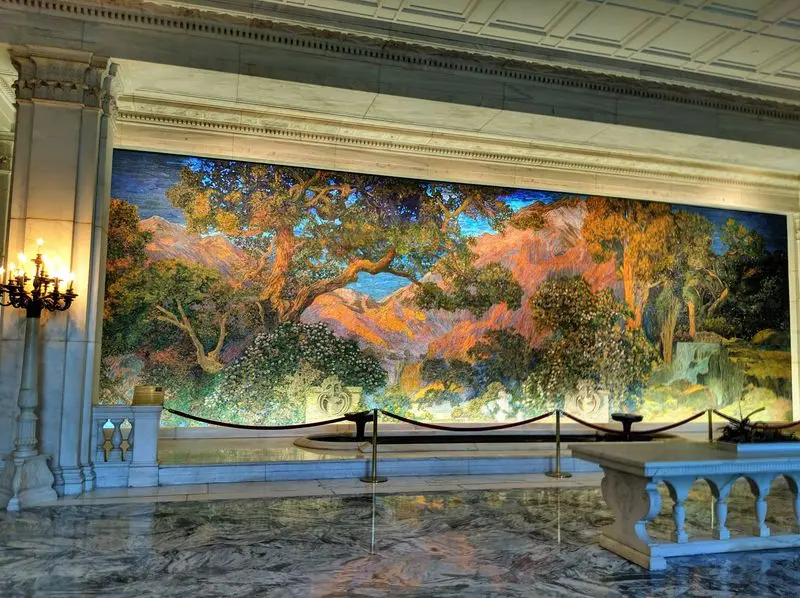
Here is the star of the show. The mosaic is called The Dream Garden, and it fills a wall of the lobby with a dreamy landscape of trees, hills, water, and sky.
The numbers behind it are wild. The piece uses roughly 100,000 pieces of glass in about 260 colors, and it measures around 15 feet tall by 49 feet wide.
It is widely described as the largest Tiffany glass mosaic of its kind in the world.
It was finished in 1916. That makes it more than a century old, yet it still looks fresh and bright.
Photos online give only a small hint of the real thing. Up close, the glass shifts as light changes, so the scene seems to change a little as a person moves across the room.
Many people describe the space as a perfect spot for a calm pause during a busy day of touring. A few quiet minutes here can feel like a mini vacation from the crowds outside.
Two Big Names, One Wall
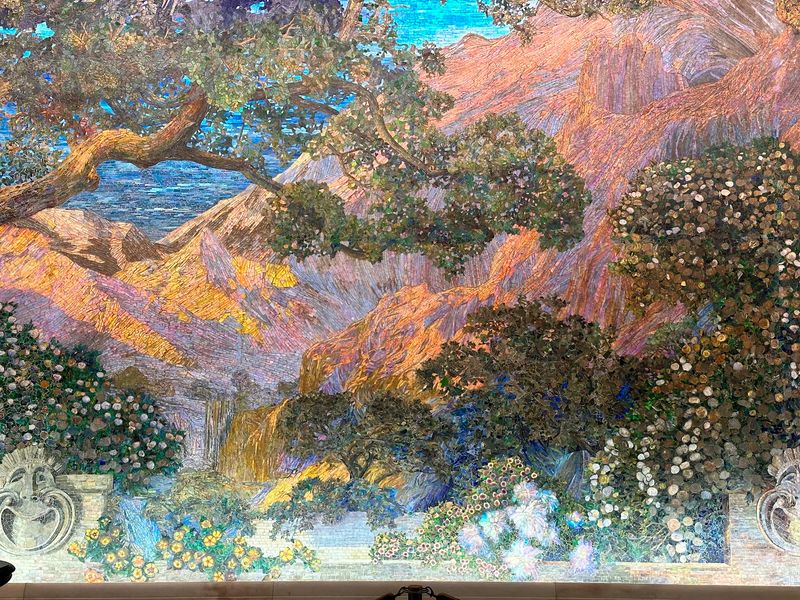
Great art often needs a team, and this mural had an all-star one. The design came from Maxfield Parrish, a painter famous for glowing skies and fairy-tale scenes.
Turning his painting into glass was the job of Louis Comfort Tiffany and his studios in New York. Tiffany’s workers matched Parrish’s colors using a special type of glass Tiffany developed.
The result blends a painter’s eye with a glassmaker’s skill. Fans of Parrish often call the piece awe inspiring, and it is easy to see why once you notice how the blues and golds play together.
Here is a fun bit of history. Cyrus Curtis, the publishing boss, wanted a grand artwork for his lobby, and the project went through more than one artist before Parrish and Tiffany teamed up.
The pairing turned out to be a lucky break. Their joint creation is now one of the most loved artworks in the city, and it has no price tag to see it.
The Fight to Keep It Home
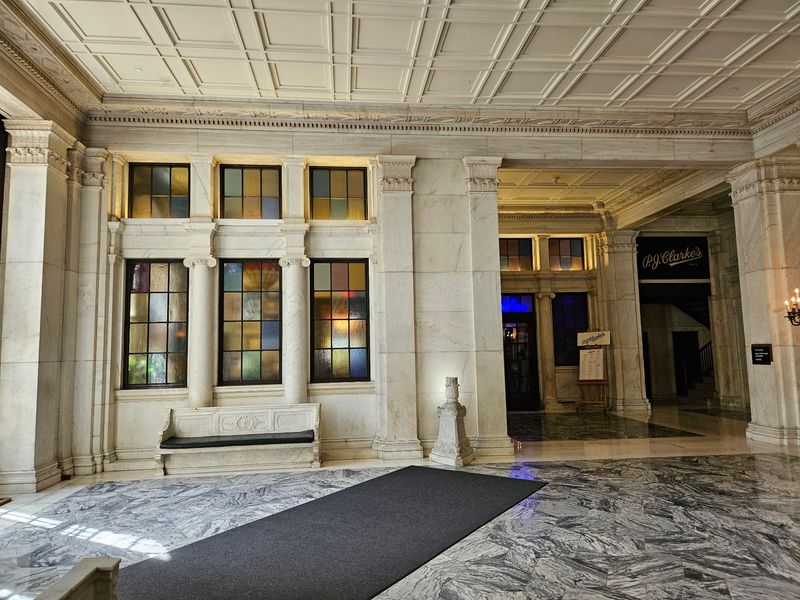
Not every masterpiece stays put without a struggle. In the late 1990s, The Dream Garden nearly left Philadelphia for good.
After the original owner’s estate decided to sell it, a buyer planned to move the mosaic out of the city. People in Philadelphia were upset at the idea of losing such an important piece of local history.
The city stepped in and named the mural a historic object. That was a first for Philadelphia, and it meant the artwork could not simply be removed.
Soon after, the Pennsylvania Academy of the Fine Arts bought the mosaic with help from a large donation. Thanks to that effort, the glass stayed right where it was installed in 1916.
Knowing this story changes how the wall looks. It is more than pretty decoration, since a whole community worked hard to protect it.
So when you stand in front of it, you are seeing a small victory for the people of Philadelphia. Not bad for a lobby stop.
Where Famous Magazines Were Born
Long before phones and streaming, families waited by the mailbox for their favorite magazines. Many of those magazines came from this very building.
Cyrus H. K.
Curtis founded his company in 1891, and it grew into a publishing giant. Its best-known titles included The Saturday Evening Post and Ladies’ Home Journal.
Other magazines joined the lineup too. Jack and Jill, Holiday, and American Home were also part of the Curtis family.
The Saturday Evening Post became especially famous for its covers painted by Norman Rockwell. His art showed everyday American life, and millions of readers saw it each week.
That plaque on the side of the building lists these publications. Reading it is a quick history lesson before you even walk inside.
Today, the company mainly works in licensing rather than printing stacks of magazines. Still, the building keeps the spirit of those busy publishing days alive in its halls, and history fans will find plenty here to talk about at dinner.
An Atrium Worth Looking Up For
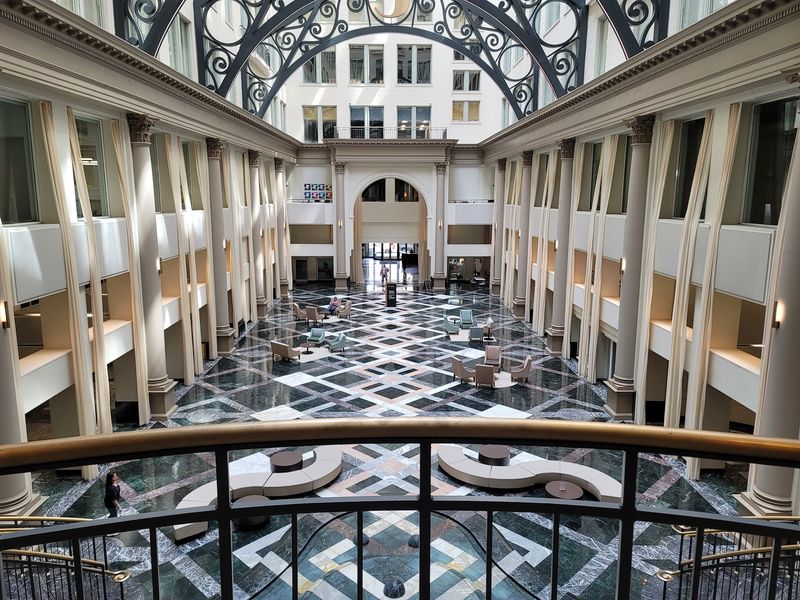
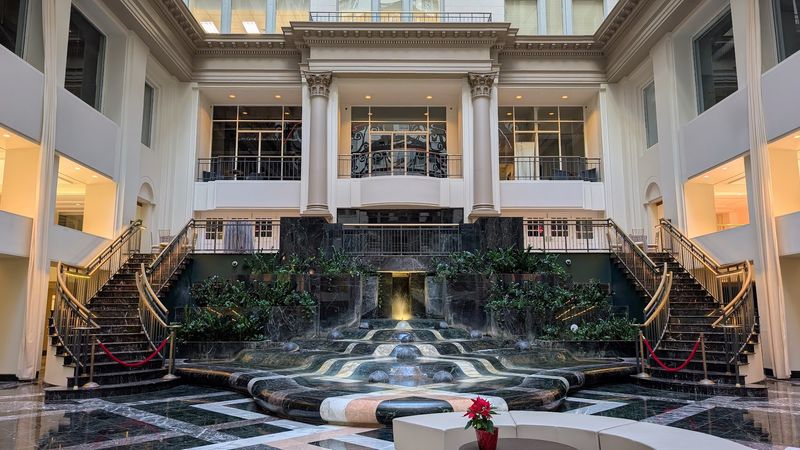
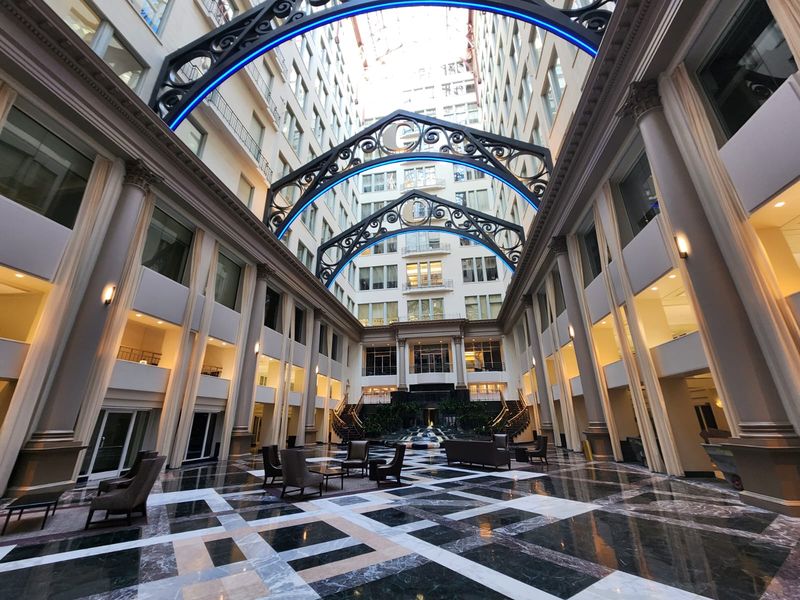
Architecture lovers, this part is for you. Beyond the mosaic, the building holds a grand atrium that stretches up several floors.
The space is open to the public, so anyone can wander in and take a look. Many people say the atrium alone makes the stop worthwhile.
A fountain sits in the middle of the open area. Around it, the floors are covered in marble, and the doors are made of brass.
The design mixes old-school elegance with touches that some describe as art deco in feel. Every corner seems to have been planned with care.
Here is a helpful tip. Take a slow lap around the atrium before heading to the mosaic, since the layout rewards a little exploring.
Bring a camera, though photos rarely capture the full scale. Wide shots work best for the atrium, while the mosaic is great for close-up detail shots.
Even the restrooms get praise for their nice design. Clearly, nobody cut corners in this building.
Free Art, No Ticket Needed
Museum tickets can add up fast on a family trip. Good news for your wallet, because seeing The Dream Garden costs exactly zero dollars.
The mosaic sits in a working lobby, not a gallery. That means you simply walk in during open hours and enjoy it.
A few simple habits make the visit go smoothly. Keep voices low, since people work in offices throughout the building.
Also, be kind to folks heading to appointments. The building holds medical offices and other businesses, so the lobby is a real workplace.
Families with kids can turn the stop into a game. Ask little ones to find the waterfall, count the trees, or guess how many glass pieces they see.
Plan on spending about 15 to 30 minutes here. That is enough time to study the glass, walk the atrium, and read the plaque outside.
For a free activity in a pricey city, this one punches well above its weight.
Check the Clock Before You Go
Nothing spoils a plan like a locked door. Because the mosaic lives inside a working building, its viewing hours follow the building’s schedule.
The smartest move is to check the hours before you head over. Weekday daytime visits are usually the safest bet.
Weekends and holidays can be trickier. Access may be limited, so a quick online check can save a wasted walk.
Timing your visit around other stops helps too. The Liberty Bell and Independence Hall are steps away, so the mosaic fits easily between them.
Morning visits often feel calmer. The lobby tends to be quieter, which makes it easier to stand back and take in the full wall.
Parking near Independence Mall can be tough and costly. Street parking rules are enforced, so a garage or public transit is often the better choice.
A little planning goes a long way here. Get the timing right, and the reward is a peaceful, crowd-free moment with a true masterpiece.
A Building That Still Works Hard
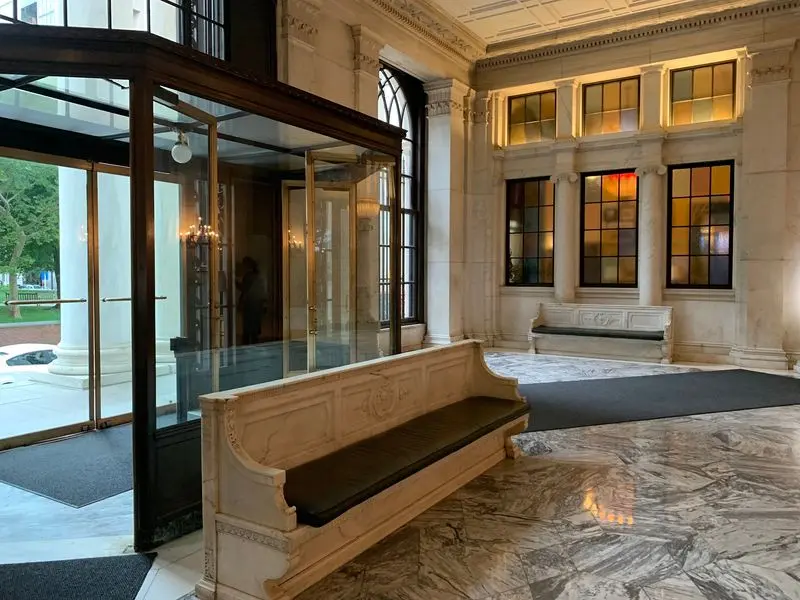
History buildings sometimes sit empty, but not this one. The Curtis Center is busy every day with offices, services, and homes.
Doctors and other professionals keep offices here. Some people discover the mosaic for the first time on the way to an appointment.
Part of the building also holds upscale apartments. That mix of work and living space keeps the property lively.
The building also hosts events. Weddings and private parties have taken place here, and the elegant setting makes those days feel extra special.
There are places to grab a bite on site as well. P.J.
Clarke’s is located in the building, and a small deli has served sandwiches and quick meals to people working nearby.
Even state exams have been held inside. It is a building that wears many hats.
This daily activity is part of the charm. A world-class artwork hanging in a place where regular life happens makes it feel friendly rather than stuffy.
Make It Part of a Bigger Day
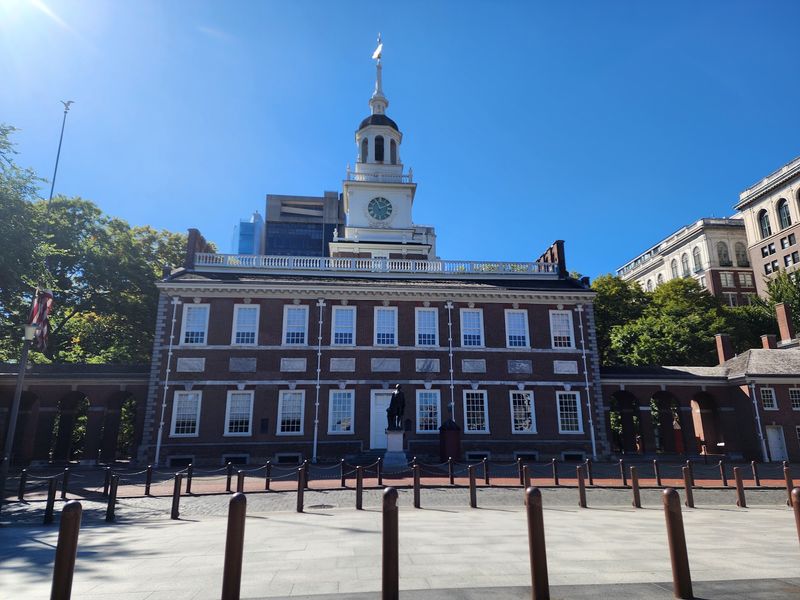
A quick stop can anchor a full afternoon of exploring. The Curtis Center sits in one of the most history-packed neighborhoods in America.
Start at the Liberty Bell, then cross the street for the mosaic. After that, Independence Hall is just a short walk away.
Jewelers’ Row is close by too. It is one of the oldest diamond districts in the country, and window shopping there costs nothing.
Washington Square is also nearby. Its shady paths offer a good spot to rest tired feet.
Art fans may want to add the Pennsylvania Academy of the Fine Arts to the list later. Since the academy owns The Dream Garden, visiting both connects the story nicely.
Wear comfy shoes, because Old City is best seen on foot. Many sights are only a few blocks apart.
By the end of the day, the mosaic may be the moment you remember most. Not bad for a stop most travelers walk right past, and you will know better.