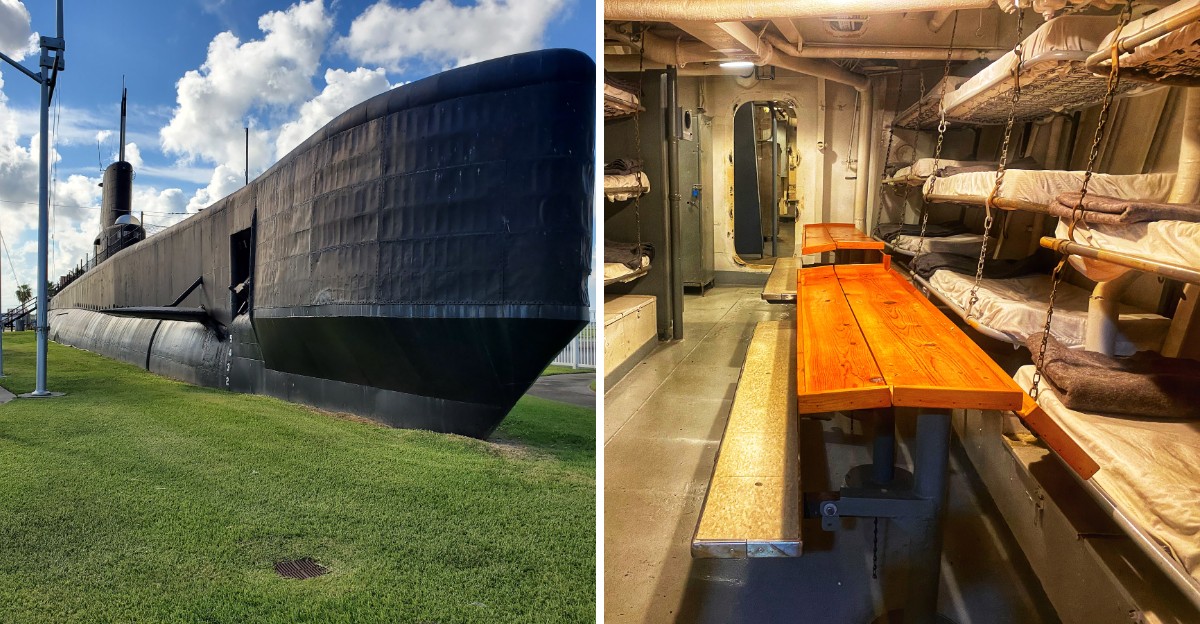
Most kids learn about World War II from a textbook. On a small island just across the channel from Galveston, they get to squeeze through the actual hatches of a real submarine instead.
The boat sits on dry land, so nobody has to worry about getting wet, but everybody needs to watch their head. Next door, a big gray warship waits with its own decks, ladders, and stories.
Families come for a quick look and end up staying for a couple of hours. The doorways are tiny, the bunks are stacked like shelves, and the history is huge.
Kids get to see how sailors ate, slept, and worked in spaces smaller than most bedrooms. Grown-ups often leave with a new respect for the crews who served.
Keep reading to learn where this spot is, what to see, and the smart tips that make the trip smoother.
Where the Submarine Hides
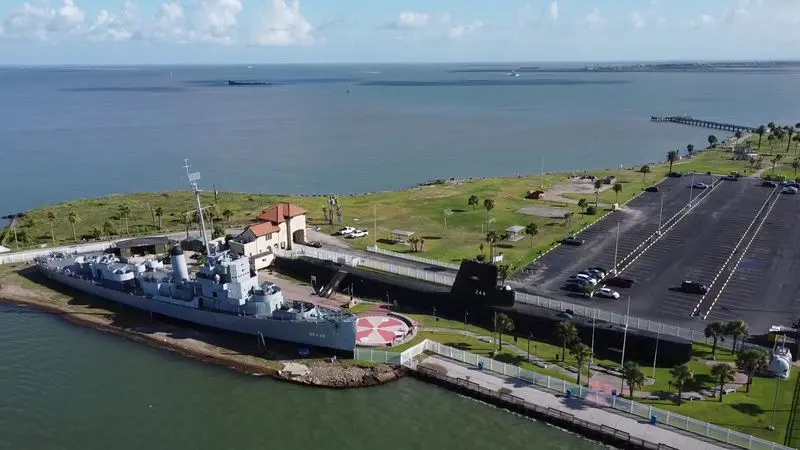
Tucked away from the busy beach strip, the Galveston Naval Museum sits at 100 Seawolf Park Blvd, Galveston, TX 77554. The museum is part of Seawolf Park on Pelican Island, a short drive across the bridge from the main part of Galveston, Texas.
Plenty of people visit Galveston several times and never find this place. That is part of its charm.
The park feels calm, and the crowds are often light compared to the busier tourist spots on the island.
Two real World War II vessels call this park home. One is the submarine USS Cavalla, and the other is the destroyer escort USS Stewart.
Both rest on display so guests can tour them up close.
The museum is open every day of the week from 9 am to 5 pm. That makes it easy to fit into a weekend trip or a summer weekday.
Plan the drive ahead and give yourself time. Once the family spots that long gray submarine, nobody will want to rush.
Meet the USS Cavalla
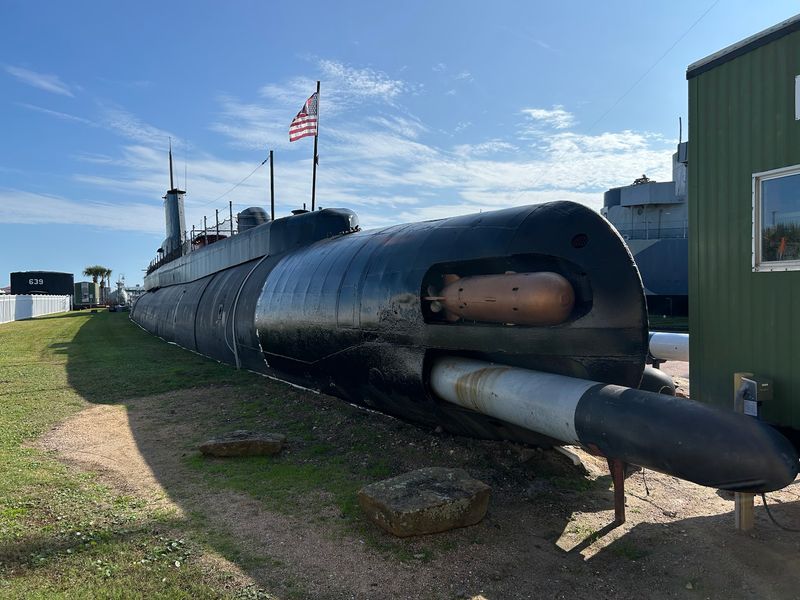
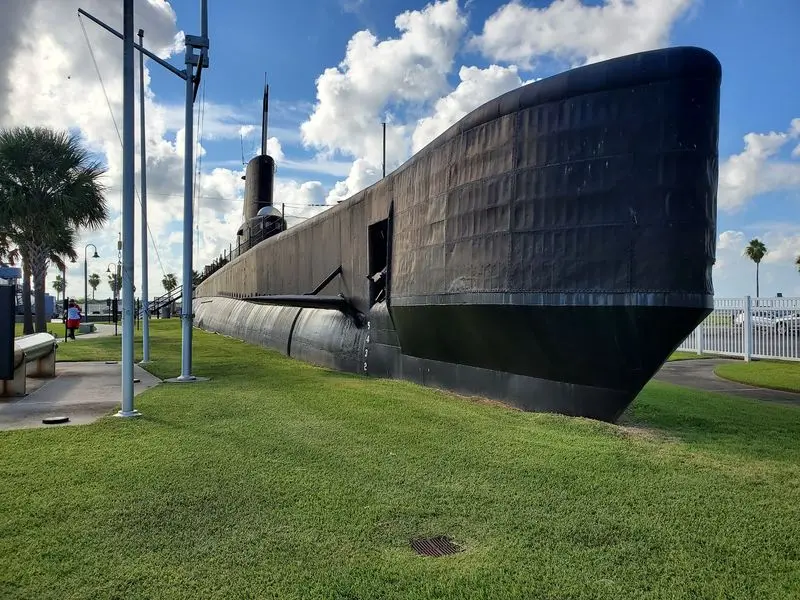
Every submarine has a name, and this one carries a proud one. The USS Cavalla, numbered SS-244, served the United States Navy during World War II.
Today the boat rests on dry land at Seawolf Park. That means kids can climb aboard without any water around them, and parents can relax a little.
The star of the show is the inside. Guests get to see the submarine in its entirety, moving from one compartment to the next on a path that covers nearly every corner.
Families are often surprised by how much they can explore. It is not just one room behind a rope.
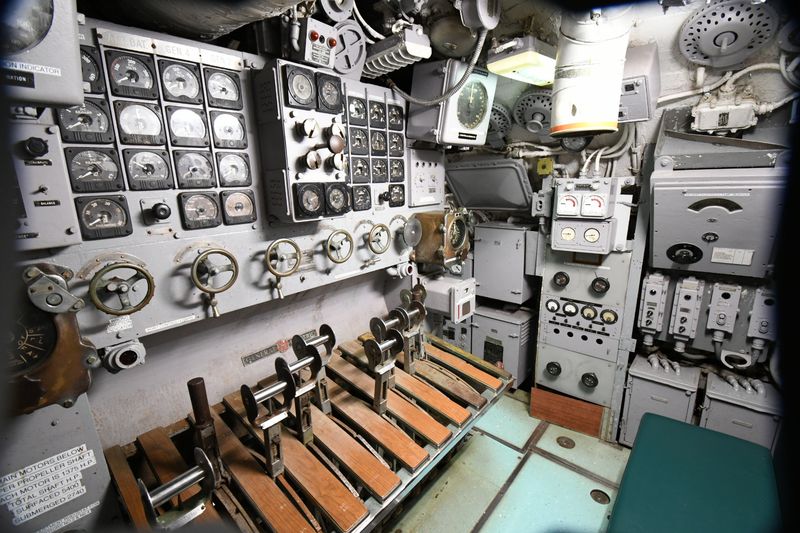
The tour winds through the spaces where the crew lived, worked, and kept the boat running.
Signs and small exhibits explain what each area was used for. Young readers can follow along, and older kids can dig into the details.
For many guests, this sub becomes the favorite part of the whole visit. After one trip through, it is easy to see why.
Mind Your Head in There
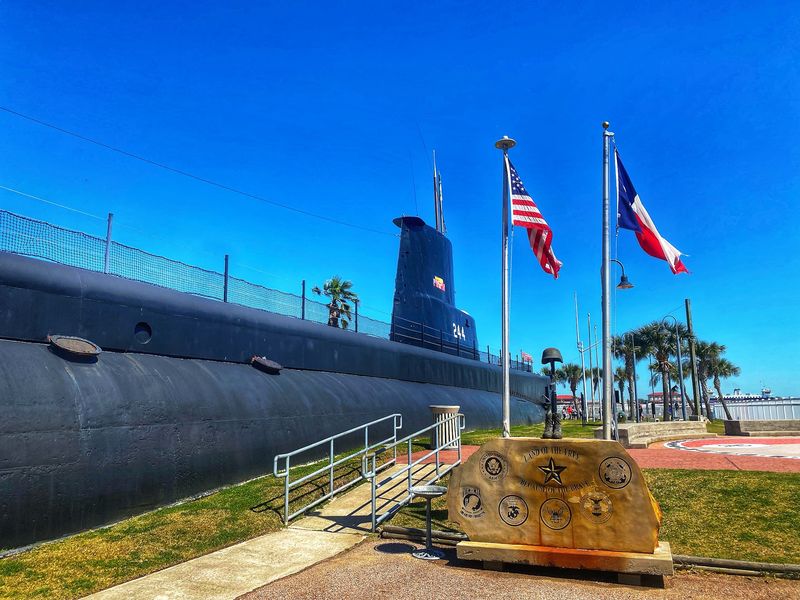
Here is a fair warning for tall dads and growing teens. The doorways between sections of the submarine are small, roughly four feet tall and two feet wide.
Guests have to duck and step through each one. Some ceiling fixtures hang at about six feet three inches, so heads need to stay alert the whole time.
Kids usually have the advantage here. They slip through the round hatches with ease while the grown-ups bend and twist behind them.
The engine room is the tightest stretch. It is so narrow that many people shuffle through sideways.
None of this is a design flaw. It is simply how submarines were built back then, with every inch put to work.
Anyone who feels uneasy in small spaces can choose to skip the sub. The rest of the museum is still well worth exploring.
For everyone else, the squeeze is half the fun. It is also the best history lesson in the building, taught one ducked head at a time.
How Sailors Really Lived
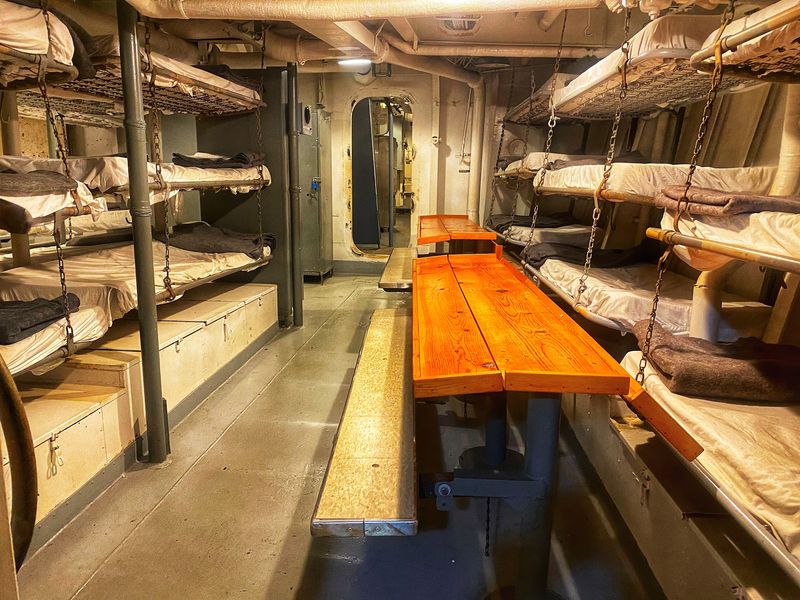
Sailors on this submarine sometimes spent months undersea. Seeing their living quarters makes that fact feel very real.
The bunks, workstations, and walkways show just how little room each person had. A crew had to eat, sleep, and do their jobs in spaces smaller than many family kitchens.
Kids tend to ask lots of questions here. Where did everyone keep their stuff?
How did they move past each other? The exhibits help answer many of them.
Grown-ups often walk away with a deeper respect for the crews. Living and working in such close quarters took patience, teamwork, and courage.
A smart move for parents is to turn the tour into a game. Ask kids to count how many steps it takes to cross a room, or guess how many people slept in one section.
Little challenges like that keep young minds busy. They also help the history stick long after the car ride home.
A Destroyer Next Door
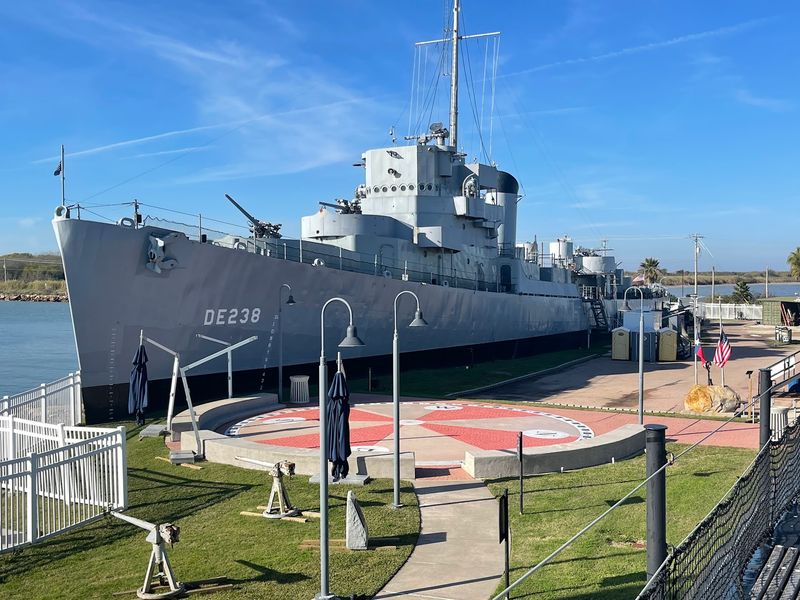
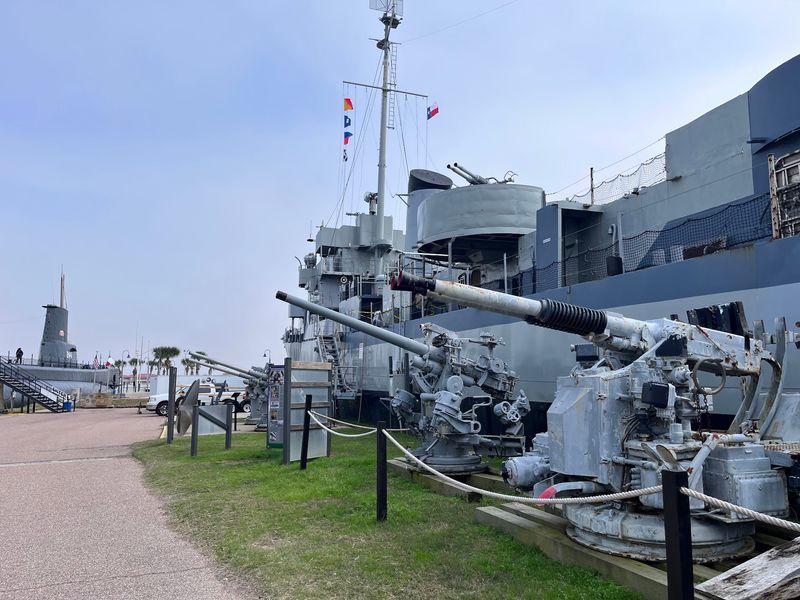
Just when the sub tour ends, a much bigger ship is waiting. The USS Stewart, numbered DE-238, is a World War II destroyer escort, and it sits right alongside the submarine.
Destroyer escorts helped protect convoys of ships during the war. This one gives families a second chance to explore naval history from a whole new angle.
After the tight sub, the Stewart feels roomy. Guests can tour the deck and also head below to see more of the ship.
Restoration work is still going on aboard this vessel. Some areas are not open yet, and the museum keeps preparing new spaces for future guests.
That means each visit could reveal something different. Families who return later may find fresh rooms ready to explore.
Below deck can still feel snug, so take it slow on the ladders. Up top, there is plenty to see, along with wide views of the water around Pelican Island.
Topside Views and Deck Time
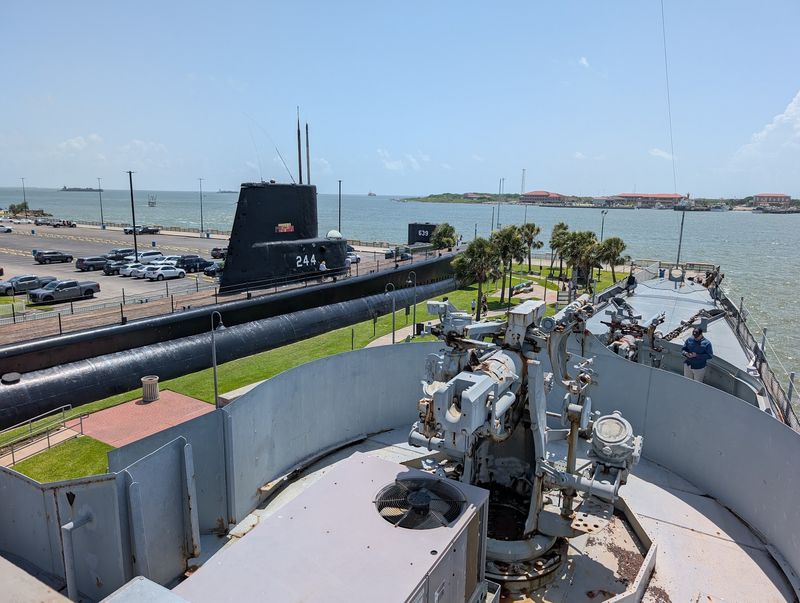
Some of the best moments happen out in the open air. The deck of the USS Stewart gives guests room to stretch after the tight submarine tour.
Kids can check out the equipment on deck and learn how the crew kept watch. Parents get a breather and a chance to snap photos.
The views of the water are a big bonus. Pelican Island sits along the Galveston channels, so ships and boats often pass by in the distance.
Families who visit on a clear day with a good breeze tend to enjoy this part the most. Picture-taking spots are everywhere, from the gray hull to the open sea behind it.
Bring sunscreen and hats, though. There is not much shade on a warship deck under the Texas sun.
A quick water break up here can reset tired legs. After that, everyone is ready for the next round of exploring.
Beat the Heat Early
Texas heat does not take days off, and neither do steel ships. Inside the vessels, some spots can get warm, especially in summer.
The good news is that both ships have air conditioning added in modern times. The sub feels more comfortable overall, while some areas of the destroyer still get pretty hot.
The simplest fix is timing. Doors open at 9 am every day, and the morning hours are usually the coolest.
Arriving early also means fewer people in the narrow passageways. Some families have found the ships nearly empty, which makes the tour feel almost private.
Pack water bottles and dress kids in light, comfy clothes. Closed-toe shoes help on ladders and metal floors.
A couple of hours is a good amount of time to plan. That is enough to see both ships, read the signs, and still beat the afternoon sun.
Explore at Your Own Pace
No schedule? No problem.
The museum offers self-guided tours, so families can move as fast or as slow as they like.
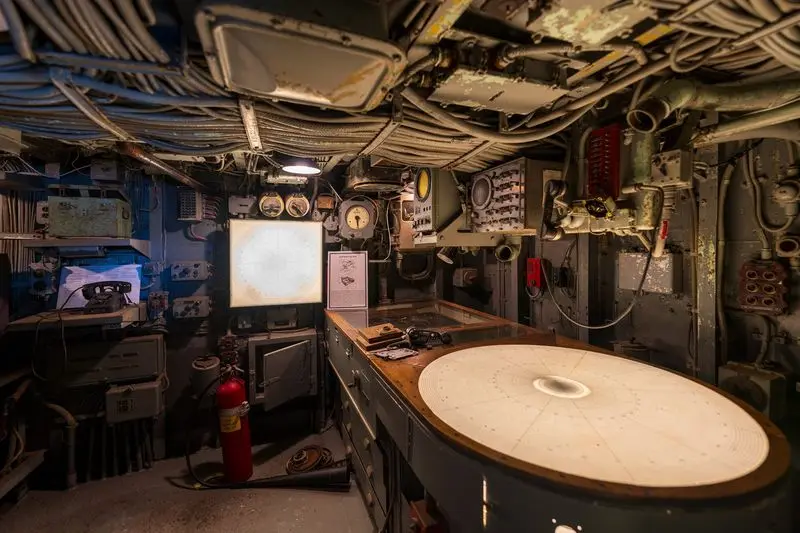
Signs and small exhibits line the path through each vessel. They explain what happened in each space and what life was like for the crew.
Readers in the group will love the plaques. Some families stop at nearly every one, and that slower pace turns the visit into a real learning adventure.
Younger kids may zoom ahead, while teens linger. That is fine here, since both vessels connect through a common area.
Guests can visit one ship, both, or skip one entirely. The choice is up to each group.
Hosted tours are also available for those who want a guide. Friendly staff and volunteers often share stories and facts that bring the exhibits to life.
Either way, nobody has to follow a script. The ships wait patiently while curious kids poke around every corner.
Honoring Women Who Served
History is not just about the sailors on deck. The museum makes a point of sharing the contributions of women who served in many roles during the war.
Tributes to these women appear throughout the site. They give kids a fuller picture of how many people helped the war effort.
Girls and boys alike can find someone to admire in these displays. It is a great chance to talk about the different jobs people did, both at sea and back home.
Parents might ask kids which role they would choose. That simple question can spark a long and thoughtful conversation.
The exhibits are clear and easy to follow. Even younger children can understand the main ideas with a little help.
These stories add depth to the whole visit. By the end, families see that winning a war took teamwork from all kinds of people, not only those aboard the ships.
A Plaza Full of Tributes
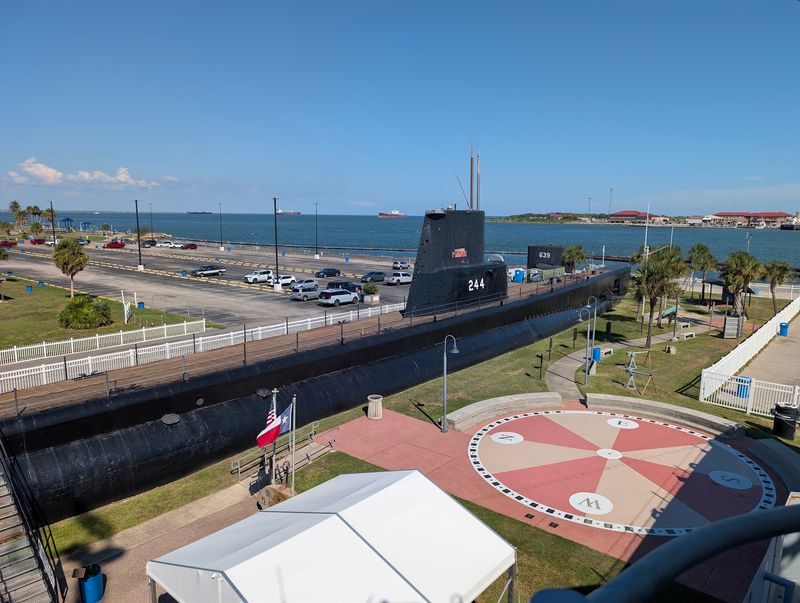
Between the two ships sits a quieter space worth a pause. The common area includes extra displays and a memorial for those who served.
The Memorial Plaza holds plaques that honor submarines and their sailors. Each one represents a crew and a story.
This is a good spot to slow down with kids. A few calm minutes here can help them understand why places like this matter.
The museum also hosts special events during the year to remember sea service members. Checking the museum website before a trip can reveal if something special is planned.
Veterans and their families sometimes visit too. Some former submariners even return for crew reunions, which shows how much these ships still mean to people.
Children often remember this part of the visit in a different way. It is less about climbing and more about thanking.
That balance makes the whole trip feel complete.
Souvenirs and Ways to Help
Before heading out, many families stop by the museum store. It is a fun place for kids to pick a keepsake from their trip aboard a real submarine.
Souvenirs make great reminders for school reports, too. A small item can help a child share the story with classmates.
Keeping two big ships in good shape takes a lot of work. The staff and restoration team are always busy maintaining the vessels and preparing new spaces.
Visitors who want to help have several options. The museum welcomes work day volunteers and groups, and financial donations also support its mission.
Even sharing the museum with friends makes a difference. More guests mean more support for preserving these historic ships.
Families with older kids might look into volunteer days as a learning project. Few chances exist to help care for a real World War II submarine, and this one sits right in Galveston.
That is a story worth taking home.