Most Civil War forts around Washington are gone now, covered by roads, houses, and shopping centers. One of them refused to disappear.
Tucked inside a quiet city park in Alexandria, Virginia, a real earthen fort still guards its hill, with cannons pointed out at a neighborhood that grew up around it.
Next door sits a small museum packed with wartime objects, a giant map of the old forts ringing the capital, and staff members who love answering questions.
The best part is that the whole place spreads across 45 acres of history and costs nothing to enter. There are walking loops, picnic tables, a playground, and even an amphitheater for summer shows.
Keep reading to learn the story behind these walls, what to see first, and the smart tips that make a visit easy and fun.
A Fort Hiding in Plain Sight
Plenty of people drive along West Braddock Road every day without realizing a Civil War fort sits just beyond the trees.
Fort Ward Museum & Historic Site is located at 4301 W Braddock Rd, Alexandria, VA 22304, in Northern Virginia, United States. The site is run by the City of Alexandria, and it covers about 45 acres of parkland in the middle of a busy suburban area.
That setting is part of the fun. One minute there are apartment buildings and traffic lights, and the next there is a grassy fort with cannons aimed at the horizon.
The fort is known as the best preserved of the many forts built to protect Washington during the war. Its earthen walls still rise from the ground, and part of it has been rebuilt to look the way it did in the 1860s.
Parking is free, and getting here from Washington or other parts of Alexandria is simple. For a site this rich in history, the lack of a ticket booth feels almost like a happy secret.
Built to Guard a Capital
Back in 1861, Washington had a big problem. The capital of the Union sat right across the river from Virginia, which had joined the Confederacy.
Army leaders answered with a giant ring of forts and batteries around the city. Fort Ward was one of them, and it grew into one of the larger forts in that defensive circle.
The fort was named for James Harmon Ward, a United States Navy officer from the early days of the war. Soldiers dug earth walls, built gun platforms, and kept watch over important roads leading toward Alexandria and Washington.
Here is a fun twist. The fort was never attacked during the war, which helps explain why so much of it survived.
Its job was to look strong enough that nobody wanted to try. In a way, the fort did its work by simply standing there.
Knowing this backstory makes a walk along the walls far more interesting, so read the signs before heading up the hill.
The Bastion That Came Back
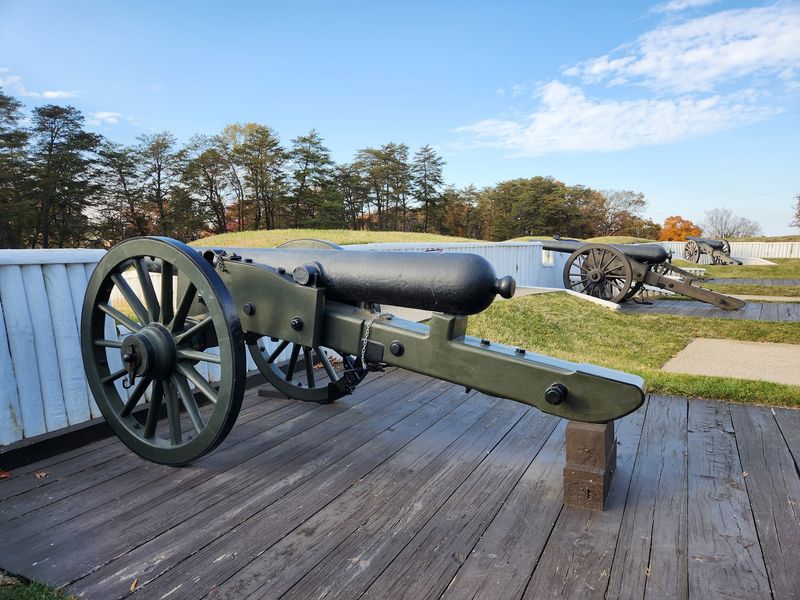
Time is tough on dirt walls, but one corner of this fort got a second life.
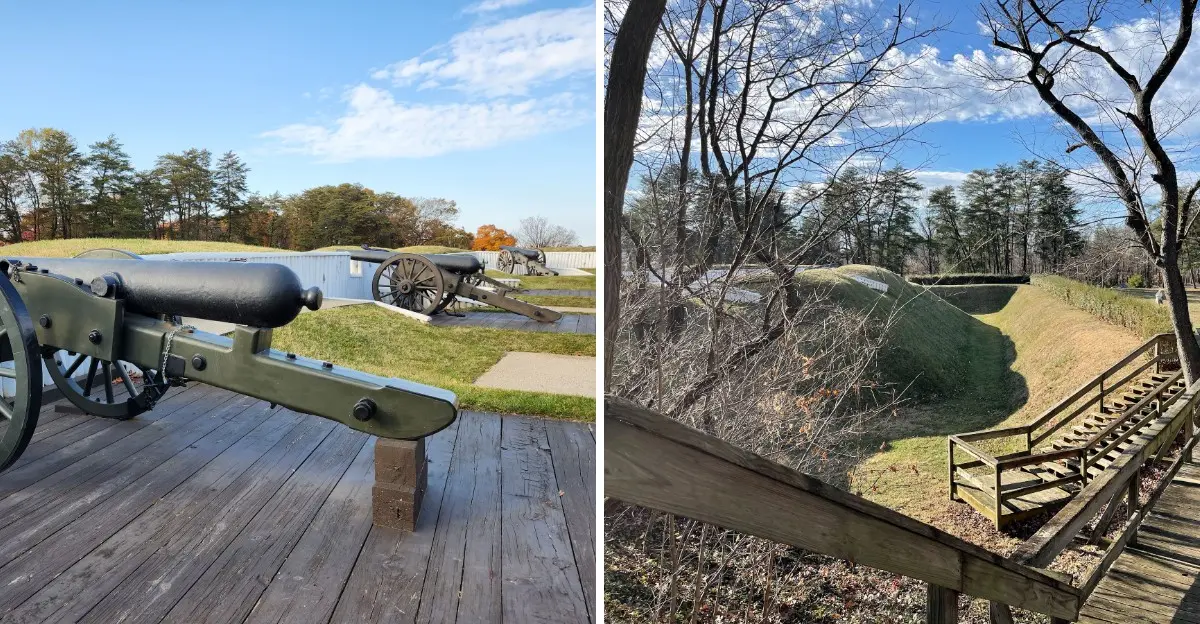
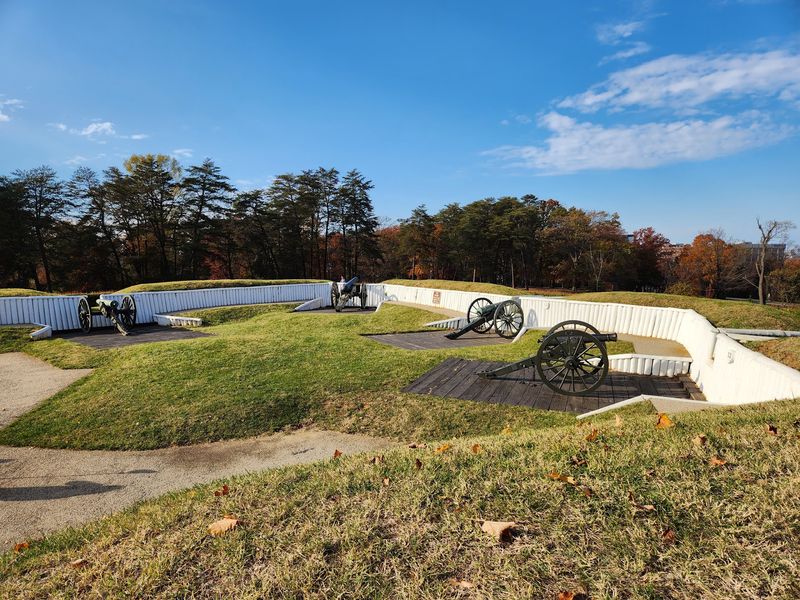
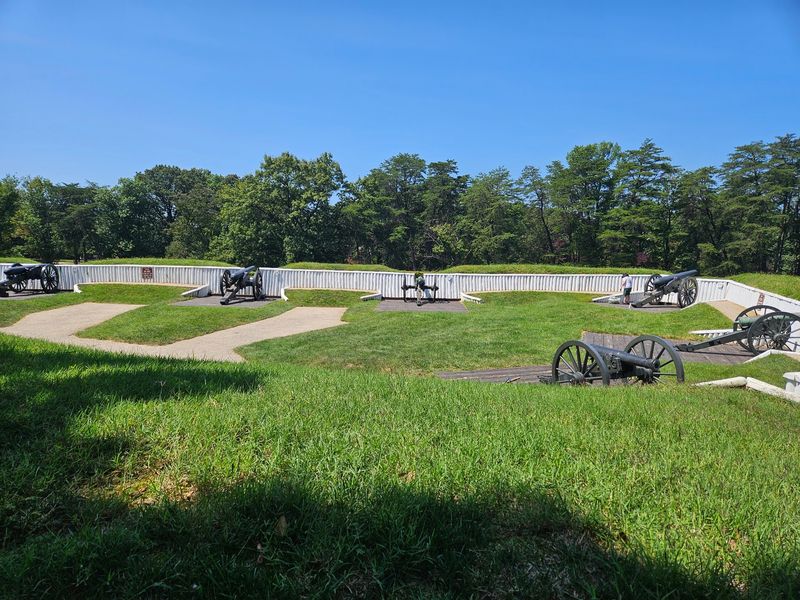
The Northwest Bastion has been restored to its original design, based on careful study of the fort’s historic plans. Replica cannons now sit on their platforms, aimed outward just as they would have been during the war.
This is the spot most people remember. The cannons are in great shape, and they make history feel real instead of something stuck in a textbook.
Take time to look at how the walls are shaped. Bastions were built with angles so soldiers could cover the ground in front of them from more than one direction.
There are also stairs leading toward the lower parts of the works. Some areas take a little effort to reach, so wear comfortable shoes.
Kids usually love this section the most, and adults often end up just as curious. Snap a few photos, then keep exploring, because the trench area nearby has its own stories.
Trenches, Gates, and Hidden Details
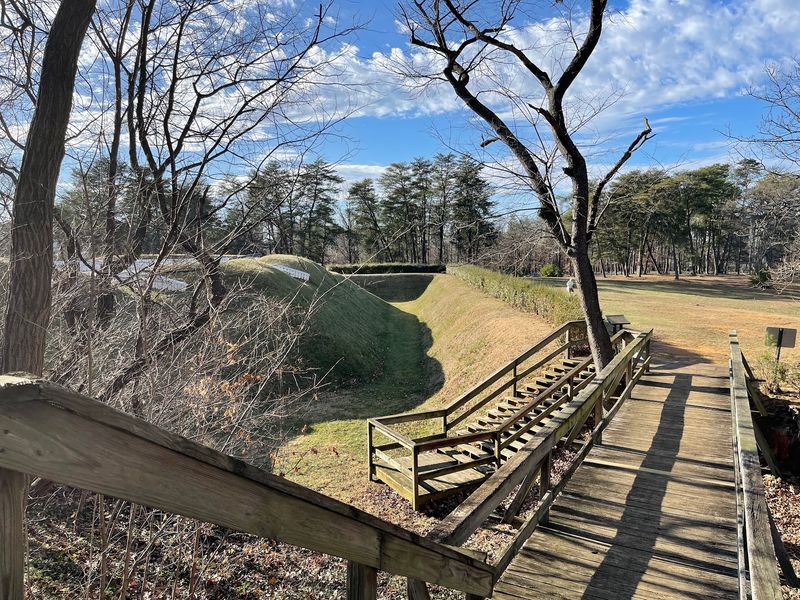
Beyond the cannons, the ground itself tells a story.
Around the fort, the outlines of old earthworks and an artillery trench area are still easy to spot. These features show how soldiers moved and protected themselves while staying ready for action.
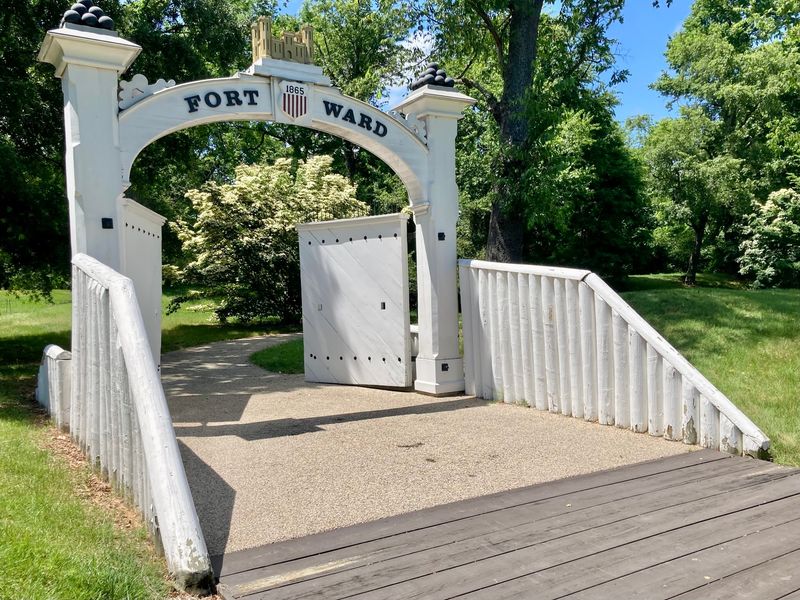
A reconstructed entrance gate gives the fort a proper front door. Historical signs placed around the grounds explain what each part was used for, so nobody has to guess.
The signs are short and easy to read. Families can stop at each one and turn the walk into a casual history lesson.
Here is a helpful tip. Follow the path in a full loop rather than heading straight to the bastion and back, since many small features are scattered around the edges.
The historic part of the park is not huge, yet it holds plenty of interesting stops. Most people can see the outdoor areas in under an hour, though curious minds may linger much longer.
Slow down, read closely, and the earth will start talking.
A Museum Dressed as Headquarters
From the outside, the museum looks like it could have been borrowed straight from an army camp.
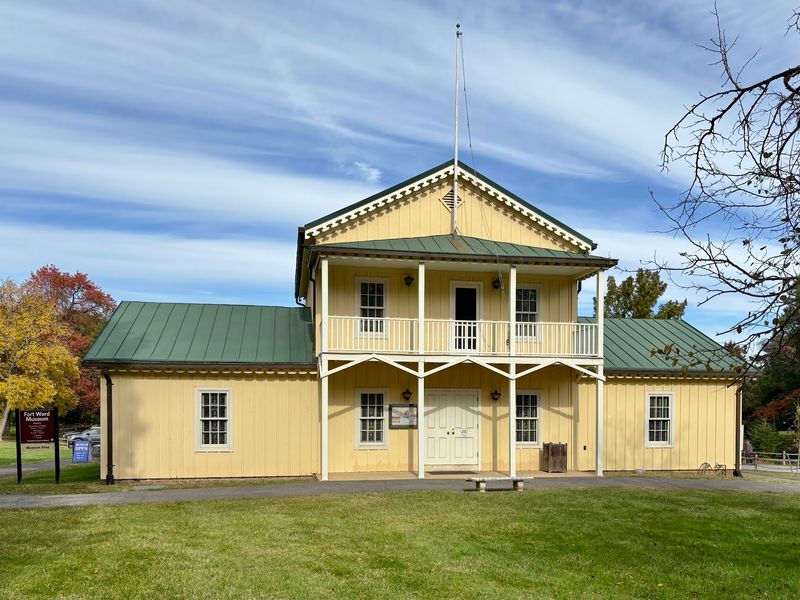
The building was designed to resemble a Union headquarters structure from the Civil War era. Inside, it packs a surprising amount into a small space.
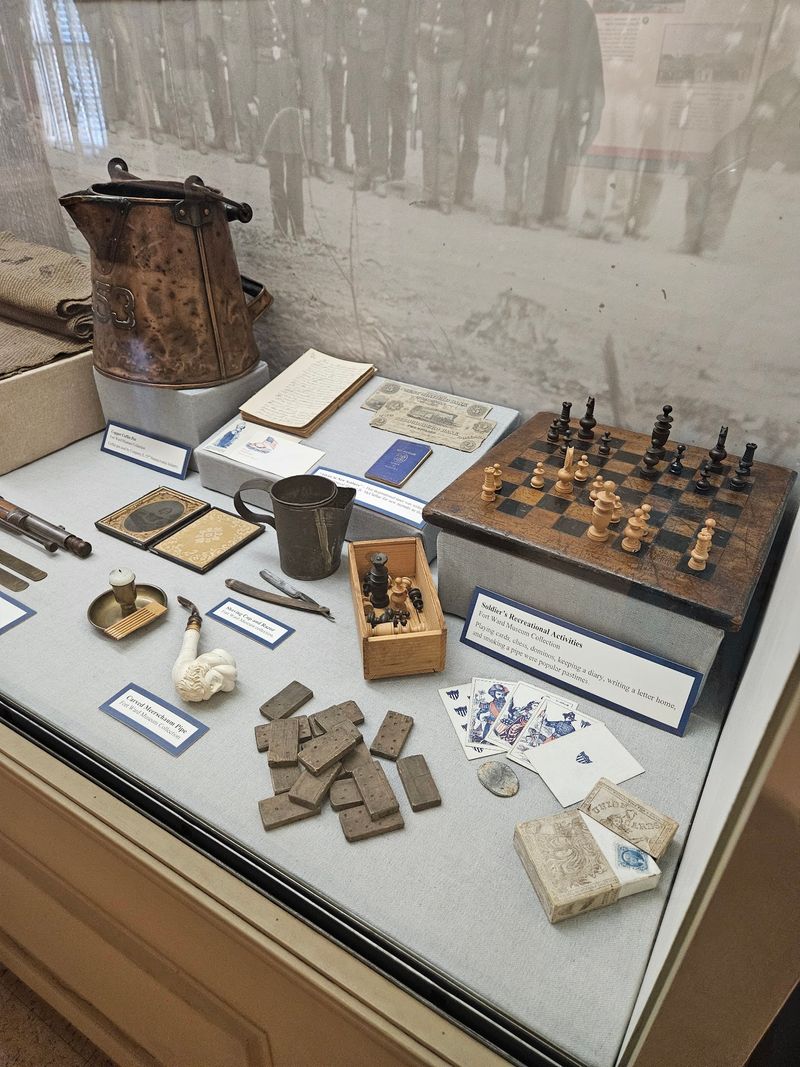
Exhibits cover life in the Defenses of Washington, the soldiers who served here, and the city of Alexandria during the war. Uniforms, weapons, letters, and everyday objects help show what life was like for regular people in hard times.
Photography is allowed, which is great for school projects or for remembering favorite pieces later. The staff members are friendly and very knowledgeable, so questions are welcome.
A small gift shop sits inside too. It is a nice place to grab a book about the war or a souvenir for a young history fan.
Many people find they need more time than they planned. Set aside at least an hour indoors, because this little building is a lot bigger on the inside than it seems.
Treasures Worth a Second Look
Some museum objects get a quick glance. Others make people stop in their tracks.
The collection at Fort Ward includes a well-known exhibit on Zouave soldiers, famous for their bold and unusual uniforms. Many history fans call it one of the strongest displays of its kind in the region.
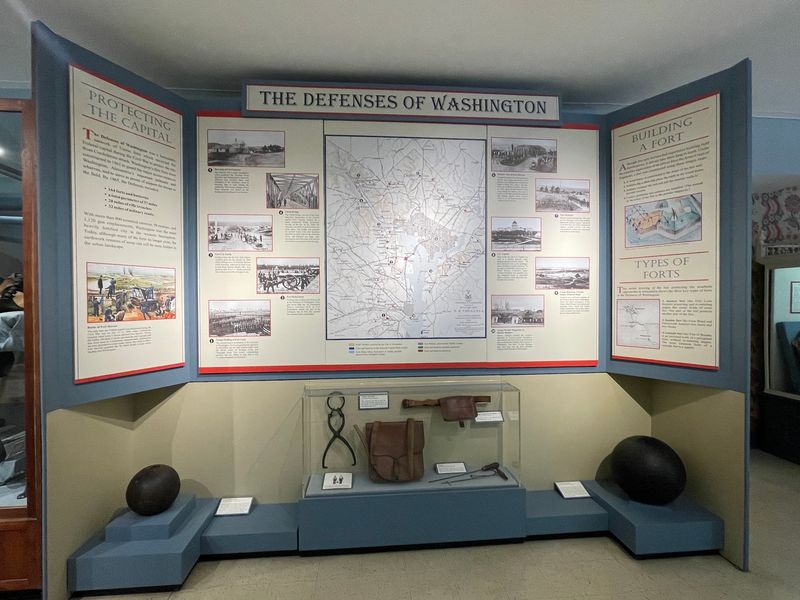
Another favorite is a huge picture showing the forts that once circled Washington. Seeing them all at once makes it clear how big the defense project really was.
Fun fact: there were dozens of forts and batteries around the capital during the war. Today, most have vanished, which makes this collection even more special.
Artifacts range from soldier gear to personal items that hint at daily routines and worries. Each case adds another piece to the puzzle.
A good approach is to pick two or three items and really study them. Read the labels, then ask a staff member for more details.
The best discoveries here often hide in the smallest display cases.
The Community Called The Fort
History did not stop when the war ended, and neither did life on this land.
After the Civil War, African American families settled on and around the old fort grounds. Their neighborhood became known simply as The Fort, and it lasted for decades.
People built homes, raised children, and formed churches and a school nearby. Their story is a powerful chapter about freedom, hard work, and building something lasting after slavery.
The park shares this history through signs and research. It adds a deeper layer to a visit that many people expect to be only about soldiers.
Some areas connected to this community are treated with special care. Guests are asked to stay respectful and follow posted guidance while exploring.
Learning about The Fort changes how the whole park feels. It reminds everyone that historic places belong to many generations, not just one moment.
Spend a few minutes with these signs, since they may end up being the most meaningful stop of the day.
Loops, Paws, and Picnic Tables
History buffs are not the only ones who show up here.
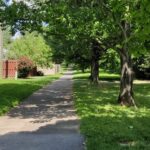
A paved loop runs through the park, and it doubles as a one-lane road. It is popular with walkers, joggers, and anyone looking to get some steps in between exhibits.
Dogs on leashes are welcome, and there are water spigots and bowls along the trail for thirsty pups. Spring is an especially pretty time for a stroll.
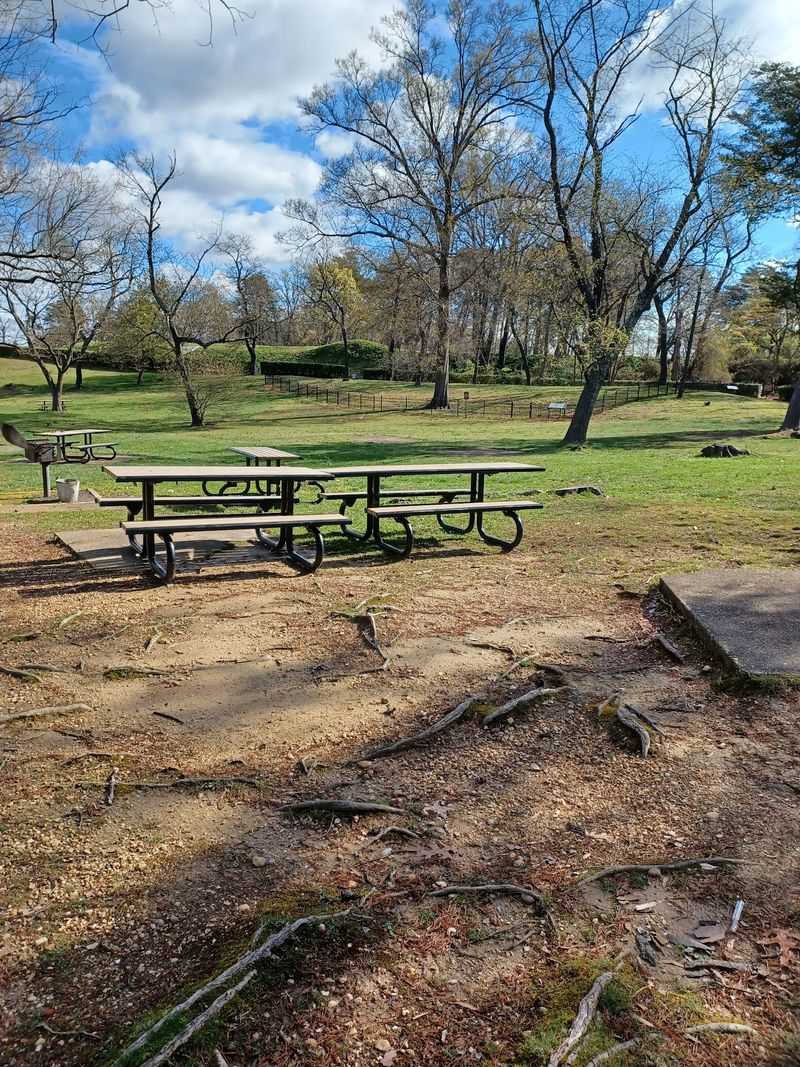
Shaded picnic tables, benches, and some grills make this a handy lunch spot. Covered tables can be reserved ahead of time, which is useful for family gatherings.
A playground keeps younger kids busy, and restrooms are available on site. Many local families plan birthday parties near the play area.
Here is a smart plan for the day. Tour the museum first, walk the fort next, then finish with a picnic and a lap around the loop.
It turns a quick history stop into a full afternoon that pleases almost everyone in the group.
Summer Nights at the Amphitheater
Not every event at this park involves cannons.
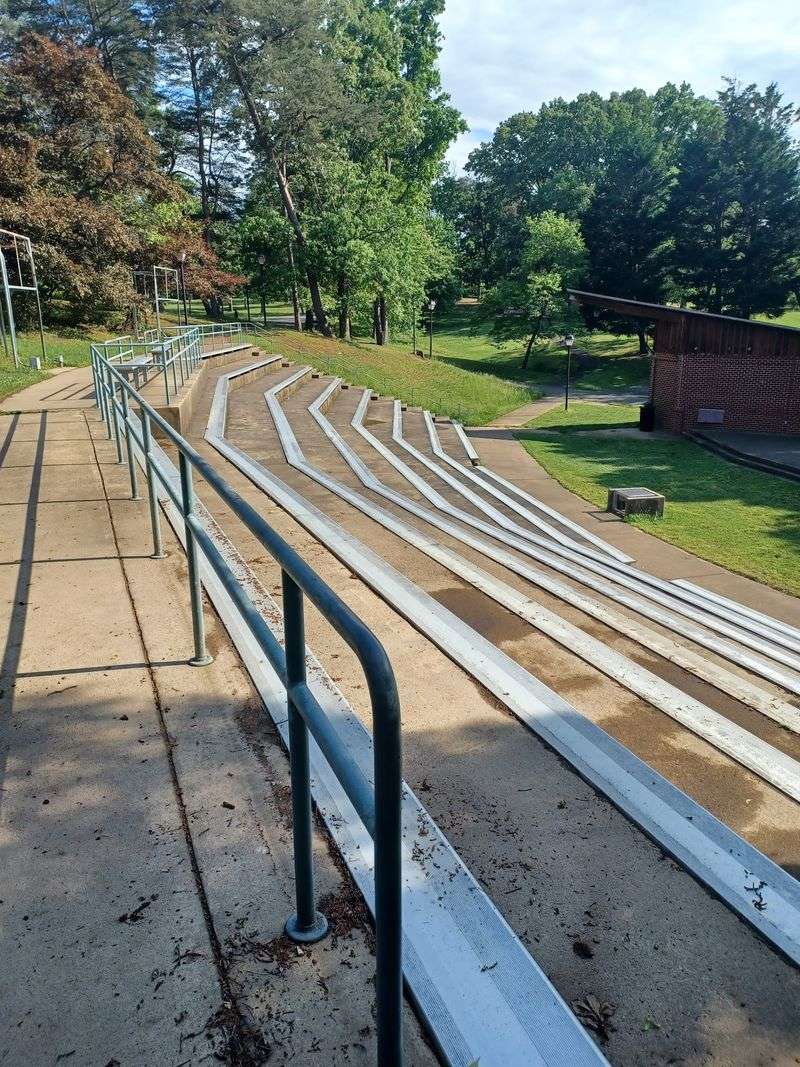
An outdoor amphitheater sits on the grounds, and it hosts concerts and performances during warmer months. The stage even has power outlets, which helps with community events and shows.
Bringing a blanket or lawn chair is a good idea. Seating is casual, and families often turn a show into a relaxed evening out.
The museum also offers interpretive programs throughout the year. These can include living history days, talks, and special activities connected to the Civil War era.
Program schedules change, so check the city website before making plans. Some events fill up quickly, especially on pleasant weekends.
These programs are a great way to meet the people who care for the site. Historians and guides often share stories that are not found on any sign.
A visit timed with a special event can feel completely different from a regular afternoon. Watch the calendar, and the park may surprise even repeat guests with something new.
Smart Timing for a Smooth Visit
A little planning goes a long way at this hilltop fort.
The museum keeps limited hours. It opens Thursday and Friday from 11 am to 4 pm, Saturday from 11 am to 5 pm, and Sunday from 1 to 5 pm, with Monday through Wednesday closed.
The park grounds can be explored beyond museum hours. Still, seeing both together makes the trip feel complete.
Late mornings on weekdays tend to be calm. Crowds often build after lunch, especially on sunny weekends.
There are two parking areas, including a second lot behind the museum reached by a small bridge. Accessibility upgrades have been made near the main fort gate, though some fort areas involve stairs.
Weather matters too. Snow and cold can make the outdoor fort harder to enjoy, while spring and fall are ideal.
Wrapping up, this free site rewards anyone who shows up curious. With a fort, a museum, and open green space all in one place, history here feels less like homework and more like a great day out.