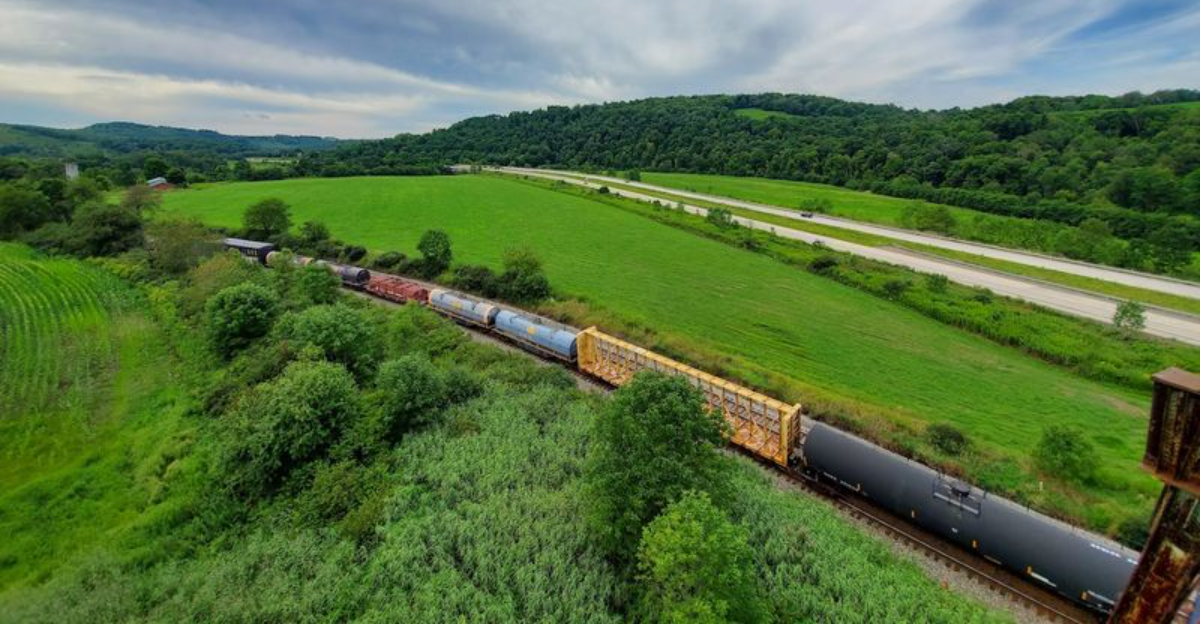
Stretching nearly 2,000 feet across a wide Pennsylvania valley, the Salisbury Viaduct is one of those places that stops cyclists dead in their tracks — in the best possible way.
Perched above the Casselman River Valley on the Great Allegheny Passage rail trail, this massive steel trestle delivers sweeping views that feel almost too dramatic for a bike ride.
Whether you are a history buff, a photography enthusiast, or just someone who loves a good adventure, this bridge has something special to offer.
Read on to discover everything that makes the Salisbury Viaduct one of Pennsylvania’s most unforgettable outdoor landmarks.
The Salisbury Viaduct at a Glance
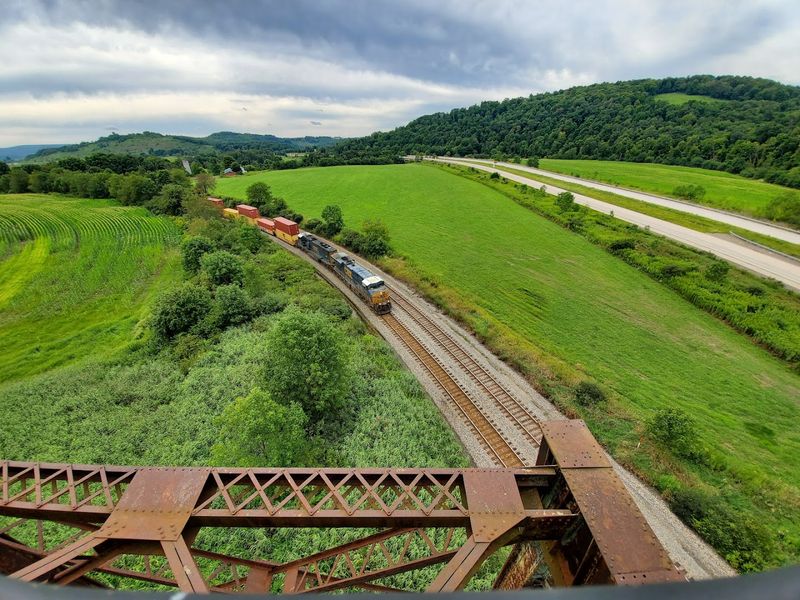
Standing at the edge of the Salisbury Viaduct for the first time, most people let out a slow whistle. At 1,908 feet long and rising about 101 feet above the Casselman River Valley, this steel trestle is not just big — it is jaw-dropping.
Numbers like these are hard to picture until you are actually standing on it, looking out across a wide, open valley with farmland stretching in every direction.
The viaduct holds the title of the longest bridge on the entire Great Allegheny Passage trail, which is itself one of the most celebrated rail trails in the United States. That distinction alone makes it worth a special trip.
But the bridge does not just win on size — it wins on sheer visual impact too.
The steel framework rises from the valley floor in a series of tall, evenly spaced towers that give the structure an almost industrial elegance. From below, it looks like something out of an old black-and-white photograph.
From above, standing on the wide trail deck, the views stretch so far that on a clear day you can practically see forever. Few bridges anywhere in Pennsylvania pack this much personality into a single crossing.
A Landmark Along the Great Allegheny Passage
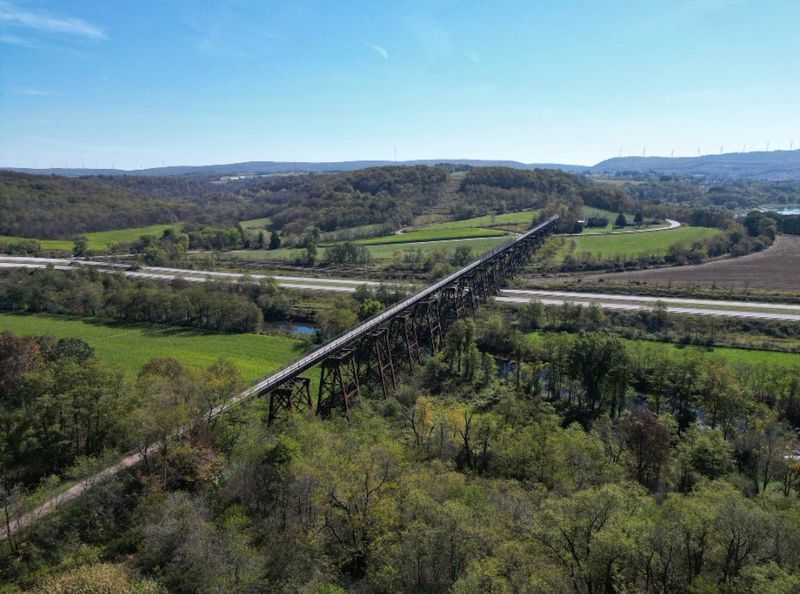
Not every trail has a landmark that people plan their entire trip around, but the Great Allegheny Passage does. The Salisbury Viaduct sits along one of the most beloved multi-use rail trails in the entire country — a 150-mile route connecting Pittsburgh, Pennsylvania to Cumberland, Maryland.
The trail follows historic railroad corridors, meaning riders get a mix of fascinating history and stunning natural scenery with every pedal stroke.
The GAP, as locals and trail regulars call it, attracts thousands of cyclists, hikers, and outdoor enthusiasts every year. Families, solo adventurers, and serious long-distance riders all share this route, drawn by the relatively flat grade and the constantly changing landscapes along the way.
The trail passes through river valleys, small towns, and forested ridges before eventually connecting with the C&O Canal Towpath heading south toward Washington, D.C.
The viaduct is arguably the single most talked-about feature on the entire trail. Ask any experienced GAP rider what they remember most, and there is a very good chance the Salisbury Viaduct comes up within the first few sentences.
It is the kind of trail feature that earns its own reputation, drawing people back season after season just to experience that open-sky crossing one more time.
Built for the Western Maryland Railway
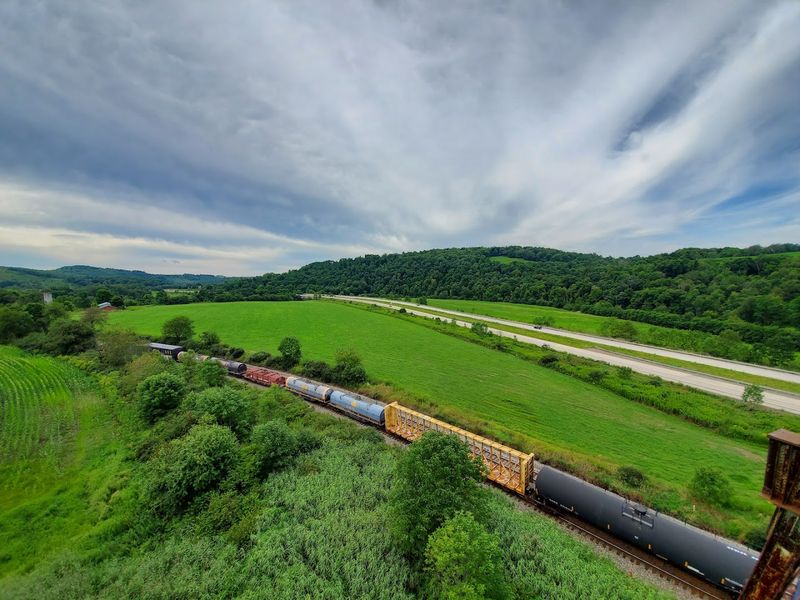
Before cyclists and hikers ever set foot on the Salisbury Viaduct, it was built for something far heavier — steam-powered freight trains. The bridge was constructed as part of the Western Maryland Railway’s Connellsville Extension, a line designed to push deeper into western Pennsylvania’s coal and timber country.
Railroad companies in the early 1900s were aggressively expanding their networks, and crossing deep valleys required bold engineering solutions.
The Western Maryland Railway was known for tackling tough terrain. This line in particular had to navigate the rugged ridges and valleys of the Allegheny Mountains, where a long, elevated crossing was not optional — it was the only practical way through.
Engineers had to design a structure sturdy enough to handle the enormous weight of loaded coal trains while also standing up to decades of weather and use.
That railroad heritage is still visible today if you know what to look for. The wide deck of the viaduct, the heavy steel construction, and the sheer scale of the structure all reflect its origins as a working railroad bridge rather than a recreational one.
Riding across it today, you can almost hear the ghost of a steam whistle echoing across the valley — a reminder of how powerfully this bridge shaped the region’s industrial history.
Completed in 1912 After Major Engineering Effort
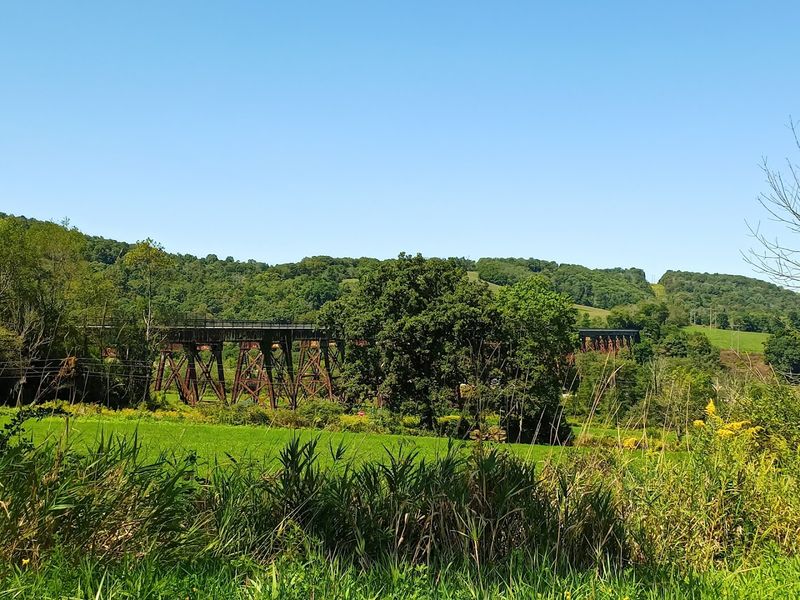
Finishing a bridge like the Salisbury Viaduct was no small achievement in 1912. Construction in that era meant doing everything without modern machinery, computer modeling, or the safety standards that workers rely on today.
Steel had to be hauled in, lifted by steam-powered cranes, and assembled piece by piece by crews working at dangerous heights above the valley floor. Getting it done at all was an accomplishment worth celebrating.
The completion of the viaduct in 1912 placed it firmly in the golden age of American railroad construction, a period when engineers were pushing the limits of what steel and ambition could accomplish. Bridges like this one were symbols of progress — proof that no valley was too wide and no ridge too steep to stop the march of the railroads westward.
More than a century later, that engineering achievement still stands. The structure has survived two World Wars, the collapse of the coal industry, decades of abandonment, and a complete change of purpose.
For a bridge that was never meant to carry bicycles and hiking boots, it has adapted remarkably well. Civil engineers who visit the trail today often stop to appreciate the craftsmanship built into every rivet and beam — a legacy of the workers who finished this remarkable structure over 110 years ago.
Designed for Expansion That Never Came
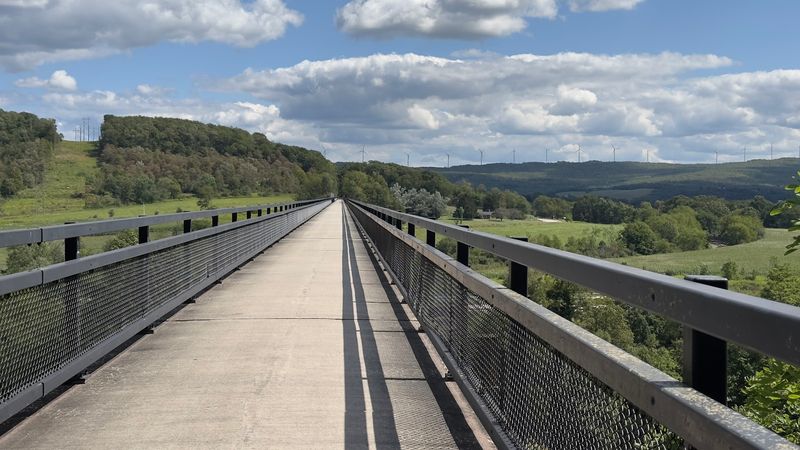
Here is a fun detail that most trail riders never notice: the Salisbury Viaduct was built wide enough to carry two railroad tracks side by side. Railroad companies in the early 1900s often planned for growth, expecting that a busy line would eventually need double-track capacity to handle increasing traffic.
So engineers built the structure with room to expand — and then the second track never arrived.
Only a single track was ever installed across the bridge, leaving a structure that was always a little bigger than its actual job required. In railroad terms, that kind of over-engineering was not unusual for the era.
Companies were flush with optimism about future freight volumes, and building extra capacity upfront was seen as smart long-term planning. The coal boom that everyone expected, however, did not last forever.
Today, that extra width is part of what makes the viaduct such a pleasant crossing for trail users. The deck feels spacious and open, with plenty of room for cyclists heading in both directions, walkers pausing to take photos, and the occasional group stopping to soak in the view.
What was once a railroad planning decision made over a century ago has turned into a surprisingly nice perk for modern outdoor recreation enthusiasts exploring the GAP.
A Difficult and Dangerous Construction History
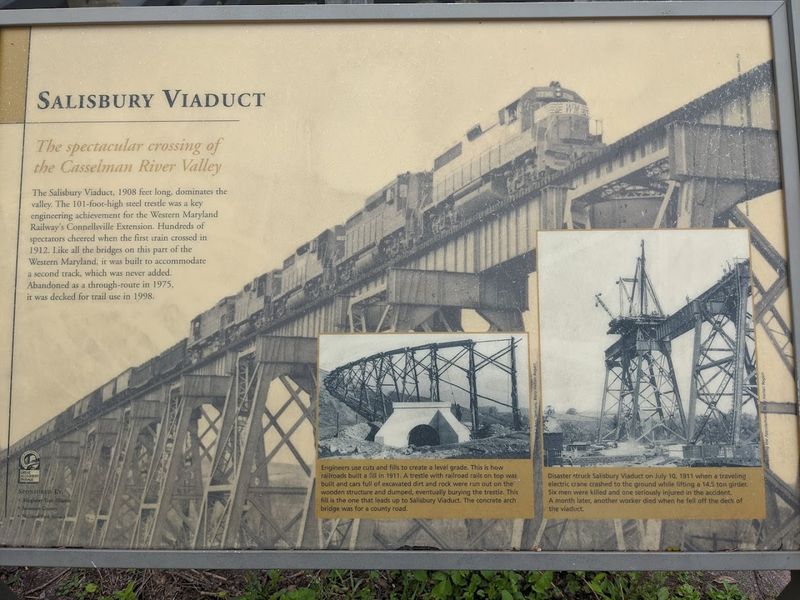
Building the Salisbury Viaduct was not just difficult — it was deadly. During construction in 1911, the project was struck by multiple tragedies, including crane failures and accidents that claimed the lives of workers on the job.
These men were laboring at extreme heights with equipment that was far less reliable than today’s standards, and the consequences of mechanical failure were catastrophic.
Worker safety in the early 1900s was a grim reality. There were no hard hats, no fall harnesses, and no federal safety regulations protecting men on construction sites.
Laborers who took these jobs understood the risk, but they needed the work, and railroad companies were not always quick to slow down production for safety concerns. The Salisbury Viaduct’s construction history is a sobering reminder of the human cost behind many of America’s great engineering landmarks.
Remembering those workers adds a layer of weight to crossing the bridge today. Every rivet and steel beam represents not just engineering skill but also the physical labor and personal sacrifice of men whose names most history books never recorded.
Next time you roll across the viaduct on your bike and pause to admire the view, it is worth taking a quiet moment to acknowledge the people who built this remarkable structure — and the price some of them paid to do it.
Abandoned Rail Line Turned Recreational Trail
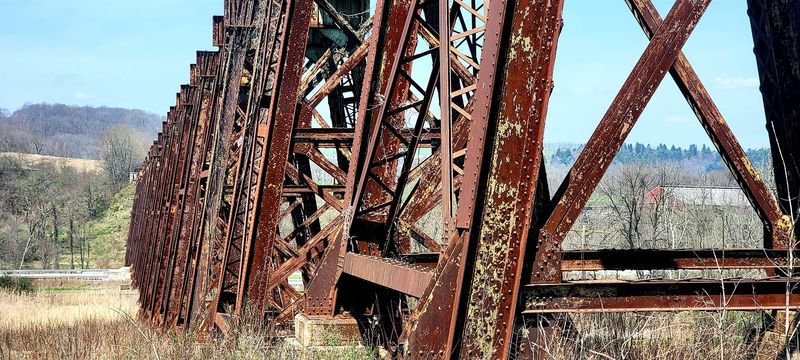
After the Western Maryland Railway shut down operations on this line in 1975, the Salisbury Viaduct sat quiet for years. Abandoned railroad infrastructure often falls into disrepair quickly, and many historic bridges from this era were demolished rather than preserved.
The viaduct was lucky — it survived the abandonment period and eventually found a second life that its original builders never could have imagined.
The rail-trail conversion movement gained serious momentum in the United States during the 1980s and 1990s, turning unused railroad corridors into public recreational paths. The Great Allegheny Passage was one of the most ambitious projects of this kind, requiring cooperation between multiple trail organizations, local governments, and state agencies to stitch together a continuous 150-mile route.
The Salisbury Viaduct was officially reopened for public use in 1998, welcoming a whole new generation of visitors.
That transformation from working railroad to beloved recreation trail is one of the great success stories in American trail history. What was once a route for coal-hauling freight trains is now a path where families bike together, solo riders find peace, and photographers chase the perfect light.
The viaduct did not just survive its abandonment — it came back better, serving far more people today than it ever did as a railroad bridge.
A Signature Photo Spot on the GAP
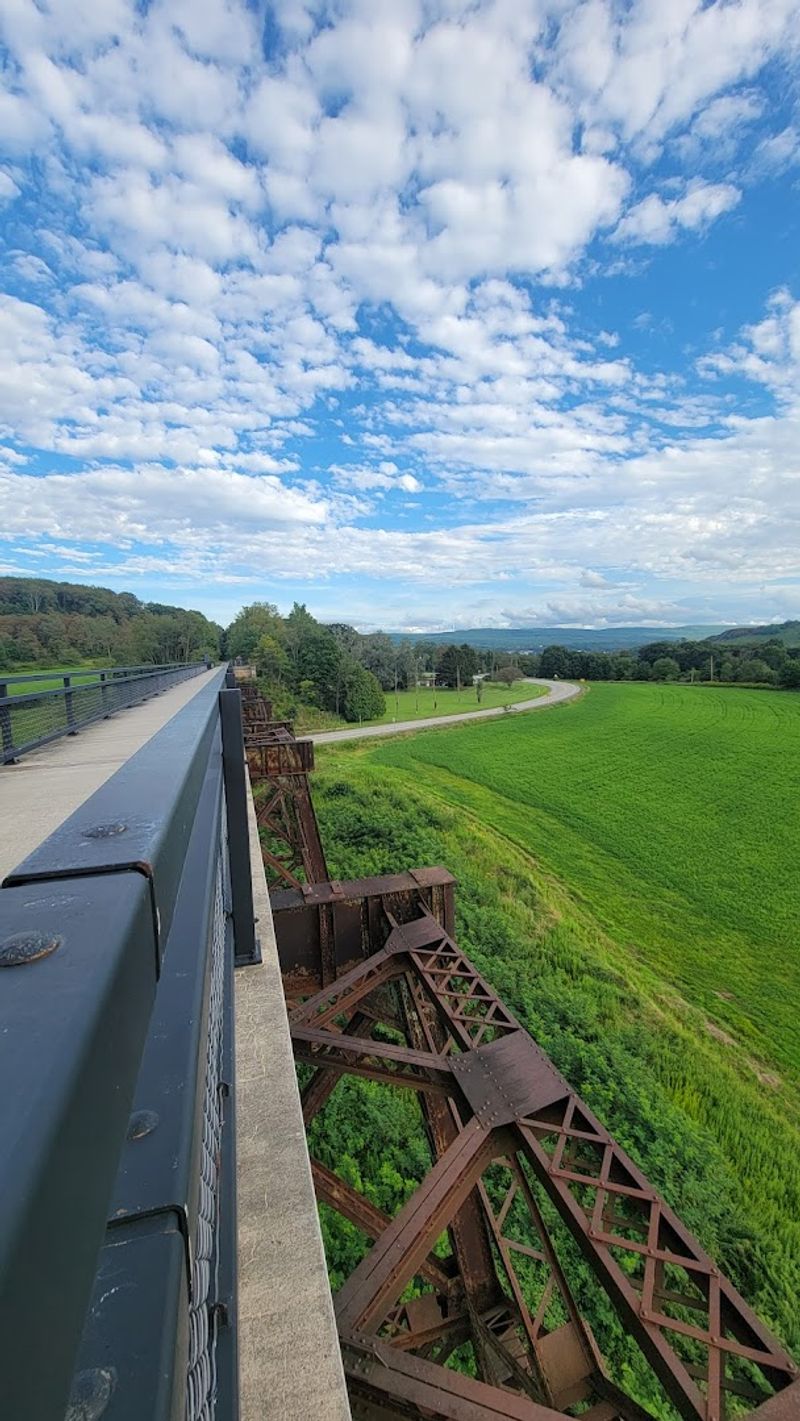
Ask any photographer who has ridden the Great Allegheny Passage where they got their best shot, and the Salisbury Viaduct will almost certainly come up. The bridge offers something that most trail features simply cannot match: a wide-open, elevated platform with 360-degree views of the surrounding landscape.
Farmland, forests, and the winding Casselman River Valley all spread out below in a panorama that practically begs to be photographed.
The lack of trees on the bridge deck means there is nothing blocking your sightlines in any direction. Most rail trails run through forested corridors where the canopy closes in overhead and views are limited to whatever peeks through the gaps.
On the viaduct, all of that changes instantly. The moment you roll out onto the steel deck, the world opens up around you in a way that feels genuinely surprising every single time.
Smartphone photographers and serious camera enthusiasts alike find endless opportunities here. Wide-angle shots capture the full sweep of the valley.
Close-up details of the steel framework create striking geometric compositions. And portrait shots with the valley in the background give riders a dramatic backdrop that no flat trail section could ever replicate.
If you are only going to stop once on your GAP ride, make it here — your camera roll will thank you.
Seasonal Beauty: Sunrise, Fog, and Fall Colors
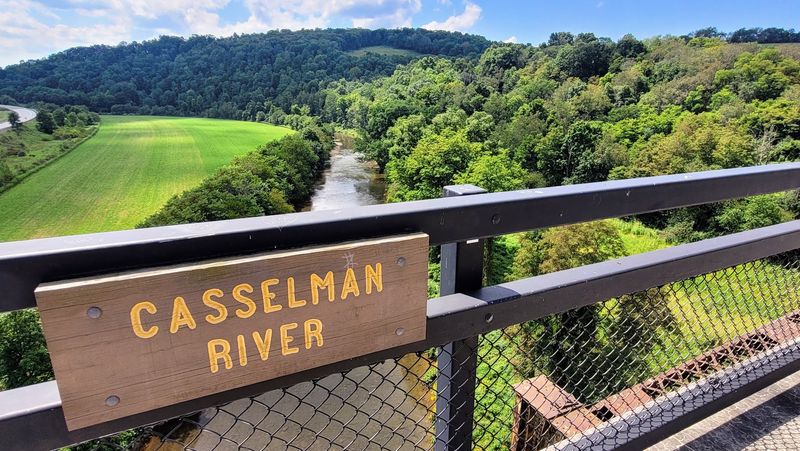
If you have only seen the Salisbury Viaduct on a clear summer afternoon, you have not seen its full range. The bridge transforms dramatically with the seasons, and certain times of year turn an already beautiful crossing into something genuinely breathtaking.
Fall is the most popular season for a reason — the valley fills with orange, red, and gold foliage, and the elevated vantage point puts you right in the middle of the color show.
Misty mornings are another favorite among photographers and early-rising cyclists. When fog settles into the Casselman River Valley below, the bridge appears to float above a soft white sea of clouds.
The steel towers disappear into the mist, and the views take on an almost dreamlike quality that no filter app can fully replicate. Getting out there early enough to catch that light requires setting an alarm, but the reward is absolutely worth the effort.
Sunrise rides across the viaduct are in a category all their own. The low-angle light catches the steel structure and turns the valley below into a glowing patchwork of color and shadow.
Serious landscape photographers sometimes plan entire trips around catching the bridge at golden hour. Even casual riders who happen to be on the trail at the right moment often describe it as one of the most beautiful things they have ever seen from the seat of a bicycle.
Easy Access Near Meyersdale, Pennsylvania
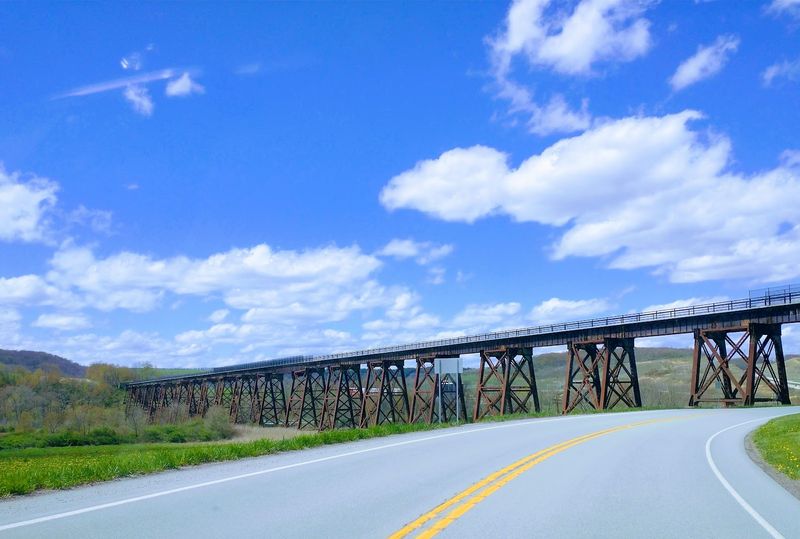
One of the best things about the Salisbury Viaduct is how easy it is to reach. Located just a few miles west of Meyersdale, Pennsylvania, the bridge is accessible from several GAP trailheads in the area.
Meyersdale itself is a charming small town that has embraced its role as a trail community, offering amenities that make it a natural base for anyone planning a viaduct visit.
The Meyersdale Historical Society area provides a convenient starting point with parking nearby, making it easy for day-trippers to hop on the trail and reach the viaduct without a long drive or complicated logistics. The trail surface between town and the bridge is well-maintained and relatively easy to navigate, suitable for riders of most experience levels.
Families with younger children, casual cyclists, and first-time GAP visitors all find the route approachable.
After crossing the viaduct, many visitors head into Meyersdale to grab a meal, browse local shops, or learn more about the area’s railroad history at the restored Western Maryland Railway Station. The town has put real effort into welcoming trail users, and that hospitality shows.
Planning a day around the viaduct and Meyersdale together makes for a well-rounded outing that combines outdoor adventure, local history, and small-town Pennsylvania charm in one satisfying package.