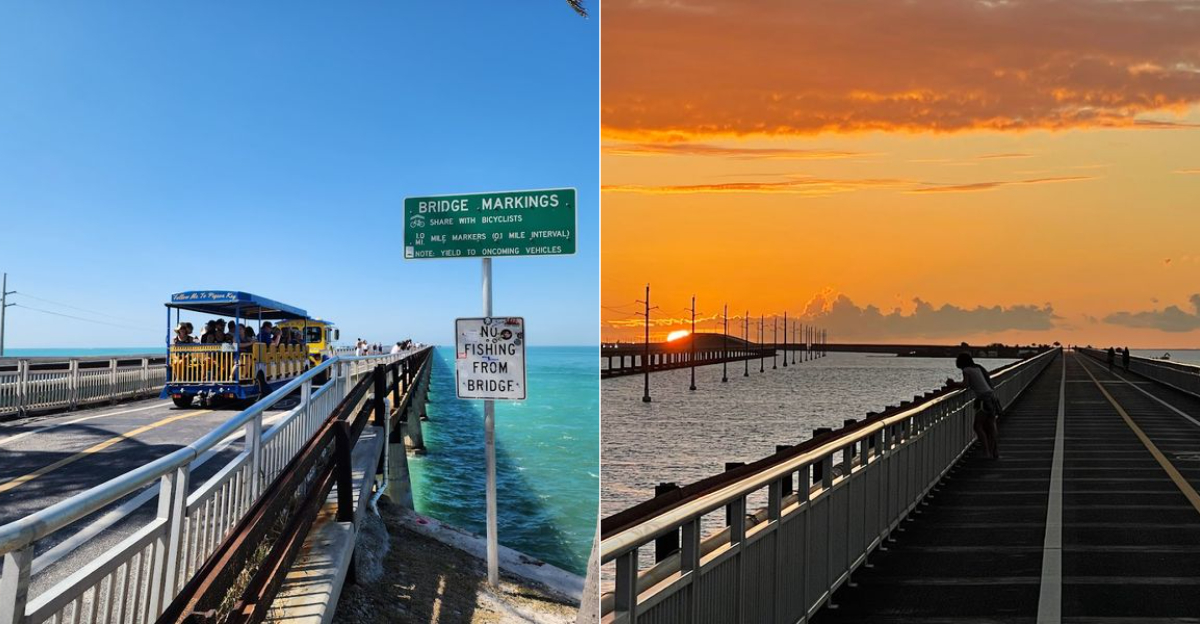
Stretching across the shimmering blue waters of the Florida Keys, the Seven Mile Bridge is one of the most jaw-dropping drives in all of America. Right beside it sits the Old Seven Mile Bridge, a historic relic from 1912 that was once part of Henry Flagler’s legendary railroad and has since been transformed into a pedestrian and biking trail.
Together, these two iconic spans offer visitors a rare chance to experience open ocean from above, whether cruising in a car or pedaling a bike with nothing but water on every side. If you are heading to the Keys and want an unforgettable adventure, this is a stop you absolutely cannot skip.
The History Behind the Old Seven Mile Bridge
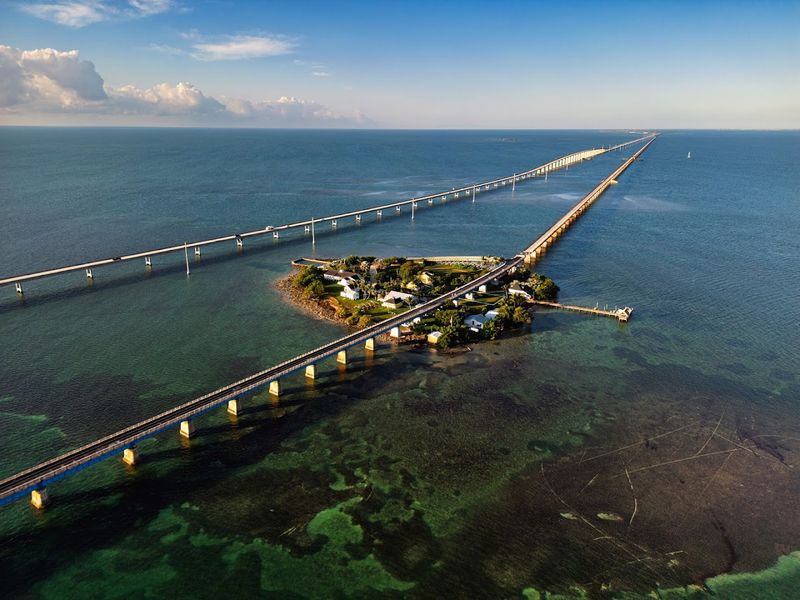
Few bridges in America carry as much history as the Old Seven Mile Bridge. Built as part of Henry Flagler’s ambitious Florida East Coast Railway extension, it was completed in 1912 and considered an engineering marvel of its era.
Workers battled brutal heat, hurricanes, and open-ocean conditions to make Flagler’s dream of connecting Miami to Key West a reality.
After a devastating 1935 hurricane destroyed much of the railroad, the bridge was repurposed into a roadway called the Overseas Highway. For decades, cars and trucks rolled across the same structure that once carried steam locomotives over the Gulf of Mexico and Atlantic Ocean.
That alone is a remarkable piece of American transportation history.
When the modern Seven Mile Bridge opened in 1982, the old span was retired from vehicle traffic. After years of restoration efforts and millions of dollars raised, it reopened as a pedestrian and cycling trail.
Today, visitors can walk or bike about two miles out to Pigeon Key, enjoying the same open-ocean views that railroad workers and early road travelers once experienced. Standing on its weathered concrete, you can almost hear echoes of the past drifting up from the water below.
Biking the Old Seven Mile Bridge Trail
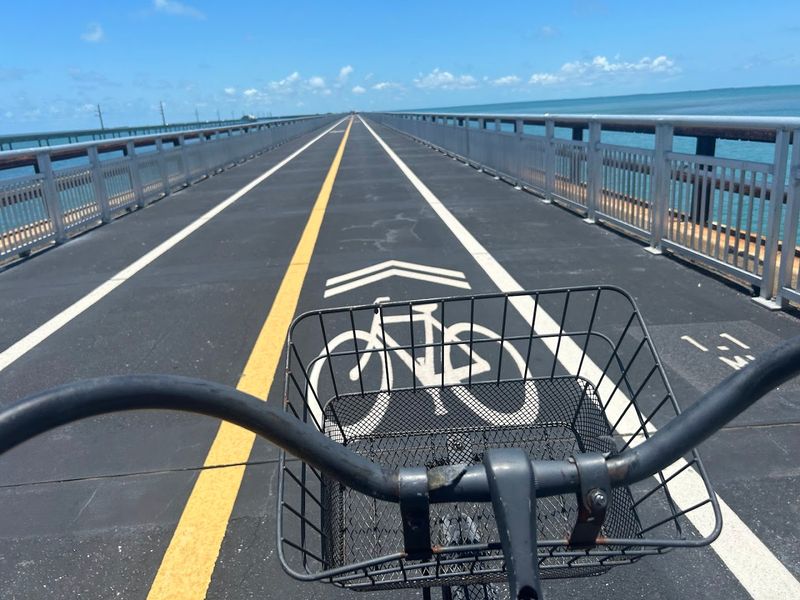
Renting a bike and pedaling out onto the Old Seven Mile Bridge is genuinely one of the coolest things you can do in the Florida Keys. The trail runs about two miles one way from the Marathon trailhead out to Pigeon Key, making for a four-mile round trip that most people can comfortably finish in about an hour.
The path is well-paved, wide enough for passing, and lined with incredible ocean views the entire way.
Locals and visitors alike rave about the experience. Several bike rental shops near the trailhead offer options ranging from standard cruisers to electric bikes, which are a smart choice if you want to cover the distance without breaking too much of a sweat in the Florida heat.
Just be sure to inspect your rental before heading out, checking brakes and seat stability, since some bikes see heavy daily use.
Sunrise and sunset rides are especially magical here. The light bounces off both the Gulf side and the Atlantic side simultaneously, painting the sky in shades of orange and pink.
Bring a water bottle, slap on sunscreen generously, and consider polarized sunglasses to cut through the ocean glare. This ride is worth every pedal stroke.
The Modern Seven Mile Bridge Drive
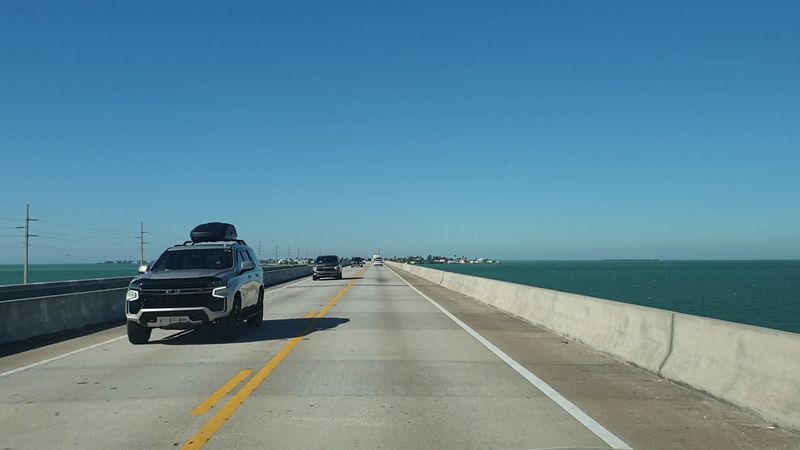
Driving across the modern Seven Mile Bridge is one of those experiences that makes you grip the steering wheel and grin at the same time. Opened in 1982, this four-lane highway spans approximately 6.79 miles over the open waters between Knight’s Key and Little Duck Key.
On both sides, the ocean stretches endlessly to the horizon, giving drivers the surreal feeling of gliding across the surface of the sea.
The bridge replaced the old railroad span and was designed to handle the growing traffic demands of the Florida Keys. Engineers built it higher off the water than its predecessor, allowing larger vessels to pass underneath without issue.
Today, it carries US Highway 1, the famous road that stretches all the way from Key West to Fort Kent, Maine, making this bridge a small but iconic piece of that legendary route.
Pulling over at the designated rest area before the bridge begins gives you a perfect photo opportunity with both the old and new bridges visible side by side. Many travelers stop here to soak in the view before crossing.
Whether you are heading toward Key West or returning toward Miami, driving this bridge never gets old, no matter how many times you have done it.
Wildlife Watching From the Bridge
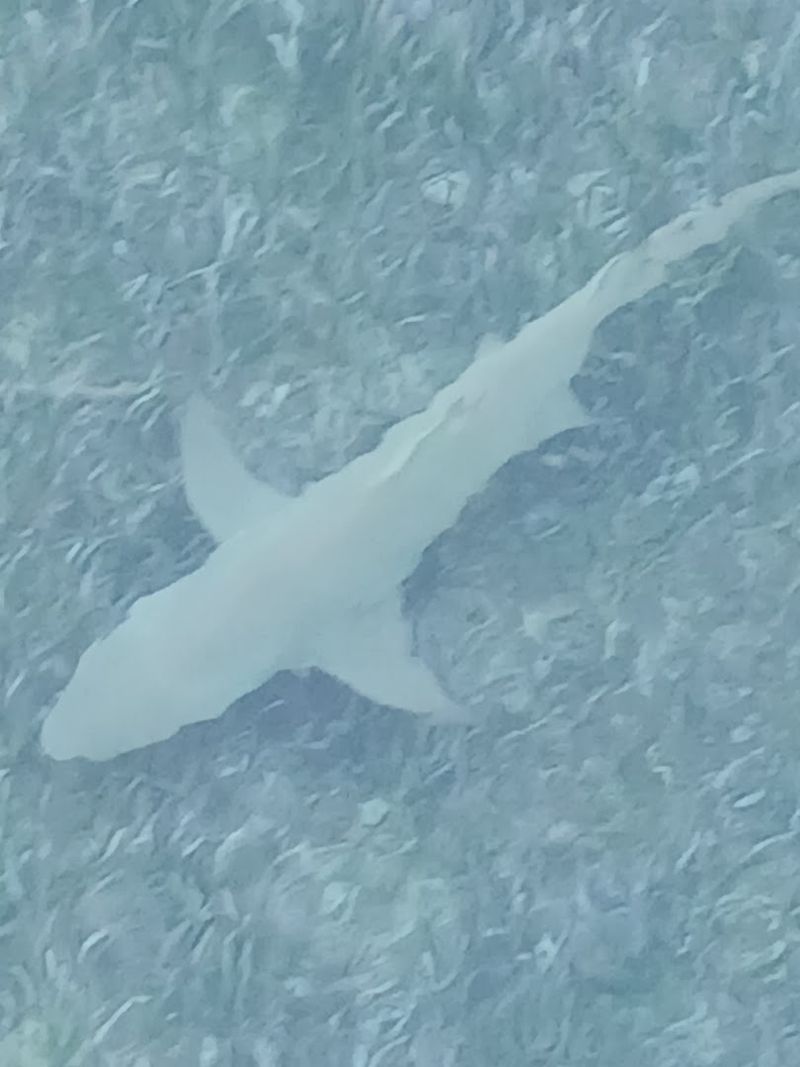
One of the biggest surprises for first-time visitors to the Old Seven Mile Bridge is just how much wildlife you can spot from up top. The water around the bridge is remarkably clear on calm days, and if you take your time and look down, you might catch glimpses of spotted eagle rays gliding gracefully beneath the surface.
These creatures, with their wide spotted wings and long tails, are absolutely stunning to watch from above.
Sea turtles are another common sighting, often floating lazily near the surface or paddling steadily through the current. Nurse sharks, which are harmless bottom-dwellers, can sometimes be seen resting in the shallower sandy areas.
Barracuda and grouper also cruise the bridge pilings, taking advantage of the structure as a feeding ground. Pelicans are practically everywhere, perching on railings and swooping dramatically into the water after fish.
Polarized sunglasses are a must if you want to see through the surface glare and spot marine life below. Early morning visits tend to offer the clearest water conditions before afternoon winds stir things up.
Bring binoculars if you have them. Whether you are a seasoned naturalist or just someone who loves cool animals, the wildlife around these bridges will not disappoint you at all.
Pigeon Key: The Hidden Gem at the End of the Trail
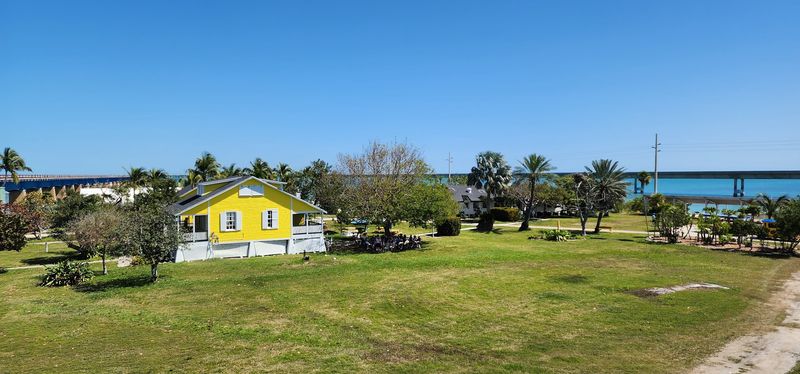
At the far end of the Old Seven Mile Bridge trail sits Pigeon Key, a tiny five-acre island that carries enormous historical significance. During the construction of Flagler’s railroad in the early 1900s, this little island served as a worker camp housing hundreds of laborers who built the original bridge.
Several of the original wooden structures from that era still stand today, preserved as part of a small but fascinating museum.
Visiting Pigeon Key feels like stepping into a different time. The Pigeon Key Foundation operates the historic site and offers guided tours that walk visitors through the island’s past, explaining what daily life was like for the workers who literally built one of America’s greatest engineering achievements while surrounded by open ocean.
The museum is compact but thoughtfully curated, with photographs, artifacts, and personal stories that bring the history to life.
Many cyclists and walkers who make the two-mile trek out to Pigeon Key spend time exploring the island before heading back. You can also reach the island by ferry from the Knight’s Key end of the bridge if biking is not your thing.
Either way, skipping Pigeon Key would mean missing the most historically rich part of this entire Seven Mile Bridge experience. It is absolutely worth the extra stop.
Sunrise and Sunset Views That Will Take Your Breath Away
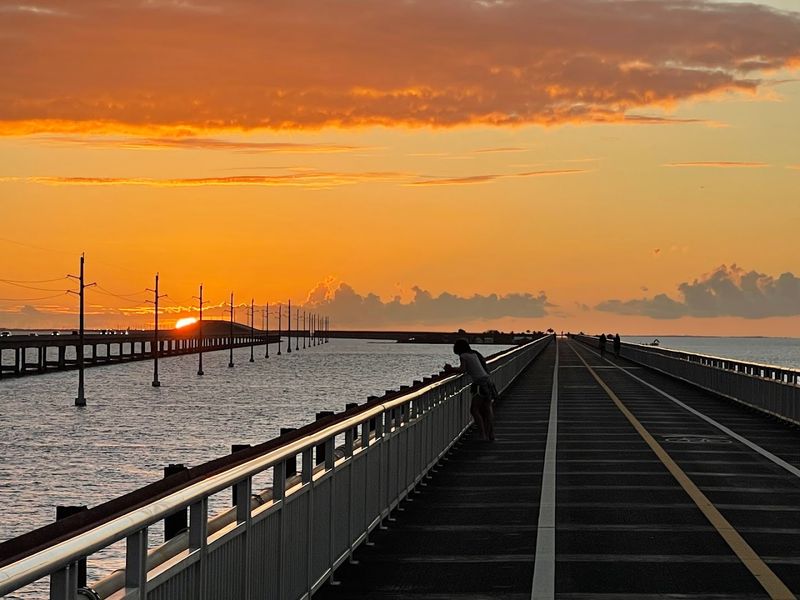
Locals who live near the Seven Mile Bridge area will tell you the same thing without hesitation: get out there early for sunrise, or time your ride for golden hour before sunset. Both experiences are genuinely extraordinary.
When the sun rises over the Atlantic side, it casts a warm golden glow across the water that makes the whole bridge feel like it is floating inside a painting. The light changes minute by minute, and no two mornings look exactly alike.
Sunset is equally spectacular. At certain times of year, the sun drops almost perfectly between the old and new bridges when viewed from the Marathon shoreline, creating a dramatic framing effect that photographers absolutely love.
Reviewers consistently mention sunset as one of the highlights of their visit, and it is easy to understand why once you are standing out there with water glowing orange on both sides of you.
Arriving early is key for securing parking, especially during peak tourist season between December and April. The main parking area near the Marathon trailhead fills up quickly on weekends.
Weekday mornings offer a quieter, more personal experience with the bridge nearly to yourself. Pack a light jacket for early morning rides since the ocean breeze can be surprisingly cool, even in Florida winters.
FRED the Tree: The Bridge’s Quirky Beloved Landmark
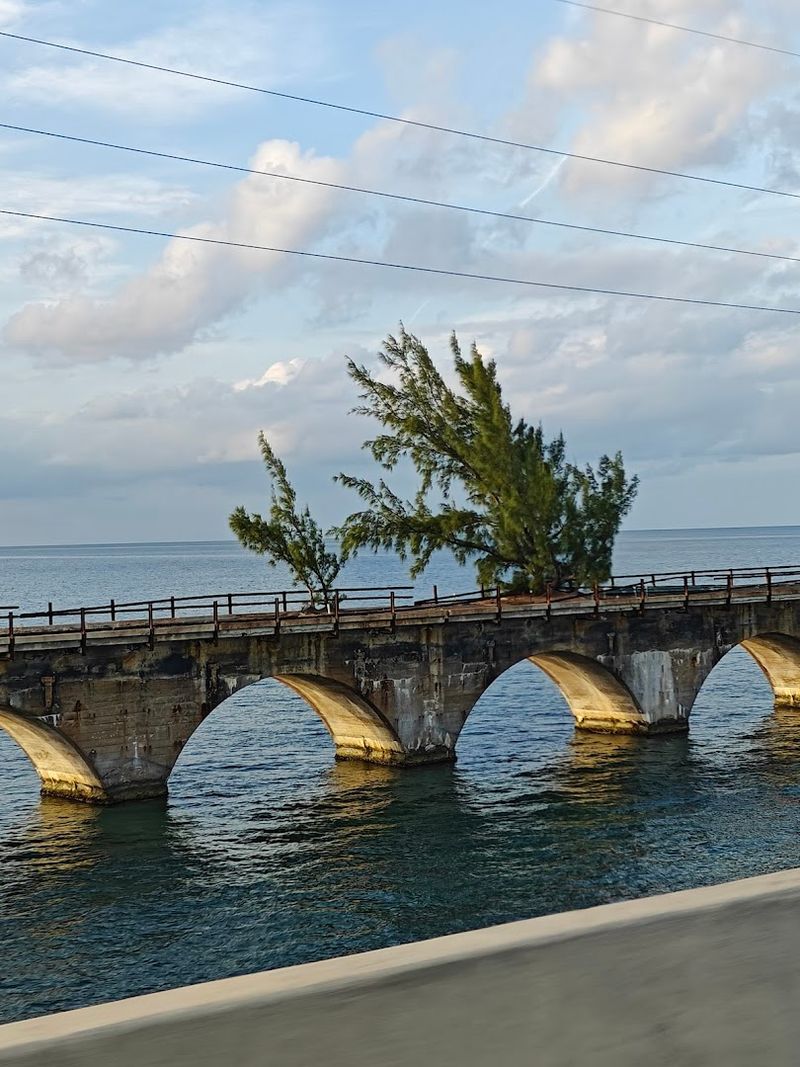
Halfway across the Old Seven Mile Bridge, you will find something completely unexpected: a small, scrubby tree growing right out of the concrete bridge surface. Locals and regular visitors have named this little survivor FRED, and spotting him has become something of a tradition for everyone who makes the trek out onto the trail.
Nobody planted FRED. He just showed up one day and decided this bridge was home.
FRED has developed a surprising fan following over the years. Visitors take selfies with him, mention him in online reviews, and genuinely seem delighted by his stubborn existence in the middle of the ocean.
There is something wonderfully charming about a single tree thriving in such an unlikely spot, rooted in concrete with salt air and ocean wind as his constant companions. He is a small symbol of resilience that somehow fits perfectly with the spirit of the Keys.
Keep an eye out for FRED as you approach the halfway point of your walk or bike ride. He is easy to spot since there is literally nothing else growing on the bridge.
Stop, take a photo, and appreciate this quirky little character who has made himself completely at home in one of Florida’s most unique settings. FRED is proof that nature finds a way, even on a century-old concrete bridge over the ocean.
Practical Tips for Visiting the Old Seven Mile Bridge
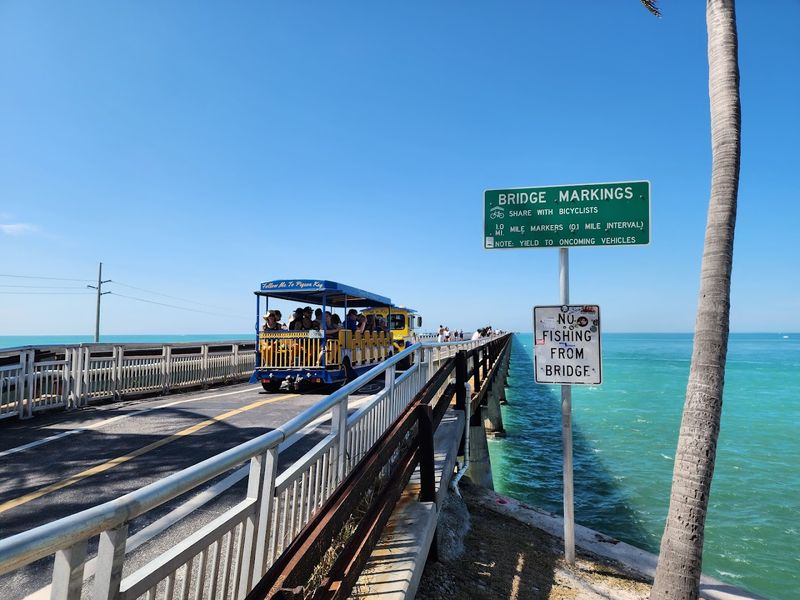
Planning your visit to the Old Seven Mile Bridge the right way makes a huge difference in how much you enjoy the experience. Parking is free and located right off US-1 before the bridge begins on the Marathon side.
The lot holds around 20 or more vehicles, and overflow parking is available across the road. Arriving before 9 a.m. on weekends almost guarantees you a spot without any stress.
Sunscreen is non-negotiable here. There is zero shade on the bridge, and the Florida sun reflecting off the water intensifies the UV exposure significantly.
Pack more sunscreen than you think you need, bring a hat, and wear lightweight clothing that covers your shoulders if you burn easily. Hydration is equally important since the salty ocean breeze can dehydrate you faster than you expect, especially during warmer months from April through October.
Trash cans are placed every 0.2 miles along the trail, so keeping the bridge clean is easy and expected. The trail is open 24 hours a day, seven days a week, and admission is completely free.
Comfortable walking shoes or proper cycling shoes make the trip far more enjoyable than sandals. Bring polarized sunglasses for wildlife spotting, and consider a small backpack for water, snacks, and camera gear.
You will want photos of everything.
Fishing and Recreation Along the Bridge
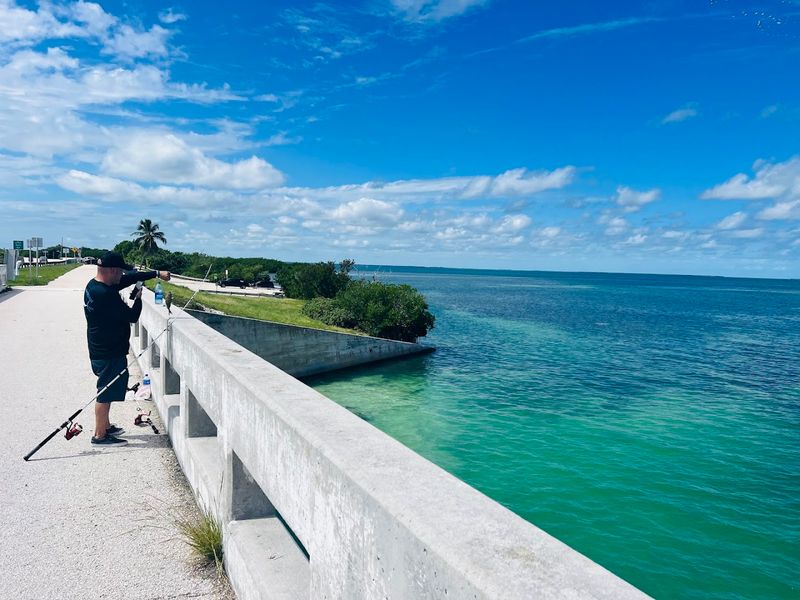
The waters surrounding the Seven Mile Bridge area are legendary among anglers throughout Florida. Fishing from the Old Seven Mile Bridge is a popular activity, and for good reason.
The bridge pilings attract a remarkable variety of fish species, including snapper, tarpon, permit, and barracuda. Bait fishing is especially productive here, and many locals make regular early morning trips to their favorite spots along the old span.
Beyond fishing, the broader area around the bridges offers kayaking and paddleboarding opportunities in the calmer bays on the Gulf side. The shallow flats near the bridge are prime habitat for bonefish and permit, making this stretch of water a destination for serious fly fishermen who come from around the world specifically to wade these flats.
Several outfitters in Marathon offer guided fishing charters that target the waters around the Seven Mile Bridge area.
Swimmers and snorkelers occasionally explore the shallower areas near the bridge base, though strong currents in certain spots require caution and experience. The marine ecosystem supported by the bridge structure is genuinely rich, with coral growth on the pilings providing habitat for colorful reef fish.
Whether you fish, paddle, snorkel, or simply watch others doing all of the above, the recreational possibilities around these two bridges are endlessly entertaining and always rewarding.
Why the Seven Mile Bridge Area Belongs on Every Florida Keys Itinerary
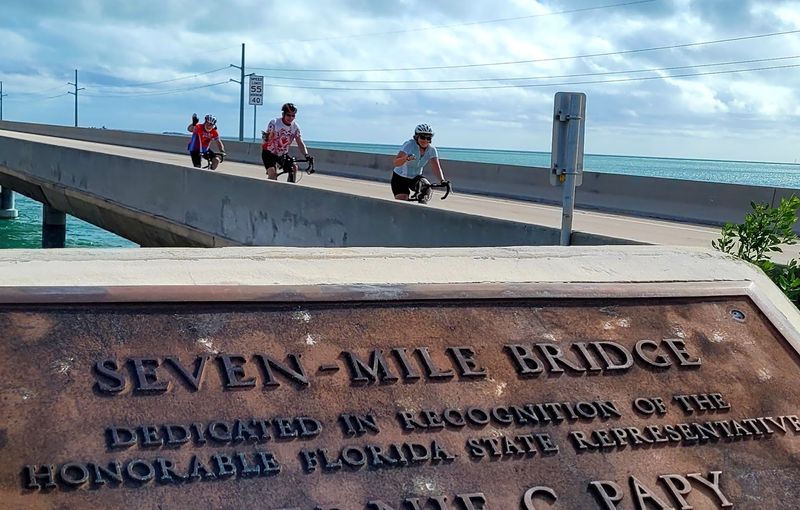
Some places in Florida are hyped up and then fail to deliver once you actually get there. The Seven Mile Bridge area is not one of those places.
Rated 4.8 stars across hundreds of reviews, this stretch of Marathon has earned its reputation as one of the most memorable stops anywhere along the Overseas Highway. The combination of history, natural beauty, wildlife, and outdoor recreation packed into one location is genuinely hard to match anywhere else in the state.
Whether you are a history buff fascinated by Flagler’s railroad legacy, a cyclist looking for a bucket-list ride over open ocean, a wildlife enthusiast hoping to spot eagle rays and sea turtles, or simply a traveler who wants a stunning photo for the memory books, this place delivers on every level. Families with kids, solo adventurers, and couples all find something meaningful here, and most people who visit say they wish they had stayed longer.
Stopping at the nearby Seven Mile Grill after your walk or ride is a local tradition worth honoring. The diner sits right at the bridge entrance and serves classic Keys comfort food with a side of authentic atmosphere.
From the moment you park your car to the moment you drive away full and sun-kissed, the Seven Mile Bridge experience reminds you exactly why the Florida Keys hold such a special place in so many hearts.