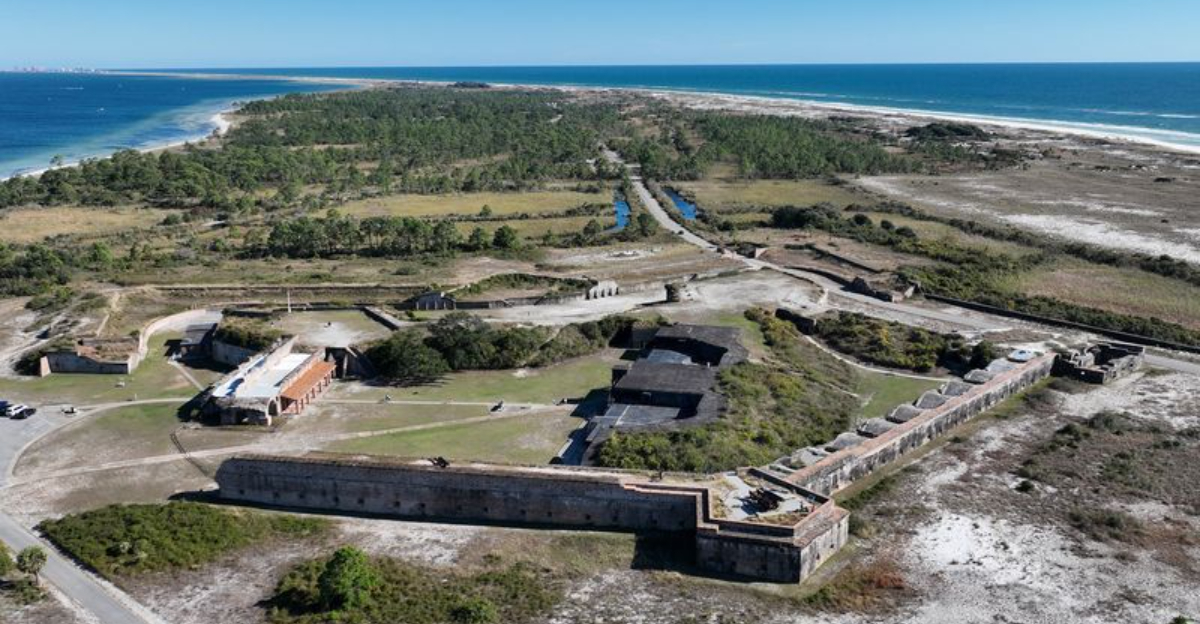
If you think a Florida beach day is only about sand and surf, Fort Pickens completely changes the picture.
Out on Santa Rosa Island, this massive brick stronghold pairs Gulf views with cannon positions, vaulted corridors, and stories that stretch back nearly two centuries.
It is the kind of place where you can wander through military history one minute and stare at dazzling white shoreline the next.
Once you know what happened here, the scenery feels even more dramatic.
A Coastal Fort Built for National Defense
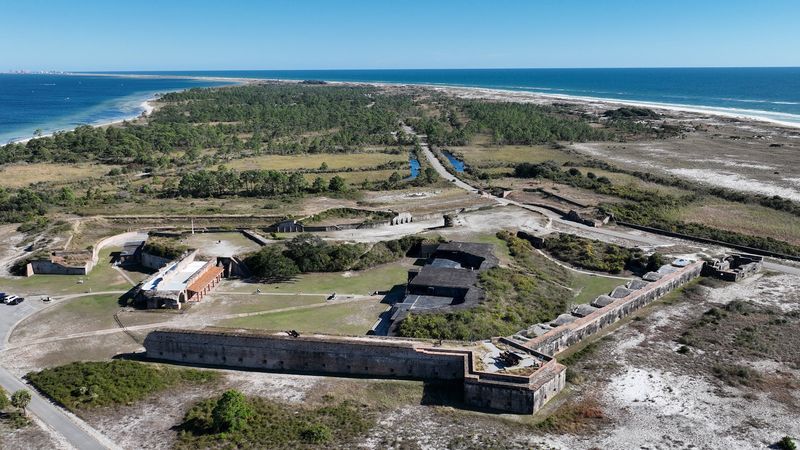
Fort Pickens was not built as a scenic ruin or a quirky beach stop. It rose between 1829 and 1834 as part of the United States Third System, a serious nationwide effort to strengthen coastal defenses after earlier wars exposed dangerous weaknesses.
When you stand before those thick brick walls, you are looking at a project meant to shield one of the nation’s most important harbors from enemy attack.
The government chose this site because Pensacola Bay mattered strategically, commercially, and militarily. Deep water, protected anchorage, and access to the Gulf made the harbor valuable enough to defend with one of the era’s most ambitious masonry forts.
That purpose still shapes the entire experience, because every wall, opening, and angle reflects a defensive mission rather than decoration.
I think that bigger historical context makes a visit more interesting. You are not just exploring an old building on the coast, you are stepping into a national defense plan that connected forts across the American shoreline.
Fort Pickens feels remote today, but it was once part of a high-stakes military network built to guard the young republic where it was most vulnerable.
A Strategic Position on Santa Rosa Island
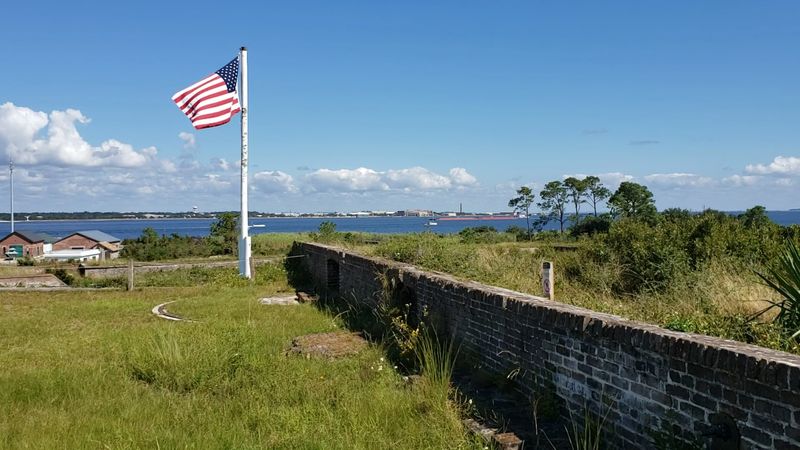
One of the first things that makes Fort Pickens memorable is where it sits. The fort occupies the western tip of Santa Rosa Island, a position that gave defenders a clear view over the deep-water entrance to Pensacola Bay.
From this spot, military planners could watch ships approaching and control a crucial gateway along the Gulf Coast.
That geography explains why the setting feels so dramatic even before you learn the history. On one side, you have open coastal scenery and bright beaches.
On the other, you have a natural harbor that has long been considered one of the Gulf’s most valuable maritime assets, making the location far more than just a pretty stretch of shoreline.
When you walk the grounds, it becomes easy to imagine how carefully this site was chosen. The fort was not dropped here by chance, and every breeze off the water seems to underline the island’s importance.
Today the area is part of Gulf Islands National Seashore, so you get the rare experience of seeing a place that still feels geographically strategic while also being protected for recreation, wildlife, and public access.
A Massive Brick Fortress Built to Last
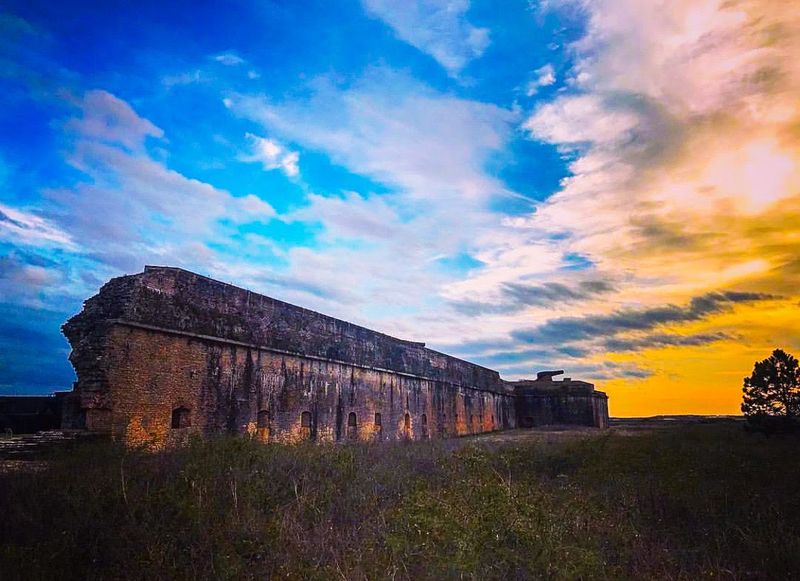
Fort Pickens looks impressive in photos, but in person the scale of the brickwork really stands out. The fort was engineered in a five-bastion, star-like pentagonal layout, a form that helped defenders cover multiple angles while reducing weak points.
Millions of bricks went into its construction, giving the structure a heavy, almost stubborn presence against the surrounding sand and water.
The design was not only about size, it was about survival. Thick masonry walls were intended to absorb punishment, while angled sections helped deflect incoming cannon fire and improve defensive coverage.
Even if you are not an architecture person, you can feel the logic behind the layout as soon as you start circling the fort and noticing how carefully every corner was planned.
What I like most is how the engineering still communicates its purpose without needing much explanation. The fort feels deliberate, symmetrical, and formidable, like it was built to outlast both storms and conflict.
That sense of durability adds weight to the visit, because you are not looking at a flimsy relic, but at a carefully calculated fortress designed to endure one of the toughest military environments of its time.
Designed for Heavy Cannon Firepower
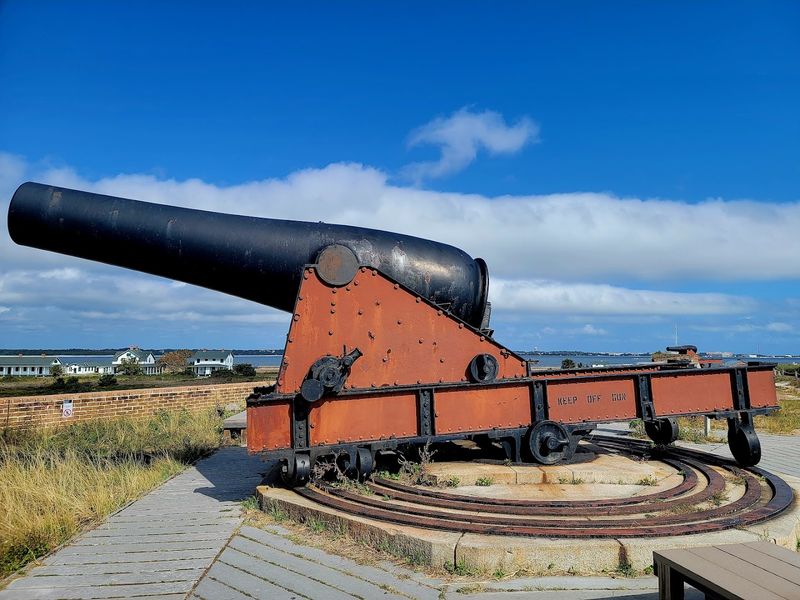
Fort Pickens was built to do more than look intimidating. At full capacity, it was designed to mount more than 200 cannons, creating overlapping fields of fire that could sweep across the harbor entrance and nearby shoreline.
That level of firepower made it one of the most formidable coastal defense sites in the region during its prime.
As you move around the fort, it helps to picture the noise, smoke, and coordination required to operate such an arsenal. Gun positions were arranged to maximize range and coverage, meaning attackers would have faced pressure from multiple angles.
The fort’s layout, thick walls, and elevated positions all supported the larger goal of controlling access to Pensacola Bay through concentrated artillery power.
Even without every cannon still in place, the site makes the military planning feel tangible. You can look through openings, across parade areas, and out toward the water and understand how this place once functioned as a serious weapon system rather than a symbolic outpost.
For me, that is one of the most striking parts of visiting – the fort still communicates its original firepower through space, scale, and sightlines alone.
A Key Stronghold in the Civil War
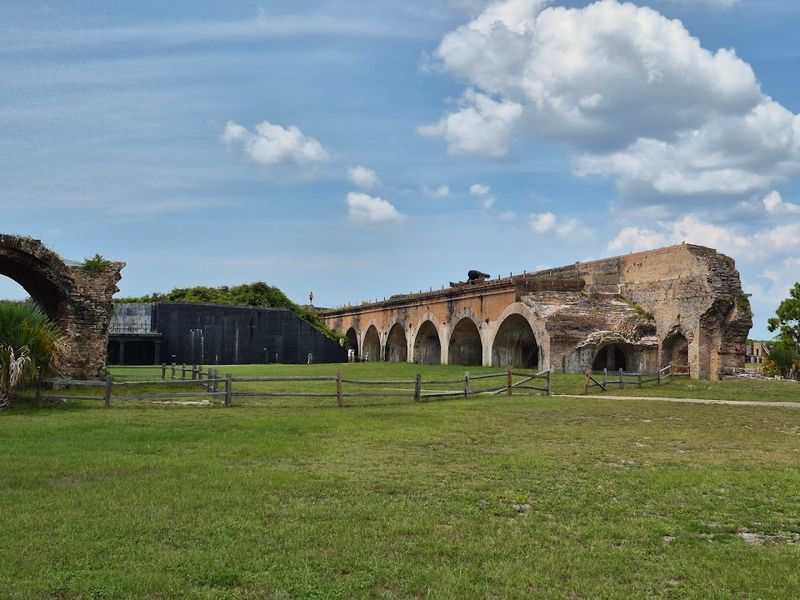
Fort Pickens holds a particularly interesting place in Civil War history because it stayed under Union control throughout the conflict. In a region where many Southern forts changed hands, this one remained a federal stronghold, helping secure Pensacola Bay at a time when control of harbors and supply routes mattered enormously.
That alone makes it a rare and important site to explore.
The fort’s continued Union occupation gave it strategic value far beyond its island setting. It served as a dependable military foothold in the South and helped limit Confederate control over the surrounding waters.
When you learn that context before walking the grounds, the place feels less like an isolated ruin and more like an active player in one of the nation’s defining conflicts.
I find that this chapter gives Fort Pickens an extra layer of tension and significance. The fort was not merely standing in the background while history happened elsewhere, it was part of the larger struggle over territory, access, and authority.
As you pass through its corridors and open spaces, it is easy to imagine the constant readiness required to hold such a visible, strategic position during uncertain and deeply divided times.
Arched Corridors and Interior Chambers
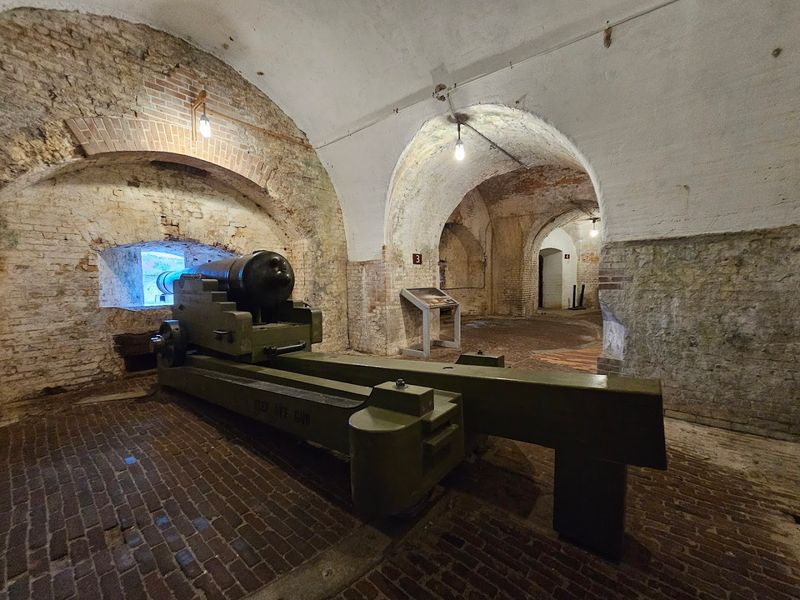
Inside Fort Pickens, the atmosphere changes in the best way. Sunlit exterior walls give way to vaulted brick corridors, shadowy chambers, powder magazines, and storage rooms that feel almost cinematic as you move through them.
People often describe these spaces as tunnels, and while they are above-ground passageways, the enclosed arches definitely create that tunnel-like mood.
What makes the interior so engaging is that it feels both practical and dramatic. These corridors were designed for movement, defense, and ammunition storage, not for aesthetics, yet the repeating brick vaults and cool, dim light make them visually unforgettable.
Every turn seems to reveal another room, another opening, or another perspective on how soldiers navigated the fort during active use.
If you enjoy places that let you sense history physically, this is where Fort Pickens really delivers. The textures, temperature shifts, and echoing spaces make the structure feel alive in a way that signs alone never could.
You are not just reading about military design, you are walking through it, seeing how architecture directed people, protected supplies, and supported the fort’s larger defensive role on the coast.
Evolution of Coastal Defense Over Time
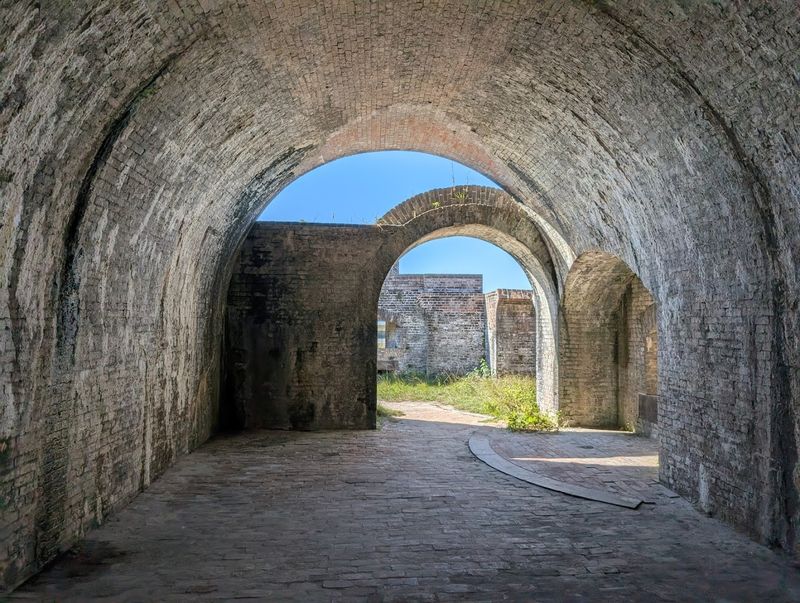
One of the smartest ways to appreciate Fort Pickens is to see it as part of a longer military story rather than a single frozen moment. Although the fort was built in the early 1800s, coastal defense strategy kept evolving, and the surrounding area later gained batteries and structures that reflected new technologies.
That contrast helps you understand how quickly military engineering could change.
Brick forts like this once represented top-tier defensive thinking, with masonry walls, bastions, and cannon platforms designed for earlier forms of warfare. Later, reinforced concrete batteries and modern artillery systems began to replace that model as weapons grew more powerful and accurate.
Near Fort Pickens, those later-era defenses provide a visible timeline of how military priorities shifted from traditional fortification to more modern, hardened installations.
I like that the site does not hide those changes. Instead, it shows you how one generation’s cutting-edge defense can become the foundation for the next phase of innovation.
Walking this landscape feels like moving through a textbook written in brick, concrete, and shoreline geography, where each structure explains a different answer to the same enduring question: how do you protect a valuable harbor from attack?
A Rare Blend of Beach and History
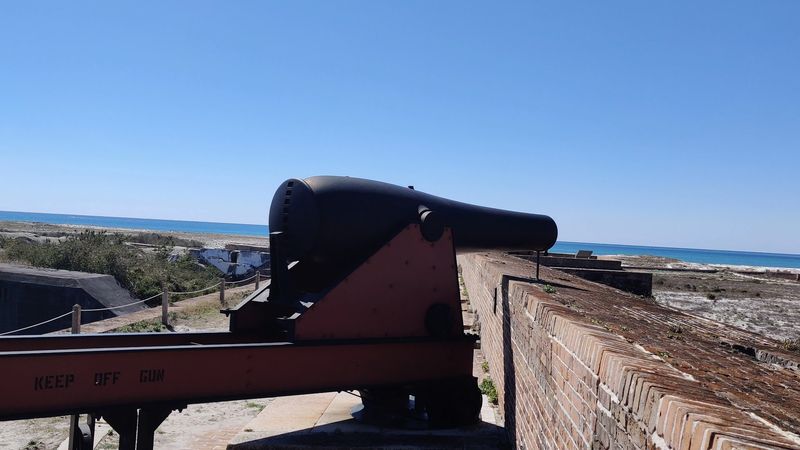
What makes Fort Pickens such a satisfying stop is the unusual pairing of serious history with classic Gulf Coast beauty. You can spend part of the day exploring a centuries-old fortress, then walk out to bright white sand and open water almost immediately afterward.
Few places blend military architecture and laid-back beach scenery this naturally.
That contrast gives the visit a rhythm that feels especially memorable. One moment you are tracing cannon positions, peering into brick chambers, and imagining ships entering Pensacola Bay.
The next, you are hearing waves, feeling sea breeze, and watching the light shift across protected shoreline that now invites reflection instead of defense.
For travelers who like variety, this is a huge part of the appeal. Fort Pickens never feels like a dry history lesson or just another beach overlook because each side of the experience strengthens the other.
The coastal setting makes the fort’s strategic role easier to understand, while the fort gives the scenery a deeper story. By the time you leave, the landscape feels richer, as if the beach itself has become part of a much larger and more human Gulf Coast narrative.
Outdoor Activities Beyond the Fort Walls
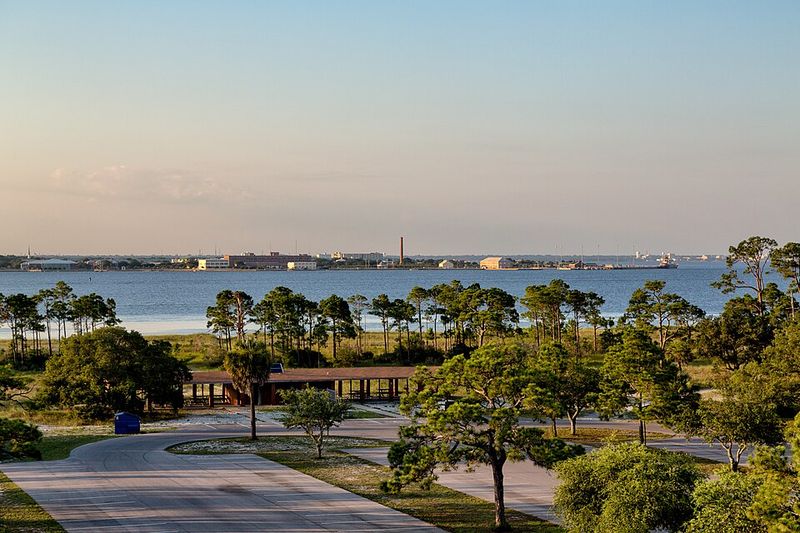
Even if the fort is your main reason for coming, the surrounding national seashore gives you plenty of reasons to stay longer. The area includes nature trails, picnic spots, wildlife habitat, scenic drives, and a campground, so the visit can easily turn into a full outdoor day.
It is one of those places where history and nature feel closely connected rather than separated into different attractions.
Birdwatchers especially have a lot to love here, since the coastal environment attracts shorebirds and other species throughout the year. Depending on the season, you may also spot evidence of sea turtle habitat or notice how the dunes, grasses, and sandy flats support a delicate ecosystem that deserves as much attention as the fort itself.
The landscape rewards slow observation, especially if you take time to look beyond the walls.
I think this broader setting is part of what makes Fort Pickens feel so complete. After walking brick corridors and learning about artillery, it is refreshing to step into open air and notice how alive the barrier island still is.
Whether you want a quiet picnic, a sunset walk, or a chance to photograph birds and dunes, the national seashore adds a softer, wilder layer to the experience.
Visitor Information and Tips
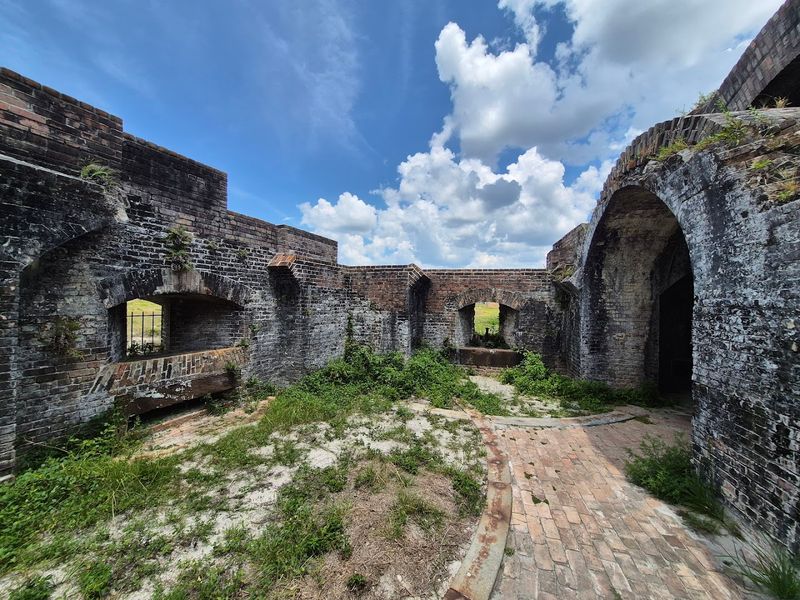
If you are planning a visit, Fort Pickens is located at 1400 Fort Pickens Road, Pensacola Beach, Florida 32561, at the western end of Santa Rosa Island. The site is typically open daily from sunrise to sunset, though seasonal conditions and weather can affect access, so checking the National Park Service website before you go is a smart move.
Entry requires a Gulf Islands National Seashore fee pass, which also covers other nearby areas.
Comfort matters here more than some first-time visitors expect. You will want water, sun protection, and sturdy walking shoes because the fort includes uneven brick surfaces, sandy paths, and lots of exposed areas with little shade.
Restrooms, picnic areas, and interpretive exhibits are available on-site, and ranger programs are sometimes offered during busier seasons if you want more historical context.
For the best experience, I would aim for early morning or late afternoon. Temperatures are usually easier to handle, the light is better for photos, and the fort feels especially atmospheric when the sun hits the brick at an angle.
Give yourself enough time to explore both the structure and the shoreline, because rushing through either part means missing what makes Fort Pickens special.