Tucked away at the intersection of Courtland Street in Atlanta sits a vibrant outdoor gallery that transforms ordinary street corners into canvases of creative expression. Folk Art Park celebrates the bold, imaginative spirit of Southern folk art through colorful murals, unique sculptures, and eye-catching installations that spread across multiple sections of a busy intersection.
This unconventional park pays homage to Georgia’s rich artistic heritage while providing a free, accessible space where art meets everyday urban life. Whether you’re a photography enthusiast, art lover, or simply curious about Atlanta’s hidden gems, this roadside attraction offers a distinctive glimpse into the world of folk art right in the heart of the city.
The Eddie Owens Martin Tribute
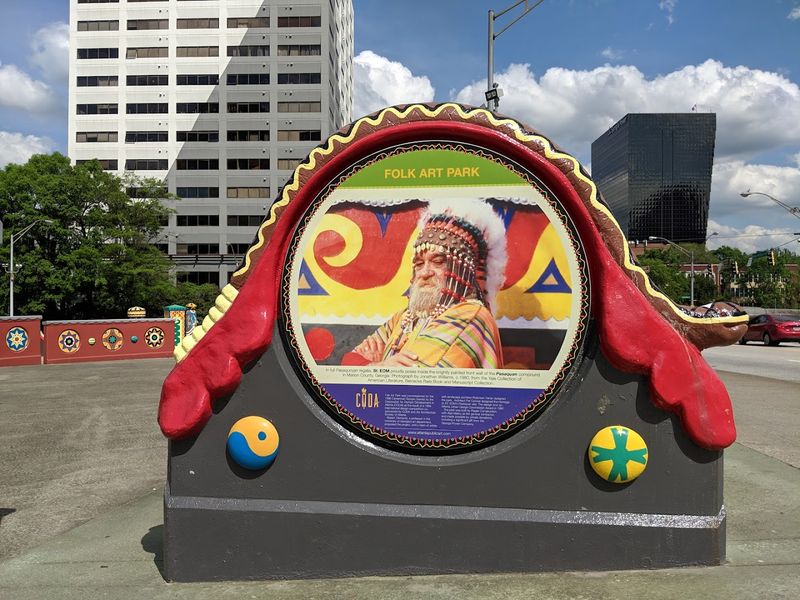
Eddie Owens Martin, also known as St. EOM, created one of Georgia’s most famous folk art environments called Pasaquan. Folk Art Park serves as a tribute to his visionary work and creative legacy.
His influence shines through every painted surface and sculptural element throughout the park.
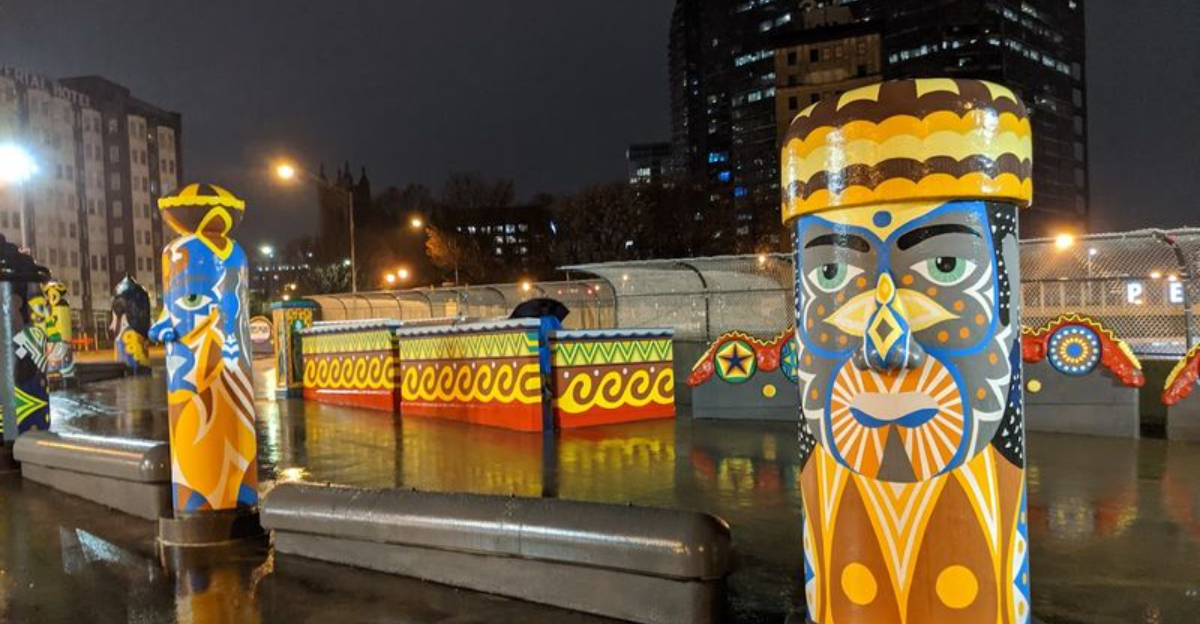
The park captures Martin’s signature style with bold geometric patterns, vibrant color combinations, and symbolic imagery. Circles, triangles, and spirals dance across concrete surfaces in yellows, blues, reds, and greens.
Each design element reflects the self-taught artist’s unique vision that blended spirituality with artistic expression.
Visitors familiar with Pasaquan will recognize similar motifs and color palettes throughout the installations. The tribute keeps Martin’s artistic philosophy alive in an urban setting.
His work emphasized transformation and creating sacred spaces through art, which the park embodies perfectly.
Understanding this connection enriches the experience of visiting Folk Art Park significantly. Martin’s story adds depth to what might otherwise seem like random colorful decorations.
His legacy continues inspiring new generations of folk artists across the South.
The Multi-Corner Intersection Design
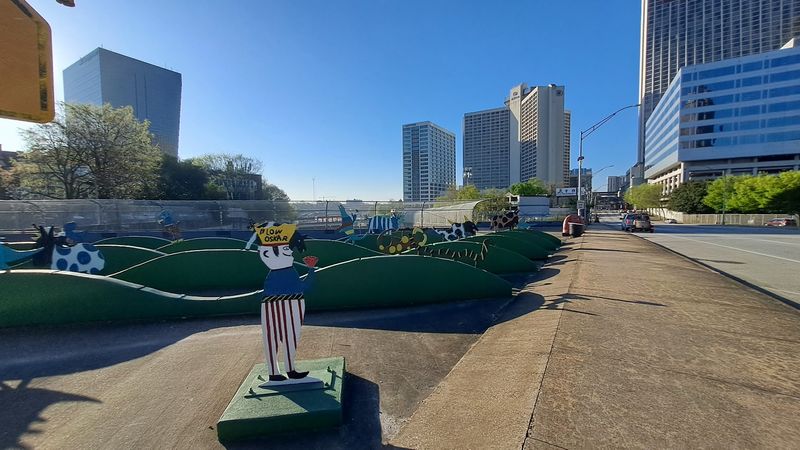
Most parks occupy a single plot of land, but Folk Art Park breaks the mold entirely. The installation spreads across three separate corners of a major intersection at Courtland Street.
This unusual layout creates a completely unique experience where art and urban infrastructure merge unexpectedly.
Navigating between the three sections requires crossing busy streets and paying attention to traffic signals. Each corner offers different artistic perspectives and installations to discover.
The fragmented design actually enhances the adventure, turning a simple park visit into an urban exploration.
The location right above Interstate 85 adds another layer of complexity to the experience. Traffic noise becomes part of the ambient soundtrack while you examine the artwork.
Concrete barriers and chain-link fencing frame many of the installations, creating an industrial aesthetic that contrasts beautifully with the colorful art.
This unconventional setup means parking can be challenging during busy times. Many visitors choose to walk from nearby Midtown locations instead.
The scattered layout might seem odd at first, but it perfectly represents how folk art finds expression in unexpected places throughout everyday environments.
Vivid Murals and Painted Surfaces
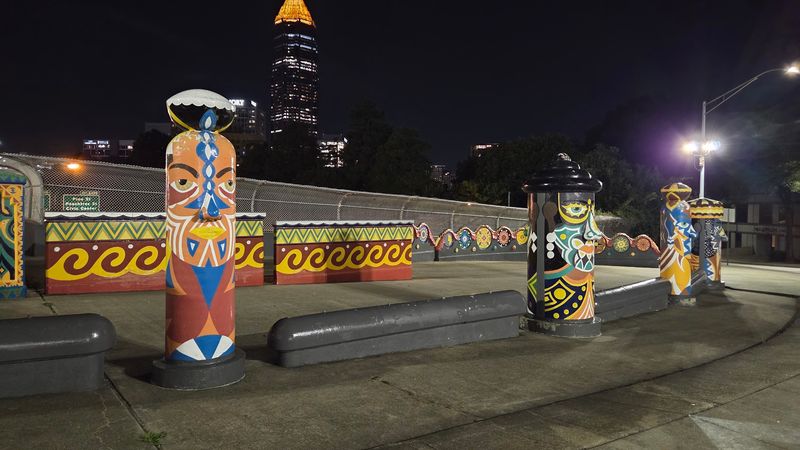
Everywhere you turn at Folk Art Park, surfaces explode with color and pattern. Concrete walls transform into canvases featuring swirling designs, geometric shapes, and abstract compositions.
The murals don’t follow traditional artistic rules but instead embrace the free-spirited nature of folk art traditions.
Primary colors dominate the palette, creating a cheerful and energetic atmosphere. Bold yellows contrast with deep blues, while bright reds and oranges add warmth to the urban landscape.
The intensity of these colors helps the artwork stand out even against the gray concrete and busy traffic backdrop.
Many painted surfaces incorporate circular mandala-like designs that draw the eye inward. Zigzag patterns and striped sections create visual rhythm across larger wall spaces.
These elements work together to transform ordinary infrastructure into something memorable and special.
The outdoor location means the art faces constant exposure to weather and elements. Despite this, the vibrant colors remain surprisingly vivid, suggesting regular maintenance and touch-ups.
This ongoing care demonstrates the community’s commitment to preserving this unique artistic landmark for future visitors to enjoy and photograph.
The Interstate Overlook Experience
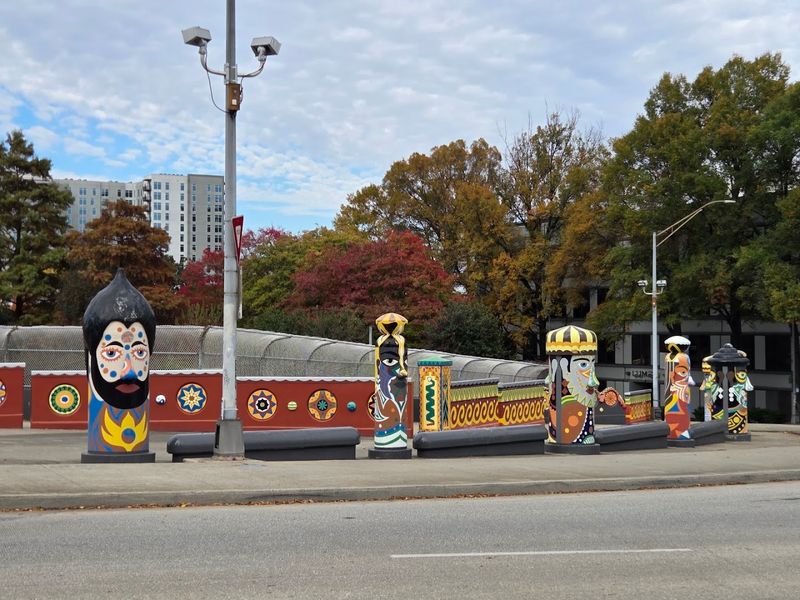
One of the park’s most distinctive features is its position directly above Interstate 85. A chain-link cage allows visitors to safely peer down at the rushing traffic below.
This perspective creates an unusual vantage point where art, architecture, and urban movement intersect dramatically.
The protective cage prevents anything from falling onto the busy freeway while still providing clear views. Photography enthusiasts particularly appreciate this spot, especially during evening hours when car lights create rivers of red and white.
The combination of folk art surroundings and modern highway infrastructure makes for compelling compositions.
Standing above the interstate creates a surprisingly meditative experience despite the constant traffic noise. Watching vehicles stream past below while surrounded by colorful artwork offers a moment to contemplate the relationship between art and daily life.
The juxtaposition feels very Atlanta, where historic Southern traditions meet contemporary urban energy.
Evening visits transform this overlook into something magical as highway lights illuminate the scene below. The cage itself becomes part of the artistic installation, its geometric pattern echoing the folk art designs throughout the park.
This spot alone makes the journey worthwhile for many visitors seeking unique Atlanta experiences.
Skateboarding Haven in Warm Weather
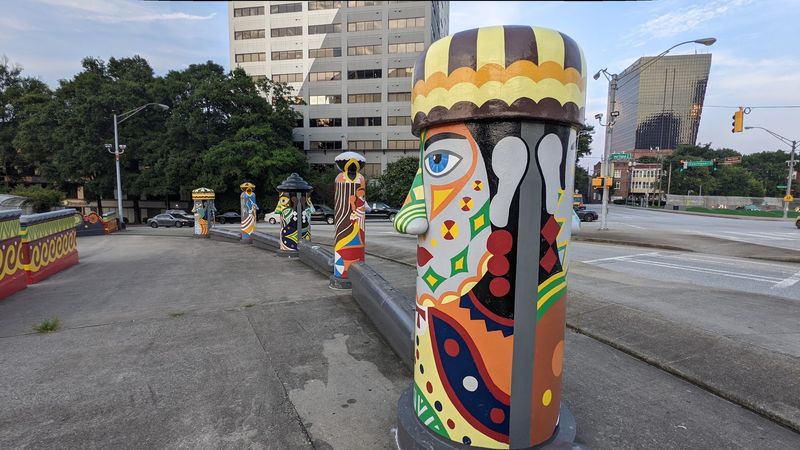
When temperatures rise, Folk Art Park transforms into a popular gathering spot for Atlanta’s skateboarding community. The concrete surfaces and varied terrain provide interesting challenges for skaters of different skill levels.
Colorful backdrops make every trick photo-worthy, blending athletic activity with artistic appreciation.
The park’s layout naturally creates spaces for skating, with smooth concrete sections and interesting angles. Young people bring energy and life to the installations during warmer months.
Their presence adds another layer of creative expression to the space, as skateboarding itself is an art form.
Watching skaters navigate the painted surfaces creates an interesting dynamic between static and moving art. The scraping sounds of wheels on concrete mix with traffic noise, creating an authentic urban soundtrack.
Many skaters return regularly, treating the park as their own outdoor recreation space.
This skateboarding culture contributes to the park’s reputation as a community gathering place. The activity attracts diverse groups of people who might not otherwise visit an art installation.
Combining sports and art makes the space more accessible and relevant to younger generations who appreciate both creative expression and physical activity in equal measure.
Photography Paradise Day and Night
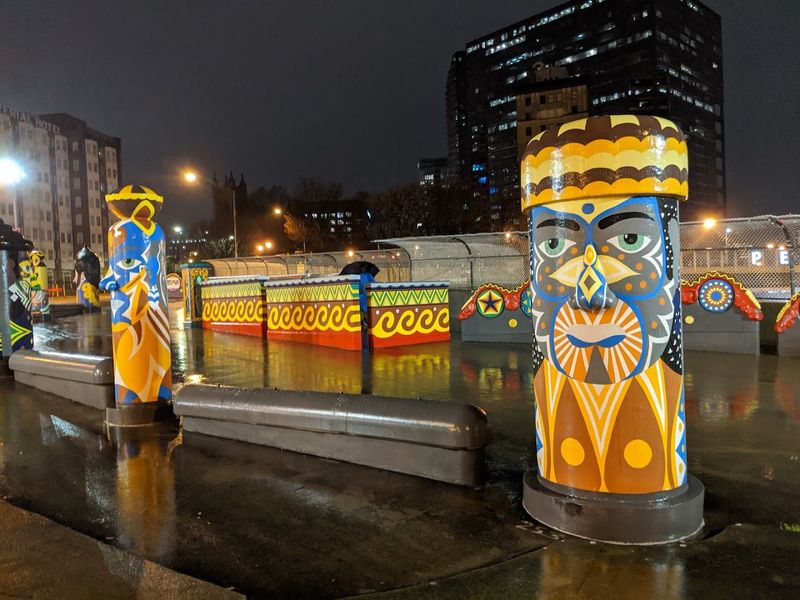
Camera enthusiasts consider Folk Art Park a hidden gem for capturing unique images. The combination of bold colors, geometric patterns, and urban setting provides endless compositional possibilities.
Natural lighting changes throughout the day, offering different moods and shadow play across the painted surfaces.
Daytime photography emphasizes the vivid colors and intricate details of the folk art designs. Bright sunshine makes the yellows and reds practically glow against blue skies.
Morning light creates interesting shadows that add depth and dimension to the flat painted surfaces.
Nighttime transforms the park into something entirely different for photographers. Artificial lighting illuminates the artwork while traffic creates light trails in the background.
The freeway overlook becomes especially dramatic after dark, with streams of headlights and taillights flowing beneath the art installations.
The park’s unusual location provides context that makes photographs more interesting than typical art documentation. Including traffic, fencing, or urban elements in compositions tells a richer story about how art exists within city environments.
Many Instagram-worthy shots come from this spot, though the best images capture the tension between beauty and gritty urban reality that defines the location’s character.
Southern Folk Art Heritage Showcase
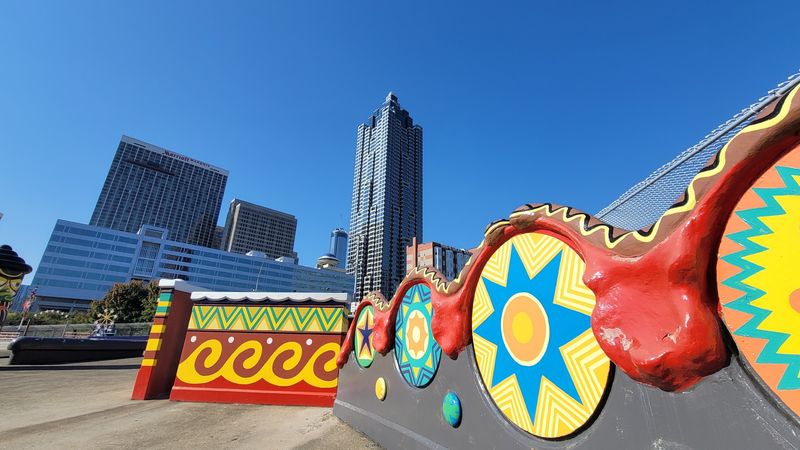
Folk art represents an important thread in Southern cultural heritage, and this park celebrates that tradition proudly. Unlike formal gallery spaces, folk art typically emerges from self-taught artists who create outside mainstream art world conventions.
This park honors that outsider artist spirit by existing outside traditional museum walls.
The installations demonstrate key folk art characteristics including bold use of color, pattern repetition, and spiritual symbolism. These elements connect to generations of Southern artists who transformed everyday materials into extraordinary expressions.
The public accessibility also reflects folk art’s democratic nature, as it belongs to everyone rather than elite collectors.
Georgia has produced numerous influential folk artists beyond Eddie Owens Martin. The state’s folk art tradition includes quilters, wood carvers, painters, and environmental artists who create visionary works.
Folk Art Park helps preserve awareness of these artistic contributions while making folk art principles visible to casual passersby.
By situating folk art in an urban intersection, the park makes a statement about art’s place in contemporary life. Art shouldn’t remain confined to galleries where only certain people feel welcome.
This roadside installation demonstrates how creative expression can enrich ordinary public spaces and everyday experiences for everyone.
The Pasaquan Connection Explained
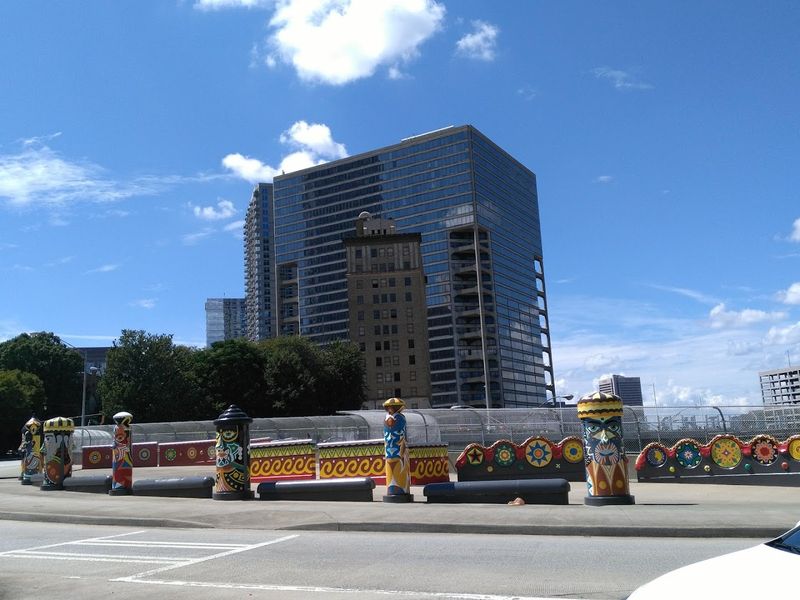
Understanding Pasaquan deepens appreciation for Folk Art Park significantly. Located in Buena Vista, Georgia, Pasaquan is Eddie Owens Martin’s original compound featuring buildings, sculptures, and painted surfaces covering nearly seven acres.
It’s considered one of America’s most important folk art environments and inspired this Atlanta tribute.
Martin created Pasaquan over four decades, transforming his property into a fantastical world of color and pattern. He developed his own mythology and symbolism that permeates every element of the site.
Pagoda-like structures, decorative walls, and painted walkways create an immersive artistic experience unlike anything else in the South.
Folk Art Park borrows heavily from Pasaquan’s aesthetic vocabulary while adapting it to an urban context. The geometric patterns, color choices, and spiritual undertones echo Martin’s original vision.
Visiting both locations provides fascinating insight into how folk art translates across different environments and scales.
Many visitors discover Pasaquan after first encountering Folk Art Park in Atlanta. The park functions as an accessible introduction to Martin’s work for people who might not travel to rural Georgia.
This connection helps preserve Martin’s legacy and ensures new generations discover his extraordinary artistic contributions to American folk art history.
Evening Illumination and Atmosphere
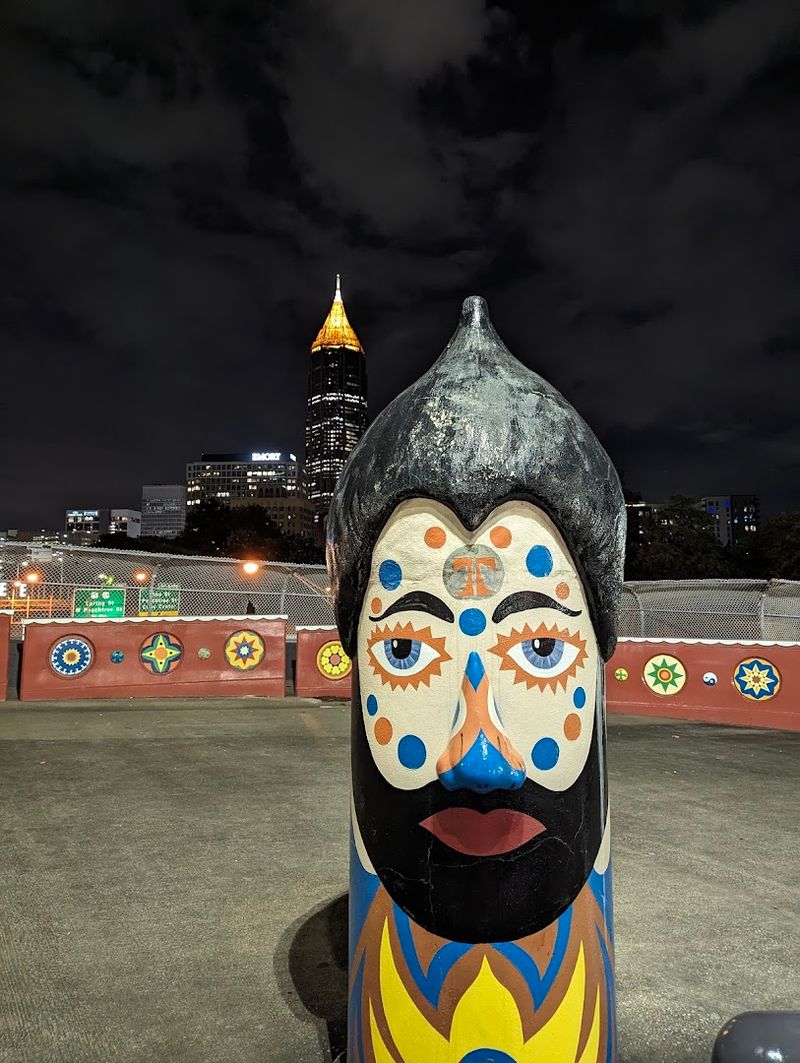
After sunset, Folk Art Park takes on completely different character and mood. Strategic lighting illuminates the painted surfaces, making colors appear to glow against the dark sky.
The transformation from daytime casualness to evening drama attracts photographers and visitors seeking a quieter, more contemplative experience.
Artificial lights create shadows and highlights that aren’t visible during daylight hours. Certain details become more prominent while others recede into darkness, changing how viewers perceive the installations.
The interplay between light and shadow adds mystery and depth to the folk art designs.
Traffic noise continues throughout evening hours, but the visual chaos of daytime activity diminishes. With fewer people around, visitors can examine artwork more closely and take time really absorbing the details.
The cooler temperatures and softer lighting create a more comfortable environment for extended visits.
Safety considerations become more important after dark, as the area can feel isolated despite proximity to major roads. Visiting with companions is recommended for evening exploration.
However, the dramatic lighting effects and unique atmosphere make nighttime visits worthwhile for those seeking different perspectives on the artwork than typical daytime tourists experience during regular visiting hours.
Open-Access Community Art Space
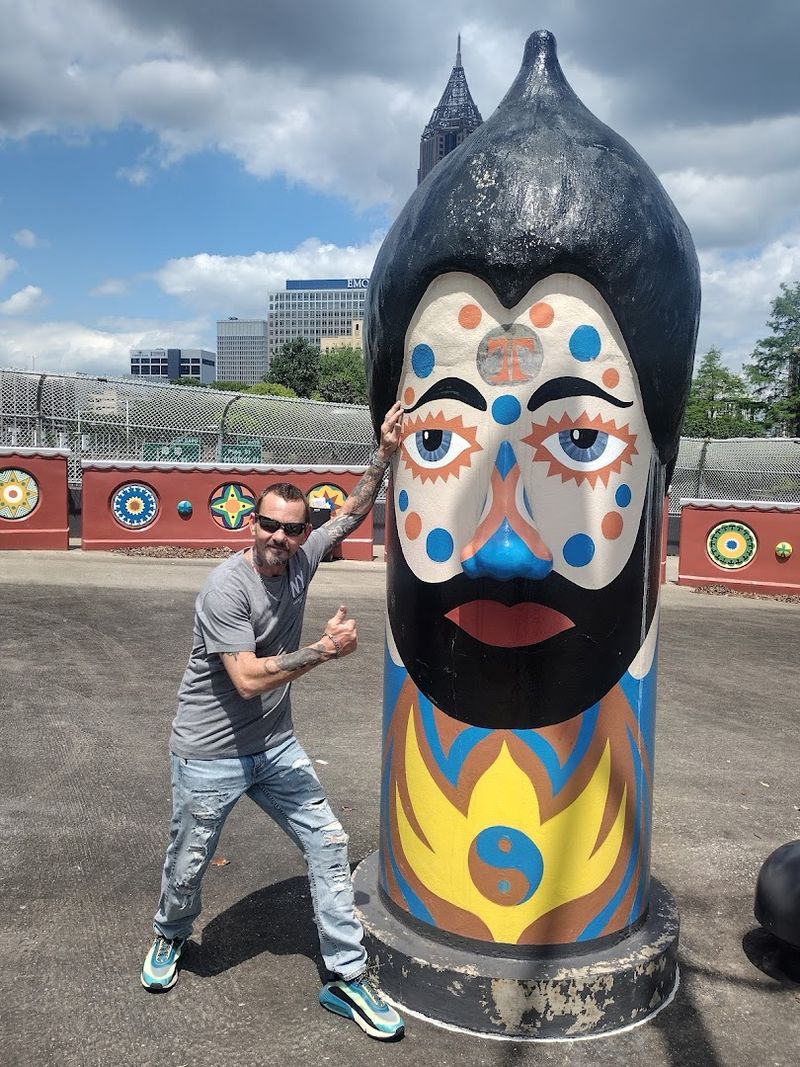
Unlike museums requiring admission fees, Folk Art Park remains completely free and accessible to everyone. Open from 6 AM to 11 PM daily, the space welcomes all visitors regardless of economic status or artistic knowledge.
This democratic approach aligns perfectly with folk art’s inclusive spirit and community-focused values.
The park functions as more than just an art display; it serves as a genuine public gathering space. People use it for lunch breaks, casual meetups, and spontaneous encounters with neighbors.
Benches scattered throughout the sections provide places to rest while contemplating the artwork or simply watching city life unfold.
Located near Midtown Atlanta and easily accessible by foot from several neighborhoods, the park attracts diverse visitors. Some come specifically for the art while others stumble upon it during daily routines.
This mix of intentional and accidental encounters creates organic community connections around shared appreciation for creative expression.
The open-access nature does present challenges, including maintenance issues and periodic concerns about safety. However, these difficulties represent the realities of creating truly public art spaces in urban environments.
The park’s continued existence despite challenges demonstrates community commitment to preserving accessible art spaces where creativity remains available to absolutely everyone without barriers or boundaries.