Tucked deep in southwest Florida, Fakahatchee Strand Preserve State Park is one of the strangest and most spectacular wild places in the entire country.
This massive swamp is home to rare ghost orchids, ancient cypress trees, Florida panthers, and ecosystems found almost nowhere else on Earth.
Most people picture theme parks or beaches when they think of Florida, but this preserve offers something far more extraordinary.
Whether you are a nature lover, a wildlife photographer, or simply someone looking for a truly unforgettable outdoor experience, Fakahatchee Strand deserves a spot on your must-visit list.
The “Amazon of North America” Landscape
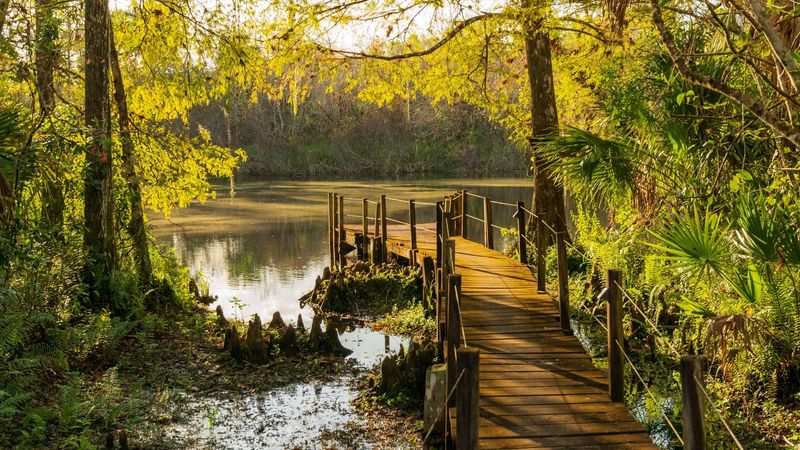
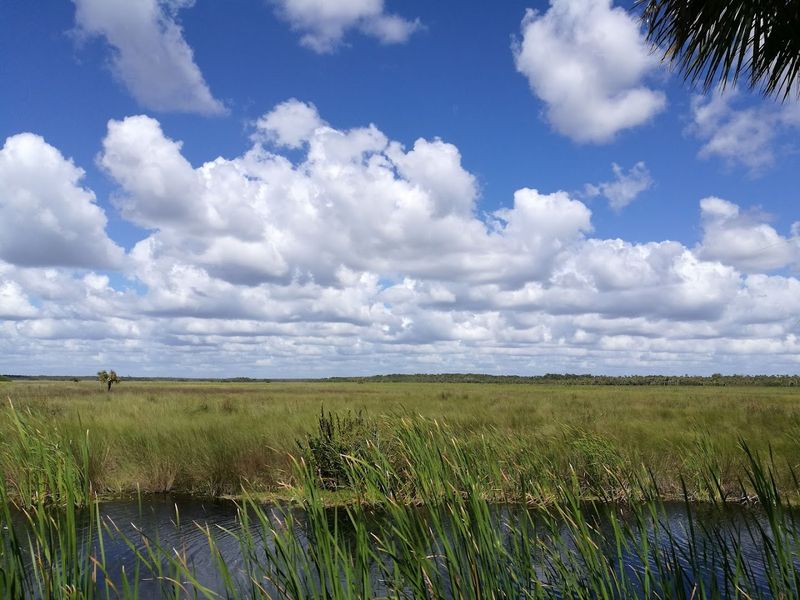
Picture a slow-moving river made entirely of forest. That is essentially what Fakahatchee Strand Preserve State Park is — an 85,000-acre strand swamp where water creeps quietly beneath a thick canopy of ancient trees.
Locals and scientists alike have nicknamed it the “Amazon of North America,” and once you see it, you understand why.
This preserve is directly connected to the greater Everglades system, making it a critical piece of South Florida’s water puzzle. Rain that falls here eventually filters through the landscape, feeding wetlands, wildlife, and communities downstream.
Without the strand, the entire regional water cycle would suffer.
What makes this landscape so jaw-dropping is how untouched it still feels. Unlike manicured parks with paved trails and visitor centers, Fakahatchee is wild in the truest sense.
Towering trees block the sky, dark water hides beneath your feet, and the air smells like earth and life. Visiting feels less like sightseeing and more like stepping into a living, breathing world that has been running on its own schedule for thousands of years.
It is humbling, a little mysterious, and absolutely unforgettable for anyone willing to explore it.
Home of the Elusive Ghost Orchid
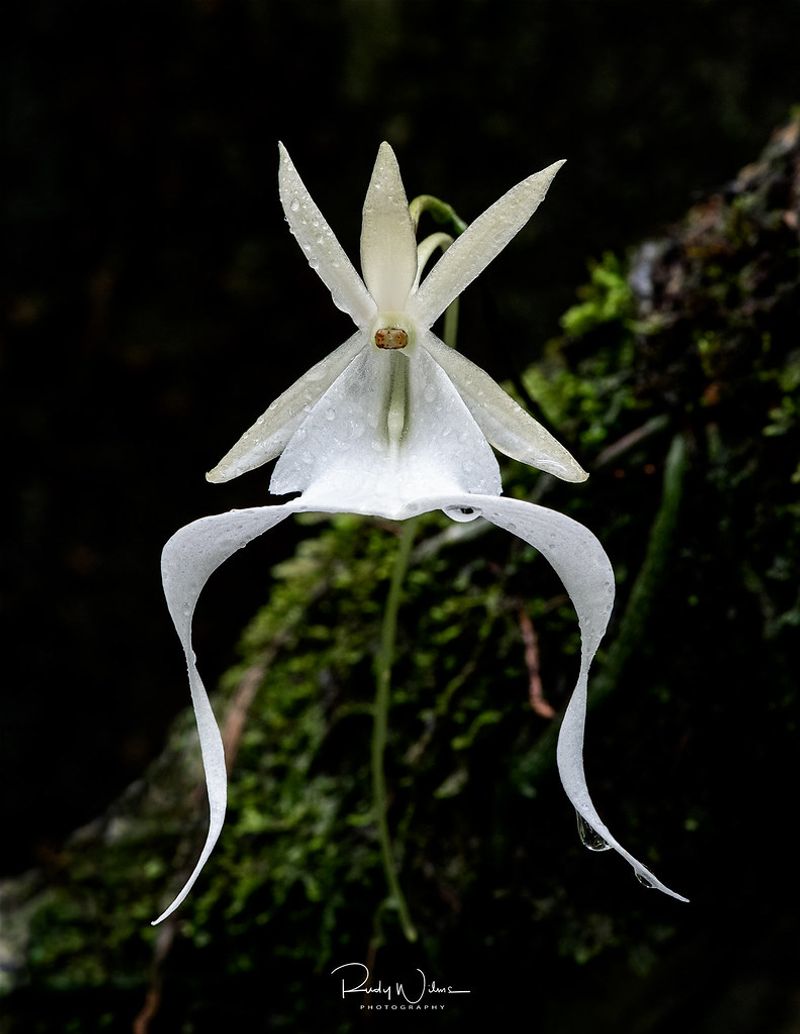
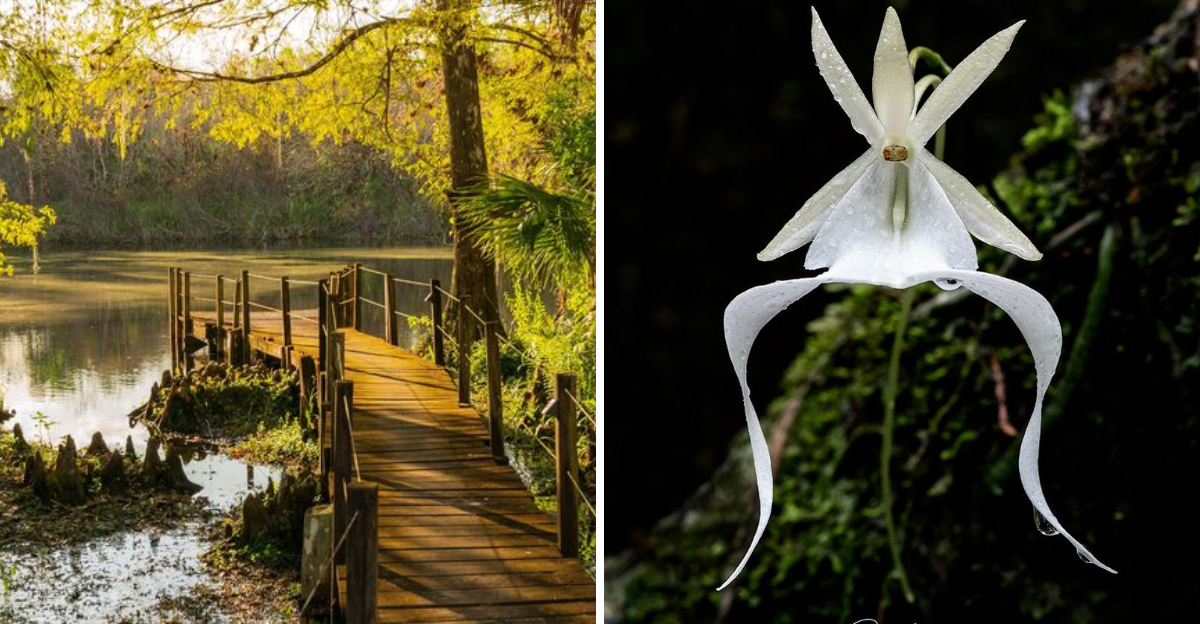
Floating in midair like something out of a fairy tale, the ghost orchid is one of the most mysterious wildflowers on the planet. Unlike most plants, it has no leaves — just white, ribbon-like blooms that seem to hover against the bark of cypress trees.
Spotting one in the wild feels like winning the lottery.
Fakahatchee Strand is considered the ghost orchid capital of the world. The preserve holds the largest known population of these rare plants in the United States, drawing botanists, photographers, and curious visitors from around the globe every summer.
Blooming season typically runs from June through August, though the exact timing shifts from year to year depending on weather conditions.
Finding a ghost orchid is not guaranteed — and that is part of the thrill. The plants grow high on tree trunks, blending into the bark when not in bloom.
Many visitors spend entire days wading through the swamp without spotting one. But those who do witness a ghost orchid in flower describe it as one of the most breathtaking moments of their lives.
Patience, good timing, and maybe a little luck are your best tools here.
One of the Largest Orchid Collections in the U.S.
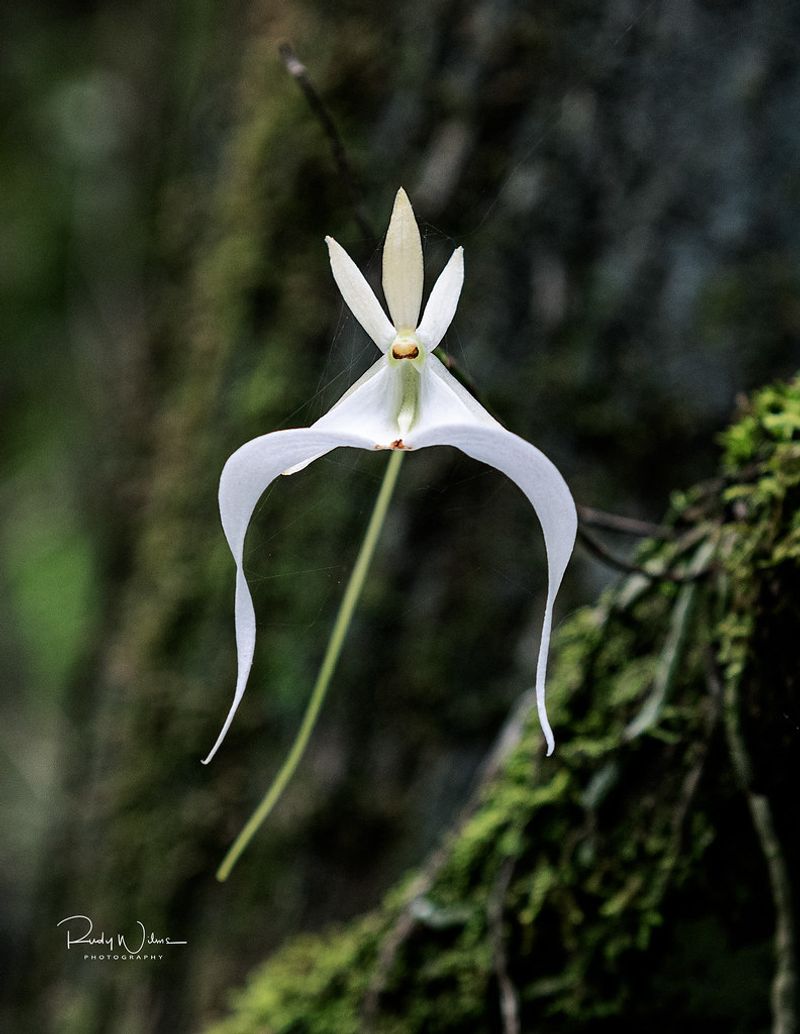
Most people come for the ghost orchid, but they leave amazed by everything else. Fakahatchee Strand hosts one of the highest concentrations of native orchid species on the entire continent.
More than 40 species of native orchids have been documented here, making it a genuine paradise for plant enthusiasts.
Among the standouts are the butterfly orchid, with its cheerful yellow-and-brown blooms, and the ribbon orchid, which drapes elegantly from tree trunks like a floral curtain. The clamshell orchid is another crowd favorite, producing clusters of small, intricate flowers that look almost too detailed to be real.
Each species has its own blooming schedule, meaning the preserve offers floral surprises throughout much of the year.
What allows so many orchid species to thrive here is the park’s unique combination of humidity, shade, and host trees. Orchids in this region are epiphytes, meaning they grow on other plants rather than in soil.
They pull moisture and nutrients directly from the air and rain. This swamp provides exactly the right conditions — warm, wet, and sheltered — for dozens of orchid varieties to flourish side by side in one remarkable stretch of wilderness.
A Rare Swamp Ecosystem You Won’t Find Elsewhere
There is exactly one place on Earth where you can stand beneath bald cypress trees and royal palms at the same time — and that place is Fakahatchee Strand. This unlikely pairing of two completely different tree species in the same forest canopy creates a layered, cathedral-like atmosphere that plant scientists still find remarkable.
Bald cypress trees are built for swamps. Their famous “knees” poke up through the water around their bases, helping the trees breathe in waterlogged soil.
Royal palms, on the other hand, are typically associated with tropical coastlines and warm, well-drained ground. Seeing both thriving together in one swamp feels almost impossible — yet here they are.
This combination exists because of Fakahatchee’s unique geography and climate. The strand sits at a crossroads between subtropical and tropical zones, creating conditions that few ecosystems can match.
The result is a forest that feels like it belongs to another world entirely. Ecologists describe it as one of the most biologically diverse freshwater swamps in North America.
For visitors, walking through it feels like exploring a place that time forgot — ancient, layered, and teeming with life at every level from the water below to the treetops above.
Wildlife From Panthers to Alligators
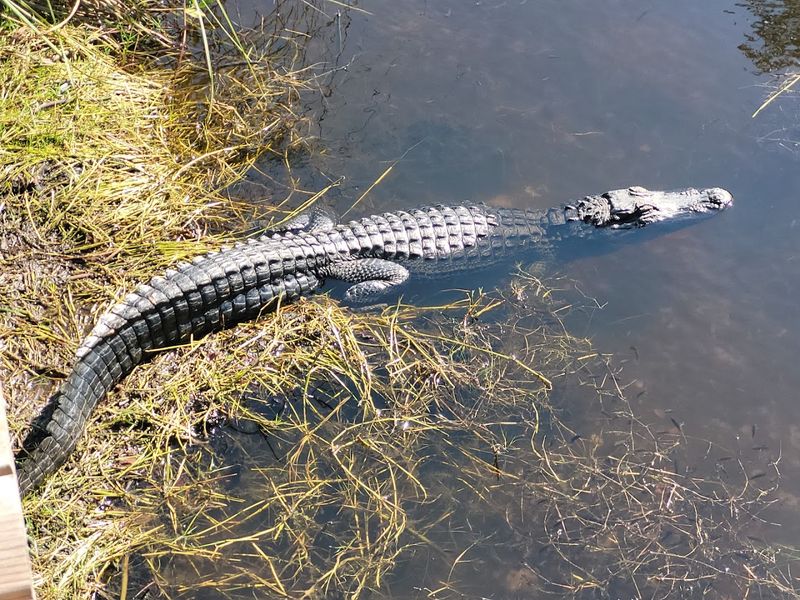
Not many parks in America can claim the Florida panther as a resident, but Fakahatchee Strand can. This critically endangered big cat uses the preserve as part of its home range, slipping silently through the swamp in search of deer, wild hogs, and smaller prey.
Fewer than 200 Florida panthers are believed to exist in the wild today, making every sighting a genuinely rare event.
Alligators are far easier to spot. These prehistoric reptiles lounge along the edges of water channels and tram roads, soaking up whatever sunlight filters through the canopy.
Early morning visitors often encounter several within a single hour of walking. Black bears also roam the preserve, along with the elusive Everglades mink — a subspecies found only in South Florida’s wetlands.
Bird watchers will not be disappointed either. The preserve hosts hundreds of species throughout the year, from wood storks and snail kites to barred owls and prothonotary warblers.
The sheer variety of wildlife packed into this single preserve is staggering. Bring binoculars, move slowly, and stay quiet — that is the formula for witnessing Fakahatchee’s animal residents going about their daily routines in one of Florida’s most untouched wild spaces.
A Swamp That Once Fueled a Logging Industry
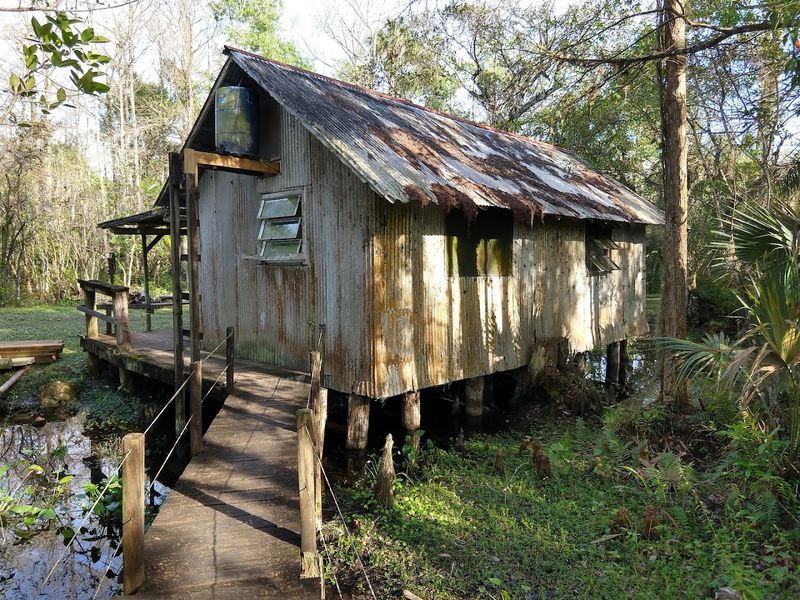
Hard to believe now, but this lush, untouched-looking swamp was once the site of one of Florida’s most aggressive logging operations. From the 1940s through the 1950s, logging companies harvested thousands of ancient bald cypress trees from Fakahatchee Strand.
Some of those trees were hundreds — even thousands — of years old before they were cut down.
To move equipment and timber through the swamp, workers built a network of elevated tram roads across the wet terrain. These raised gravel and dirt paths allowed heavy machinery to reach deep into areas that would otherwise be completely inaccessible.
When the logging era ended, the companies left, but the tram roads stayed behind.
Today, those same roads serve a completely different purpose. Hikers, wildlife photographers, and orchid hunters use them as trails to explore the preserve’s most remote corners.
Janes Scenic Drive follows one of the original tram routes. Walking these paths, you can still spot enormous old cypress stumps scattered throughout the swamp — silent reminders of the trees that once stood here.
The forest has been slowly recovering for decades, and while it will never fully return to its pre-logging state, Fakahatchee’s resilience is a powerful testament to nature’s ability to heal itself over time.
The Big Cypress Bend Boardwalk Experience
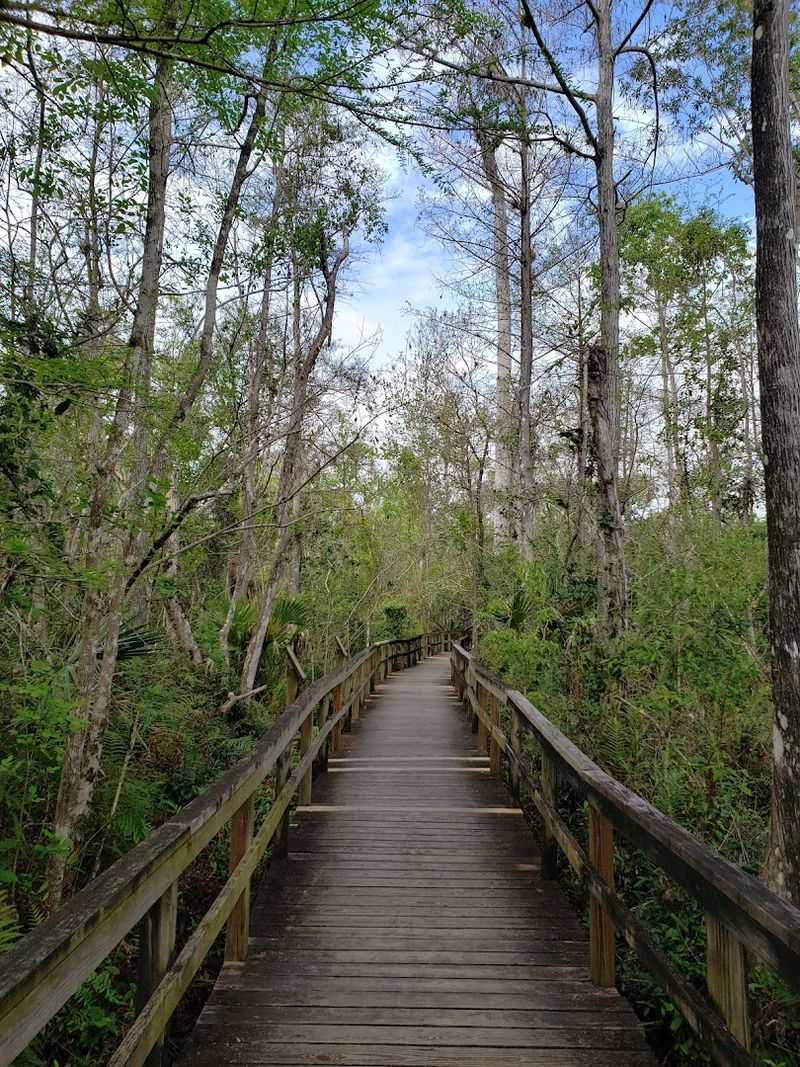
Not everyone is ready to wade knee-deep through swamp water to experience Fakahatchee — and that is perfectly fine. The Big Cypress Bend Boardwalk offers a completely accessible way to feel the magic of the swamp without getting your feet wet.
This elevated wooden walkway stretches above the dark water, putting you right in the middle of the cypress forest without any of the mud.
The boardwalk is relatively short, making it a great option for families with young children, older visitors, or anyone who simply wants a quick but memorable taste of the preserve. Despite its brevity, the scenery packs a serious punch.
Twisted cypress trunks draped in Spanish moss rise on either side, and the water below reflects the canopy above like a dark mirror.
Wildlife sightings along the boardwalk are common and often close. Alligators rest just beneath the wooden planks, turtles bask on partially submerged logs, and wading birds stalk the shallows in search of fish.
On a quiet morning, the boardwalk feels almost sacred — the kind of place where you instinctively lower your voice and slow your pace. It is one of the easiest and most rewarding nature experiences in all of South Florida, and well worth every minute spent there.
Janes Scenic Drive Adventure
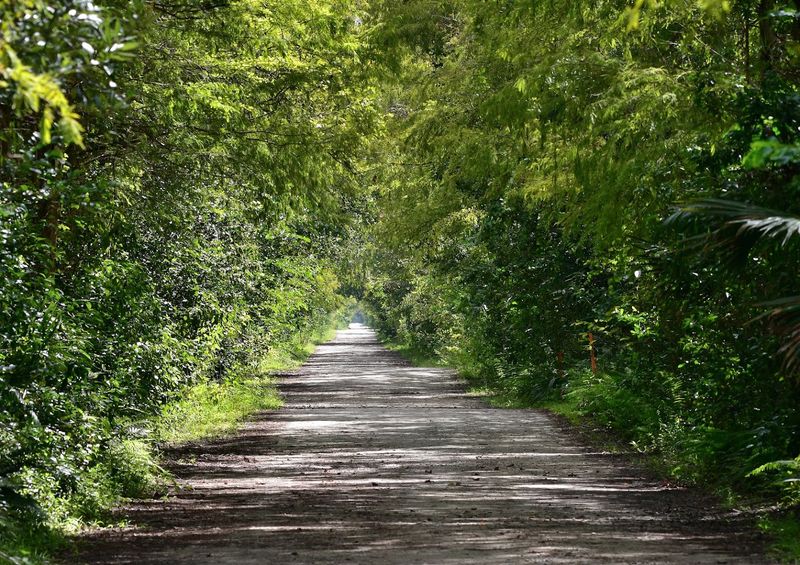
If the boardwalk is the gentle introduction to Fakahatchee, then Janes Scenic Drive is the full adventure. This 11-mile gravel road — built on one of the original logging tram routes — cuts straight through the heart of the preserve, offering a rugged and immersive way to explore areas that most visitors never reach.
You can drive the road in a regular vehicle during dry conditions, though a high-clearance car is recommended for wetter seasons. Many visitors choose to bike or walk sections of it instead, which slows things down and dramatically increases wildlife encounters.
Deer graze at the road’s edges, birds of prey circle overhead, and the occasional alligator crosses right in front of you.
Photography enthusiasts particularly love Janes Scenic Drive for the quality of light that filters through the canopy at different times of day. Early morning and late afternoon are peak times, when golden sunlight streams between the trees and the swamp comes alive with movement and sound.
The drive also provides access to interior trailheads where guided swamp walks and orchid tours depart. Whether you experience it by car, bike, or on foot, Janes Scenic Drive delivers one of the most authentically wild road experiences available anywhere in Florida.
A Fragile Ecosystem Under Threat
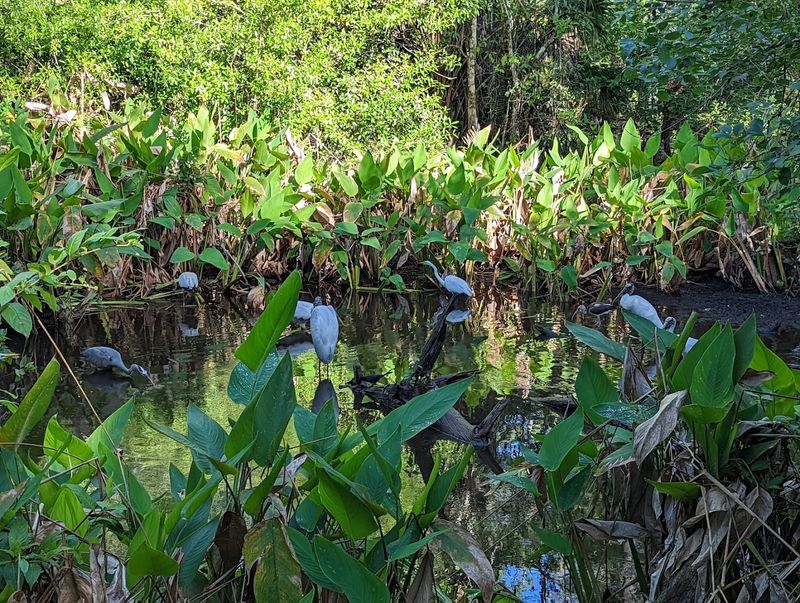
For all its beauty and biodiversity, Fakahatchee Strand faces some serious threats that put its future in jeopardy. The ghost orchid, already one of the rarest plants in North America, is particularly vulnerable.
Poaching remains a persistent problem — collectors illegally remove plants from the wild, dramatically reducing already tiny populations. Rangers and conservation groups work hard to monitor known orchid sites, but the swamp is simply too vast to fully protect.
Hurricanes pose another major danger. South Florida sits directly in the path of Atlantic storm systems, and powerful storms can tear through the swamp, snapping ancient trees and destroying the specific microhabitats that ghost orchids need to survive.
Hurricane Irma in 2017 caused significant damage to the preserve, and recovery has been slow.
Climate change adds yet another layer of pressure. Rising temperatures, shifting rainfall patterns, and increasing saltwater intrusion from sea level rise all threaten the delicate balance that makes Fakahatchee’s ecosystem work.
Conservation organizations like the Friends of Fakahatchee actively work to protect and restore the preserve through education, volunteer programs, and advocacy. Supporting these efforts — even just by visiting responsibly and spreading the word — makes a real difference in ensuring this extraordinary place survives for future generations.
Why It’s One of Florida’s Most Unusual Nature Stops
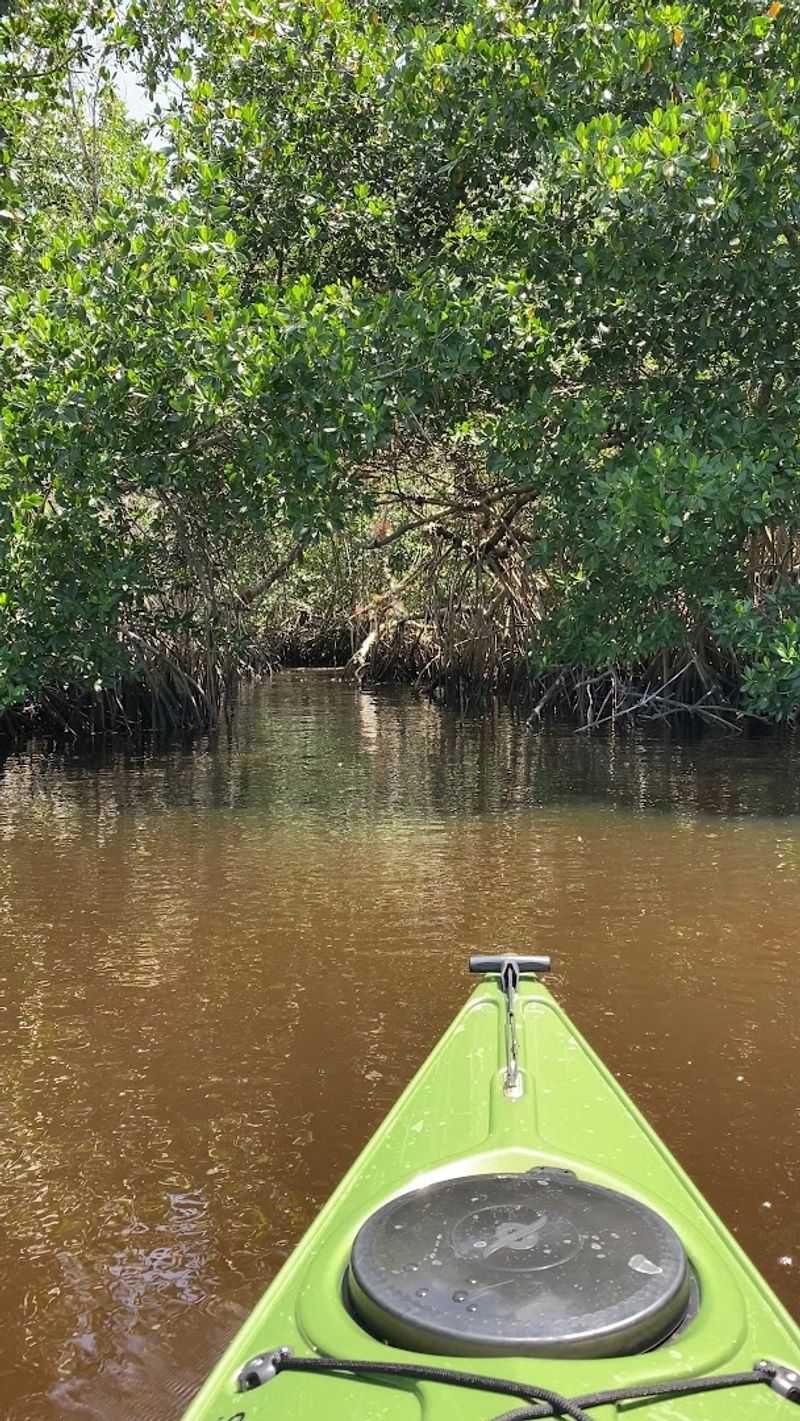
Florida has no shortage of natural attractions — from the coral reefs of the Keys to the springs of North Florida — but Fakahatchee Strand occupies a category entirely its own. There is no roller coaster, no gift shop at the entrance, and no perfectly manicured trail telling you exactly where to look.
What you get instead is raw, unfiltered wilderness that rewards curiosity and patience in equal measure.
Rare plants grow high in the treetops, rooted in nothing but bark and air. Endangered animals move through the shadows without anyone scheduling their appearances.
The landscape itself feels ancient — like it has been quietly doing its own thing long before humans arrived and will continue long after. That sense of genuine wildness is increasingly hard to find anywhere in the modern world.
Visitors who come expecting a typical park experience often leave with something much bigger — a renewed appreciation for ecosystems that operate on their own terms. Fakahatchee Strand does not put on a show for you.
It simply exists, in all its muddy, orchid-draped, panther-stalked glory. And somehow, that makes it more compelling than almost any manicured attraction in the state.
If you want Florida at its most honest and extraordinary, this swamp is exactly where you need to go.