
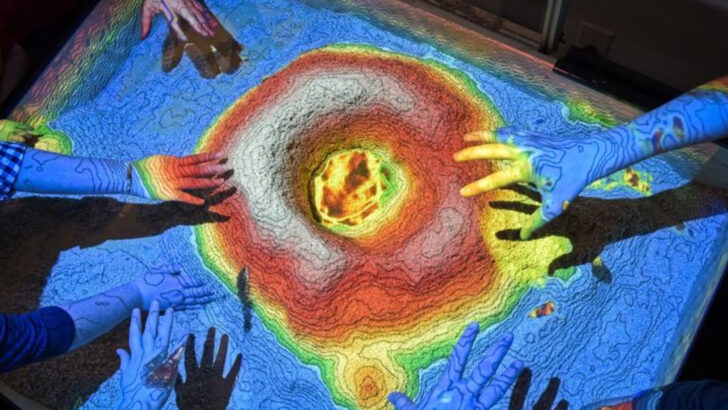
Tucked inside a four-story building in Lancaster, Pennsylvania, the Lancaster Science Factory is one of the most exciting hands-on STEM destinations in the Mid-Atlantic region.
With more than 75 interactive exhibits spread across multiple floors, kids get to build, launch, experiment, and explore in ways that no textbook could ever replicate.
Whether your child is obsessed with robots, curious about electricity, or just loves getting their hands messy with water experiments, this place has something to spark every kind of curiosity.
If you are planning a family outing or a school field trip, this guide breaks down everything you need to know before you go.
A Four-Story Hands-On Science Playground
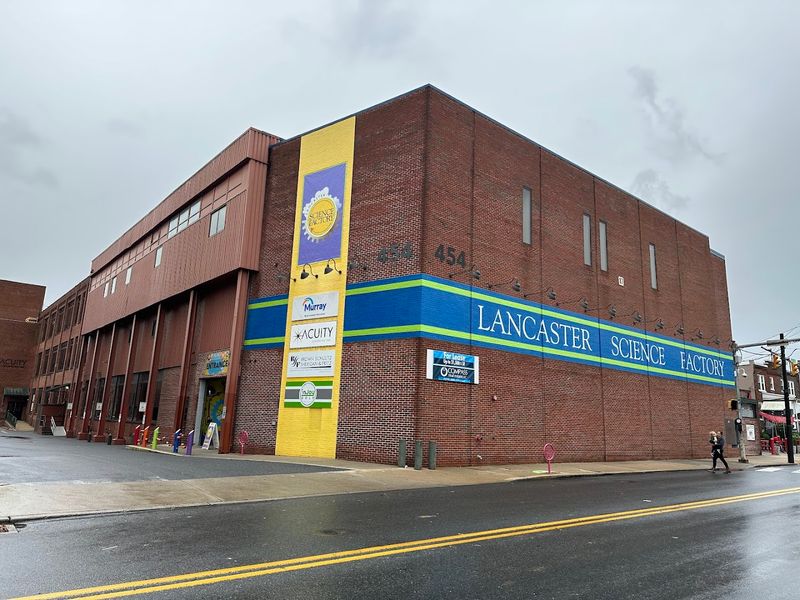
Imagine a building where every single floor is packed with something new to discover, build, or break apart just to see how it works. That is exactly what the Lancaster Science Factory delivers across four action-packed levels in the heart of Lancaster, Pennsylvania.
Unlike traditional museums where you stare at things behind glass, this place puts kids directly in the driver’s seat of their own learning.
Each floor has a distinct personality, moving from one STEM theme to the next as you climb higher. The layout is intentionally open so that kids can roam freely, backtrack to a favorite station, or race ahead to discover what is waiting on the next level.
Parents often find themselves just as captivated as their children, which says a lot about how well-designed the experience truly is.
The building itself has been transformed from a historic structure into a vibrant, modern learning environment that feels equal parts playground and laboratory. Energy is everywhere — kids are laughing, building, and shouting “it worked!” from every corner.
For families looking for a truly memorable outing that goes beyond screen time, this four-story science adventure is hard to beat.
Over 75 Interactive STEM Exhibits
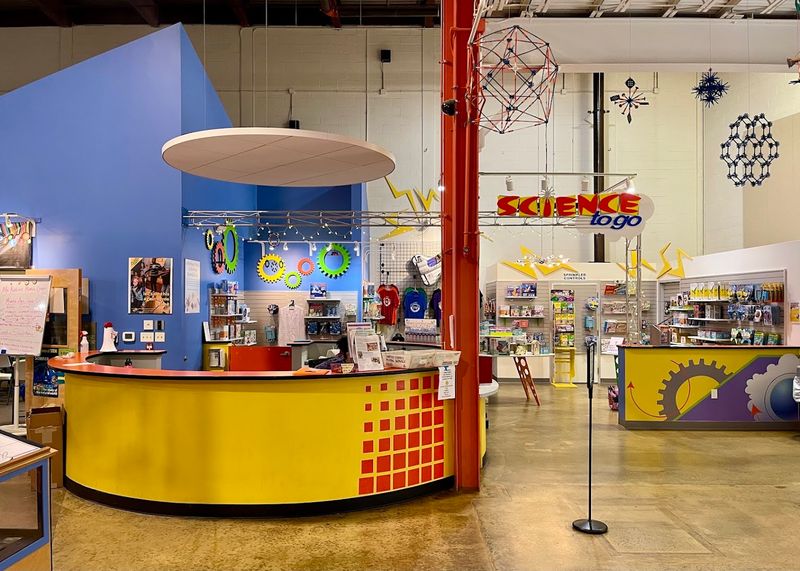
Seventy-five exhibits sounds like a lot — because it genuinely is. At the Lancaster Science Factory, the sheer variety of hands-on stations means that no two visits ever feel exactly the same.
Kids can spend an entire afternoon here and still leave knowing there were corners they did not fully explore, which makes return trips just as exciting as the first one.
The exhibits span the full STEM spectrum: science, technology, engineering, and math are all represented in creative, kid-friendly ways. What sets this place apart from a typical science center is that almost nothing is just for looking.
Buttons get pressed, levers get pulled, structures get built, and experiments get repeated until kids figure out why something works the way it does.
For parents and teachers, this kind of active, inquiry-based learning is incredibly valuable. Research consistently shows that children retain information far better when they experience it physically rather than simply reading about it.
With 75-plus exhibits covering topics from physics to biology to computer science, the Lancaster Science Factory essentially turns a Saturday afternoon into a full semester of unforgettable STEM discovery.
Every exhibit is an invitation to ask “what happens if I try this instead?”
Build, Launch, and Engineer in Real Time

There is something deeply satisfying about pulling back a launcher, letting go, and watching your creation fly across the room — especially when you built the whole thing yourself. At the Lancaster Science Factory, stations focused on building, launching, and engineering give kids the chance to test real physics concepts without ever opening a textbook.
Force, motion, trajectory, and momentum all become crystal clear when you are the one running the experiment.
Kids can construct bridges and test how much weight they can hold before snapping. They can adjust launch angles and observe how changing one variable completely changes the outcome.
These are not simplified toy versions of science — they are genuine engineering challenges that require kids to think critically, fail, adjust, and try again. That cycle of experimentation is exactly how real engineers and scientists work every day.
What makes this section especially great for families is how naturally it generates conversation. Parents find themselves discussing why one design worked better than another, and kids start explaining their reasoning out loud.
That kind of spontaneous STEM dialogue is priceless. Whether your child wants to be an astronaut, an architect, or just loves blowing things up safely, these exhibits deliver the hands-on thrill of real-world engineering.
The Engineering and Building Zones
Balance, weight distribution, and material strength might sound like engineering school concepts, but at the Lancaster Science Factory’s dedicated building zones, they become afternoon adventures. Kids get access to a variety of construction materials — foam blocks, connectors, magnetic pieces, and more — and the challenge is simple: build something that actually holds together under pressure.
Easier said than done, and that is exactly the point.
Structural engineering challenges at these stations are cleverly designed to be approachable for younger children while still being genuinely tricky for older kids and even adults. A kindergartner might stack blocks as high as possible, while a middle schooler might attempt to build the most weight-bearing bridge with the fewest materials.
Both experiences are equally valid and equally exciting within the same space.
One of the most valuable lessons kids take away from the building zones is that failure is not the end — it is feedback. When a tower collapses or a bridge buckles, the natural instinct is to figure out what went wrong and rebuild smarter.
That growth mindset, practiced in a playful, low-stakes environment, transfers directly into how kids approach challenges in school and life. The building zones make perseverance feel fun rather than frustrating, which is a remarkable thing to pull off.
Electricity, Magnetism, and Energy Play
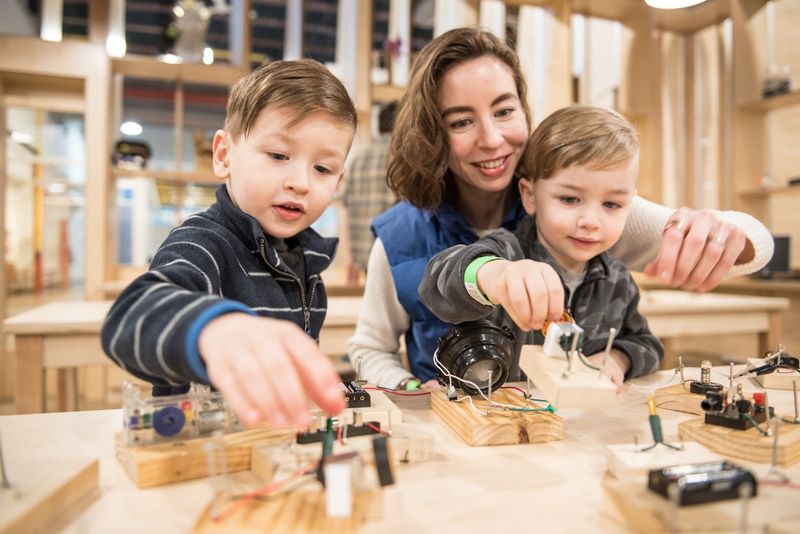
Electricity is one of those topics that sounds intimidating until you actually get to play with it in a safe, interactive environment. The Lancaster Science Factory’s exhibits on electricity, magnetism, and energy management to make these invisible forces feel totally real and completely fascinating.
Kids can generate their own electricity, watch magnetic fields visualized through iron filings, and experiment with circuits in ways that genuinely click.
One of the standout features of this section is how it layers learning without making it feel like a lesson. A child might start by simply touching a plasma globe and noticing how the light follows their finger.
Curiosity kicks in, questions start flying, and before long they are exploring the full exhibit trying to understand why it behaves that way. That natural progression from wonder to investigation is exactly how good science education works.
Energy-based installations throughout this section also touch on real-world applications, giving kids context for why these concepts matter beyond the museum walls. Understanding how circuits work, how magnets generate power, and how energy flows through a system are foundational ideas that connect directly to renewable energy, electronics, and engineering careers.
It is the kind of exhibit that makes parents think “I wish I had this when I was a kid” — and they would be absolutely right.
Water Lab and Fluid Dynamics Exploration
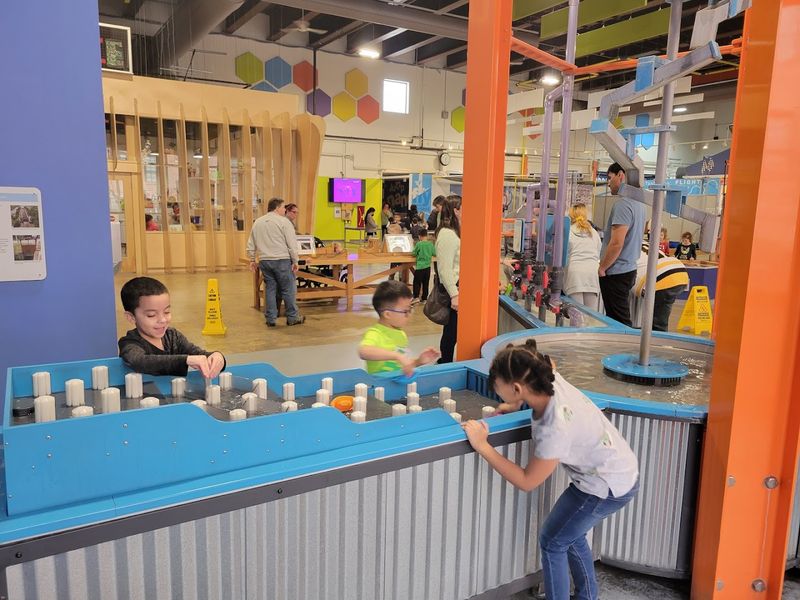
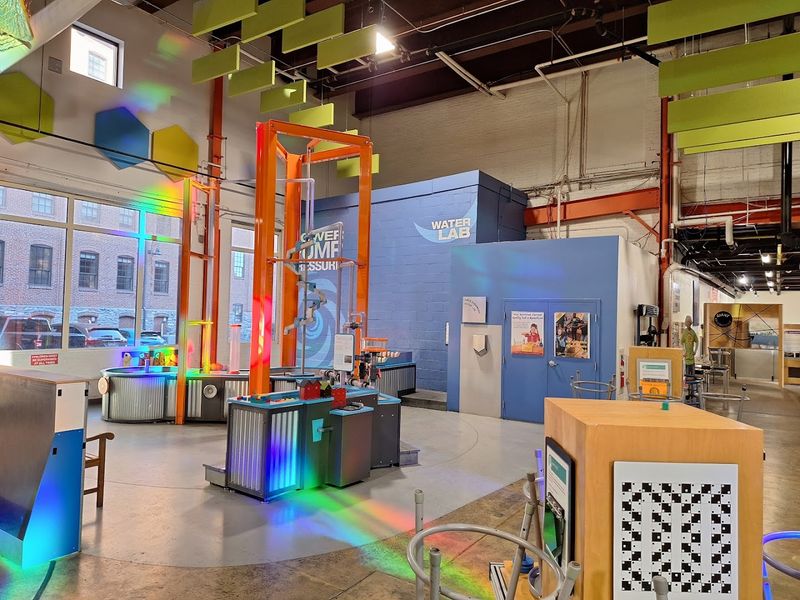
Few things capture a child’s attention faster than water — especially water they are allowed to redirect, dam up, and send rushing through channels they designed themselves. The water-based exhibits at the Lancaster Science Factory are perennial favorites among visitors of all ages, and it is easy to see why.
Fluid dynamics, pressure, and flow rate all get explored through pure, joyful play that feels nothing like homework.
Kids can manipulate gates and valves to control the speed and direction of water currents. They can test how different shapes affect water flow, or observe what happens when pressure builds behind a barrier and is suddenly released.
These are the same principles that engineers use when designing dams, water treatment systems, and irrigation networks — just presented in a way that an eight-year-old finds absolutely irresistible.
A heads-up for parents: the water exhibits are genuinely hands-on, meaning your child will likely get a little damp. Bringing a spare shirt is a smart move, especially for younger kids who tend to commit fully to the experience.
The museum typically provides aprons, but enthusiasm has a way of outpacing protective gear. Wet sleeves aside, the water lab consistently ranks among the most memorable parts of any visit to the Lancaster Science Factory.
Light, Sound, and Optical Illusions
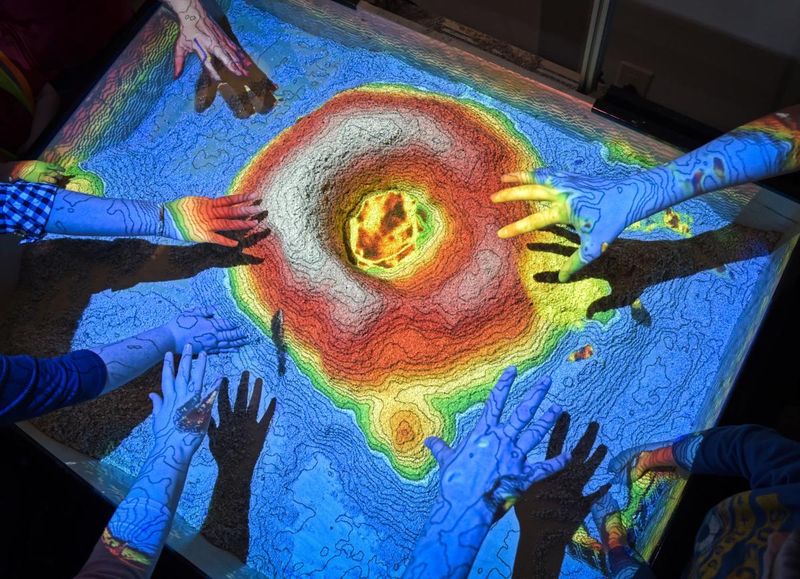
Science starts to feel like actual magic when you are standing inside an optical illusion that makes your own hand look like it is floating, or when you shout into a parabolic dish and hear your voice reflected back from 30 feet away. The light and sound exhibits at the Lancaster Science Factory tap into that sense of wonder brilliantly, using lasers, mirrors, sound waves, and visual trickery to make physics genuinely spellbinding.
Kids can experiment with how light bends through different materials, discovering the concept of refraction without ever hearing the technical term until they are ready for it. Sound stations let visitors visualize audio waves, see how pitch affects vibration, and explore why certain shapes amplify noise while others absorb it.
Every exhibit in this section is designed to provoke a “wait, how does that work?” moment.
Optical illusions are a particularly clever inclusion because they challenge kids to question what their eyes are telling them — which is a foundational scientific habit of mind. Trusting data over perception, forming hypotheses, and testing assumptions are all skills that these playful illusion exhibits quietly reinforce.
The light and sound section is also one of the most photogenic parts of the building, so families tend to linger here longer than they planned. Bring extra time for this floor.
Maker Space and STEM Workshops
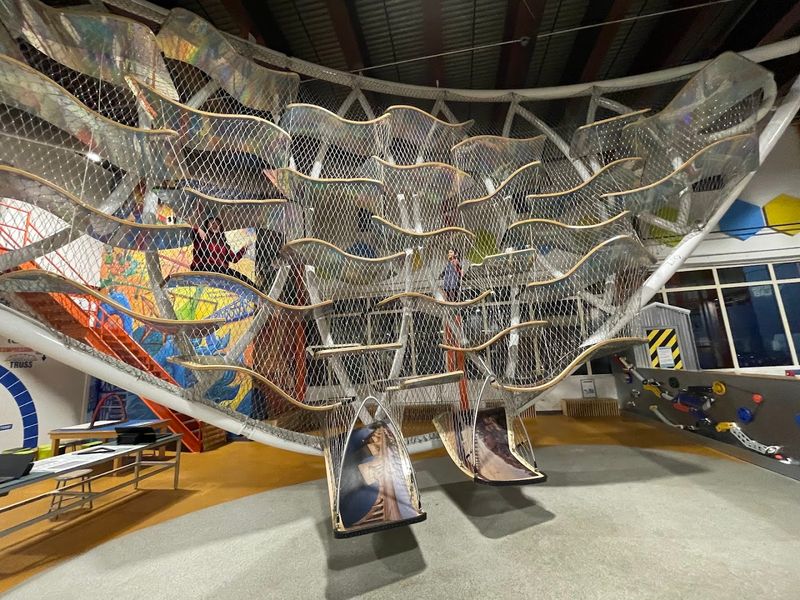
Beyond the open exhibit floor, the Maker Space at the Lancaster Science Factory offers a more structured kind of creativity — one where kids follow a challenge prompt, collaborate with others, and produce something tangible by the end of a session. Guided by trained educators, these workshops cover everything from 3D printing basics to bridge-building competitions to coding-driven robotics challenges.
It is hands-on learning with a little more direction and a lot more satisfaction.
Workshops rotate regularly, so repeat visitors always have something new to try. A family that visited in the fall for a circuits workshop might return in the spring to find a completely different engineering challenge waiting for them.
This keeps the Maker Space feeling fresh and gives kids a reason to keep coming back throughout the year. Schools also frequently book the space for field trip programming tied directly to curriculum standards.
For parents who want their kids to walk away with more than just memories, the Maker Space is where the deepest learning happens. Children leave with completed projects, new vocabulary, and often a renewed confidence in their own problem-solving abilities.
It is worth checking the factory’s event calendar before your visit so you can time your trip to coincide with a workshop that matches your child’s current interests. Spots can fill up quickly on busy weekends.
Designed for Curious Kids Pre-K to 8th Grade
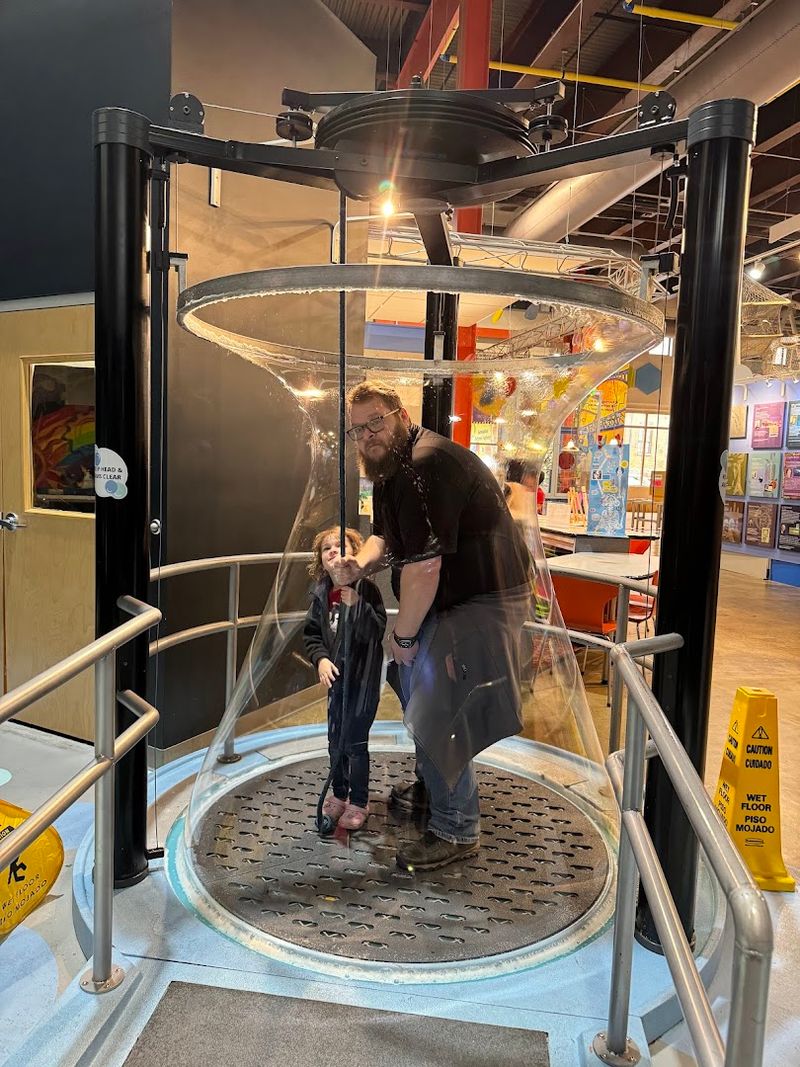
One of the smartest things about the Lancaster Science Factory is how thoughtfully it has been designed to serve a wide age range without leaving anyone bored or overwhelmed. Pre-K children can engage with sensory-rich, low-complexity stations that develop fine motor skills and basic cause-and-effect thinking.
Meanwhile, middle schoolers can tackle exhibits that challenge them with multi-step engineering problems and abstract scientific concepts. The same building works for both groups simultaneously.
This age-range flexibility makes the factory an ideal destination for families with kids at different stages, eliminating the “too young” or “too old” problem that plagues many science centers. A six-year-old and a twelve-year-old sibling can both find meaningful engagement on the same floor, even if they are drawn to completely different exhibits.
Parents do not have to split up or compromise — everyone finds their level naturally.
School groups from across Lancaster County and beyond regularly visit as part of structured field trips, and the staff is experienced at facilitating programming for everything from kindergarten classes to advanced middle school science cohorts. Teachers appreciate that the exhibits align with Pennsylvania STEM curriculum standards, making the trip genuinely educational rather than just a fun day out.
For homeschooling families especially, this flexibility makes the Lancaster Science Factory an incredibly valuable resource throughout the academic year.
Visitor Info and Tips for Your Trip
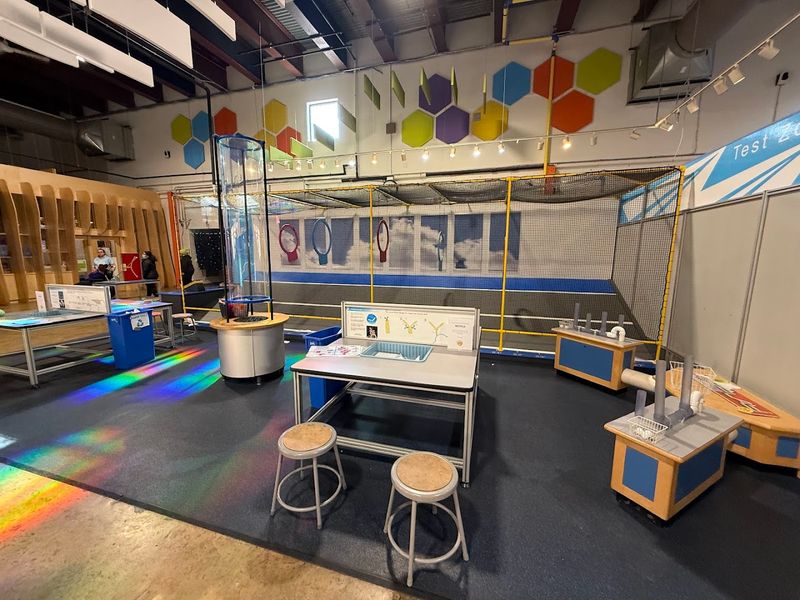
Planning ahead makes a big difference when visiting the Lancaster Science Factory, especially if you want to catch a Maker Space workshop or avoid the weekend rush. The museum is located at 454 New Holland Ave, Lancaster, PA 17602, and can be reached by phone at +1 717-509-6363.
Typical hours run Tuesday through Saturday from 10 AM to 5 PM, with Sunday afternoon hours also available — though it is always smart to confirm current hours on their website before heading out, as seasonal schedules can shift.
Budget around two to three hours for a comfortable visit that covers most of the exhibits without feeling rushed. If your family is particularly into one section — say, the water lab or the engineering zones — you could easily spend longer.
Admission is reasonably priced for a regional science center, and membership options are worth considering if you plan to return more than once during the year.
A few pro tips from experienced visitors: weekday mornings are significantly less crowded than weekend afternoons, making it easier for kids to access popular exhibits without long waits. Dress your children in clothes you do not mind getting a little dirty or damp, since the hands-on nature of the exhibits invites full physical commitment.
Check the online calendar for special events, themed weekends, and educator-led STEM programming that can add an extra layer of excitement to your visit.