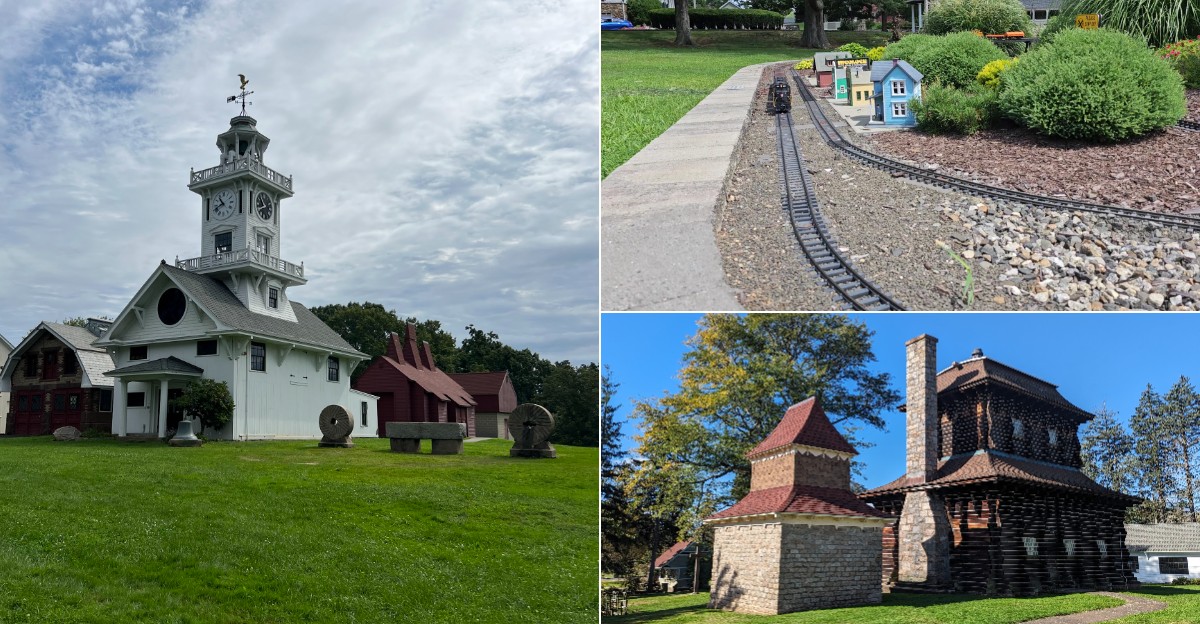
A peaceful garden can hold stories that are anything but peaceful. At Boothe Memorial Park in Stratford, Connecticut, rose beds, broad lawns, and curious little buildings create a welcoming setting, yet old family graves, wartime shelters, and local tales of unexplained sounds add a darker layer to the landscape.
Located at 5800 Main St, the park invites visitors to look beyond its pretty paths and discover the history woven into the grounds. A quiet walk can reveal weathered stones, historic structures, and reminders of the families and events that shaped this corner of Stratford.
The contrast is part of what makes the experience so intriguing: one moment you are admiring flowers and open lawns, and the next you are considering the lives remembered here. From its unusual architecture to the stories that linger around its historic grounds, Boothe Memorial Park has plenty of details waiting to be uncovered.
An Estate Built by Two Unusual Brothers
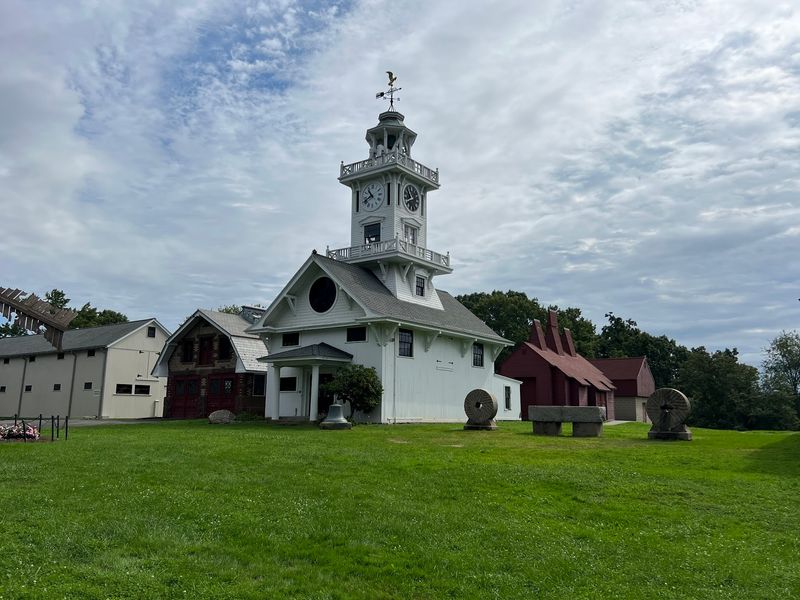
At first glance, the scattered buildings look as if someone collected pieces of several towns and placed them on one lawn. That impression is part of the fun.
Boothe Memorial Park grew from the family property of brothers David Beach Boothe and Stephen Nichols Boothe, who filled their Stratford estate with structures reflecting their many interests.
The brothers preserved family history, explored new ideas, and enjoyed making things that stood out. Their choices left a landscape that feels playful one moment and puzzling the next.
As you walk between buildings, notice how little they seem to have in common; that mix tells you something about the minds behind the estate.
The darker side is not a single hidden disaster. It is the reminder that every attractive old property has seen changing lives, losses, and uncertain times.
A quiet stroll here can make those years feel surprisingly close.
Begin with a slow circuit of the grounds instead of rushing to one landmark. Read any posted signs, then look back across the lawns to see how the different buildings fit together.
The odd layout is the first clue to the park’s remarkable story.
The Homestead and Its Long Memory
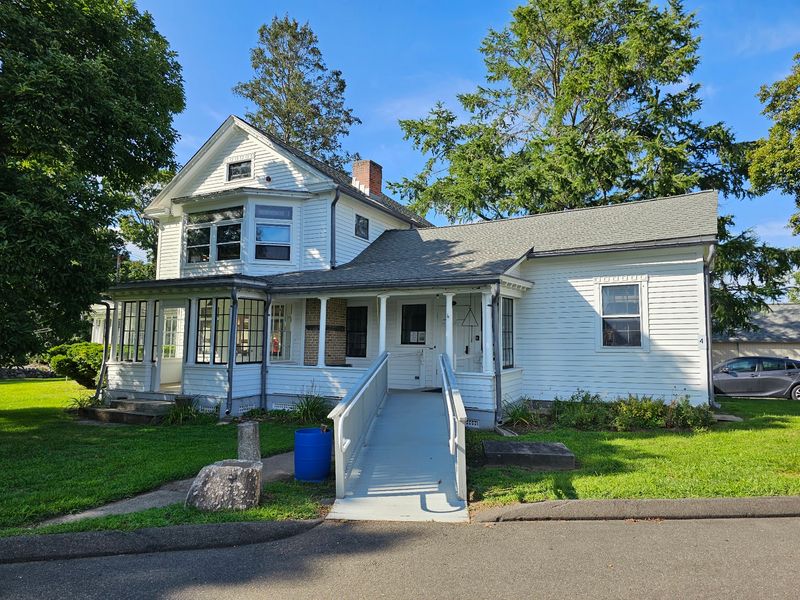
A house can feel old even when parts of it are newer than the ground beneath. The Boothe homestead is the clearest example at Boothe Memorial Park.
Its site is linked to a family presence dating to the 1600s, but the standing house changed over time, including major work in later centuries.
That difference matters when you hear the claim that it is the oldest homestead in America. A long-used site is not the same thing as an unchanged building.
Rather than accepting a bold label at face value, ask a guide which parts of the house belong to which period.
Stories of voices and unexplained knocks also circulate around the homestead. They are local lore, not proof that anyone haunts the rooms.
Still, the tales can make an ordinary doorway feel a little less ordinary, especially when you consider how many generations lived on this land.
If a tour is available, take time to study the furnishings and layout before focusing on spooky stories. Check the park’s current tour schedule before traveling, since access to historic interiors can be limited even when the grounds are open.
The Redwood Building’s Unusual Idea
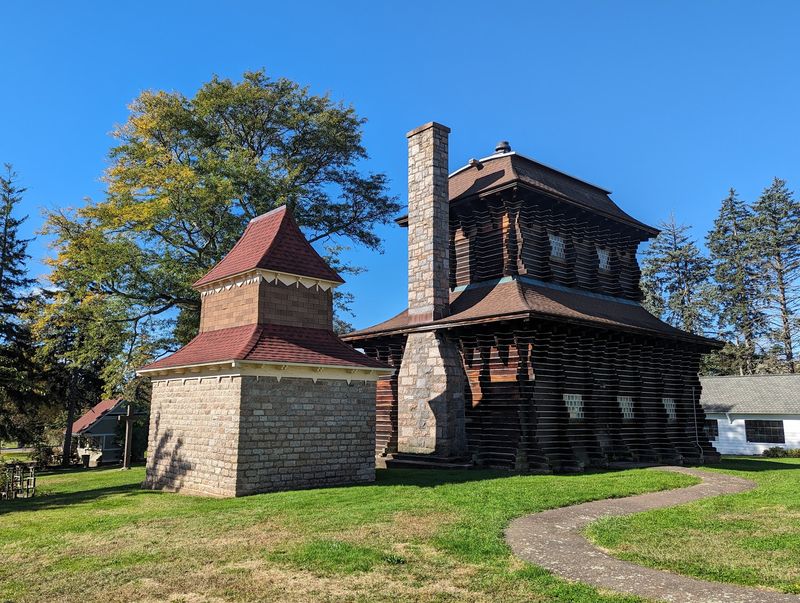
One building seems to ask visitors to stop and wonder what its builders were thinking. The Redwood Building, sometimes called the Technocratic Cathedral, stands among the curious sights at Boothe Memorial Park.
Its layered wood design looks unlike a typical barn, church, or family home.
The structure is associated with the brothers’ interest in technocracy, an idea that gave scientists and engineers a leading role in organizing society. You do not have to agree with the idea to find the building fascinating.
It shows how a debate about the future could become something you can walk up to and study.
Look closely at the way the wood pieces meet, and compare that pattern with the simpler walls of nearby buildings. The contrast turns an architecture stop into a small puzzle.
It also hints at the uneasy years when many Americans searched for better answers to serious problems.
Take a photograph from a few steps back so its full shape appears in the frame. Then move closer to notice the construction details, while respecting barriers and closed doors.
The reward is a glimpse of a bold idea made solid.
A Clock Tower That Would Not Stay Quiet
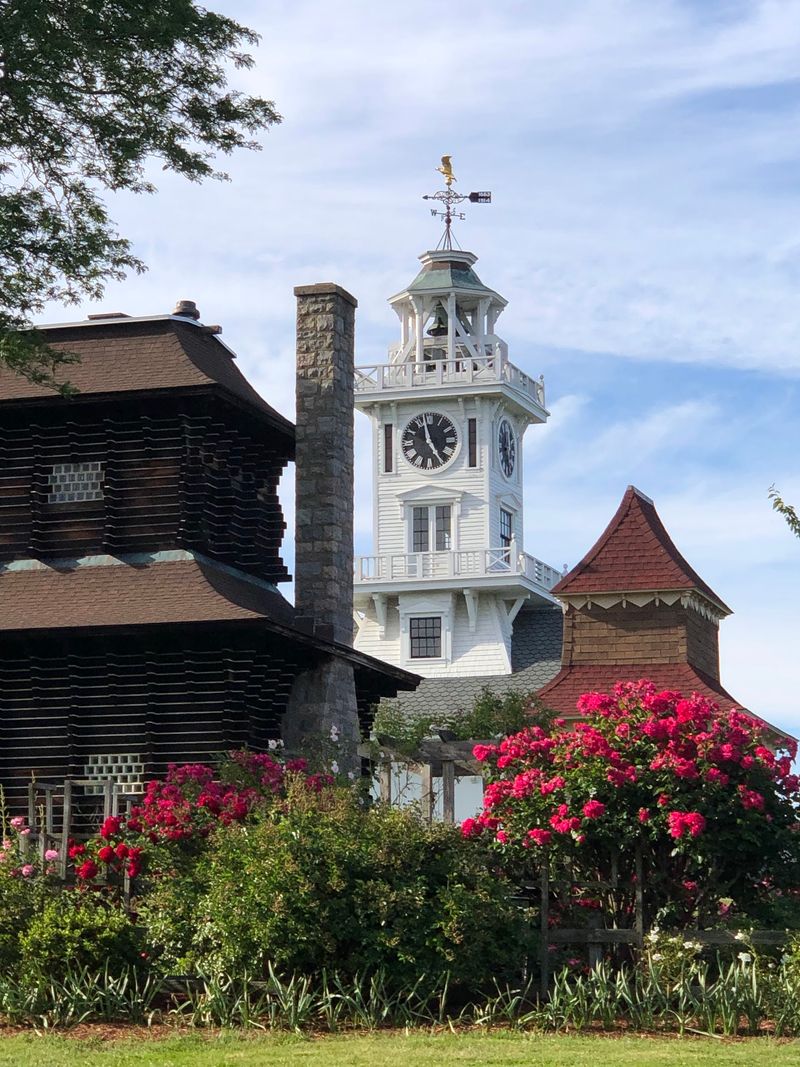
Imagine living near a clock that does not always tell you the right time. The tower at Boothe Memorial Park is tied to a story about bells that rang unpredictably and irritated neighbors.
It is a funny tale now, but it also reveals how one family’s grand project could affect everyone nearby.
The brothers added the clock tower to a barn as part of their celebration of family history in Stratford. According to a popular account, complaints about the bells led to a sharp public response from them.
Whether you come for the dispute or the design, the tower gives the park a personality that polished monuments rarely have.
Stand where you can see the tower rising over the older farm building. That view brings two kinds of time together: a working farm’s daily routines and the brothers’ wish to mark an anniversary.
It is easy to picture neighbors glancing up, then wondering if the bells could be trusted.
Read posted information for the most reliable version of the story. Even if the bells stay silent during your visit, the tower makes a memorable stop and a good reminder that history includes small arguments as well as major events.
The Family Cemetery Beside the Lawns
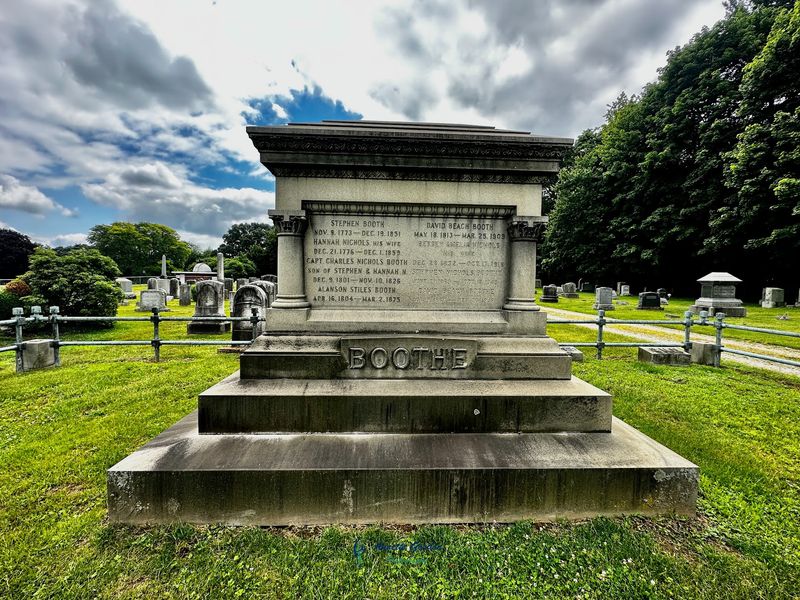
Footsteps often slow when a walk reaches the cemetery. Near the lively grounds of Boothe Memorial Park, Boothe family headstones offer a quieter view of the same story.
The names and dates are a reminder that the people behind the unusual buildings were real relatives who grew older, mourned, and died.
Local ghost stories have attached themselves to this part of the property, but a graveyard does not need a haunting to feel powerful. Its history is there in stone.
Look for repeated family names and the gaps between dates; they can suggest how one generation followed another without telling you everything those people faced.
Visit with the same care you would show at any burial ground. Stay on permitted paths, leave stones and decorations untouched, and keep voices low if others are reflecting nearby.
A photograph from a respectful distance can capture the setting without turning someone’s grave into a prop.
The cemetery changes the mood of the park in a useful way. After seeing the brothers’ imaginative buildings, you can pause here and think about the family roots beneath all that creativity.
It is a brief stop that adds depth to the entire walk.
Family Stories That Grew Larger Over Time
Not every mystery needs a ghost. Family stories can become hard to untangle when they are told for decades, and the Boothe brothers left plenty for later visitors to discuss.
Their shared estate raises a natural question: how did two strong personalities agree on so many unusual projects?
Some accounts describe tension over David’s marriage, while other tales suggest a romantic rivalry between the brothers. Those more dramatic claims should be treated as stories unless a guide can point you to solid records.
Guesswork can be entertaining, but it should not replace what we know about their work and their gift to the town.
Walk from one distinctive building to another and notice the range of interests on display. A tower, a shop, and a tiny landmark do not suggest a tidy plan.
They suggest people willing to follow an idea simply because it mattered to them.
For a richer visit, ask a knowledgeable volunteer which family stories are documented and which belong to local legend. The answer may be less sensational than a feud, yet more interesting: real people are rarely as simple as the tales we inherit about them.
Wartime Shelters on a Peaceful Estate
Solid stone can change the feeling of a sunny walk in an instant. Among the park’s playful buildings are structures described as wartime bunkers, linked to the uncertainty of World War II.
Their heavy construction feels far removed from flower beds and picnic lawns.
Accounts of the estate describe two shelters built from granite paving blocks. Seen beside the brothers’ more fanciful projects, they suggest a different kind of planning: preparing for a danger no one wanted to face.
Their presence gives visitors a concrete way to think about fear during a global war, even far from a battlefield.
Pause to compare the shelters’ thick walls with the light details of nearby buildings. You can ask younger visitors what they would pack if they had to spend time in a safe space, then talk about how families today prepare for storms.
That connection makes distant history easier to understand.
View the structures only from places open to visitors, and do not enter any closed or unsafe area. They may be small stops on a larger tour, but their mood stays with you.
Here, the park’s unusual past becomes suddenly serious.
Tiny Trains and Big Changes
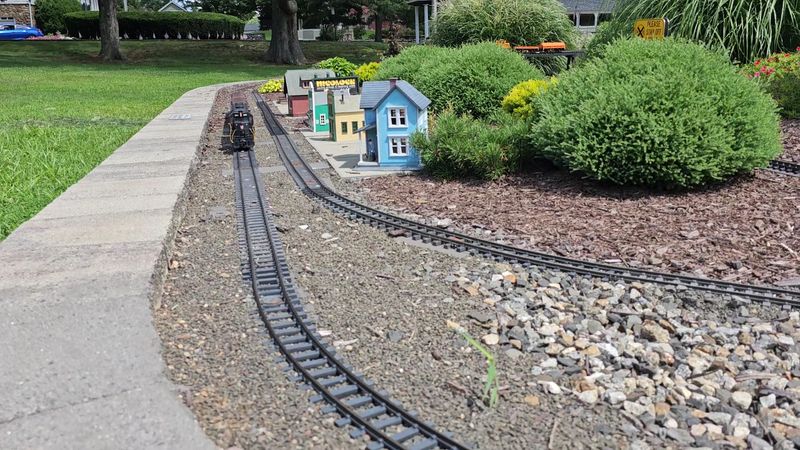
A small train rounding a curve can pull your attention away from the park’s darker tales. The railway displays at Boothe Memorial Park give visitors a lighter way to explore the brothers’ interest in machines and movement.
Model tracks and carefully made scenery turn a big transportation story into something you can examine up close.
Look for the details that make a miniature scene believable, such as the spacing of tracks or the scale of buildings. Each choice reflects patient work.
It also points toward a time when rail travel changed how people and goods moved across Connecticut and the rest of the country.
If the railway area is open during your visit, allow extra time rather than treating it as a quick photo stop. Children can try spotting the smallest feature in a display, while adults may enjoy the craft behind it.
Displays and operating times can change, so check ahead before promising anyone moving trains.
Afterward, return to the outdoor paths with a different view of the estate. The brothers did not collect only old memories; they were interested in technology, too.
That contrast keeps the park from feeling stuck in one century.
A Lighthouse Far From the Shore
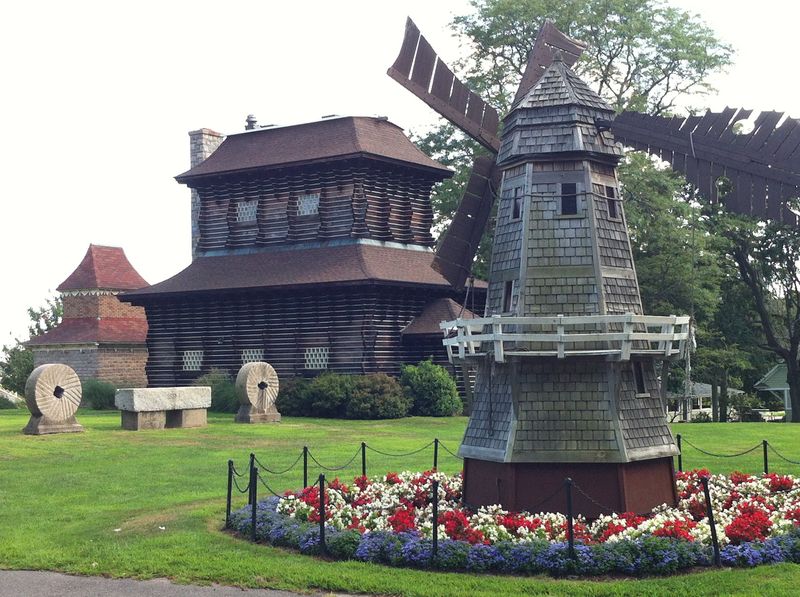
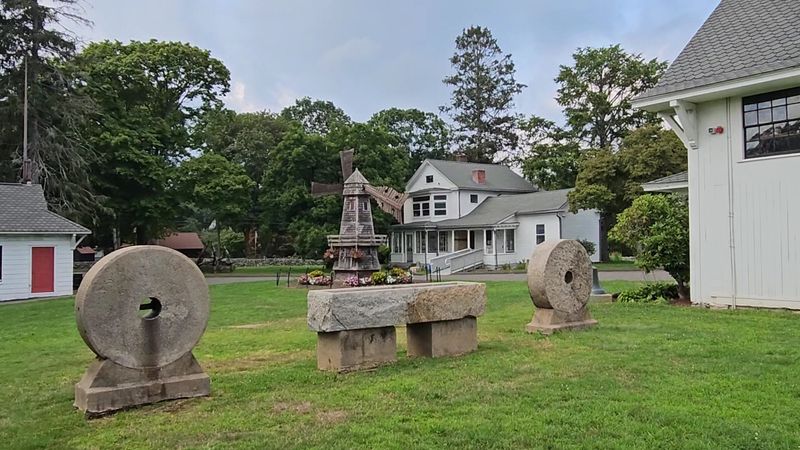
A lighthouse standing on a lawn feels like the start of an odd story. At Boothe Memorial Park, that small structure is part of a collection that also includes a windmill.
Neither needs to guide a ship or grind grain to catch your eye; they show how the brothers turned their interests into places visitors could see.
The miniature scale makes these landmarks especially easy to enjoy with children. Ask them what job each full sized structure would have done, then consider why someone might build a smaller version here.
The conversation can shift from play to history without feeling like a lesson.
These cheerful sights also offer a useful pause between heavier stops, including the cemetery and wartime shelters. A place can hold sad memories and still make room for invention.
From the right angle, the tiny lighthouse against the open lawn is a pleasing photograph of that contrast.
Take a moment to look beyond the structures rather than simply checking them off a list. Their unexpected setting tells you how personal this estate once was.
The brothers made room for ideas that would seem out of place almost anywhere else.
A Public Park With a Private Past
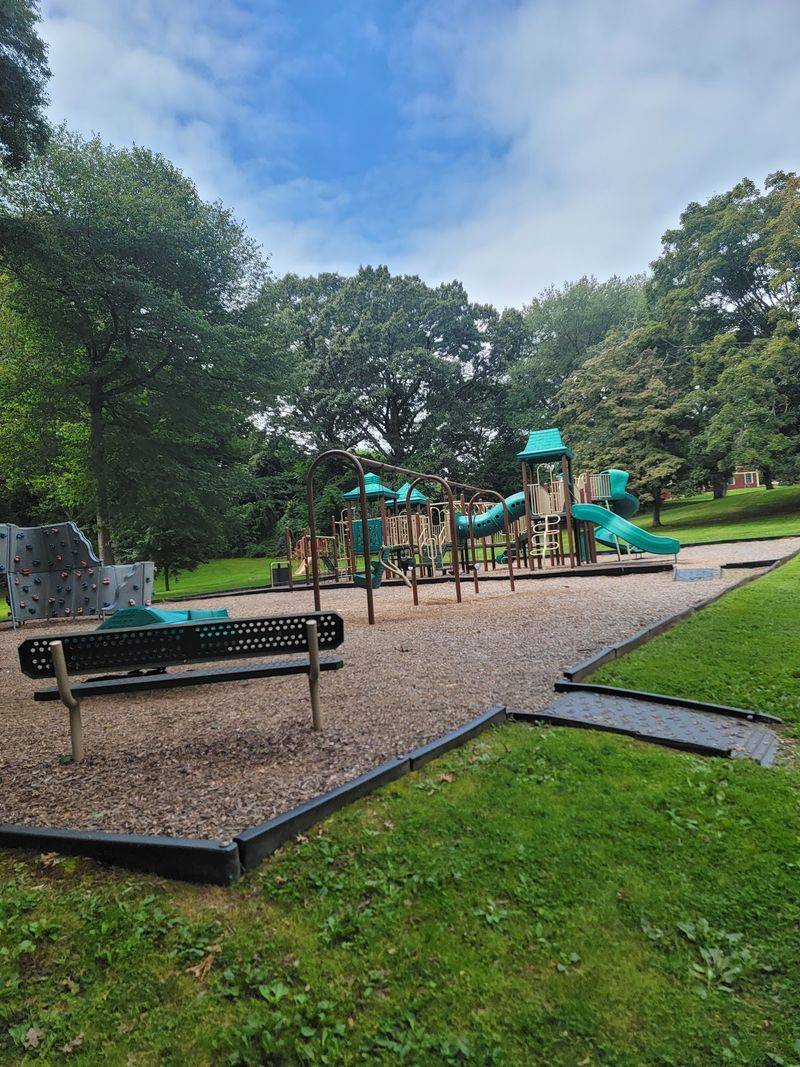
Picnic blankets on the grass make it hard to picture this land as a private family estate. Yet that change is the heart of Boothe Memorial Park’s story.
After the brothers’ era, the property became a public place where Stratford residents and travelers could enjoy its grounds and collections.
Today, a visit can be as simple as walking past historic buildings, resting near the rose garden, or taking children to the playground. Each activity shares space with reminders of earlier lives.
A family lunch might happen only a short walk from a cemetery, a wartime shelter, or a building made for a strange new idea.
That contrast is a reason to stay longer than you planned. Bring water and comfortable shoes, then give yourself time for both the gardens and the less familiar corners.
If you hope to tour interiors or see a special display, confirm current hours with the park before setting out.
Leave with more than a spooky tale. The park shows how one family’s unusual home became a shared place, and how a community can enjoy a peaceful landscape without forgetting the complicated history around it.