
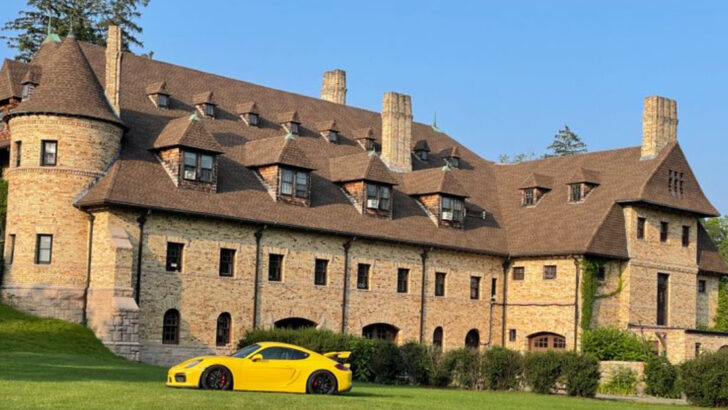
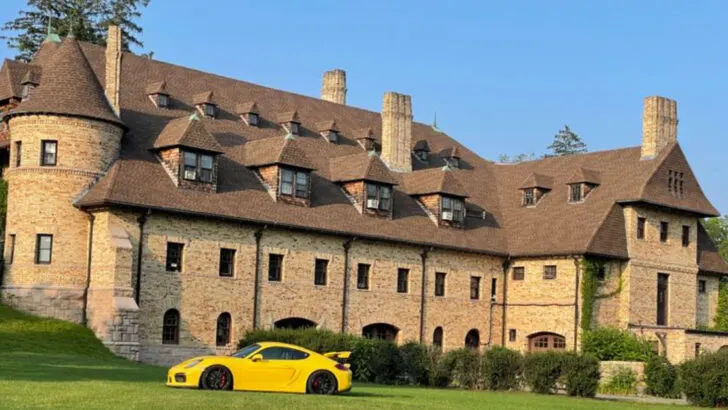
This museum doesn’t whisper history—it revs it.
Tucked inside one of Massachusetts’ oldest country estates, the Larz Anderson Auto Museum feels like a secret passed between locals. The stone carriage house once sheltered horses. Now it guards rare machines that shaped the earliest days of American driving.
This isn’t a sterile showroom. Brass-era racers, prewar classics, and oddball experiments sit close enough to spark goosebumps. The Andersons were early auto obsessives, and their taste leaned bold, curious, and slightly rebellious. You feel that spirit the moment you step inside.
Step outside and the magic stretches further. The estate’s rolling grounds host lawn events where engines growl and crowds lean in.
Brookline traffic fades away.
For a while, the past feels fully alive.
The Carriage House Chateau Experience
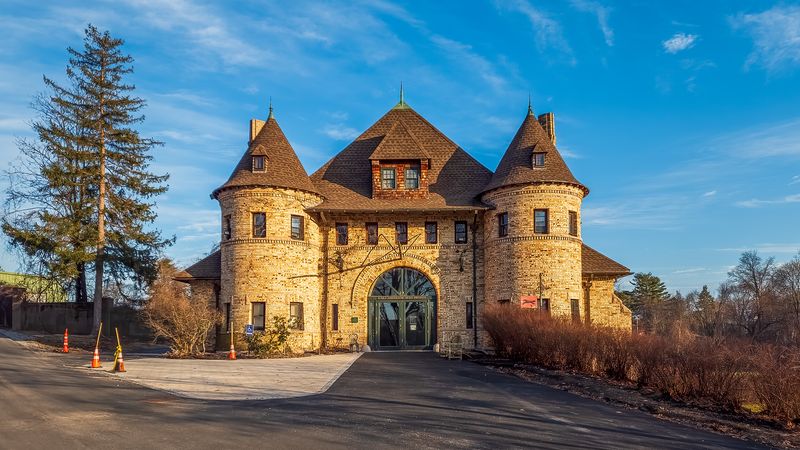
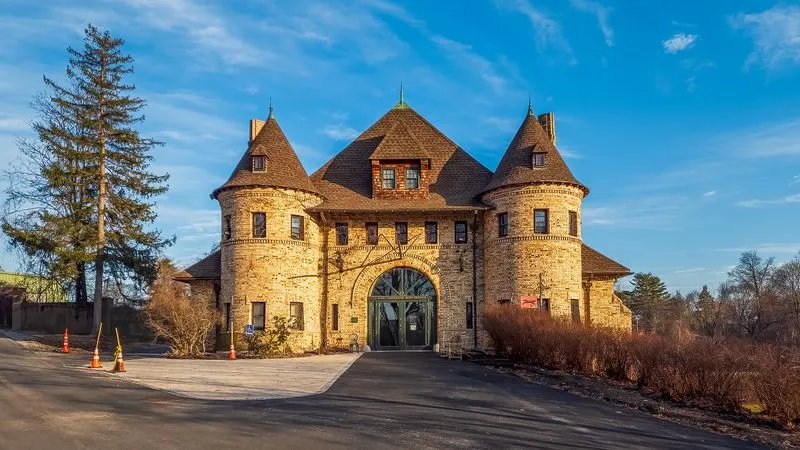
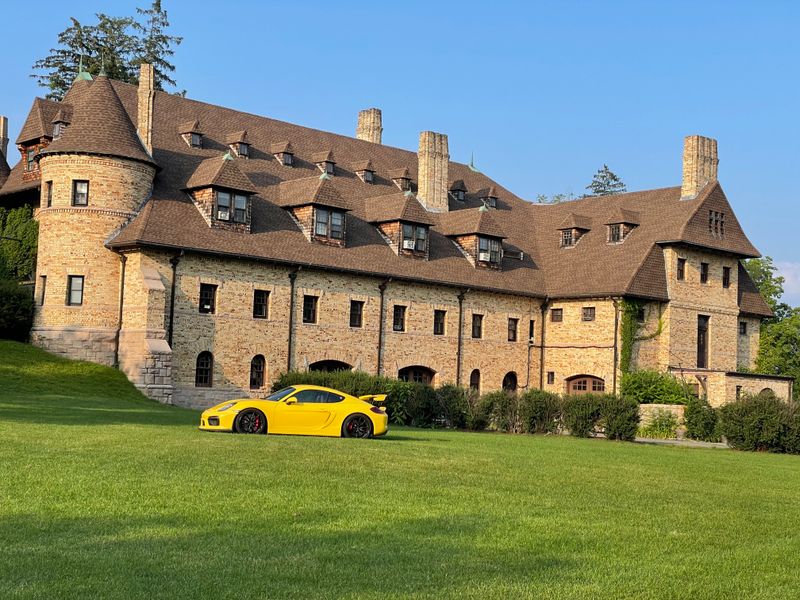
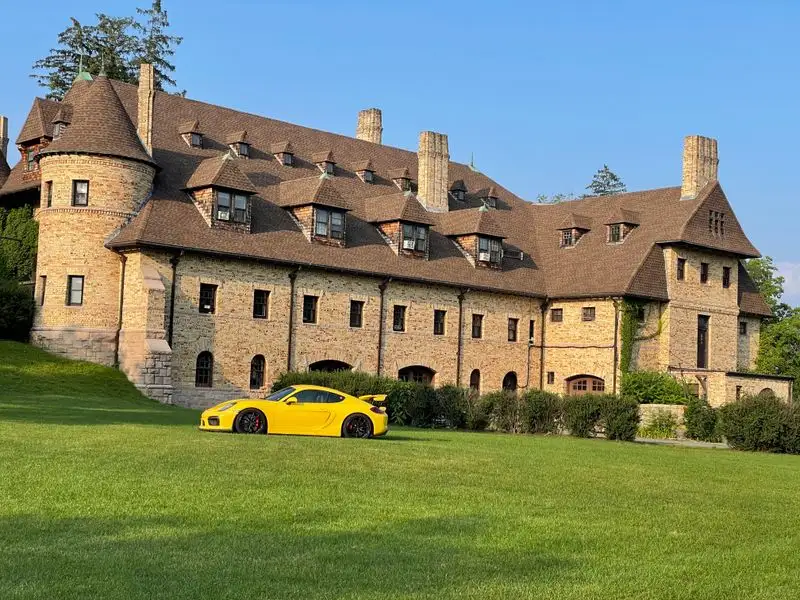
Before a single car steals your attention, the building does. The Larz Anderson Auto Museum lives in a grand carriage house designed to echo a French chateau, with arched bays, peaked roofs, and glowing wood interiors.
You feel the aura of an era when automobiles were luxuries and architecture framed them like art.
Step across creaking floors and you catch a whiff of old timber mixed with machine oil. Sunlight cuts through mullioned windows and lands on brass radiators and lacquered coachwork.
Even if cars are not your obsession, the craftsmanship and serenity make the visit feel like a quiet time capsule.
Pause to look up at the rafters and carved details, because they tell their own story about wealth, travel, and taste. The building is the exhibit that sets every other exhibit.
When you later admire an early touring car, you are also seeing how owners would have stored and showcased it, right where carriage and motor ages overlap.
Turn-of-the-Century Automobiles
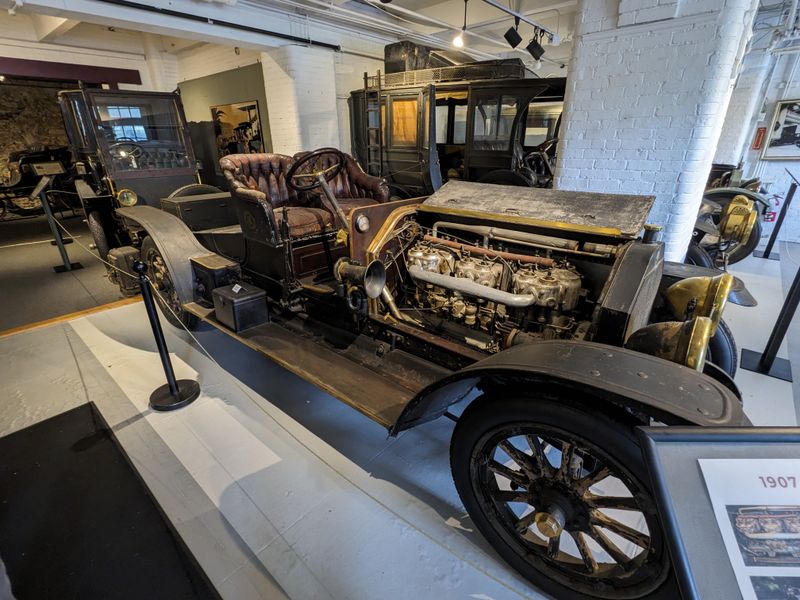
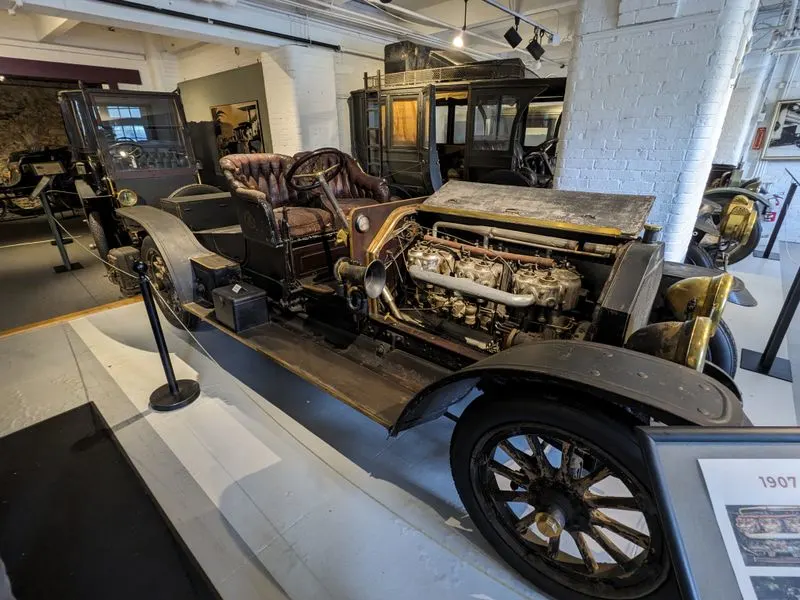
Antique cars from the early 1900s sit with quiet confidence, their brass lamps and carriage-like bodies glowing softly. You notice hand-riveted panels, wooden artillery wheels, and elegant tiller or spindly steering wheels.
Each machine feels both delicate and daring, a reminder that motoring began as an adventurous, slightly precarious experiment.
Placards outline feats like hill climbs, endurance runs, and electrics that challenged gasoline’s early dominance. Stand close and you can imagine the smell of leather and hot metal, the clatter of chains on rough roads.
These vehicles do not hide their mechanics, so you understand how power, braking, and comfort evolved.
What makes the collection sing is its authenticity. Some cars wear age honestly, unbuffed by overrestoration, so history feels near enough to touch.
You walk away with fresh respect for drivers who coaxed power from small engines and crude tires, carving the first lines on the map of modern mobility.
Japanese Icons in the Basement
Head downstairs and the tone changes instantly. The basement gallery often highlights Japanese classics that defined a generation, from tidy hatchbacks to sleek sports coupes.
You sense personal memories stirring as you spot cars once seen only in magazines, posters, or the background of childhood neighborhoods.
Design details jump out: lightweight bodies, high-rev engines, purposeful interiors. The exhibit traces how Japan balanced reliability with performance, creating cult favorites that shaped tuner culture and motorsport.
It is easy to linger, comparing silhouettes, gear levers, and gauges that made these machines feel approachable yet thrilling.
What hits hardest is seeing them together, curated with care rather than hype. The space is intimate, so every angle feels intentional and photogenic.
Whether you grew up dreaming of an AE86 or the first time you heard a straight-six sing, this corner makes you feel seen.
Vintage Bicycles and Early Mobility
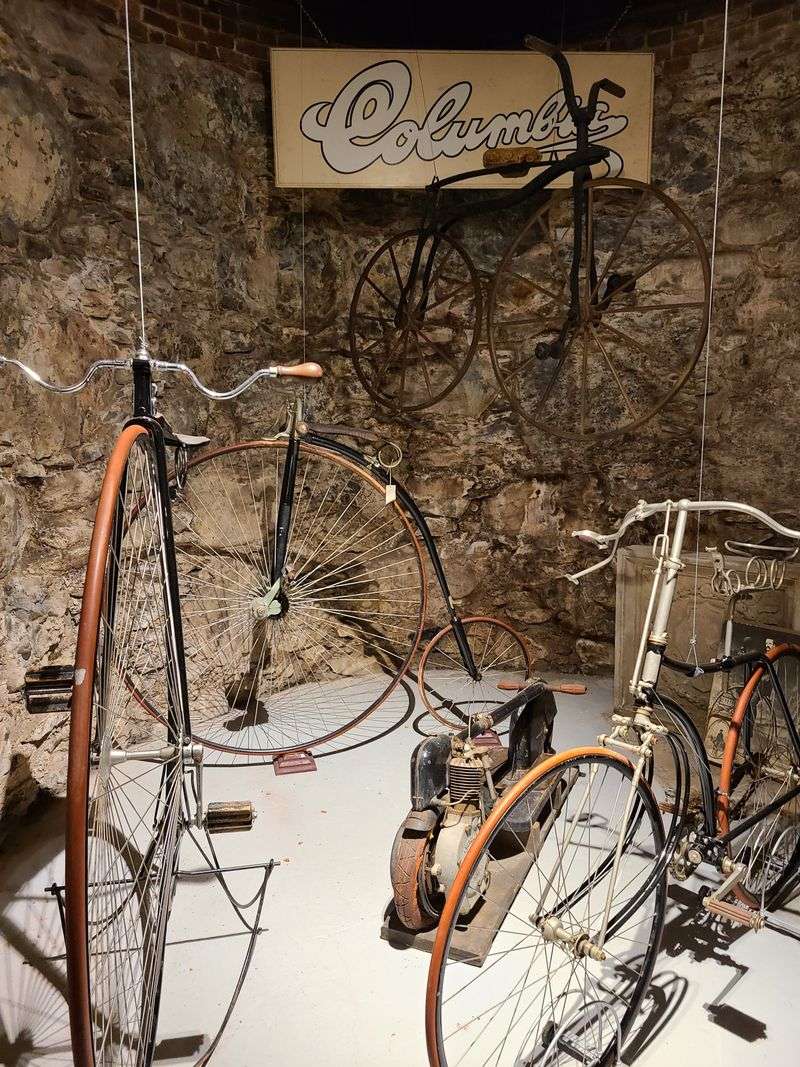
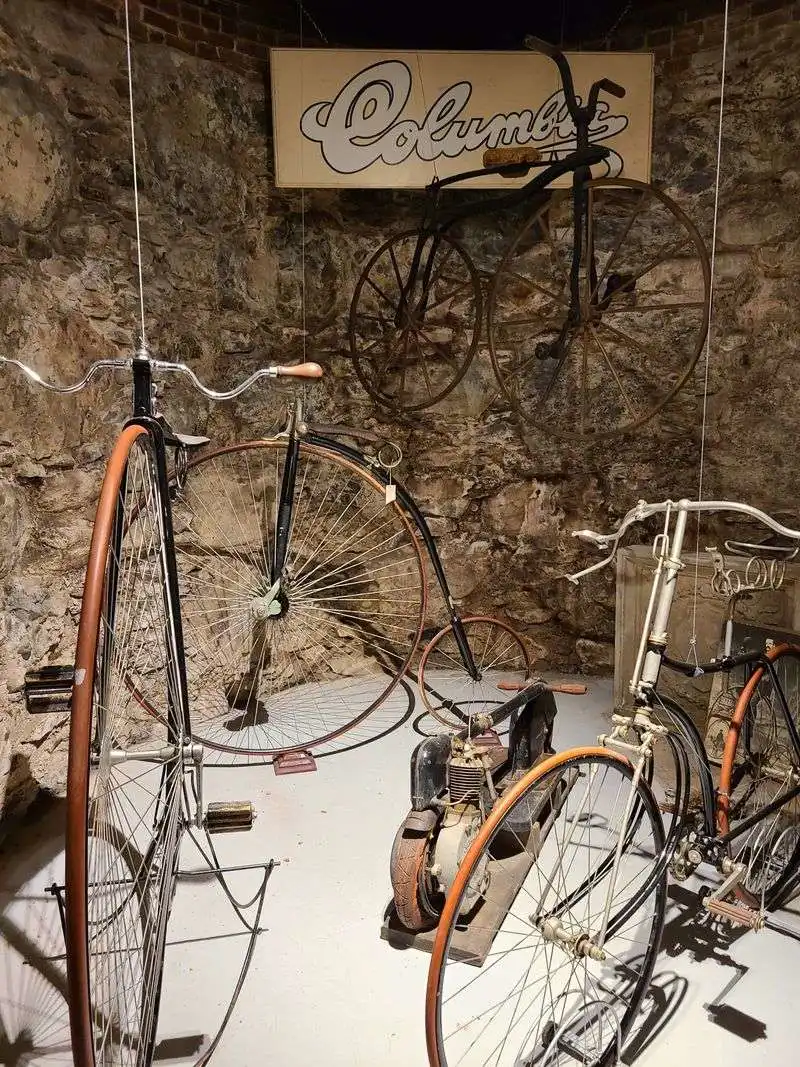
Not everything here runs on pistons. The museum’s vintage bicycles reveal how mobility culture began, long before traffic and interstate signs.
A towering high-wheel penny-farthing stands beside early safety bikes, inviting you to imagine bumpy streets, long skirts, and daring commutes.
These machines changed social life by shrinking distances affordably. You can trace craftsmanship in spoked wheels, leather saddles, and chain drives that later influenced motorcycle and automotive design.
The exhibit makes a persuasive case that two wheels laid important groundwork for four, especially in materials, ergonomics, and maintenance culture.
Read the labels and notice how cycling touched fashion, health, and even women’s independence. It also provided a pipeline of tinkerers and racers who pushed mechanics forward.
You leave appreciating that mobility is a continuum, with bicycles giving everyday people the first thrilling taste of practical freedom.
Unrestored Survivors and Authentic Patina
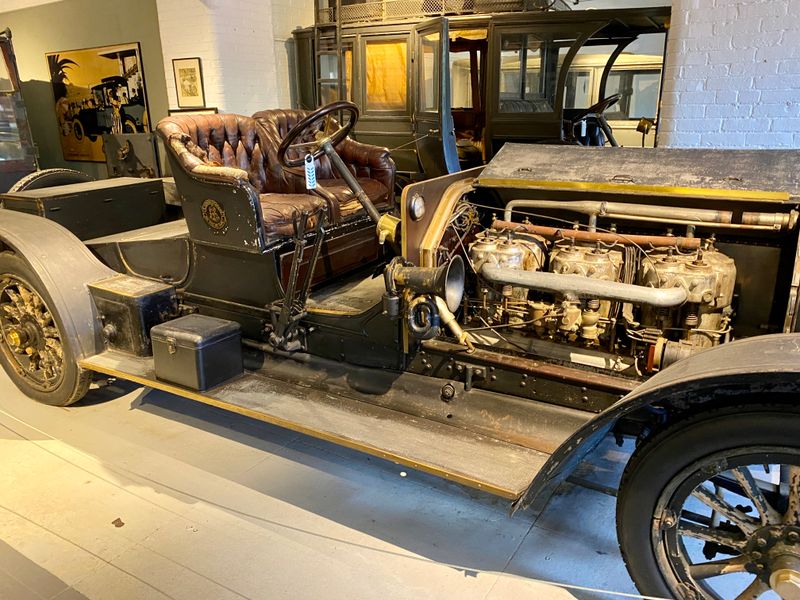
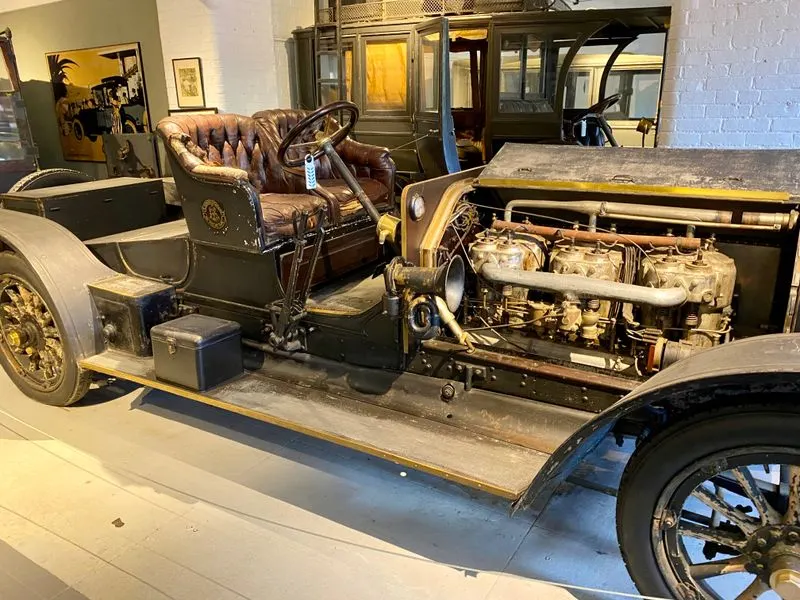
There is a special gravity to cars left largely unrestored. Scuffs, sun-faded paint, and threadbare leather create a tactile record of use and time.
Instead of a perfect mirror finish, you get the intimate truth of travel, maintenance, and the eras these vehicles survived.
Most museums polish history until it gleams. Here, some pieces are allowed to whisper in their own voices.
You sense prior owners, winter storage, and Sunday drives across early New England roads, all embedded in dings and creaks that restoration might erase.
It changes how you look at value. Authentic patina becomes a kind of historical data, reminding you that engineering and memory share the same chassis.
When you step back, the car is not only an object but a biography, and that realization stays with you long after the visit.
Lawn Events on the Hill
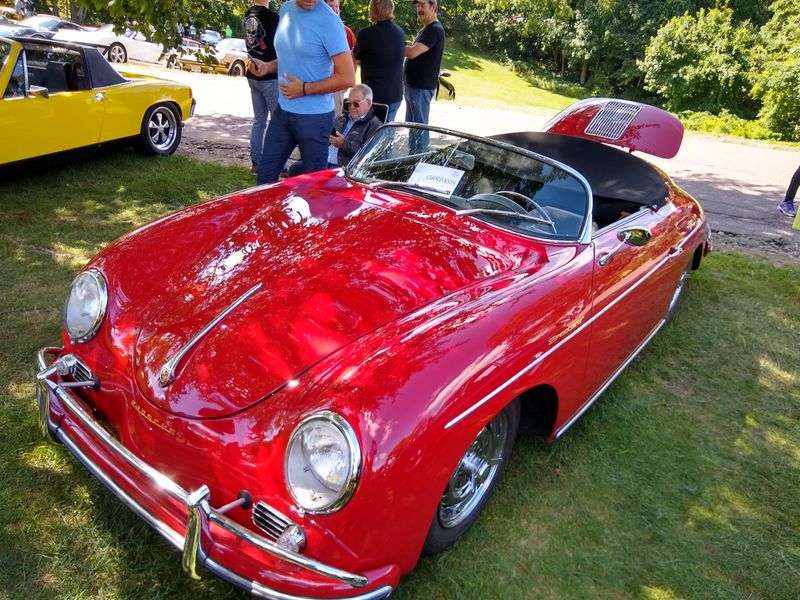
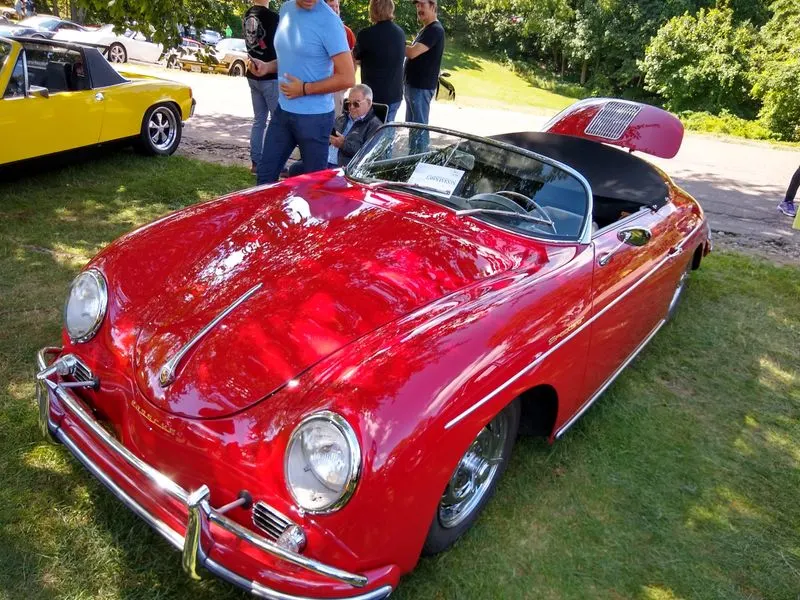
On warm weekends, the museum’s hill transforms into a rolling show field. Lawn events bring dozens to hundreds of cars, from obscure microcars to exotics, with owners happy to chat.
Spread a blanket, sip coffee, and enjoy that peculiar mix of metal and community.
Each gathering has its own flavor, like Tutto Italiano or discontinued model day. You see children picking favorites, photographers chasing reflections, and old friends greeting each other around hoods.
The variety makes it easy to learn, because every shape and engine note sits side by side.
If you time it right, catch a free Cars and Coffee. The estate setting elevates everything, giving chrome and carbon a classic backdrop.
Even non-enthusiasts appreciate the picnic-worthy views and relaxed pace that make gear talk feel welcoming.
Architecture, Grounds, and Views
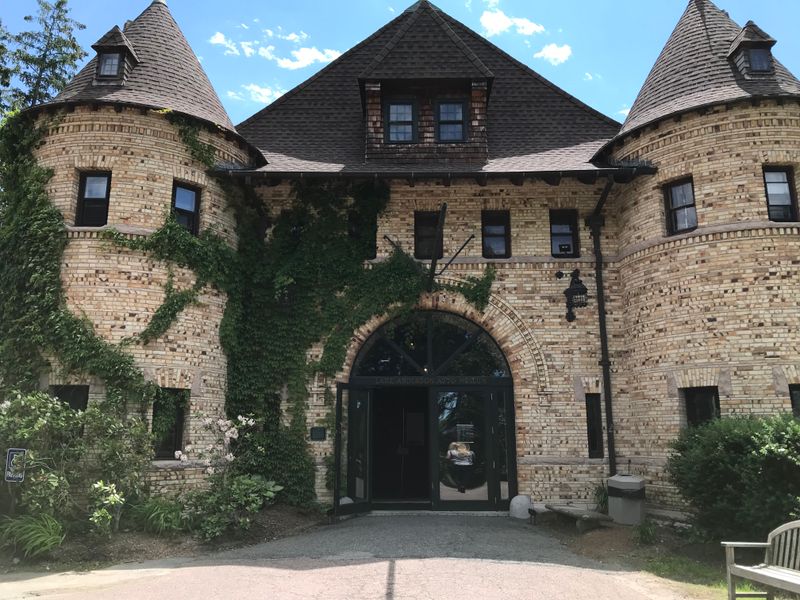
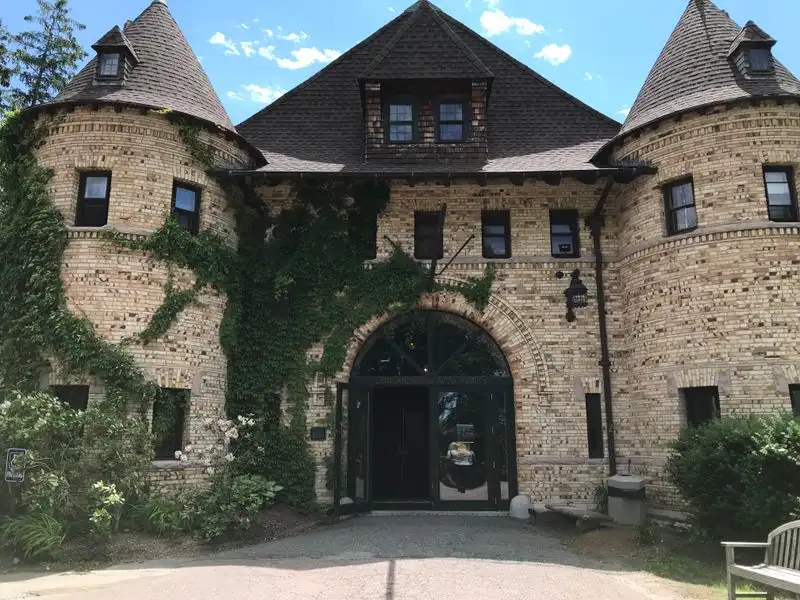
The museum sits within Larz Anderson Park, where grassy slopes and stone walls frame the chateau-like building. Walk the grounds to catch long views that change color with the seasons.
It is easy to see why couples choose this place for weddings and photos, even before you step into the galleries.
Architecture and landscape work together here. The carriage house is compact yet stately, standing comfortably against the open lawn.
Benches, shade trees, and winding paths make it a restorative pause within Greater Boston’s busy rhythm.
Bring comfortable shoes and time to wander after your visit. The fresh air clears your head so the mechanical stories settle in.
You leave feeling you saw more than a collection: you experienced an estate designed to make objects and people look their best.
Planning Your Visit
Plan a relaxed visit between 10 AM and 3 PM from Tuesday through Sunday, since Monday is typically closed.
The Larz Anderson Auto Museum sits at 15 Newton Street, Brookline, Massachusetts, tucked inside the historic Larz Anderson Park.
Check the website for exhibit changes and the lawn event calendar, because pairing a show day with the galleries makes the experience feel bigger.
Tickets are modestly priced, with occasional discounts including military.
Parking is straightforward, and the park itself invites a stroll before or after your tour. Expect a small museum that trades size for character, which means you can truly see everything without rushing.
Add time for photos, because light inside the carriage house is flattering. Call ahead if you have accessibility questions or hope to catch a docent.
If you are bringing kids, challenge them to find the oldest car or spot an early electric. You will likely leave with a phone full of pictures and a head full of stories.