
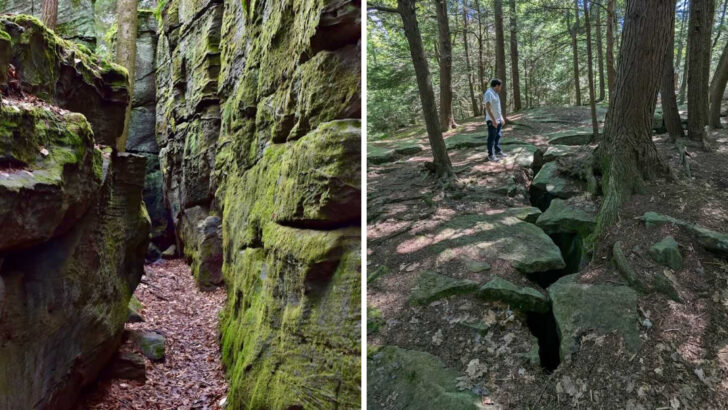
Hidden deep in the forests of Clearfield County, Pennsylvania, lies one of nature’s most jaw-dropping secrets — Bilger’s Rocks.
This sprawling field of ancient sandstone boulders has been sitting quietly in the woods for over 300 million years, long before dinosaurs even walked the Earth.
Twisted passageways, cool stone chambers, and towering rock walls make it feel like stepping into another world entirely.
Whether you love geology, hiking, or just stumbling upon places that feel truly wild and untamed, Bilger’s Rocks is the kind of place that earns a permanent spot on your must-visit list.
A Hidden Rock City in the Pennsylvania Wilds
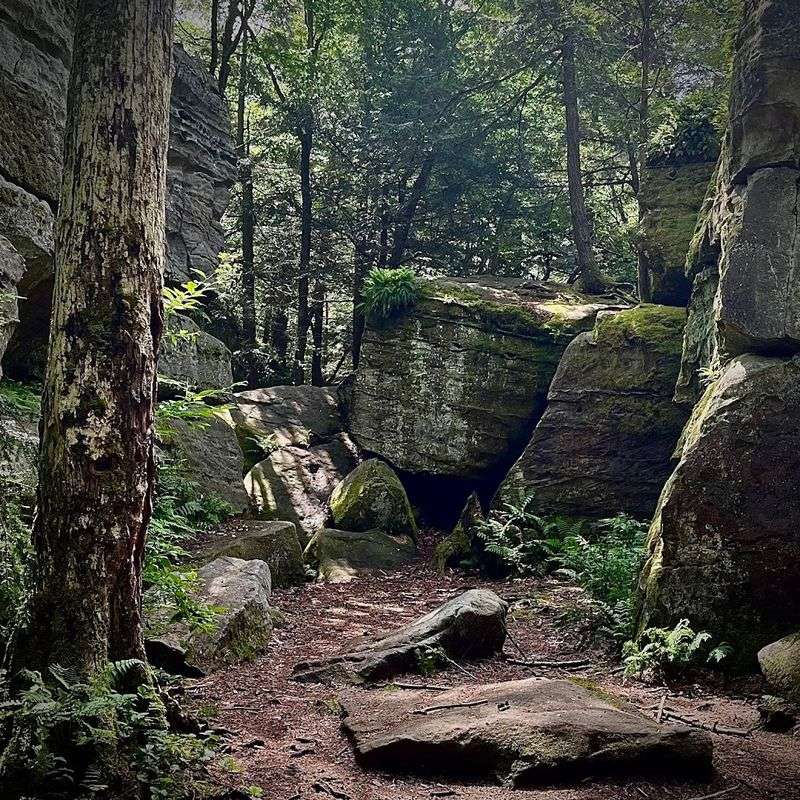
Somewhere between the small towns of Grampian and Chest Springs in Clearfield County, a forest hides something extraordinary. Bilger’s Rocks is not just a pile of stones — it is an entire landscape of massive sandstone boulders stretching across more than 100 acres of wild Pennsylvania woodland.
Many people who visit for the first time describe the feeling as stepping into a completely different world.
The site is often called a natural “rock city” because walking through it genuinely feels like navigating streets and alleyways between enormous stone buildings. Some boulders tower 20 feet or more above the forest floor.
The sheer scale of the place catches most visitors off guard — photos simply do not do it justice.
Getting there requires a short drive down rural roads, which only adds to the sense of discovery. There are no flashy signs or tourist traps waiting at the entrance.
Just trees, quiet air, and suddenly — rock after rock after rock stretching as far as you can see. For anyone who loves off-the-beaten-path adventures, this hidden corner of Pennsylvania delivers in a big way.
Formed Over 300 Million Years Ago
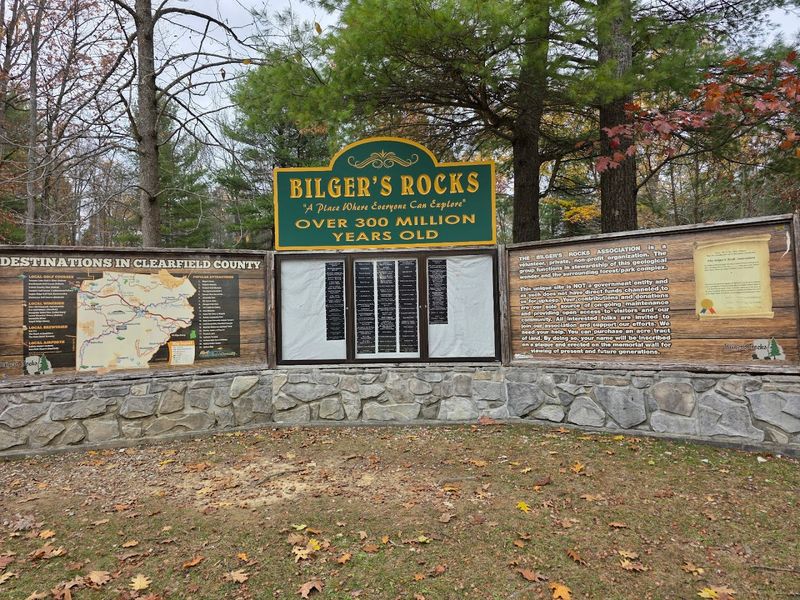
Three hundred million years is a number so large it barely registers — but that is exactly how old the rocks at Bilger’s Rocks are. During the Carboniferous Period, roughly 316 to 320 million years ago, this region of North America looked nothing like it does today.
Thick layers of sand and sediment accumulated over countless centuries, eventually compressing under enormous pressure into the dense sandstone formations we see today.
At that time, the supercontinent Pangaea had not yet broken apart, and the area was likely covered by ancient rivers, swamps, and shallow seas. The organic material from those environments — plants, sediment, and minerals — hardened slowly over millions of years into solid rock.
Long before the first dinosaur appeared on Earth, this stone was already ancient.
Understanding the age of Bilger’s Rocks makes visiting feel almost spiritual. You are not just looking at rocks — you are looking at a frozen chapter of Earth’s earliest story.
Every crack, layer, and surface texture is a record of time that no human being has ever fully witnessed. That perspective alone makes the trip worthwhile for anyone even mildly curious about our planet’s history.
A Natural Labyrinth of Passageways and Crevices
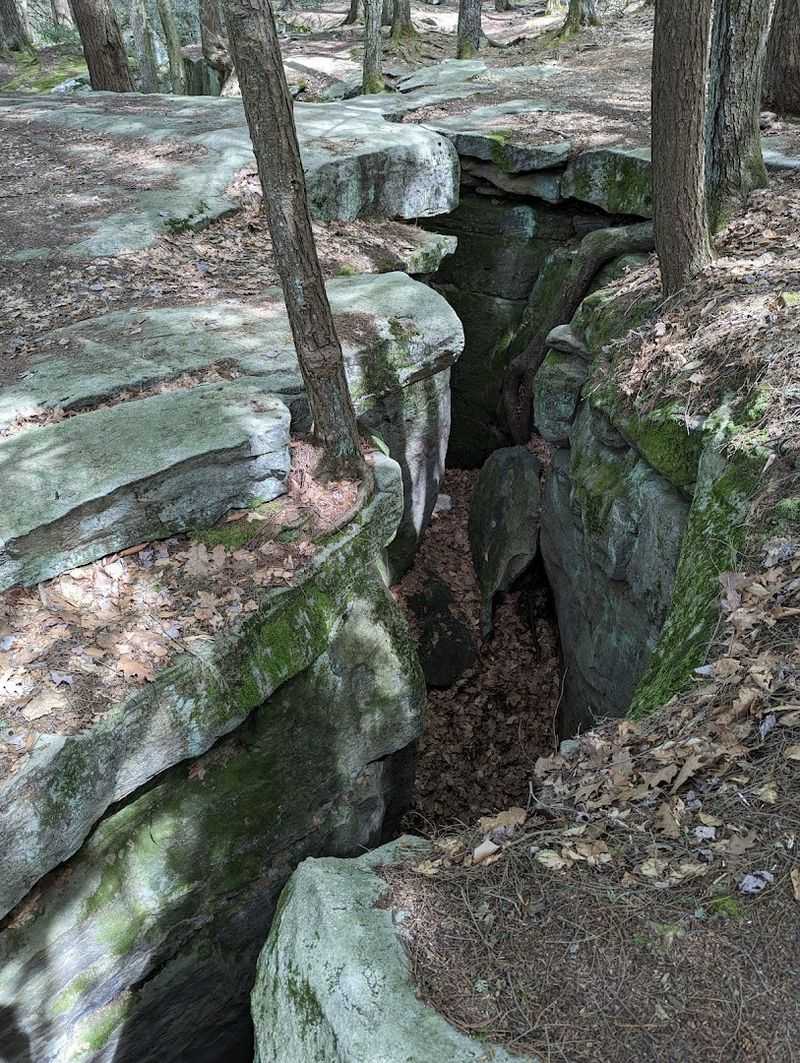
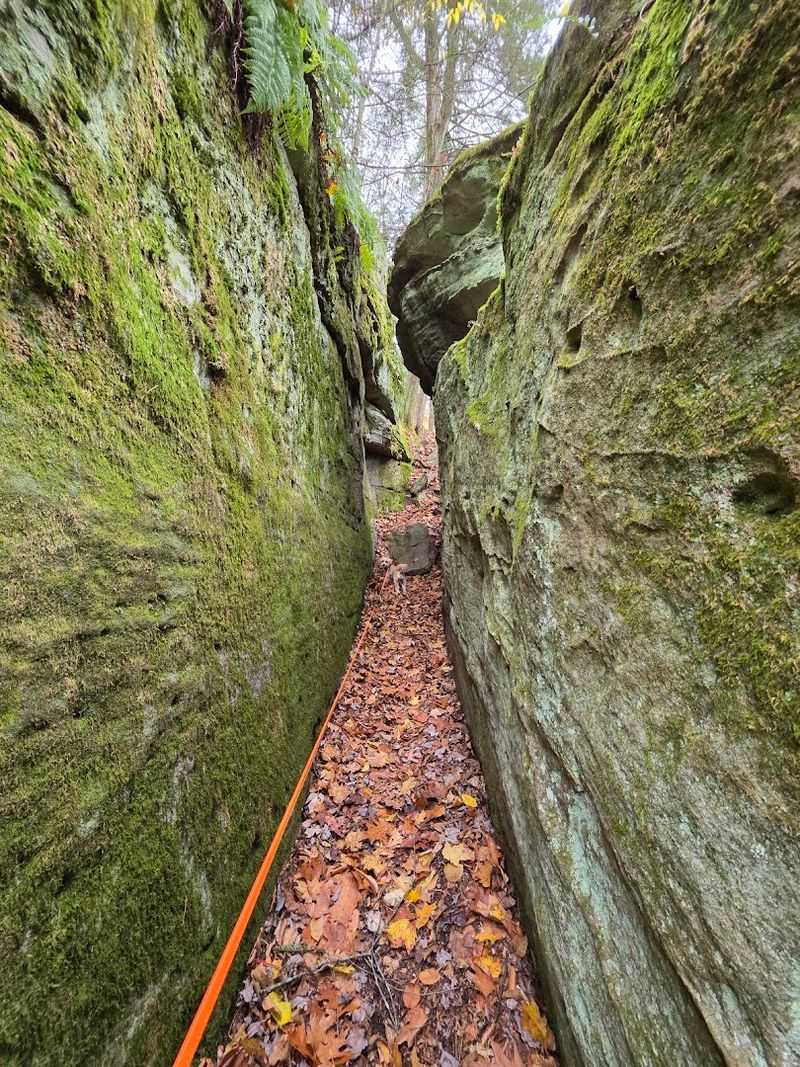
Picture squeezing sideways through a gap barely wide enough for your shoulders, with cold stone walls pressing in from both sides and a sliver of sky visible far above your head. That is the kind of experience waiting inside the natural labyrinth at Bilger’s Rocks.
Over millions of years, the massive rock blocks slowly split apart, creating a network of corridors, tunnels, and chambers that wind unpredictably through the forest.
Some passageways open up into surprisingly spacious rooms, while others narrow down to tight squeezes that kids absolutely love and taller adults approach with a bit more caution. The maze-like layout means it is genuinely easy to lose your sense of direction, which makes exploration feel exciting rather than predictable.
Every turn reveals something new — a hidden alcove, a mossy overhang, or a dramatic vertical crack stretching upward like a natural cathedral window.
Families with adventurous kids tend to spend hours here without covering the entire site. There is no official guided tour — the exploration is entirely self-directed, which adds to the charm.
Bring comfortable shoes with good grip, because the rock surfaces can be slippery, especially after rain. The labyrinth rewards curiosity and patience in equal measure.
The Science Behind the Splitting Rocks
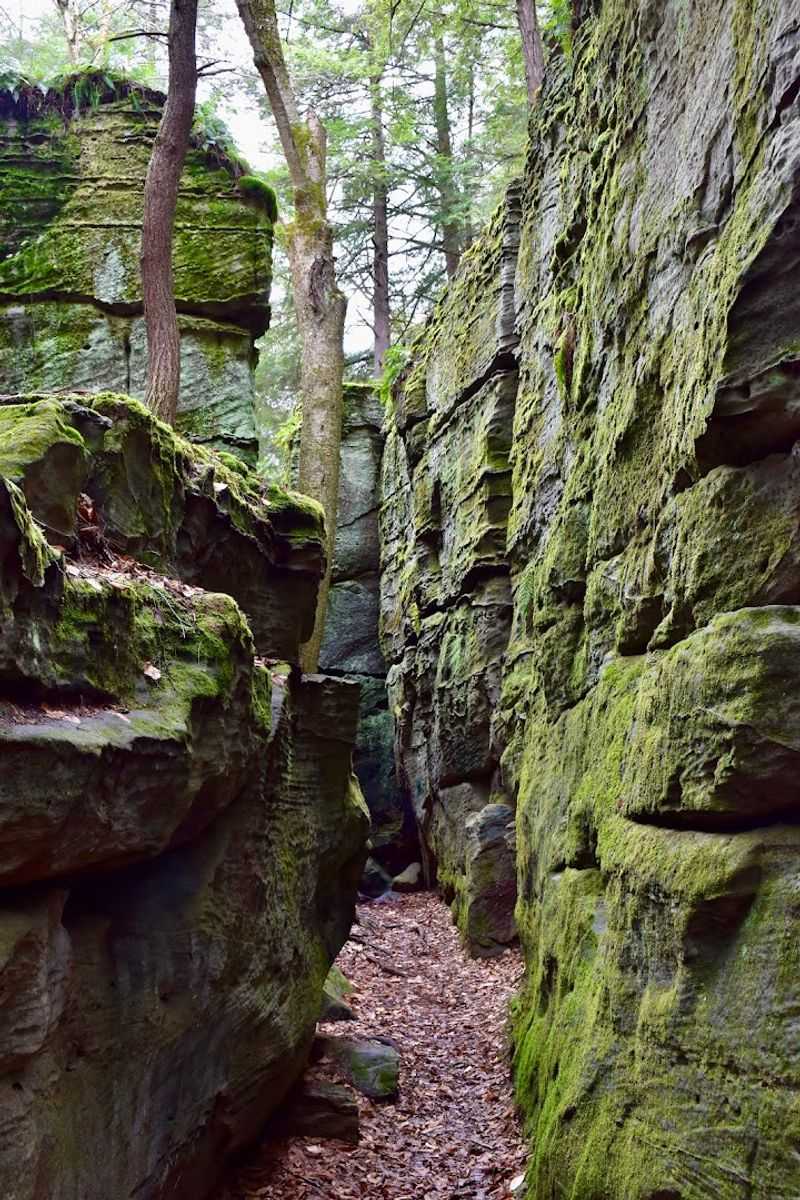
Have you ever wondered how solid rock ends up split into dozens of massive pieces? At Bilger’s Rocks, the answer involves tectonic forces, millions of years of weather, and the surprisingly powerful effects of freezing water.
When ancient tectonic activity shifted the Earth’s crust, it created long straight fractures called joints running through the sandstone. These joints were the starting point for everything that followed.
Once those initial cracks formed, water began doing its slow but relentless work. Every winter, water seeped into the fractures and froze.
Water expands when it freezes, and that expansion pushed the cracks wider — just a tiny bit each cycle, but over thousands of years, those tiny bits added up to enormous gaps. Plant roots followed, threading into the cracks and adding even more pressure as they grew.
The result is a geological process called frost wedging combined with biological weathering — two natural forces that turned a solid sandstone plateau into the dramatic boulder field visible today. Geologists love studying sites like this because they offer a rare, visible record of how landscapes transform over deep time.
For students and curious visitors, Bilger’s Rocks is basically an outdoor science classroom that requires no textbook to understand.
A Rare Geological Feature in the Appalachians
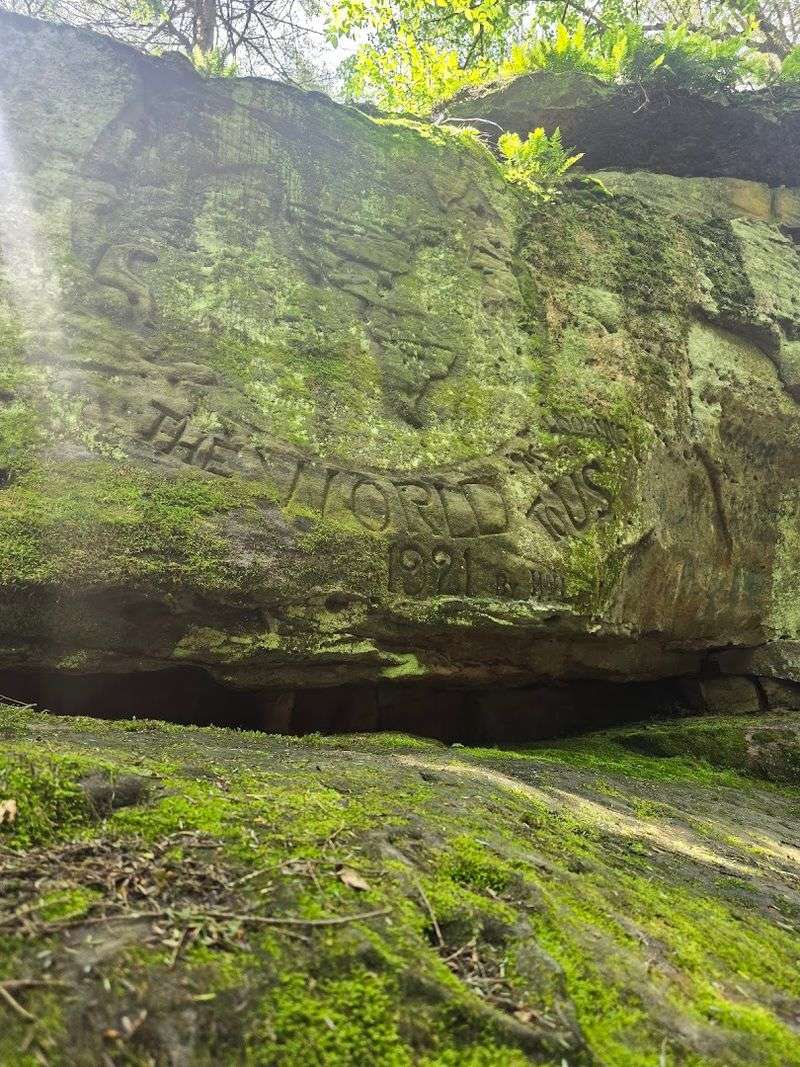
Rock cities — the informal term for dense fields of massive fractured boulders like those at Bilger’s Rocks — are genuinely uncommon geological features, especially in the humid, heavily forested regions of the Appalachians. Most of the world’s famous rock cities are found in drier climates where erosion patterns differ significantly.
Finding one this well-preserved in central Pennsylvania is a true geological rarity.
Pennsylvania’s climate actually works against the long-term survival of rock cities in some ways. Heavy rainfall, dense vegetation, and active biological decomposition tend to break down exposed rock formations faster than in arid environments.
The fact that Bilger’s Rocks has remained so structurally intact makes it even more remarkable from a scientific standpoint. Researchers believe the particular hardness of the local sandstone has played a significant role in its preservation.
Compared to other rock formations in the state, Bilger’s Rocks stands out for both its size and its complexity. Other Pennsylvania landmarks like Hickory Run Boulder Field get more attention, but Bilger’s Rocks offers something different — a walkable, explorable maze rather than a flat open field of stones.
For geology enthusiasts, this site deserves far more recognition than it currently receives on a national level.
Named Rock Chambers and Features
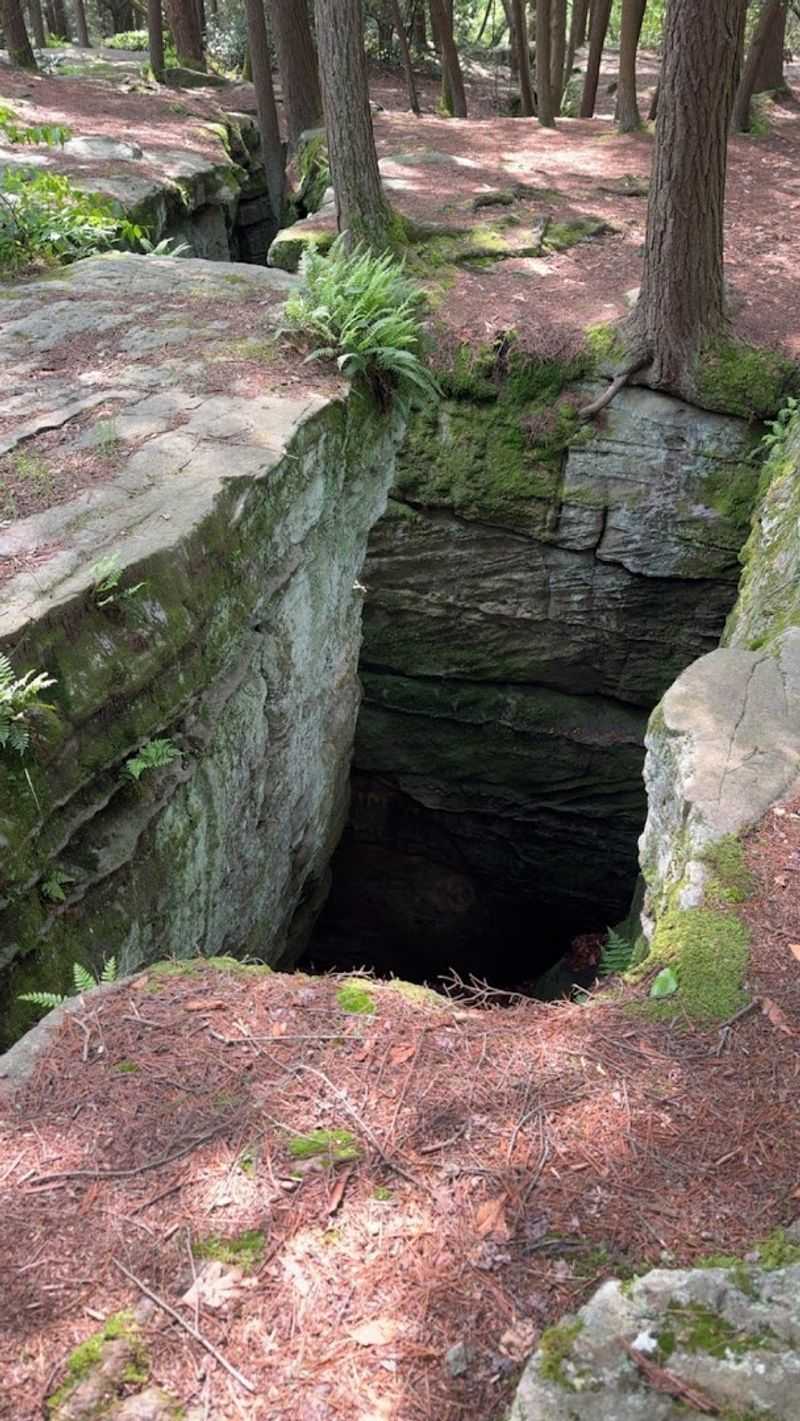
One of the most delightful parts of exploring Bilger’s Rocks is discovering that many of its most dramatic formations have been given names — and those names have real personality. The “Devil’s Dining Room” and “Devil’s Kitchen” are two of the most popular spots, consisting of large overhanging rock slabs that form natural roofed chambers.
Standing inside them, you can easily imagine why early visitors gave them such vivid, slightly spooky titles.
Then there is the “Ice Cave” — a narrow crevice where cold air trapped between the rocks keeps temperatures noticeably lower than the surrounding forest, sometimes staying chilly well into late spring or even early summer. On a hot July hike, stumbling into the Ice Cave feels like opening a refrigerator door in the middle of the woods.
It is one of those small natural surprises that makes the whole trip memorable.
These named features give visitors a sense of orientation within what could otherwise feel like an overwhelming maze. Kids especially love hunting for each named spot like a treasure hunt, checking them off as they explore.
The names themselves reflect generations of visitors who found meaning, humor, and wonder in the same stones — a tradition of human connection with this landscape that stretches back far longer than most people realize.
A Place Used for Thousands of Years
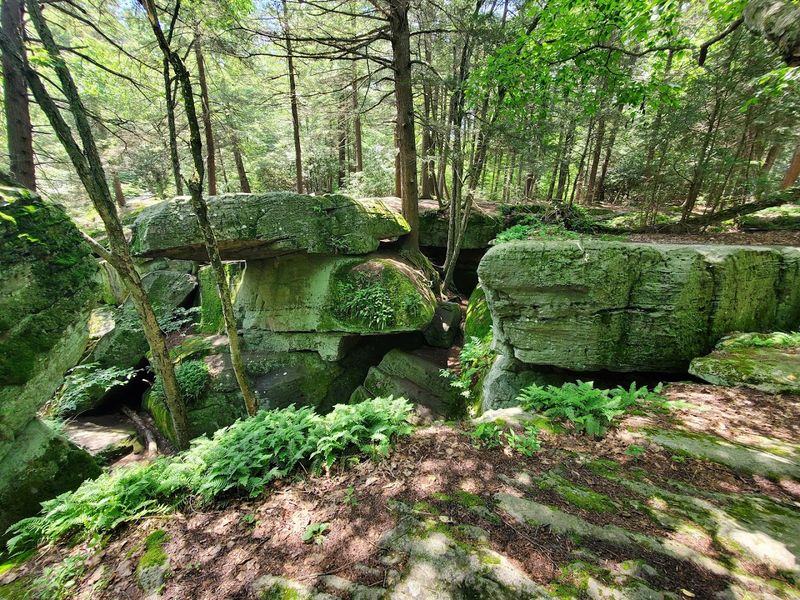
Long before any European settler ever laid eyes on Bilger’s Rocks, Indigenous peoples had already been using this landscape for thousands of years. The natural shelters formed by the overhanging boulders and enclosed chambers provided excellent protection from wind, rain, and cold.
Archaeological evidence from the broader region suggests that Native American groups moved through and camped near formations like these as part of their seasonal travel patterns.
The nearby waterways — including Chest Creek — made the area even more practical as a stopping point. Fresh water, natural shelter, and dense forest offering both cover and hunting opportunities made the rock city an ideal temporary camp.
The passageways through the boulders may also have served as travel corridors, offering hidden routes through otherwise difficult terrain.
Thinking about those earlier inhabitants while walking the same stone passageways adds a powerful layer to any visit. The rocks themselves have witnessed human presence across a span of time that dwarfs recorded history.
Every handprint worn smooth, every fire-darkened overhang, every natural shelter that still blocks the wind today — these features connected people to this place long before it had a name on any map. That continuity of human experience makes Bilger’s Rocks feel genuinely sacred in a quiet, unhurried way.
A Quiet Role in Underground Railroad History
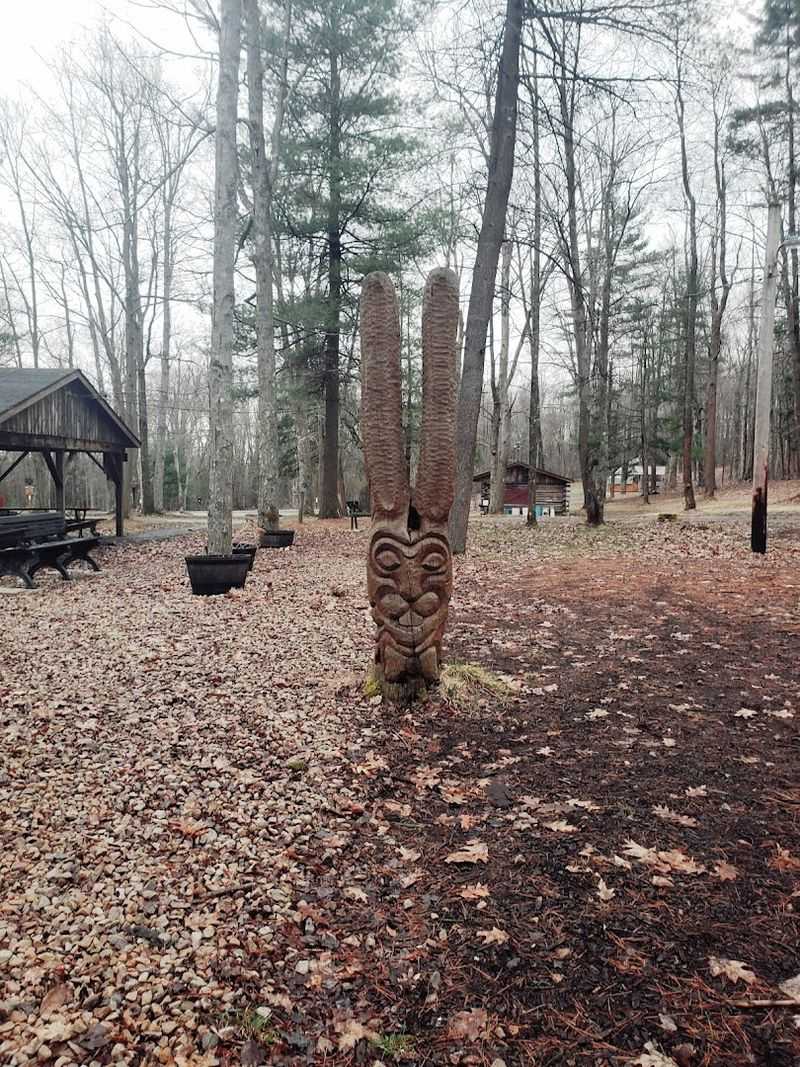
Central Pennsylvania’s rugged landscape played a role in American history that many people outside the region never learn about. The dense forests, hidden valleys, and rocky terrain surrounding areas like Bilger’s Rocks made this part of the state a natural corridor for the Underground Railroad — the secret network of routes and safe houses that helped enslaved people escape to freedom in the years before the Civil War.
Clearfield County sits in a region where abolitionists were active and where the geography itself offered cover. Forested ridges, creek-carved valleys, and isolated farmsteads made it difficult for anyone to track movement through the area.
Rock formations like those at Bilger’s Rocks provided natural landmarks and potential hiding places along routes that freedom-seekers traveled largely at night.
This chapter of history is not always loudly advertised at the site itself, but it is part of what makes the land meaningful beyond its geological features. The same boulders that sheltered Native Americans for thousands of years may have sheltered people fleeing bondage just a century and a half ago.
Knowing that history while walking those narrow stone corridors gives the experience a weight and significance that goes far beyond a simple nature hike. History lives in these rocks just as surely as geology does.
A Hands-On Adventure for Modern Visitors
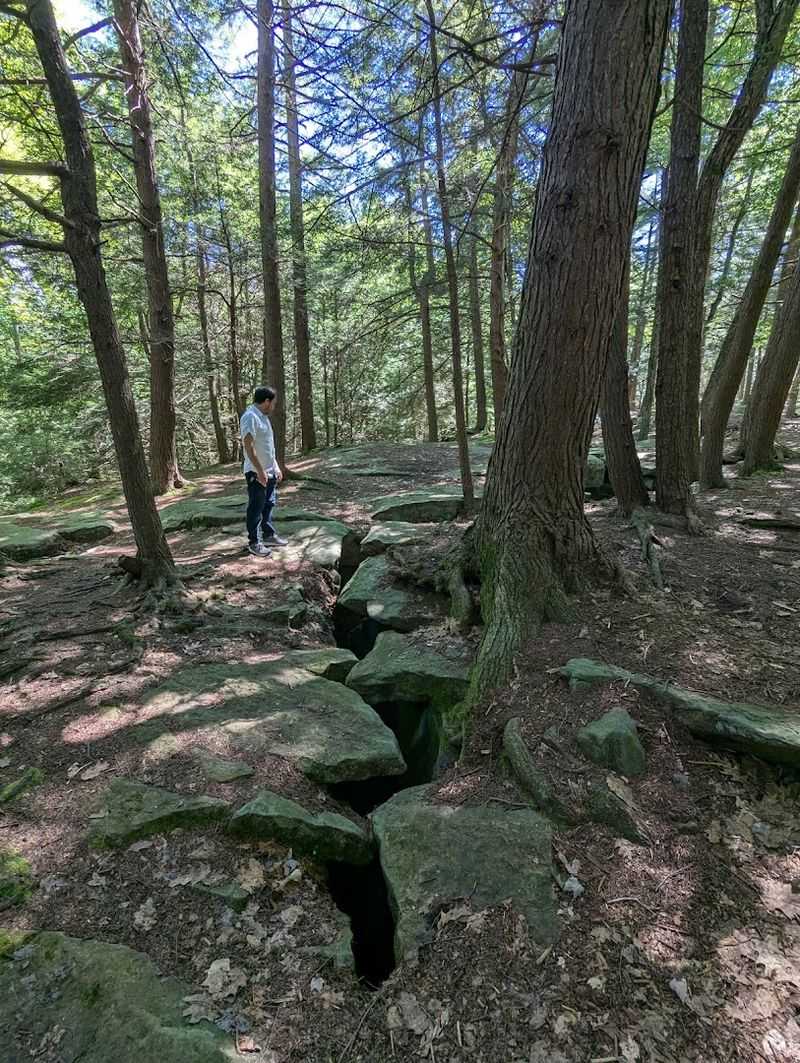
Bilger’s Rocks is the kind of outdoor destination that turns even reluctant hikers into enthusiastic explorers. The site is not a passive, look-but-don’t-touch experience — visitors are actively encouraged to climb, squeeze, and wander through the boulders.
Kids who might otherwise drag their feet on a nature walk suddenly become completely absorbed in the challenge of navigating the rock maze. The whole place operates like a giant natural playground.
Cool air flows steadily through the crevices even on warm summer days, making the site comfortable to explore when the surrounding forest feels hot and humid. Miles of informal trails wind through the boulder field, meaning repeat visitors can take completely different routes and still discover new formations.
The terrain ranges from easy walking on open paths to more challenging scrambles over and between rock faces.
Practical tips for visiting: wear closed-toe shoes with solid grip, bring water, and allow more time than you think you will need — most people underestimate how long they will want to stay. A small flashlight or phone light is handy for peering into darker crevices.
Dogs are welcome on leash, and the site tends to be quieter on weekday mornings. Go expecting an adventure, and Bilger’s Rocks will absolutely deliver one.
Preserved by the Community
In 1990, Bilger’s Rocks faced a real threat. Development pressure in the region put the site at risk of being lost to private use, potentially closing off public access to one of Pennsylvania’s most remarkable natural landmarks forever.
A group of local residents refused to let that happen. They organized, raised funds, and successfully preserved the site — a grassroots conservation victory that deserves far more recognition than it typically gets.
Today, the Bilger’s Rocks Association maintains the property as a community-operated natural area. The experience is refreshingly rustic — there are no corporate sponsors, no gift shops, and no admission booths demanding credit cards.
A modest fee helps cover maintenance costs, and the facilities include trails, picnic areas, and a small campground for those who want to spend the night among the boulders.
That community stewardship is part of what makes the site feel so genuine. Visiting Bilger’s Rocks is not a polished, packaged tourist experience — it is an honest encounter with a wild, ancient landscape maintained by people who simply love it.
Supporting places like this, whether through visiting, donating, or just spreading the word, helps ensure that future generations will have the same chance to wander those stone corridors and feel the same sense of wonder that has drawn people here for thousands of years.