
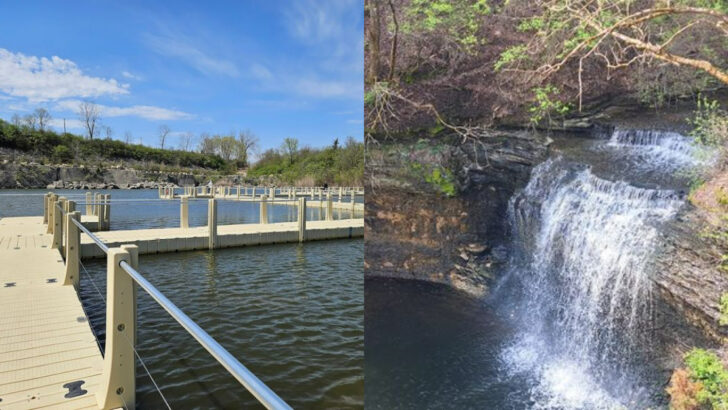
Hidden in plain sight along Old Dublin Road in Columbus, Ohio, Quarry Trails Metro Park is one of the most unexpected green spaces you will ever walk through. What was once the largest contiguous quarry in the United States has been transformed into a 182-acre public park with trails, lakes, and a genuinely beautiful waterfall.
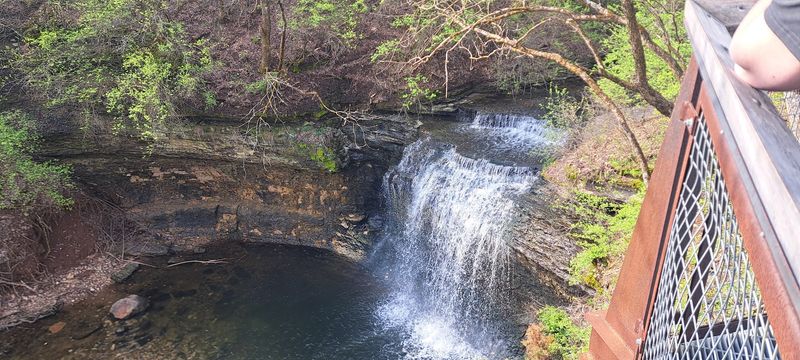
Millikin Falls, the park’s star attraction, drops about 25 feet over layered limestone and draws visitors year-round. Whether you are a hiker, a history buff, or just someone looking for a peaceful afternoon outdoors, this place delivers something truly different.
From Industrial Scar to Public Green Space: The Story Behind Quarry Trails
Before there were hiking boots on these trails, there were heavy machines tearing through solid rock. The Marble Cliff Quarry operated here for over a century, providing limestone that helped build landmarks like the Ohio Statehouse.
That industrial history is not swept under the rug at Quarry Trails — it is literally built into the landscape.
The Columbus Metropolitan Park District acquired the land and officially opened Quarry Trails Metro Park in 2021. Old quarry equipment, carved stone walls, and exposed rock ledges remain as permanent features visitors can see and touch.
Nothing has been scrubbed clean or prettied up for appearances.
Walking through the park today, you get a real sense of what this land went through. The transformation from industrial site to public green space did not erase the past — it honored it.
That honest approach is a big part of what makes this park feel so different from any standard Columbus nature trail.
Where Millikin Falls Fits Into the Picture
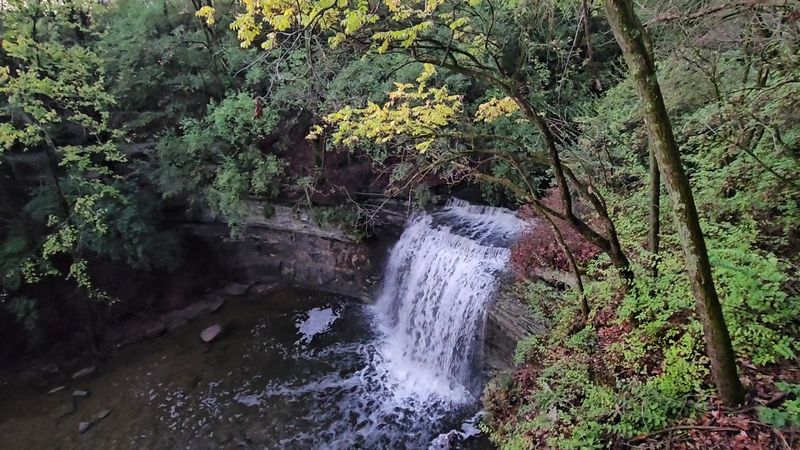
Named after Andrew Millikin, a 19th-century farmer who once owned land nearby, Millikin Falls sits at the heart of the park’s eastern trail system. The waterfall flows over a broad limestone ledge and drops into a wide, shallow pool that visitors can actually wade in up to their knees.
It is the kind of spot that makes you stop walking and just stand there for a moment.
What makes this waterfall especially interesting is its origin story. The falls exist partly because quarry workers spent decades digging into this hillside, exposing and reshaping the rock face in ways that nature alone would not have done.
Human hands helped create this view.
That combination of natural beauty and industrial history gives Millikin Falls a depth that most waterfalls simply do not have. Knowing why the water falls the way it does makes standing next to it feel like more than just a photo opportunity — it feels like reading a chapter of Ohio history.
What the Waterfall Actually Looks Like Up Close
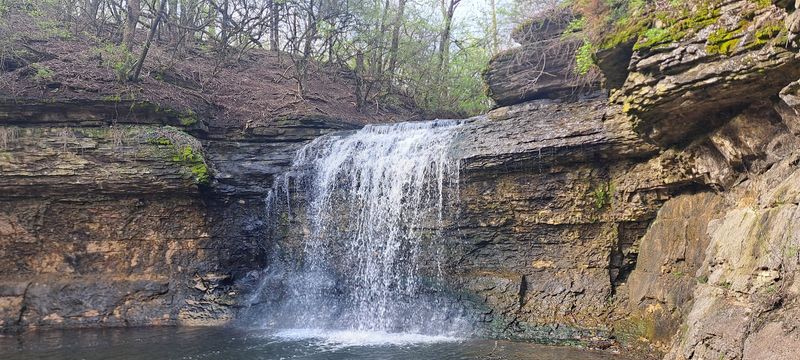
Standing at the base of Millikin Falls after a good rain is a completely different experience than visiting on a dry summer afternoon. The falls spread horizontally across a wide, stepped limestone shelf rather than dropping in one narrow stream.
On a wet week, the entire ledge becomes a moving sheet of white water that you can hear long before you see it.
During drier stretches, the flow thins to a quieter curtain, but the visual is still worth the walk. The pale gray limestone, the layered shelving of the rock, and the way light hits the water at different times of day all keep the scene from ever looking exactly the same twice.
Visitors can view the falls from two levels — an upper overlook that is accessible to most people, and a lower area near the water reached by stone stairs with a solid railing. Both angles offer something different, and many people end up doing both without even planning to.
The Trail System: How to Get There Without Getting Lost
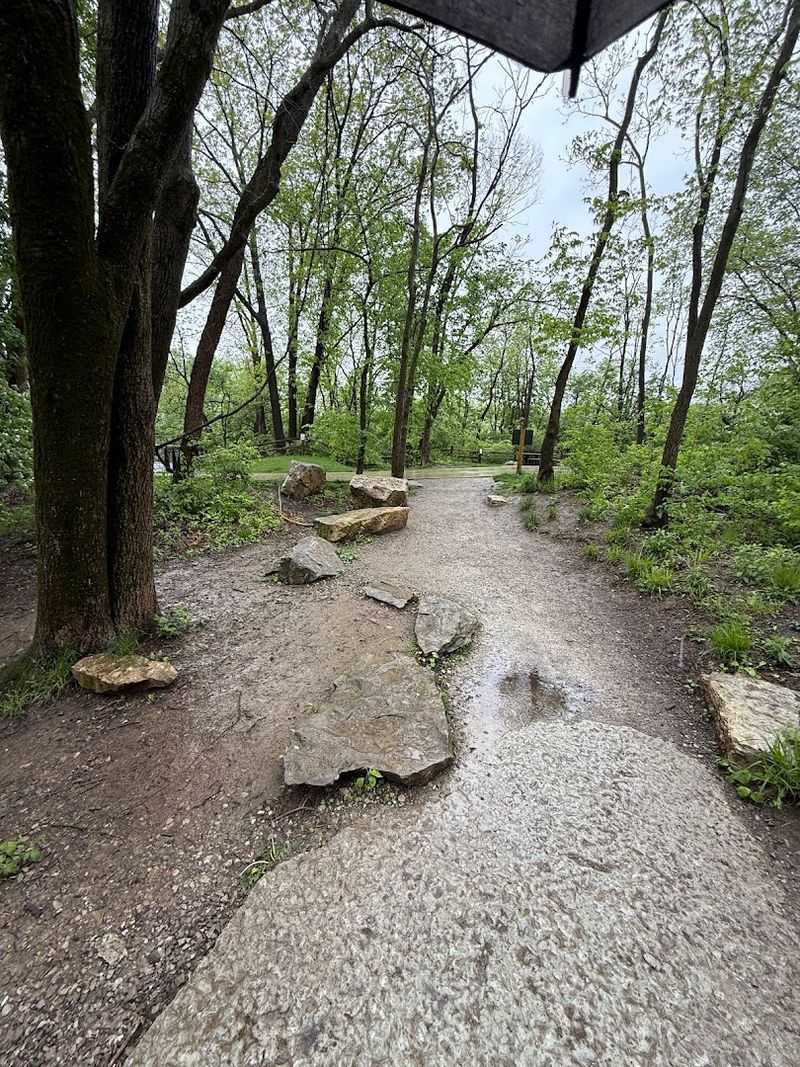
Getting to Millikin Falls is straightforward once you know which entrance to use. The park sits at 2158 Old Dublin Road in Columbus, and there is a specific entrance near the falls area that puts you right on the paved path leading to the water.
First-time visitors who enter from the wrong lot sometimes miss the waterfall entirely, so checking the map before you go saves a lot of confusion.
The trail to the falls is roughly 1.5 miles round trip and is rated easy to moderate. Most of the path is paved, which makes it accessible for a wide range of visitors.
There is one steeper section near the water with stone stairs, but the railing is solid and manageable for most people, including those with mild knee or ankle issues.
The full park trail network covers around 9 miles total, including mountain bike routes and loop paths around the quarry lakes. Signage throughout is consistent and clear, so getting turned around is genuinely hard to do once you are on the trail.
The Quarry Lakes: Flooded Pits That Have Become Something Else Entirely
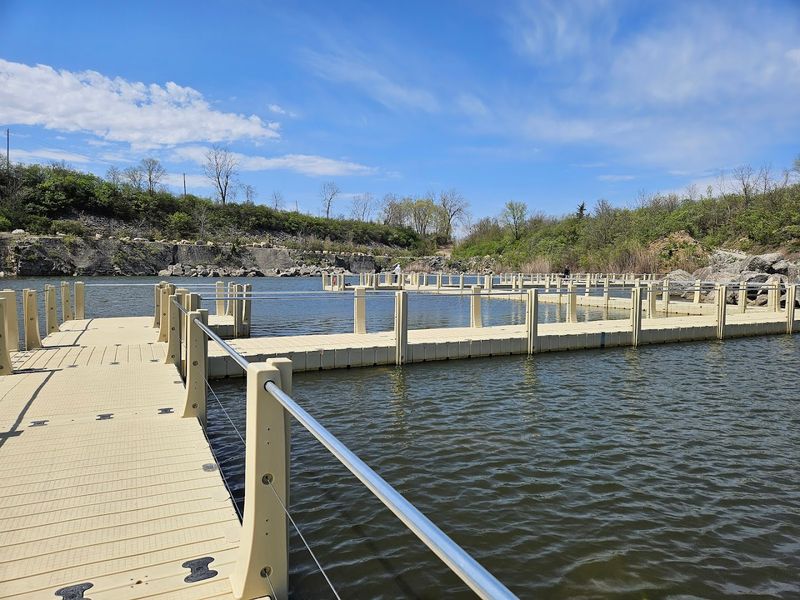
Decades after the quarry shut down, groundwater slowly filled the abandoned pits, creating a series of clear, blue-green lakes that sit dramatically below the surrounding trail level. The contrast between the pale limestone walls and the vivid water color is striking in a way that photographs struggle to fully capture.
Visitors regularly stop at overlook points just to stare down into them.
Swimming is not allowed in the quarry lakes, but wading near Millikin Falls is permitted up to knee depth. Kids especially love this part — reviewers have mentioned children spending extended time playing in the shallower water near the falls, which has a sandy and rocky bottom that is fun to explore.
Kayaking and paddleboarding are available in designated areas of the park, and fishing is also permitted. The lakes add a recreational layer to the park that goes well beyond a simple nature walk.
Seeing that much vivid blue water surrounded by industrial-era stone walls is one of those visuals that sticks with you long after the visit.
Wildlife and Vegetation Along the Route
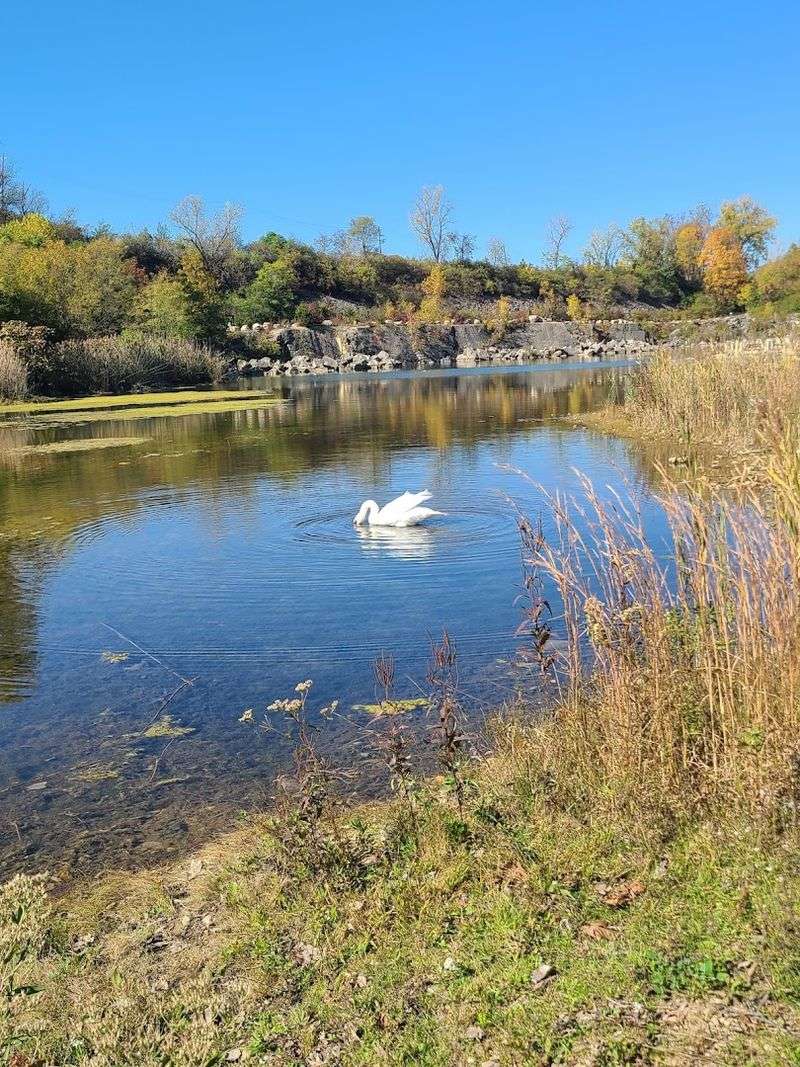
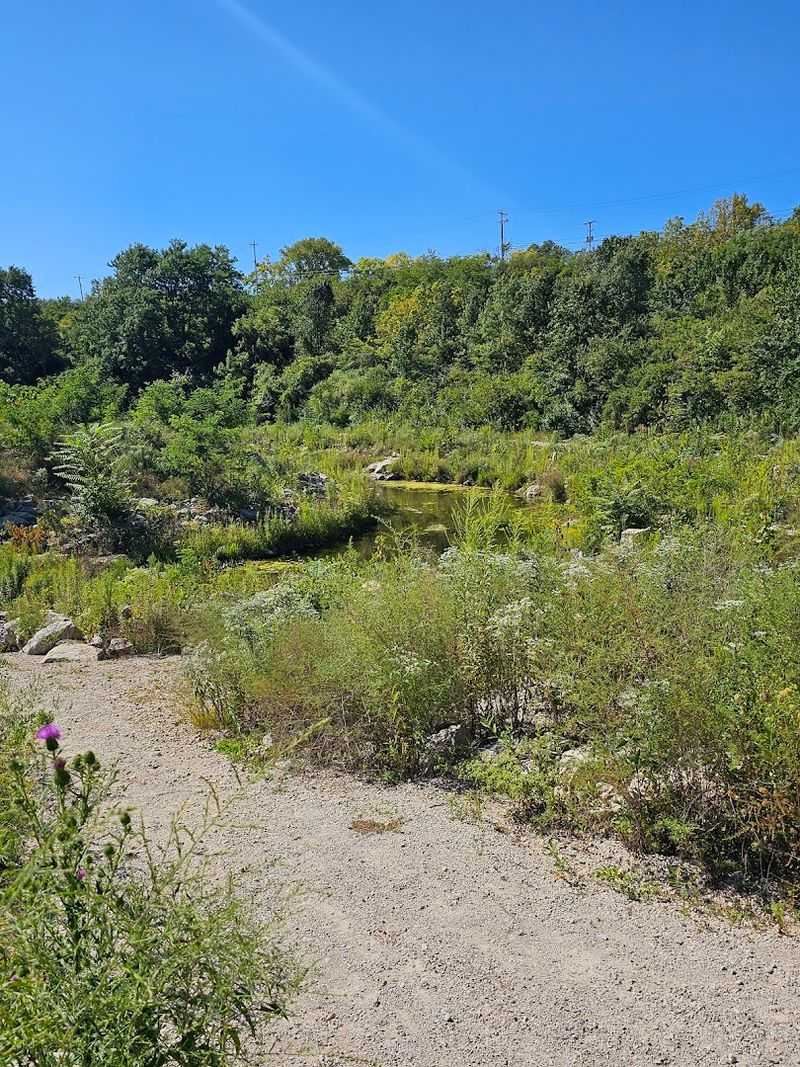
The land around Millikin Falls is in a visible state of recovery, which makes it genuinely fascinating for anyone who pays attention to plants and animals. Because quarry operations stripped the terrain for most of the 20th century, the vegetation here is a patchwork of mature trees, early-succession shrubs, and open rocky patches.
That variety of habitat draws a wider range of species than a uniform forest would.
Birders have recorded red-tailed hawks, great blue herons near the water, and a solid mix of warblers during migration season. The herons in particular seem unbothered by visitors, often standing near the quarry lake edges in plain view.
Bringing binoculars on a weekday morning visit pays off well here.
The recovering ecosystem gives the park a slightly raw, in-progress character that feels honest rather than manicured. Watching native plants slowly reclaim what was once bare industrial ground is quietly compelling.
It is the kind of natural storytelling that does not need a sign to explain it — the landscape does the talking on its own.
The Rock Walls and Geology: Reading the Landscape as You Walk
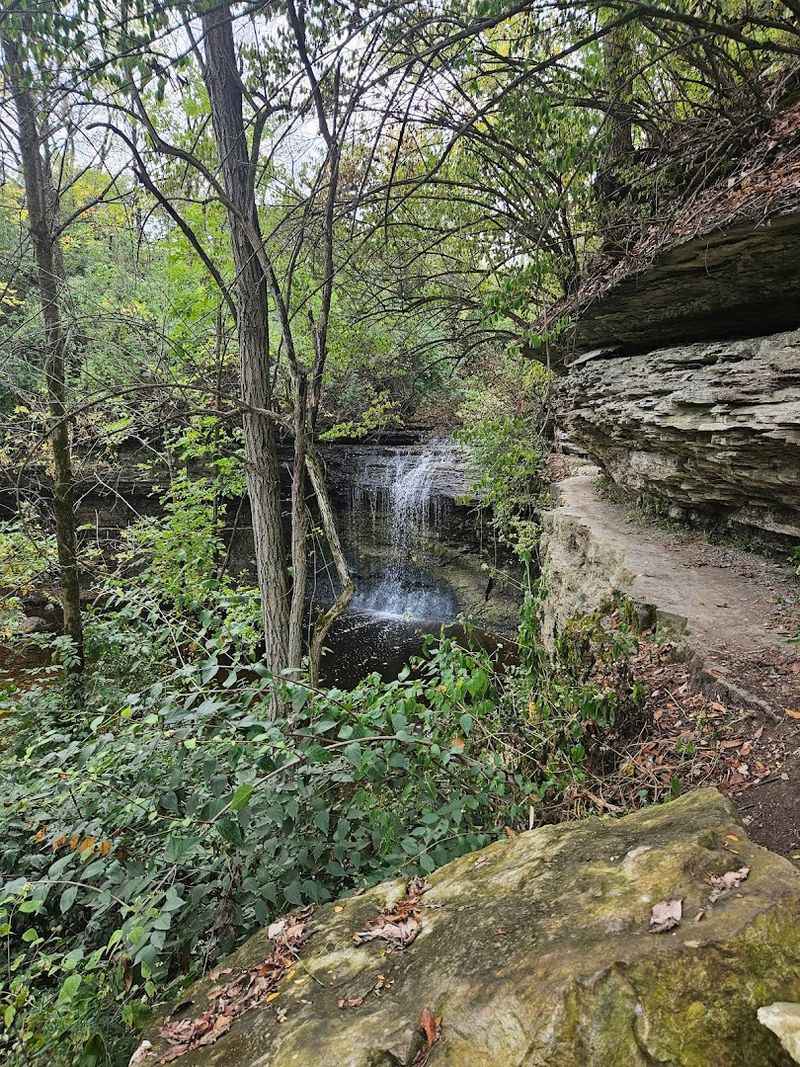
One of the quieter pleasures of walking through Quarry Trails is realizing that the walls around you are basically an open geology textbook. The exposed limestone shows clear horizontal banding — layers of ancient sediment compressed over hundreds of millions of years that quarry workers cut through to reach usable stone.
Each stripe in the rock represents a different era of geological time.
Ohio’s bedrock rarely gets this kind of surface exposure. Most of the state is covered in thick soil and flat terrain that hides what lies beneath.
At Quarry Trails, the rock faces are right there at eye level, and you do not need a geology degree to find them interesting. The sheer scale of the exposed walls makes the age of the earth feel genuinely real in a way that reading about it never quite does.
Geologically curious visitors often spend extra time at certain sections of the trail just studying the striations up close. The park does not heavily label or interpret the geology, which means curious visitors get to do their own reading of the rock.
The Atmosphere on the Trail: What It Feels Like to Walk Through
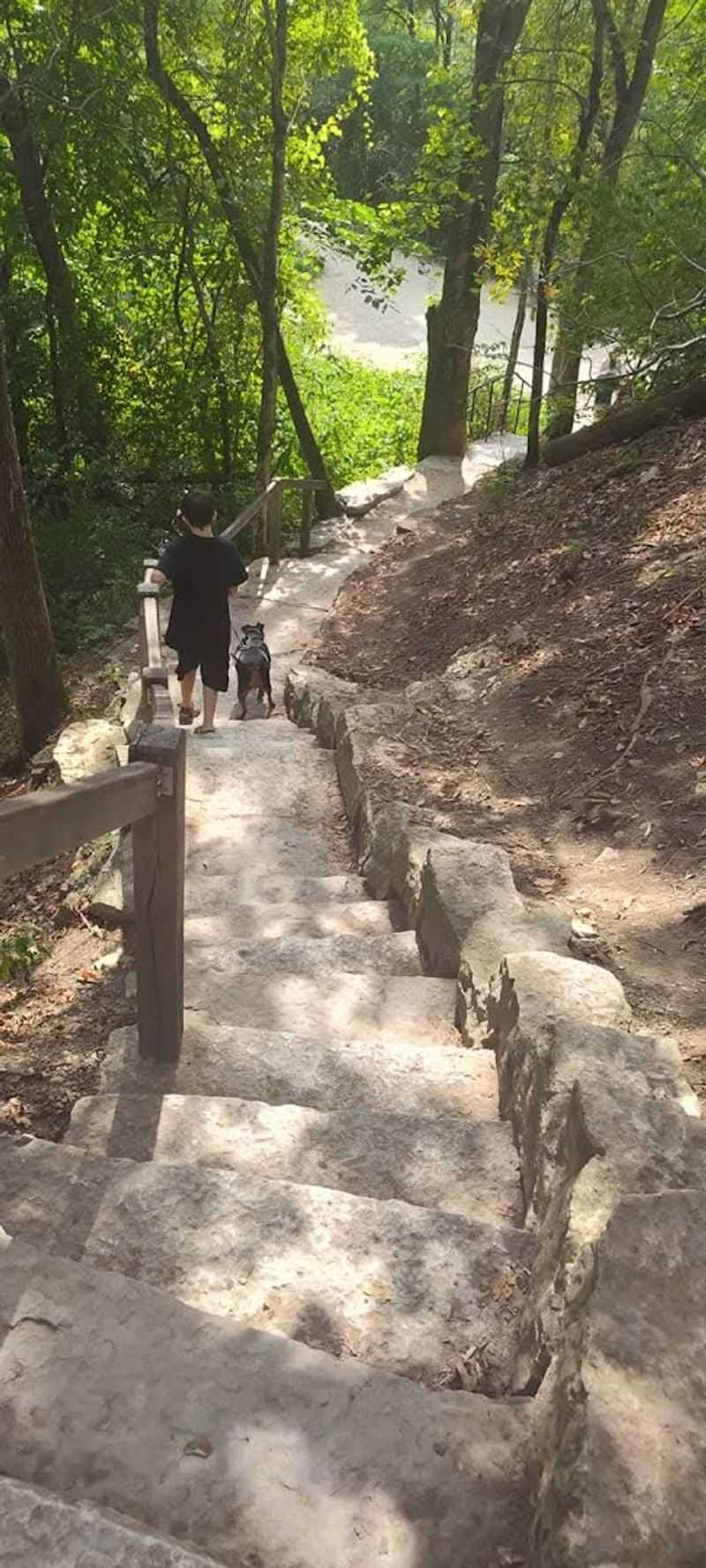
There is a particular feeling you get walking through Quarry Trails that is hard to find anywhere else in central Ohio. The combination of tall stone walls, open sky overhead, the sound of water, and young trees growing back in creates a layered, almost enclosed quality.
It does not feel like a typical Midwestern greenspace — it feels like somewhere that has a story.
Even on busy weekend days, the trail network spreads visitors out enough that quiet stretches are easy to find. The path sometimes runs right along the edge of old quarry walls, with a sheer drop to a lake on one side and a stand of trees on the other.
That kind of terrain simply does not exist in most Ohio parks.
Multiple reviewers have described the park as a hidden gem, and that label fits. The atmosphere manages to feel both dramatic and peaceful at the same time, which is not a combination most urban parks can pull off.
It earns the reputation it has built since opening in 2021.
Practical Details: When to Go and What to Bring
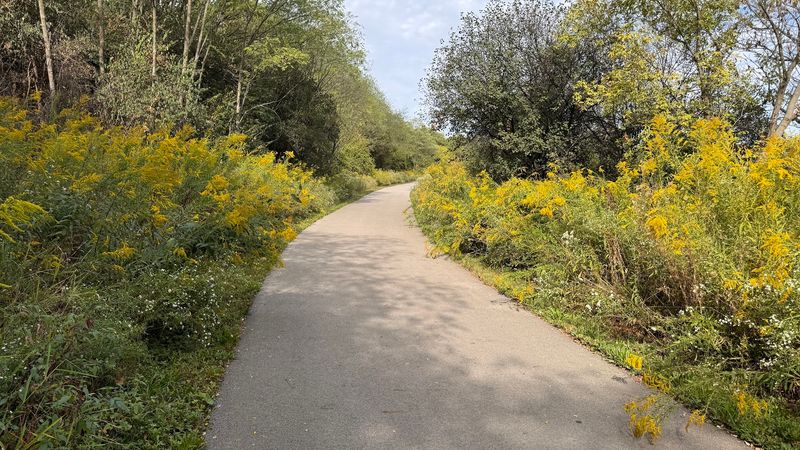
Spring is the best time to catch Millikin Falls at full flow, especially in the weeks following heavy rain. The water volume rises noticeably after wet stretches, and the sound of the falls carries well down the trail before you even see the water.
Fall visits offer a different kind of reward — the leaf color against pale limestone creates a contrast that makes photos look almost too good to be real.
The park is open year-round from 6:30 AM until dark and is free to enter. Parking is available near the falls entrance off Old Dublin Road, but the lot fills up fast on weekend mornings during warmer months.
Arriving before 9 AM on Saturdays is genuinely practical advice, not just a suggestion for early risers.
Bring water, wear comfortable shoes with some grip for the stone stairs near the falls, and pack out any trash since the park relies on carry-out policies. If you plan to let kids wade, pack a change of clothes — they will almost certainly use it.
How Quarry Trails Fits Into Columbus’s Broader Park System
Quarry Trails is one of the newer additions to the Columbus Metropolitan Park District, which manages dozens of parks across the region with consistent standards for trail maintenance, signage, and habitat management. The Metro Parks system in Columbus is frequently recognized as one of the stronger urban park networks in the Midwest, and Quarry Trails has added a genuinely distinctive entry to that portfolio.
The park connects to a broader citywide effort to reclaim former industrial and agricultural land for public use. That mission is visible throughout Quarry Trails in ways that go beyond just planting grass and adding benches.
The preserved quarry equipment, the honest landscape, and the ecological recovery all reflect a deliberate choice to let the land tell its own story.
Since opening in 2021, visitor traffic has been consistently strong, which speaks to how much demand existed for this type of experience near the city. The park continues to develop, with amenities like a suspension bridge and paddling launch reported as future additions that will expand what the space can offer.
Why This Park Is Worth the Stop If You’re Near Columbus

Not every park gives you three genuinely different things to think about on a single walk. At Quarry Trails, you get the industrial history embedded in the stone walls, the unusual origin story of a waterfall shaped by human labor, and the visual drama of flooded quarry lakes sitting below trail level.
That combination is hard to find anywhere else in central Ohio.
The park is free to enter, accessible from multiple trail difficulty levels, and compact enough to experience meaningfully in two to three hours. Kids have plenty to engage with — wading near the falls, a play area with zip lines, and the quarry lake overlooks all hold attention without requiring any special gear.
Adults get the geology, the history, and the atmosphere.
Quarry Trails demonstrates what ecological recovery on former industrial land can actually look like when a city commits to doing it well. The result is not a polished wilderness — it is something more honest and more interesting than that.
A place that shows both what was taken from the land and what has grown back in its place.