
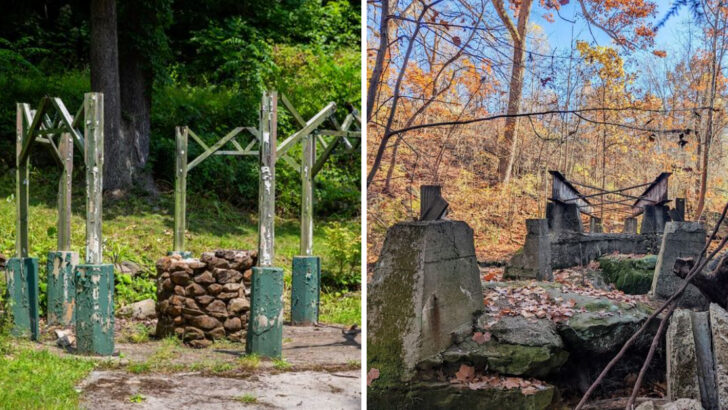
Hidden along a rocky gorge in New Castle, Pennsylvania, Cascade Park once rang with laughter, music, and the thunderous roar of roller coasters.
Today, the park stands as a peaceful nature retreat where crumbling concrete footers and rusted relics quietly tell the story of a golden era of American amusement.
What was once one of western Pennsylvania’s most beloved destinations has slowly been reclaimed by trees and wildflowers.
If you love history, adventure, or the haunting beauty of forgotten places, Cascade Park is a story worth knowing.
Forgotten Thrills in the Woods
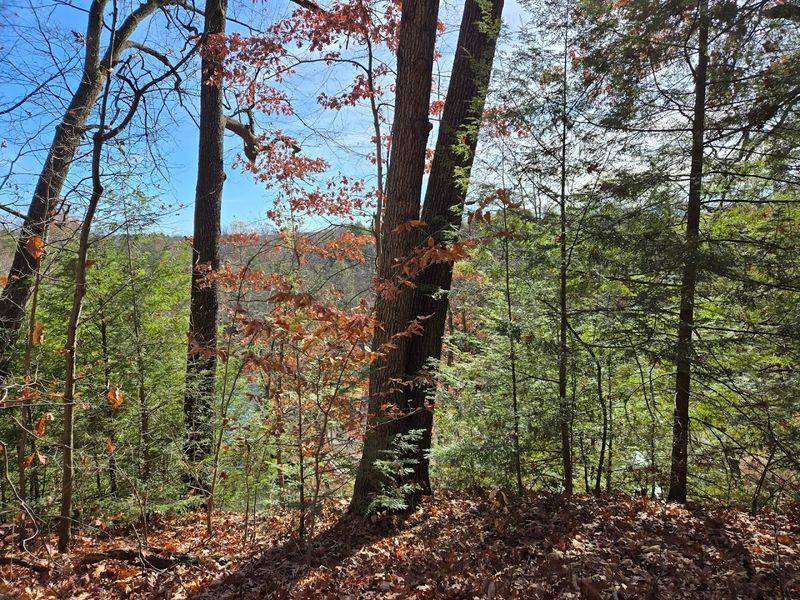
Tucked into a wooded gorge at 1928 E Washington St in New Castle, Pennsylvania, Cascade Park carries the quiet weight of a place that used to be everything. Families once flooded through its gates on summer weekends, filling the air with the smell of popcorn and the sound of screaming coaster riders.
Today, those sounds are replaced by birdsong and rustling leaves.
Walking through the park now feels almost dreamlike. Old stone walls line pathways where midway games once stood, and concrete supports rise unexpectedly from the forest floor like ancient ruins.
The gorge itself, carved by Big Run Creek, adds a dramatic backdrop that makes the setting feel both wild and strangely sacred.
What makes Cascade Park so fascinating is the contrast — nature and nostalgia tangled together in one beautiful, melancholy space. You do not need to be a history expert to feel the presence of the past here.
Even first-time visitors often describe a sense of walking through a place that remembers itself. For anyone curious about forgotten Americana, this quiet corner of Lawrence County is an unexpected and deeply moving destination worth the trip.
Origins: From Big Run Falls to Cascade Park
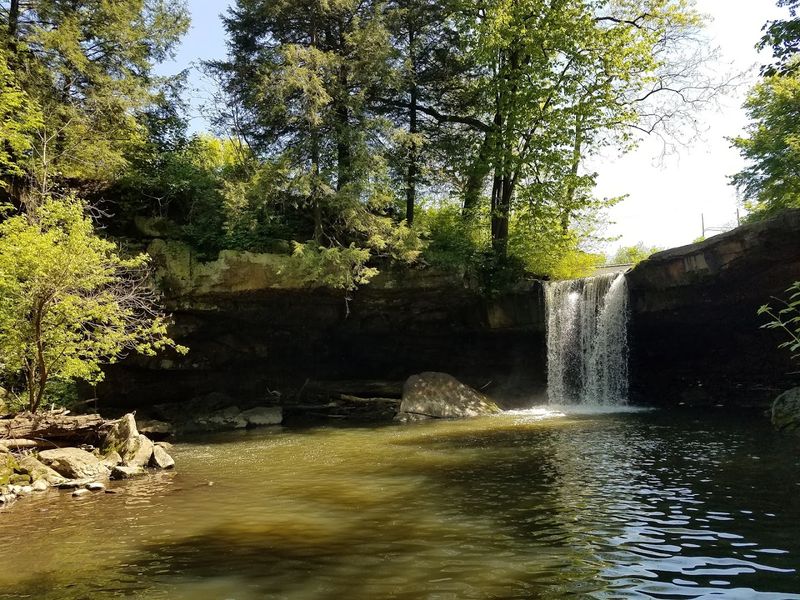
Before roller coasters ever rattled through the gorge, this land was known simply as Big Run Falls — a scenic natural area where the creek tumbled over rocks and locals came to cool off. Everything changed in 1897 when a streetcar company saw potential in the location.
Trolley operators across the country were building amusement parks at the end of their lines to boost weekend ridership, and Cascade Park became one of those so-called “trolley parks.”
The idea was straightforward: give people a reason to ride the trolley on their days off. A destination with picnic tables, entertainment, and natural beauty was the perfect draw.
The company developed the land around the falls, adding amenities and attractions that made the park a regional sensation almost immediately.
This origin story is surprisingly common in American history. Dozens of beloved regional parks from the late 1800s and early 1900s share the same trolley-park roots.
What makes Cascade Park stand out is how well its natural setting — the gorge, the waterfall, the dense trees — enhanced everything that was built around it. The land itself was always the real attraction, long before anyone ever laid a single rail of track.
The Golden Age: Early Rides and Attractions
At its peak, Cascade Park was genuinely spectacular. The dance pavilion alone was reportedly the largest in all of Pennsylvania — a massive wooden structure where bands played and couples danced late into summer evenings.
It was the kind of place that made people feel like they were part of something special, even if they were just a factory worker from New Castle looking for a Saturday escape.
Beyond dancing, the park offered a full carousel with hand-carved horses, shaded picnic groves perfect for family outings, and even a small zoo that delighted younger visitors. The first roller coaster arrived early in the park’s history, adding a thrilling new dimension to what was already a well-rounded destination.
Day-trippers came from miles around, and the park became a genuine community gathering place.
There is something deeply human about what Cascade Park offered during those years. It was not a grand resort or a luxury experience — it was accessible, joyful, and built around the simple idea that regular people deserve a place to have fun.
That spirit, more than any single ride or attraction, is what made the golden age of Cascade Park so memorable to those who lived it.
Roller Coasters That Defined the Park
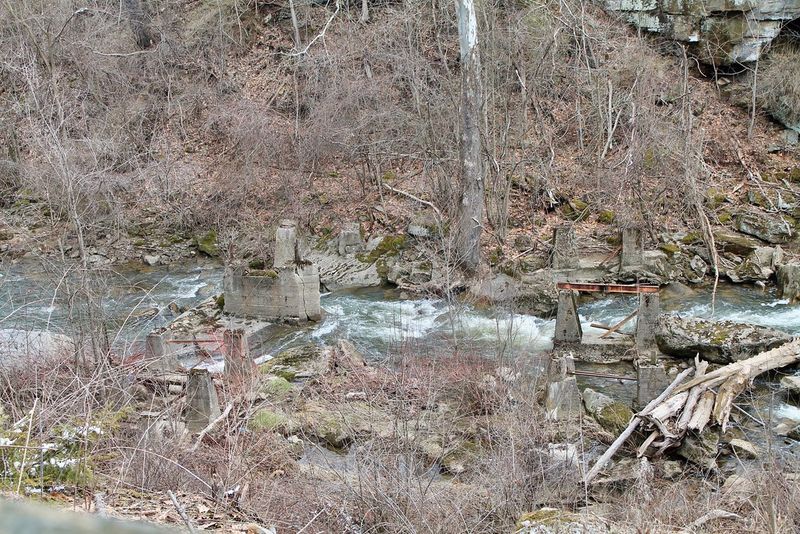
Roller coasters were the heartbeat of Cascade Park for decades. The original coaster sat near what is now the parking lot area and gave early visitors their first taste of speed and adrenaline.
But it was the Gorge coaster that really put the park on the map — a daring ride that actually sent cars plunging down into the natural gorge, using the dramatic terrain as part of the thrill itself.
That relationship between the ride and the landscape was unusual and exciting. Most coasters of the era were built on flat fairgrounds.
At Cascade Park, the gorge was not just a backdrop — it was part of the experience. Riders felt the cool air rising from the creek below as their cars rattled along wooden tracks suspended above the rocky ravine.
Later, the Comet coaster continued that tradition of terrain-hugging thrills. Each successive coaster reflected the evolving tastes of the riding public while staying true to what made the park unique.
Coaster historians today still talk about the Gorge coaster with a kind of reverence, recognizing it as a genuinely creative engineering solution that turned a natural obstacle into one of the park’s greatest selling points. Few parks could claim anything quite like it.
Thrills Turn to Trouble: Decline Begins
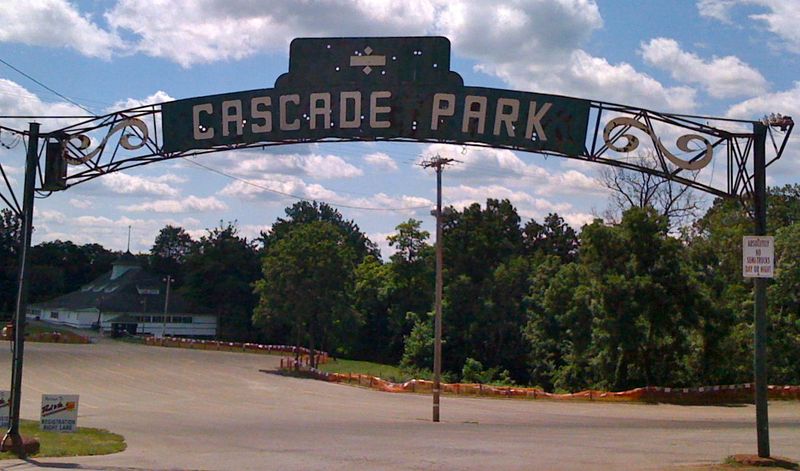
By the middle of the twentieth century, the good times at Cascade Park were beginning to unravel. Attendance started dropping as families gained access to cars and could travel farther for entertainment.
The rise of television also kept people home on evenings that might once have been spent at the park. Broader social and economic shifts were quietly draining the energy from places like this all across America.
Maintenance became a growing problem. Wooden roller coasters require constant upkeep, and as revenue fell, the funds needed to keep everything in safe, working order became harder to come by.
A few accidents along the way did not help the park’s reputation either. Each incident chipped away at the sense of carefree fun that had defined the park for so long.
There is a painful irony in how quickly a beloved institution can slip from thriving to struggling. Cascade Park did not collapse overnight — it faded gradually, the way a photograph loses its color over years of sunlight.
The people who loved it most likely watched the decline with a mixture of sadness and disbelief, hoping each season might bring a turnaround that, unfortunately, never really came in any lasting way.
The Comet’s Final Ride
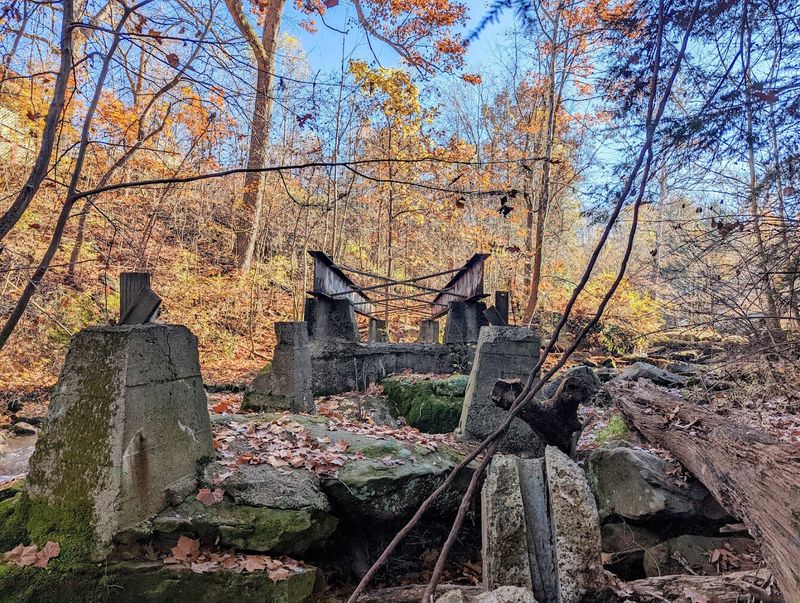
Of all the rides that called Cascade Park home, the Comet coaster holds a special and bittersweet place in the park’s story. Riders loved it for its speed and its wild interaction with the natural gorge terrain.
For a time, it was the main reason people kept coming back. But the Comet’s end came not with a grand final season announcement — it came quietly and violently, courtesy of a fallen tree.
In the early 1980s, a tree crashed down onto the coaster’s structure, causing serious damage. What might once have been repaired quickly was now left to deteriorate.
Vandalism followed, further weakening the already-compromised structure. The combination of nature and neglect proved fatal to the ride that had defined the park’s final era of major attractions.
Locals who remember riding the Comet often describe it with the kind of fondness people reserve for childhood summers — full of exaggerated speed and breathless drops that felt bigger than they probably were. Losing the Comet was not just losing a ride.
It was losing the last real anchor of what Cascade Park had been. After the Comet fell silent, there was little left to argue that the park was still an amusement destination in any meaningful sense.
The Abandonment and Removal of Rides
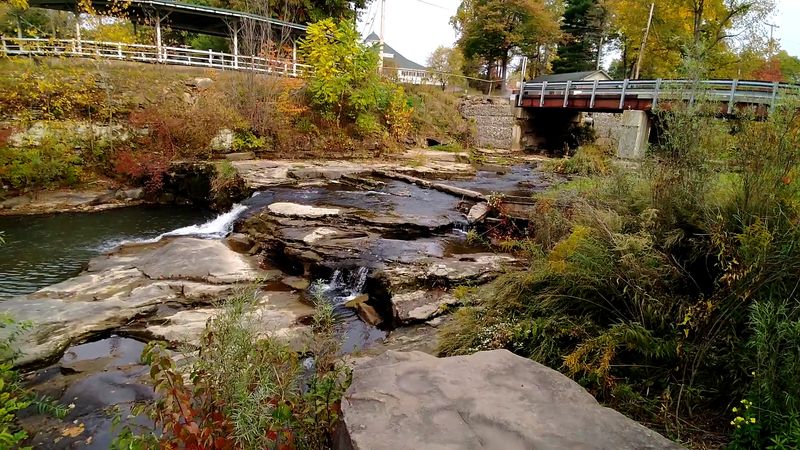
When Cascade Park officially closed its ride operations in the mid-1980s, the process of dismantling what remained began. Ride structures were removed, buildings were torn down, and the midway that had once buzzed with activity was stripped back to bare earth.
For anyone who had grown up visiting the park, driving past during those years must have felt like watching a piece of their own past being erased piece by piece.
But removal is never total. Concrete does not simply vanish, and neither do the heavy steel footers that once anchored coaster supports into the ground.
Workers took what they could, but plenty was left behind — embedded in the soil, half-buried under leaf litter, or simply too embedded in the gorge walls to bother extracting. Those remnants became the accidental monuments that visitors still discover today.
Walking the trails now, you can stumble upon a concrete pad in the middle of the woods and suddenly realize you are standing where thousands of people once stood, waiting in line for a ride that no longer exists. That feeling — half detective, half time traveler — is part of what gives abandoned park sites their strange magnetic pull.
Cascade Park offers that experience in abundance, rewarding curious explorers at nearly every turn.
Nature Reclaims the Gorge
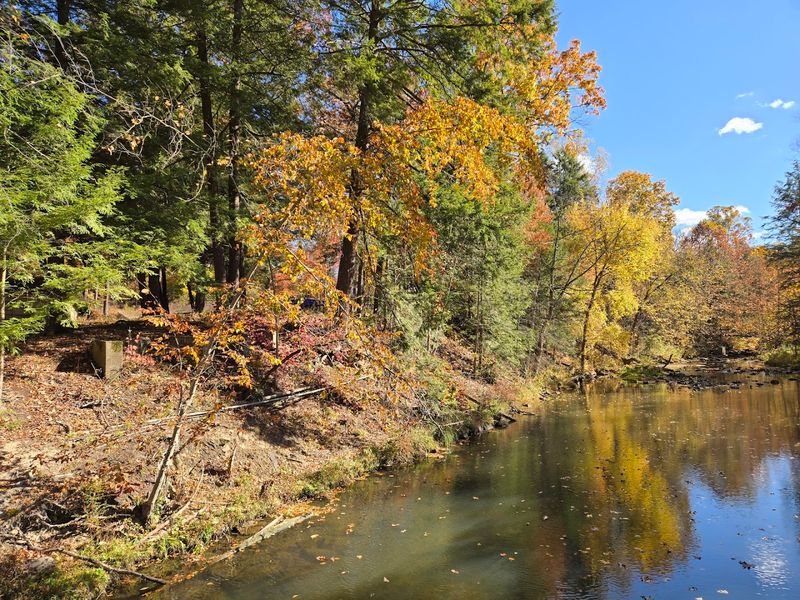
Few things in nature are as quietly dramatic as watching the land take back what was once paved over and built upon. At Cascade Park, that process has been happening for decades, and the results are genuinely beautiful.
The gorge trails now wind past waterfalls and mossy boulders, with the occasional concrete footer rising from the undergrowth like a monument to a different era entirely.
Big Run Creek still rushes through the ravine below, just as it did long before the first trolley car ever brought visitors to the park. The waterfall that originally drew people to the area still tumbles over the same rocks.
Wildflowers push up through cracks in old pavement, and tree roots have slowly wrapped themselves around leftover structural steel. The forest has been patient, and it is winning.
Ecologically, this reclamation is a success story. What was once a heavily developed entertainment zone has softened back into something resembling its natural state.
Hikers who know nothing about the park’s history can simply enjoy the gorge as a scenic natural trail. Those who do know the history see something layered and complex — a place where human ambition and natural persistence exist side by side in a quietly spectacular way.
Current Park Life: Picnic Groves and Community Events
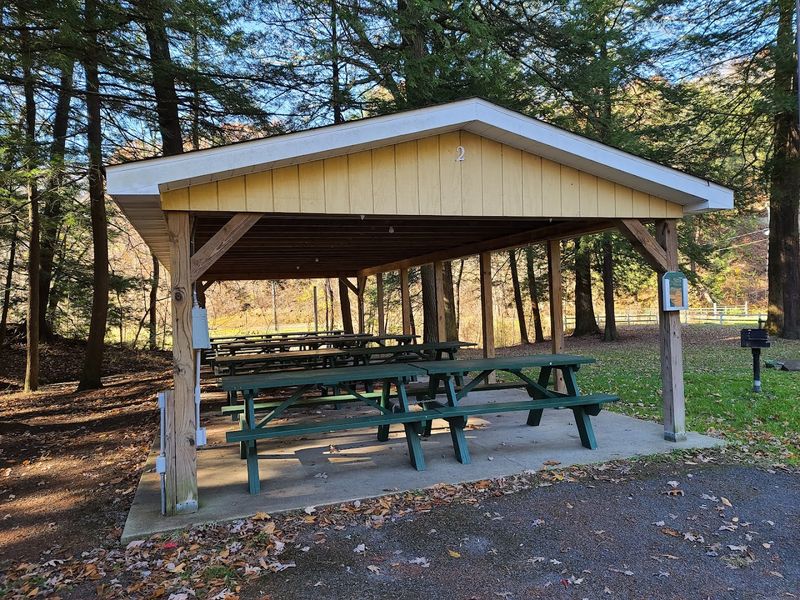
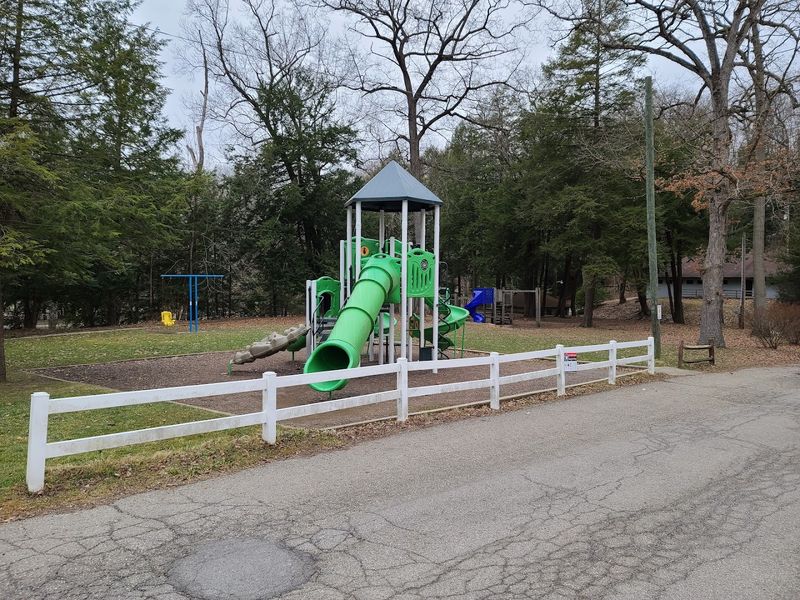
Cascade Park did not disappear — it reinvented itself. Today the park operates as a community green space managed by Lawrence County, offering something quieter but no less valuable than roller coasters and midway games.
Restored pavilions provide shaded gathering spots for family reunions, birthday parties, and neighborhood cookouts. Picnic groves that existed since the park’s earliest days still welcome visitors looking for a peaceful outdoor afternoon.
Walking trails loop through the gorge and along the creek, giving hikers and casual strollers access to the same dramatic natural landscape that made the park famous in the first place. Community events bring the park back to life on a regular basis — car shows, seasonal festivals, and local gatherings fill the grounds with energy that feels like a respectful echo of the park’s lively past.
There is something genuinely hopeful about seeing a place like this survive in a new form. Not every abandoned park gets a second life, and many simply deteriorate into completely inaccessible eyesores.
Cascade Park managed to hold on to its community identity even after losing its rides. The people of New Castle clearly still feel ownership over this space, and that sense of shared pride is visible in every maintained trail and freshly painted pavilion bench.
Legacy and Photography Magnet
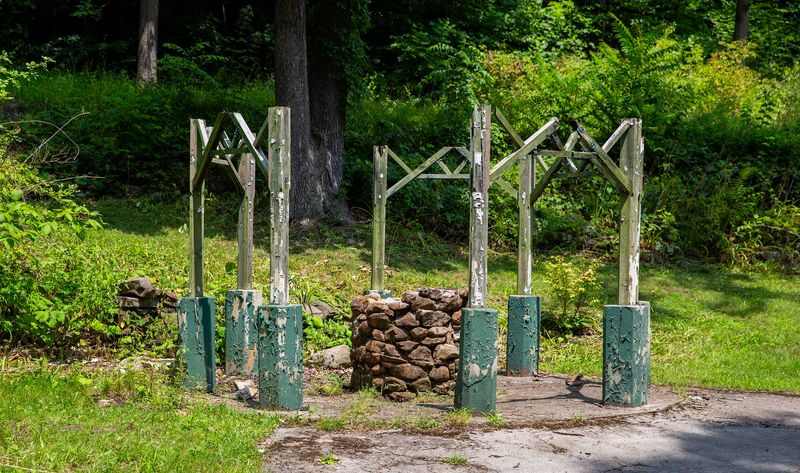
Word has spread among a very specific and passionate community of explorers: Cascade Park is one of Pennsylvania’s most rewarding spots for anyone obsessed with amusement park history. Coaster enthusiasts travel from neighboring states to walk the gorge trails and identify the footprints of rides they have only read about in old park guides.
Each concrete footer and rusted anchor bolt is a clue in an ongoing puzzle that history buffs find genuinely addictive.
Photographers are equally drawn to the site. The combination of dramatic gorge scenery, filtered forest light, and scattered architectural ruins creates a visual environment that is almost impossible to replicate artificially.
Images from Cascade Park regularly circulate in urbex communities online, sparking new interest and sending fresh waves of curious visitors to New Castle each year.
What Cascade Park represents goes beyond one park or one town. It stands as a reminder that the American tradition of communal outdoor entertainment — the trolley park, the regional amusement destination, the summer gathering place — was once a vital part of everyday life.
Documenting these places before the last remnants disappear is a form of cultural preservation. Every photograph taken in that gorge is, in its own small way, an act of remembrance for something worth remembering.