Hidden in the small town of Summerville, Georgia, sits one of the most extraordinary folk art environments ever created in America. Howard Finster, a Baptist minister and self-taught artist, transformed his backyard into a sprawling wonderland of religious visions, recycled materials, and hand-painted messages that continue to inspire visitors from around the world.
What started as a simple garden in 1961 grew into a four-acre masterpiece featuring thousands of artworks made from discarded hubcaps, bicycle parts, bottles, and whatever materials Finster could find. Today, the Paradise Garden Foundation preserves this incredible legacy, welcoming curious travelers to experience a place where faith, creativity, and environmental consciousness merge into something truly magical.
The Visionary Folk Artist Behind the Garden
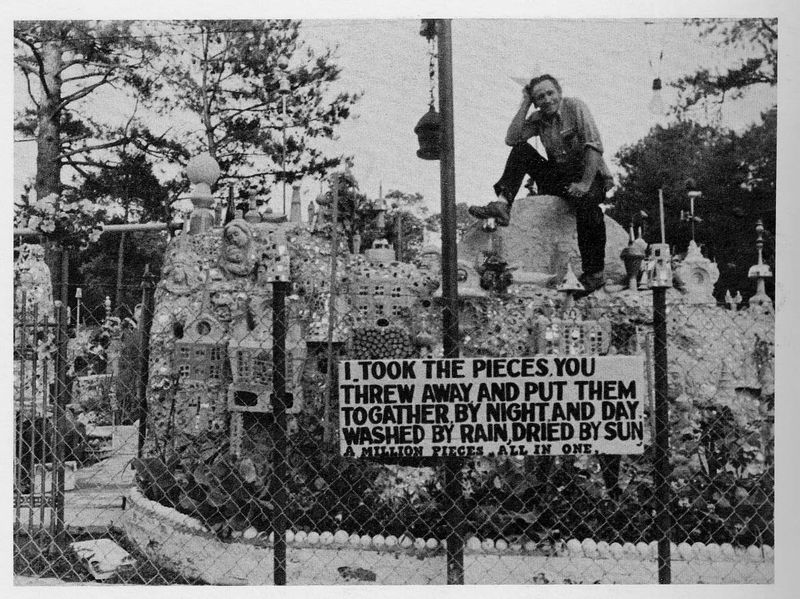
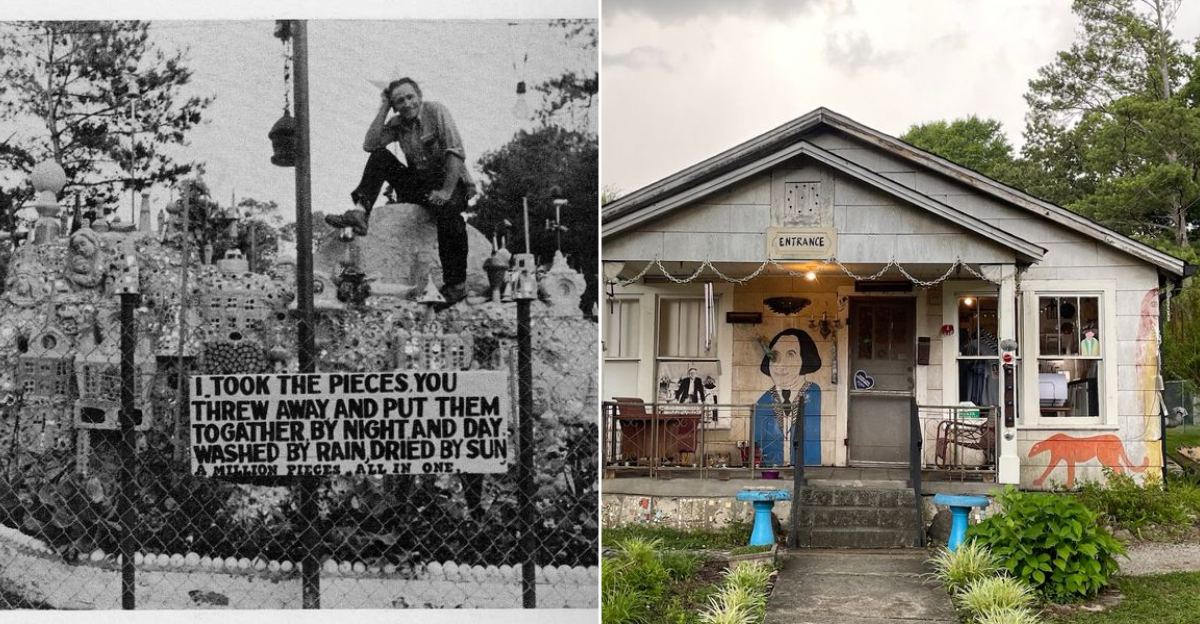
Howard Finster never planned to become one of America’s most celebrated folk artists. Born in 1916 in rural Alabama, he spent most of his life as a Baptist minister and bicycle repairman, fixing things and preaching sermons around northwest Georgia.
Everything changed one day in 1976 when, according to Finster, he experienced a divine vision while working on a bicycle.
A face appeared on his paint-covered finger, and he heard a voice telling him to create sacred art. From that moment forward, Finster dedicated himself to what he called his mission: creating 46,991 pieces of art to spread religious messages.
He worked constantly, painting on anything he could find, from wood and glass to old tires and television sets.
Finster’s outsider art caught the attention of the wider art world in the 1980s. His unique style and prolific output earned him features in major museums and galleries.
Despite his growing fame, he remained humble and focused on his spiritual calling.
Today, Finster is recognized as a pioneering figure in American folk art. His legacy lives on through Paradise Garden, where visitors can still feel his creative spirit in every corner.
A Garden Built from Recycled Treasures
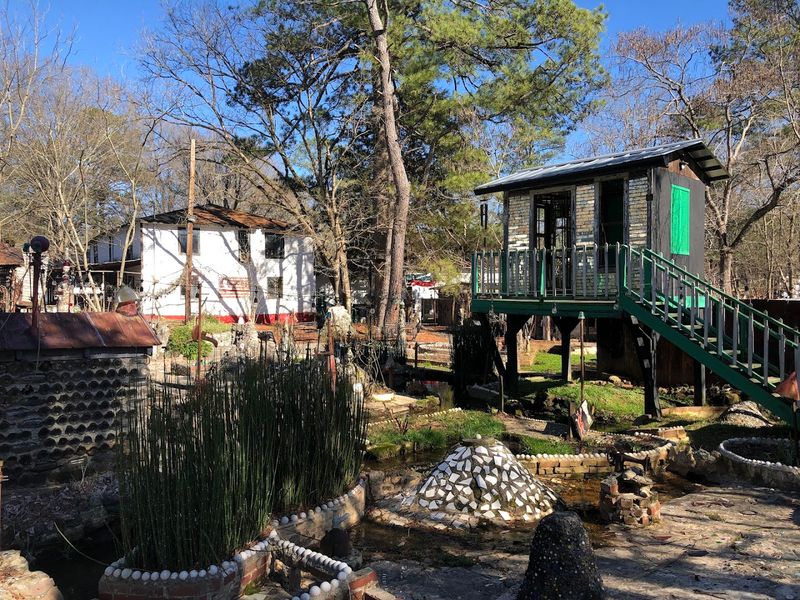
Walk through Paradise Garden and you’ll quickly notice something remarkable: almost everything here was destined for the trash. Finster had an extraordinary talent for seeing beauty and purpose in discarded objects that others considered worthless.
Hubcaps became decorative medallions, glass bottles transformed into sparkling mosaics, and old bicycle parts found new life as sculptural elements throughout the grounds.
This wasn’t just about being thrifty or creative with limited resources. Finster genuinely believed that God’s glory could be revealed through anything, even rusty metal and broken glass.
He collected materials constantly, sorting and storing them in his workshops until inspiration struck. Visitors today can still see some of these organized collections hanging from nails on workshop walls.
The garden demonstrates an early form of environmental consciousness that feels remarkably modern. By transforming waste into art, Finster created something beautiful while keeping tons of materials out of landfills.
Every bottle cap pressed into concrete, every hub cap mounted on a wall tells a story of redemption and transformation.
Current restoration efforts maintain this philosophy, carefully preserving the weathered patina of Finster’s original materials. The raw, unpolished aesthetic is part of what makes Paradise Garden so authentic and moving.
The World of Two with 46,991 Pieces of Art
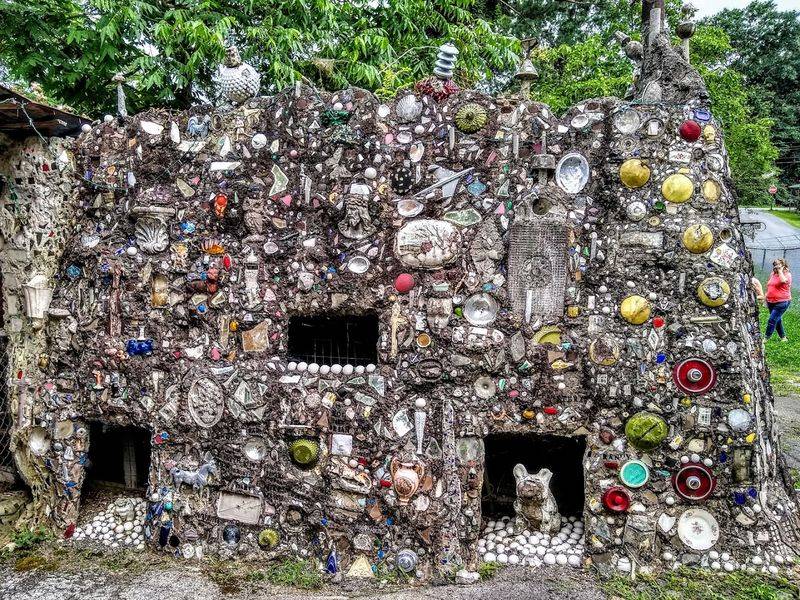
Finster called Paradise Garden his “World of Two,” imagining it as a new Garden of Eden where humanity could reconnect with the divine. He set an ambitious goal for himself: creating exactly 46,991 pieces of art before his death in 2001.
This wasn’t random—Finster numbered each work meticulously, tracking his progress toward this divinely inspired target. He believed God had given him this specific mission.
The sheer volume of artwork across the four-acre site can feel overwhelming at first. Paintings cover every available surface: buildings, fences, walkways, even rocks.
Three-dimensional sculptures emerge from unexpected corners. Hand-lettered Bible verses and spiritual messages demand your attention wherever you look.
Each piece reflects Finster’s urgent need to communicate spiritual truths. He painted quickly and prolifically, often working on multiple projects simultaneously.
His style was deliberately naive and direct, using bright colors and simple imagery that anyone could understand. Famous faces like Elvis Presley, George Washington, and Jesus Christ appear throughout his work.
Scholars estimate Finster came close to his goal, though exact counts vary. What matters most is experiencing the cumulative effect of thousands of artworks created with single-minded devotion.
You could visit multiple times and still discover something new.
The Meditation Chapel – A Sacred Space
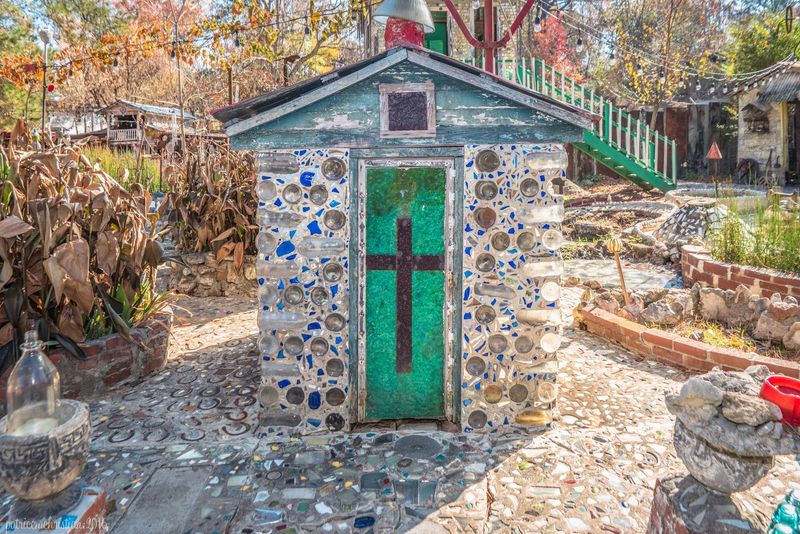
Among the many structures at Paradise Garden, the Meditation Chapel holds special significance as Finster’s most personal spiritual sanctuary. Built in the early days of the garden’s development, this small building became the heart of Finster’s creative and spiritual practice.
Here he would pray, meditate, and seek inspiration for new artworks that would spread his religious message to visitors from around the world.
Recent restoration work has brought the chapel back to its former glory. During hot summer days, visitors sometimes wait in line for their turn to step inside and experience this intimate space.
The walls showcase some of Finster’s most intricate hand-painted designs, with Biblical scenes and messages covering every inch. Sunlight filters through decorated windows, creating an almost otherworldly atmosphere.
The chapel represents more than just another building on the grounds. It embodies Finster’s belief that sacred spaces don’t need to be elaborate or expensive—they just need to be created with genuine faith and devotion.
Even visitors who don’t share Finster’s religious views often report feeling moved by the sincerity evident in every brushstroke.
Foundation staff like the beloved Mary provide insights into the chapel’s history and significance. Their warmth and knowledge help visitors understand the deeper meaning behind what they’re seeing.
Hand-Painted Biblical Messages Everywhere
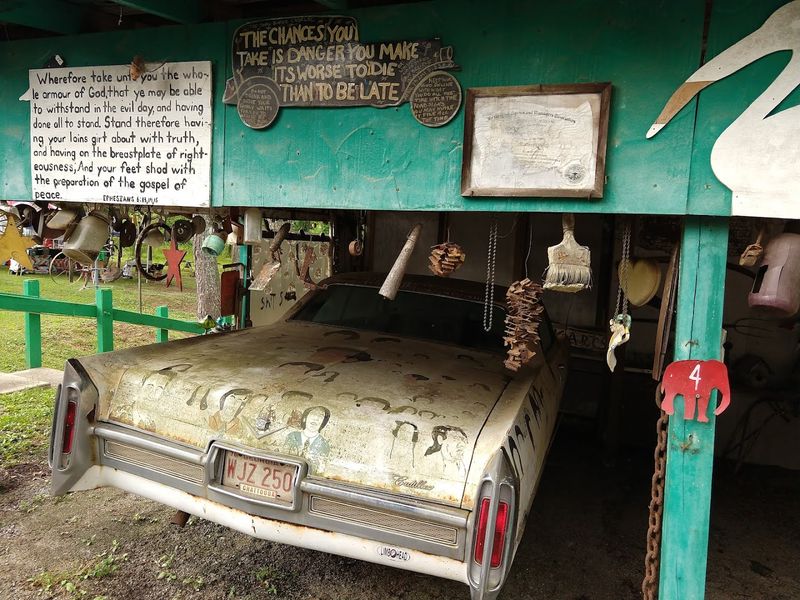
Reading might be your primary activity at Paradise Garden, even though it’s supposedly a visual art environment. Finster covered surfaces with hand-lettered scripture verses, spiritual advice, and personal revelations in his distinctive folk art style.
These messages aren’t subtle—they’re bold, colorful, and impossible to ignore as you wander the grounds.
Some signs offer direct Biblical quotations, while others share Finster’s own interpretations and visions. His spelling and grammar occasionally stray from standard conventions, but this only adds to the authentic, unfiltered quality of his communication.
He wrote the way he spoke, with urgency and conviction. Each message was meant to reach someone who needed to hear it exactly at that moment.
The variety of surfaces Finster used for his text-based art is remarkable. Wooden boards, metal sheets, concrete pathways, and building walls all became canvases for his written messages.
He combined words with images, creating visual poems that engage both eyes and mind. Angels, demons, historical figures, and abstract patterns surround and frame his texts.
For pre-teens and families, the foundation offers photo scavenger hunts that encourage visitors to search for specific messages and artworks. This interactive approach helps younger visitors engage more deeply with Finster’s complex visual environment.
Bridges, Walkways, and Art Underfoot
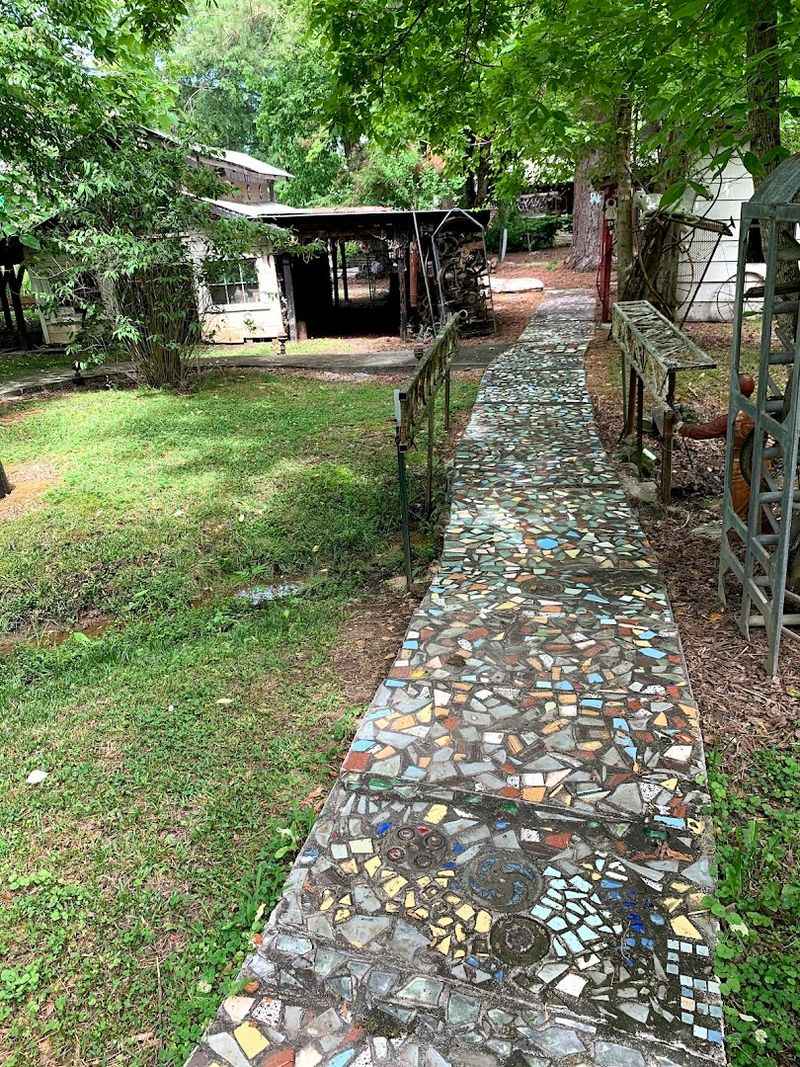
Most visitors to Paradise Garden spend their first few minutes looking up and around at the buildings and sculptures. Smart explorers quickly learn to look down as well.
Finster decorated every pathway, creating intricate designs in concrete embedded with colorful bottle caps, glass pieces, and painted patterns. Walking through the garden becomes a treasure hunt where each step reveals new details.
The bridges connecting different areas of the property deserve special attention. Finster transformed these functional structures into artworks themselves, adding railings decorated with found objects and painting surfaces with his characteristic religious imagery.
These bridges aren’t just ways to cross from one area to another—they’re experiences unto themselves that slow you down and make you notice your surroundings more carefully.
Paved paths wind through the four-acre site, guiding visitors past various buildings, sculptures, and garden areas. Each section has its own character and collection of artworks.
The paths themselves feature different designs, showing how Finster’s style evolved over decades of continuous creation. Some areas showcase early geometric patterns, while later sections display more elaborate pictorial scenes.
This attention to every surface reflects Finster’s comprehensive artistic vision. He didn’t want visitors to simply observe art—he wanted them to be completely surrounded and immersed in his creative spiritual world from ground to sky.
Finster’s Workshop and Creative Process
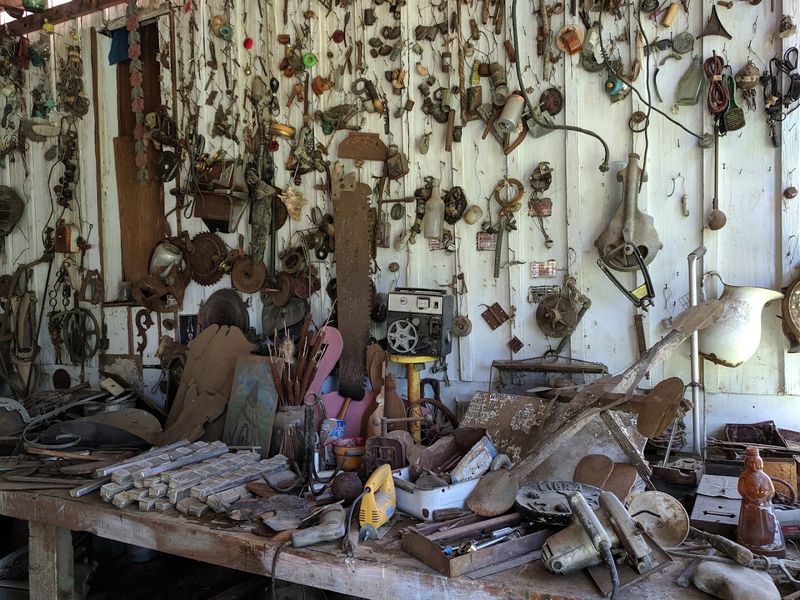
Stepping into Finster’s preserved workshops offers the most intimate glimpse into his creative mind. Walls lined with individual nails each hold specific types of metal pieces—sorted by size, shape, and color.
This meticulous organization reveals the methodical side of an artist often perceived as chaotic and spontaneous. Finster knew exactly where to find what he needed when inspiration struck.
Some visitors find these workshops slightly invasive, as they reveal personal aspects of Finster’s life and possible neurodivergent traits. The extensive collections and sorting systems suggest obsessive tendencies alongside artistic genius.
However, this unfiltered access helps us understand the real person behind the art. Finster wasn’t mythological—he was human, complex, and driven by forces he himself didn’t always fully understand.
Tools, partially completed projects, and stockpiles of materials fill the workshop spaces. You can almost feel Finster’s presence, imagine him working late into the night on yet another piece for his divinely ordained collection.
The workshops smell of old wood, paint, and metal—authentic scents that connect visitors directly to the artist’s working environment.
Foundation staff members emphasize the importance of preserving these spaces exactly as Finster left them. They provide context that helps visitors appreciate both the artistic output and the process that generated such incredible productivity over decades.
The Connection to Rock and Roll History
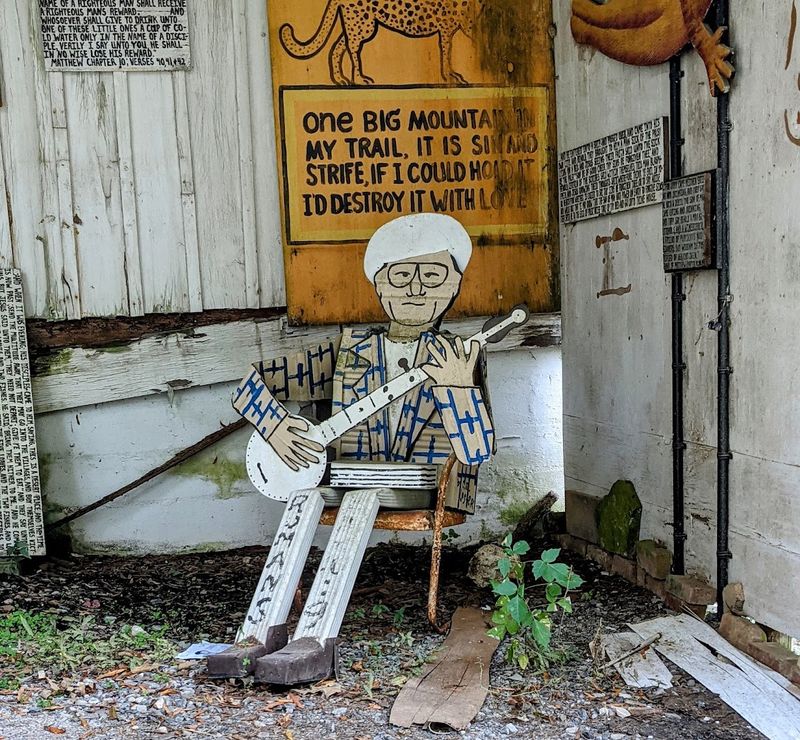
Finster’s influence extended far beyond the folk art world into mainstream popular culture, most famously through his work with the Talking Heads. In 1985, the innovative rock band commissioned Finster to create the cover art for their album “Little Creatures.” This collaboration introduced millions of music fans to Finster’s distinctive style, bridging the gap between outsider art and commercial success in unprecedented ways.
The album cover features Finster’s characteristic crowded composition style, with multiple figures, bright colors, and hand-lettered text filling every available space. This exposure led to additional music industry commissions and gallery shows in major cities.
Suddenly, the self-taught minister from rural Georgia was being celebrated in New York and Los Angeles art scenes.
R.E.M., another influential band, also collaborated with Finster on album artwork and music videos. These partnerships demonstrate how Finster’s earnest, unironic spiritual art resonated even with audiences who might not share his religious convictions.
His sincerity and originality transcended cultural boundaries, appealing to punk rockers and museum curators alike.
Visitors who grew up in the 1980s often experience a moment of recognition when they learn about this connection. Paradise Garden becomes not just a religious folk art site but a pilgrimage destination for music history enthusiasts as well.
Finster Fest – An Annual Celebration
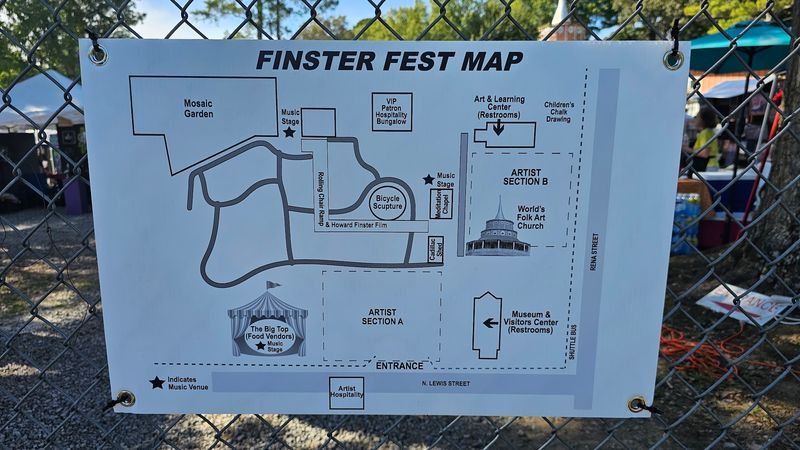
Every September, Paradise Garden transforms into a bustling celebration of folk art during Finster Fest. Dozens of contemporary folk artists set up booths displaying their work, carrying on the tradition Finster championed throughout his life.
Live music fills the air, food vendors serve Southern specialties, and visitors from across the country gather to celebrate outsider art in all its forms.
The festival creates a unique community atmosphere that reviewers consistently praise. Folk artists tend to be welcoming, quirky individuals who love discussing their creative processes and inspirations.
Unlike more formal art fairs, Finster Fest maintains a casual, friendly vibe where children and adults can interact directly with working artists. Many attendees return year after year, treating it as an annual reunion.
Fair warning: Georgia in September can be brutally hot. Multiple reviewers mention long lines and high temperatures making some activities challenging.
Organizers recommend arriving early or waiting until late afternoon when crowds thin and temperatures drop slightly. Bringing water, sunscreen, and shade gear makes the experience much more comfortable.
The festival honors Finster’s legacy while supporting living artists who work in similar self-taught, visionary traditions. It demonstrates how one man’s creative vision continues inspiring new generations.
Attending Finster Fest provides context for understanding Paradise Garden’s ongoing cultural significance beyond just preserving historical artifacts.
The Ongoing Restoration and Preservation
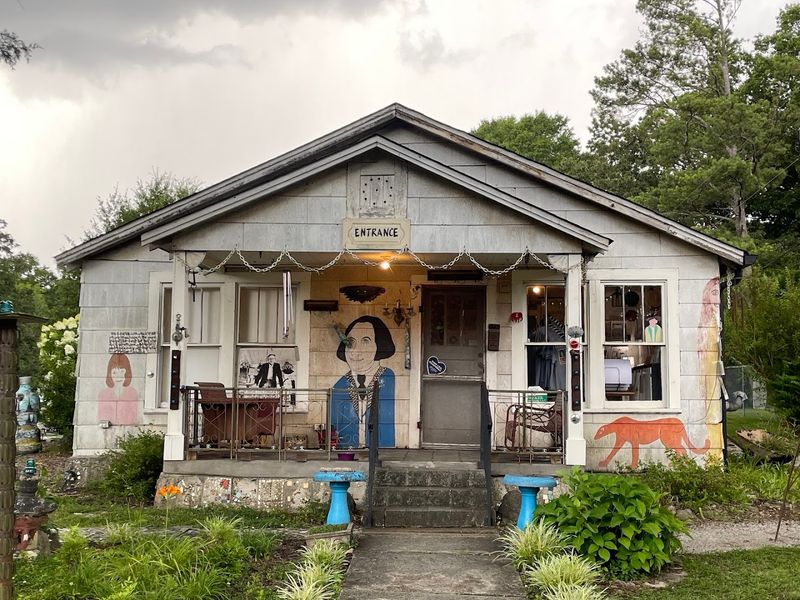
After Finster’s death in 2001, Paradise Garden faced an uncertain future. Weather, vandalism, and simple neglect took their toll on artworks never designed to withstand decades of exposure.
Early visitors described the site as run-down and unkept, with some pieces deteriorating beyond recognition. The situation seemed dire for preserving this important piece of American folk art history.
Everything changed when the Paradise Garden Foundation formed and began actively fundraising for restoration. Through grants, private donations, and community support, they’ve systematically restored buildings and stabilized outdoor artworks.
Recent visitors express amazement at the transformation, noting how much better the site looks while still maintaining its authentic weathered character. Restoration teams face the delicate challenge of preserving Finster’s vision without making everything look artificially new.
The foundation operates as a historical place museum, charging modest admission fees that support ongoing maintenance and programming. They offer self-guided tours with helpful staff members like Mary, who receives frequent praise in reviews for her warmth and knowledge.
The foundation also maintains a small shop selling books, T-shirts, and reproductions of Finster’s work.
Current hours run Thursday through Sunday, 11 AM to 5 PM, with closures on Mondays. Visitors should check the website before planning trips, especially during winter months when weather occasionally forces temporary closures.