
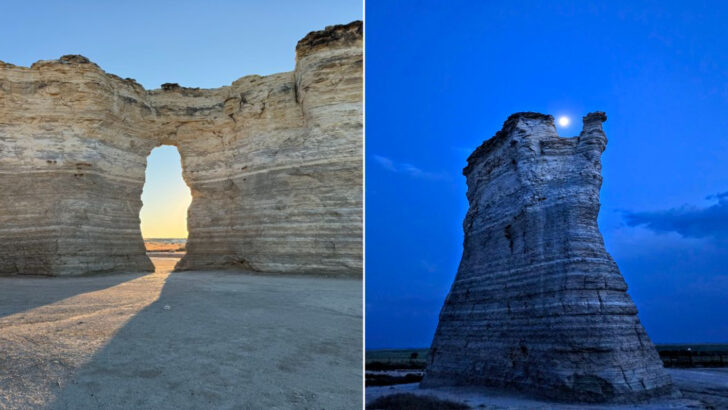
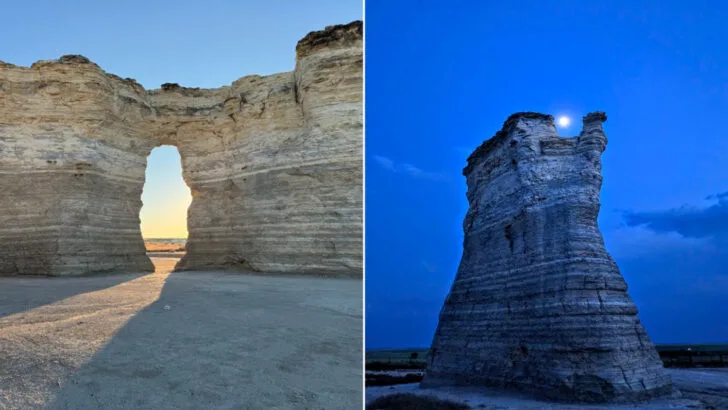
Nothing prepares you for the sudden surprise of Monument Rocks.
You drive for miles across endless Kansas prairie—golden grasses waving in the wind, sky stretching wider than you thought possible. The road hums beneath your tires, quiet except for the occasional call of a meadowlark.
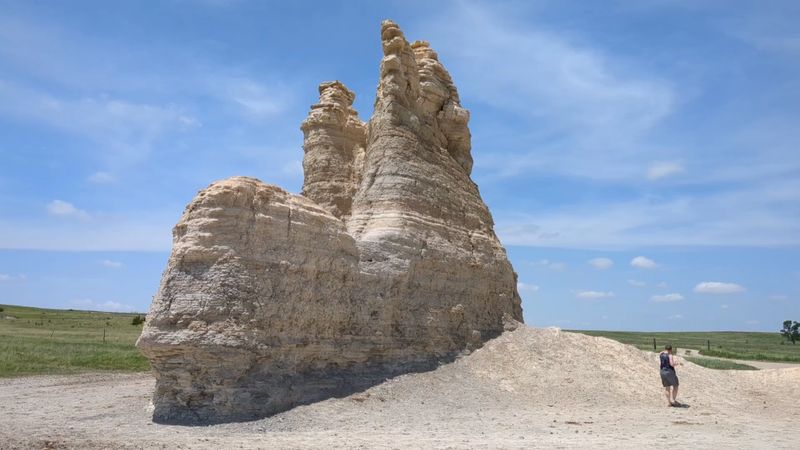
Then, out of nowhere, the earth rises into chalky spires, towering seventy feet against the horizon.
These formations feel impossible, like nature’s own pyramids dropped in the middle of nowhere. Fossil whispers peek from their surfaces—ammonites coiled like tiny galaxies, fish bones etched into stone.
Sunlight plays on sharp edges, casting shadows that shift as you walk around.
Monument Rocks aren’t just a sight—they’re a journey through time. Standing among the pyramids, you feel the past brushing against the present.
The prairie stretches on beyond, reminding you how small, and yet how lucky, you are to witness a secret this grand.
Orientation and First Impressions
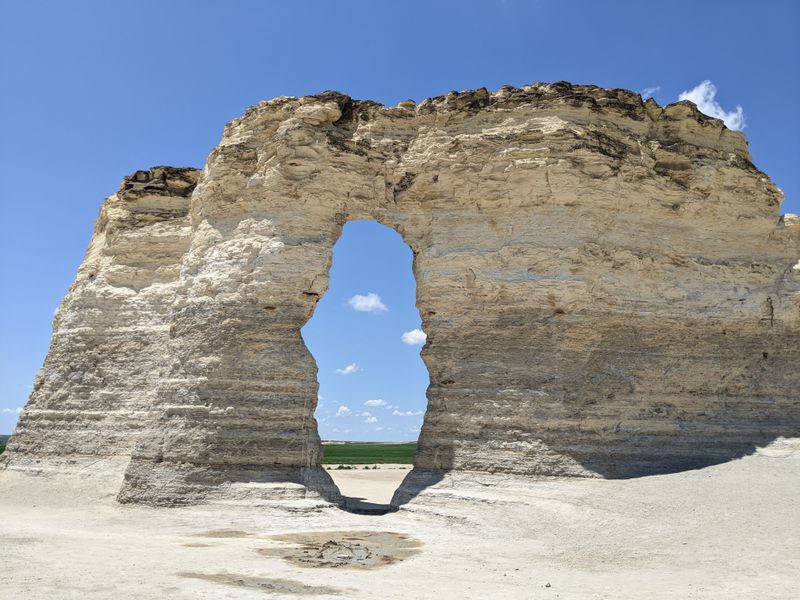
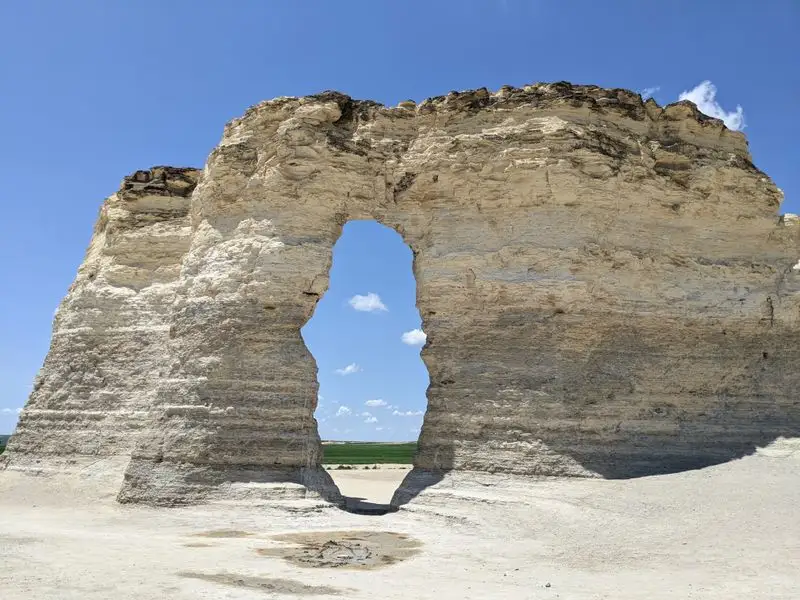
Your first glimpse of Monument Rocks arrives like a secret revealed by the prairie. A quiet gravel road carries you across seas of grass, until pale chalk towers suddenly break the horizon.
The formations loom, rugged yet elegant, etched by wind and water into arches, fins, and cathedral-like walls.
Step out and the silence feels expansive, holding the soft hiss of prairie wind. There are no gates or ticket booths, just space and sky.
You measure the scale by tracing seams of ancient sediment and fossil whispers pressed into the rock.
Circling the base, you start to notice textures: gritty chalk dust underfoot, knifed flutes where rain carved channels, shadow lines that lengthen and slip. The towers catch light differently as sun angles change, warming to honey or cooling to bone white.
It is easy to stand still here. Even the car seems louder than necessary, so you let the engine tick cool and listen.
If you came seeking drama, the drama is quiet, patient, impossible to rush. This is a landscape that invites breathing room, and you take it.
Getting There: The Peaceful Prairie Drive
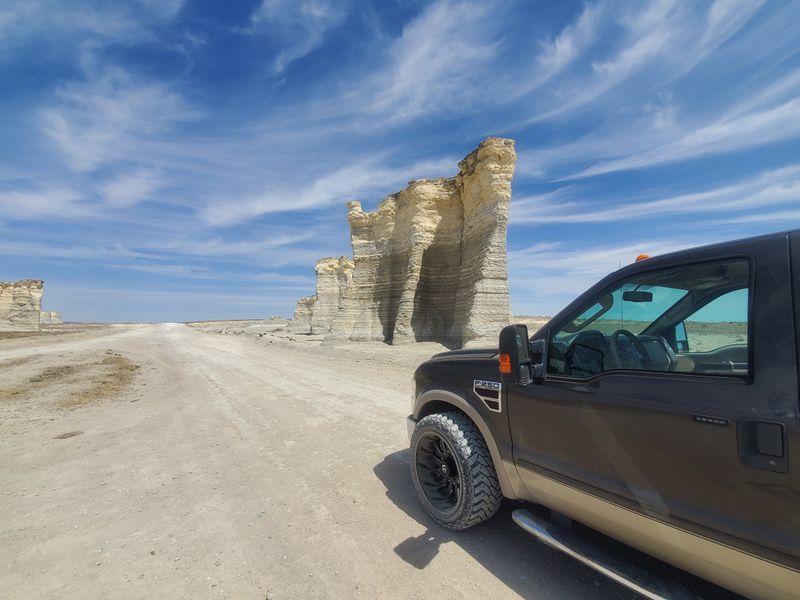
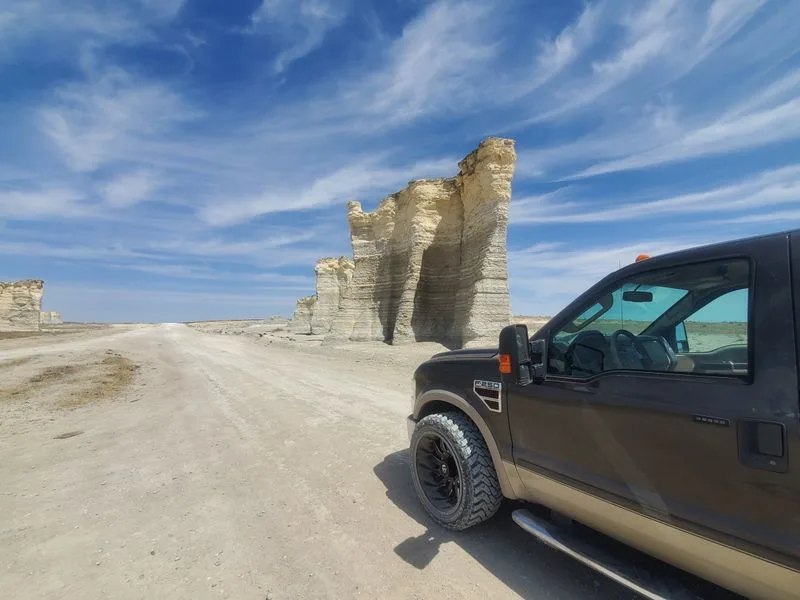
The journey to Monument Rocks is part of its magic. From Oakley, paved lanes give way to gravel, and the prairie opens like a canvas.
You watch fence lines unspool while meadowlarks skip ahead, and the car hums a steady rhythm that quiets the mind.
Navigation feels simple but remote. Cell service can fade, so saving offline maps helps, and bringing water is wise.
Drive slowly on washboard stretches to avoid tossing gear and to keep dust plumes friendly for other travelers.
Detours along county roads reveal windmills, hay bales, and the outline of distant grain elevators. Each bend hints at the improbable reveal ahead, the chalk monuments tucked beyond a gentle rise.
The approach heightens anticipation without fanfare.
Arriving, you will notice the road ends in presence rather than pavement. There is no grand entrance, only the sound of tires crunching to a stop.
That peaceful drive ensures your senses arrive before your schedule does, ready for the hush of stone and sky.
Geology 101: Ancient Seabed Chalk
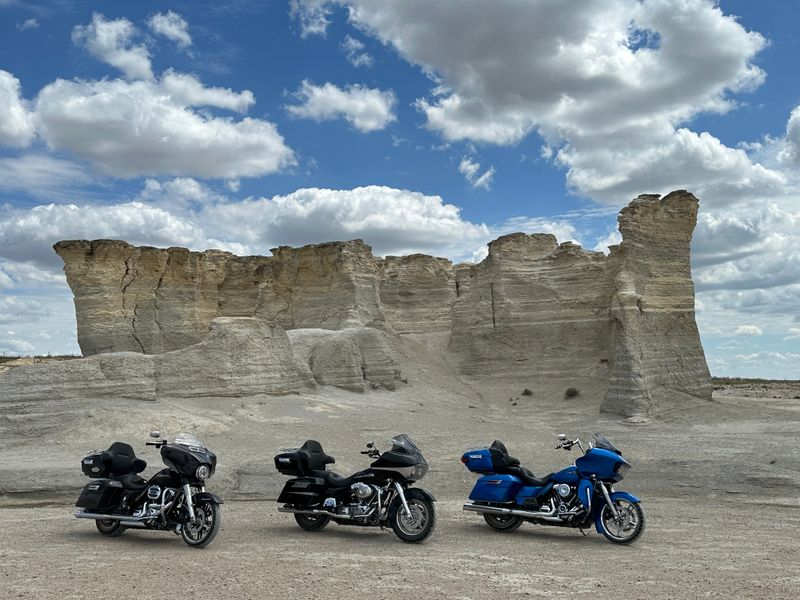
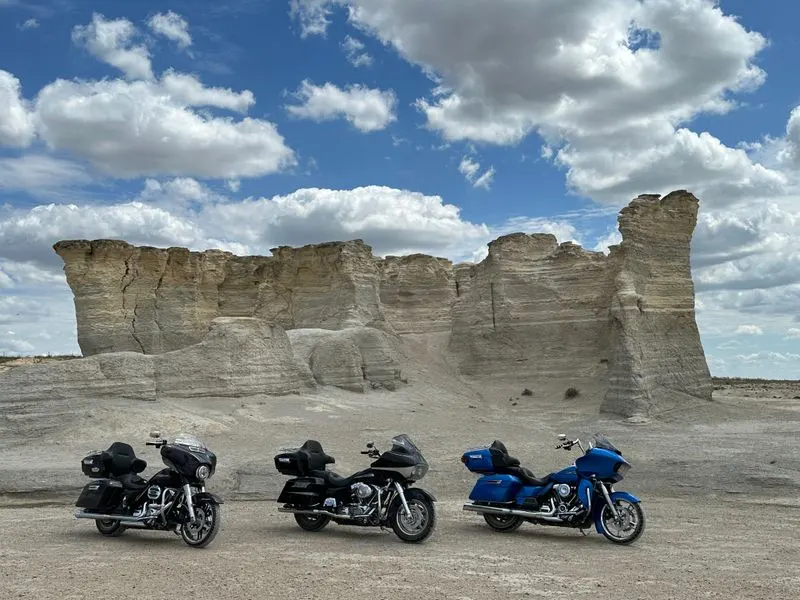
Stand close, and the rock tells an old ocean story. Monument Rocks formed from Niobrara Chalk, a soft limestone laid down about 80 million years ago when a shallow sea flooded the Great Plains.
Layer by layer, microscopic shells and marine sediments settled, compressing into fragile stone.
Look for fine horizontal bedding that marks shifting sea conditions. Subtle color bands hint at mineral changes, while vertical cracks reveal stress and weathering.
Rain cuts gullies, wind sharpens edges, and freeze-thaw cycles pry flakes free.
Chalk invites touch but crumbles easily. Resist scraping or climbing, since the formations are delicate and erosion is relentless.
Even footprints on steep slopes can speed wear, so admire from stable ground.
The scale can be deceptive. What seems permanent is actually fleeting on geologic time.
Each season edits the shapes, trading crisp corners for new arcs and windows. Knowing this makes every visit unique, like reading a page the sea keeps rewriting in the middle of Kansas.
Fossils and the Cretaceous Story
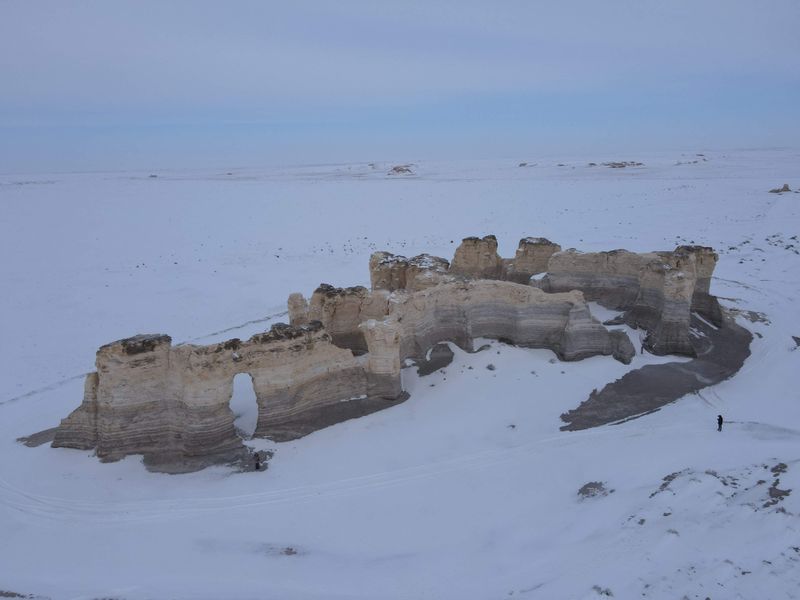
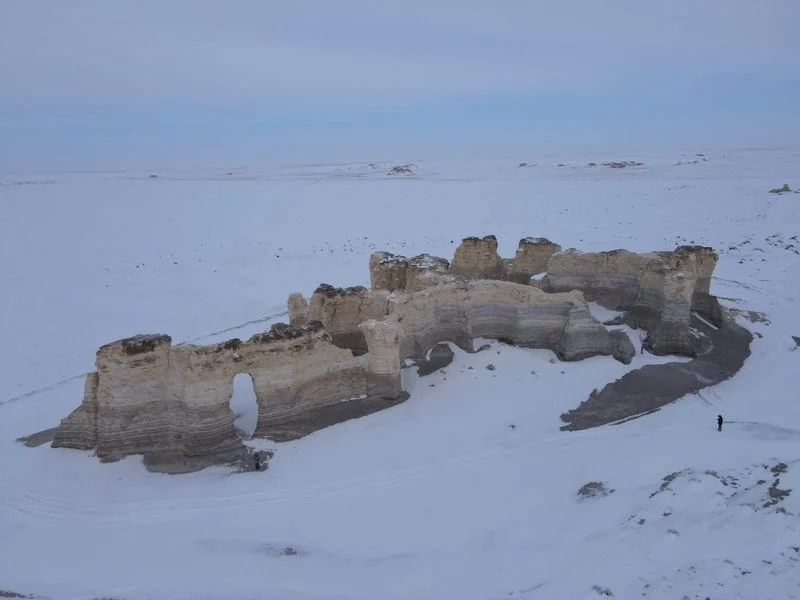
Monument Rocks sits inside a Cretaceous chapter brimming with life. Imagine warm inland seas where mosasaurs hunted, plesiosaurs glided, and schools of fish traced shifting currents.
As organisms died, their remains settled into the ooze that became this chalk.
Fossils are protected, and collecting is not allowed at Monument Rocks. Still, you can train your eyes to notice impressions, shell fragments, and textural hints that whisper of ancient biology.
Nearby museums in Oakley and the region help connect these clues with actual specimens.
Picture ammonites coiled like stone galaxies and fragile fish bones etched in chalky relief. The formations are a time capsule, but one exposed to weather and respectful visitors.
By leaving everything in place, you help keep the story coherent for the next curious traveler.
Reading the landscape as prehistory changes the way you stand here. You are not just sightseeing; you are eavesdropping on an ocean that once covered Kansas.
That mental shift deepens the view, turning the quiet into narrative.
Photography Tips: Light, Angles, and Sky
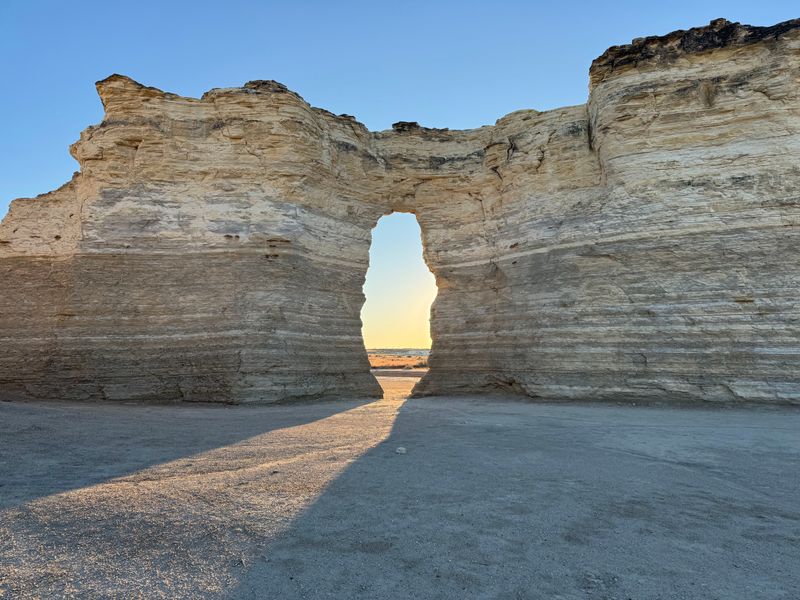
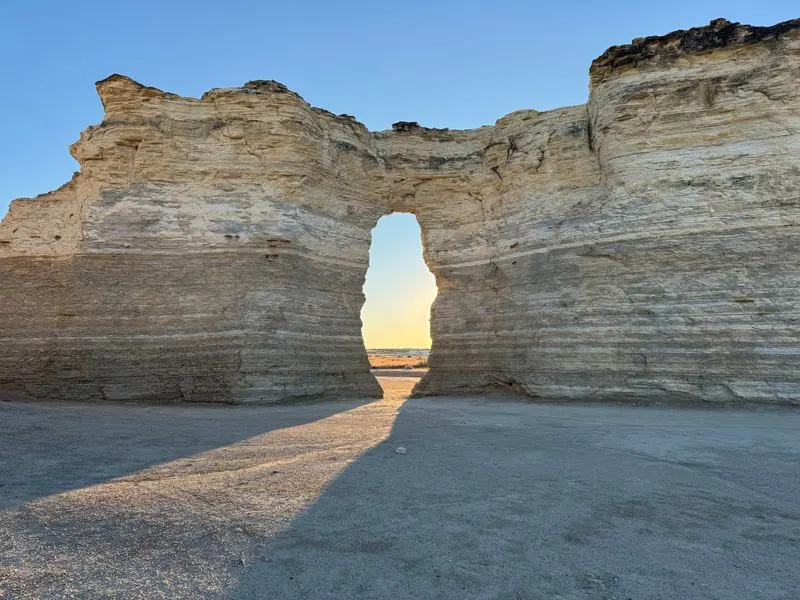
Light is everything at Monument Rocks. Arrive near sunrise or sunset when the chalk warms to gold and shadows carve three-dimensional depth.
Midday can still work with strong skies, but polarized glare flattens details, so angle yourself to avoid harsh reflection.
Walk the perimeter to find foreground interest: tire ruts, grasses, and textured rubble. Low angles dramatize height, while stepping back compresses spires against cloud banks.
Bring a wide lens for scale and a moderate telephoto to isolate arches and flutes.
Tripods help in dim light, but wind can shake gear, so weigh it down. Bracket exposures if the sky glows brighter than the stone, and consider a soft graduated filter.
Panoramas capture the full amphitheater without feeling cramped.
Respect boundaries and avoid climbing for that shot. Foot traffic scuffs fragile surfaces and scars photos for everyone.
Patience matters here; wait for the sky to speak, and the formations will answer with shadows.
Respecting Private Land and Access Etiquette
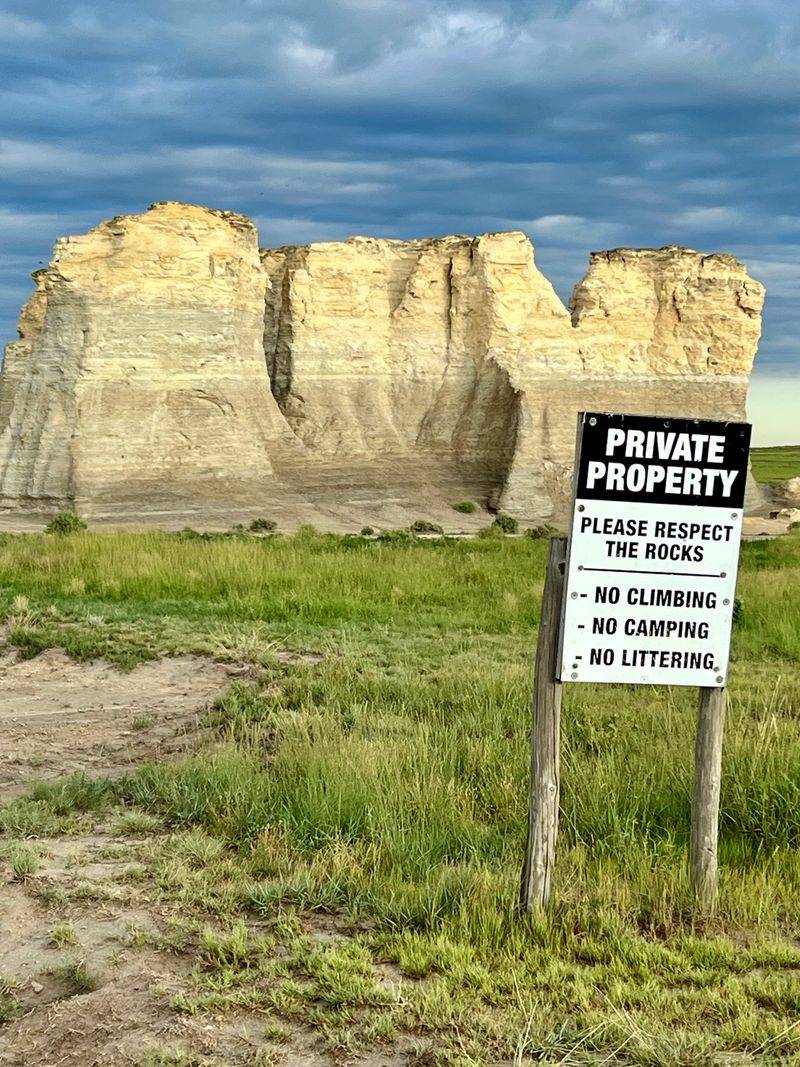
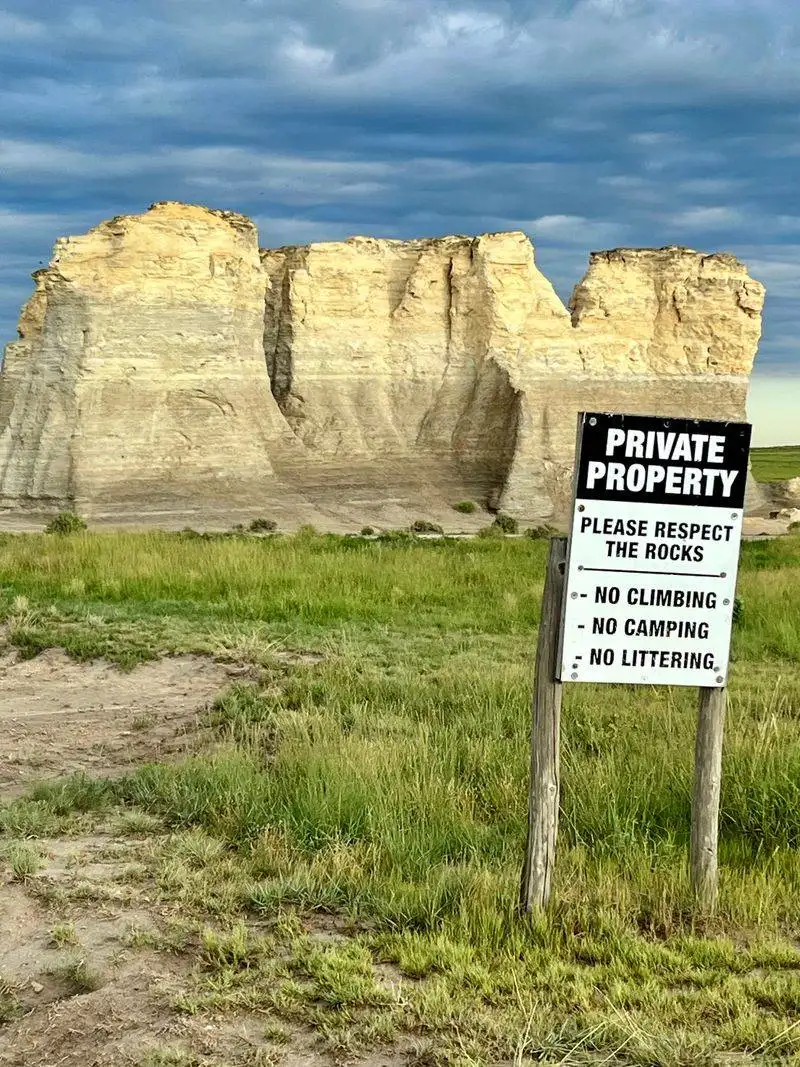
Monument Rocks sits on private land with public access, a generous arrangement that depends on respect. There is no fee or staffed gate, so visitors carry the responsibility to tread lightly.
Follow posted signs, stay on established pullouts, and keep vehicles off delicate ground.
Pack out all trash, including micro litter like bottle caps and tissues. Avoid climbing or carving names into chalk, which damages formations and ruins the experience.
If livestock are present, give them space and leave gates exactly as you find them.
Night visits are allowed, but keep noise low and lights considerate. Drones can disturb wildlife and other visitors, and may be restricted, so check current guidelines before launching.
Dogs belong on leashes, with waste packed out.
Good etiquette protects access for everyone. A few thoughtful choices maintain the landowner’s trust and the site’s quiet character.
Treat Monument Rocks like a guest would treat a cherished home, grateful for the invitation.
Weather, Seasons, and Best Times to Visit
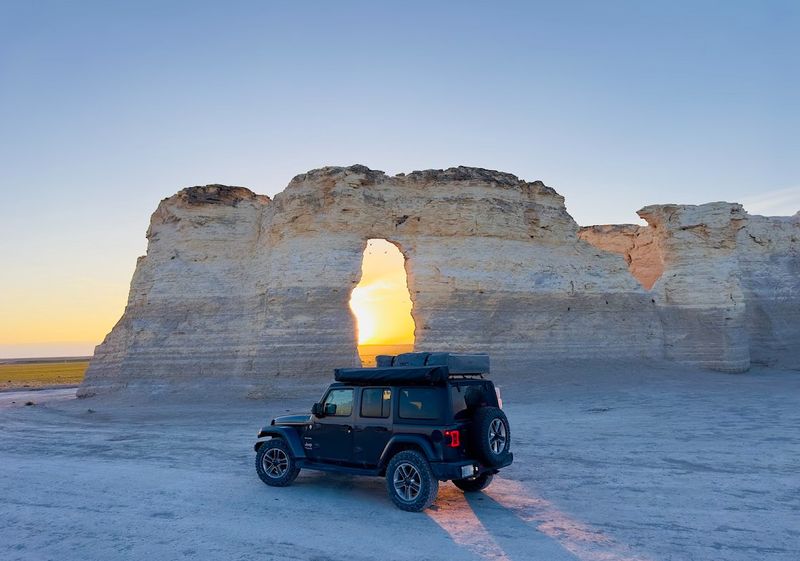
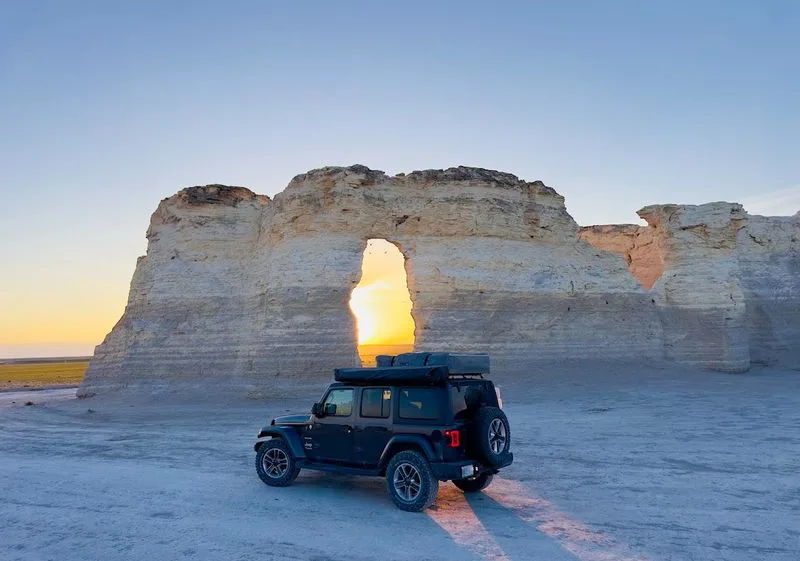
Season shapes the experience as much as geology. Spring can bring wildflowers and quick-moving storms that paint dramatic skies.
Summer offers long golden hours, along with heat and the chance of afternoon thunderstorms rolling across the plains.
Autumn cools the air and warms the grasses, inviting long walks and layered clothing. Winter sometimes lays a delicate snow against the chalk, etching edges and revealing fresh textures.
The formations hold mood like a gallery wall changing exhibits.
Wind is a constant companion, so plan for gusts that sting eyes and nip at hats. Sunscreen and water matter year-round under the big sky.
After rain, roads can become muddy and rutted, so consider waiting for drier conditions.
For quiet, aim for weekdays at sunrise or sunset. The low light carries calm and photographic payoff.
If storms build, watch from a safe distance; lightning makes a fierce backdrop but demands caution.
Stargazing and Night Photography
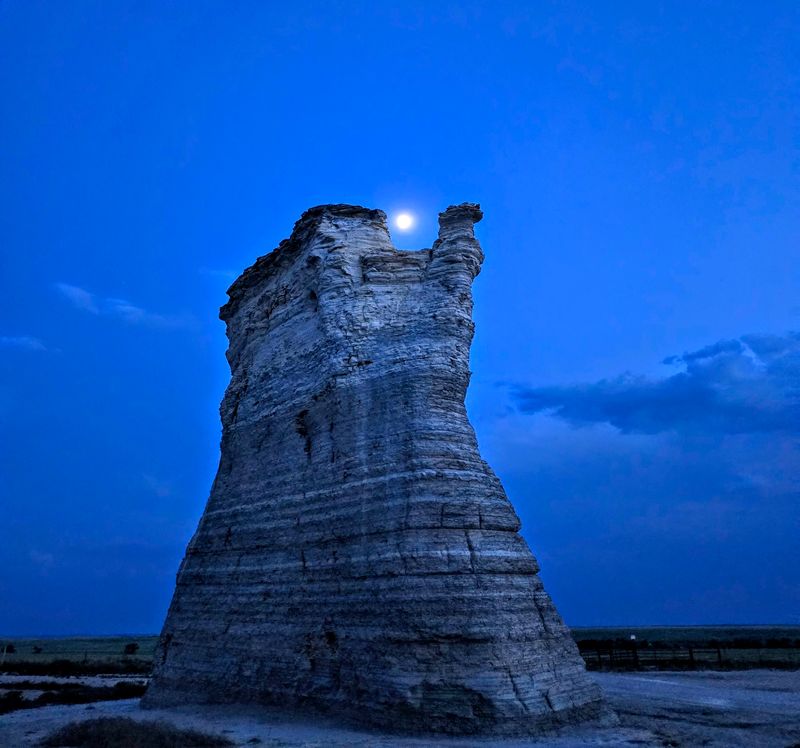
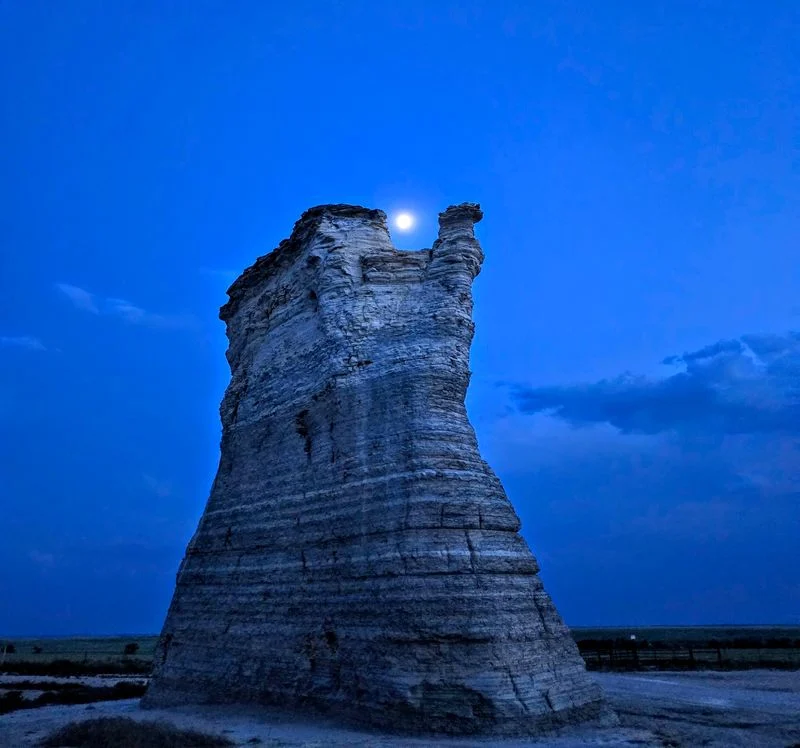
When the sun slips away, Monument Rocks becomes an observatory without walls. With minimal light pollution, the Milky Way can stretch like a luminous river above chalk silhouettes.
Warm low-level lighting can tastefully reveal texture without drowning starlight.
Scout compositions in daylight to avoid wandering near fragile areas after dark. Bring a sturdy tripod, wide fast lens, and extra batteries.
Red headlamps protect night vision and respect other visitors’ work.
Long exposures invite wind shake, so shield the tripod and use a remote release. Consider blending a short exposure for the sky with a longer frame for foreground detail.
If you light paint, keep it subtle and brief to share the darkness kindly.
Sound carries farther at night, and the prairie rewards quiet. Stand still long enough and you will hear coyotes yip across distance like punctuation marks.
The sky answers with constellations that feel close enough to pocket.
Safety, Facilities, and What to Bring
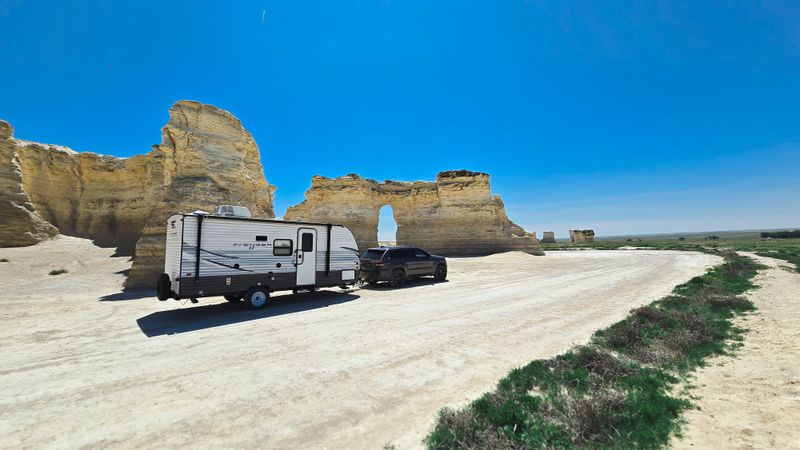
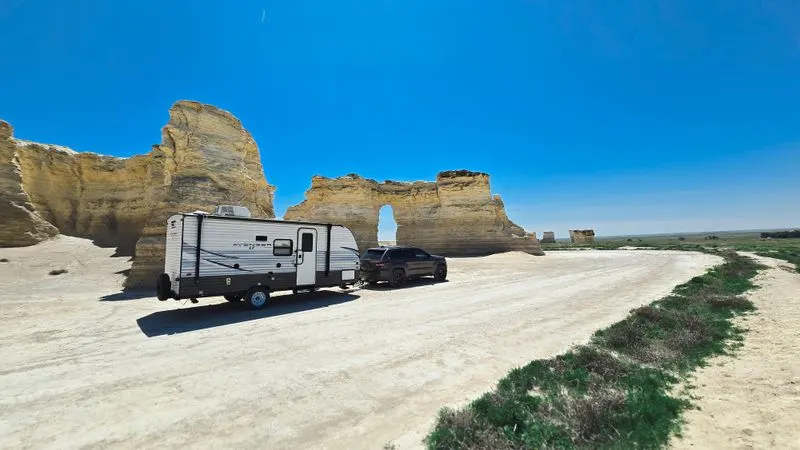
This is a remote site with no services, so self-sufficiency keeps the visit smooth. Bring plenty of water, sun protection, sturdy shoes, and a basic first-aid kit.
A paper map or offline navigation helps if cell coverage fades.
There are no restrooms or trash bins on-site. Pack out everything, and plan restroom stops in Oakley before heading out.
Weather can change quickly, so keep layers handy and secure hats against gusts.
Stay aware of footing near eroded edges where chalk crumbles easily. Do not climb the formations; slides and collapses happen without warning.
In summer, heat plus wind can dehydrate faster than expected, so sip regularly.
Share your plan with someone if traveling solo and keep fuel topped off. Drive slowly on gravel to avoid flats and wildlife collisions at dusk.
Preparedness ensures the landscape remains the only wild card.
Nearby Context: Oakley and Regional Highlights
Monument Rocks feels solitary, but Oakley provides the friendly launchpad. Fuel up, grab snacks, and check museum hours before the gravel turnoff.
The Prairie Museum and nearby fossil exhibits help tie the chalk story to real specimens.
Local diners offer the kind of comfort food that pairs well with wind and big skies. Ask for current road conditions, especially after storms.
Residents know the rhythms of the prairie better than any app.
Regional highlights include the nearby Castle Rock Badlands, another sculpted chalk landscape worth pairing for a full day. Both sites showcase the same ancient sea written in different accents.
The loop forms a satisfying narrative arc.
Return to Oakley for the night if you are chasing sunrise light. A simple motel, a hot meal, and a short pre-dawn drive set you up perfectly.
That small-town hospitality frames the wilderness with practical ease.