
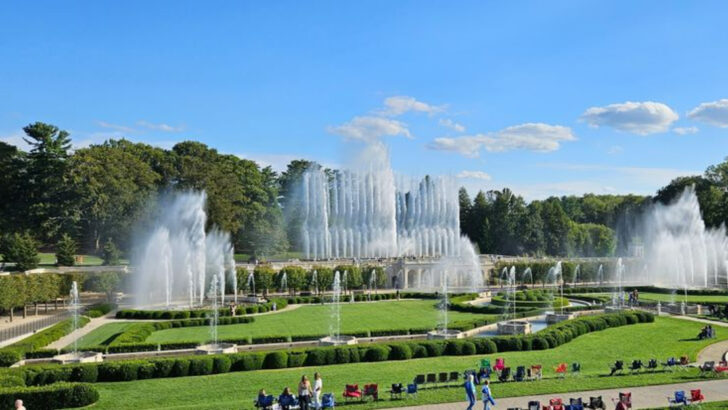
Tucked inside Longwood Gardens in Kennett Square, Pennsylvania, the Italian Water Garden is one of those places that genuinely stops you in your tracks. Built in the late 1920s, it was designed to feel like a piece of Italy planted right in the American countryside, and somehow, it still delivers that feeling today.
With over 600 water jets, 18 pools, and hand-carved stone details, the garden is both a historic landmark and a living work of art. Whether you are a first-time visitor or a longtime fan of Longwood, this garden has a way of pulling you back in.
Arrival at Longwood Gardens
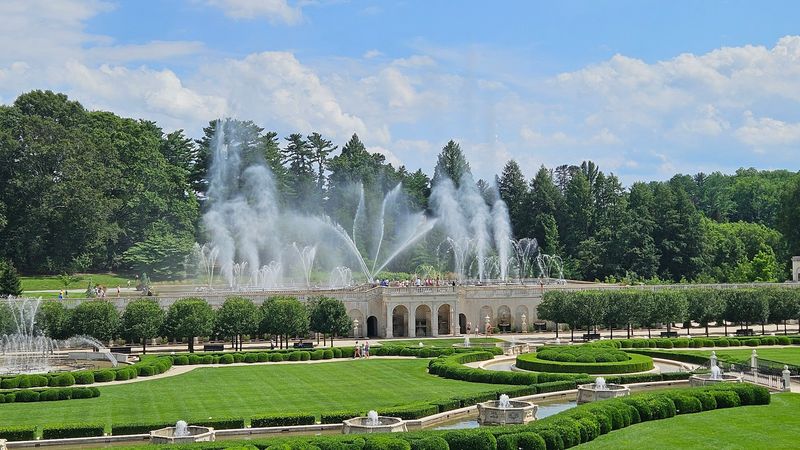
Pulling into Longwood Gardens in Kennett Square, Pennsylvania, feels like stepping into a different world altogether. The air smells different here, slightly earthy and sweet, and the landscape opens up in a way that makes everyday stress seem very far away.
Most visitors arrive expecting beauty, but few are fully prepared for just how much of it is packed into this one property.
Longwood spans over 1,000 acres, but the Italian Water Garden sits in its own quiet corner, northeast of the Large Lake. To get there, you walk through stretches of manicured paths and tall trees that slowly build your anticipation.
By the time the garden comes into view, the sound of moving water reaches you before you even see the fountains.
Buying tickets online in advance is strongly recommended, especially during peak seasons. The garden is open daily and welcomes visitors from late morning well into the evening, making it a flexible destination for all kinds of schedules.
A Garden Built Between 1925 and 1927
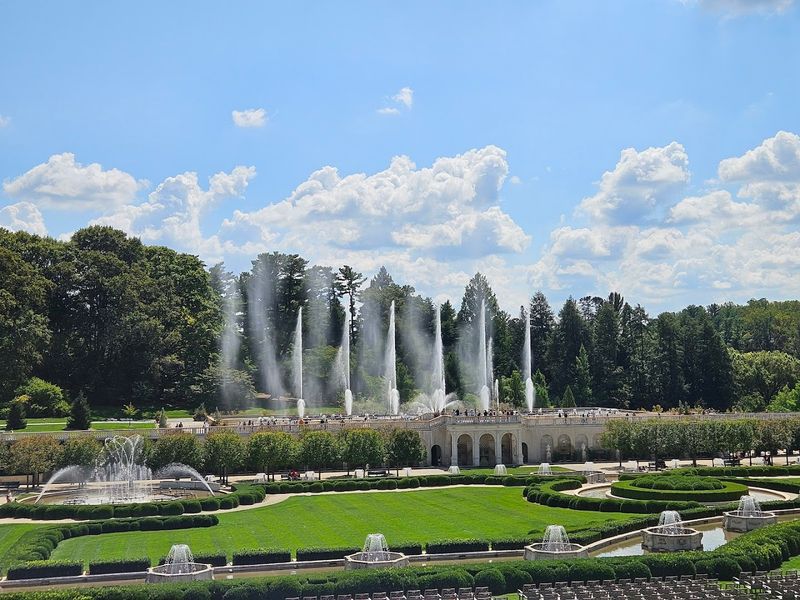
Pierre S. du Pont had a very specific vision when he began planning the Italian Water Garden in 1925, and he moved fast. Within just two years, a soggy, low-lying piece of land had been transformed into one of the most structured and elegant outdoor spaces in the entire country.
That kind of speed, combined with that level of craftsmanship, says a lot about how seriously du Pont took his gardens.
Du Pont was not just a wealthy businessman with a hobby. He was a deeply intentional designer who studied water features the way an architect studies buildings.
Every decision about the Italian Water Garden, from the angle of each jet to the length of the pools, was made with precision and purpose.
Finishing a project of this scale in roughly 24 months is remarkable even by modern standards. Knowing it was completed nearly 100 years ago makes the whole thing feel even more extraordinary when you are standing inside it.
Inspired by the Villa Gamberaia in Italy
After visiting the Villa Gamberaia near Florence, Italy, Pierre du Pont came home with more than just memories. He came back with a design language, one built around symmetry, still water, and the kind of quiet grandeur that Italian Renaissance gardens do so well.
The Villa Gamberaia sits on a hillside outside Florence and features long, narrow pools framed by clipped hedges, and du Pont clearly fell hard for that aesthetic.
What makes the Pennsylvania version remarkable is how faithfully it captures the Italian spirit without simply copying it. Du Pont adapted the proportions, the materials, and the layout to suit his specific piece of land, creating something that feels genuinely Italian but is entirely its own thing.
Visitors who have traveled to Tuscany often say the Italian Water Garden triggers a strong sense of recognition, like running into an old friend in an unexpected city. That emotional resonance is exactly what du Pont was chasing, and by every measure, he nailed it.
The Surprise of 600 Water Jets
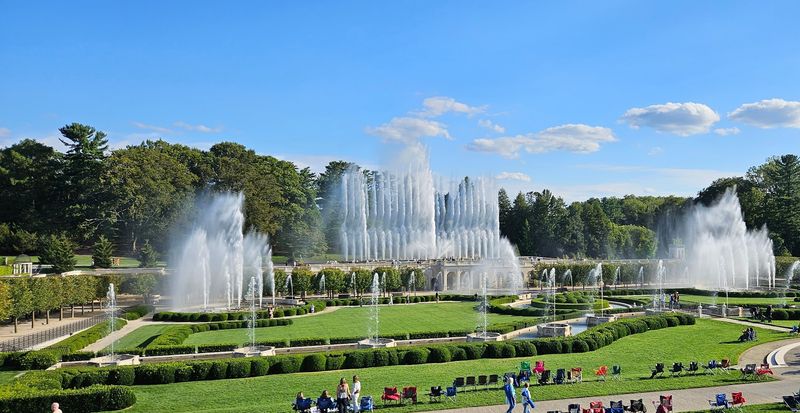
Nothing quite prepares you for the moment all the fountains turn on at once. Six hundred jets firing simultaneously create a curtain of sound and motion that is almost theatrical in its intensity.
The water catches the light in dozens of ways depending on the time of day, turning the garden into something that feels almost alive.
Together, those jets move roughly 4,500 gallons of water per minute through the garden’s system. That is not a trickle or a gentle mist.
That is a full-on hydraulic performance happening in a space that also happens to be extraordinarily beautiful and calm when the jets are resting between cycles.
The fountain displays change scenes every few minutes, which means standing in one spot for fifteen minutes gives you a completely different show each time. Visitors who plan to spend serious time at the Italian Water Garden often find themselves lingering far longer than expected, simply because the water keeps doing something new and worth watching.
Eighteen Pools, Each with Its Own Rhythm
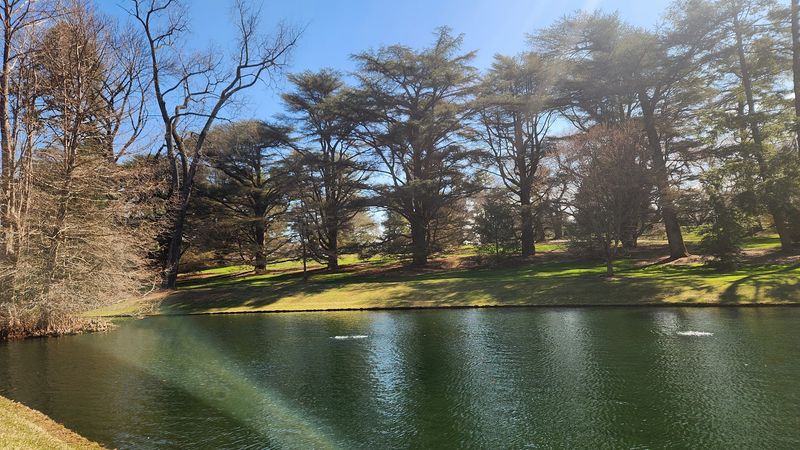
Eighteen pools sounds like a lot until you actually walk through the space and realize how naturally they flow from one to the next. The garden does not feel cluttered or overwhelming.
Instead, the pools create a kind of visual rhythm, almost like a repeated musical phrase that keeps the whole composition feeling organized and intentional.
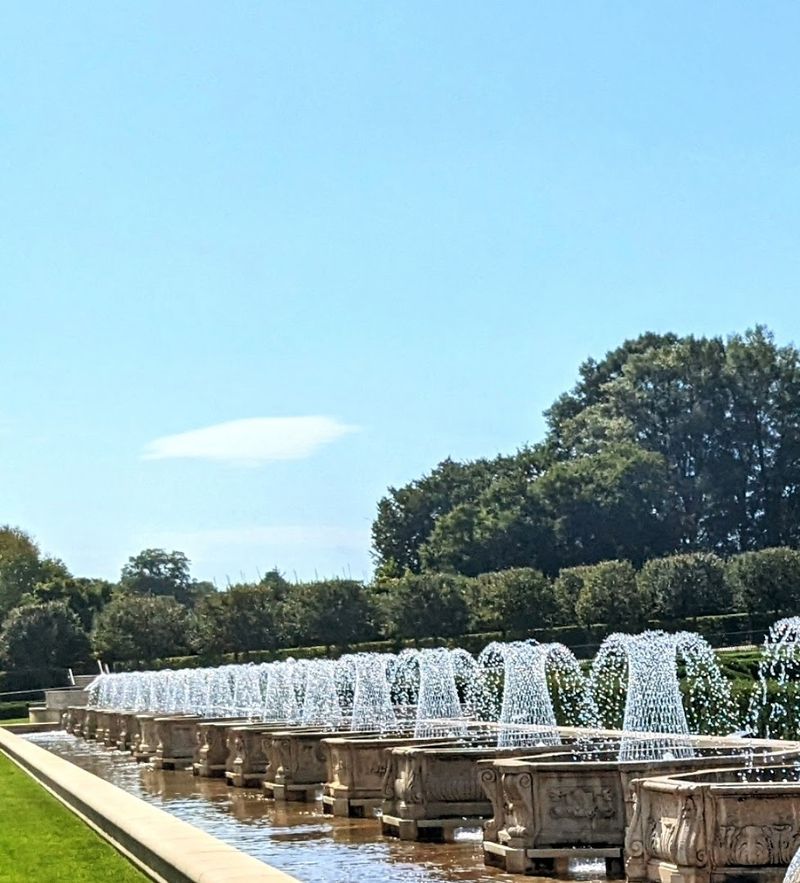
Some pools are long and narrow, designed to reflect the sky and the surrounding linden trees. Others feature pedestal basins that spray water upward in tight, elegant arcs.
Moving from one section to the next gives you a sense of progression, like turning pages in a book where each chapter has its own mood but belongs to the same story.
The repetition is the point. Du Pont understood that the human eye finds comfort in pattern, and the Italian Water Garden uses that instinct brilliantly.
By the time you have passed through all eighteen pools, you feel settled rather than overwhelmed, which is a genuinely rare achievement in large-scale garden design.
A Site That Was Once Low and Marshy
Before the Italian Water Garden existed, this corner of Longwood was basically a problem. The ground sat low and wet, the kind of terrain that most landscape designers would steer clear of rather than try to develop.
Du Pont saw it differently. He looked at that boggy, inconvenient piece of land and decided it was exactly where he wanted to build something extraordinary.
Turning marshy ground into a precisely engineered formal garden required serious engineering and a clear creative vision working together at the same time. The water that once made the site difficult became the central element of the entire design.
What was a liability became the whole point.
There is something genuinely inspiring about that reversal. The most challenging spot on the property became the most celebrated one.
Today, visitors who know the backstory often look at the orderly pools and neatly edged stone paths with a fresh sense of appreciation, knowing that none of it should have been easy to build, yet all of it looks effortless.
The Water Staircase and the Illusion of Flow
One of the most photographed features in the entire garden is the curving water staircase, and it earns every single picture taken of it. The staircase creates the impression that water is flowing naturally downhill from the Large Lake into the garden below, which is a lovely idea that is also technically not what is happening at all.
Separate water systems actually power the staircase and the pools independently. But du Pont designed the visual connection so convincingly that your brain simply accepts the illusion without questioning it.
The staircase curves in a way that feels organic rather than engineered, which is a harder trick to pull off than it might sound.
Visitors who notice the staircase for the first time often stop and stare for a while before moving on. It has a meditative quality, the kind of steady, predictable movement that slows your breathing and quiets your thoughts without you even realizing it is happening.
That is good design doing exactly what it is supposed to do.
Blue Tiles, Limestone, and Hand-Carved Details
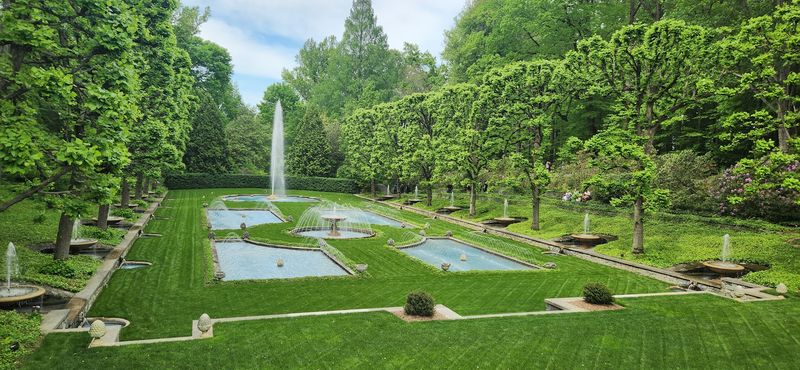
Run your eyes along the edge of any pool in the Italian Water Garden and you will notice the details almost immediately. The blue tiles that line each pool are not just practical, they are vivid and specific, the kind of saturated color that makes water look almost luminous on a sunny afternoon.
Against the pale limestone coping that borders the pools, the blue pops in a way that feels both bold and elegant.
The carved stone ornaments scattered throughout the garden add another layer of craftsmanship that rewards slow, close looking. Pedestal basins, decorative corbels, and sculpted edges all carry the visual language of Italian Renaissance stonework, translated into a Pennsylvania setting with remarkable fidelity.
These materials age beautifully, which is part of why the garden still looks so right even after nearly a century. The limestone has developed a soft patina, and the tiles retain their color with a brightness that seems almost defiant.
Together, they give the space a finished, considered quality that sets it apart from gardens that rely on plants alone to make their impression.
A View Designed With Care
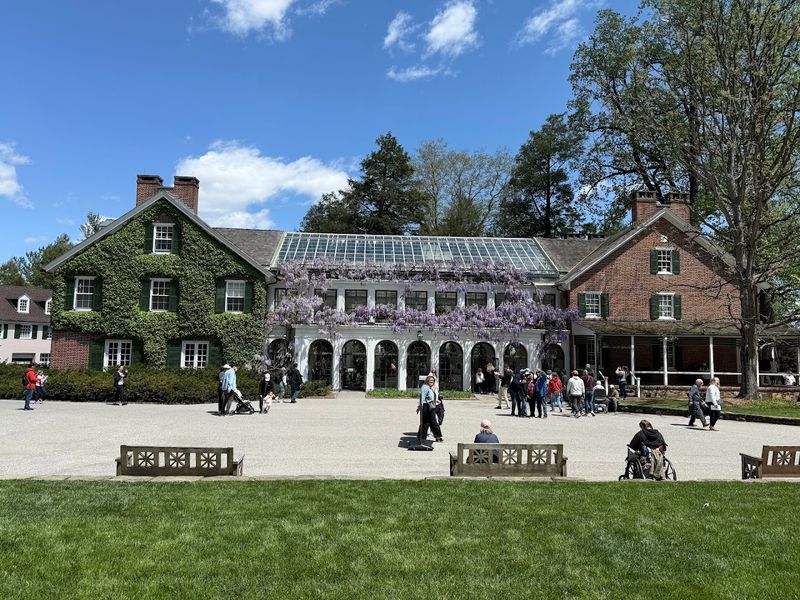
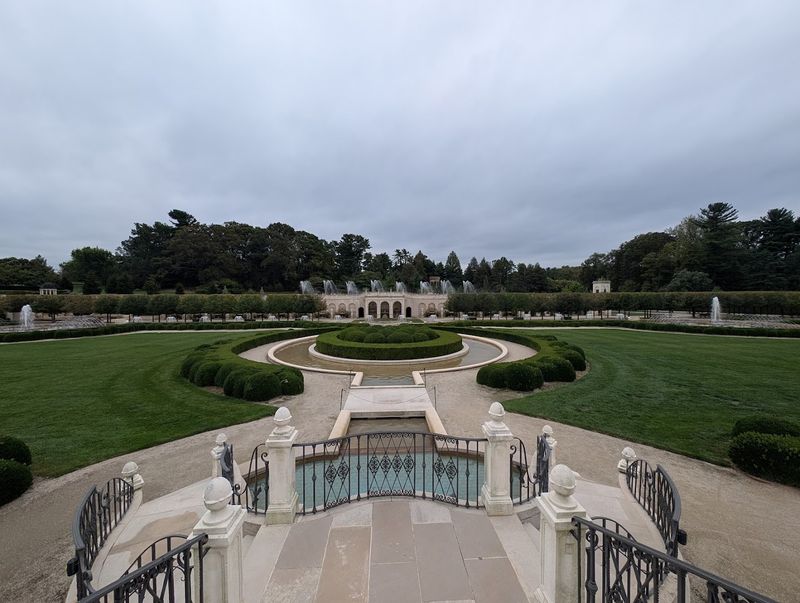
Here is a detail that most visitors walk right past without knowing: the two pools closest to the overlook are actually shorter than the two pools at the far end of the garden. Du Pont made that adjustment deliberately so that all four pools would appear to be exactly the same size when viewed from above.
It is a trick borrowed from classical perspective design, and it works perfectly.
Standing at the overlook and looking down at the layout is one of those moments where the garden reveals its intelligence. What looks like a simple, symmetrical arrangement is actually a carefully calculated optical illusion built into the ground itself.
Du Pont was not just designing a pretty space. He was designing a specific experience of that space from a specific vantage point.
That kind of intentionality runs through every part of the Italian Water Garden. Nothing is accidental, and nothing is arbitrary.
Every angle, every proportion, and every sightline was considered before a single stone was placed, which is why the garden still reads as coherent and complete from every direction you approach it.