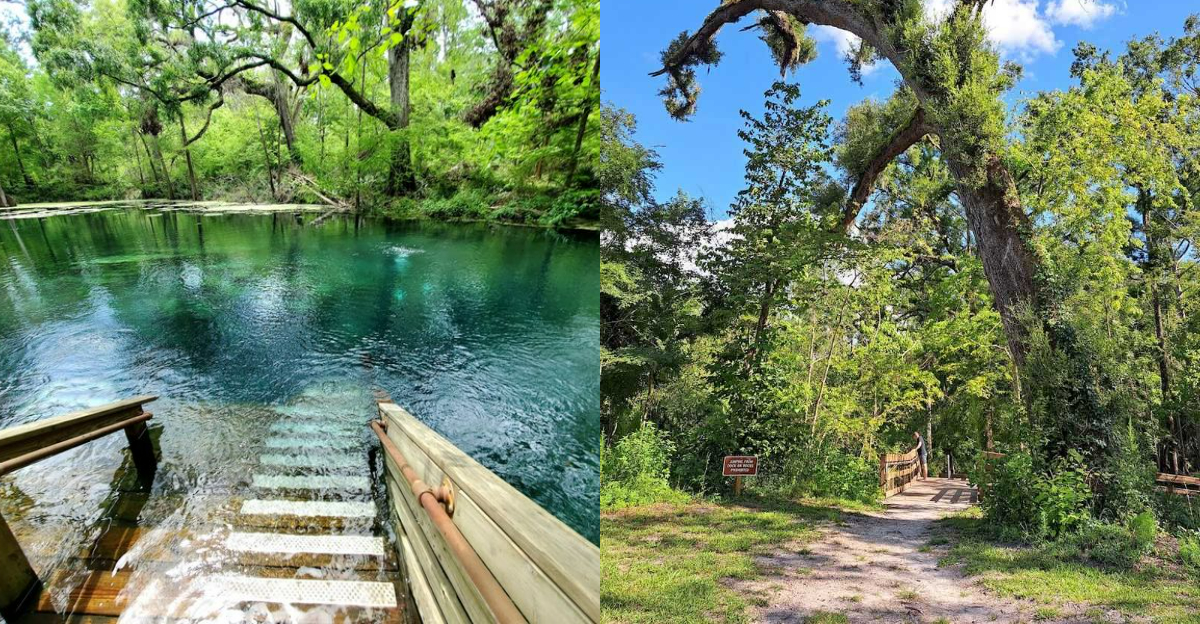
At first glance, Wes Skiles Peacock Springs State Park looks like a quiet patch of North Florida woods, the kind of place you might almost drive past without a second thought. Then the trail starts revealing sinkholes, cold blue water, and openings into a hidden world that stretches far below your feet.
This is a park where the surface stays calm while the real drama happens underground. If you love places that feel both peaceful and slightly mysterious, this one is hard to forget.
The Calm Trail With A Secret Below
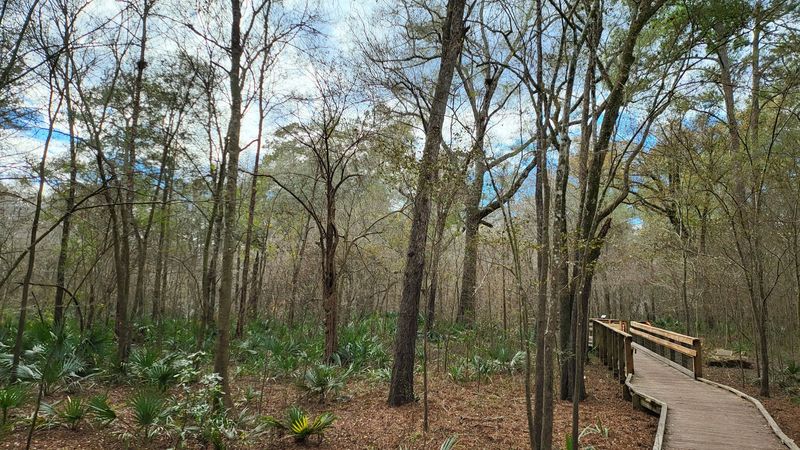
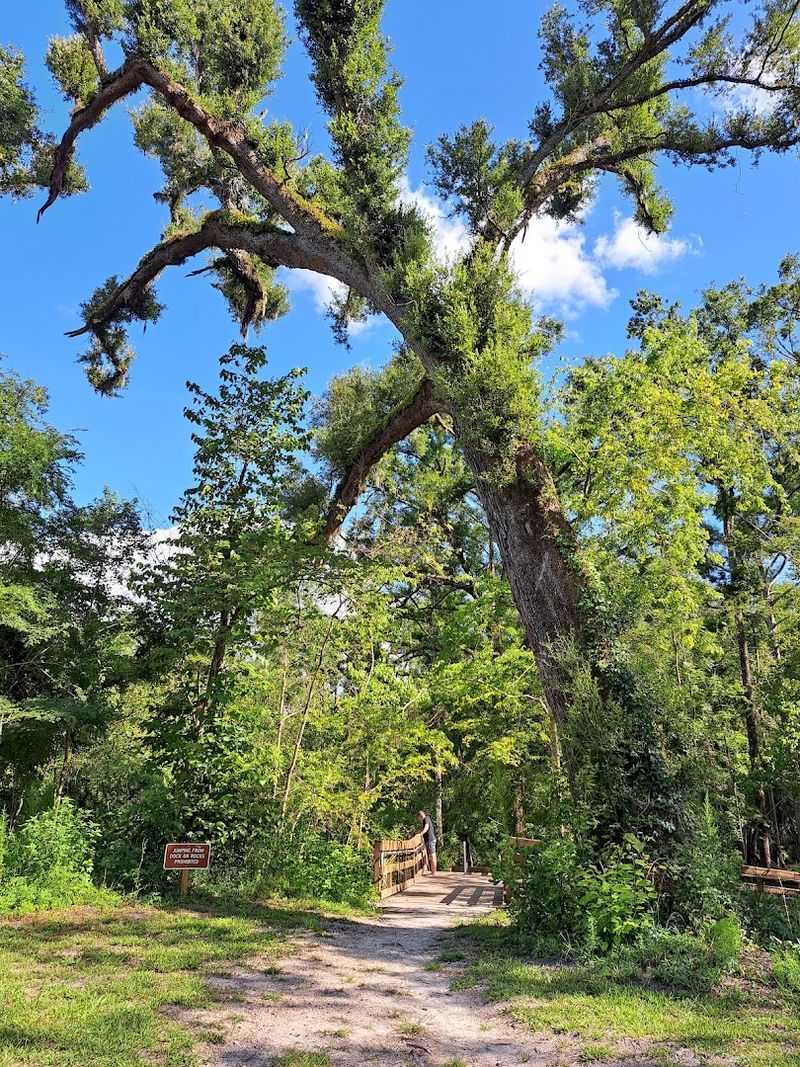
When you first step onto the trail at Wes Skiles Peacock Springs State Park, it feels almost deceptively simple. The path is short, shaded, and lined with oaks and pines, giving you that classic North Florida hush where every footstep sounds louder than expected.
Nothing about the opening stretch screams world class geology.
That is exactly what makes the park so memorable. You are walking across a landscape shaped by limestone, aquifers, and underground passageways, even when all you see is leaf litter, roots, and filtered sunlight.
The ordinary forest setting becomes more interesting once you realize a massive cave system runs below it.
I love places that reveal themselves slowly, and this trail does that beautifully. One minute you are in a quiet woodland, and the next you are peering into water filled openings that hint at enormous spaces underneath.
It feels like Florida turned itself inside out here.
Why Wes Skiles Still Shapes The Experience
The park’s name matters, and once you know who Wes Skiles was, the place gains another layer. Skiles was a Florida born cave diver, underwater photographer, and filmmaker whose work helped people understand the beauty and fragility of the state’s spring systems.
He did not just explore these places – he translated them for the rest of us.
That legacy fits perfectly here because Peacock Springs is not only scenic, it is educational in a quiet way. Every sinkhole and spring opening feels like part of a bigger story about groundwater, geology, and conservation.
You can sense why a park built around hidden water would carry the name of someone who spent his life bringing hidden worlds into view.
As you walk, the tribute feels earned rather than decorative. The name connects the trail to decades of exploration and advocacy.
It reminds you that protecting extraordinary places often begins with somebody choosing to show people why they matter.
A Short Walk That Overdelivers
Some parks ask for a long commitment before they show you anything remarkable. Wes Skiles Peacock Springs State Park does the opposite, which is part of its charm.
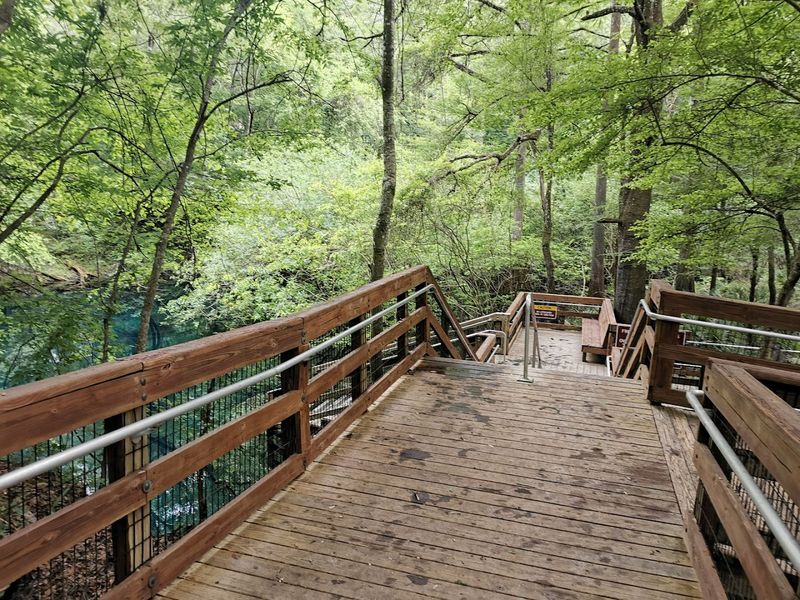
The interpretive trail is only about 1.2 miles, but it packs in enough scenery and geological intrigue to make the walk feel much bigger.
The canopy helps a lot, especially on warm Florida days when open trails can feel punishing. Here, the shade from hardwoods and pines keeps the route cooler, and the unpaved path gives everything a more natural, tucked away feel.
You are never far from a reminder that the terrain is unstable in the most fascinating way.
What I like most is the pacing. The trail does not overwhelm you with one giant overlook and then flatten out into ordinary woods.
Instead, it keeps offering glimpses of water, limestone, and depressions in the earth that make you pay attention. It rewards curiosity more than endurance, which feels refreshing.
Sinkholes That Look Quiet Until You Stand At The Edge
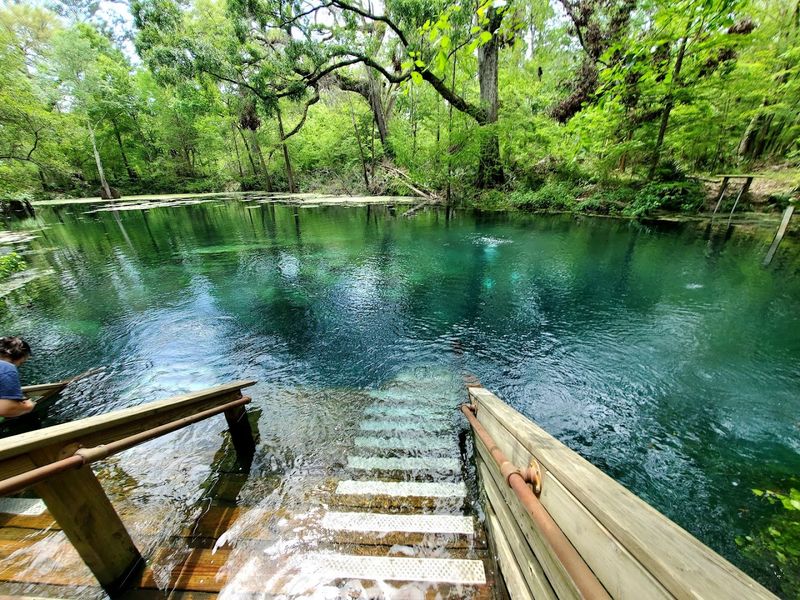
The sinkholes here are not theatrical in the way many people expect. You will not find giant warning signs from nature or some dramatic canyon effect announcing their presence from far away.
Instead, they appear as circular openings and depressions ringed by limestone, roots, and still water that looks almost too clear to be real.
That subtlety is what makes them powerful. When you step closer and look down, the depth suddenly registers, and the whole scene changes from pretty to slightly unnerving.
Some drops are steep enough to give you a real sense that the ground beneath this forest is hollowed, layered, and constantly shaped by water.
I think that contrast is the park’s magic trick. From a distance, the sinkholes seem modest, even gentle.
Up close, they feel like windows into a process much larger and older than the trail around them. You are not just looking at scenery – you are looking at geology in the middle of an unfinished sentence.
The Blue Water Is Colder Than It Looks
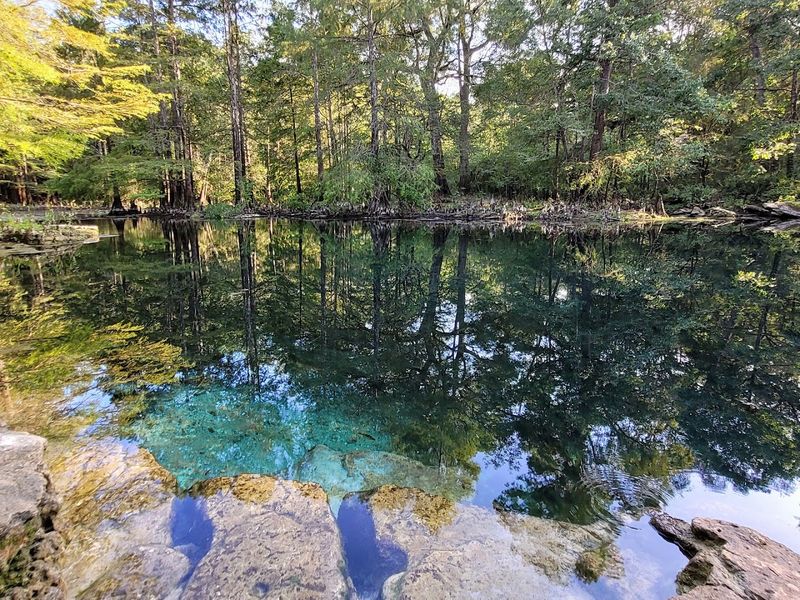
The springs at Wes Skiles Peacock Springs State Park have that impossible looking blue that makes you stop in your tracks. The water rises from the aquifer at a steady cool temperature, usually around the low seventies, which feels brisk compared with the warm Florida air.
Even before you touch it, the color alone tells you this is not an ordinary pond.
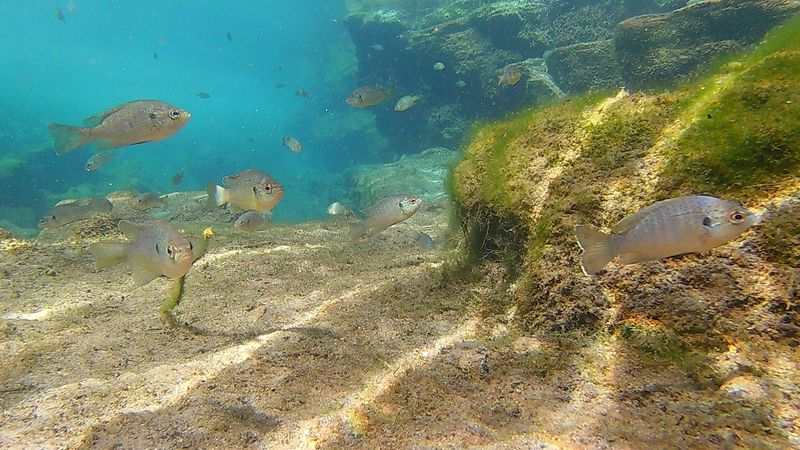
On a good visibility day, you can see deep into the water column, down to pale sand and moving fish near the vents. Light filters through in a way that turns the springs bright turquoise in places and darker cobalt in others.
The effect feels clean, crisp, and almost backlit from below.
What stays with you is the clarity. You look in and expect reflections to block the view, but instead the water opens up like glass.
It creates the strange sensation that the spring is both inviting and warning you at the same time.
Orange Grove Sink Is The Best First Look
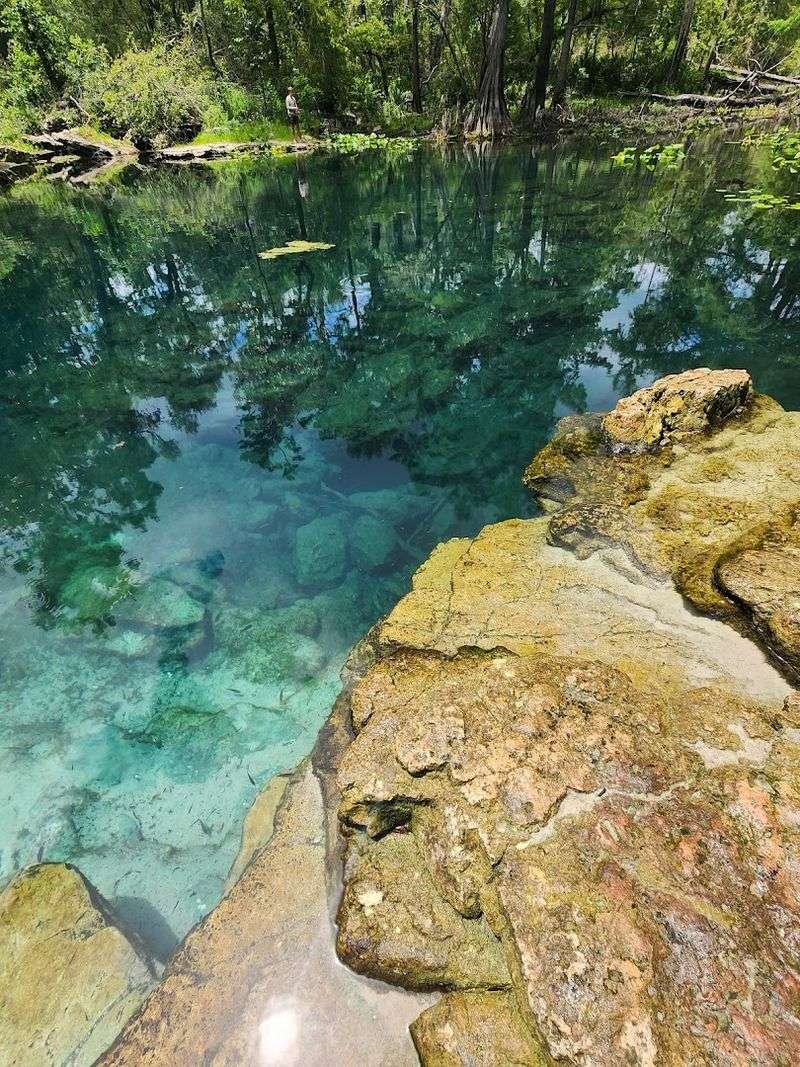
If you are visiting without cave diving plans, Orange Grove Sink is the place that makes the park click. It is one of the most accessible spots in the park, with a walkway and steps that bring you close to the water without making the experience feel staged.
You can stand there and immediately understand why people talk about Peacock Springs with such fascination.
From the surface, the sink gives you a direct visual hint of the space below. Snorkelers and swimmers can float above the opening, while non swimmers can simply peer into the clear water and watch the depth reveal itself in gradients of blue and green.
Depending on conditions, you may even notice duckweed resting on parts of the surface.
I think Orange Grove works so well because it bridges curiosity and access. You do not need technical training to appreciate the scale here.
It offers just enough closeness to the underground world to make your imagination do the rest.
Peacock Springs Is Where The Experts Arrive
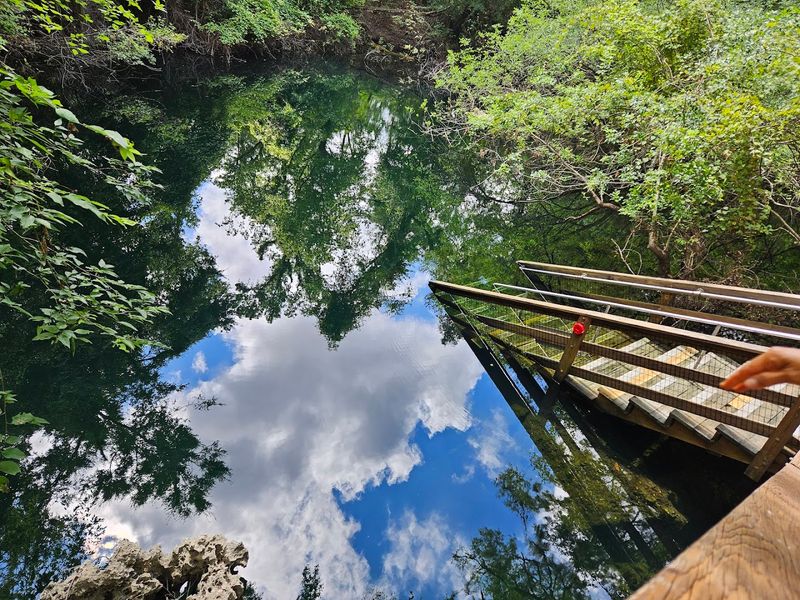
Peacock Springs itself is the part of the park that gives the whole place international credibility among cave divers. Beneath the surface lies a mapped underwater cave system with more than 33,000 feet of passages, making it one of the most significant open cave diving areas in the country.
Even if you never enter the water, knowing that scale changes how you view the site.
At the surface, the spring can look surprisingly modest, which somehow makes the hidden system more impressive. Certified cave divers come here with specialized equipment, lights, and strict plans because the environment below is beautiful but unforgiving.
The park makes that boundary clear, and it should.
For everyone else, the spring still offers plenty. You can watch the water, study the entrance area, and feel the contrast between the calm surface and the complex passageways underneath.
It is one of those places where imagination does nearly as much work as eyesight, and that is part of the appeal.
What Cave Diving Here Actually Demands
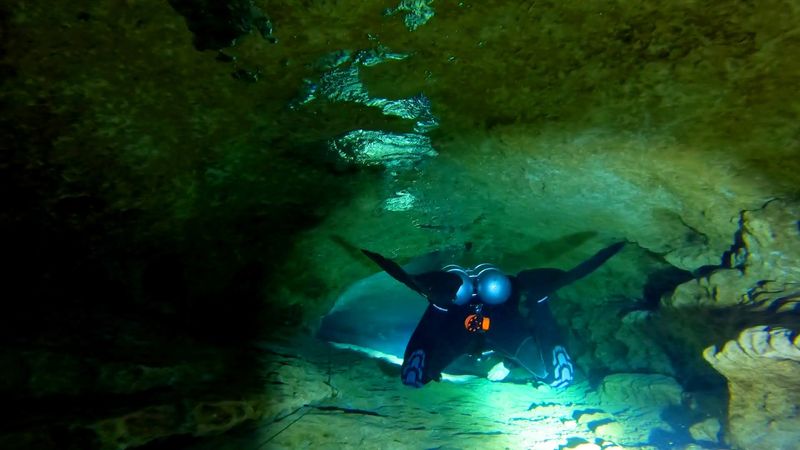
It is easy to romanticize cave diving at Wes Skiles Peacock Springs State Park, but the reality is highly technical. Once divers pass beyond the entrance, natural light fades quickly, and navigation depends on guideline reels, powerful lights, training, and disciplined movement.
This is not casual adventure tourism dressed up with a dramatic name.
The conditions can be stunning, especially when visibility is high and the limestone walls show their texture in sharp detail. But that same beauty comes with risk because fine silt on the floor can reduce visibility fast if a diver loses buoyancy control.
That is why certification, planning, and adherence to rules matter so much here.
As a visitor on land, I actually appreciate the seriousness. It keeps the park from becoming a spectacle built on false confidence.
You can admire the underwater cave system while also respecting that these passages belong to skilled, properly trained divers. The mystique remains, but it is grounded in reality instead of bravado.
The Wildlife Is Subtle But Rewarding
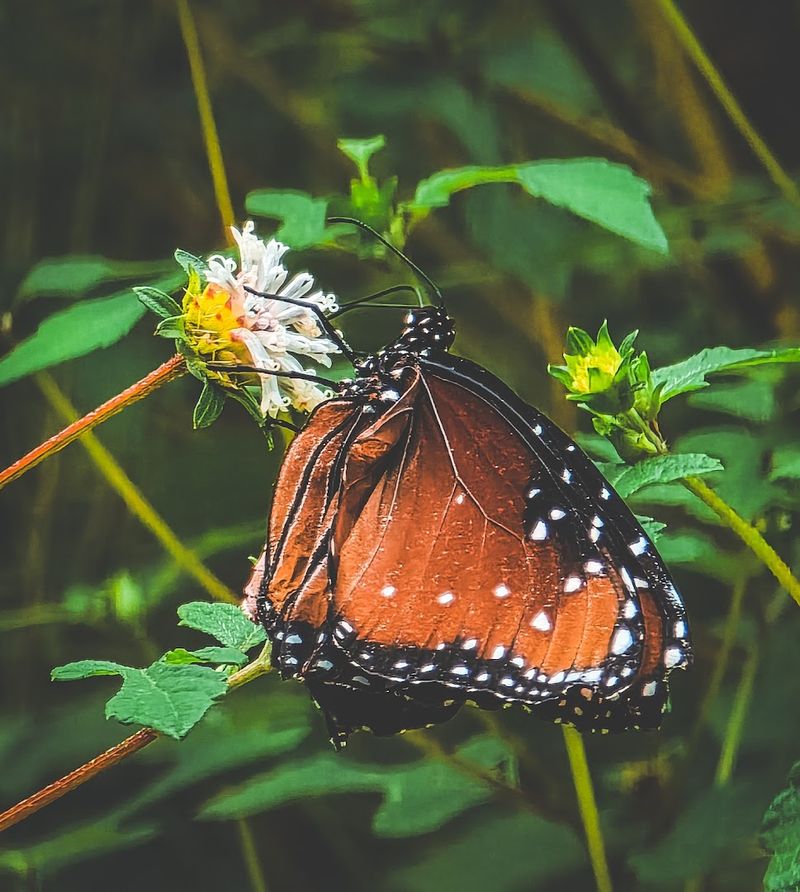
Wes Skiles Peacock Springs State Park is not the kind of place where wildlife performs on cue, and that suits it perfectly. The animals here tend to reveal themselves in passing, which makes every sighting feel a little more personal.
You might notice deer in the woods, a gopher tortoise near the trail, or a wading bird standing motionless at the water’s edge.
The springs add another layer of life that can be easy to miss if you only glance at the surface. Look closely and you may spot bass, bluegill, or other freshwater fish hovering in the clear water near the vents.
On lucky visits, a turtle can glide across the sandy bottom like it has all day to spare.
I like how the park rewards patience rather than noise. You are not moving through a theme park version of nature.
You are standing in a quiet habitat where everything feels a little more reserved, and the stillness often becomes the real attraction.
Useful Things To Know Before You Pull In
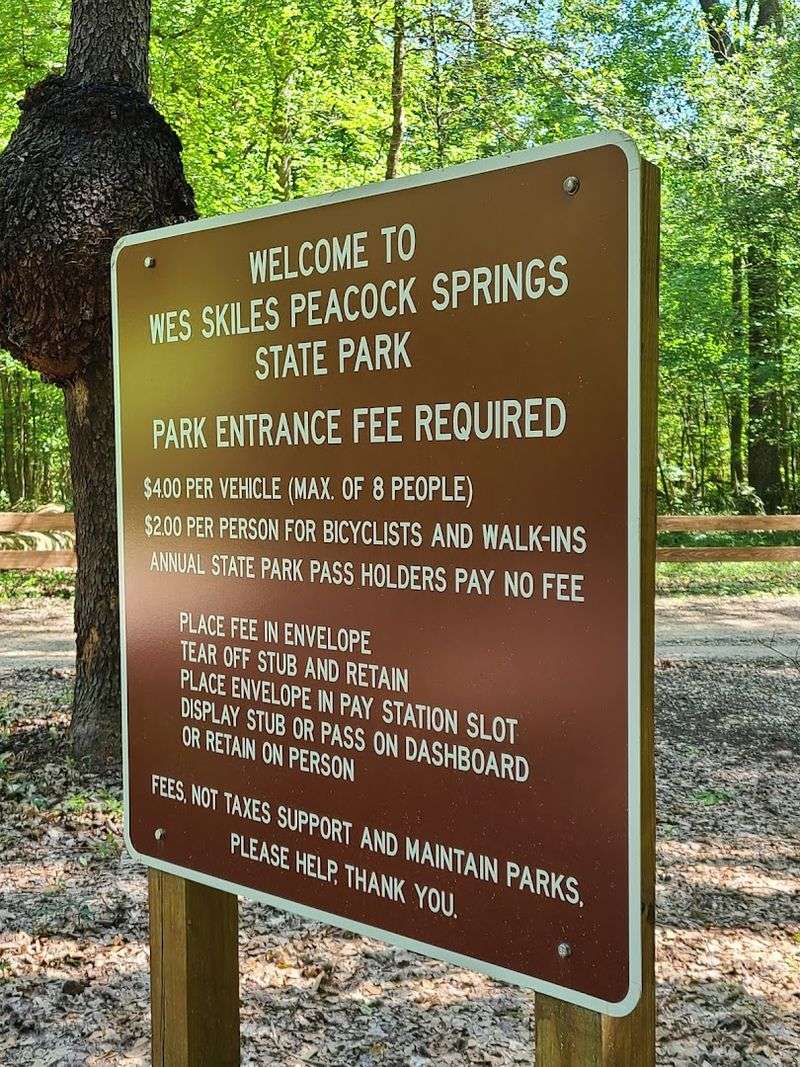
This is a relatively simple park, so a little planning goes a long way. The entrance fee is modest, parking is available on site, and basic facilities include restrooms, picnic areas, and spots where divers can stage their gear.
What you will not find are food vendors, lodging, or the kind of heavy infrastructure that smooths over every inconvenience.
That simplicity is part of the appeal, but it also means you should arrive prepared. Bring water, snacks, and anything you need for the day, and keep in mind that conditions can vary with river levels, seasonal visibility, and occasional area closures.
The park is generally open from morning until sundown, though dive activity has stricter timing.
If you are a diver, proof of cave certification is mandatory for the cave systems, and solo diving is not allowed. If you are not diving, you still benefit from checking ahead.
A quick call can save you a long drive on a bad water day.
Why The Park Lingers In Your Mind
Some Florida parks impress you with big overlooks, long boardwalks, or obvious attractions. Wes Skiles Peacock Springs State Park works differently.
Its power comes from the tension between what you can see easily and what you know is hidden below the surface.
You leave remembering small things with unusual intensity: the temperature shift near the water, the blue glow inside a sinkhole, the sudden feeling that the earth under the trail is thinner than it looks. The park does not compete for your attention, and that restraint makes its details feel sharper.
It asks you to notice rather than consume.
That is why it sticks. Even after you are back on the road, the place keeps replaying in fragments, like a half solved mystery made of limestone, roots, and spring water.
You do not need to be a diver to feel its scale. You just need a little curiosity and enough patience to look into the water for more than a minute.