
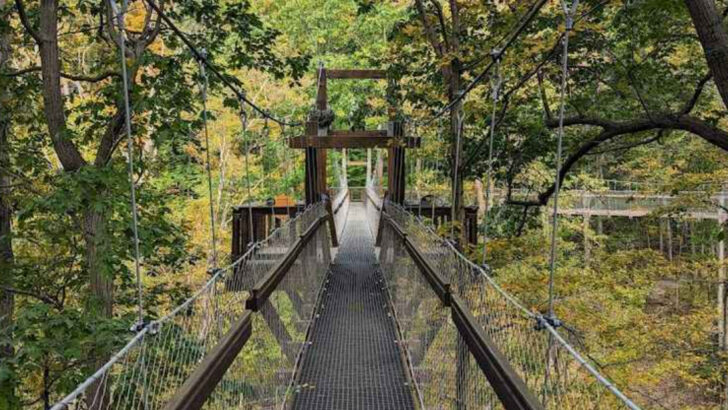
Tucked away in Kirtland, Ohio, the Holden Arboretum holds a secret that stops first-time visitors in their tracks: a 500-foot elevated walkway that carries you 65 feet above the forest floor. Spread across 3,600 acres of rolling woods and winding trails, this place feels like stepping into a world most people only see from airplane windows.
The Murch Canopy Walk and the towering Kalberer Emergent Tower together make this one of the most memorable outdoor spots in the entire Midwest. Whether you are 8 or 80, a morning here will leave you looking at trees in a completely different way.
Arriving at Holden Arboretum
The drive along Sperry Road sets the mood before you even reach the gate. Tall oaks and maples press close to the pavement, and the air coming through your car window already carries that mix of pine resin and damp earth that signals real forest ahead.
By the time the arboretum entrance sign comes into view, there is a quiet excitement building.
Buying tickets at the gate is quick and straightforward. Adult admission runs around twenty dollars and covers everything inside, including the canopy walk and the emergent tower.
Staff at the booth are friendly and can answer basic questions before you pull through.
Parking is easy, with a wide lot just steps from the visitor center. Once you step out of the car, the sheer size of the place hits you.
Trees stretch in every direction, and the noise of the road fades almost immediately. Even the parking lot feels calm here, surrounded by 3,600 acres of living, breathing woodland that seems to exhale slowly all around you.
Checking In at the Corning Visitor Center
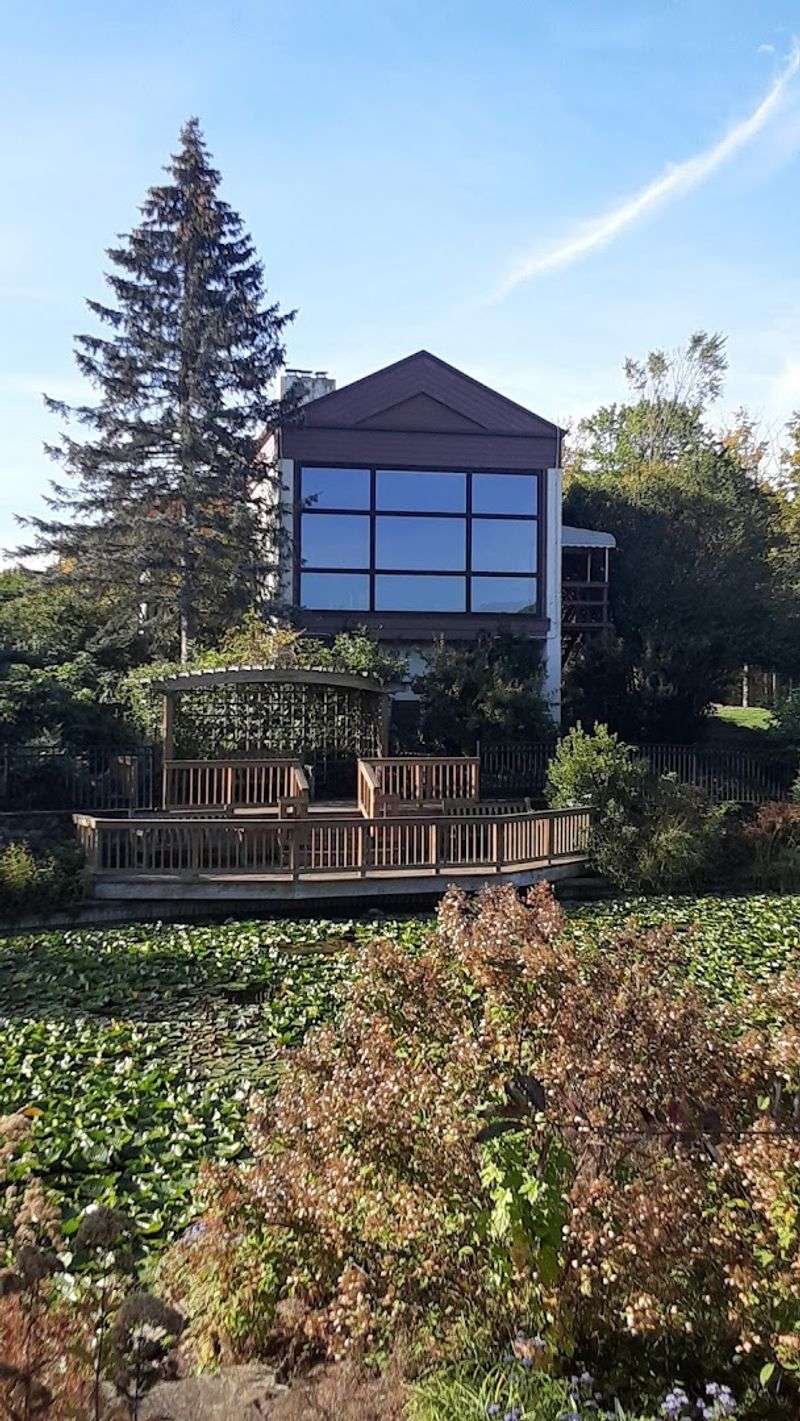
Walking into the Corning Visitor Center feels like a clean, welcoming pause before the adventure begins. The building is modern and light-filled, with large windows that frame views of the gardens outside.
Trail maps are stacked neatly near the entrance, and a friendly staff member is almost always ready to hand you a brochure and point you in the right direction.
One of the most useful things you will learn here is that the Murch Canopy Walk and the Kalberer Emergent Tower are both included with your general admission. No extra fees, no separate ticketing lines.
That small piece of news tends to make people visibly happier as they grab their maps and head out.
Restrooms are clean and well-maintained, which matters more than people admit after a long drive. A quick check of the day’s posted trail conditions is worth the two minutes it takes.
Some paths can be muddy after rain, and the staff will tell you honestly which routes are best for the day you happen to show up.
Walking the Paths to the Canopy Area
There is something deeply satisfying about the walk from the visitor center to the canopy structures. The gravel path is wide enough for two people to stroll side by side, and the surface stays level and manageable even for younger kids or visitors who prefer an easier pace.
Shade from the surrounding trees keeps things cool even on warm summer days.
The sounds change as you move deeper into the woods. Traffic noise disappears entirely within the first few minutes, replaced by the soft crunch of gravel underfoot and the constant, layered calls of birds working through the canopy overhead.
You might catch the sharp tap of a woodpecker or the liquid whistle of a wood thrush somewhere off the trail.
Signage along the way is clear and helpful, pointing toward the canopy walk without any confusion. The path itself builds anticipation in a natural way.
Each curve reveals a little more of the forest, and by the time the first platform structure comes into view through the trees, most visitors have already slowed their pace just to take it all in.
Stepping onto the Murch Canopy Walk
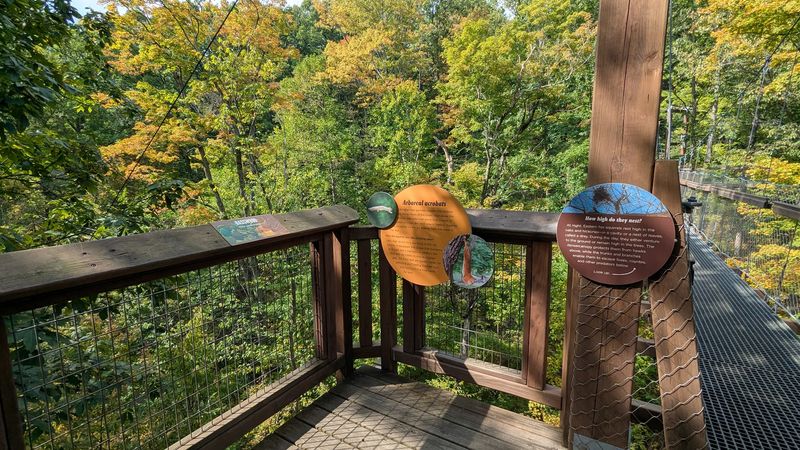
That first step onto the Murch Canopy Walk produces a feeling that is genuinely hard to describe until you experience it yourself. The solid wooden boards feel reassuring underfoot, and the woven wire mesh sides run from the deck to the top rail, making the whole structure feel secure without blocking your view of the surrounding trees.
A gentle climb brings you up to the first platform almost before you realize how high you have climbed.
At 65 feet above the forest floor, the world looks completely different. Trunks that seemed enormous from the ground now reveal their upper halves, all pale bark and branching architecture stretching toward the light.
The scale of the forest becomes real in a new way up here, and most visitors stop instinctively at the first platform just to absorb it.
Educational signs are placed at each platform, sharing facts about the tree species around you and the ecology of the canopy zone. Kids tend to read them without being asked, which says a lot.
The structure creaks softly as you move, a perfectly normal sound that somehow makes the whole experience feel more alive and honest.
Crossing the Suspension Bridges
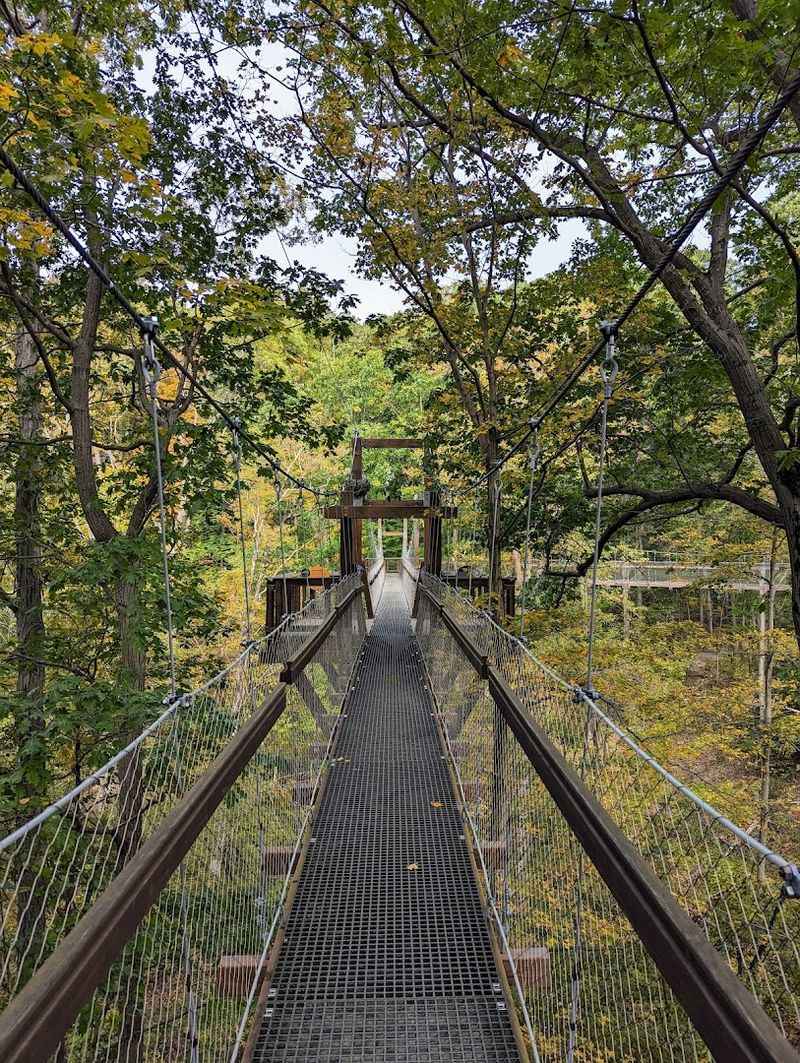
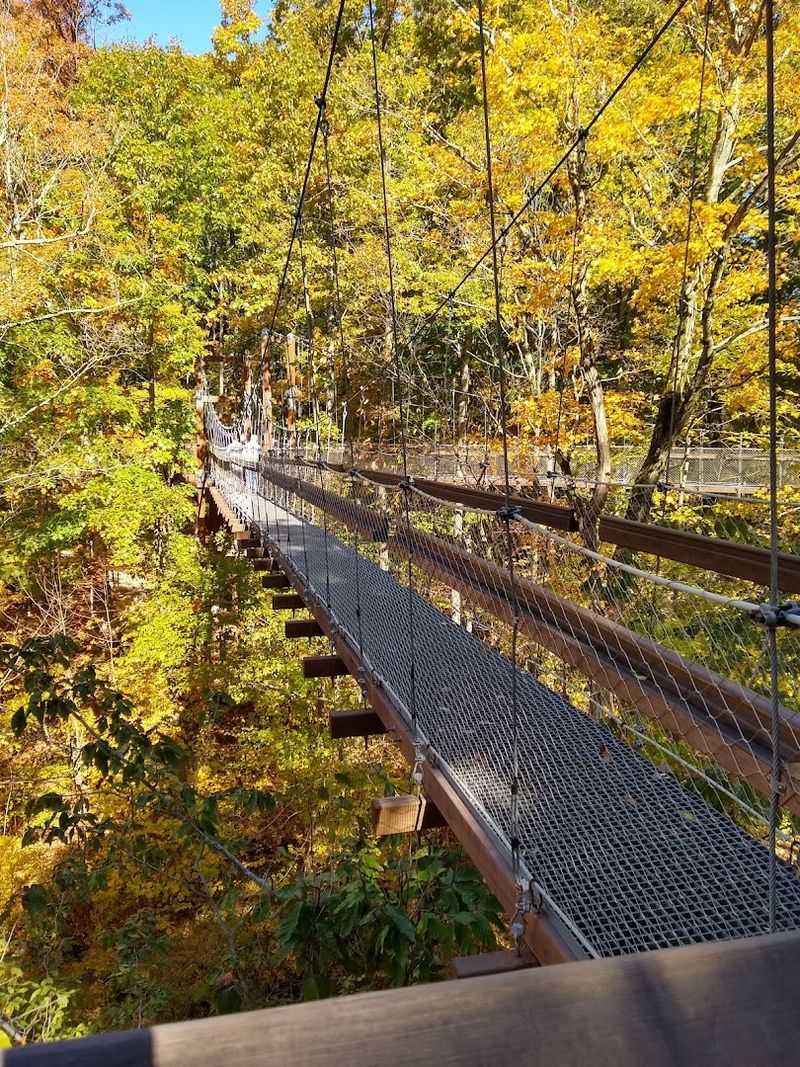
Four suspension bridges connect the platforms of the canopy walk, and crossing them is the part most visitors remember longest. Each bridge moves with a light, rhythmic bounce as you walk, the kind that makes you grin even if you were not expecting it.
Heavy support cables run above and alongside you, and the composite decking stays solid beneath your feet even when the structure sways gently in a breeze.
The design follows a triangular layout, with three main anchor points holding the system together. Moving between them means you are constantly shifting your angle on the forest, seeing the same trees from slightly different heights and directions.
On a breezy day, leaves brush close enough that you can reach out and touch them without leaning over the rail.
One practical tip worth passing along: secure your hat before stepping onto a bridge. The wind moves more freely up here than it does on the ground, and lightweight items have a way of testing the limits of gravity at the worst possible moments.
The bridges are the highlight of the walk for a reason, so take your time crossing each one.
Pausing at the Observation Platforms
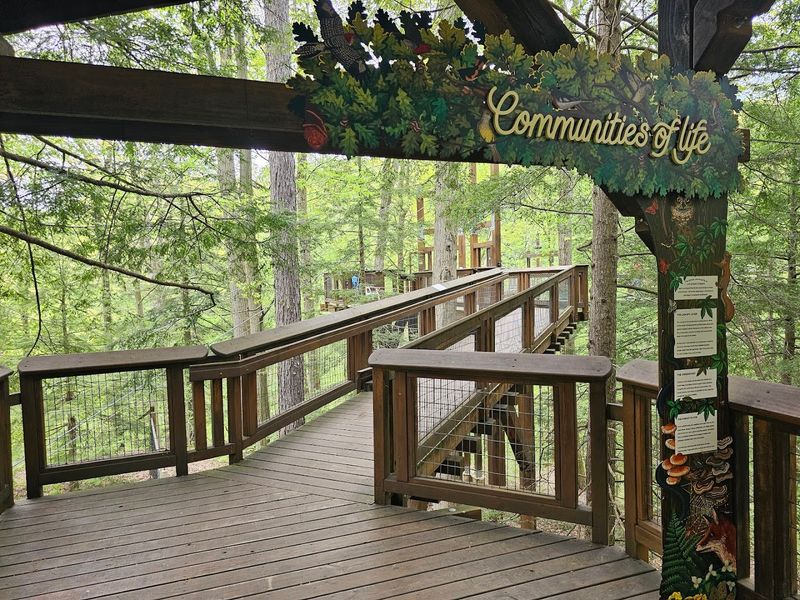
Built into the walk at each anchor point, the observation platforms are roughly the size of a generous backyard deck, maybe ten feet by ten feet, open on the sides and perfectly positioned for stopping. Visitors tend to cluster here naturally, not because anyone tells them to, but because the view simply demands a pause.
You can look out across the unbroken green of the canopy or peer down through the gaps to the ground far below.
On a clear day, a tributary of Pierson Creek is visible winding through the forest floor beneath you. The water catches light in small flashes between the tree roots and ferns, and watching it from this height gives a surprisingly peaceful sense of how the landscape fits together.
The quiet creak of the wooden structure mixes with the rustle of branches in a way that feels almost musical.
Educational placards on each platform add context to what you are seeing, covering topics from tree canopy ecology to the specific species of birds likely to be spotted nearby. Children especially enjoy the interactive elements included on some signs.
Spending five unhurried minutes on each platform turns a quick walk into a genuinely rich experience.
Climbing the Kalberer Family Emergent Tower
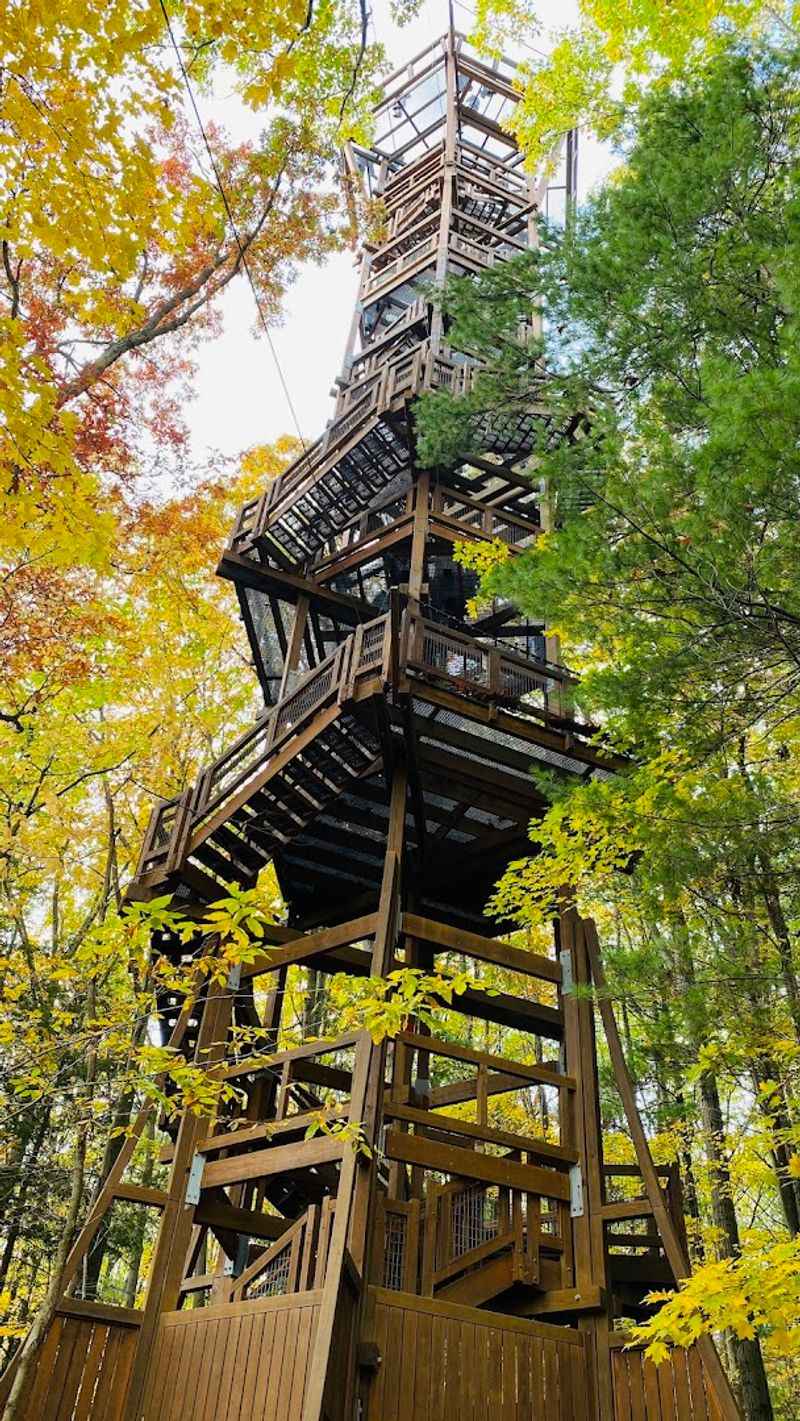
A short walk from the canopy area brings you to the base of the Kalberer Family Emergent Tower, and looking straight up at it from the ground is its own small shock. At 120 feet tall, it clears the surrounding treetops by a comfortable margin, and the climb involves more than 200 steps arranged in a steady, manageable spiral.
Most reasonably fit visitors make it to the top without needing to stop, though the platforms along the way invite a breather if you want one.
The tower is built with wide wooden platforms at multiple levels, each one offering a slightly higher and wider view than the last. By the halfway point, you are already eye-level with branches that the canopy walk never quite reached.
The open sides let wind move through freely, which feels wonderful after the climb and adds a faint, exhilarating sense of exposure.
At the top, the full scale of the arboretum opens up around you. The rolling Ohio forest stretches in every direction, interrupted only by the distant shimmer of sky.
Standing there with the wind moving through the structure, it is easy to understand why visitors consistently rate this tower among the best outdoor experiences in the entire region.
Taking in the Views from the Tower
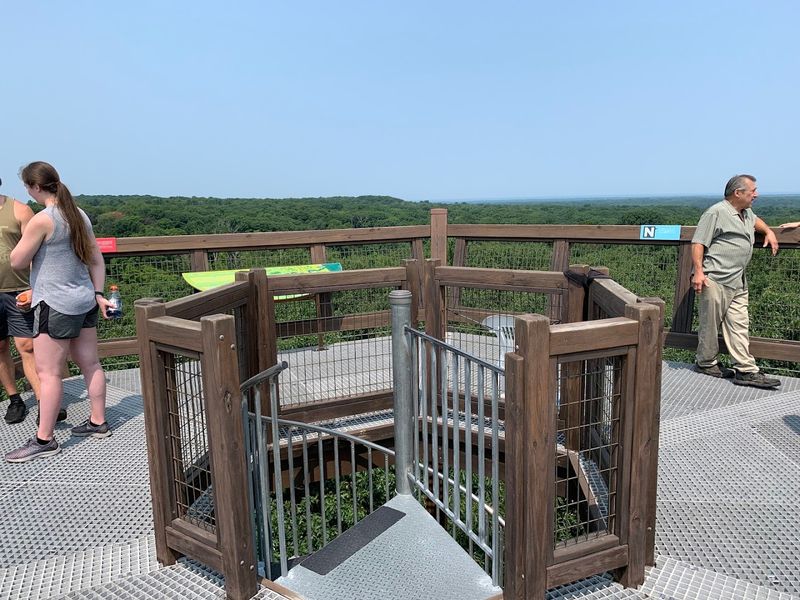
Standing at the top of the Kalberer Tower on a clear day, the distant blue line of Lake Erie appears about twelve miles to the north, sitting low and steady above the rolling forest. It is one of those views that catches people off guard, the sudden realization that you are high enough to see all the way to one of the Great Lakes from a spot in the middle of Ohio woodland.
Some visitors pull out their phones immediately; others just stand quietly for a moment.
Looking south and east, the forest seems to go on without interruption, broken only by the occasional rooftop or road cutting through the trees far below. The canopy walk you crossed earlier is visible as a faint structure threading between the treetops, looking smaller and more delicate from this height than it felt while you were on it.
The tower sways just perceptibly in a strong breeze, enough to remind you that you are standing in the open air well above everything else around. That slight movement, combined with the wind and the unobstructed view in every direction, makes the top of the tower feel genuinely different from anywhere else in the arboretum.
Noticing Forest Life from Above
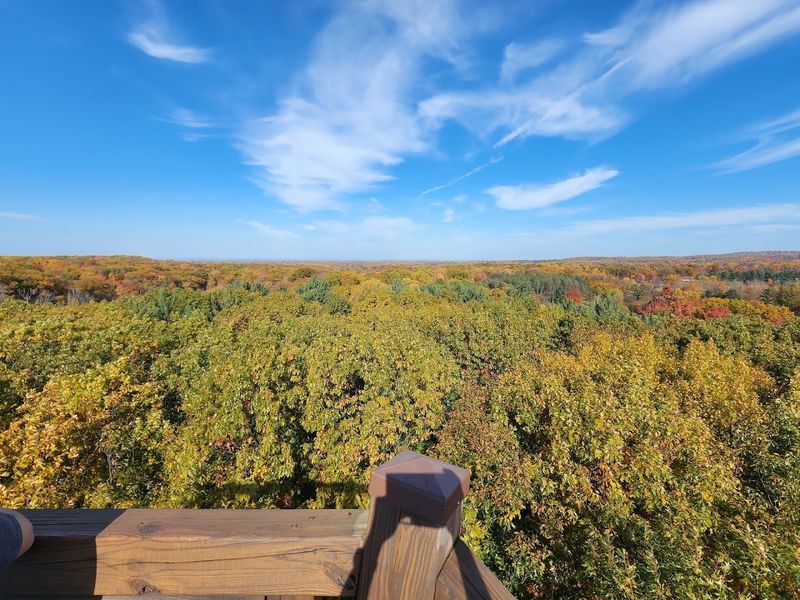
Being eye-level with the treetops rewires the way you notice wildlife. From the ground, most forest activity stays hidden behind bark and leaves.
Up on the canopy walk, you are suddenly inside the layer where much of that activity actually happens. A woodpecker hammering at a nearby trunk is no longer a distant tap from below but a close, vivid performance you can watch from just a few feet away.
Squirrels move along branches with a confidence that looks almost practiced, barely glancing at the humans standing on wooden platforms nearby. Insects that are invisible from the ground become easy to spot up here, moving through shafts of sunlight between leaves.
On quieter mornings, the soft scramble of small animals on branches just below the walkway is a constant, gentle soundtrack.
Bird activity is especially rewarding from this height. Species that spend most of their time in the upper canopy are suddenly approachable in a way that no ground-level trail can match.
Warblers, vireos, and tanagers move through the branches around you, and the experience of watching them without binoculars or craning your neck is something that stays with you long after the visit ends.
Wrapping Up Your Visit in the Preserve

After the tower and the canopy walk, heading back toward the visitor center brings a particular kind of satisfied tiredness that feels completely earned. Your legs know they worked, and your mind has had the rare experience of seeing a familiar thing, a forest, from an entirely unfamiliar angle.
Grabbing a drink or a snack at the visitor center before you leave is a small pleasure that rounds the morning off nicely.
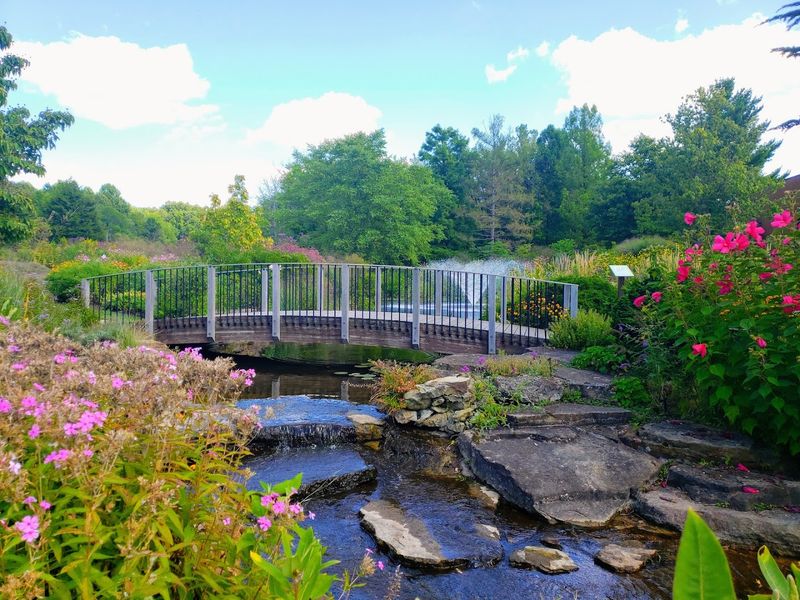
The gardens near the parking area are worth a slow look on the way out. Depending on the season, flowers are blooming in organized beds or the last fall colors are clinging to the shrubs along the path.
Even visitors who came only for the elevated structures tend to linger here a little longer than they planned.
A full morning at Holden Arboretum leaves most people with a clear mental map of the 3,600 acres, from the quiet gravel paths at ground level to the wind-swept top of the Kalberer Tower. The arboretum is open daily from 9 AM to 5 PM, and the combination of elevated walks and peaceful ground trails makes it one of the most complete outdoor experiences in Northeast Ohio.