A quiet road can lead to a place where history suddenly feels close. You might round a bend and find an old lighthouse above the water, a weathered fort, or carvings that connect the landscape to people who stood there generations ago.
Those unexpected discoveries can make a simple drive feel like something worth remembering.
Across Michigan, historic parks bring together scenic roads, outdoor spaces, and stories preserved in the places where they happened. Forts, lighthouses, historic structures, and cultural landmarks give visitors something tangible to explore, while the surrounding landscapes make each stop feel like part of the journey rather than a separate destination.
Our weekend drive took us to several corners of the state, and each stop offered something we hadn’t expected. Here are 10 historic parks in Michigan that gave us more than we went looking for.
Frontier echoes at Fort Wilkins Historic State Park
Cold air rolled off Lake Superior, and for a minute the whole place felt paused in another century. Boots on the path sounded louder here, as if the ground still remembered drills, chores, and long winters at the edge of the map.
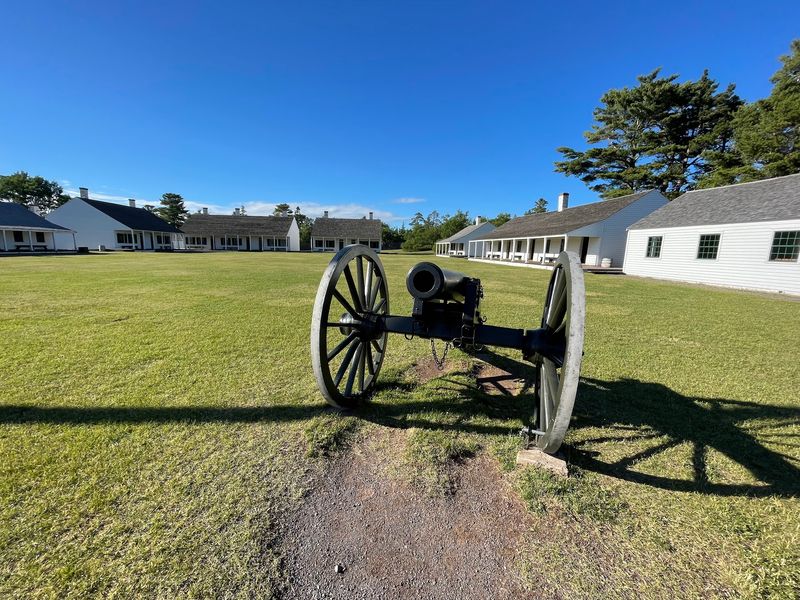
That mood follows you through Fort Wilkins Historic State Park in Copper Harbor. The 1844 army outpost has restored buildings that let you wander past barracks, officers’ rooms, and work spaces without much effort or guesswork.
A short walk makes the layout easy to understand, so it works well even if you are traveling with kids.
What surprised us most was how much life the details still carry. The blacksmith shop, rough wood walls, and old tools tell the story better than any textbook.
Nearby lighthouses add another layer, reminding you that soldiers were not the only people trying to manage this remote shoreline.
Bring a light jacket, even in warmer months, and give yourself time to slow down. Rushing through misses the quiet feeling that makes this park stay with you long after the drive home.
Stagecoach memories at Cambridge Junction Historic State Park
Dusty roads are easy to forget when most trips happen with cup holders and playlists. Standing here, though, it takes almost no effort to picture tired travelers hoping for food, rest, and news from somewhere farther down the road.
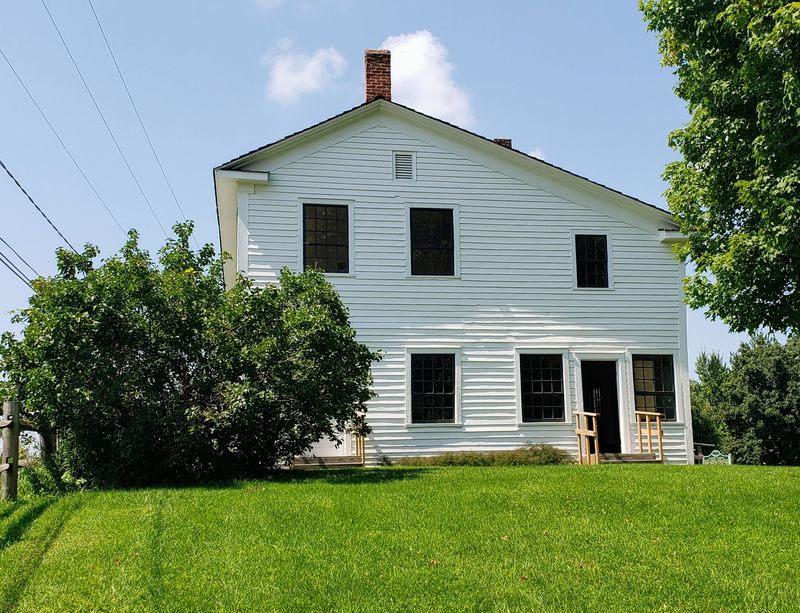
Cambridge Junction Historic State Park in Brooklyn centers on Walker Tavern, a stagecoach stop from the 1840s on the old Chicago Road. The building has the kind of creaky charm that makes history feel human instead of formal.
Nearby structures, including the Hewitt House and a reconstructed barn, help fill out the picture of what travel and daily life once looked like.
What we liked most was how understandable the place feels. You do not need to be deeply into transportation history to enjoy imagining wagons pulling in, horses being tended, and strangers sharing a meal before moving on.
Go with a little curiosity and a little patience. Read room by room, and notice the ordinary details like tables, doors, and travel space.
They explain just as much as the big dates do. It is a small stop with a surprisingly strong sense of movement, purpose, and people.
Towering survivors at Hartwick Pines State Park
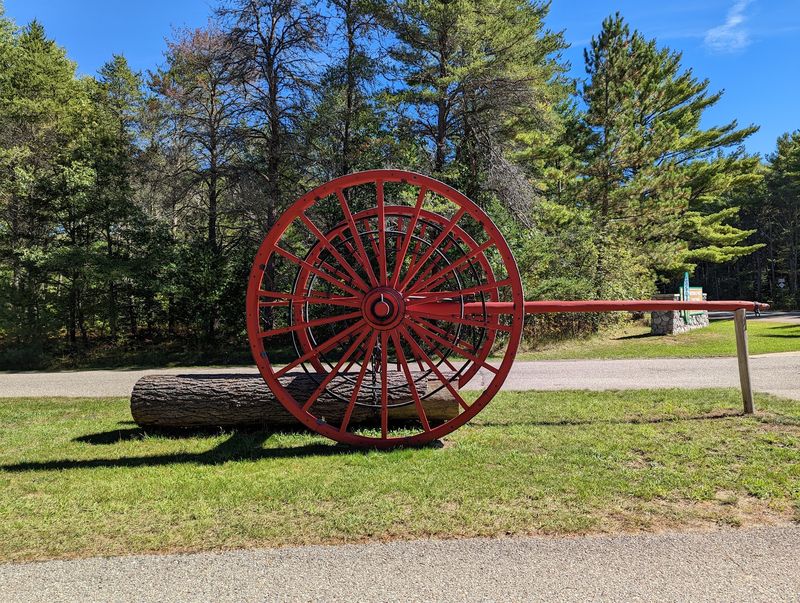
Some forests make you talk less without asking. The trees at this park rise so high and straight that the whole trail feels like a quiet hall, and it is hard not to think about how much of Michigan once looked like this.
Hartwick Pines State Park in Grayling protects one of the state’s remaining old growth pine stands. That alone would be memorable, but the park also explains the logging era that changed these woods forever.
After walking among giant white pines, we headed to the logging museum and found old tools, camp items, and exhibits that made the scale of that industry much easier to picture.
The contrast is the real lesson here. You can admire the forest and also understand why so little of it remains.
That combination gives the visit weight without making it feel heavy or gloomy.
Bring water and plan enough time for both the trails and museum. If you only do one, you miss half the story.
Families, hikers, and casual history fans can all find something here because the park offers beauty first, then meaning, and finally a stronger respect for what survived.
Forgotten seedlings at North Higgins Lake State Park
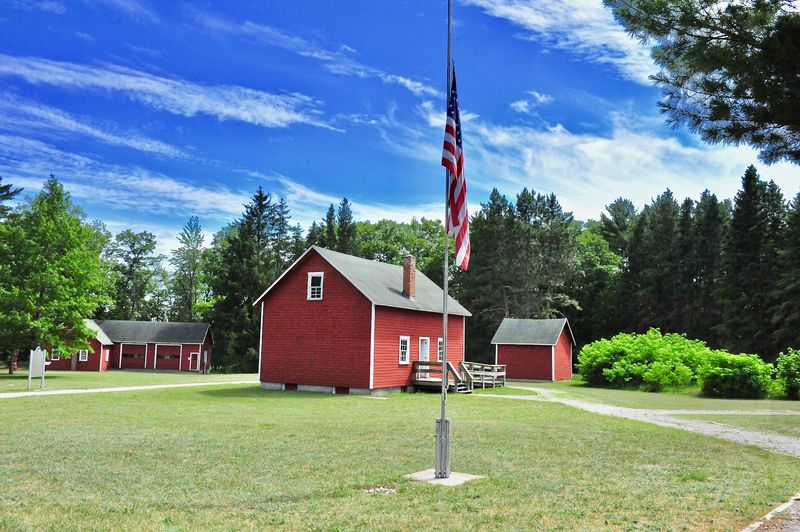
Not every historic place announces itself with a fort wall or a lighthouse tower. Here, the surprise is quieter.
A park beside beautiful water turns out to hold the story of millions of tiny trees and the people who helped reshape Michigan’s forests.
North Higgins Lake State Park in Roscommon sits on the site of a once huge seedling nursery. The Higgins Lake Nursery and CCC Museum explains how the area supported reforestation and how Civilian Conservation Corps workers played a major part during the Depression years.
Inside, the displays make large ideas feel personal, especially when you learn how young workers lived, trained, and planted on a massive scale.
We liked the balance between lake-country calm and serious history. One minute you are enjoying the outdoors, and the next you are thinking about how damaged land can recover with planning, labor, and time.
Try pairing the museum with a walk outside so the story feels rooted in the landscape around you. It is an easy place to overlook on a fast trip, but slowing down here adds a thoughtful chapter to any Michigan weekend drive.
A lighthouse bend at Tawas Point State Park
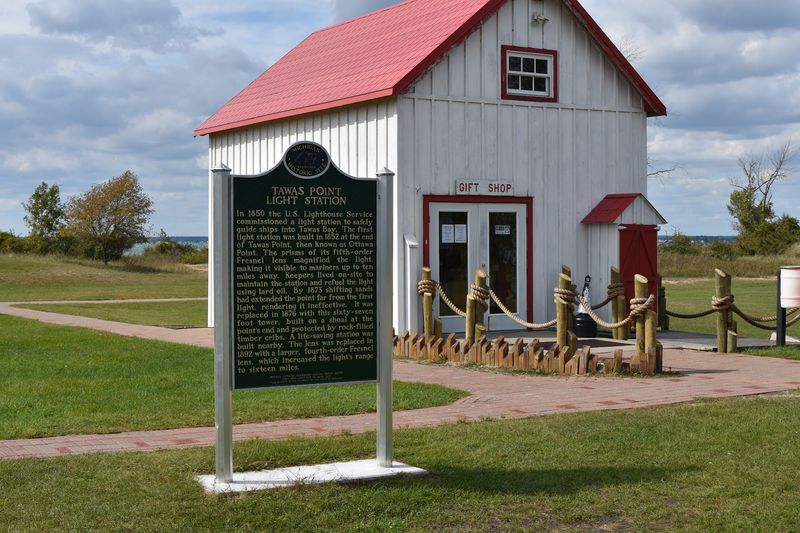
Wind, sand, and open water usually steal the show on a Great Lakes stop, but here the lighthouse keeps pulling your eyes back. It stands with the kind of calm confidence that makes you wonder how many storms it watched without blinking.
Tawas Point State Park in East Tawas is home to the 1876 Tawas Point Lighthouse, a rare Victorian era station on the Great Lakes. The walk out feels pleasant and easy, with wide views over Lake Huron and a shoreline that curves so neatly it almost looks drawn.
Once you arrive, the setting does half the storytelling before you even step inside.
We loved the mix of simple pleasures and history. You can watch birds, feel the breeze off the water, and then learn about keepers who relied on routine, discipline, and a dependable light.
The tower and keeper’s house make the maritime past feel lived in rather than distant.
Bring sunglasses, and if tours are open, take one. Climbing and hearing the details adds a lot.
This is a good stop for travelers who want a beach mood with something deeper tucked into the end of the path.
Big-water history at Straits State Park
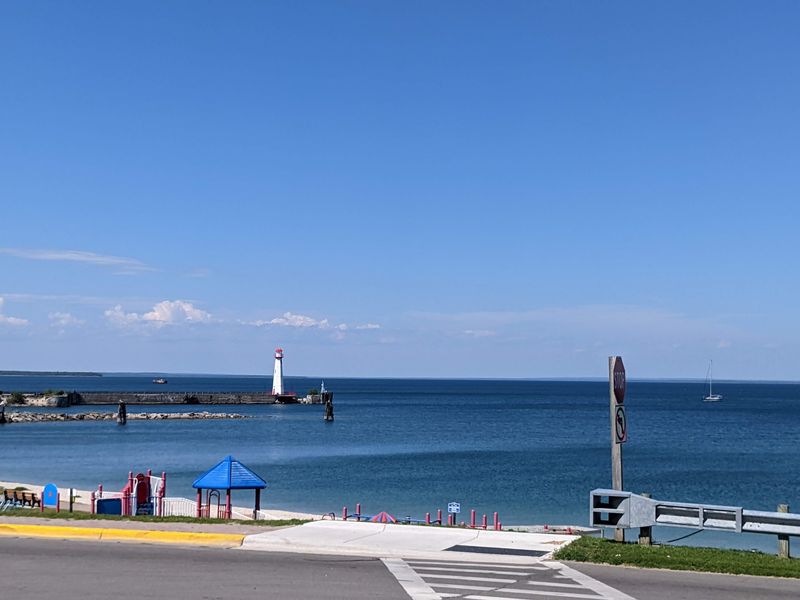
Few places in Michigan make geography feel this dramatic. Water moves in every direction, the bridge stretches across the scene, and the high overlook gives the area a sense of importance before you even read a single sign.
Straits State Park in St. Ignace includes the Father Marquette National Memorial area, where the story turns toward exploration, faith, and encounters between French visitors and Native communities. Even if parts of the memorial are under improvement, the park itself still offers the setting that explains why this place mattered so much.
Standing above the Straits, it is easy to imagine canoes, trade routes, and first impressions unfolding on the water below.
The views are what first pull people in, but the history gives them staying power. We found ourselves lingering longer than expected, partly because the landscape feels active and partly because the story reaches so far back.
Come near sunset if you can, when the bridge and water take on extra color. It is also a smart stop to pair with other Mackinac area sights.
Even a short visit adds scale, context, and a stronger sense of Michigan’s earliest crossroads.
Layer upon layer at Mackinac Island State Park
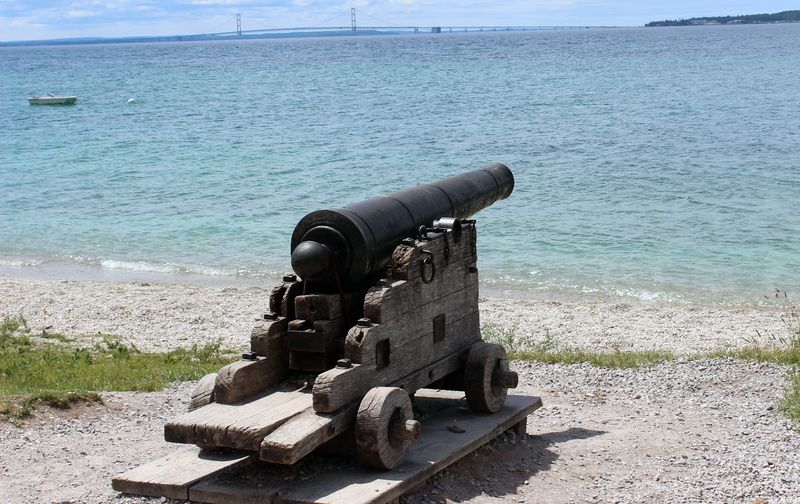
The sound that defines this place is not traffic. It is hoofbeats, bicycle tires, and the low hum of visitors looking up at buildings that have watched many versions of Michigan pass by.
Mackinac Island State Park is not just one historic stop. It feels like a whole collection of eras spread across a beautiful island.
Fort Mackinac, older homes, churches, and overlooks all fold into the experience, and the car-free setting somehow makes the history easier to absorb. Instead of rushing from site to site, you move at a slower pace and notice details, from cannon areas to porch views over the water.
What surprised us was how natural the mix feels. Military history, tourism history, and everyday island life all share the same roads and trails.
Picking up fresh fudge nearby or watching carriages pass only makes the past feel more connected to the present.
Give yourself more time than you think you need. Renting bikes can help, but walking parts of the park is worth it too.
This is one of those rare places where every turn seems to open another chapter, not just another photo stop.
Dunes, waves, and Big Sable at Ludington State Park
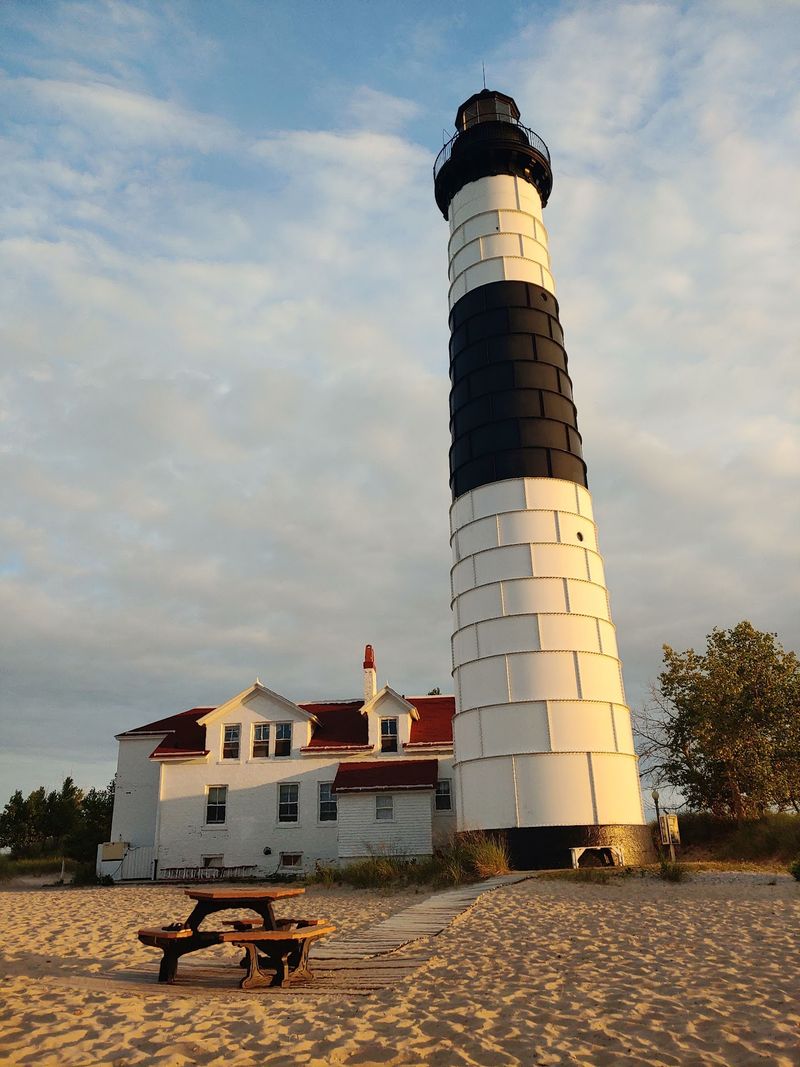
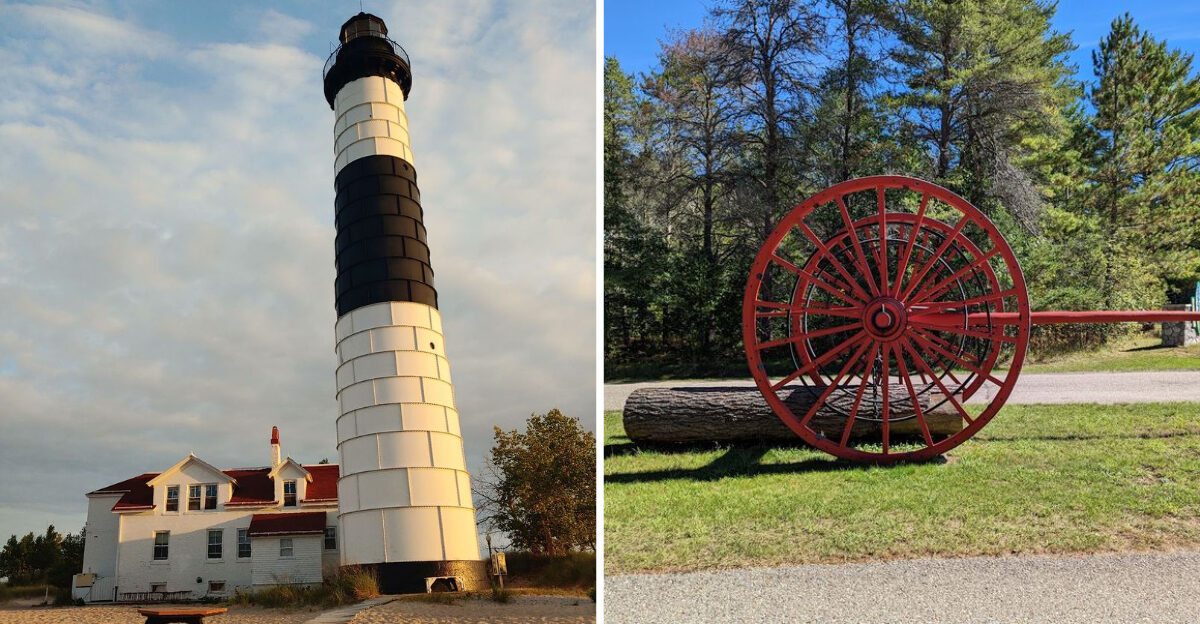
Nothing about the walk feels small. The sky looks wide, the sand shifts under your feet, and the sound of Lake Michigan seems to fill every open space until the lighthouse finally rises ahead like a landmark from an older world.
Ludington State Park offers one of those rare combinations that please almost everyone. Big Sable Point Lighthouse gives the park a clear historic center, while the surrounding dunes, shoreline, and trails keep the visit active and scenic.
Learning about lumber baron Charles Mears, local shipwreck concerns, and the push for a lighthouse adds real substance to what could otherwise be just a pretty beach stop.
We found the approach part of the experience. By the time you reach the tower, the landscape has already prepared you for the story.
The historic beach house and long sweep of shoreline make the park feel tied to both work and leisure across generations.
Bring water, sun protection, and shoes that handle sand well. If you can stay into evening, do it.
The light gets softer, the lake feels even bigger, and the history of this coast settles in with a little more force.
Mill wheels and farm roots at Wolcott Mill Metropark
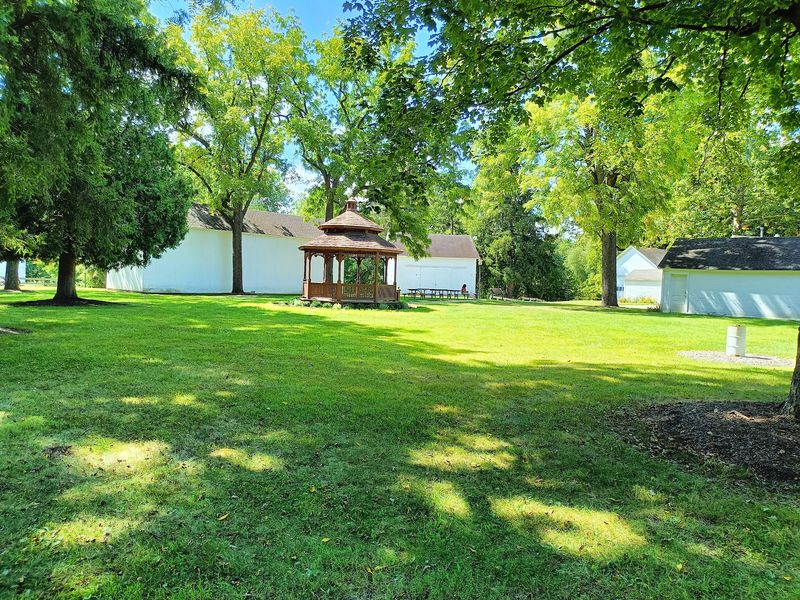
The creek, the mill, and the farm buildings give this stop a lived-in feeling right away. Instead of grand drama, you get the pleasure of seeing how ordinary work once powered a whole community, one bag of grain at a time.
Wolcott Mill Metropark Historic Center in the Ray area preserves an 1845 grist mill and the farming world around it. Inside, the machinery is the star.
Gears, belts, and grinding equipment make it easier to understand that flour was not a simple store purchase for earlier families. It depended on local systems, skilled labor, and dependable water power.
We enjoyed how approachable the site feels. Children can connect with the farm setting, while adults may find themselves staring at the engineering longer than expected.
The mill’s age and steady presence add a kind of practical dignity that feels different from military or lighthouse history.
Try visiting when demonstrations or seasonal programs are offered if your timing works out. Even without them, the grounds are worth a relaxed walk.
This is a good reminder that state and regional history is not only about famous moments. It is also about food, labor, and daily routines.
Where Michigan’s park story began at Interlochen State Park
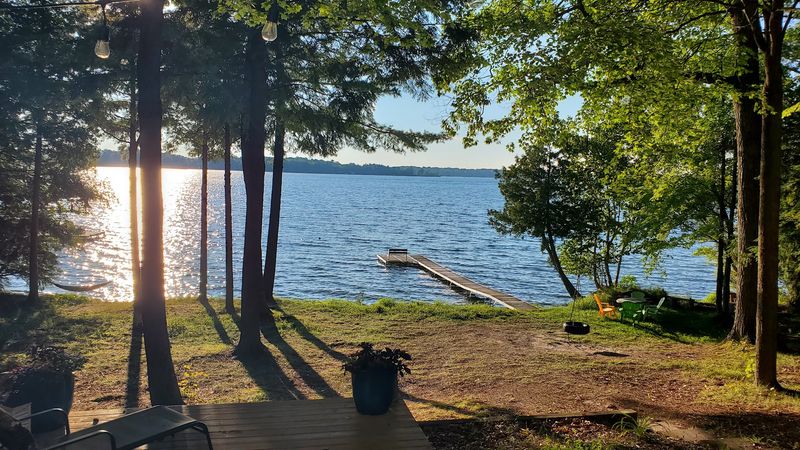
Some places feel important in a loud way. Others carry their meaning more gently.
Between lakes and tall pines, this park belongs to the second group, and that may be why its history lands so well once you learn what started here.
Interlochen State Park holds a major place in Michigan history as the state’s first state park, established in 1919. Knowing that changes the walk.
The trees are still the immediate draw, especially the old red and white pines that inspired protection in the first place, but the larger idea is what lingers. This was an early decision to save beauty before it disappeared.
We liked how the park avoids feeling like a monument. It still works as a real getaway, with water, woods, and room to breathe.
Yet underneath that calm is the beginning of a bigger conservation story that shaped many trips Michigan families would later take.
If you stop here, do more than check the box. Take a lakeside pause, notice the older trees, and think about what it means for a state to choose preservation.
The visit feels simple on the surface, but its legacy reaches much farther.