Tucked into the Blue Ridge Mountains of North Carolina, Penland School of Craft has been turning raw materials into remarkable art since 1929. Whether you want to blow glass, throw clay on a wheel, or hammer hot metal into something beautiful, this school offers a hands-on experience unlike anything else in the country.
It started as a small weaving circle and grew into a world-famous destination where over 1,400 students come every year to learn from some of the best craft artists alive. If you have ever wanted to make something with your own two hands, Penland might just be the place that changes everything.
A School Born From a Weaving Circle in the Mountains
Back in 1923, a teacher named Lucy Morgan gathered a small group of women in Mitchell County, North Carolina, and taught them to weave. She had just learned the skill at Berea College and wanted local women to earn income from home.
That quiet gathering became the seed of something extraordinary.
By 1929, weaving expert Edward F. Worst had visited the group, expanded the program to include basketry and pottery, and helped Morgan formally establish Penland School of Craft.
The name Penland Weavers and Potters eventually gave way to the institution known worldwide today.
What makes this origin story so meaningful is what it says about the school’s soul. Making things with your hands was taken seriously from day one, and that belief has never faded.
Every kiln fired, every glass bubble blown, and every metal piece hammered at Penland carries the echo of that first weaving circle in the Appalachian hills.
Blue Ridge Mountains, an Hour From Asheville
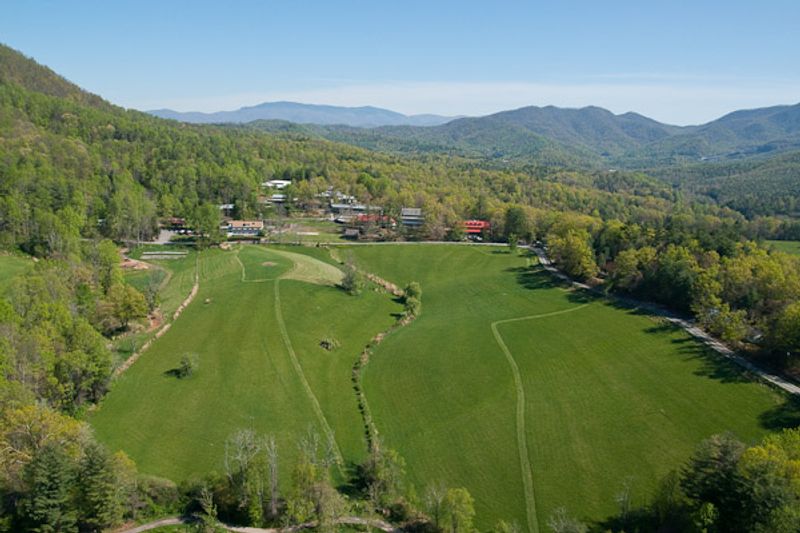
Finding Penland requires commitment. The school sits on 400 acres in the Blue Ridge Mountains, about six miles from Spruce Pine and nine miles from Bakersville, North Carolina.
From Asheville, the drive takes roughly an hour along winding two-lane roads that climb steadily through mountain terrain.
That remoteness is not an accident — it is a feature. When you are surrounded by forest, ridge lines, and a campus where everyone is making something, the outside world fades away fast.
Students, instructors, and resident artists share meals, paths, and creative energy in a way that simply does not happen in a city classroom.
One visitor review described the school as a “hidden gem in the mountains” and noted that staying in the area puts you within an hour of both Asheville and Boone, with Linville Falls, Roan Mountain, and the Blue Ridge Parkway all nearby. The location rewards those willing to seek it out.
51 Buildings Spread Across a Working Hillside
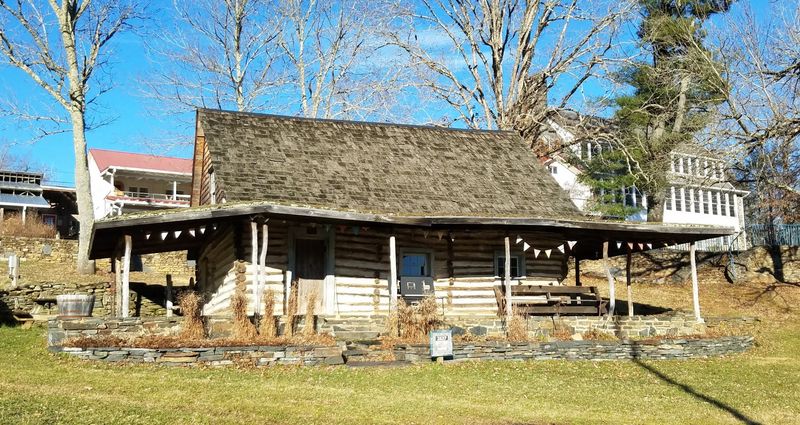
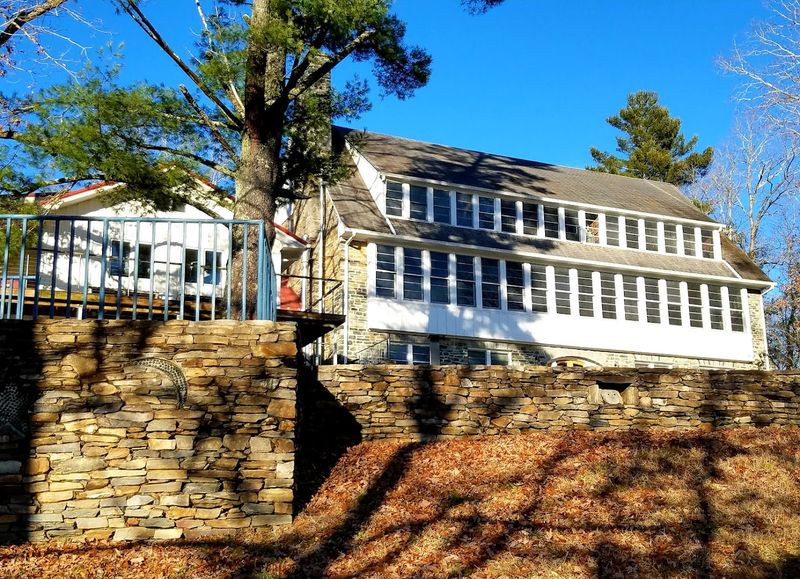
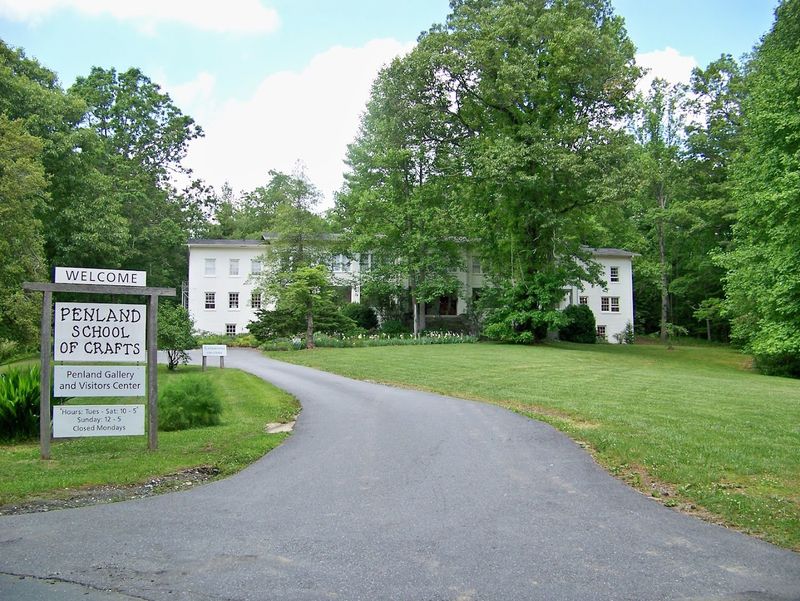
Walking the Penland campus feels a little like stumbling into a creative village that grew organically over decades. Fifty-one buildings dot the hilly terrain — studios, housing, a dining hall, a coffee house, a gallery, and a supply store, most reachable on foot or by bike within minutes.
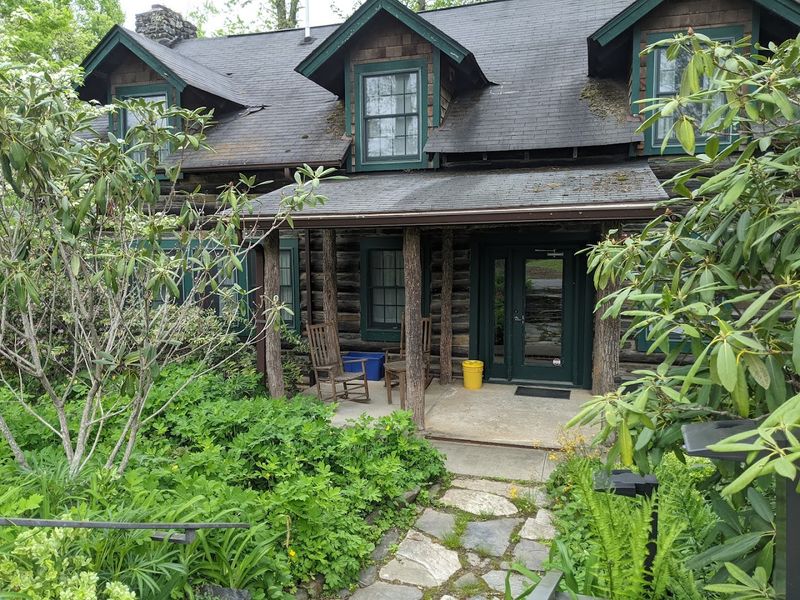
The architecture blends historic structures with newer designs by North Carolina firms, including Dixon Weinstein Architects from Chapel Hill. One standout is the Craft House, described as one of the largest log buildings in the state, which houses the supply store and features a wide front porch overlooking the surrounding mountains.
Visitors who stop on that porch tend to slow down and stay longer than planned. There is something about the combination of mountain air, hand-built surroundings, and the distant sound of a torch or a loom that makes it hard to leave.
Campus tours let guests peek into studio doorways while real work is happening inside.
Sixteen Disciplines, All Completely Hands-On
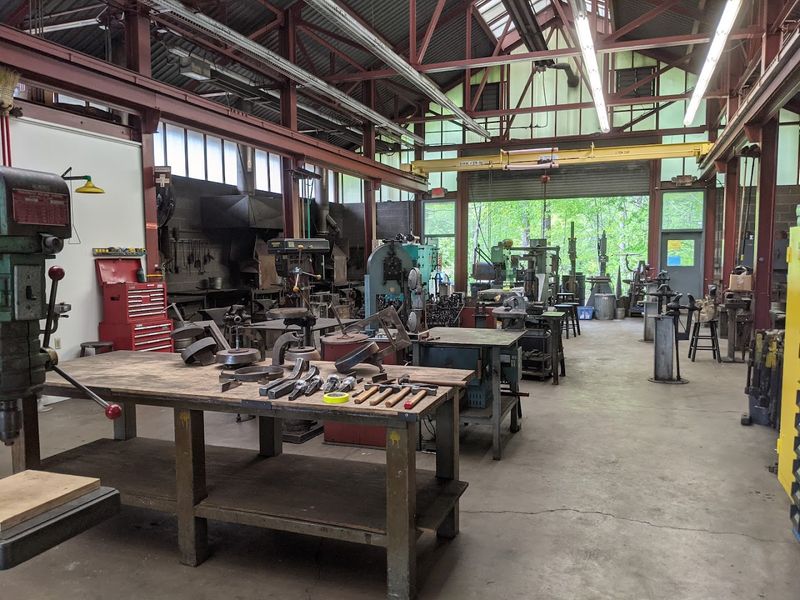
Penland is not a place where you watch someone else make art and then take notes. The school operates working studios in 16 disciplines: books and paper, clay, drawing and painting, blown and cast glass, iron, letterpress, metals, photography, printmaking, textiles, and wood.
Every studio is stocked with professional-grade equipment.
Step past the doorway of the glassblowing studio and you are hit immediately — mineral dust in the air, waves of heat from the furnace, the hypnotic orange glow of molten material gathering on the end of a pipe. The metals studio hums with ventilation and the occasional sharp pop of a torch.
Each space has its own sensory signature.
One longtime student reviewer described the studios as “neat, clean, and well-supplied,” noting that instructors are genuinely invested in sharing their skills. That professional-level environment is what separates Penland from a basic community art class.
You are working in a real studio, not a simplified classroom version of one.
No Permanent Faculty — Every Instructor Is a Visiting Artist
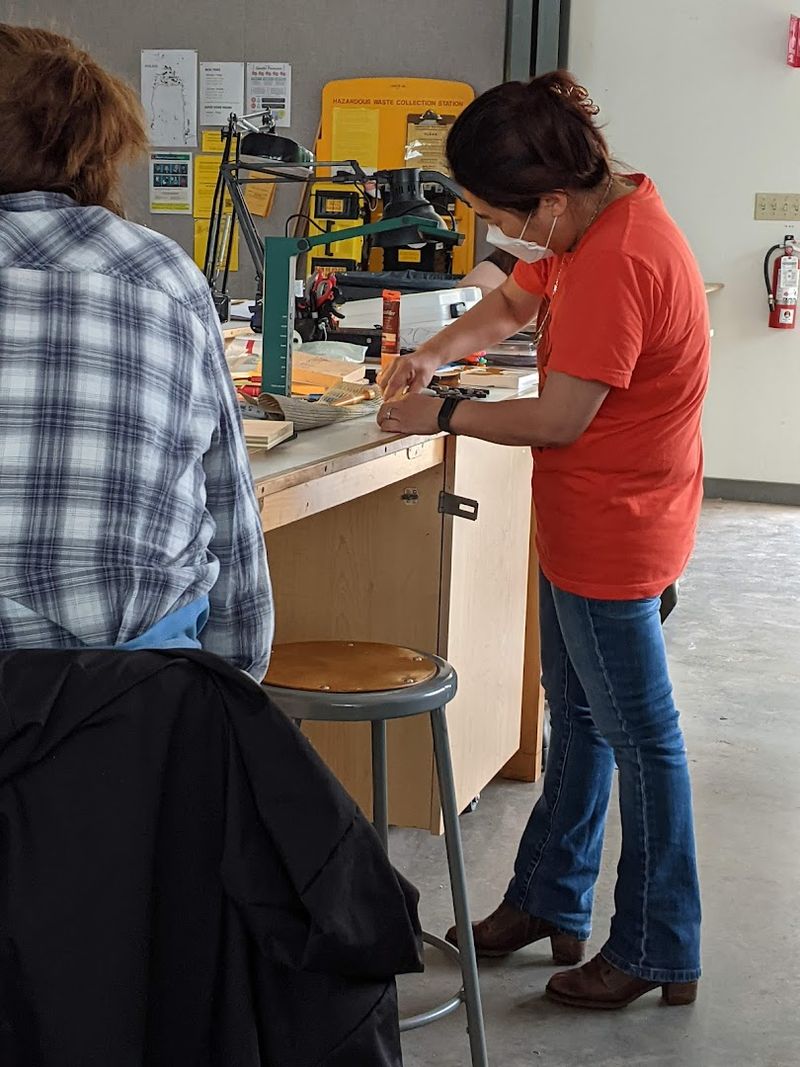
Here is something unusual about Penland: there is no standing faculty. Every single instructor travels to campus from somewhere else — from across the United States or from other countries — hired specifically to lead one workshop during one session.
The person teaching your glass workshop might spend the rest of the year showing work in international galleries.
That rotating model keeps the instruction fresh and the creative energy unpredictable in the best way. Around 1,400 students come to Penland each year, and the mix inside any given workshop is genuinely wide.
You might sit next to a retired schoolteacher, a working ceramicist with twenty years of experience, or someone who picked up the craft just last year.
Multiple reviewers have highlighted the quality and warmth of the instructors. One former student wrote that the teachers are “friendly and gifted and willing to share their interests and skills.” That generosity of knowledge, combined with professional-level expertise, is a combination that is genuinely hard to find anywhere else.
Workshop Formats: One Week, Two Weeks, or Eight Weeks Deep
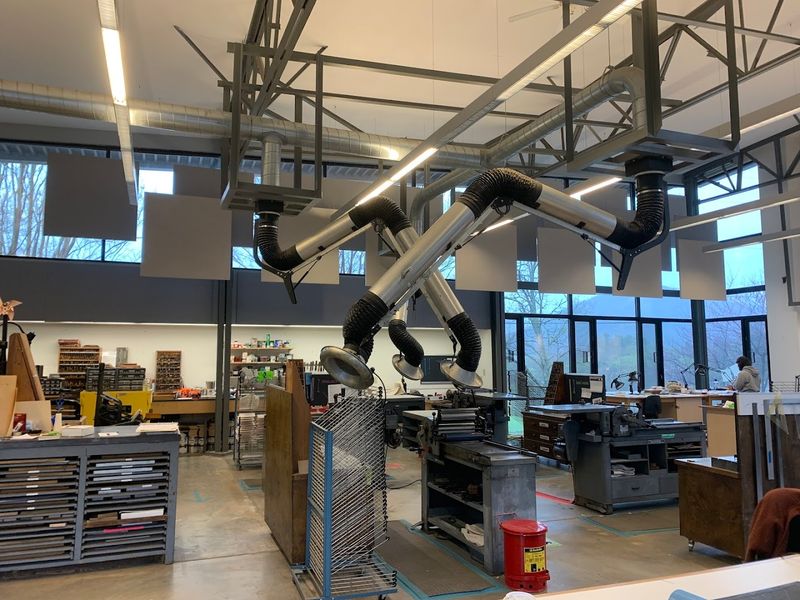
Not everyone has the same amount of time to give, and Penland has built its schedule around that reality. Workshops run in three main formats: one-week short sessions, standard two-week summer workshops, and eight-week Spring and Fall Concentrations for students who want serious immersion in a single medium.
The school runs programming from March through November, with a shorter Winter Residency in January. Summer is the busiest season by far, offering around 98 workshops across disciplines in a single stretch.
Spring and fall concentrations attract a different kind of student — someone ready to slow down, go deep, and spend two months inside one studio area.
That range of formats means Penland works for the curious first-timer who can only spare a week and the committed artist who wants eight weeks away from everything else. Either way, the mountain setting and the shared creative atmosphere tend to make whatever time you spend there feel longer and richer than it actually is.
What It Actually Costs and How to Make It More Affordable
Tuition for a standard two-week summer workshop runs around $2,117, with hot glass workshops priced a bit higher at about $2,763 due to the cost of furnace materials. Add room and meals, and the total can range from roughly $2,000 on the low end to well over $5,000 depending on your housing choice.
Penland offers partial scholarships that bundle tuition, shared housing, and meals at a reduced rate — summer scholarship packages with hostel-style housing start as low as $836. Residents of nearby counties in Western North Carolina and Eastern Tennessee qualify for half-price standby tuition when spots open up less than four weeks before a session begins.
Active and retired military, K-12 teachers, and college faculty are also eligible for that same standby discount.
Financial aid does not cover everything, but it makes the school genuinely accessible to people who would otherwise have no path in. Checking the website early and using the waitlist for sold-out sessions is strongly recommended by the school itself.
On-Campus Housing: Simple Beds, Big Community Energy
Penland’s own website describes the on-campus housing as “quite simple” — a bed, a place for your clothes, and no air conditioning. That honesty is refreshing.
Options range from hostel-style rooms shared by up to 13 people to single rooms with private baths, assigned based on availability at the time of registration.
The point of staying on campus has nothing to do with luxury. When your studio is a five-minute walk away and you are eating every meal with the same group of people, the workshop stops being a class and starts being a way of living for a few weeks.
That shared focus creates something that is genuinely hard to manufacture in any other setting.
Students can commute from off campus if they prefer, but most choose to stay on-site for exactly the reason described above. Several reviewers have mentioned the social atmosphere as one of the most memorable parts of attending — the conversations at dinner, the late-night studio visits, the unexpected friendships.
The Gallery and Visitors Center: No Enrollment Required
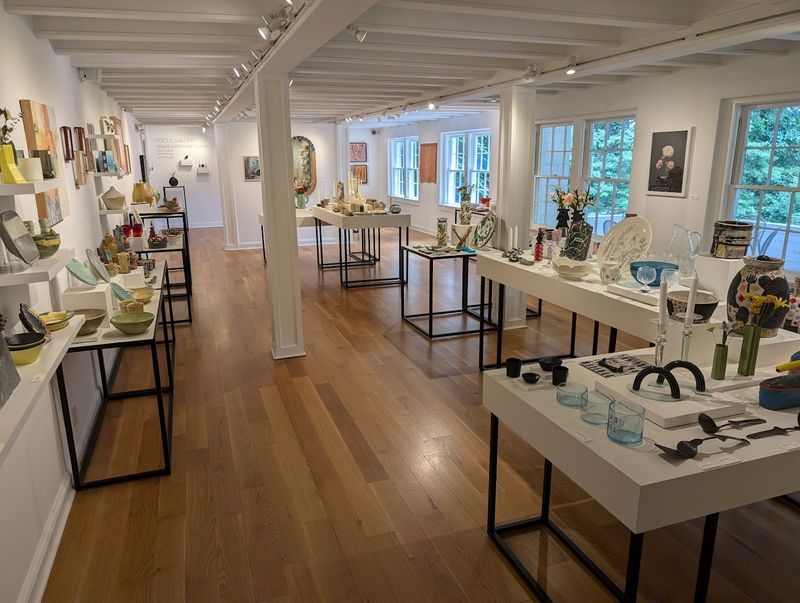
You do not need to sign up for a workshop to experience Penland. The gallery and visitors center is free, open to the public year-round, and regularly surprises first-time visitors who show up without knowing much about the school.
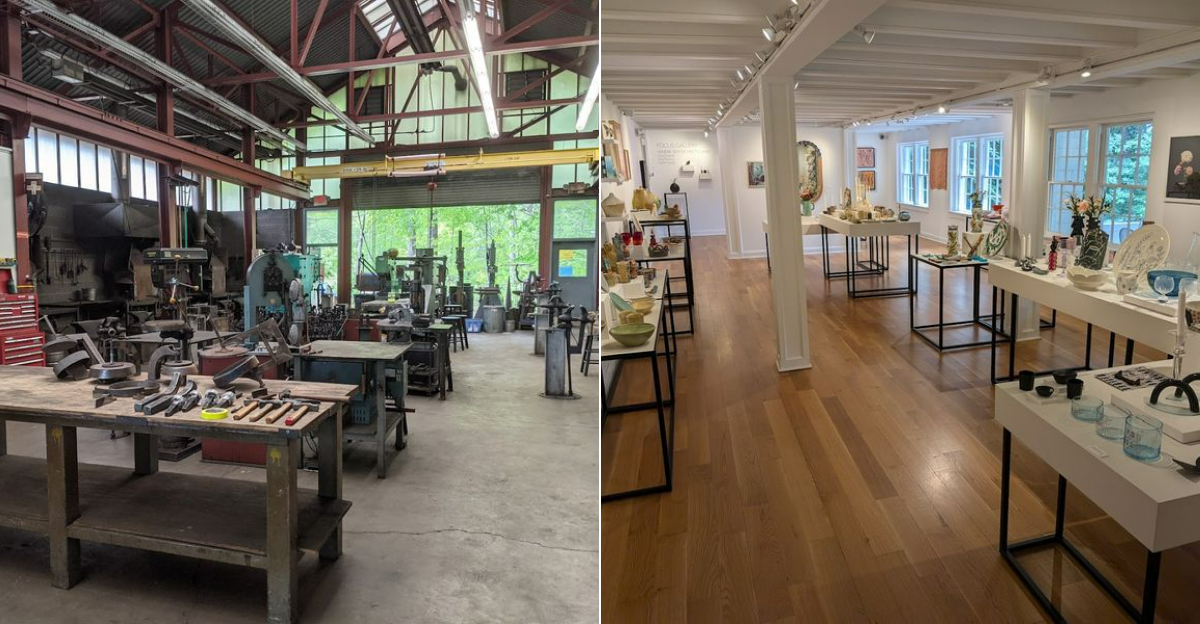
The main room holds ceramics, woodwork, sculpture, jewelry, and painting — all for sale or on display — alongside rotating exhibitions that change throughout the year.
A second set of rooms inside the visitors center contains a timeline of the school’s history, a video walkthrough of the working studios, and pieces from the permanent collection. TripAdvisor visitors who stopped in casually have described the quality as “significantly better than expected from a working school in a rural mountain location.”
One reviewer who visited for an annual benefit auction called Penland “a magical place” and said the gallery spaces were “superb.” Another came away inspired enough to pick up paintbrushes again after nearly a decade away from art. That kind of impact, from a free afternoon visit, says a lot about what this place holds.
Resident Artists and the Barn Studios You Can Actually Walk Into
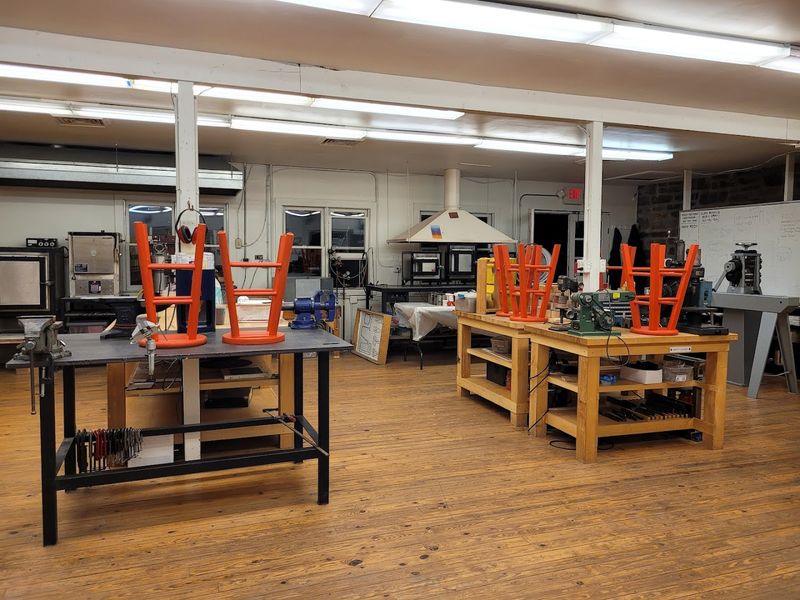
Penland has hosted a formal artist residency program since the 1960s, making it one of the longest-running programs of its kind in the United States. Resident artists — professional craftspeople at a pivotal moment in their careers — live on campus for one or three years, with no cost for housing or studio space.
Their studios are located in a converted barn complex called The Barns, a short walk from the main campus.
During working hours, residents keep their studio doors open and welcome visitors to stop in, watch, and ask questions. It is a genuinely rare opportunity: watching a working professional artist in the middle of a real project, not a demonstration, not a performance — just actual work in progress.
About seven times a year, during each school session, residents formally host open studio evenings where casual visitors can spend extended time in the spaces. For anyone interested in what a serious craft practice looks like up close, these evenings offer something you simply cannot get from a gallery wall.
Community Day: One Day a Year When the Studios Open to Everyone
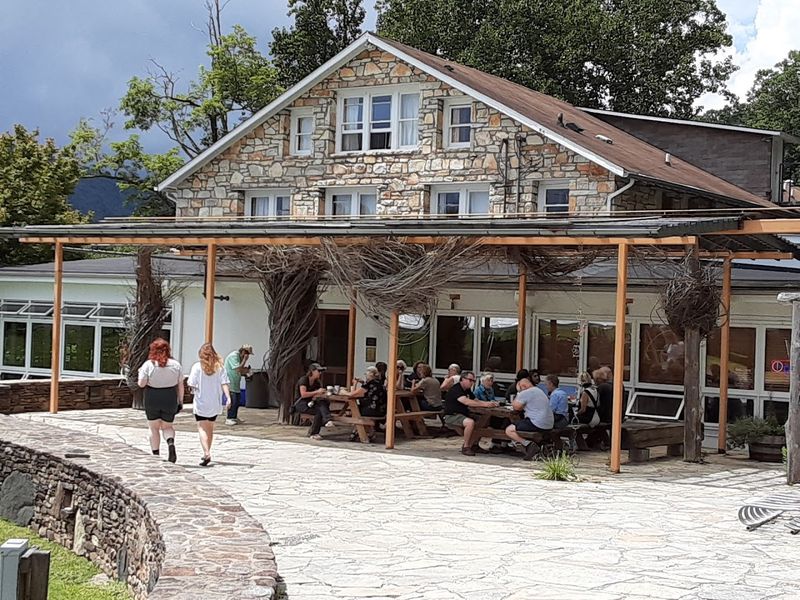
Every year in early March, Penland throws open its working teaching studios for Community Day — one of the only times non-enrolled visitors can step inside the studios and actually try something. Guided by working artists, guests can attempt a small hands-on project in materials they might never have touched before.
The event is free, family-friendly, and clearly beloved by the surrounding region, though people travel from across North Carolina to attend. For someone sitting on the fence about signing up for a full workshop, Community Day is the most honest preview available.
You get your hands on the materials, feel the weight of a tool, and understand in a way that no website description can fully capture what it means to work in that space.
Children, retirees, curious tourists, and serious artists all show up on the same day and work side by side, which is very much in the spirit of how Penland has always operated. It is the school at its most open and most itself.
Planning Your Visit: Everything You Need Before You Go
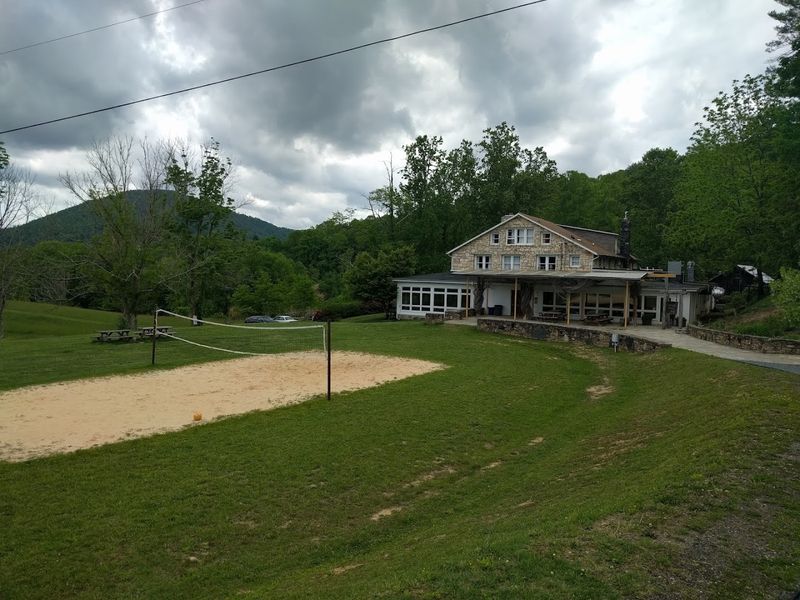
The school is located at 67 Doras Trail, Bakersville, NC 28705 — about 50 miles and one hour north of Asheville via NC-19E and Penland Road. The gallery and visitors center are open year-round and require no advance booking for a casual drop-in.
The Craft House supply store is open seven days a week from spring through fall and Monday through Friday in winter.
The on-campus coffee house and cafe operate seasonally, so checking the website before your visit is a smart move. During active workshop sessions, teaching studios are closed to the public, but the grounds, gallery, Barns studios, and the Craft House porch are all accessible to anyone who shows up.
For workshop enrollment, registration opens on a rolling basis and popular sessions fill fast. The school recommends checking the website early and using the waitlist for sold-out workshops — spots sometimes open within a few weeks of a session start.
Contact Penland at (828) 765-2359 or visit penland.org for current schedules and availability.