North Carolina has a way of making you look up, then rewarding you for the climb.
From misty Blue Ridge ridges to quiet Piedmont forests, its observation towers turn ordinary hikes into big sky moments.
Some sit beside famous trails, while others hide down gravel roads where the only soundtrack is wind in the trees.
I picked the towers that felt most memorable because each one offers more than a pretty photo.
You get a sense of place, a little history, and a fresh reason to keep exploring.
A few are easy stops, and a few will make your legs complain before the view makes them forgive you.
Bring water, check trail conditions, and do not rush the last steps.
The best views in North Carolina often arrive after a little effort, and these towers prove that the climb can be half the fun.
Ready to see where the state opens wide?
1. Kuwohi Observation Deck – Bryson City
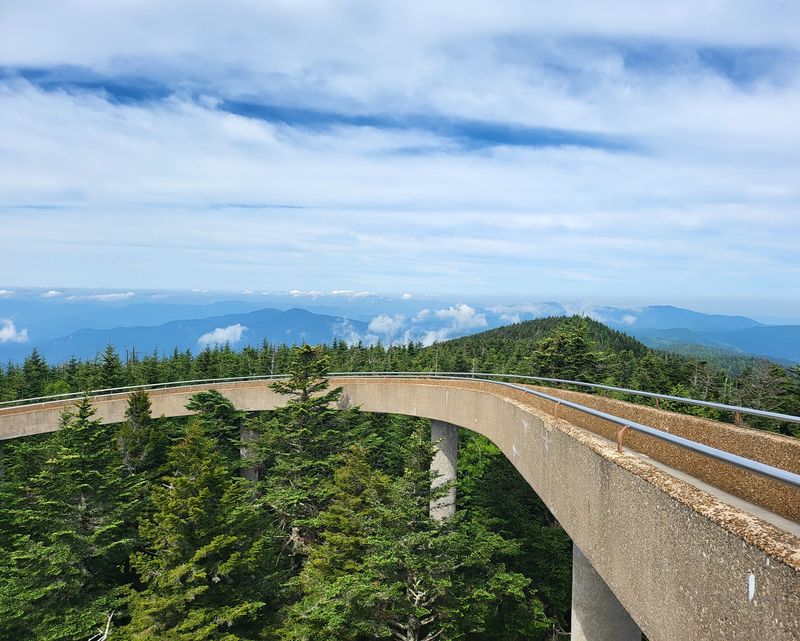
The air feels thinner at Kuwohi, and the view seems to stretch forever.
Located near Bryson City in Great Smoky Mountains National Park, this famous summit reaches 6,643 feet, making it the highest point in Tennessee and a major landmark for North Carolina visitors too.
The paved half-mile path to the observation deck is short, but it is steep enough to make most people slow down.
At the top, the round deck gives a 360-degree look across the Smokies, with ridges folding into blue layers on clear days.
Early morning often brings soft fog below the deck, which makes the mountains look like islands.
Parking can fill quickly, especially in fall and summer, so arrive early if you want a calmer visit.
Bring a jacket because the summit can feel chilly even when Bryson City is warm.
Kuwohi is also a meaningful Cherokee place, so take time to respect the name, the land, and the history around you.
2. Fryingpan Mountain Lookout Tower – Canton
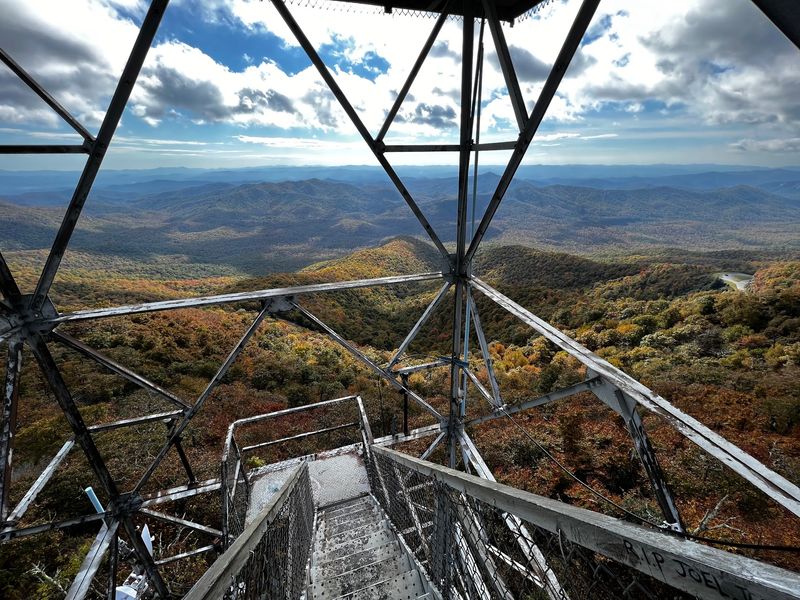
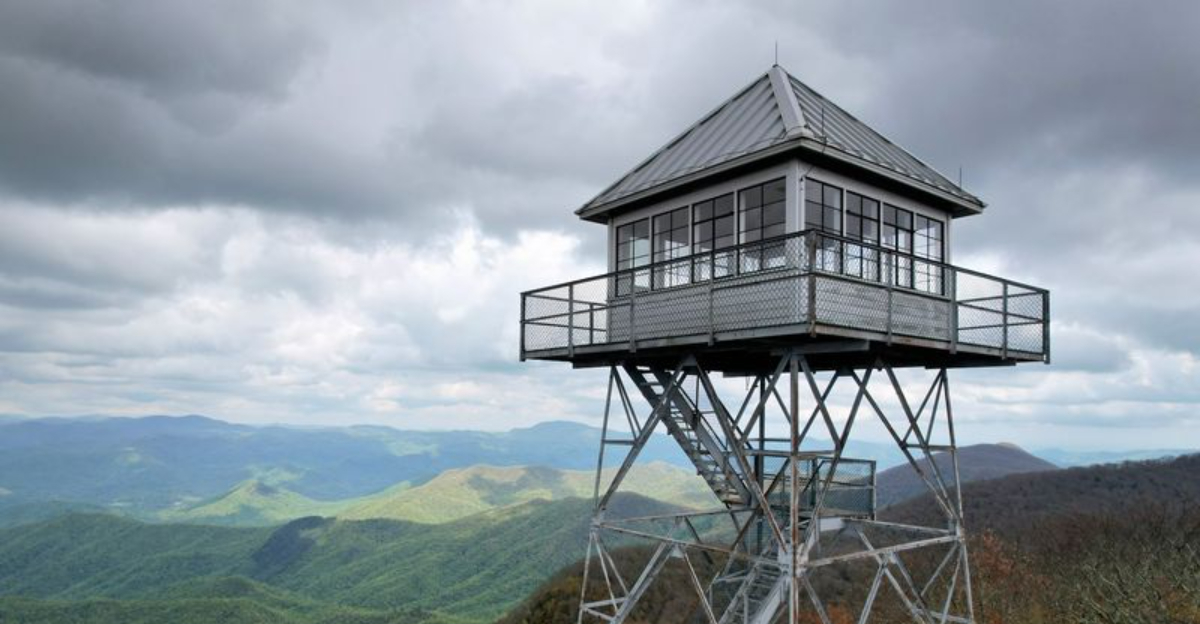
Metal stairs rattle under your boots at Fryingpan Mountain, which somehow makes the reward feel bigger.
This lookout tower near Canton stands in Pisgah National Forest, not far from the Blue Ridge Parkway.
The hike is about 1.5 miles round trip on a gated forest road, so it feels friendly for many visitors, though the uphill grade still asks for steady legs.
The cab at the top is usually closed, but the stairs below it are enough for a wonderful view.
From the platform, you can spot rolling peaks, dark forests, and long ridgelines that seem to drift into the distance.
Because the tower is exposed, skip the climb during storms or strong winds.
Late afternoon can be beautiful here, with golden light sliding across the mountains.
Pack a snack, watch your step on the grated stairs, and give other climbers space.
Fryingpan Mountain is simple, scenic, and a classic Blue Ridge Parkway side adventure.
3. Flat Top Lookout Tower – Blowing Rock
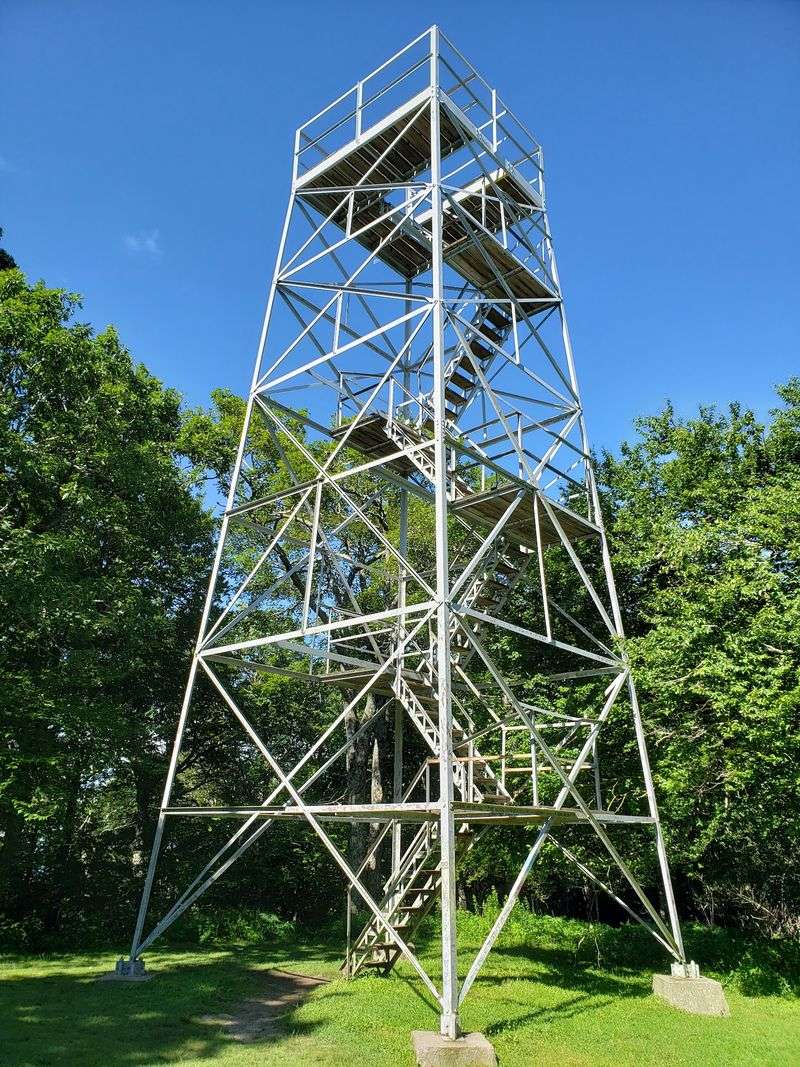
A walk to Flat Top feels like stepping into an old mountain postcard.
The tower sits inside Moses H.
Cone Memorial Park near Blowing Rock, where wide carriage trails wind through woods, fields, and quiet high country scenery.
The route from the Cone Manor area is several miles round trip, so it suits hikers who enjoy a longer, steady outing rather than a quick roadside stop.
At the summit, the lookout tower rises above the trees and gives a fine view of the surrounding Blue Ridge.
The climb up the steps adds just enough excitement, especially when the breeze moves across the ridge.
Many visitors pair this hike with a stop at the historic Cone Manor or a stroll around Bass Lake.
Wear comfortable shoes because the carriage roads are easy to follow but longer than they first appear.
In autumn, the area glows with color, while spring brings fresh greens and cool air.
Flat Top rewards patience with peaceful views.
4. Rich Mountain Fire Tower – Hot Springs
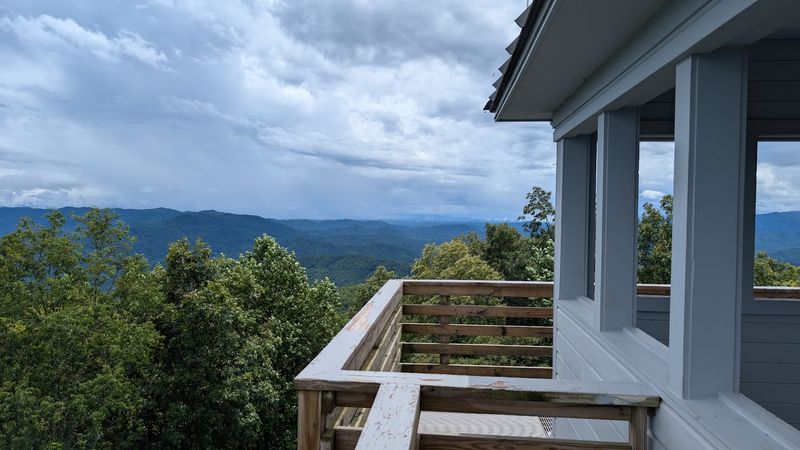
Some towers feel remote, and Rich Mountain wears that wild feeling proudly.
Found near Hot Springs, this fire tower sits close to the Appalachian Trail in Pisgah National Forest.
Reaching it usually means a real hike, often from Tanyard Gap or nearby trail access points, so check maps before you go and plan for changing mountain weather.
The tower has a quiet, old-time charm that matches the rugged land around it.
From the upper steps, you can see wooded slopes, distant ridges, and the broad mountain country surrounding the French Broad River valley.
Hot Springs is a fun base for this outing because the trail town has food, lodging, and, of course, warm mineral springs for tired legs.
Carry more water than you think you need, since climbs in this area can feel tougher than the mileage suggests.
Rich Mountain is best for hikers who like their views with a little solitude, a little sweat, and a strong sense of Appalachian history.
5. Shuckstack Fire Tower – Robbinsville
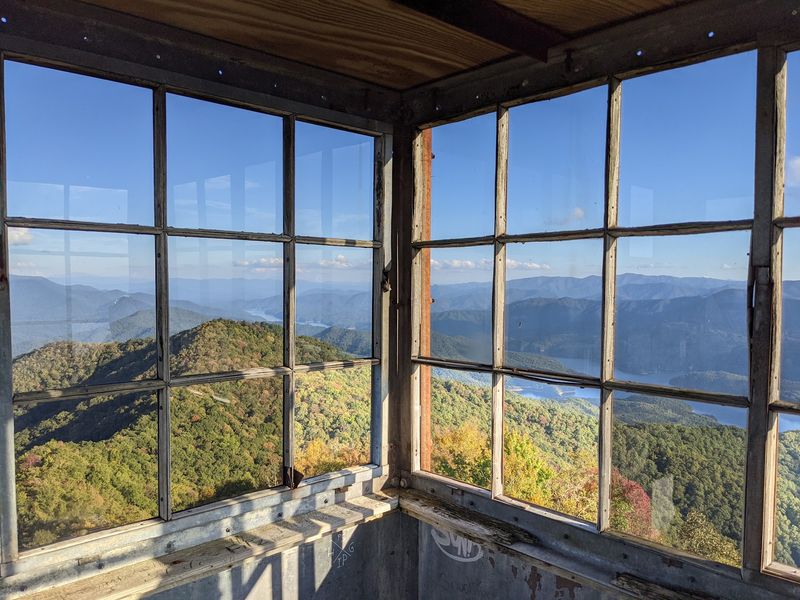
Fontana Lake flashes below Shuckstack like a blue secret tucked between the mountains.
This fire tower near Robbinsville is reached from the Fontana Dam area, using a steep section of the Appalachian Trail.
The hike is challenging, with several miles of climbing, so it is better for prepared hikers than casual sightseers.
The tower itself is old and can feel a bit nerve-testing, especially for people who dislike heights.
Still, the view from the stairs is unforgettable, with Fontana Lake, Great Smoky Mountains ridges, and deep forest spreading in every direction.
Because the structure has aged, visitors should be careful, avoid crowding, and turn back if conditions feel unsafe.
Start early, bring plenty of water, and give yourself time to enjoy Fontana Dam before or after the hike.
Shuckstack stands out because it combines a serious climb, a famous long-distance trail, and one of the most dramatic lake views in western North Carolina.
6. Wesser Bald Fire Tower – Franklin
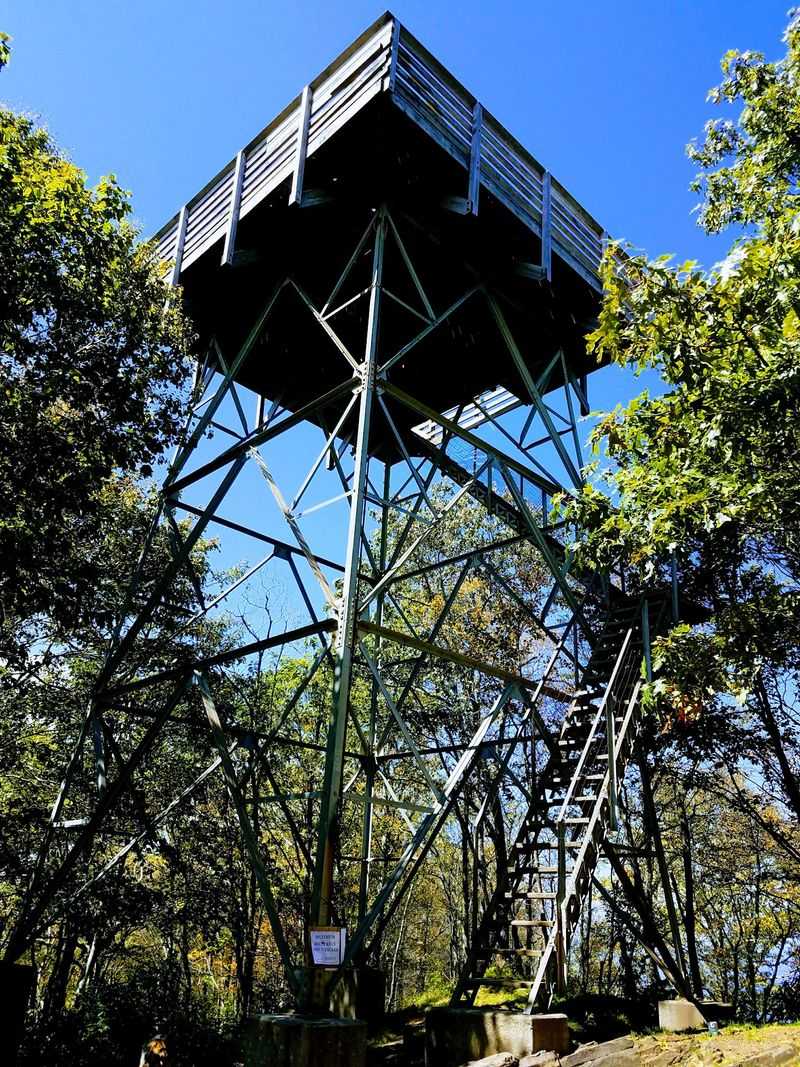
Wesser Bald has the kind of view that makes hikers forget their sore calves for a minute.
Located near Franklin in Nantahala National Forest, this tower sits along the Appalachian Trail and is often reached from Tellico Gap.
The hike is not extremely long, but the climb is steady, so pacing yourself makes the day more enjoyable.
The fire tower has a viewing platform that opens up a wide panorama of the Nantahala mountains.
On a clear day, ridges roll outward in every direction, and the scene feels big without feeling crowded.
This spot is popular with Appalachian Trail hikers, so you may hear trail stories while resting near the summit.
Spring and early summer can bring wildflowers, while fall adds bright color across the slopes.
Bring layers, because the wind can surprise you on top, and pack out every bit of trash.
Wesser Bald is a wonderful pick for visitors who want a classic mountain hike with a true summit payoff.
7. Albert Mountain Fire Tower – Otto
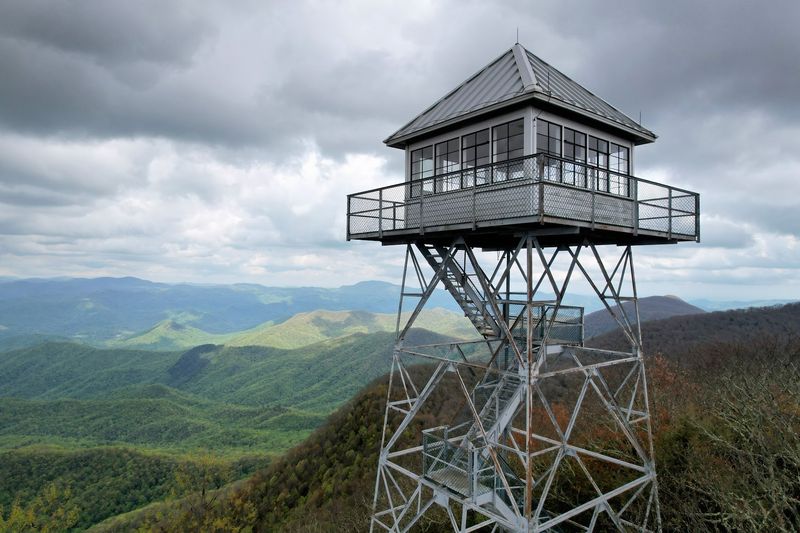
A bold little climb near the top gives Albert Mountain its punch.
This fire tower near Otto is a well-known Appalachian Trail landmark in Nantahala National Forest.
Many hikers reach it from Mooney Gap or Deep Gap routes, and the final stretch can be steep, rocky, and exciting in a hands-on way.
The tower marks a memorable point for northbound Appalachian Trail hikers because it sits near the 100-mile mark from Springer Mountain.
Even for day hikers, that bit of trail lore adds extra energy to the visit.
Views from the tower area sweep across southern Appalachian ridges and deep forested valleys.
The cab is not always open, but the surrounding summit still offers a strong sense of height and space.
Wear shoes with good grip, especially after rain, because the rocks can get slick.
Albert Mountain is not the easiest stop, but it feels adventurous, proud, and full of trail spirit.
Pack patience, respect the structure, and enjoy a summit that feels earned.
8. Moore’s Knob Observation Tower – Walnut Cove
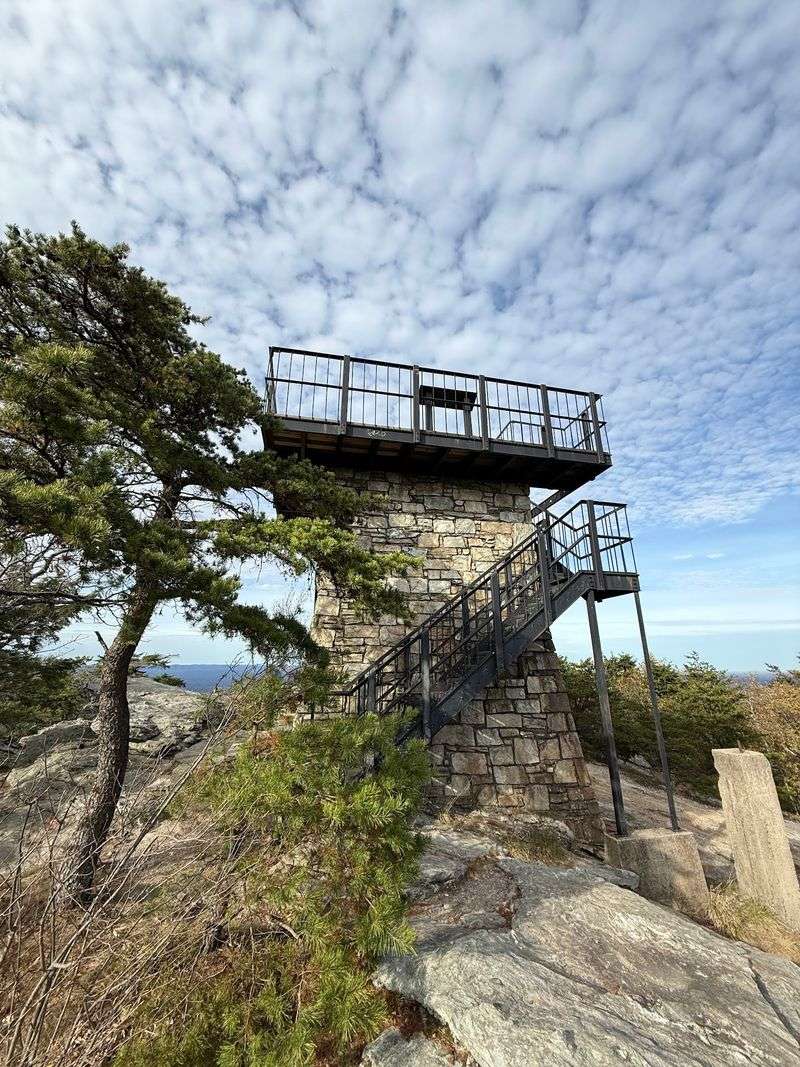
Not every grand North Carolina view belongs to the far western mountains.
Moore’s Knob Observation Tower proves that Hanging Rock State Park near Walnut Cove can compete for attention.
The tower sits on the park’s highest point, reached by the Moore’s Wall Loop Trail, a strenuous hike with stone steps, rocky sections, and steady elevation gain.
At the top, the stone tower gives a wide look across the Sauratown Mountains and the Piedmont beyond.
The view feels different from the Blue Ridge because the land drops into rolling countryside, farms, forests, and far-off towns.
This is a smart choice for hikers in the Triad area who want a big-view day trip without driving deep into the mountains.
Bring water, take breaks on the climb, and save energy for the descent.
Afterward, Hanging Rock State Park offers waterfalls, picnic areas, and more trails.
Moore’s Knob feels tough, rewarding, and surprisingly dramatic for central North Carolina.
9. Buck Mountain Lookout Tower – Troy
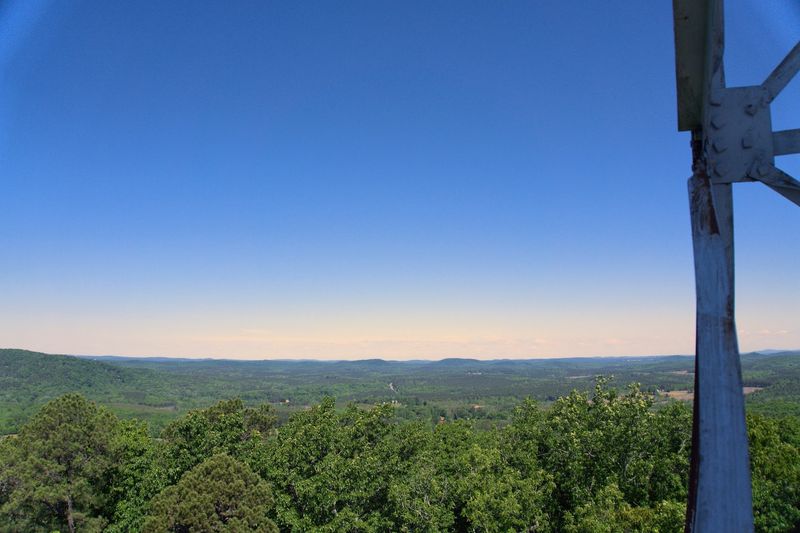
The Uwharrie Mountains may be ancient, but Buck Mountain gives them a fresh angle.
This lookout tower near Troy stands in Uwharrie National Forest, a region known for low, rugged hills that are much older than the Appalachians.
The area feels quieter than many famous mountain spots, which makes it appealing for people who like less crowded adventures.
Access can depend on current road and trail conditions, so check with Uwharrie National Forest before visiting.
Some routes may involve gravel roads, forest paths, or seasonal changes that affect how close you can get.
The tower area offers views over a sea of trees, with rounded ridges rising gently instead of sharply.
It is a different kind of beauty, more subtle but still impressive.
Bring navigation tools, download maps, and do not rely only on cell service.
Buck Mountain is a fine reminder that North Carolina’s scenic towers are not limited to the Blue Ridge.
The Uwharries bring history, quiet woods, and a peaceful horizon.
10. Lake Crabtree Observation Tower – Morrisville
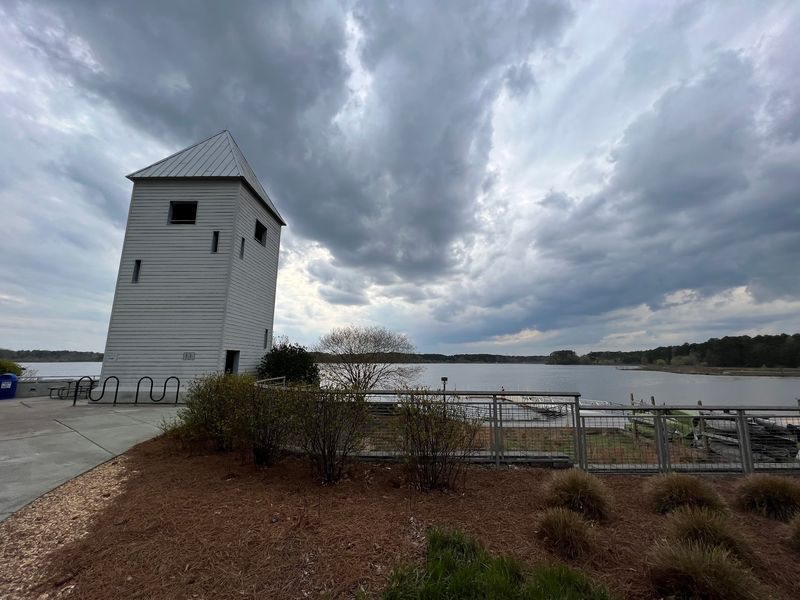
Airplanes, kayaks, and herons can all share the scene at Lake Crabtree.
This observation tower in Morrisville sits inside Lake Crabtree County Park, close to Raleigh-Durham International Airport and Research Triangle Park.
Unlike the mountain towers, this one offers an easy, low-stress outing for families, bird watchers, and anyone who wants a quick nature break.
The tower overlooks wetland edges, trees, and open water, so binoculars are a smart addition.
You might spot ducks, turtles, songbirds, or a great blue heron standing like a statue near the shore.
Trails around the park connect nicely with picnic spots, bike paths, and lake access.
Because the park is popular, weekends can be busy, but the mood stays relaxed and friendly.
Wear comfortable shoes, bring sunscreen, and leave time for a walk by the water.
Lake Crabtree proves an observation tower does not need a high mountain to deliver a memorable view.
Sometimes a peaceful lake near town does the job beautifully.
11. Maple Springs Observation Deck – Robbinsville
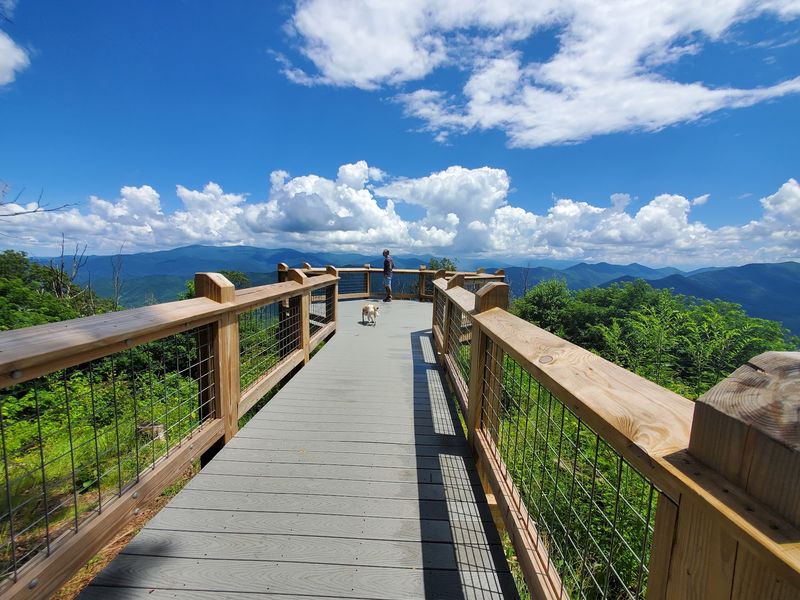
Maple Springs feels like a quiet balcony built for forest daydreams.
Located near Robbinsville, this observation deck is often linked with the Joyce Kilmer-Slickrock area and the scenic roads of Graham County.
It is a great stop for travelers exploring the wilder side of far western North Carolina, where dense woods and steep ridges dominate the landscape.
The deck gives a broad look across the surrounding Nantahala country, with layers of green in summer and fiery color in fall.
It is also a nice companion stop if you are visiting Joyce Kilmer Memorial Forest, famous for its huge old-growth trees.
Roads in this part of the state can be curvy and remote, so fuel up, drive carefully, and check conditions before heading out.
Cell service may be limited, which can actually make the visit feel more peaceful.
Maple Springs is not flashy in the theme-park sense.
Its charm comes from stillness, big woods, and a view that asks you to slow down.
12. Monadnock Lookout Tower – Snow Camp
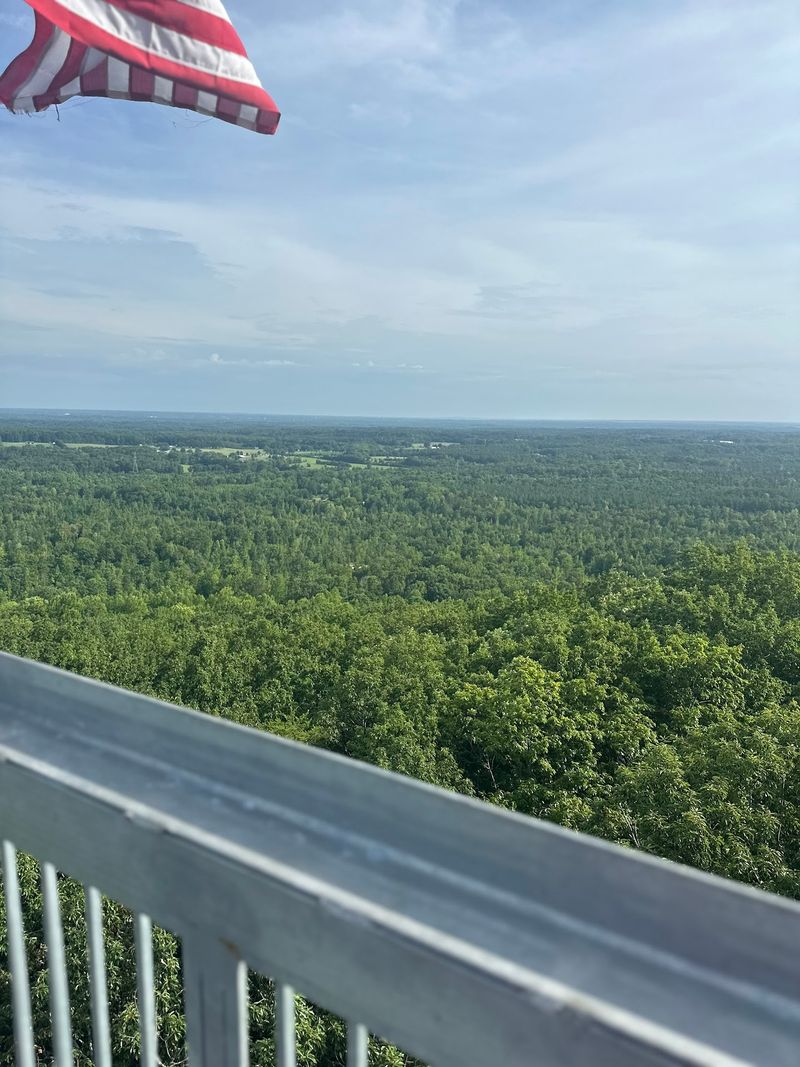
A tower in Snow Camp sounds almost like a storybook clue, and Monadnock fits that mood.
Located in the Piedmont community of Snow Camp, this lookout tower offers a gentler kind of North Carolina view.
Instead of dramatic peaks, expect wooded land, open countryside, and the soft rise and fall of central North Carolina terrain.
The name monadnock refers to an isolated hill or rocky rise that stands above the surrounding land.
That makes the tower especially interesting for visitors who enjoy geography, quiet places, and views that reveal the shape of the land in a slower way.
Because lesser-known towers can have changing access rules, confirm visiting details before making the trip.
Private property, maintenance, or local guidelines may affect what you can safely do.
If access is available, bring a camera and enjoy the peaceful setting without expecting crowds or big trail traffic.
Monadnock Lookout Tower stands out because it celebrates the Piedmont, a region many travelers pass through too quickly on their way to the mountains.