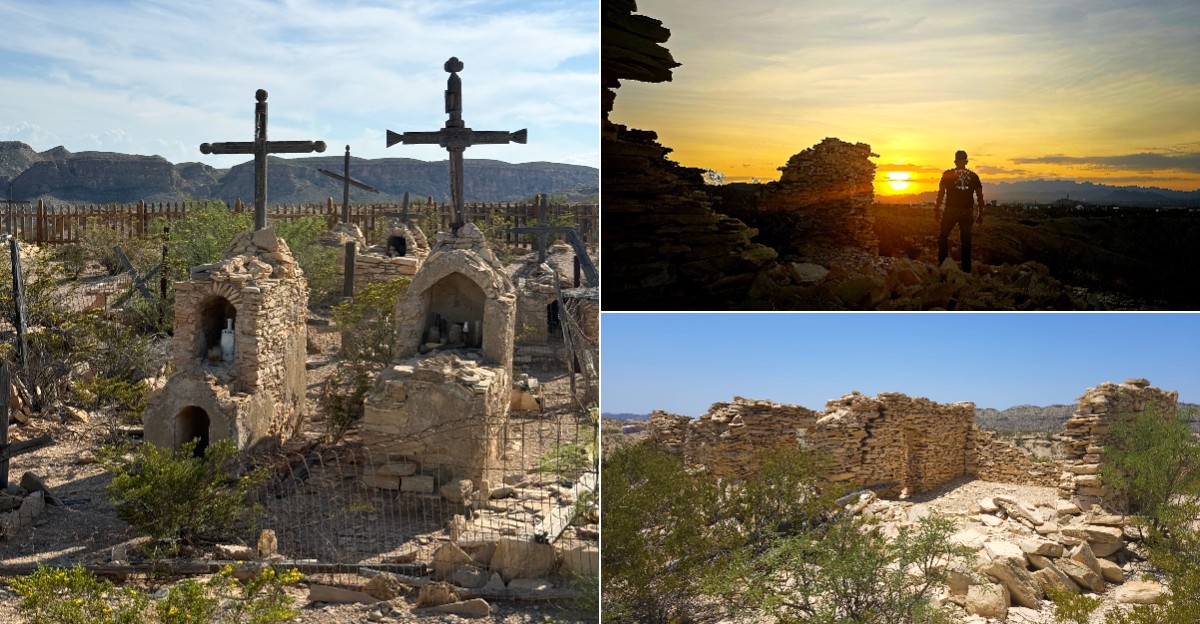
Crumbling stone walls, rusted relics, and endless desert views give this corner of West Texas an eerie, unforgettable beauty.
The Terlingua Ghost Town sits in far southwest Texas, in Brewster County, just outside Big Bend National Park and not far from the Rio Grande.
In the early 1900s, it was a busy mining town known for producing quicksilver, also called mercury.
When the mines closed, the town emptied out, leaving behind adobe ruins and a hauntingly beautiful old cemetery.
Sunsets over the Chisos Mountains are a favorite moment for visitors gathered on the old porch.
Bring water, sun protection, and a sense of adventure for a stop that feels like stepping into a forgotten chapter of Texas history.
A Desert Hideaway, Not a Riverbank Town
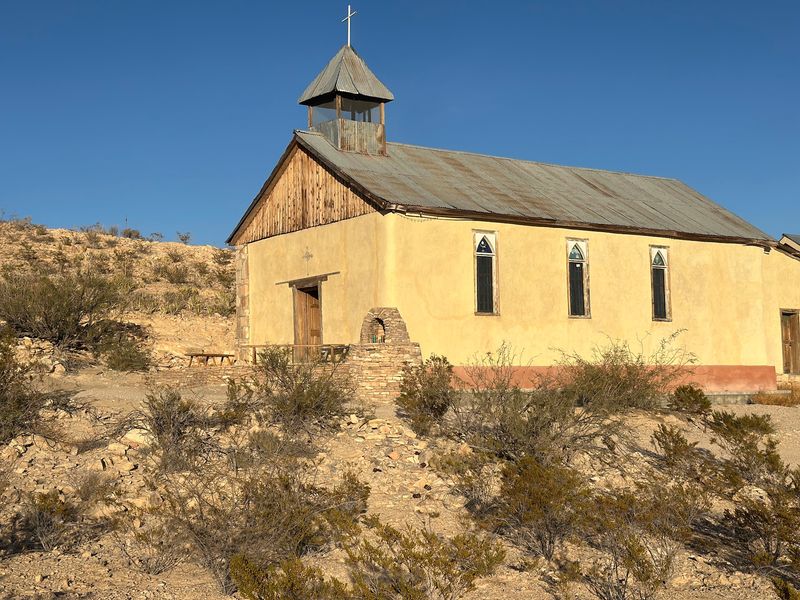
Dusty hills and scattered stone walls create the first impression, rather than flowing water or a leafy riverbank. Terlingua Ghost Town, Texas 79852, USA, stands inland from the Rio Grande in the Big Bend region. Understanding that difference helps visitors arrive with realistic expectations and plan their time wisely.
The historic settlement grew around mining, not a riverside landing or waterfront trading post. Its setting is open, rocky desert, with mountain views and buildings spread across uneven ground. You will want comfortable walking shoes, drinking water, and protection from the sun even for a short visit.
Start by getting your bearings near the main visitor businesses before wandering toward historic features. Roads, occupied properties, and fragile ruins share the same landscape, so follow posted directions and respect boundaries. A map downloaded before arrival can help when mobile service becomes unreliable.
Allow enough time to explore without rushing between photo stops. Morning and late afternoon often offer more comfortable temperatures, although conditions change with the season. Check the forecast before leaving your lodging.
The reward is not a hidden stretch of riverfront. It is a chance to see how a remote desert community formed, faded, and found a different way to survive over the following decades.
Mercury Mining Built the Original Community
A valuable red mineral once made these dry hills a place of hard work and big hopes. Miners extracted cinnabar, the ore used to produce mercury, which was also called quicksilver. Demand for that metal helped turn a remote settlement into a busy mining community.
Large mining operations expanded around the turn of the twentieth century. The Chisos Mining Company, associated with businessman Howard Perry, became central to the town’s growth. Workers and their families needed homes, supplies, education, and places to gather.
Mining life was demanding, and mercury brought serious health risks. The surviving landscape should not be treated as an adventure playground, especially around old industrial remains. Never enter mine openings, touch unknown materials, or step beyond warning signs.
As the mining economy declined during the 1940s, many residents left in search of work elsewhere. Buildings emptied, roofs failed, and the desert slowly became more visible between the walls. That change explains the ghost town label better than any tale about wandering spirits.
Look for historical displays and interpretive information during your visit. Knowing what people mined, and why they stayed, gives ordinary foundations much more meaning. Behind every broken wall was a household connected to an industry that could be both profitable and dangerous.
Stone Ruins Turn a Walk Into a History Lesson
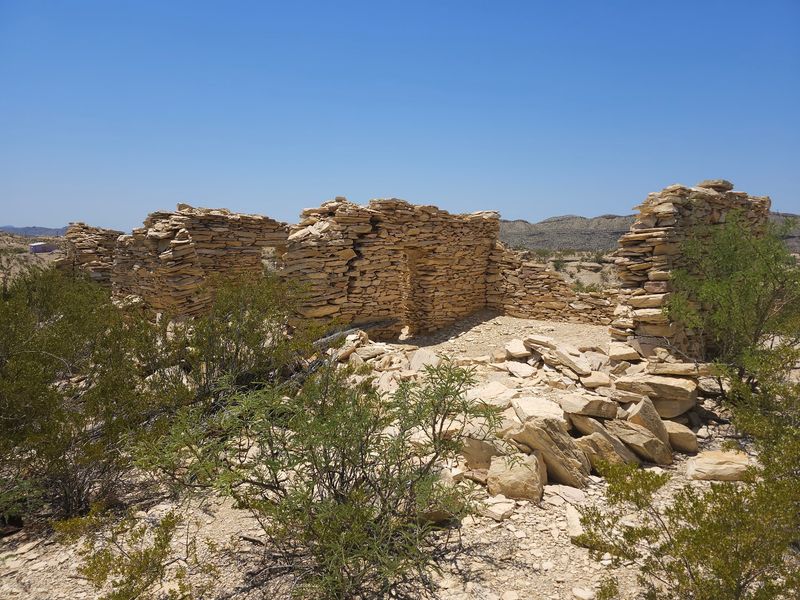
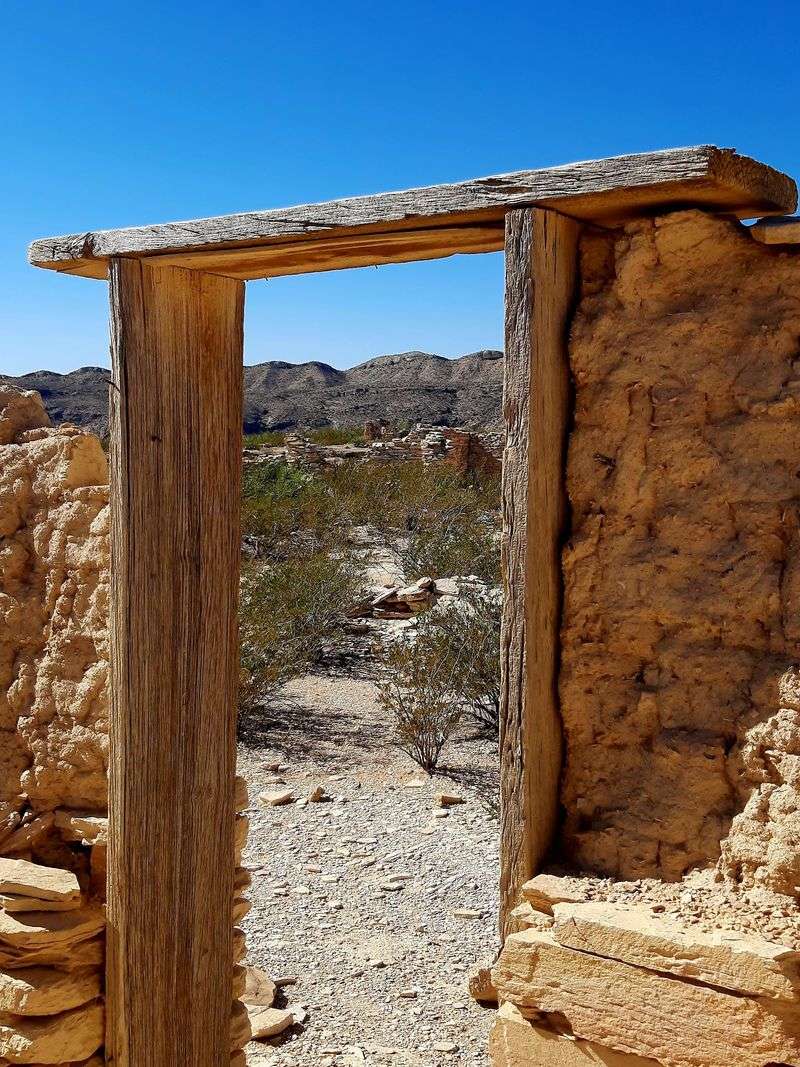
An empty doorway can tell a surprisingly full story when you stop long enough to study it. Across the historic settlement, roofless rooms and rough stone walls reveal pieces of everyday life. They make the past feel close without needing a polished museum setting.
Notice how local materials shaped the buildings. Stone offered a practical resource in a place where transporting supplies could be difficult and costly. Small rooms and simple layouts also reflect the needs of a working mining community.
Walk carefully because the ground may include loose rocks, sharp debris, and sudden changes in height. A wall that looks solid in a photograph may actually be unstable. Stay outside structures when access is unclear, and never climb masonry for a better view.
Photographers can find strong compositions from established walking areas. Doorways, broken rooflines, and mountain backgrounds create layers without requiring anyone to disturb the site. Early or late light often makes the texture of the stone easier to see.
Leave every object where you find it, including small scraps that seem unimportant. Removing souvenirs takes pieces away from a shared historical record. The best keepsake is a photograph paired with a better understanding of how families once made homes in this demanding desert environment.
The Cemetery Deserves a Quiet Pause
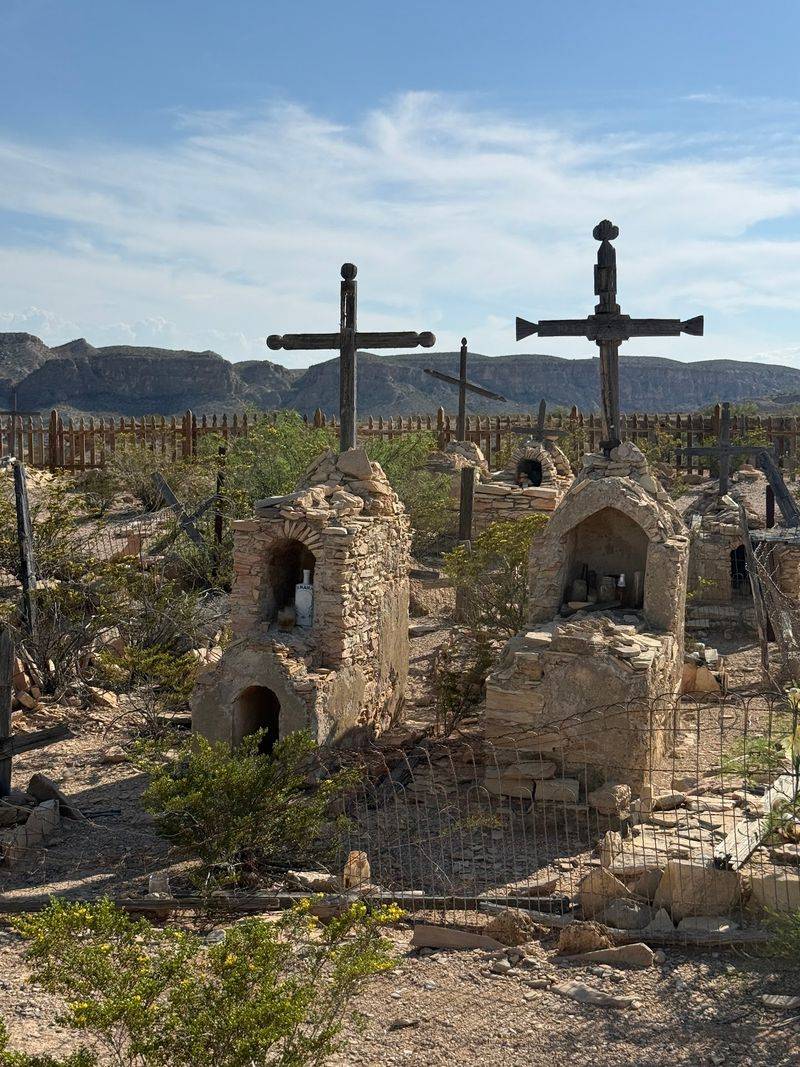
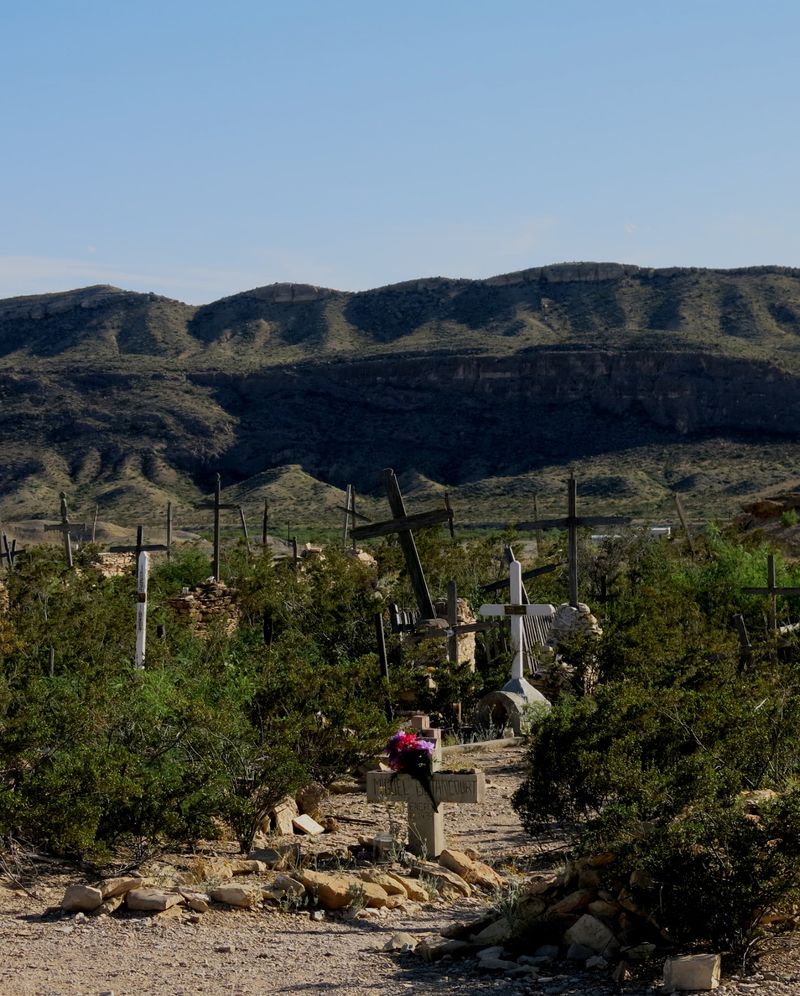
Simple crosses stand against the desert sky, turning a sightseeing stop into something much more personal. The historic cemetery preserves the memory of people who lived through the settlement’s mining years. Its modest markers remind visitors that a ghost town was once a home.
Some graves reflect the hardships of illness, dangerous work, and life far from reliable medical care. The influenza pandemic of 1918 is part of the cemetery’s history. Not every marker provides a complete story, so avoid guessing about individual lives.
Move slowly and keep your voice low. Stay on clear routes, avoid stepping across burial plots, and leave crosses, stones, flowers, and other offerings untouched. Children may need a simple reminder that this is a place of remembrance.
Photography should be thoughtful rather than theatrical. A wide view can show the setting without turning a personal memorial into a prop. If mourners or community members are present, give them room and ask before photographing people.
Seasonal remembrance traditions may bring decorations and visitors, but arrangements can change. Check local information instead of assuming an event will occur during your trip. Even on an ordinary day, a brief, respectful visit adds a human dimension that ruins alone cannot fully provide to the wider mining story.
An Old Theater Still Brings People Together
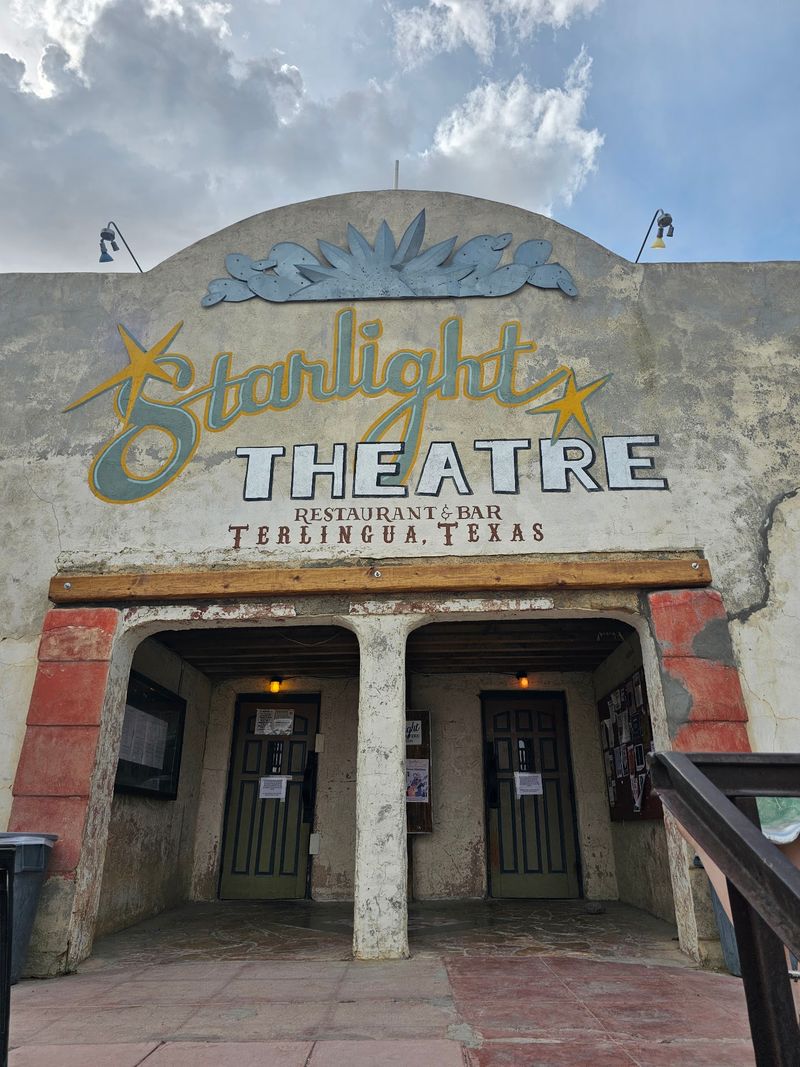
Not every old building here has been left to the wind. The Starlight Theatre gives visitors a lively contrast to the nearby ruins, operating as a restaurant and entertainment venue. Its continued use shows how a historic place can gain a new purpose.
The building began as a theater serving the mining community. Today, people come for a meal, conversation, and music when performances are scheduled. That mix makes it a useful stop after walking through the quieter historic areas.
Check current opening hours before making dinner plans. Busy evenings can bring a wait, and entertainment schedules may change with the season or the day. Build some flexibility into your visit rather than counting on immediate seating.
You do not need to treat the evening like a formal history lesson. Simply noticing the building, its setting, and the people using it helps connect the old settlement with the present. The story becomes less about abandonment and more about adaptation.
Be considerate when taking pictures around the entrance or dining areas. Staff are working, diners deserve space, and access routes should remain clear. Supporting an established local business can be a practical way to enjoy the atmosphere while contributing to the community that cares for this unusual historic setting today.
The Trading Company Porch Keeps the Town Social
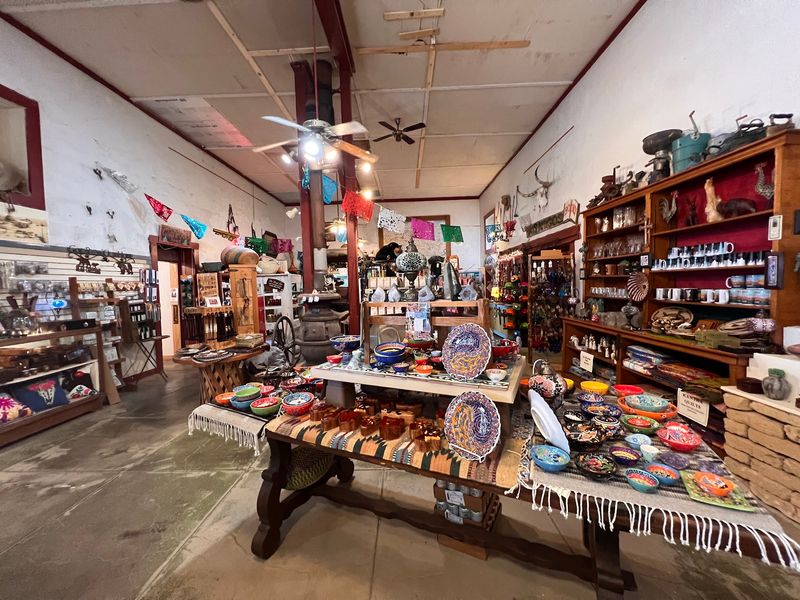
A porch can sometimes explain a community better than a guidebook. Around the Trading Company, visitors often find a social gathering spot rather than another silent relic. Conversation and casual people watching offer a different view of the settlement.
The store occupies a historic commercial building connected to the mining town’s past. Its present role blends practical visitor needs with the appeal of an old desert storefront. Check current hours if shopping is an essential part of your plans.
Slow down, but remember that a welcoming atmosphere does not make everyone part of a tourist attraction. Ask before photographing people, avoid interrupting private conversations, and keep walkways open. A friendly greeting is usually a better starting point than a camera.
Browse with curiosity instead of expecting every item to be a historical artifact. Modern shops serve modern customers, even when the building has a long story. That contrast is part of what makes the place interesting.
If seating is available, a short break can help you appreciate the rhythm of the town. Carry water, take your trash with you, and follow any posted rules about the shared space. The porch experience is less about checking off an attraction and more about recognizing that this ghost town still has neighbors.
Sunset Changes the Whole Scene
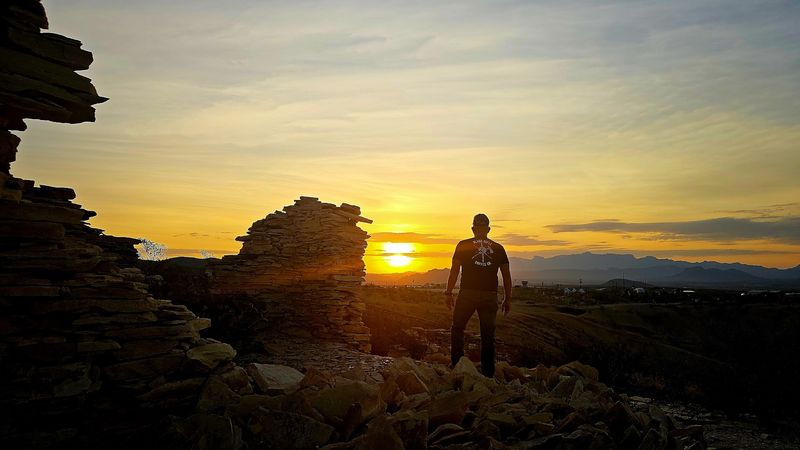
Wait until the sun lowers, and the plainest wall may become the most beautiful thing in view. Warm light brings out the stone’s rough edges while distant hills settle into softer colors. Even a short evening walk can feel very different from a midday visit.
Choose a safe, permitted viewpoint before the light begins to fade. There is no need to climb ruins, cross fences, or wander onto private land for a memorable photograph. A simple foreground of stone or desert plants can give the scene depth.
Bring a small flashlight for your return walk. Uneven ground becomes harder to judge after sunset, and phone batteries may already be low from navigation and pictures. A light jacket can also help when evening temperatures drop.
On clear nights, the surrounding desert can offer impressive views of the stars. Local lights, clouds, moonlight, and nearby activity all affect what you can actually see. Keep expectations flexible rather than assuming every night will deliver a perfect sky.
Respect businesses and residences when looking for a darker spot. Avoid shining bright lights toward people, windows, or other viewers. The nicest ending to an evening is often uncomplicated: a safe place to stand, a changing sky, and enough time to enjoy the silence around you.
A Little Planning Makes the Visit Better
The desert does not care whether your visit lasts twenty minutes or an entire afternoon. Heat, strong sunlight, and rough walking surfaces can turn a casual stop into an uncomfortable outing. A few simple preparations help keep the focus on the history.
Pack more drinking water than you expect to need. Wear a hat, use sunscreen, and choose shoes with dependable grip rather than thin sandals. During hot weather, arrange outdoor exploring for cooler hours and take regular breaks.
Download directions and useful information before setting out. Mobile coverage can be unreliable, and opening hours are not always the same throughout the year. Confirm meals, shopping, and lodging directly with the businesses you plan to use.
Accessibility varies across the historic area because paths and surfaces are uneven. Travelers with mobility needs should ask individual businesses about parking, entrances, restrooms, and the easiest available routes. Do not assume that every ruin or cemetery path is suitable for wheels.
Keep pets controlled, supervise children, and leave historic objects untouched. Remember that occupied homes and working businesses stand beside abandoned structures. A successful visit balances curiosity with care, giving you time to appreciate the past while respecting the people who continue to make a life in this remarkable desert community today.