A shipwreck story can begin surprisingly far from the waves, tucked inside an ornate building in the heart of Lewes. At 102 Kings Hwy, the Zwaanendael Museum explores Delaware’s coastal history through recovered objects, local stories, and exhibits that bring the region’s connection to the water into sharper focus.
While its shipwreck displays may catch your attention, this free local history museum offers much more than wrecks alone.
Inside, maritime artifacts and historical objects provide glimpses into the people, vessels, and events that shaped this coastal community. The museum’s distinctive architecture adds another layer to the visit, giving the small downtown stop a character all its own.
It’s the kind of place where a seemingly simple display can prompt questions about what happened offshore and what eventually washed ashore. Take your time looking around, and more pieces of Lewes’ past begin to emerge, including a few unexpected details you may not have anticipated.
Shipwreck Stories Without Getting Your Feet Wet
The ocean can hide a story for centuries, then return it one small object at a time. That sense of discovery gives the shipwreck displays at Zwaanendael Museum their appeal, even if you have never read a book about sailing.
Rather than treating a wreck as just a dramatic ending, the museum helps visitors consider the people, work, and trade connected to coastal waters. Recovered objects turn a distant event into something easier to understand, especially when you study their shapes and everyday uses.
Take your time with the exhibit labels before moving to the next case. A plain object may reveal more than the largest piece nearby, and asking a staff member about its purpose can open a much richer story about life aboard a vessel.
Keep expectations grounded: this is a compact local history museum, not a warehouse filled with entire ships. Its strength is the close view it offers, giving you room to notice details and connect a wreck beneath the water with the town standing above it today, all without needing a boat trip.
A Chance Discovery at Roosevelt Inlet
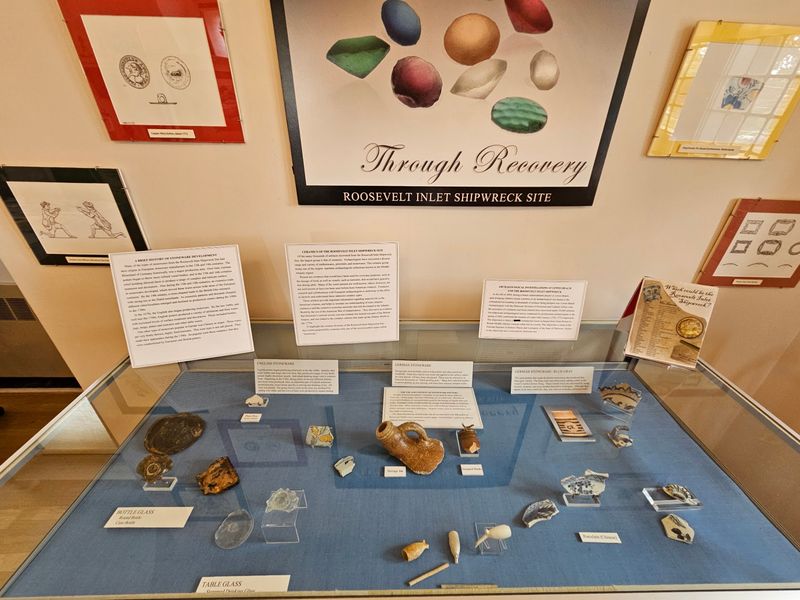
Sometimes the past turns up when nobody is looking for it. The Roosevelt Inlet shipwreck, discovered during dredging near Lewes, adds that unexpected twist to the maritime stories associated with Zwaanendael Museum, making ordinary harbor work sound a little more remarkable.
Visitors have reported an exhibit about this wreck upstairs, although display arrangements can change. Its appeal lies in the link between buried evidence and modern discovery: objects that once traveled by water become clues for people trying to understand an earlier world.
Look for explanations of how researchers study recovered material rather than judging objects only by their appearance. Shape, material, and context can help answer questions about age or use, but an attractive fragment does not automatically tell a complete story on its own.
Before climbing the stairs, ask whether the Roosevelt Inlet material is currently on view. Some past visitors also described supervised opportunities to handle selected objects, but those should never be assumed available.
Even without a hands-on activity, the discovery story offers a memorable reason to slow down and read carefully instead of rushing onward.
The Human Side of a Lost British Warship
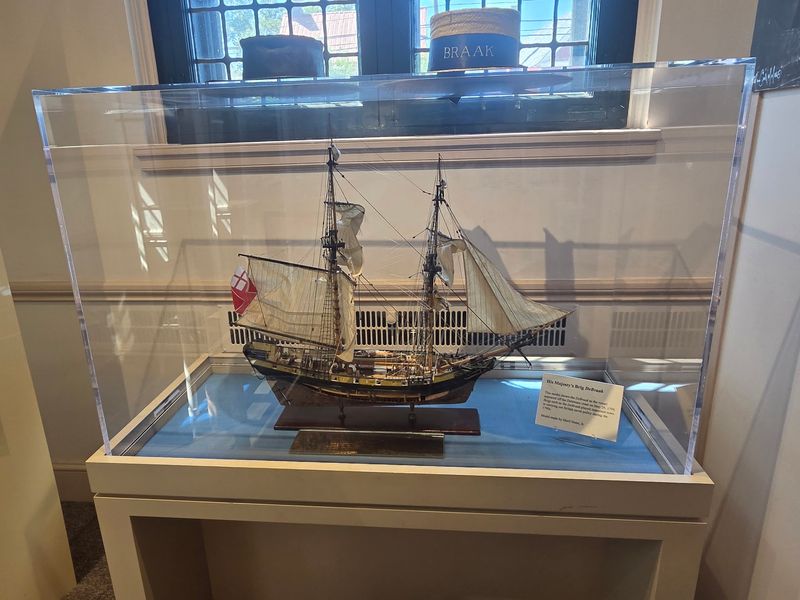
A warship carried more than weapons and cargo. Every voyage also held routines, skills, worries, and people whose names can disappear behind the larger story of a sinking, which makes the human side of maritime history especially worth your attention.
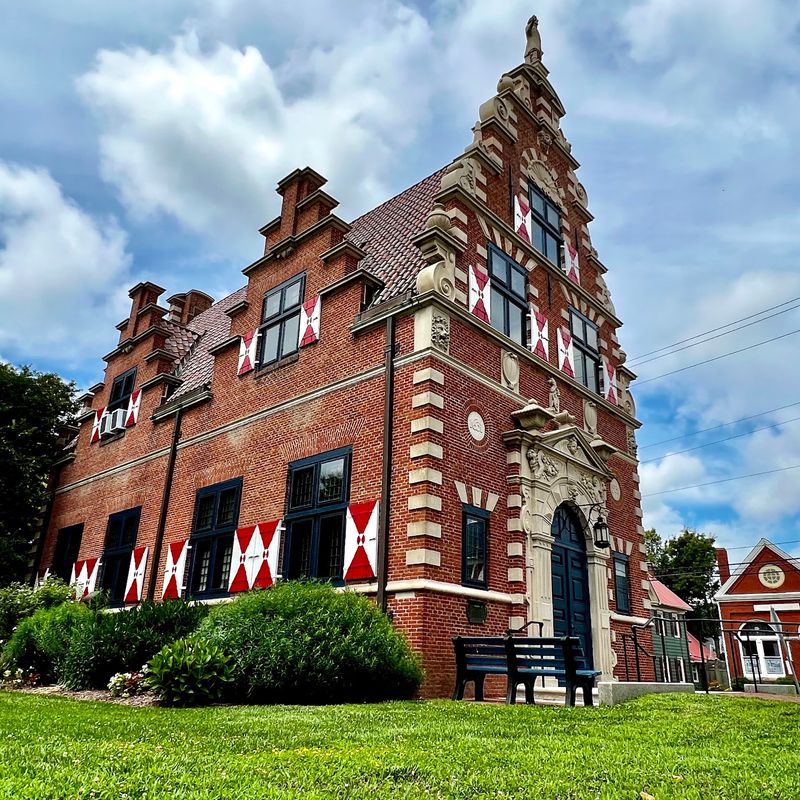
At Zwaanendael Museum, shipwreck interpretation has included the British warship DeBraak, which sank near Lewes in 1798. That connection places the town within a wider world of naval travel and reminds visitors that coastal history reaches far beyond a single shoreline.
As you explore, consider what an object might reveal about daily life aboard ship. Eating, working, sleeping, and keeping equipment usable were practical concerns, not background details, and museum interpretation can help make those routines easier to picture without turning guesses into facts.
Ask staff which DeBraak stories and objects are part of the current display, since exhibits may change. You will not find the full wreck sitting inside this small building.
Instead, the reward is a clearer sense of the people behind a famous loss and the careful work needed to understand their lives from surviving evidence today.
Dutch Architecture That Stops You on the Sidewalk
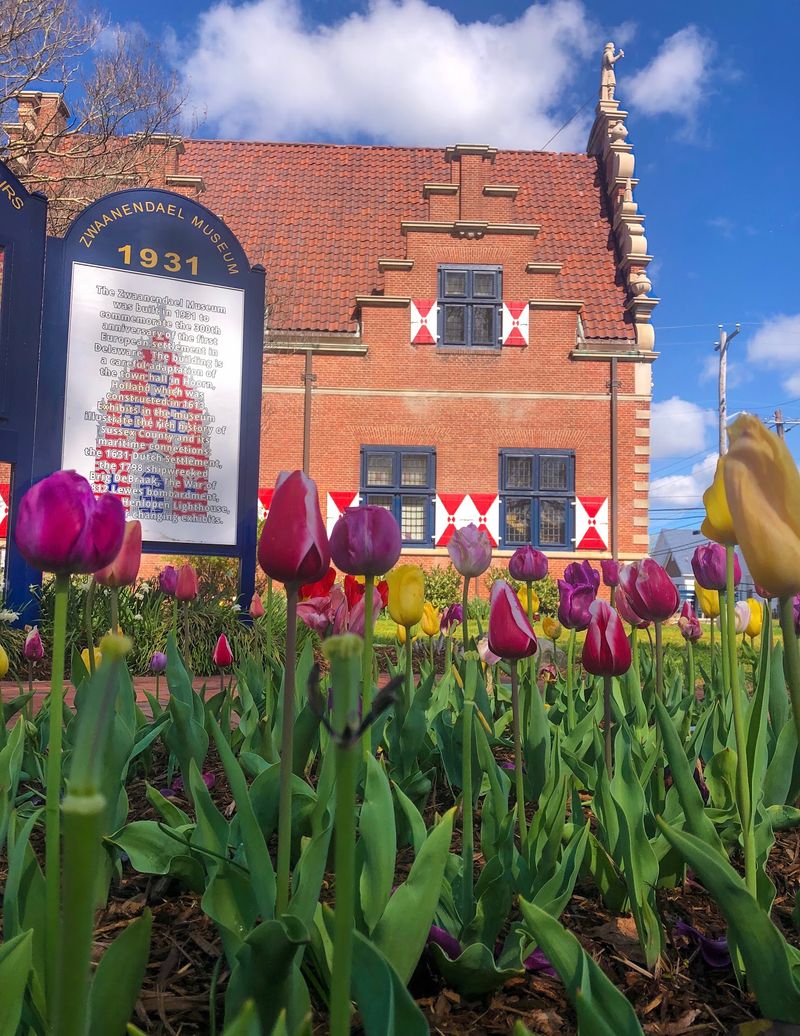
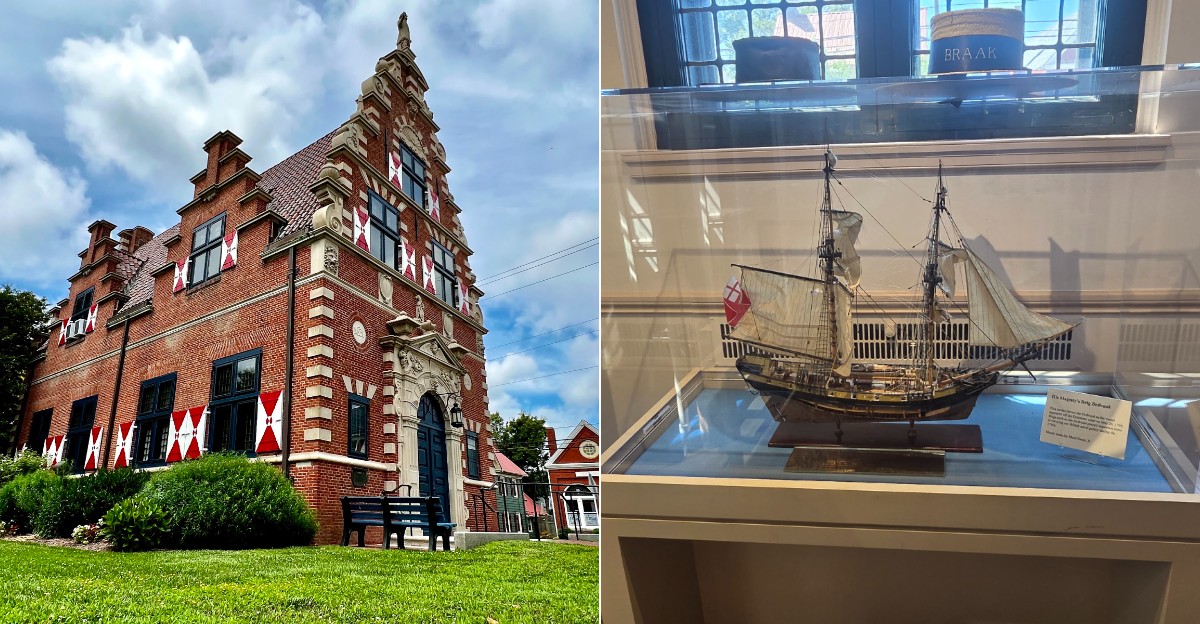
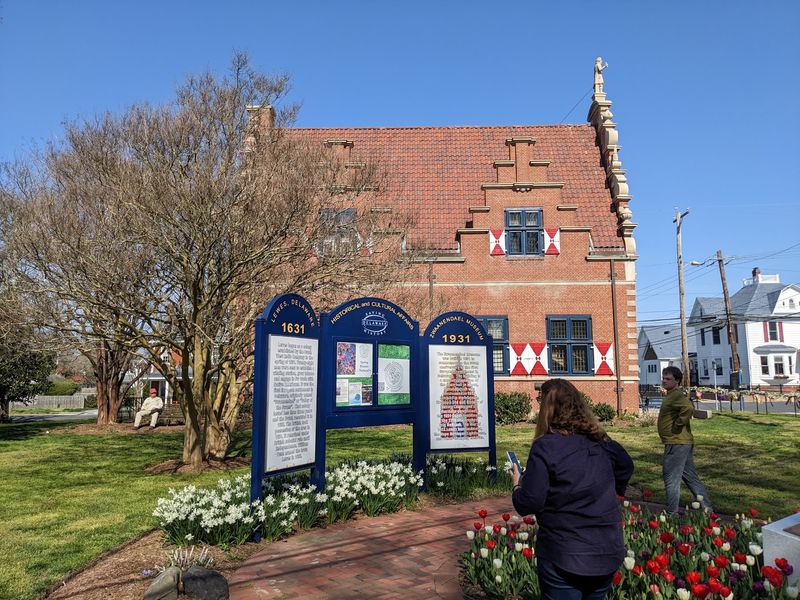
Before a single display case comes into view, the roofline asks you to look up. The stepped gable and decorative details of Zwaanendael Museum feel different from the surrounding streetscape, giving this small building a presence much larger than its size.
Opened in 1931, the museum commemorates the three hundredth anniversary of the Dutch settlement established here in 1631. Its design was inspired by the town hall in Hoorn, in the Netherlands, making the exterior part of the historical experience rather than simple decoration.
Pause across the sidewalk where you can safely take in the whole front. Notice how the upper outline draws your eye upward, then move closer to study the entrance and brickwork without blocking other visitors or stepping into the street for a photograph.
The address is 102 Kings Hwy, Lewes, DE 19958, but the building offers a stronger visual landmark than a street number alone. Photographing the outside before going in creates a useful connection: once the settlement story becomes clearer inside, those Dutch design choices carry more meaning when you step back into daylight after your visit ends.
Delaware’s Early Settlement Story Gets a Local Face
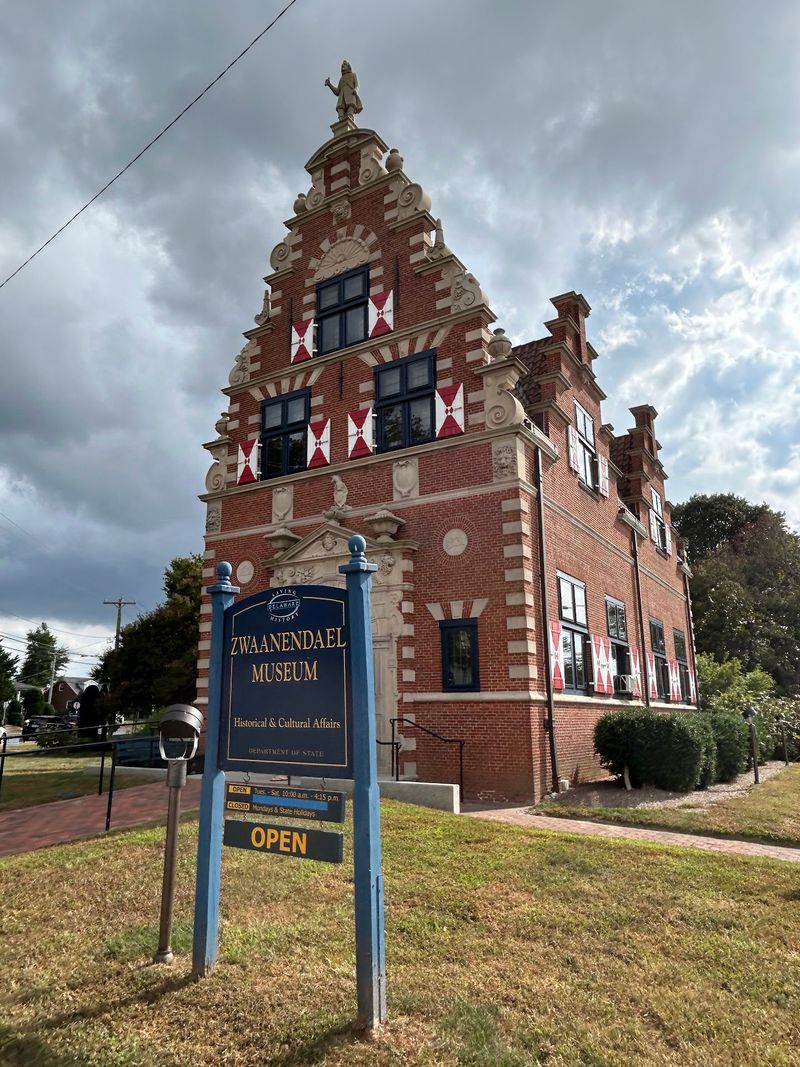
A date in a textbook feels different when you stand where the story unfolded. Lewes gives the museum’s early settlement history a physical setting, with the Dutch-inspired building serving as a reminder that Delaware’s beginnings were closely tied to this coast.
Zwaanendael Museum commemorates the Dutch settlement founded in 1631, but a thoughtful visit involves more than celebrating an arrival. The region already had Indigenous communities, and early colonial history includes conflict and loss as well as plans for trade and new settlement.
Read the available interpretation with those overlapping experiences in mind. Instead of trying to memorize every date, follow a few basic questions: who lived here, why newcomers came, and how their choices affected others.
Those questions make a complicated past easier to approach honestly.
If a name or event is unfamiliar, ask the staff for a simple explanation or a suggested starting point. The museum’s small scale can make these conversations feel less intimidating than they might in a large institution.
You leave with context for the building, but also with a fuller understanding of the place surrounding it today.
The Merman Adds a Wonderfully Strange Detour
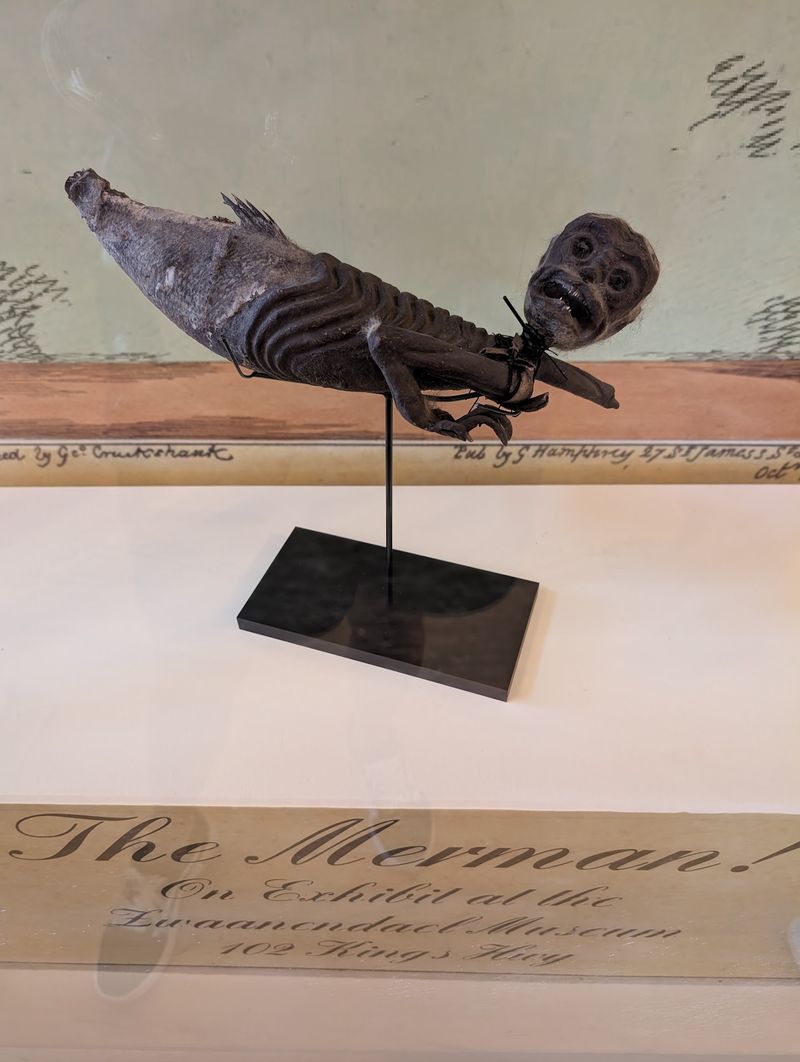
Not every museum memory involves a date, a battle, or a ship. Sometimes it is the strange little object you keep talking about afterward, and the merman associated with Zwaanendael Museum has exactly that kind of unexpected hold on visitors.
Past guests repeatedly mention seeing this unusual curiosity upstairs. Treat it as a historical oddity, not proof of a real sea creature, and give the surrounding explanation as much attention as the object itself.
The story behind a curiosity can outshine its appearance.
For families, it offers an easy opening for a conversation about evidence. What makes something believable, and how do we know what we are seeing?
Keeping that discussion playful lets children practice looking closely without taking away the fun of a genuinely strange museum encounter.
Check with staff before heading up, since access and displays can change. Visitors have reported that the upper floor is reached by stairs rather than an elevator.
If climbing is difficult, ask whether a photograph or explanation is available downstairs, so the museum’s quirkiest attraction does not become a mystery you cannot share in during your visit.
Small Objects Reward a Slower Look
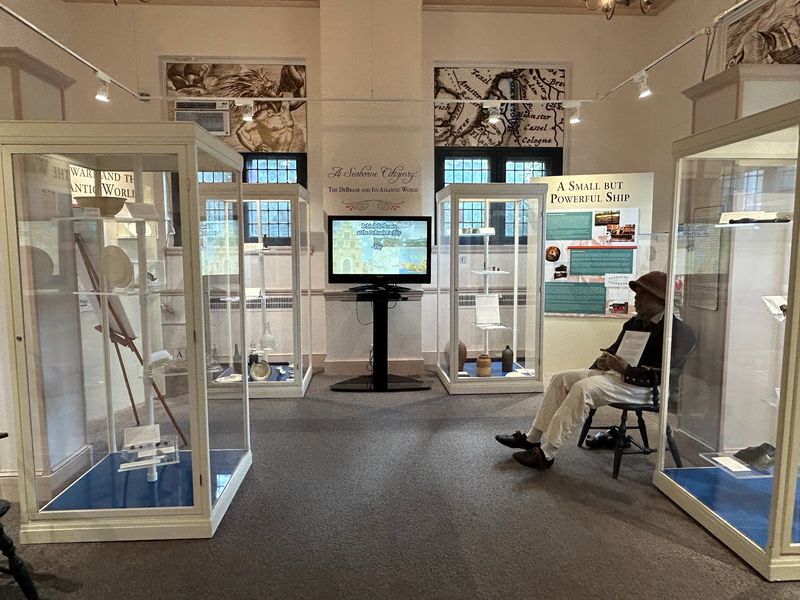
A worn edge can be more interesting than a polished surface. Small signs of use remind you that museum objects once belonged to real routines, long before anyone placed them behind glass or wrote a label explaining why they matter.
That is a rewarding way to explore Zwaanendael Museum, where visitors often praise the artifacts as much as the shipwreck information. Its collections and exhibits address local maritime, military, and social history, so not every object belongs to the same story.
Choose one case and spend a few minutes with it instead of scanning everything at once. Read the label, examine the material, and think about how the object would have been held or used.
Avoid touching anything unless staff clearly invite you to do so.
Display changes mean a particular artifact mentioned in an older review may not be present when you arrive. Let that uncertainty encourage discovery rather than disappointment.
A modest object can become the highlight of your visit when you understand its purpose, and the compact galleries leave enough room in your schedule for that kind of patient attention to details.
A Staff Conversation Can Change the Whole Visit
The best detail may come from a conversation rather than a case. A quick question can turn a confusing label into a clear story, especially in a museum where several centuries of local history share a relatively small amount of space.
Visitors to Zwaanendael Museum often describe the staff as welcoming and knowledgeable. Reviews mention helpful explanations and discussions of Delaware history, suggesting that a little curiosity can add depth to what might otherwise be a very short walk through the galleries.
Start with something specific that caught your attention: a shipwreck object, the Dutch building design, or an unfamiliar local name. Asking how researchers know a detail is another useful approach, because it invites an explanation of evidence instead of just a list of facts.
Allow other visitors room to ask questions, and remember that staff availability depends on the day. There is no need to arrive with expert knowledge or prepare a long list.
One thoughtful exchange can give the museum a more personal feel and help you connect its displays to the wider history of Lewes without feeling rushed or overwhelmed.
A Free Stop With a Quiet Garden Finish
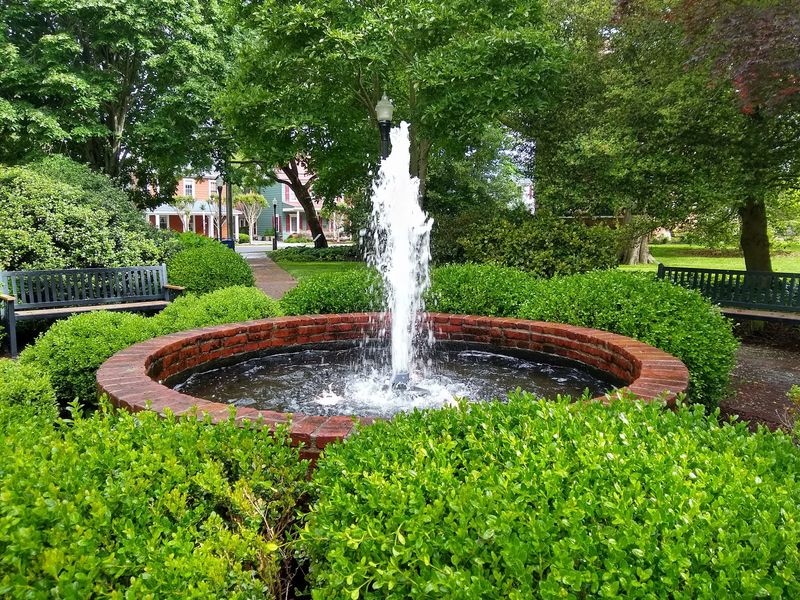
A little breathing room makes a history stop feel like part of a vacation. After reading about ships and settlement, stepping outside gives your eyes a break and lets the museum’s stories settle without immediately moving to another display or activity.
Visitors describe a cared-for garden and fountain behind Zwaanendael Museum, along with restrooms in the park behind it. Conditions and facilities can change, but the outdoor setting offers another reason to leave a few extra minutes around your visit rather than rushing away.
Admission is free, and donations are welcomed, making the museum an approachable stop for travelers watching their budget. The supplied schedule lists Wednesday through Saturday, 10 AM to 4:15 PM, with closures Sunday through Tuesday.
Confirm current hours through the official website before traveling.
For questions about access, exhibits, or temporary closures, call 302-645-1148. Older reviews mention nearby street parking, but posted limits should guide your plans when you arrive.
Leave time to admire the building once more before departing; its Dutch outline and the quiet grounds make a fitting finish to a visit built around stories recovered from the past.