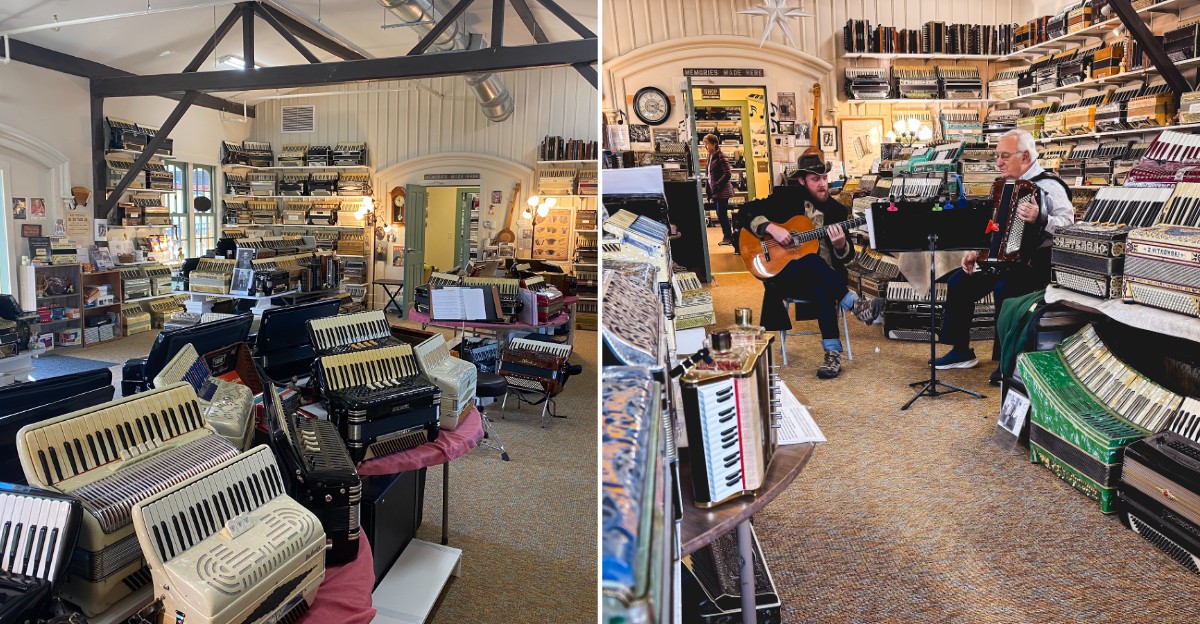
One accordion can fill a room with sound, but imagine walking into a museum filled with hundreds of them. In Canaan, Connecticut, the New England Accordion Connection and Museum Company offers an unusual look at the instruments, performers, and stories that helped shape accordion culture across generations.
Located at 75 Main St, this small Connecticut museum feels personal in a way that large collections often cannot. Rows of accordions invite a closer look, while the stories behind the instruments add human details to what could otherwise be a simple display of old objects.
Even visitors who know little about accordions can find something intriguing in the buttons, bellows, polished cases, and distinctive designs. Music lovers may come for the history, while curious travelers may simply wonder what could possibly fill a museum devoted to one instrument.
Inside, there are plenty of unexpected details waiting to be discovered, one accordion at a time.
A Surprise Behind the Door
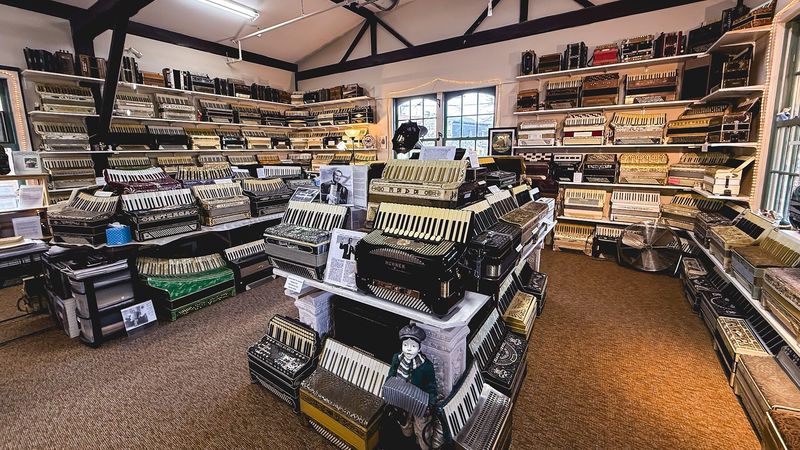
Some of the best travel stops begin with a doubtful glance at a sign. An accordion museum might sound like a quick peek, yet the sight inside can stop you in your tracks.
Rows of instruments fill the room, each one different enough to make you look twice.
The surprise waits at the New England Accordion Connection and Museum Company, at 75 Main St in Canaan, Connecticut. Its small setting makes the collection feel close rather than distant.
You can study a row of buttons, follow the folds of a bellows, and notice how much care went into a single instrument.
Give yourself more time than a hurried stop between errands. Visitors often praise the stories shared by founder Paul Ramunni, which can turn an unfamiliar object into something personal.
If he is available, ask what first drew him to a particular accordion.
You do not need to know a song or recognize a famous maker to enjoy the visit. Curiosity is enough.
By the time you leave, the word accordion may bring to mind people and memories, not just its familiar sound.
Music Inside an Old Station
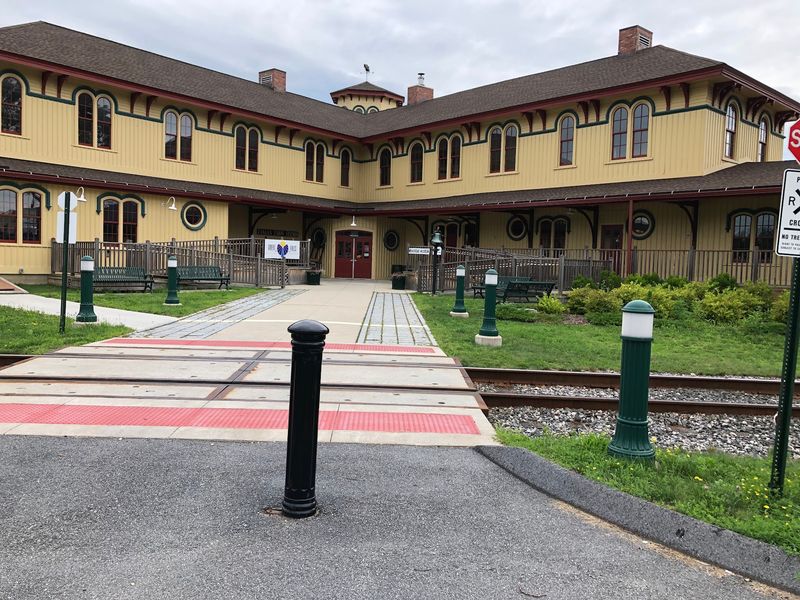
A railroad station seems made for stories about people coming and going. That feeling follows you into this museum, where instruments once carried to lessons, dances, and family parties now have a new place to rest.
The building adds a quiet sense of travel before you hear a note.
The New England Accordion Connection and Museum Company occupies space in the restored Canaan Union Railroad Station in downtown Canaan. The station has roots in the nineteenth century and was rebuilt after a 2001 fire.
Its past makes a fitting backdrop for a collection shaped by the lives of many owners.
Pause outside before going in and take a look at the station itself. Then compare that historic setting with the shiny keys and patterned fronts inside.
It is an easy way to see how both a building and an instrument can survive change.
For a relaxed visit, check the museum’s current hours before setting out. Once there, let the station slow your pace.
The contrast between an old travel hub and a room full of music gives this little stop much of its charm.
The Collector Who Came Back to Music
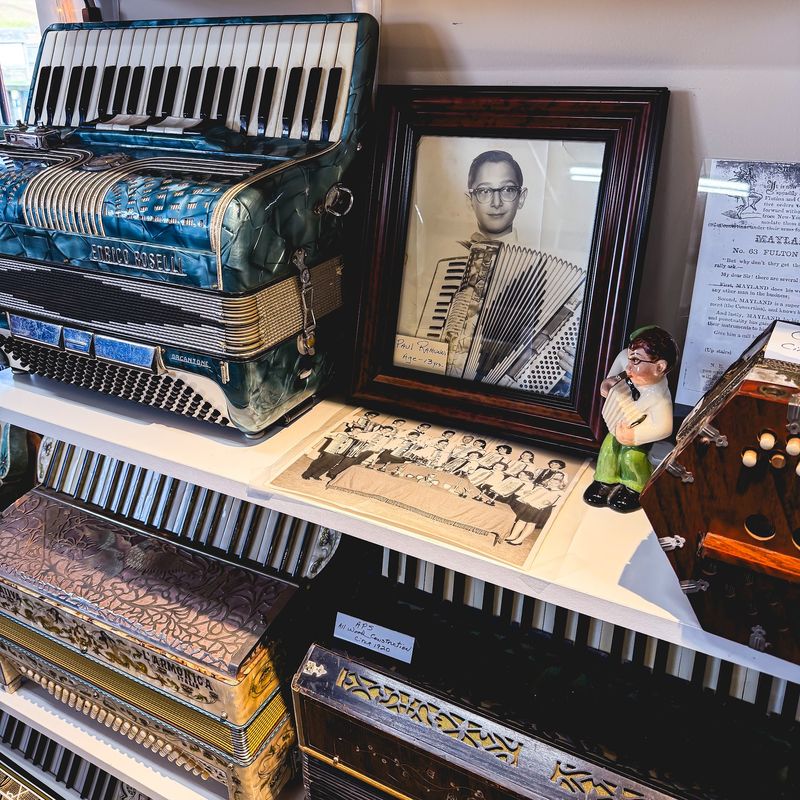
Childhood music lessons do not always lead where a parent expects. Paul Ramunni has described resisting the accordion when he was young, then playing through his teenage years before putting it aside.
Decades later, the instrument called him back, and the result became much bigger than a return to practice.
Ramunni founded the New England Accordion Connection and Museum Company in Canaan after renewing his interest in playing in 2008. His collection grew into a place where visitors can meet the instrument through someone who cares about its sound and its past.
That personal touch helps explain why guests often remember their conversations as clearly as the displays.
If you get a chance to speak with him, ask how an accordion joins the collection. An answer may lead to its former owner, a family connection, or a detail you would never spot on your own.
Listen for the way a small fact can open a much larger story.
The visit offers a welcome thought for anyone who once gave up a hobby. Interests can return at any age.
Here, one renewed passion has made room for hundreds of other people’s memories.
Every Accordion Has a Former Life
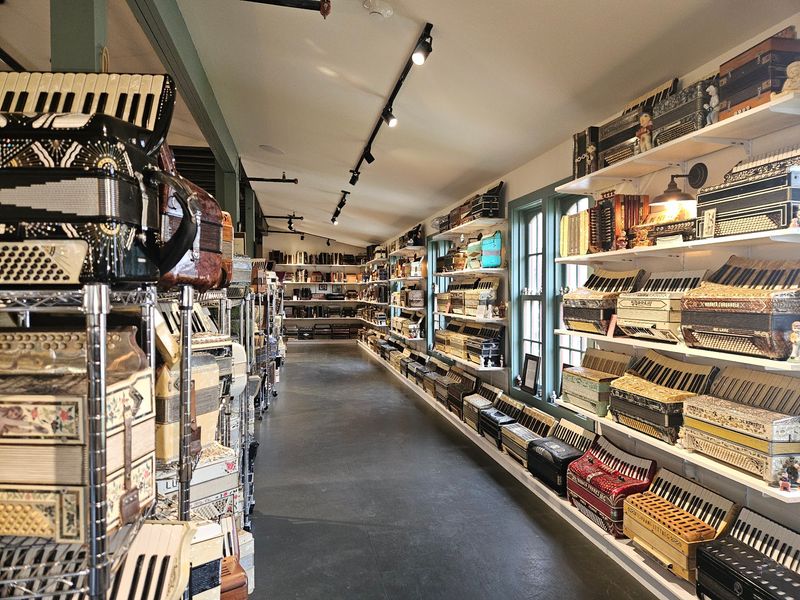
A worn key can raise a better question than a perfect one: whose hand touched it last? At this museum, the answer matters as much as the maker or date.
An accordion may have passed through a family, crossed a border, or played at gatherings that nobody thought to photograph.
Inside the New England Accordion Connection and Museum Company, Ramunni puts special care into sharing the human stories attached to the instruments. The collection includes pieces from different eras and places, but it does not ask you to memorize a timeline.
Instead, you can follow one object’s path and imagine the people who kept it close.
Choose an accordion that catches your eye and ask what is known about its past. Some stories may be detailed, while others leave room for questions.
Both can help younger visitors understand that history is made of ordinary lives as well as famous names.
Take your time with the little signs of use, from rubbed edges to faded finishes. They are not flaws to skip over.
They show that these instruments were once part of busy days, special nights, and familiar homes.
Hundreds of Shapes, Colors, and Keys
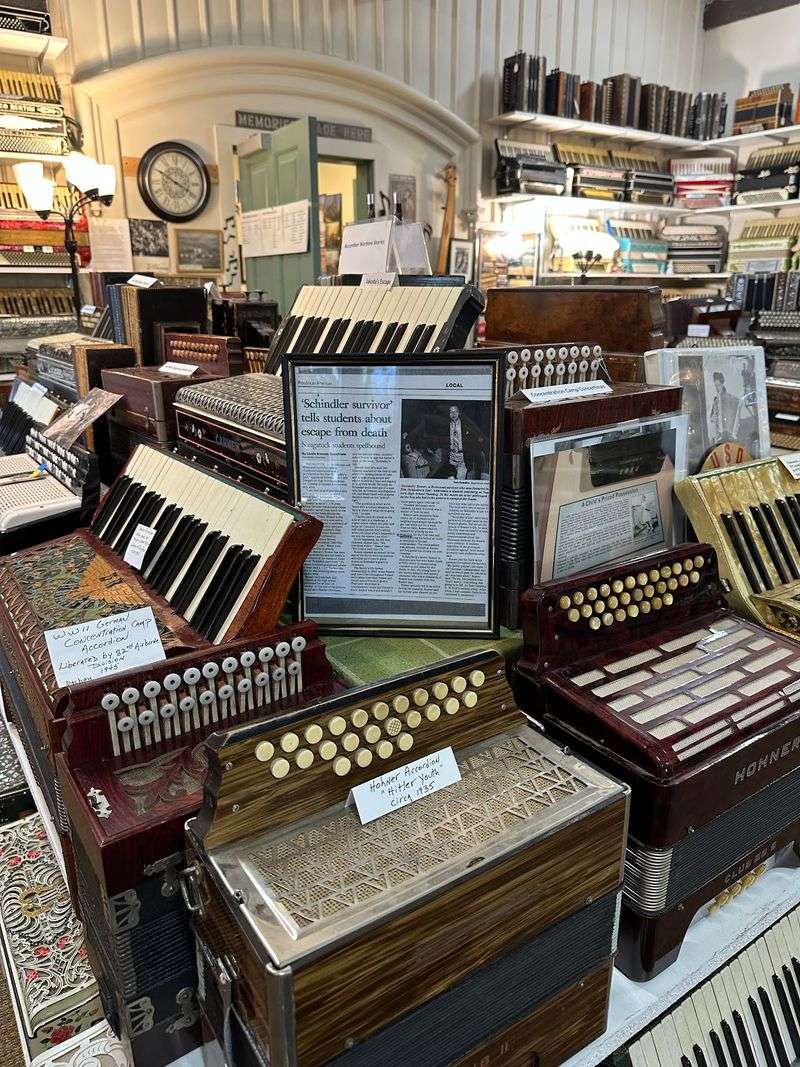
At first, the room can look like a bright wall of patterns. Step closer and it becomes clear that no two accordions ask for quite the same kind of attention.
Some have piano-style keys, others have rows of buttons, and many show off details made to catch the light.
The New England Accordion Connection and Museum Company has more than 500 accordions on display, according to a recent response from its owner. Older pieces sit among instruments from later decades, making changes in size, shape, and decoration easy to spot.
Mother-of-pearl effects and gleaming trim give some of them the look of stage costumes.
Try a simple game as you look around: find the smallest instrument, then the most decorated one. Notice which features seem useful to a player and which seem designed for an audience.
The comparison makes the collection fun even if you cannot read music.
Allow time for a second look before leaving. Your first pass may take in the scale of the display, while the next reveals tiny buttons, unusual colors, and signs of handwork.
That shift from a crowd of instruments to individual pieces is part of the pleasure.
Quiet Stories of Strength
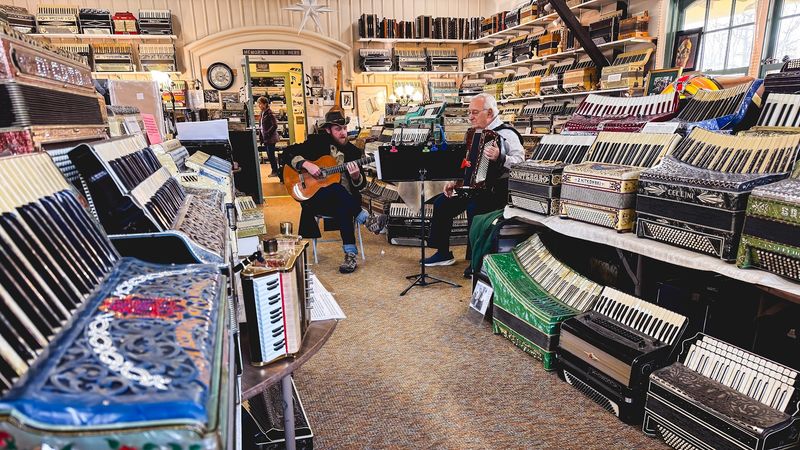
Not every instrument in the room carries a cheerful memory. Some are connected with war, loss, and the difficult choices people made to get through them.
Meeting those stories can change the mood of a visit, and that change deserves time and care.
At the New England Accordion Connection and Museum Company, Ramunni has spoken about accordions with connections to Dachau and to service during World War II. Accounts of these pieces remind visitors that music has existed even in frightening circumstances.
Details tied to any one instrument are best heard with their source and history clearly explained.
If you are visiting with children, pause before a heavy story and give them room to ask questions. You do not need to explain every event at once.
Focus on the people involved and on why preserving their belongings may help others remember them.
A respectful visit can hold both sadness and hope. The museum’s harder histories show that an accordion is more than a source of dance tunes.
In someone’s hands, it may also have offered company, a link to home, or a moment of comfort.
Famous Names, Familiar Feelings
A famous name may draw you toward a display, but a family memory might keep you there. For some visitors, an accordion recalls a grandparent at a party or a tune heard in the kitchen.
Those small connections give the museum an appeal that goes beyond celebrity history.
The collection at the New England Accordion Connection and Museum Company includes an accordion associated with television musician Lawrence Welk. Accounts of the museum also describe an instrument said to have been played for Al Capone.
Such links offer a striking starting point, though the stories behind them are best learned directly from the people caring for the collection.
Bring along a relative who remembers accordion music, if you can. Ask whether any instrument looks like one they knew, then give their answer room to wander.
A pattern on the front or a row of buttons may open a story you have never heard.
Even without a family link, you can enjoy the contrast between public fame and private memories. The well-known names are fun to discover.
The lasting reward may be realizing how many ordinary people made room for this music in their lives.
A Place Where Music Keeps Moving
A museum full of old instruments might seem like a place where music has stopped. Here, the opposite is true.
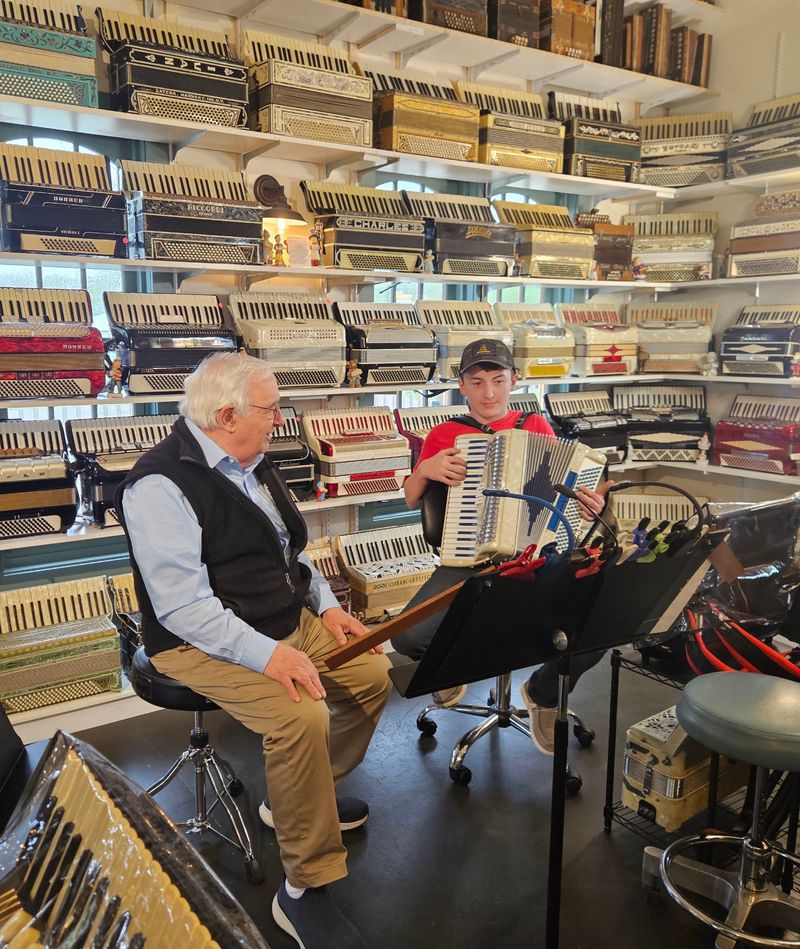
Beyond the displays, people can find ways to learn, care for an accordion, or bring one home to play.
The New England Accordion Connection and Museum Company offers lessons, accordion sales, and repair services in Canaan. That mix makes it more than a room of objects behind a boundary.
It connects a visitor who is simply curious with players who want to keep an instrument working well.
If a family accordion has been sitting unused, ask about repair before trying to force stiff parts or worn keys. If you are considering lessons, talk about your experience and the kind of music you enjoy.
A clear conversation can help you decide whether learning the instrument fits your time and budget.
Visitors interested only in the museum are welcome to enjoy it for that reason alone. Still, hearing that these skills are being passed along adds something special to the displays.
The oldest accordion and the next beginner belong to the same continuing story.
Details You Can See and Hear
Before you know an accordion’s history, you may notice its shine. Light catches the keys and bright trim, then slips into the deep folds of the bellows.
Look a little longer, and older finishes begin to stand out beside newer, polished ones.
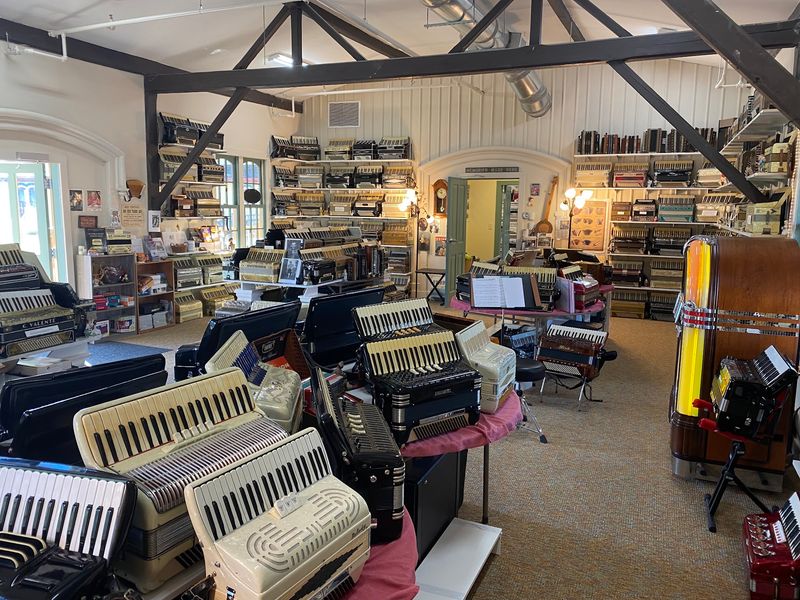
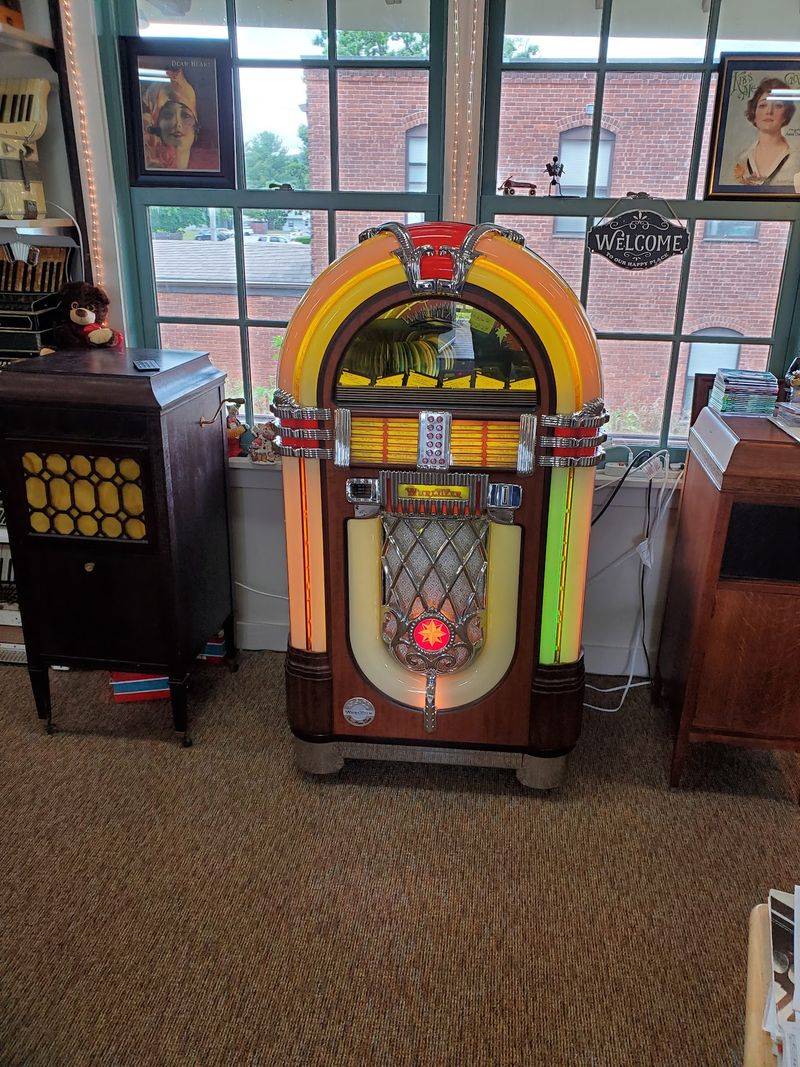
The New England Accordion Connection and Museum Company gives visitors plenty to notice at close range. Accounts of the museum also describe a renovated Wurlitzer jukebox stocked with accordion music.
Whether a tune comes from the jukebox or a player during your visit, hearing the sound beside the instruments can make their designs feel less mysterious.
Listen for the way a melody rises as air moves through an accordion. Then study the buttons or keys that help shape it.
Ask before touching an instrument, since even a sturdy-looking piece may be old or delicate.
A slow circuit of the displays works better than a race to see everything. Pick out one color, one pattern, and one sound to remember afterward.
The little sensory details can stay with you longer than a list of dates, and they make the museum feel lively without needing a large stage.
Leave Room for One More Song
Sometimes the person least excited about a stop is the one who talks about it afterward. That is part of the fun here.
A visitor may arrive for a quick look, then stay to hear how an instrument found its way into the collection.
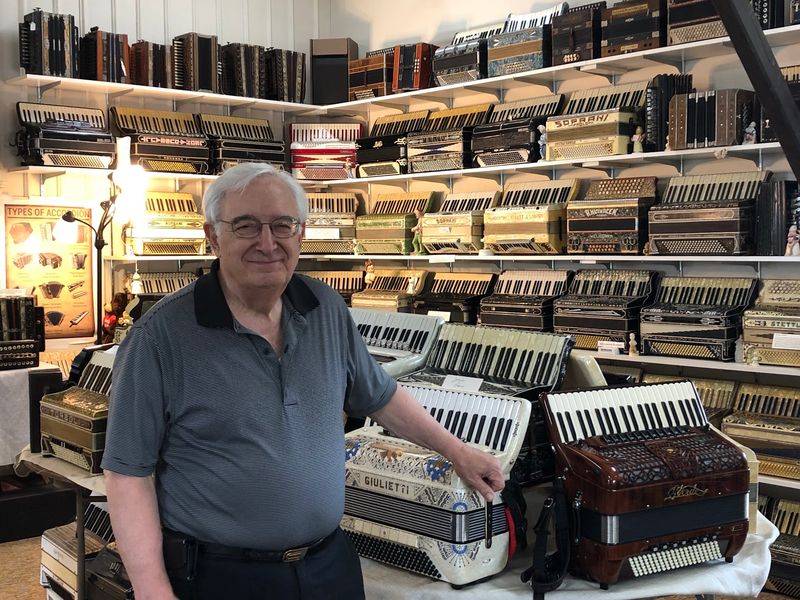
At the New England Accordion Connection and Museum Company, reviews often praise the welcoming conversations and the chance to hear Paul Ramunni play. A live demonstration is never something to assume, but you can ask whether one is possible when you visit.
Even without a performance, the displays give friends or family plenty to discuss.
Plan ahead by checking current hours and calling if you are making a special trip to 75 Main St in Canaan. Visitors have described free admission with donations welcome, so confirm the latest details before you go.
Leave some flexibility in your schedule for stories that take longer than expected.
The best reason to visit may be the simplest one: sharing an unexpected discovery. You can come knowing nothing about accordions and still find a favorite.
On the way out, ask your companion which instrument they would most like to hear.