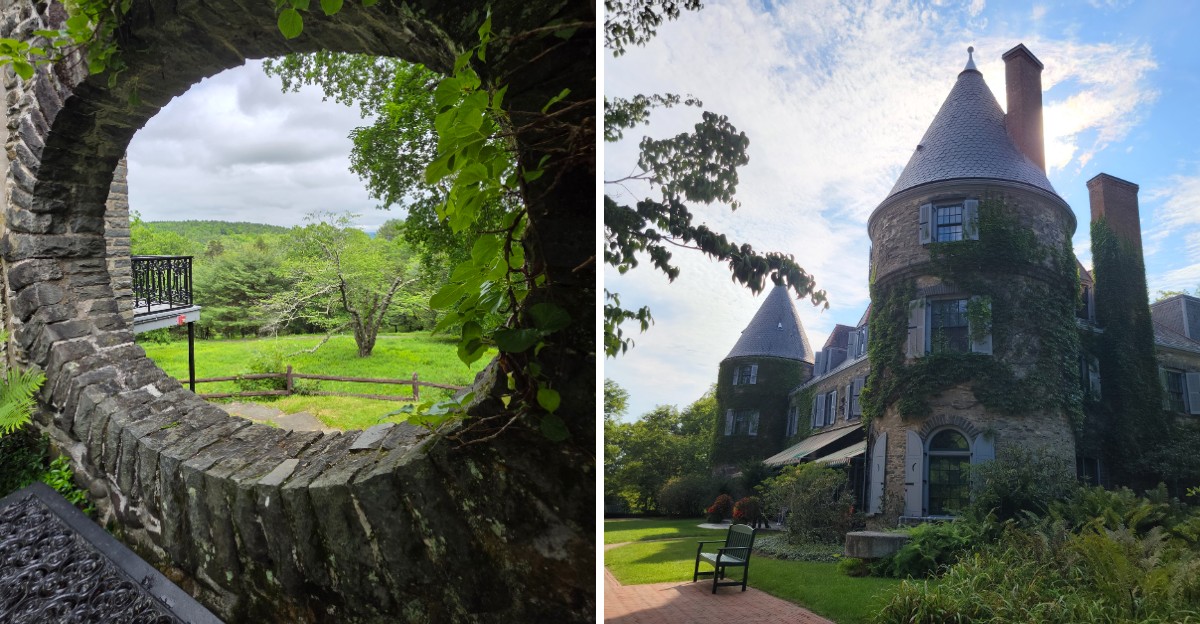
A castle is hiding above the Delaware River, and most people drive right past it.
Perched above Milford, Pennsylvania, Grey Towers National Historic Site looks like it was lifted from the French countryside and dropped into the Pocono Mountains.
Built in the 1880s as a grand summer home, the stone estate comes complete with towers, dramatic architecture, and gardens that beg to be explored.
But the real surprise goes far beyond its castle-like appearance.
Grey Towers is deeply tied to Gifford Pinchot and the early conservation movement that helped shape America’s approach to protecting forests.
Walk through the mansion, roam the gardens, and uncover the remarkable story behind this unexpected Pennsylvania treasure.
It’s the kind of place that makes you wonder how something this striking stayed hidden for so long.
A Castle-Like Estate Above Milford
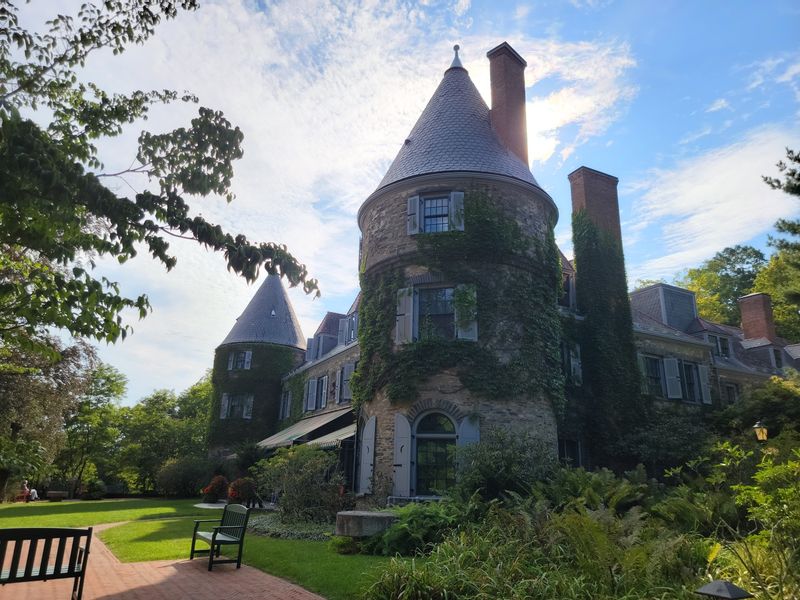
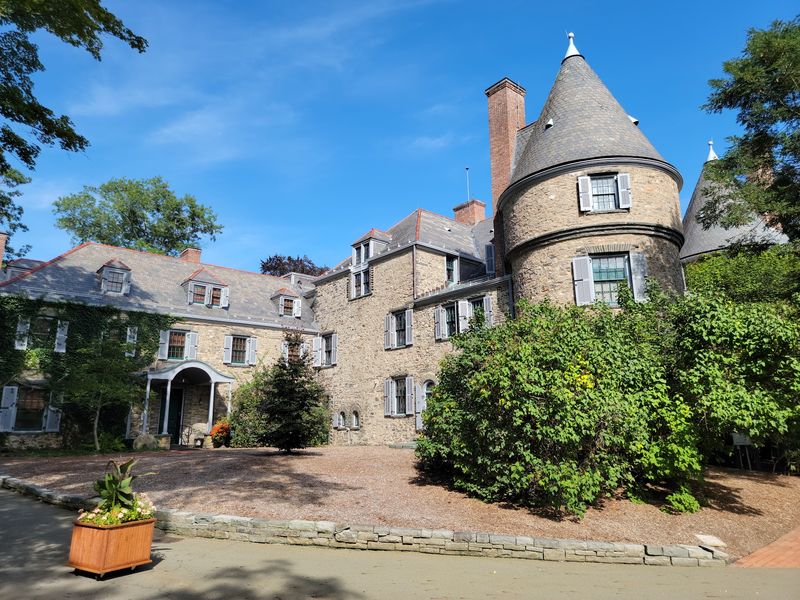
Rising from the hillside above Milford sits a stone mansion that catches everyone by surprise. Grey Towers looks nothing like typical Pennsylvania homes.
Instead, its towers and medieval style make it seem like someone transported a French château straight across the Atlantic Ocean.
Construction began in 1884 and finished two years later in 1886. The builders chose local fieldstone for the walls, giving the house a solid, fortress-like appearance.
Every angle and tower was designed to mirror the grand country estates of medieval France.
The dramatic silhouette earned Grey Towers its castle nickname, and the description fits perfectly. When you first spot the mansion through the trees, you might wonder if you took a wrong turn and ended up in Europe.
The property sits high enough to offer views across the surrounding landscape, making the castle comparison even more convincing.
James and Mary Pinchot commissioned this remarkable estate as their family’s summer retreat. They wanted something special, and they certainly got it.
Today, Grey Towers remains one of Pennsylvania’s most surprising architectural treasures.
The Pinchot Family Built Grey Towers
James Pinchot made his fortune in the wallpaper business in New York City. His wife Mary came from a prominent family with deep roots in American history.
When they decided to build a summer home, they didn’t think small.
The couple chose land near Milford for their seasonal escape from city life. They envisioned a grand estate where their family could spend warm months surrounded by nature.
Their son Gifford grew up spending summers at Grey Towers, developing a deep connection to the land that would shape his entire life.
For generations, the Pinchot family gathered at this stone mansion. They celebrated holidays, hosted important guests, and made decisions that reached far beyond the property’s boundaries.
The estate witnessed countless family moments while also serving as a meeting place for people working on conservation issues.
Everything changed in 1963 when Gifford Pinchot’s son made an extraordinary decision. He donated Grey Towers and approximately 102 acres to the United States government.
This generous gift transformed the private family retreat into a public treasure that everyone could visit and appreciate.
Richard Morris Hunt’s Château-Inspired Design
Richard Morris Hunt was one of America’s most celebrated architects in the late 1800s. His portfolio included mansions for the wealthiest families and important public buildings.
When the Pinchots hired him, they knew they would get something extraordinary.
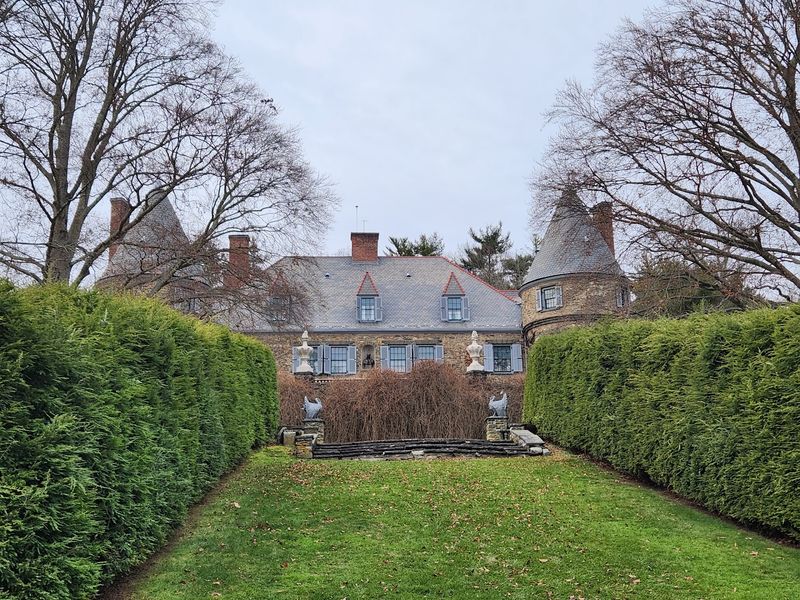
Hunt drew inspiration from medieval French châteaux for Grey Towers. These historic country houses featured distinctive towers, thick stone walls, and dramatic rooflines.
He adapted these European elements to work with Pennsylvania fieldstone and the local landscape.
Henry Edwards-Ficken and James Pinchot himself took Hunt’s original designs and brought them to life. They made decisions about materials, supervised construction workers, and handled countless details.
The local fieldstone gave the mansion its authentic castle feel while connecting it to the surrounding countryside.
Every architectural choice reinforced the château style. Massive fireplaces anchored interior rooms.
Stone towers punctuated the exterior silhouette. Windows were positioned to frame views while maintaining the medieval character.
The result was unlike anything else in northeastern Pennsylvania, a true American château that looked like it had been standing for centuries.
Gifford Pinchot Turned the Estate Into Something More
Summer vacations at Grey Towers planted seeds in young Gifford Pinchot’s mind. Surrounded by forests and natural beauty, he began thinking seriously about how America managed its wild places.
Those childhood experiences would eventually change the entire country.
Gifford became the first Chief of the U.S. Forest Service, a position that let him put conservation ideas into action.
He worked directly with President Theodore Roosevelt on policies protecting millions of acres of American forests. Later, Pennsylvania voters elected him governor not once but twice, in 1923 and again in 1931.
Grey Towers served as more than just his family home. Gifford used the estate as a place to work on forestry plans, meet with other conservationists, and develop strategies for protecting natural resources.
Important conversations about America’s environmental future happened in those stone-walled rooms.
The mansion became a symbol of the conservation movement itself. Visitors who came to Grey Towers weren’t just seeing a beautiful building.
They were stepping into a place where ideas about scientific forestry and environmental stewardship took shape.
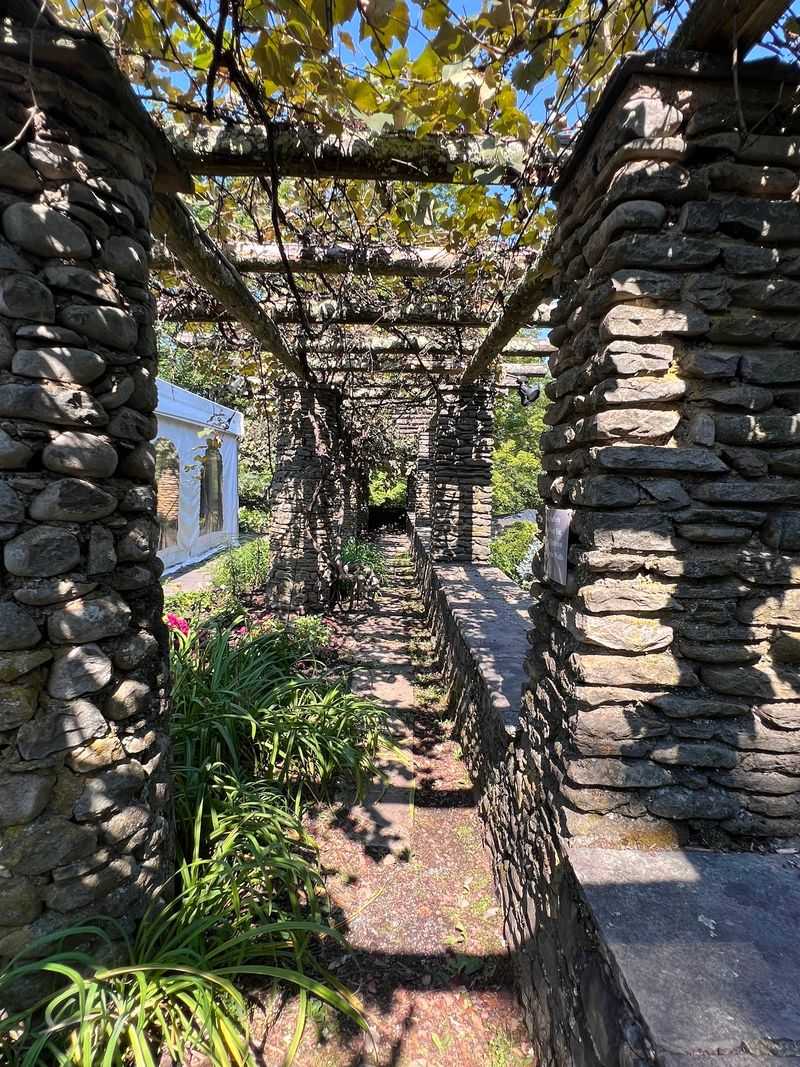
The Gardens Were Designed as Outdoor Rooms
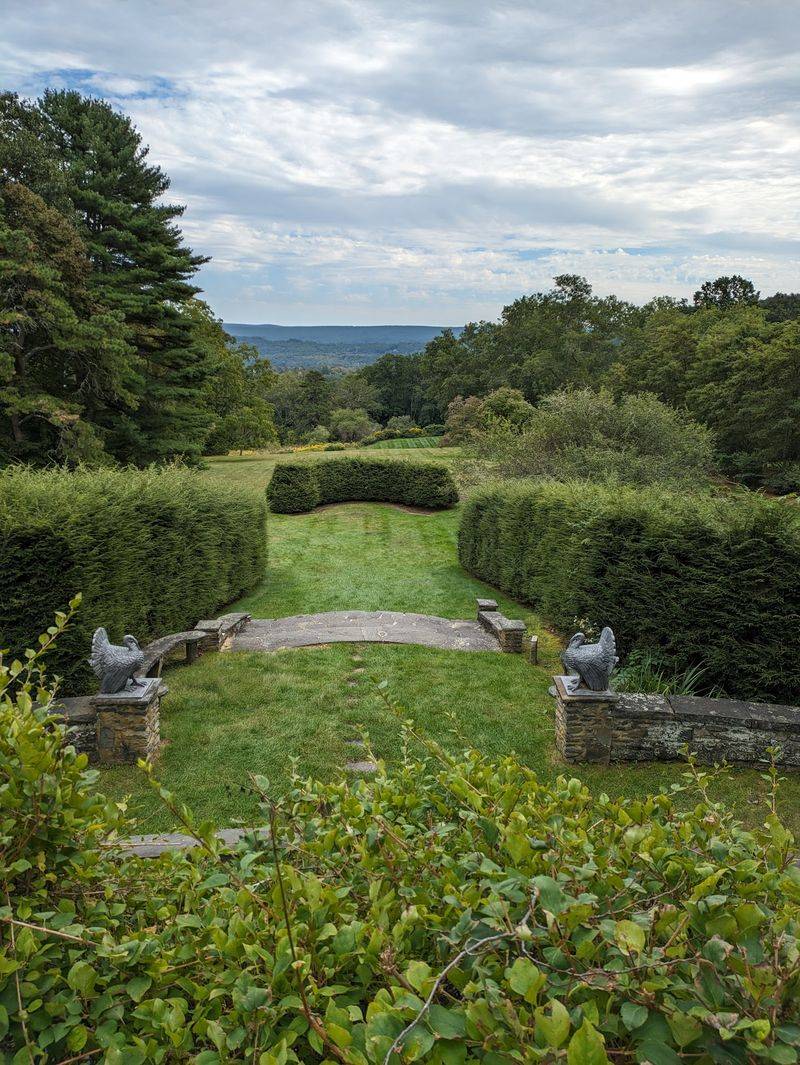
Walk through the grounds at Grey Towers and you’ll notice something unusual. The gardens don’t just surround the mansion randomly.
Instead, they were carefully planned as outdoor extensions of the interior spaces.
Gifford and his wife Cornelia reimagined the landscape in the early 1900s. They wanted gardens that functioned like actual rooms without walls.
Each outdoor area connected to a specific part of the house and served a particular purpose.
Some garden spaces were designed for entertaining guests during warm weather. Others provided quiet spots for reading or conversation.
Formal paths guided visitors through different outdoor rooms just as hallways connect interior spaces.
This approach made Grey Towers feel much larger than its physical walls suggested. When the weather was nice, the Pinchots could move seamlessly from inside to outside.
The gardens offered all the comfort and function of indoor rooms but with fresh air and natural beauty surrounding everyone.
Today’s visitors can still experience this unique design philosophy. Walking the grounds reveals how thoughtfully each outdoor space relates to the mansion.
You’re not just looking at pretty plants but exploring a carefully orchestrated landscape.
Look Closely at the Mansion’s Details
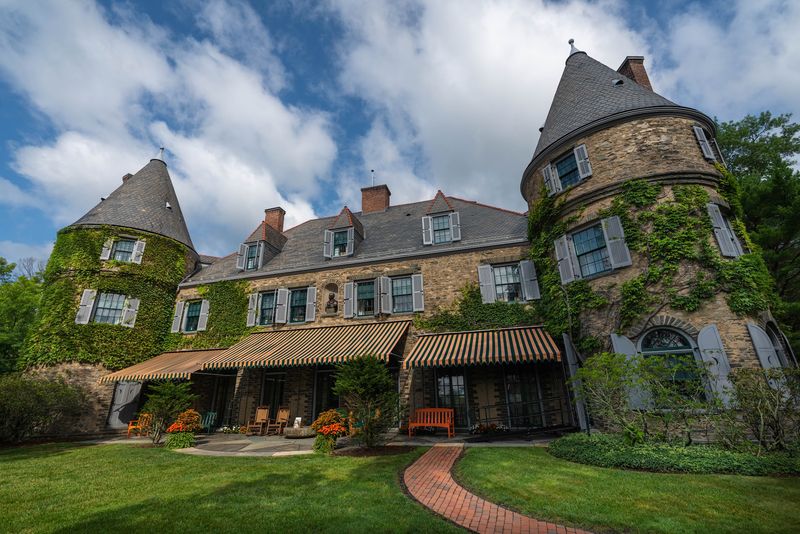
Grey Towers rewards visitors who take time to really look. Quick photos from the parking lot miss the fascinating details that make this mansion special.
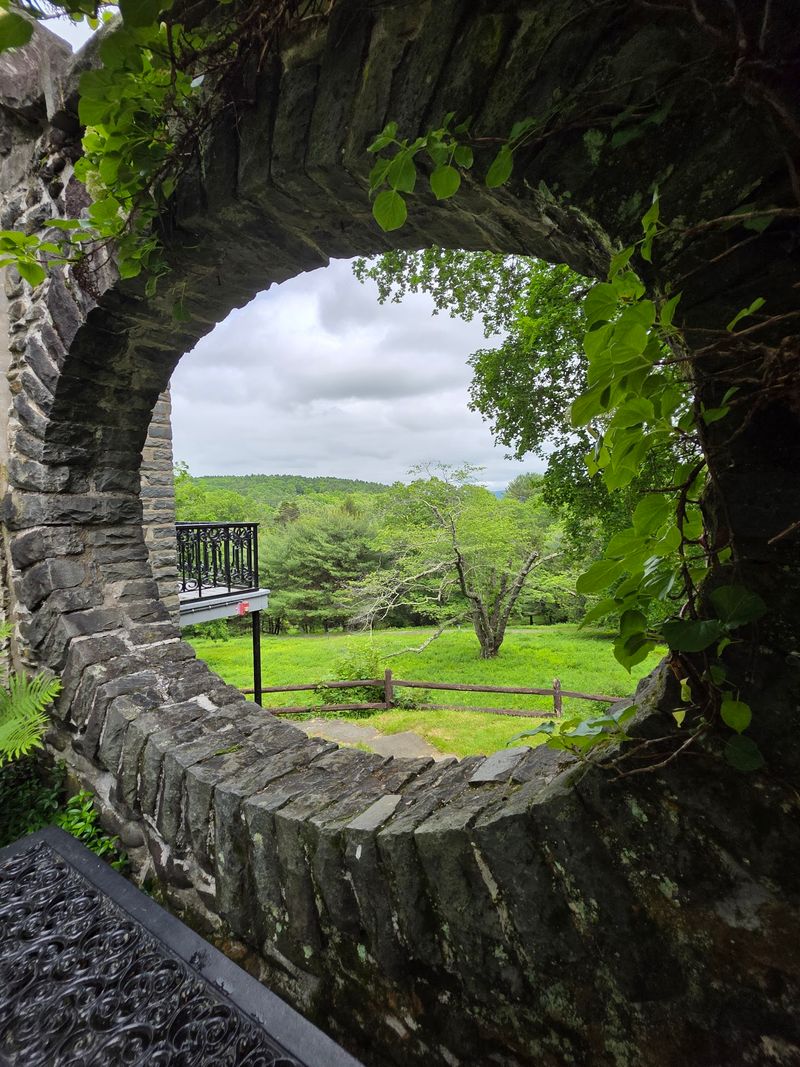
Start with the fieldstone walls themselves, built from rocks gathered locally and fitted together with incredible skill.
Each tower serves both form and function. They create the château silhouette from outside while providing interesting spaces inside.
Some house staircases, others create cozy nooks in larger rooms.
Step inside and the château theme continues. Massive stone fireplaces dominate major rooms, built large enough that you could almost stand inside them.
Carved wood details, formal furniture arrangements, and carefully planned sightlines through windows all reflect the original design intent.
Cornelia Pinchot later made significant changes to several important spaces. She completely transformed the dining room and library, updating them to reflect her own vision while respecting the building’s historic character.
These modifications show how the mansion evolved with each generation while maintaining its essential château-inspired identity.
Every architectural element tells part of Grey Towers’ story. The relationship between house and grounds, the use of local materials, and the French medieval influences combine to create something truly memorable.
Grey Towers Became Part of America’s Conservation Story
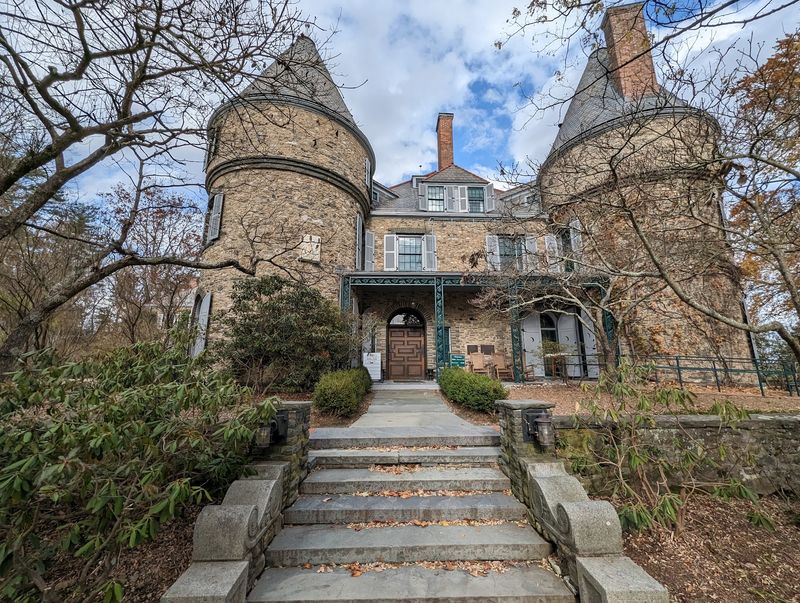
Forests covered much of America when European settlers arrived. By the late 1800s, logging companies had cut down huge areas without any plan for the future.
People began worrying that forests might disappear completely if nothing changed.
James Pinchot cared deeply about these issues. At Grey Towers and on surrounding land, he and his son Gifford started experimenting with scientific forestry.
They studied how to harvest trees sustainably, allowing forests to regrow and remain productive forever.
These experiments and the ideas developed at Grey Towers influenced national policy. When Gifford became Chief of the Forest Service, he brought lessons learned on the family estate to forests across America.
Grey Towers essentially became a laboratory for conservation thinking.
Federal legislation later officially recognized the property’s importance. The law described Grey Towers as one of the significant places connected to the development of American conservation.
This wasn’t just a family making their own land look nice; it was groundbreaking work that changed how the entire nation thought about natural resources and environmental protection for future generations.
The Estate Became a National Historic Site
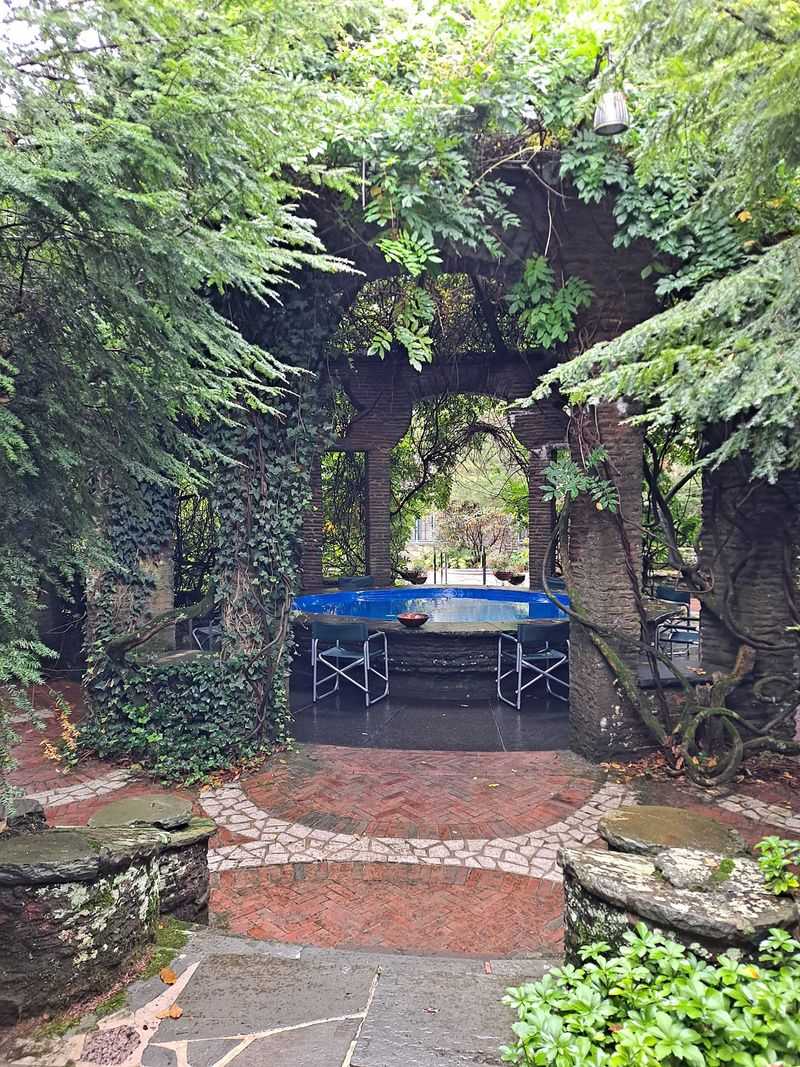
Private estates rarely become public property. Most get sold off, divided up, or demolished when families can no longer maintain them.
Grey Towers took a different path thanks to one family member’s remarkable generosity.
In 1963, Gifford Bryce Pinchot decided to donate his family’s cherished estate to the United States. He transferred Grey Towers and roughly 102 acres to federal ownership.
This gift ensured that the mansion and grounds would be preserved and that everyone could visit.
The property became part of the official federal conservation story. It joined other historic sites that tell how Americans learned to protect natural resources.
Today, the Forest Service manages Grey Towers, connecting it directly to the agency Gifford Pinchot once led.
Visitors now explore rooms where conservation history was made. They walk gardens designed by people who shaped environmental policy.
The mansion serves as both an architectural treasure and an educational resource.
This transition from private home to public landmark gave Grey Towers new purpose. Instead of benefiting just one family, the estate now teaches thousands of visitors each year about architecture, history, and the conservation movement’s Pennsylvania roots.
There’s More to See Than the Castle
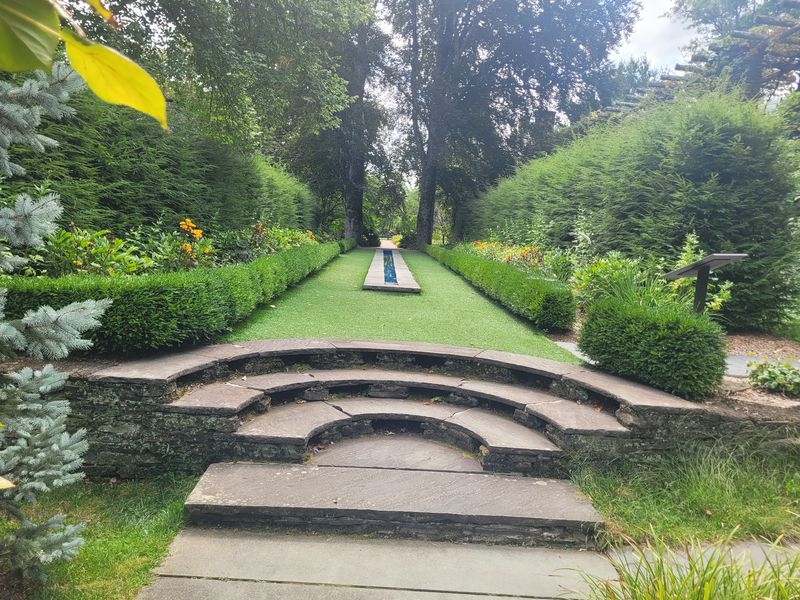
Many people drive to Grey Towers, snap a few pictures of the château-style mansion, and then leave. They’re missing most of what makes this place worth visiting.
The building itself is just one part of a much larger experience.
The historic landscape extends across the donated acreage. Gardens designed as outdoor rooms invite exploration.
Paths wind through different areas, each with its own character and purpose. You need time to appreciate how everything connects.
Stories layer on top of the physical spaces. Learning about the Pinchot family adds meaning to what you see.
Understanding Gifford’s conservation work transforms the mansion from a pretty building into a place where important ideas developed. The architecture and environmental history weave together.
The National Park Service recognizes Grey Towers as a valuable attraction for people exploring the Upper Delaware region. It fits naturally into trips that include river activities, small-town visits, and outdoor recreation.
The estate offers a different kind of experience, something cultural and educational that complements the area’s natural beauty perfectly.
Plan to spend several hours here. You’ll want time inside the mansion and outside in the gardens.
Both matter.
Plan Your Visit
Grey Towers National Historic Site sits at 151 Grey Towers Drive, Milford, PA 18337. The Forest Service operates the property, so you’re visiting a federal historic site connected to America’s conservation agency.
GPS directions to this address should get you to the entrance without problems.
Current business information lists daily hours as 9 a.m. to 4:30 p.m. However, you should absolutely verify these details before traveling.
Historic sites sometimes adjust schedules seasonally, close for special events, or modify operations for weather. Tour schedules might require reservations, especially during busy times.
Call ahead at +1 570-296-9630 to confirm everything. Ask about guided tour availability since walking through the mansion with a knowledgeable guide dramatically improves the experience.
Also check whether any admission fees apply and if reservations are necessary for your planned visit date.
Some practical tips: wear comfortable walking shoes for exploring the grounds. Bring a camera because the architecture and gardens photograph beautifully.
Check the weather forecast since much of the estate experience happens outdoors. Consider visiting during spring or fall when gardens look spectacular and temperatures are comfortable for extensive walking around the historic property.