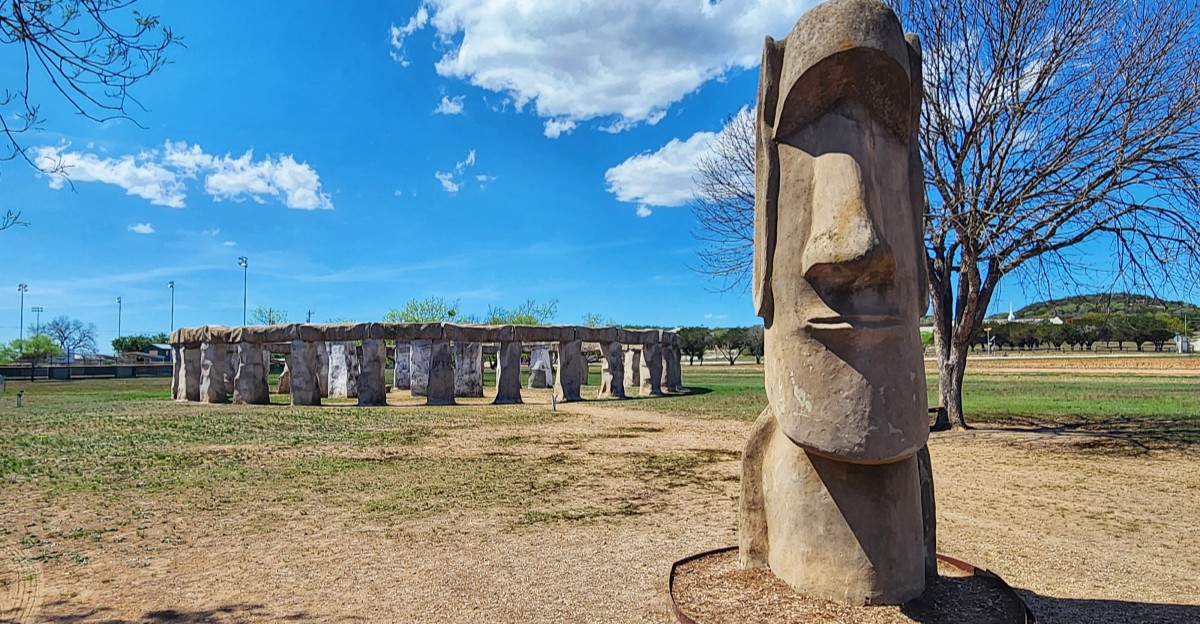
You can drive through the Texas Hill Country expecting limestone cliffs and quiet roads, then suddenly find yourself standing beside a stone circle that looks as though it belongs in England. Stonehenge II at the Hill Country Arts Foundation in Ingram offers an unexpected encounter with a full-scale replica of the famous prehistoric monument, without the transatlantic flight.
Located at 120 Point Theatre Rd S, the site has become one of the area’s most unusual roadside discoveries.
The stones invite a closer look, but there is more to the visit than a quick photograph. The replica has its own unusual story, while the surrounding Hill Country Arts Foundation adds an artistic dimension to the setting.
Together, they make the stop feel connected to both creativity and the landscape around it.
If you are curious about how Stonehenge ended up in the Texas Hill Country, there is plenty to discover once you arrive. Here’s what makes this unexpected landmark worth a closer look.
The Surprise Beyond the Hill Country Roads
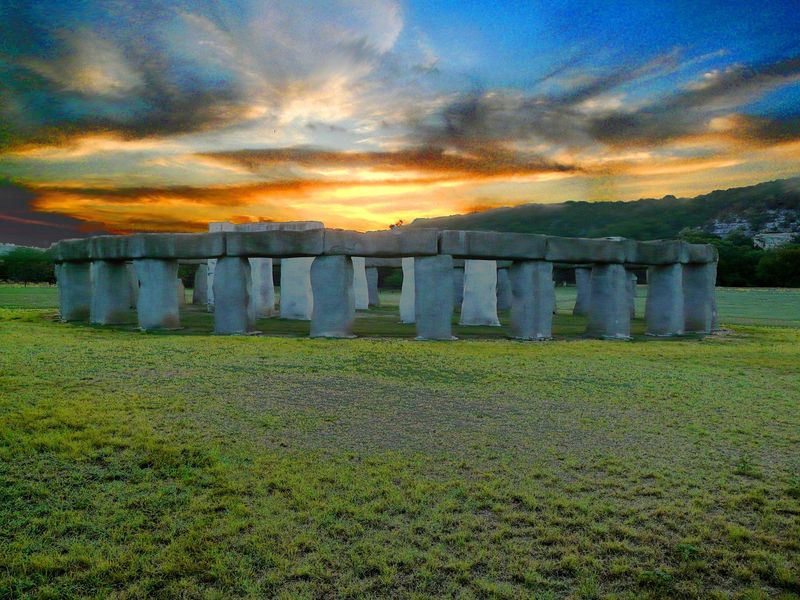
One minute, the road feels like a familiar Hill Country drive. The next, huge upright shapes appear against the sky, looking strangely out of place among the trees and grass.
That first glimpse is part of the fun at Stonehenge II in Ingram.
The replica stands on the grounds of the Hill Country Arts Foundation at 120 Point Theatre Rd S. It borrows the famous outline of Stonehenge in England, but the setting is unmistakably Texas.
You do not need to know much about ancient history to enjoy the contrast.
Give yourself a moment before reaching for your camera. Walk around the outside, notice how the shapes change from each angle, and look back toward the surrounding landscape.
A few steps can turn a crowded group of pillars into a clean row of arches.
For travelers passing through, the attraction makes a welcome break from the car. It is unusual enough to spark conversation, yet small enough to enjoy without rushing through a packed schedule.
Arriving with an open mind matters more than arriving with a detailed plan.
A Leftover Stone Started It All
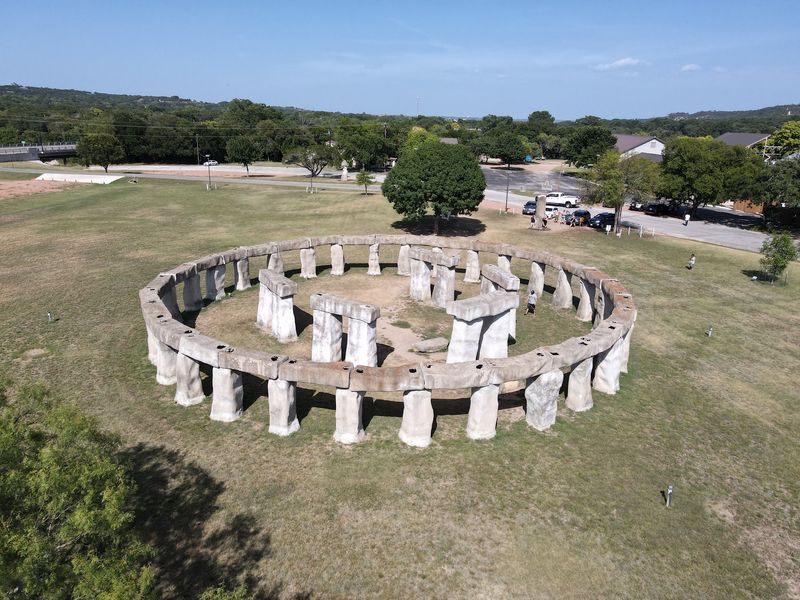
Big ideas sometimes begin with whatever is left after a small job. Stonehenge II traces its beginnings to an extra piece of limestone from a patio project.
Local craftsman Doug Hill suggested that his neighbor, art patron Al Shepperd, stand it upright on his land.
That simple act led to an arch, then to a much larger tribute to England’s Stonehenge. The project grew on Shepperd’s property near Hunt before finding its later home at the Hill Country Arts Foundation in Ingram.
Knowing that story makes the structure feel less like a copy and more like a creative experiment between neighbors.
As you look around, imagine the moment someone decided one standing slab was not quite enough. There is humor in that decision, but also the pleasure of seeing a playful idea through.
It gives the site a personality that a carefully planned monument might not have.
Share the origin story with anyone traveling beside you. Younger visitors, especially, may enjoy guessing what they would build from a leftover stone.
The answer might make this stop even more memorable than the photos.
Two Unexpected Faces Join the Scene
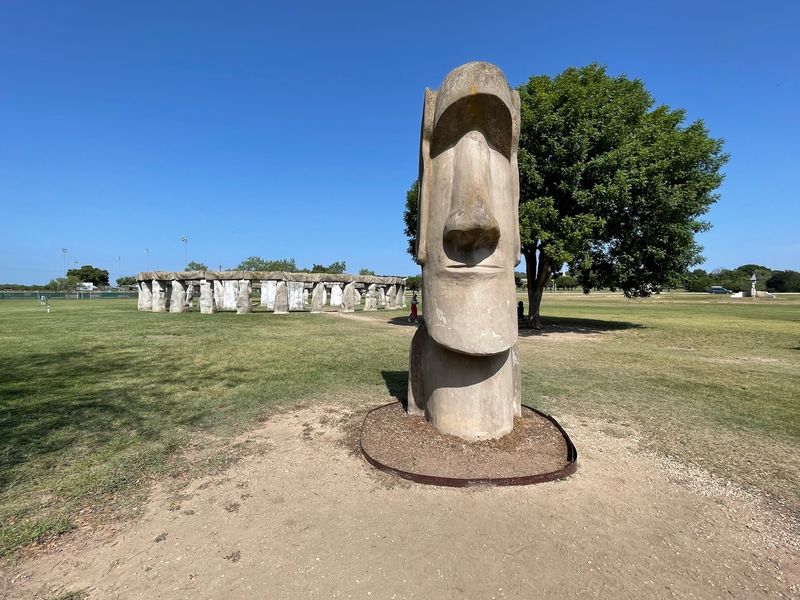
Just when the stone circle begins to make sense, two giant faces change the mood. Near Stonehenge II stand sculptures inspired by the moai of Rapa Nui, also known as Easter Island.
Their long faces add a second surprise to an already unusual Texas scene.
Al Shepperd added the figures after finding inspiration in the famous Pacific island statues. They are artistic tributes, not ancient objects, and their presence gives the grounds a cheerful sense of curiosity.
Look at the faces from nearby, then step back until you can see them with the circle in one view.
For a playful photograph, place a friend between a moai figure and the pillars. Changing your position by just a few feet can make the two parts of the installation appear close together or far apart.
Remember to leave room for others to take pictures, too.
The pairing has no need to follow a history lesson. Instead, it shows how one person’s interests can turn a patch of land into a place full of questions.
You may leave wondering what other unexpected ideas belong in a Texas art park.
Stone Looks Can Be Deceiving
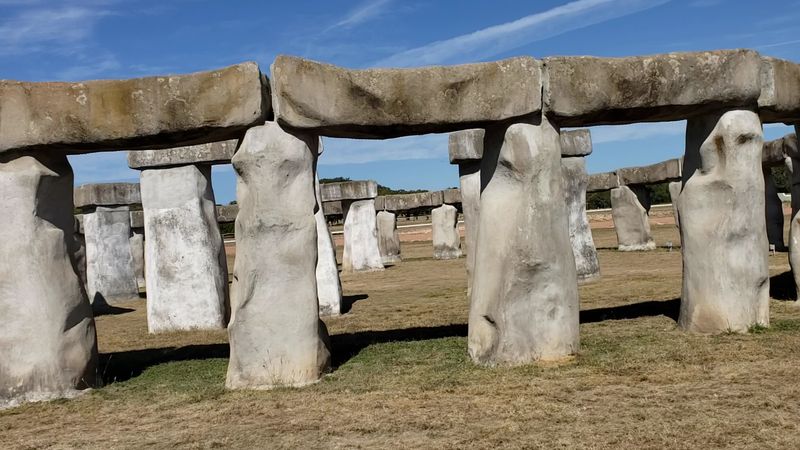
From across the lawn, the pillars seem heavy enough to have stood for centuries. Move closer, and the clever construction becomes part of the attraction.
Much of Stonehenge II uses modern materials shaped to look like great blocks of stone, rather than giant rocks hauled from a quarry.
That choice helped Doug Hill and Al Shepperd create a dramatic form without building it the way ancient people did. Some limestone was part of the original project, while the larger display relies on crafted surfaces and supporting materials.
The result is an artwork that asks you to look twice.
Try viewing one pillar in bright light and another in shadow. Rough surfaces, uneven edges, and changes in color help sell the illusion from different distances.
Stay on permitted paths and avoid climbing, even if the shapes look solid enough to support you.
There is a useful lesson tucked inside the fun: impressive art does not always depend on expensive materials. Thoughtful design can make ordinary supplies feel extraordinary.
That makes this stop especially interesting for young artists, builders, and anyone who likes knowing how things are made.
The Landmark That Found a New Home
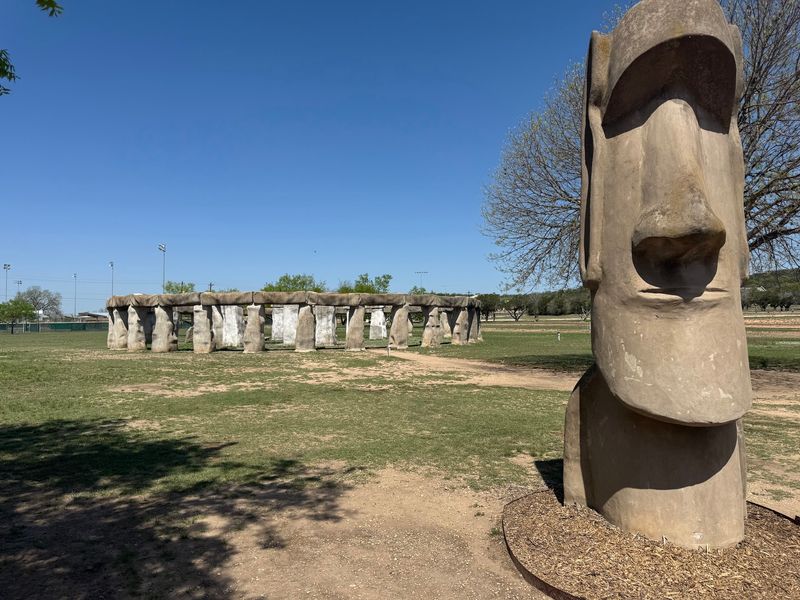
Imagine caring about a local landmark enough to move it. Stonehenge II originally stood on Al Shepperd’s land near Hunt, not at the Ingram address visitors use today.
When the property’s future changed, the installation faced an uncertain path of its own.
The Hill Country Arts Foundation helped bring the artwork to its present grounds. That move gave the circle a public setting where more people could discover the work of Shepperd and Doug Hill.
Standing beside the pillars now, it is easy to forget that they have a travel story, too.
Look for the way the installation sits within an active arts campus rather than an empty field. Its new home connects a quirky roadside sight with people who create and support art in the region.
If you enjoy the stop, consider learning about the foundation’s current programs or ways to help.
The relocation also changes how a visit feels. You are seeing more than a monument saved for pictures; you are seeing a community’s choice to keep an unusual idea alive.
That thought stays with you long after the road trip continues.
A Familiar Shape at a Different Scale
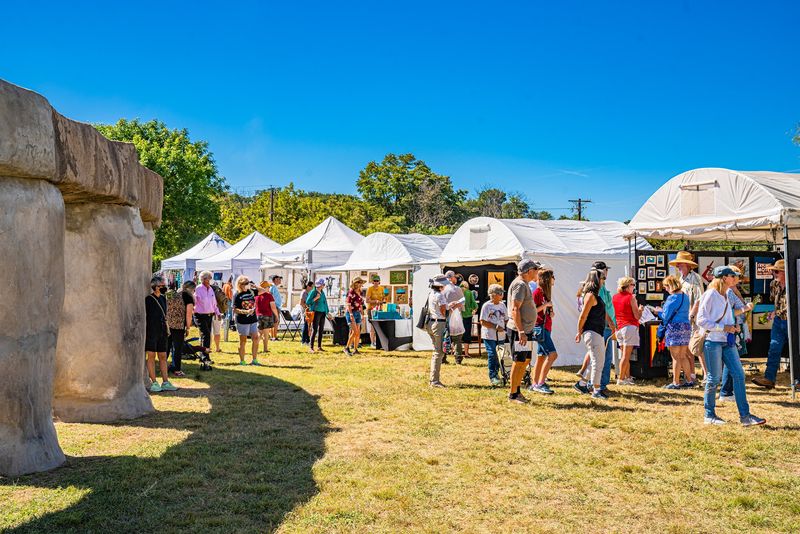
Standing near a pillar gives your eyes a useful puzzle. Stonehenge II is smaller than England’s Stonehenge, yet its arches still rise high enough to make a person pause.
Its proportions are often described as about 90 percent of the original’s height and 60 percent of its width.
Those numbers are interesting, but the view tells the story better. From one angle, the forms appear tightly grouped; from another, there is room for the Texas sky to show between them.
The replica aims to capture a recognizable shape, not to serve as an exact copy of an ancient site.
To show the scale in a photo, have a travel partner stand near the circle without leaning on the installation. Take one picture from farther back and another from a lower angle.
Both will show how much perspective changes what you see.
The smaller size makes the experience feel surprisingly personal. You can study the arrangement without needing a map or a long tour, then decide which view best captures your visit.
Sometimes a tribute is most enjoyable when it leaves room for its own character.
Art Lives Beyond the Circle

A stone circle may be the reason you turn in, but it is not the whole story. Stonehenge II belongs to the Hill Country Arts Foundation campus, a place shaped by visual art and live performance.
That connection gives the visit a different feel from an ordinary roadside pullout.
Ingram’s arts center has hosted exhibits, classes, and theater activities. Depending on the day and current conditions, you might find another reason to stay after seeing the replica.
Before making plans around a gallery, show, or shop, check the foundation’s latest updates rather than assuming every building is open.
The campus suffered serious damage in the July 2025 flood, and recovery has affected some facilities. Outdoor access to Stonehenge II has continued, but visitors should expect that other areas and programs may change.
A quick call is wise if an indoor stop is important to your trip.
Even when you have only a short visit, the arts setting matters. The monument feels like part of a larger habit of making things and sharing them.
That idea gives its curious shapes a welcome sense of purpose.
An Easy Stop With a Little Planning
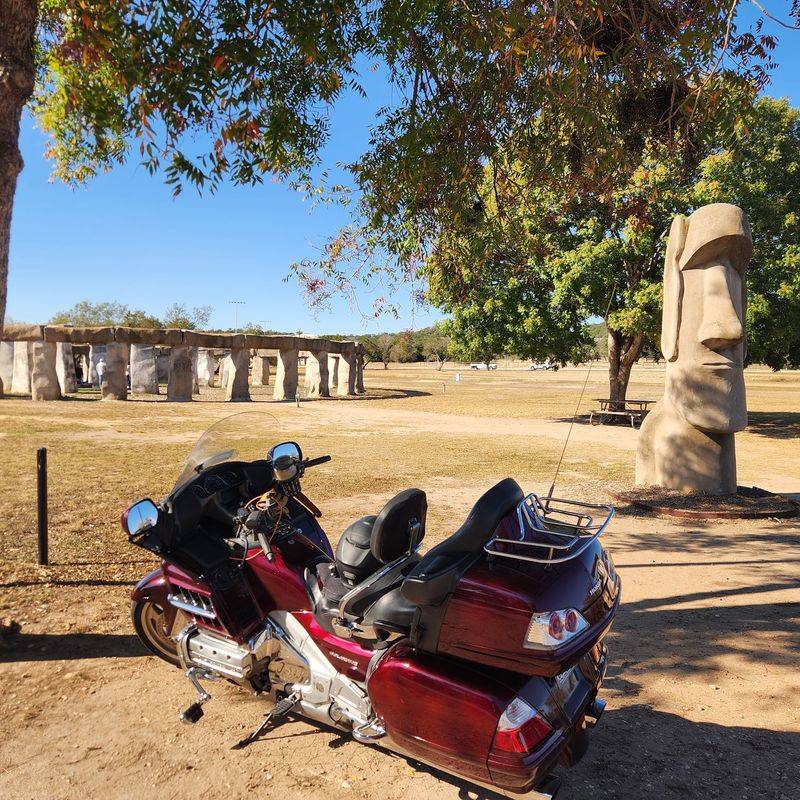
Not every worthwhile stop needs tickets and a full afternoon. Visitors have commonly been able to see Stonehenge II without an admission charge, making it an easy addition to a Hill Country drive.
The outdoor setting also lets you set your own pace once you arrive in Ingram.
Bring water, especially in warm months, because an open viewing area can feel hot under the Texas sun. Comfortable shoes help on uneven ground, and it is smart to watch for fire ants before putting down a bag or sitting in the grass.
Give the artwork space and follow any posted access signs.
Do not count on the gift shop, galleries, or restrooms being open without checking first. Flood recovery has affected the arts foundation’s buildings, and conditions can change.
If you are traveling a long distance, call the foundation or review its latest visitor information before leaving.
The best plan is simple: allow time to stretch your legs, circle the installation, and enjoy the unexpected view. Treat any open indoor spaces as a bonus.
That approach keeps a brief stop relaxed, even if the day does not go exactly as planned.
Photos That Tell a Texas Story
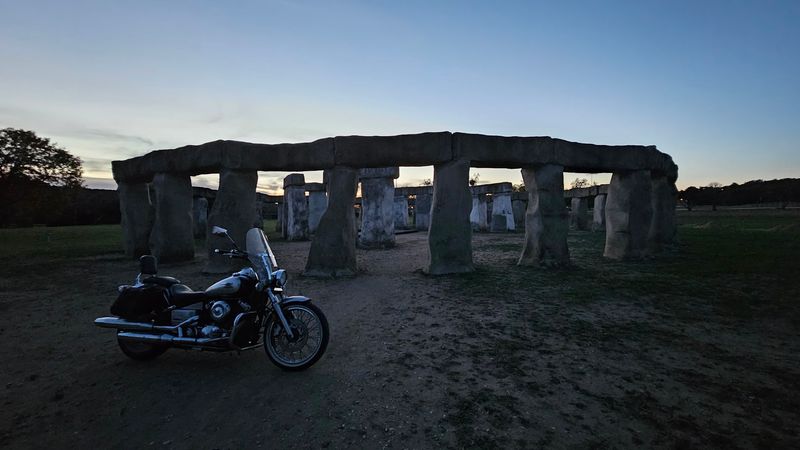
Late sunlight can make the same circle look entirely new. At Stonehenge II, shadows stretch across the ground and the spaces between the pillars become as interesting as the pillars themselves.
You do not need a fancy camera to bring home a striking image.
Start with a wide shot that includes the grass, trees, and open sky. Those details show that this is the Texas Hill Country, not England.
Then move closer for a frame of one arch, or turn toward the nearby moai figures for a picture with an extra twist.
Try taking photos early or late in the day if your schedule allows. Softer light can bring out surface texture without making people squint.
If others are visiting, pause to let them finish a shot before walking into their frame, and keep any photo setup clear of paths.
After a few pictures, put the phone away for a minute. The best part may be watching someone else spot the circle for the first time.
That surprised expression explains the appeal of Stonehenge II better than a carefully posed photo ever could.
Why the Oddity Stays With You
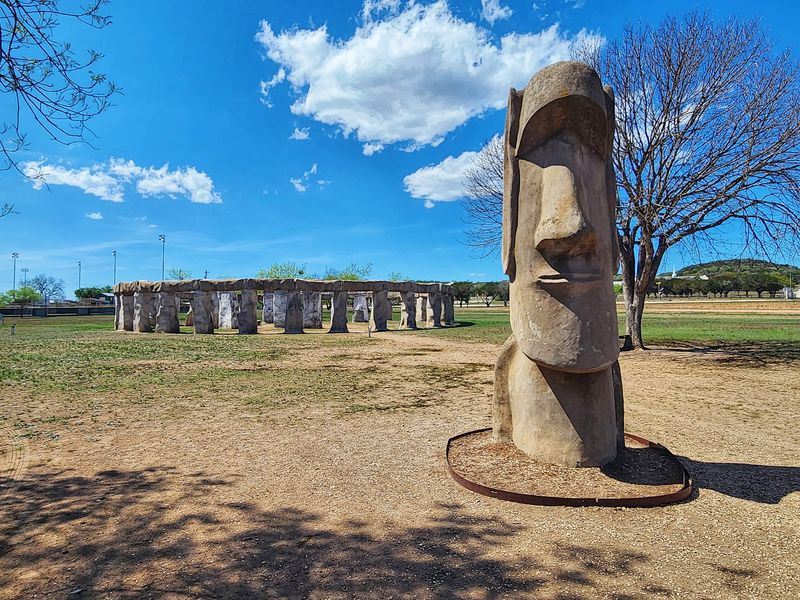
Some roadside sights make you smile, then fade from memory. Stonehenge II has a better chance of sticking around.
Its stone-like arches, unexpected moai figures, and story of two neighbors building something unusual give visitors plenty to talk about on the drive home.
The setting at the Hill Country Arts Foundation adds another layer. What began as a playful project near Hunt now stands where people can encounter it as public art.
Its survival says something about the value of protecting creative work, even when that work is wonderfully hard to explain.
Before you leave, take one last slow look around the circle. Notice a detail you missed at first, whether it is a rough surface, an opening between pillars, or the view beyond them.
If the stop has made you curious about the people behind it, seek out the foundation’s account of its history.
You do not have to decide whether it looks exactly like the original Stonehenge. Its appeal lies in being a Texas creation with a story of its own.
That is reason enough to pull over, look closely, and remember Ingram.