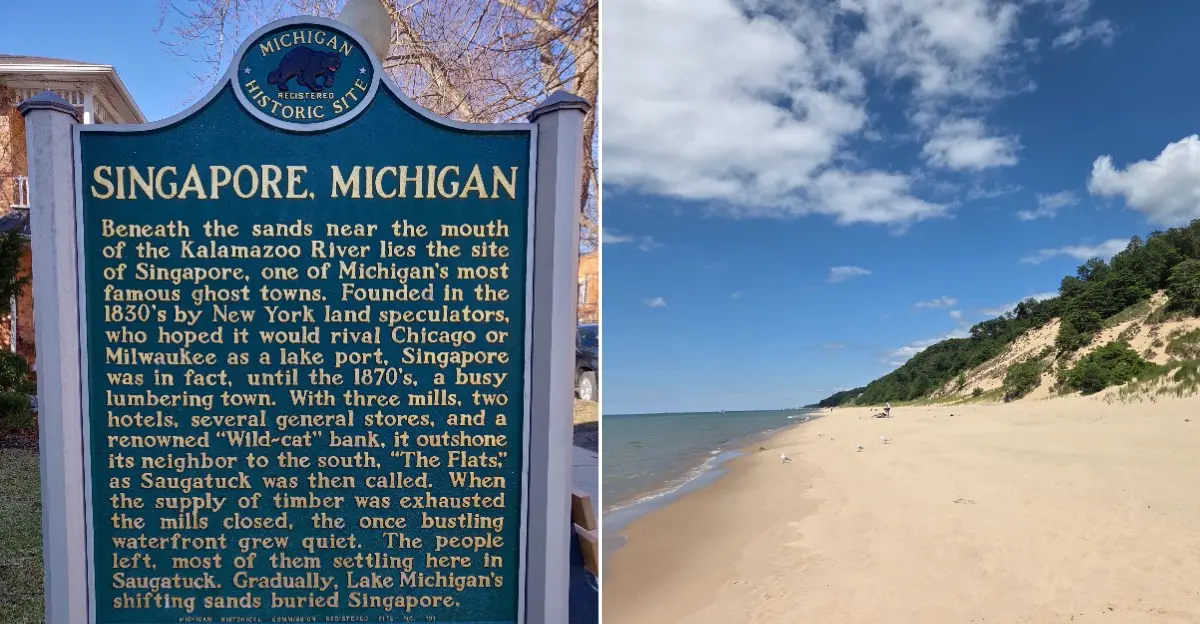
Much of a once-busy lumber town with two hotels, a bank, and sawmills now lies buried beneath Lake Michigan’s shifting sand dunes. Although little is visible today, changing water levels have occasionally exposed old docks and building foundations.
The sand did not arrive overnight. It gradually covered the area after residents cut down the pine forests that helped hold the dunes in place.
I can’t imagine watching the wind slowly swallow the streets where people once lived.
The story gets stranger. This little lumber town supplied timber to Chicago, including during the rebuilding period after the Great Chicago Fire of 1871.
It also had its own bank, whose notes became worthless when the bank folded in 1842.
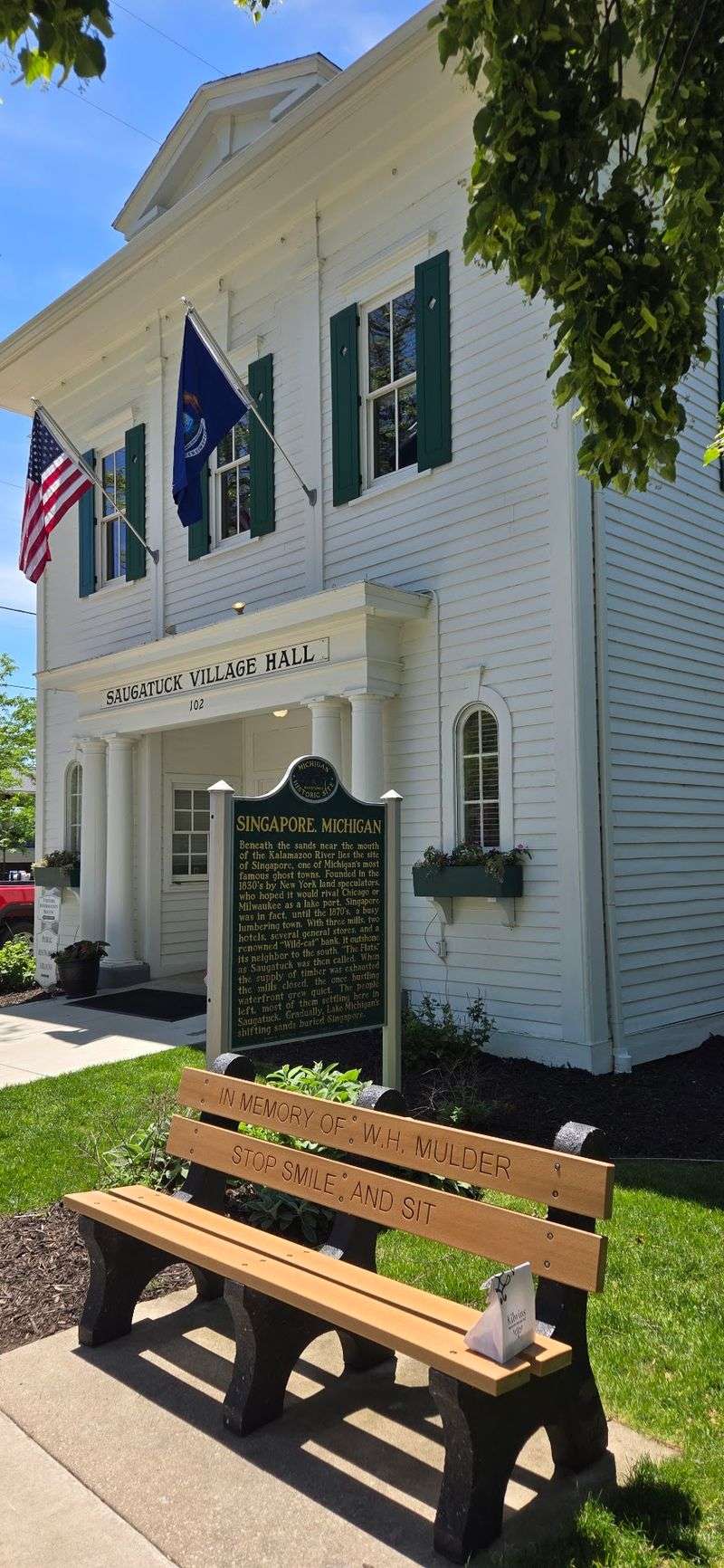
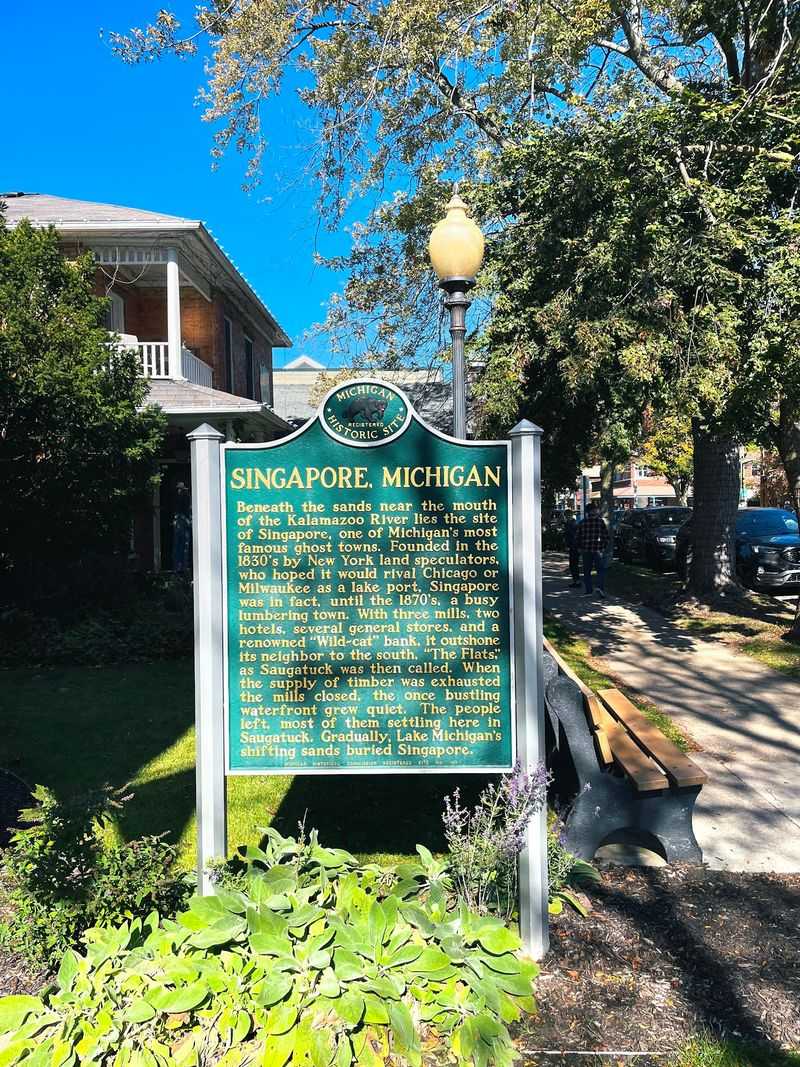
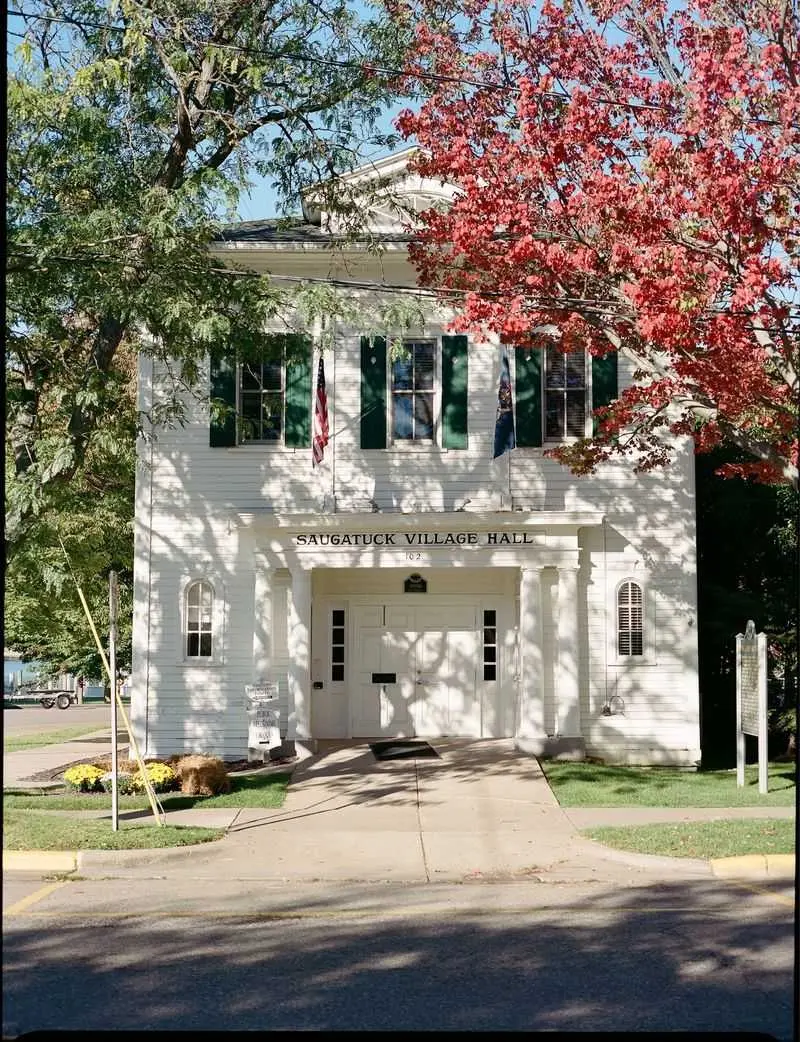
Today, a historical marker at Saugatuck City Hall tells the story of Singapore, Michigan, the ghost town buried near the mouth of the Kalamazoo River. I like how one small sign can hold such a wild story.
So what exactly lies beneath those dunes?
A Tiny Sign Holds A Story Way Bigger Than Its Size
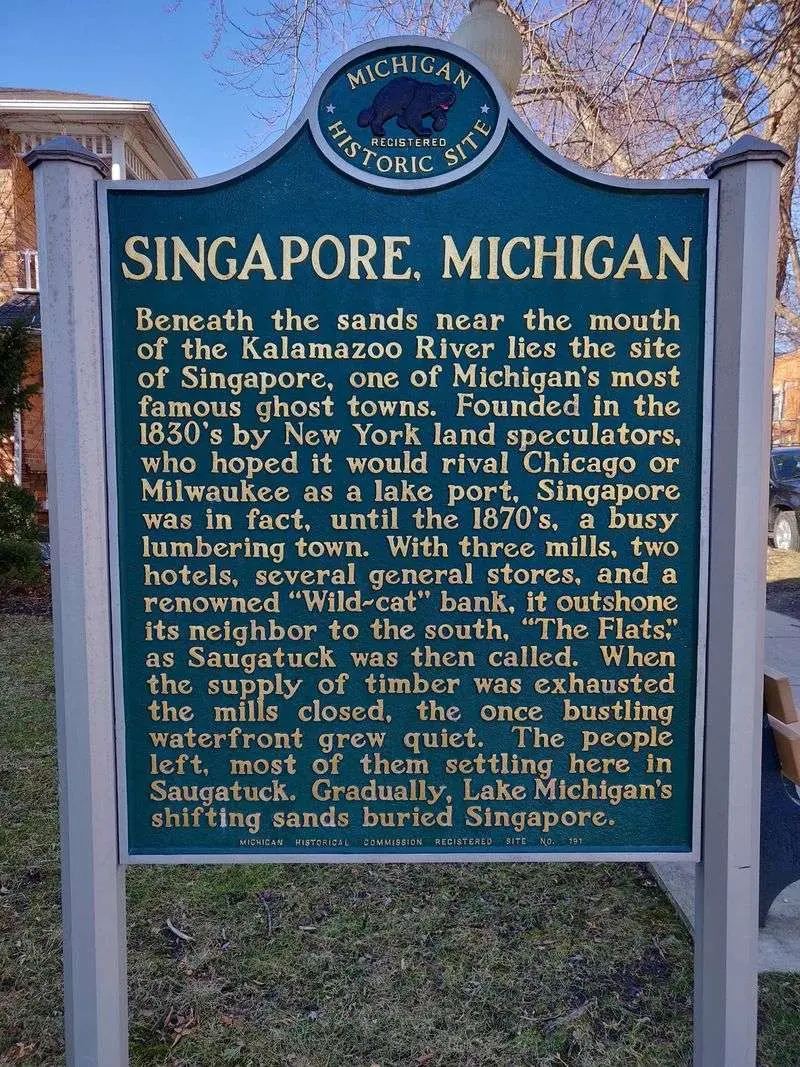
Plenty of historical markers explain a courthouse or a old church. The Singapore, Michigan Historical Marker explains an entire town that vanished into the sand.
You’ll find it in Saugatuck, near the end of the street before the harbor. It stays open 24 hours a day, so there’s no ticket, no line, and no closing time to worry about.
The plaque gives a quick history of Singapore, a once busy lumber town. It covers how the town grew, why people left, and how the dunes swallowed what remained.
Reading it takes just a few minutes.
That short stop packs a lot of punch, though. Few places let you stand in one spot and think about a whole community hiding nearby under tons of sand.
Here’s a practical tip. Read the marker first, before you head out to the dunes or the river.
Knowing the story ahead of time makes every hill of sand look a little more mysterious.
Bring the kids too. A buried town sounds like something from an adventure book, and that hook can turn a quick history lesson into a real conversation on the drive home.
A Big Dream Was Supposed To Beat Chicago
Ambition was never the problem here. Singapore was founded in the 1830s by New York investors with huge plans in mind.
They wanted a major port. The founders envisioned their town competing with places like Chicago and Milwaukee, which were also growing during that era.
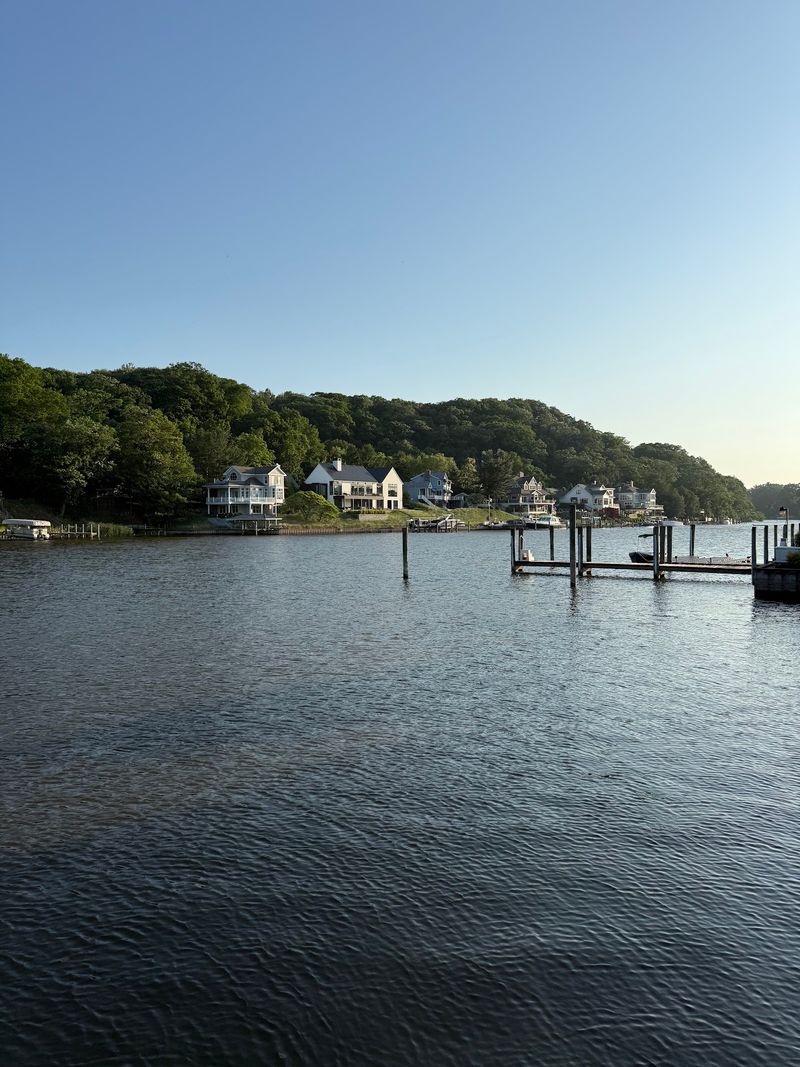
The location seemed promising. Singapore stood near the mouth of the Kalamazoo River, north of present-day Saugatuck.
Ships could access Lake Michigan, and pine forests stretched across the surrounding area.
Sources differ on whether the town was founded in 1836 or 1837. Either way, Singapore emerged during a bold period when speculators were investing in Michigan’s frontier.
It’s fascinating to think about how differently things turned out. Chicago grew into one of America’s largest cities, while much of Singapore was eventually buried beneath shifting sand dunes.
That contrast makes the historical marker even more interesting to read. You can almost feel the hope behind the original plan, even though the town’s future unfolded very differently.
Next time someone calls a goal too big, this story makes a good reminder. Big dreams need solid ground, and sand rarely qualifies.
Mills, Hotels, And A Bank Once Filled The Streets
For a town that’s now invisible, Singapore had a surprisingly full main street. At its peak, it boasted three to four mills, two hotels, several general stores, and a bank.
Records point to around 100 to 200 residents. That’s not a giant crowd, but it was enough to keep the saws running and the docks busy.
About 23 buildings stood there at one point. The town is also credited with Michigan’s first schoolhouse, which is a pretty big claim for a place you can’t even find anymore.
Lumber and shipbuilding powered daily life. Schooners and steamships hauled boards across the lake to fast-growing cities like Chicago.
Shipbuilders here even launched the Octavia. It’s remembered as one of the earliest three-masted ships built in Michigan, which tells you this crew knew its craft.
Try to keep that busy picture in mind when you visit. The quiet dunes today once echoed with saw blades, boat hammers, and people going about their workday.
That mental image is the real souvenir. Everything else is buried, so your imagination does the heavy lifting.
Their Homemade Money Turned Into Fancy Paper
Money troubles hit Singapore early and hard. The town had a so-called wildcat bank, and it printed its very own banknotes.
Wildcat banks were common on the frontier in that era. They often issued paper money without much real value behind it, which is a risky way to run things.
Singapore’s bank failed in 1842. When that happened, its notes became worthless, leaving people holding paper that couldn’t buy much of anything.
Here’s the twist. Those failed bills are now treasured history, and the Saugatuck-Douglas History Center displays examples of them for visitors to see.
So the money didn’t work as cash. It works great as a conversation starter, though, and it’s one of the few things you can actually look at from the lost town.
The bank building had a second life as well. It was later moved upriver to Saugatuck instead of staying behind with the rest of the town.
Pair the marker with a look at these notes if you can. Seeing real objects from Singapore makes the story feel solid instead of something out of a legend.
Blame The Wind, But Also The Missing Trees
Sand doesn’t usually swallow towns in Michigan. Singapore pulled it off because the white pine forests around it were almost completely cut down.
Those trees had been doing an important job. Their roots and branches held the dunes in place and blocked the steady winds off Lake Michigan.
Once the forest was gone, nothing stopped the sand. By the mid-1870s, lumber demand also dropped, and newer milling methods made the local operation less competitive.
People started leaving. The town was largely abandoned by 1875, the same year the main sawmill was taken apart and moved to St. Ignace.
After that, the wind took over. Gust by gust, the dunes crept in until the whole place disappeared, which earned Singapore the nickname Michigan’s Pompeii.
Unlike the famous Italian city, no volcano was involved. Just patient wind, loose sand, and a lot of empty space where trees used to stand.
There’s a useful lesson tucked in here. Nature often keeps things balanced in quiet ways, and you only notice the help once it’s gone.
Houses Once Slid Across A Frozen River To Safety
Moving day in Singapore looked nothing like loading a truck. Before the sand finished its work, folks hauled some buildings across the frozen Kalamazoo River.
The bank made the trip, along with three houses. They traveled over the ice to Saugatuck, which is a pretty clever use of a Michigan winter.
Think about how much effort that took. These were full buildings, not boxes, and the frozen river acted like a giant road.
Those rescued structures matter a lot today. They’re a real link between the buried town and the harbor town where the marker now stands.
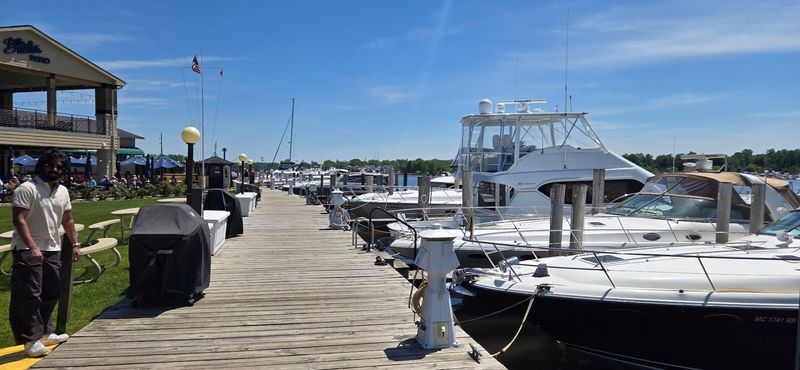
That connection is why the plaque sits in Saugatuck. The address is Butler Street, Saugatuck, MI 49453, close to the harbor that kept growing while Singapore faded.
Standing there helps the story click into place. Part of the lost town literally ended up in this neighborhood.
It’s also a cheerful note in a fairly gloomy tale. Not everything was lost to the dunes, thanks to some winter grit and smart timing.
Ride, Float, Or Climb Above The Buried Streets
Seeing the actual ruins isn’t possible. Everything sits completely hidden under the dunes, so you’ll need some creative ways to explore.
A river trip makes a great start. The Saugatuck-Douglas History Center offers a 90-minute Kalamazoo River cruise focused on the history of Singapore.
Prefer something bumpier? Saugatuck Dune Rides takes off-road tours through the dunes above the former settlement.
On those rides, you might occasionally spot traces like old wooden pilings in the water. Nothing is promised, but that small chance adds a fun treasure-hunt feeling.
The History Center itself is worth a stop too. That’s where you can see artifacts tied to Singapore, including those famous wildcat bank notes.
Here’s a simple plan. Read the marker, visit the History Center, then pick a cruise or dune ride to see the landscape for yourself.
Doing all three turns a quick roadside stop into a full Michigan history adventure. Each piece fills in a different part of the puzzle, and none of it requires a shovel.
Climb The Dunes That Did The Swallowing
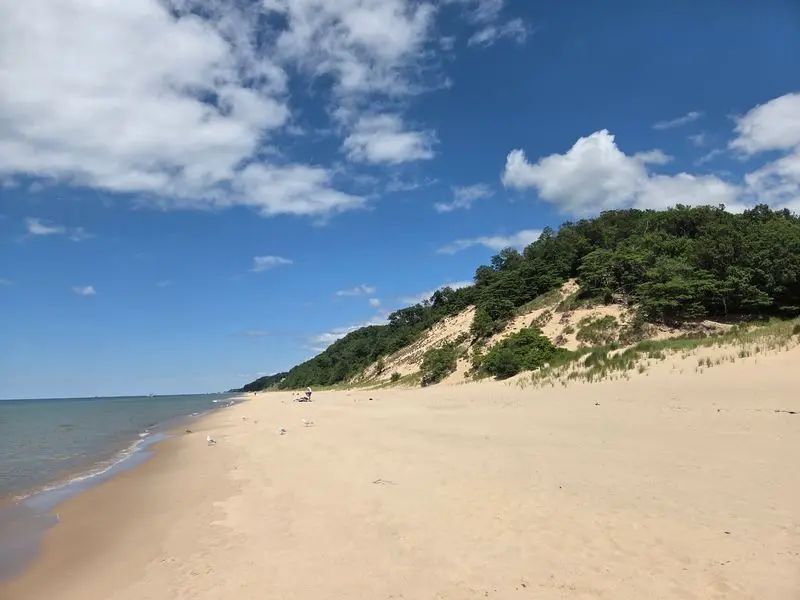
Two hundred feet of sand is a lot to bury a town under. Saugatuck Dunes State Park has dunes reaching that height, and they’re seriously impressive.
The park protects roughly 1,000 acres of land along Lake Michigan. It also includes 2.5 miles of sandy beach and 13 miles of trails through dunes and quiet forest.
The former town of Singapore lies buried near the mouth of the Kalamazoo River, south of Saugatuck Dunes State Park. The park is a nearby destination for exploring the region’s dunes, making it a natural final stop after reading the historical marker in Saugatuck.
Wear good shoes for the trails. Sand gets tiring fast, so pack water and give yourself plenty of time to wander.
Once you reach the shoreline, look back at the dunes. It’s easy to understand how this powerful landscape could gradually cover a town that once had two hotels and a bank.
The views are beautiful, and the story makes them even better. You’re looking at scenery shaped by the same kind of shifting dunes that buried Singapore.
For a Michigan day trip, this pairing is hard to beat. Start with a historical marker, end with a walk among the dunes, and leave knowing something almost nobody else does.