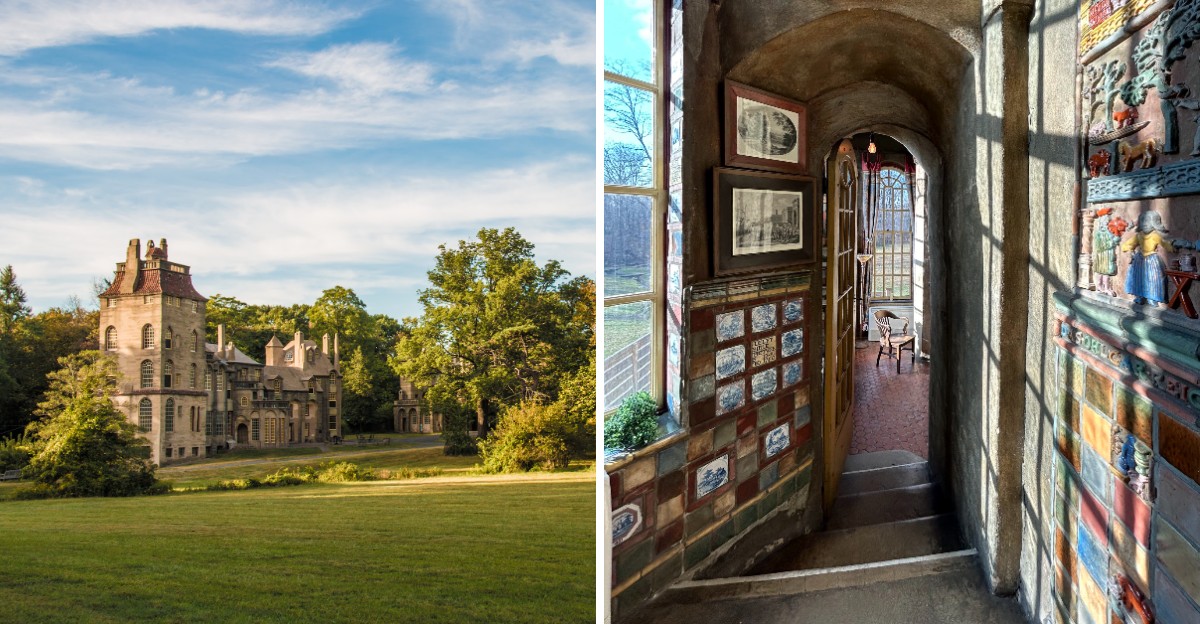
There’s a real castle hiding in the middle of Doylestown, and it looks like it was dropped straight out of a medieval story.
Fonthill Castle rises from the Pennsylvania countryside with towering walls, strange angles, colorful tiles, and enough unexpected details to make an ordinary historic house seem downright boring.
Built in the early 1900s by Henry Chapman Mercer, this remarkable home was never meant to follow the rules.
Mercer filled it with handcrafted tiles, historic treasures, winding passages, unusual rooms, and architectural surprises around nearly every corner.
The best part? You don’t need a passport or a flight across the Atlantic to see it.
This castle has been standing in Doylestown for more than a century, quietly waiting for curious visitors to discover just how strange and spectacular a home can be.
A Real Castle Hiding In The Heart Of Doylestown
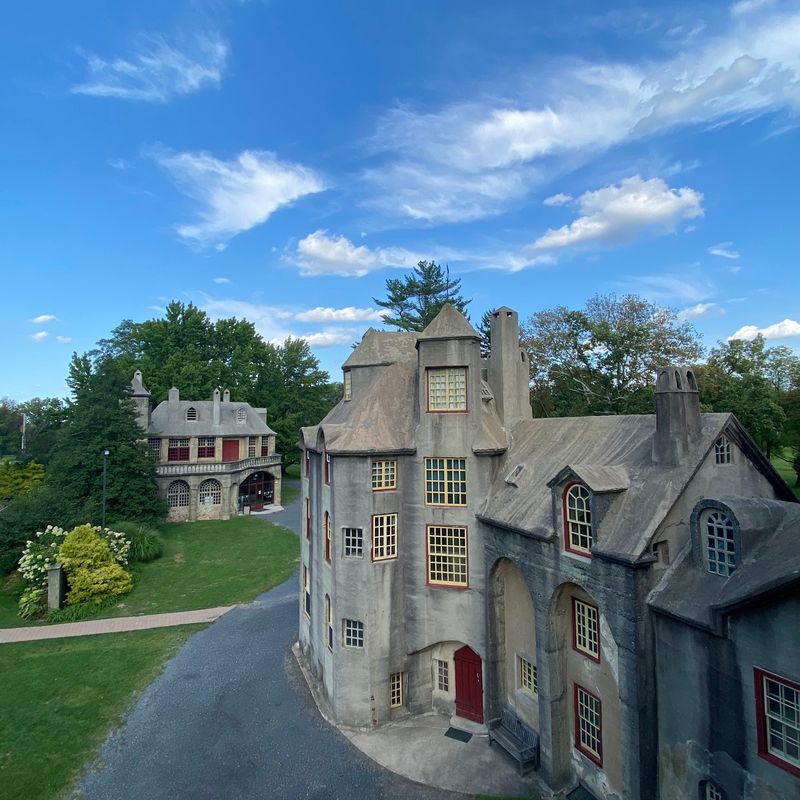
Walking through a typical Pennsylvania neighborhood, you’d never expect to stumble upon an actual castle. Yet that’s exactly what awaits visitors in Doylestown, where Fonthill Castle rises from its grounds like something straight out of a storybook.
Unlike the grand European fortresses built centuries ago, this castle has a much more recent and unusual origin story.
Henry Chapman Mercer created this extraordinary landmark in the early 20th century, designing it as his personal residence and creative showcase. The building defies every expectation of what an American home should look like.
With its towers, turrets, and Medieval-inspired features, Fonthill stands as one of the most unexpected architectural treasures hiding in plain sight.
Most locals know it exists, but countless visitors pass through Doylestown without ever discovering this gem. The castle’s location on East Court Street keeps it somewhat tucked away from main tourist routes.
That hidden quality only adds to its magic and mystery.
Henry Mercer Built The Castle As His Own Extraordinary Home
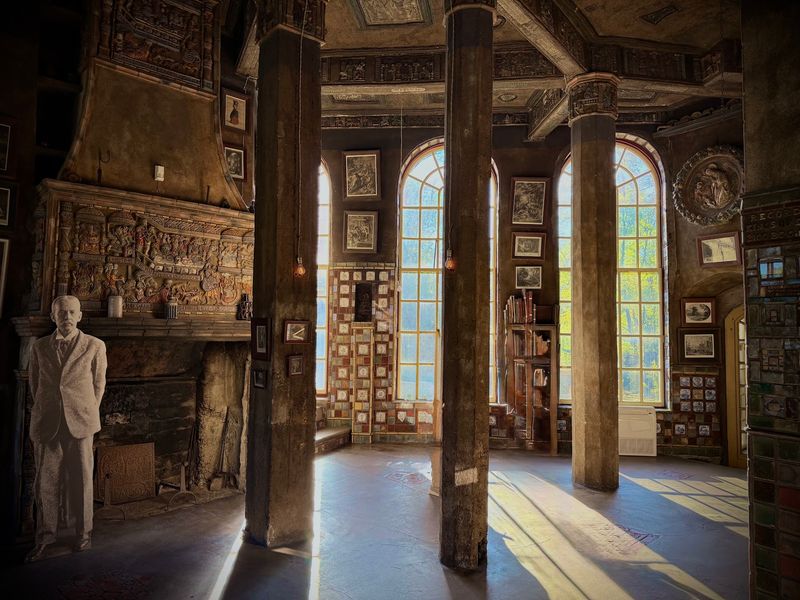
Henry Chapman Mercer wasn’t your average homeowner. Born in 1856, this brilliant scholar wore many hats throughout his life: archaeologist, collector, historian, craftsman, and innovative tilemaker.
His diverse interests shaped nearly every decision he made when planning Fonthill.
Construction began in 1908, with Mercer personally overseeing the entire project. He didn’t hire a traditional architect or follow conventional building plans.
Instead, he let his imagination run wild, creating spaces that reflected his scholarly passions and artistic vision. The castle became both his home and a three-dimensional scrapbook of everything he loved.
Mercer’s background in archaeology influenced his appreciation for historic craftsmanship and traditional building methods. His extensive travels exposed him to architectural styles from around the world.
He wanted Fonthill to be a living museum where he could surround himself with beauty and history every single day. The result was something no one had ever seen before in American residential architecture.
It Looks Medieval, But The Castle Is Made Of Reinforced Concrete
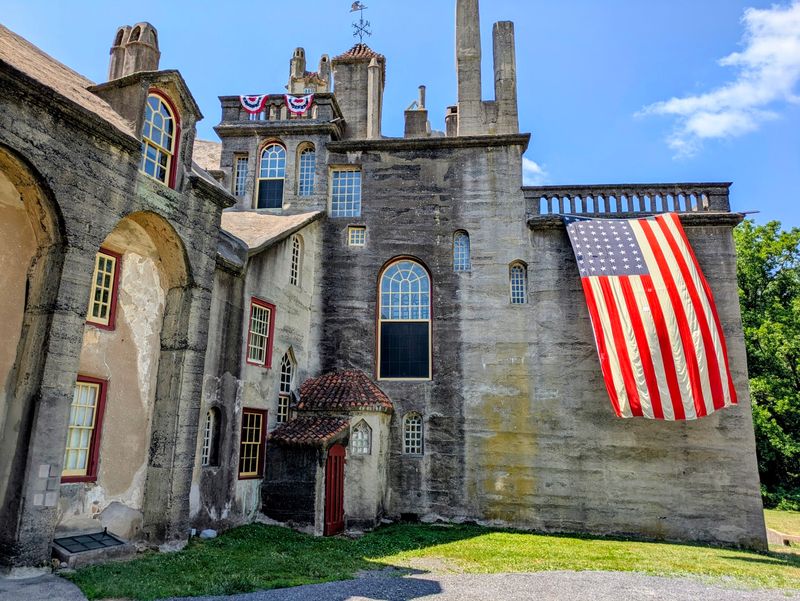
Here’s where Fonthill gets really interesting. Despite its ancient appearance, the castle represents cutting-edge construction technology for its time.
Mercer chose reinforced concrete as his primary building material, a radical choice in the early 1900s when most fancy homes used traditional stone, brick, or wood.
The construction process stretched from 1908 into the early 1910s, with workers pouring concrete into custom forms. Mercer drew inspiration from Medieval, Gothic, and Byzantine architectural traditions rather than following typical American mansion styles.
He wanted the romantic look of an old-world castle combined with the durability and flexibility of modern materials.
This concrete construction allowed Mercer to create irregular shapes and unusual spaces that would have been extremely difficult with traditional building methods. The material proved incredibly strong and fire-resistant.
Today, the castle stands as proof that Mercer’s experimental approach worked beautifully, preserving his vision for over a hundred years without major structural problems.
Inside Are 44 Rooms, 18 Fireplaces, And More Than 200 Windows
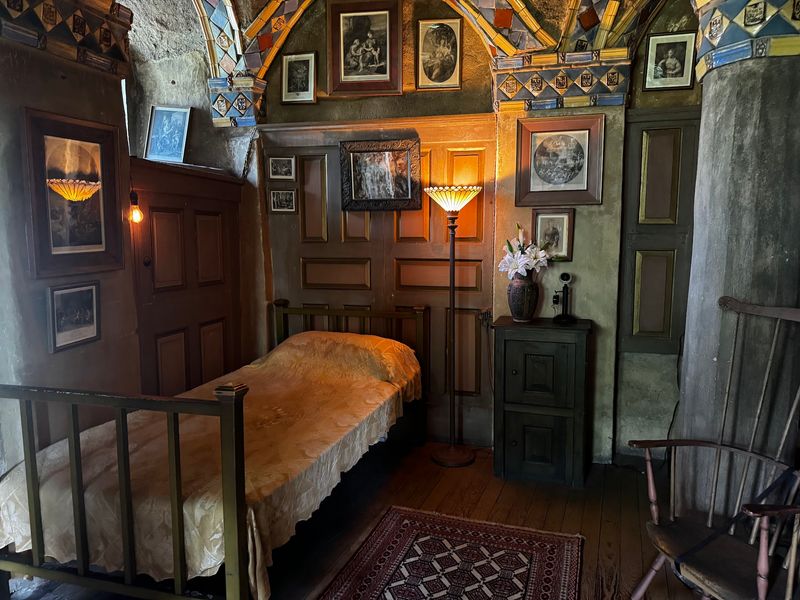
Stepping inside Fonthill means entering a labyrinth of architectural wonders. The castle contains 44 distinct rooms, each with its own character and purpose.
These spaces range from tiny nooks perfect for reading to grand halls suitable for entertaining guests. No two rooms feel quite the same.
Throughout the building, you’ll find 18 fireplaces warming different areas. Each fireplace received special attention from Mercer, who decorated many with his handmade tiles.
The mantels and surrounds showcase different styles and artistic influences.
Perhaps most remarkably, more than 200 windows puncture the castle’s walls. Mercer individually designed each window opening, varying their sizes, shapes, and placements.
Some windows are tall and narrow, others short and wide. This variety creates constantly changing light patterns throughout the day.
The irregular fenestration adds to the building’s fairy-tale quality while ensuring every room receives natural illumination. Walking through Fonthill means constantly discovering new views both inside and out.
The Walls Are Covered With Henry Mercer’s Famous Tiles
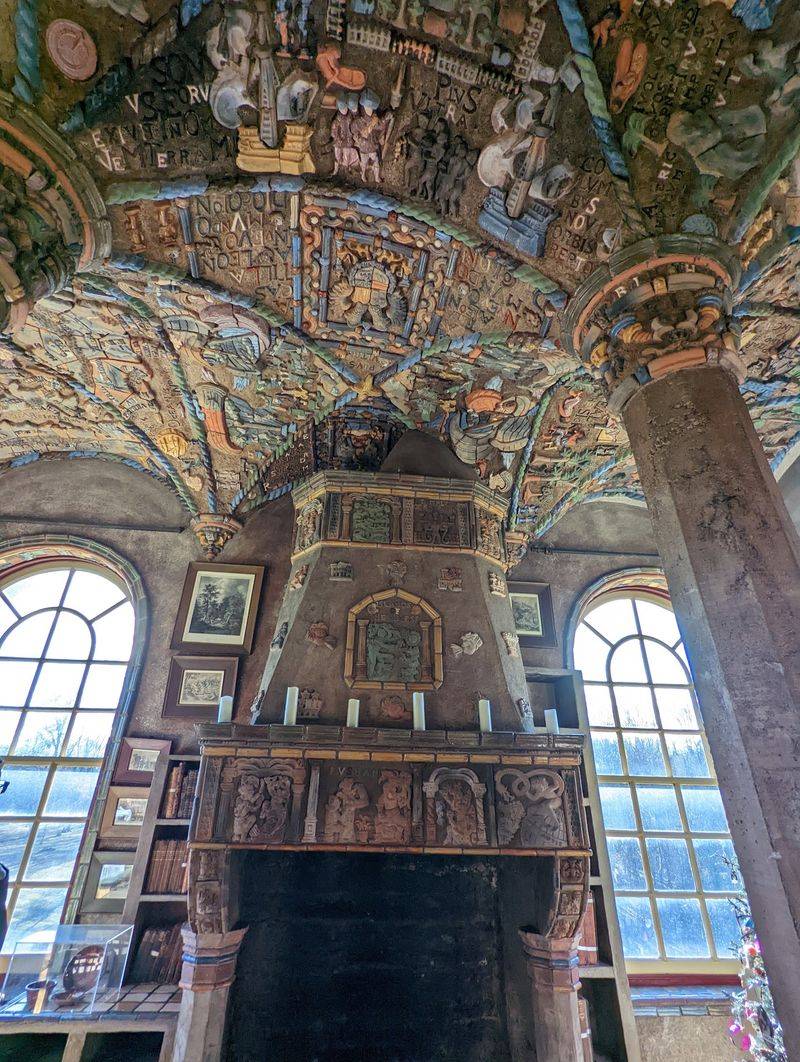
Fonthill isn’t just a castle with some tile decoration. The entire building serves as a showcase for Mercer’s passionate tilemaking work.
Thousands of handcrafted ceramic tiles cover walls, ceilings, fireplaces, and architectural details throughout the property. These tiles transform ordinary surfaces into works of art.
Mercer produced many tiles himself through his nearby Moravian Pottery and Tile Works. He also collected extraordinary examples from Persian, Chinese, Spanish, Dutch, and other cultural traditions.
The collection represents years of dedicated hunting and appreciation for ceramic artistry from around the globe.
Walking through the castle means being surrounded by this incredible tilework at every turn. Biblical scenes share wall space with medieval knights, nature motifs, and geometric patterns.
Some tiles tell stories, while others simply dazzle with color and craftsmanship. The integration is so complete that the tiles feel inseparable from the architecture itself.
This wasn’t just interior decoration for Mercer but rather the very soul of his home.
Every Turn Reveals A Different Architectural Surprise
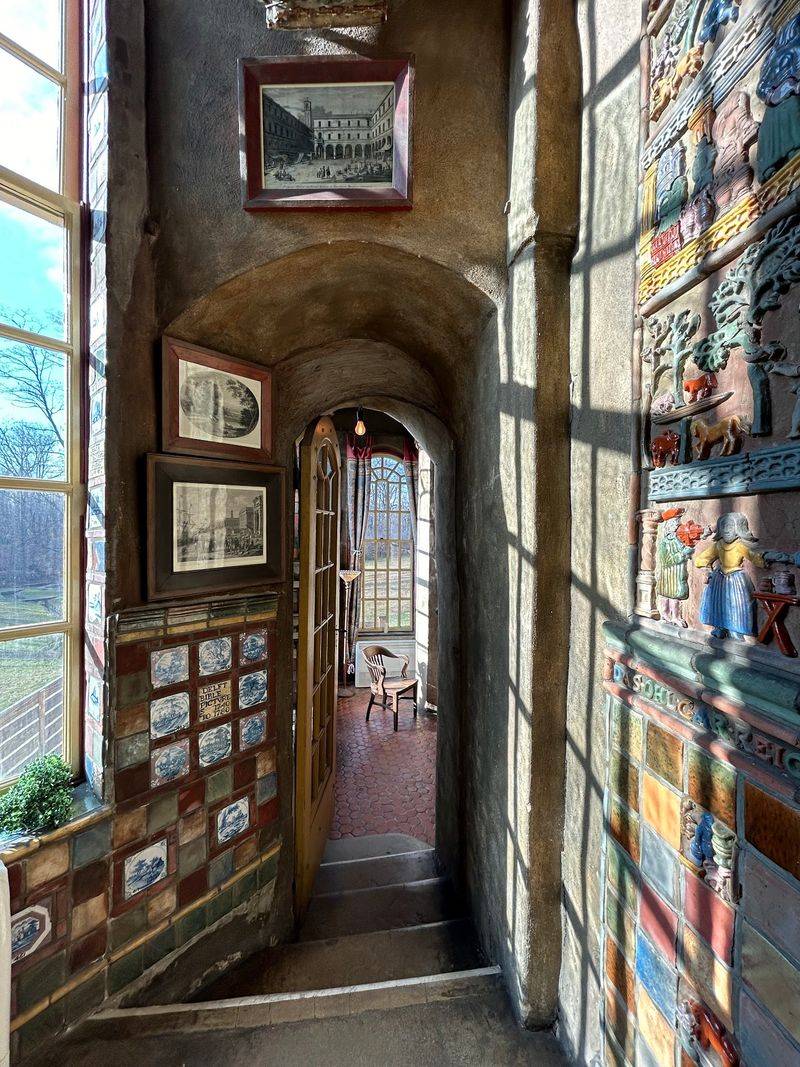
Forget everything you know about traditional mansion layouts. Fonthill’s interior follows no predictable pattern or conventional floor plan.
Mercer designed the space organically, adding rooms and passages based on inspiration rather than symmetry or standard architectural practices.
Visitors encounter steep stairways that twist in unexpected directions. Narrow passages suddenly open into surprisingly spacious rooms.
Balconies overlook rooms you’ve already visited from completely different angles. Some doorways are arched, others rectangular, and a few seem custom-shaped for no particular reason except Mercer’s whim.
The ceiling heights change dramatically from space to space. You might move from a cozy, low-ceilinged study into a soaring two-story hall within just a few steps.
These unusual transitions create a genuine sense of exploration and discovery. Unlike touring a typical historic house where rooms connect logically, navigating Fonthill feels like wandering through a storybook castle where magic might happen around any corner.
That disorienting quality was completely intentional on Mercer’s part.
Fonthill Was More Than A Home, It Was Mercer’s Personal Showplace
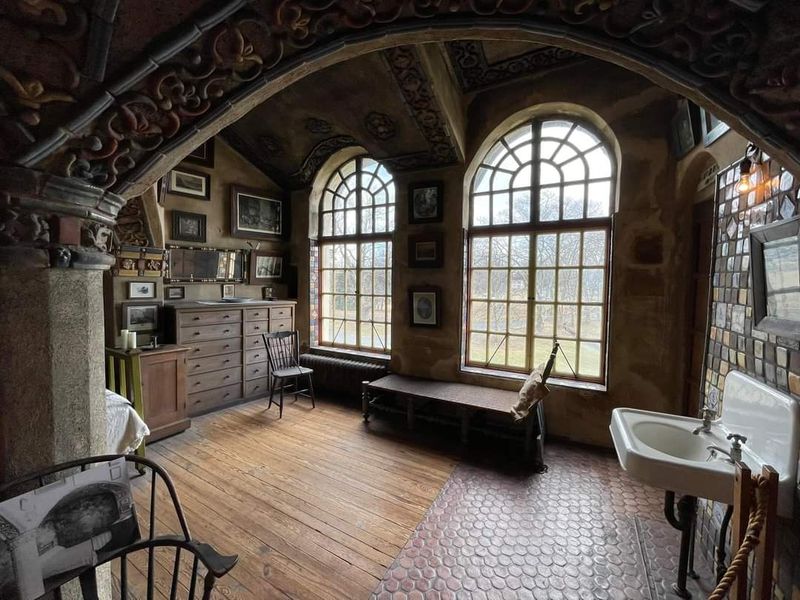
Mercer never intended Fonthill to be merely a comfortable place to sleep and eat. From the beginning, he envisioned the castle as a living expression of his scholarly interests and collecting passions.
Every design choice reflected his desire to surround himself with beauty, history, and craftsmanship.
The building holds historic objects, artwork, books, prints, and especially tiles that Mercer gathered over decades. These weren’t stored away in closets or basements.
Instead, he incorporated them directly into the architecture. His collections became part of the walls, ceilings, and built-in displays throughout the residence.
This approach created something truly unique, part home, part museum, and part architectural experiment. Mercer could walk through his own house and be constantly reminded of different cultures, time periods, and artistic traditions.
Friends and visitors experienced the same journey through his curated world. The castle functioned as a three-dimensional autobiography, revealing Mercer’s mind and interests through physical space rather than written words.
Some Of The Castle’s Most Fascinating Features Were Surprisingly Modern
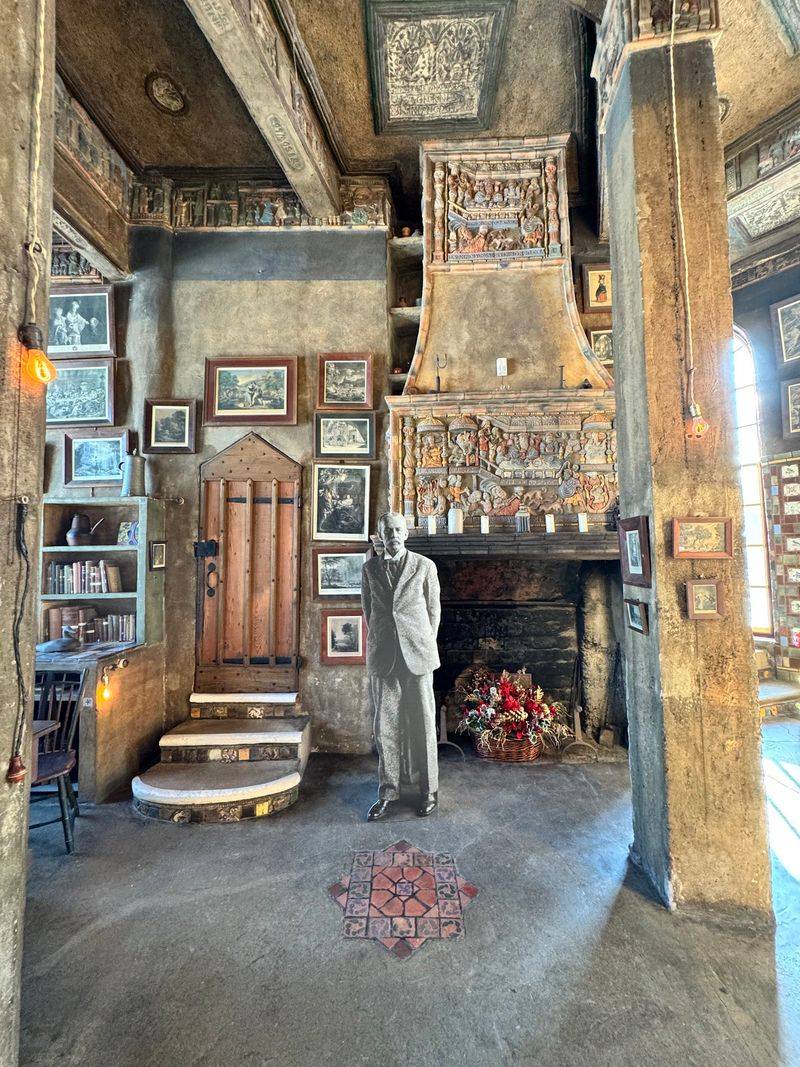
Behind Fonthill’s Medieval appearance lurked surprisingly advanced technology for the early 1900s. Mercer appreciated historical aesthetics but had no interest in living without modern conveniences.
The combination created fascinating contrasts throughout the building.
An Otis elevator served the castle’s multiple levels, saving residents from constantly climbing those steep stairs. Multiple dumbwaiters moved items between floors efficiently.
An intercom buzzer system allowed communication between different parts of the large building. Internal telephones connected various rooms long before such systems became common in American homes.
These modern features remained somewhat hidden, preserving the castle’s old-world atmosphere. Mercer wanted visitors to feel transported to another time without actually sacrificing comfort or practicality.
The result was a unique blend of romantic architecture and cutting-edge household technology. Today, this combination seems even more remarkable when you consider how rare such conveniences were in 1910.
Mercer proved you could honor the past while embracing the future, creating a timeless home that worked beautifully on multiple levels.
The Castle Is Part Of A Larger Henry Mercer Historic Legacy
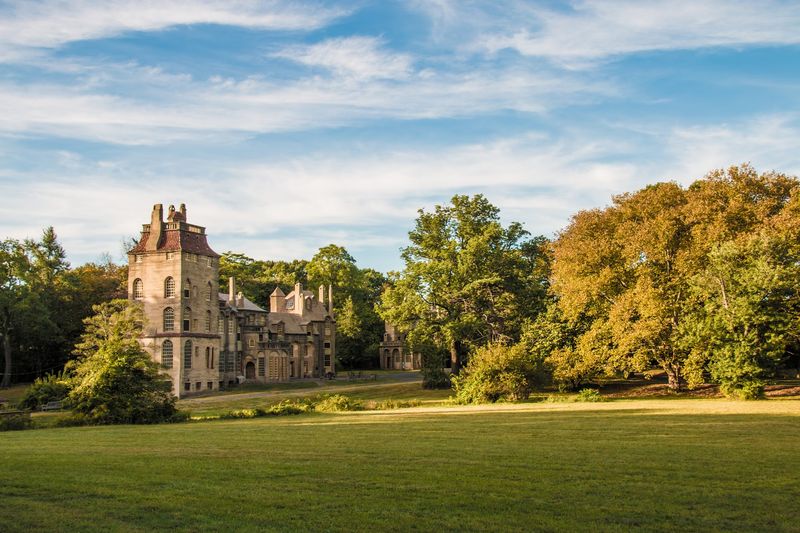
Fonthill doesn’t stand alone in Doylestown. The castle forms one part of a remarkable trio of buildings connected to Henry Mercer’s life and work.
Together, these structures create an extraordinary historic district that tells a complete story about this fascinating man.
The Mercer Museum sits roughly a mile away, housing Mercer’s massive collection of early American tools and artifacts. This enormous concrete structure looks equally unusual from the outside.
Then there’s the Moravian Pottery and Tile Works, where Mercer produced the beautiful tiles that adorn Fonthill and countless other buildings.
Visiting all three sites gives you a comprehensive understanding of Mercer’s collecting passions, architectural vision, and artistic talents. Each building showcases different aspects of his multifaceted personality and interests.
Fonthill reveals his personal living space and aesthetic preferences. The museum displays his scholarly work preserving American craft traditions.
The tile works demonstrates his hands-on artistic production. Together, they make Doylestown an incredibly important destination for anyone interested in American arts, crafts, and architecture from the early twentieth century.
Plan Your Visit
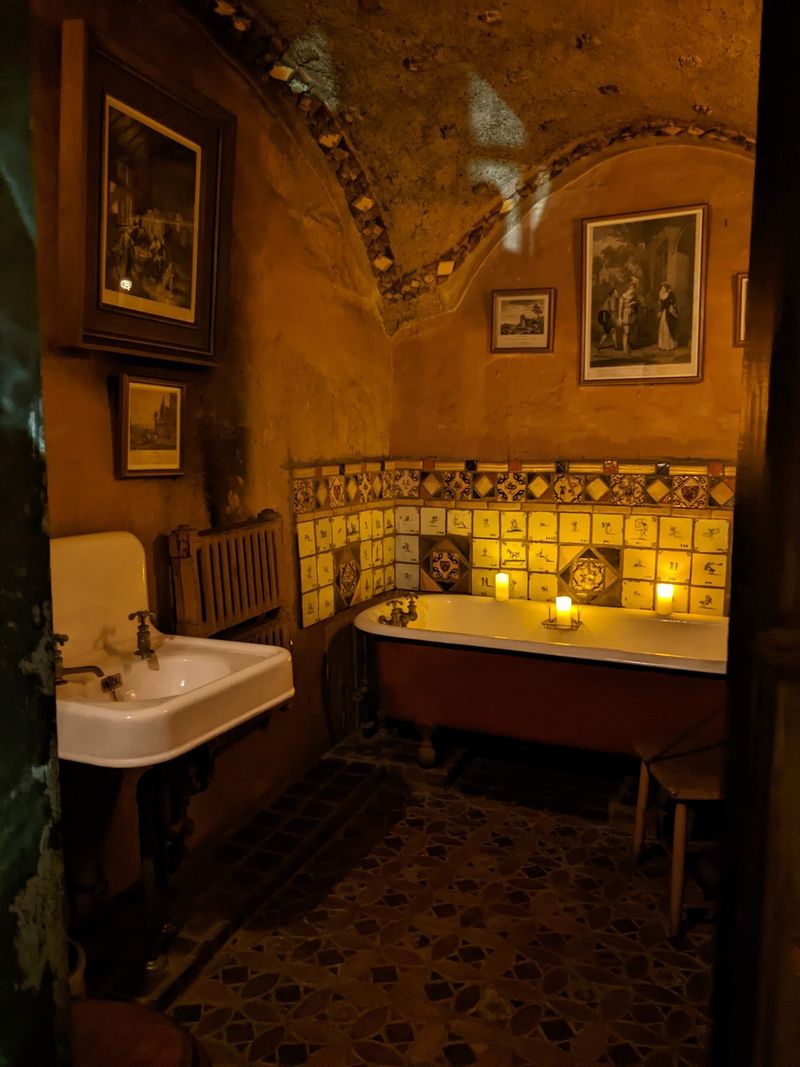
Ready to explore this incredible castle yourself? Fonthill Castle is located at 525 E.
Court Street, Doylestown, PA 18901. The castle welcomes visitors Tuesday through Sunday from 10 a.m. to 5 p.m., with Mondays reserved as closure days.
However, special events occasionally change these hours, so checking ahead is always smart.
All visits happen through guided tours lasting approximately 60 minutes. Advance ticket purchases are strongly recommended because tours frequently sell out, especially during peak seasons.
Current admission prices are $20 for adults, $17 for seniors, $15 for students, $10 for ages 6 through 17, and free for children 5 and under.
Plan to arrive about 10 minutes before your scheduled tour time. Use the designated Fonthill parking area, accessed via the Route 313 or Swamp Road entrance.
Be prepared for steep stairs and narrow, uneven passages throughout the castle. Unfortunately, these architectural features mean accessibility options are quite limited.
Comfortable walking shoes are essential for navigating Mercer’s wonderfully irregular creation safely and enjoyably.