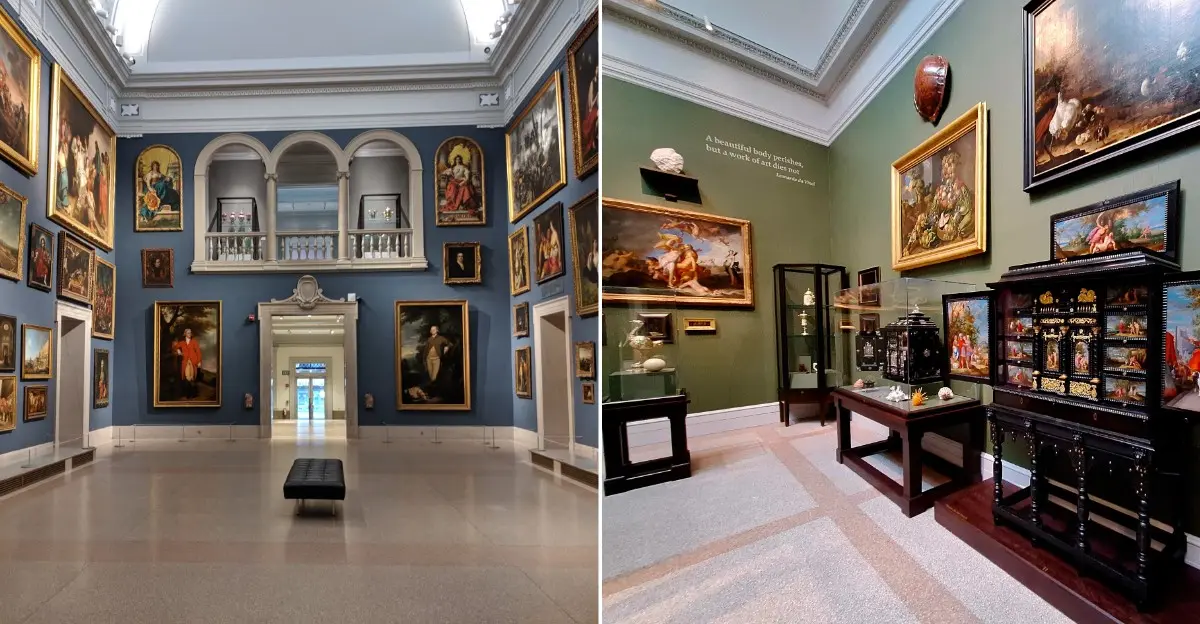
A quiet stone building in downtown Hartford holds centuries of art behind its doors. At the Wadsworth Atheneum Museum of Art, visitors can move from grand European paintings to ancient objects, American masterpieces, and striking modern works without ever leaving the building.
Located at 600 Main St, this remarkable museum is the oldest continuously operating public art museum in the United States, giving every gallery a little more historical weight.
Inside, the experience changes from room to room. You might pause before a richly detailed portrait, study an ancient artifact, then turn a corner and find something bold and contemporary.
The mix makes it easy to lose track of time as you explore collections spanning cultures and generations.
For anyone curious about art, history, or unexpected discoveries in Hartford, the Wadsworth Atheneum offers plenty to uncover. Here are some of the details and memorable stops worth seeking out.
A Castle on Main Street
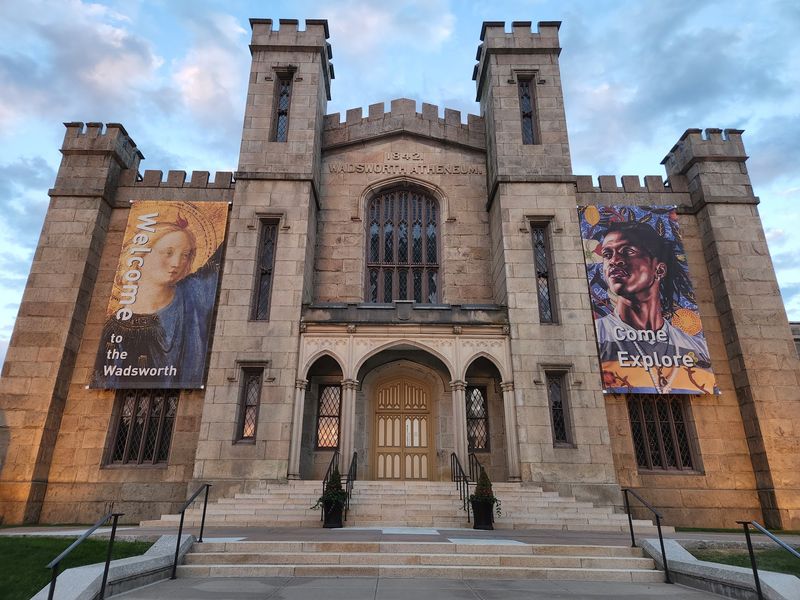
Traffic rolls through downtown Hartford, and then a stone castle seems to appear beside the sidewalk. Its towers and pointed windows make an ordinary walk feel like the start of a story.
That first look is a good reason to pause before heading through the museum doors.
The Wadsworth Atheneum Museum of Art stands at 600 Main Street, where its original Gothic Revival building has welcomed visitors since 1844. Founded in 1842, the museum is known as the oldest continuously operating public art museum in the United States.
Architects Ithiel Town and Alexander Jackson Davis designed the granite building to look grand without leaving Connecticut behind.
The name atheneum offers another clue to its past. Daniel Wadsworth imagined a place where people could explore art alongside other subjects, including literature, history, and science.
In its early years, the building served more than one cultural purpose.
Take a moment to study the outside before you go in, especially the stonework and castle-like shape. Inside, remember that people have been coming here to learn and look for generations.
The building makes the visit feel special before you see a single painting.
Five Buildings, One Surprising Walk
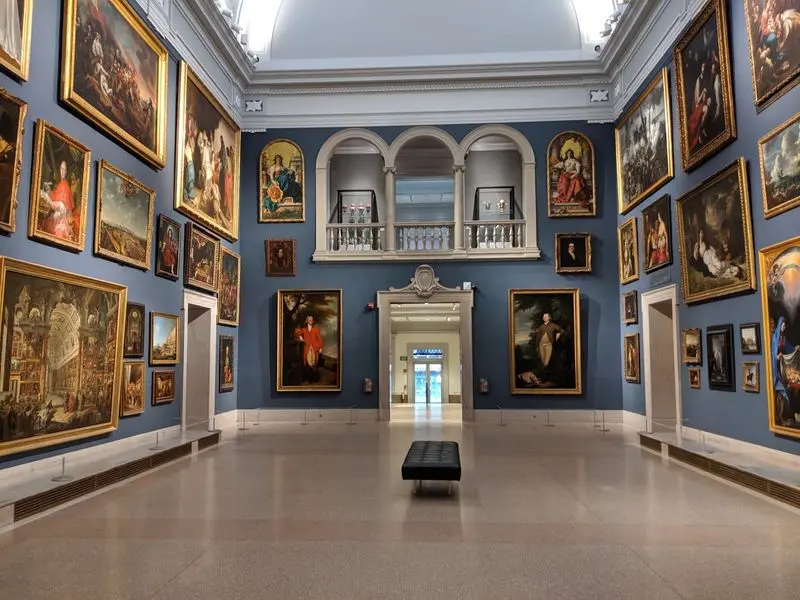
A doorway can change the mood of a whole afternoon. At this museum, moving into the next room may feel like stepping into another chapter of design history.
The art is not the only thing worth looking at; the spaces around it tell stories too.
The Wadsworth Atheneum in Hartford joins five buildings into one museum. Its original Gothic Revival structure gained new neighbors as the collection grew, including the Tudor Revival Colt Memorial and the Renaissance Revival Morgan Memorial.
Later additions brought very different shapes and styles to the same block.
One surprise is the Avery Memorial, which opened in 1934. It is recognized as the first American museum building designed in the International Style, with a cleaner, more modern look than the older sections.
The Goodwin building followed in 1969, adding another piece to the architectural puzzle.
As you walk, look up from the labels now and then. Notice where a hallway widens, where the light changes, or where older details give way to simple lines.
If the layout feels confusing, ask a staff member for directions. Finding your way through the buildings is part of the fun.
The Director Who Made Hartford Bold
Some museums grow by playing it safe. Hartford had a director who seemed far more interested in asking what an art museum could do next.
His choices helped turn a long-established institution into a place known for taking chances.
A. Everett Austin Jr., often called Chick Austin, became director of the Wadsworth Atheneum in 1927.
During his 17 years there, he strengthened its European paintings collection while bringing modern artists to local audiences. He also made room for music, dance, theater, film, and photography.
His record includes a major Italian Baroque exhibition, a landmark Surrealist show in 1931, and an ambitious Picasso retrospective. He even commissioned an opera by Gertrude Stein and Virgil Thomson.
Those choices sound bold today, but they were especially daring when the museum made them.
Look for the connection between seemingly different galleries as you visit. An older European painting and an unusual modern work may share a building because someone believed both deserved an audience.
You do not need to love every piece to enjoy that spirit. Austin’s story invites you to stay curious, follow a surprising turn, and give unfamiliar art a little time.
A Caravaggio That Stops You Cold
One small movement in a painting can make a crowded day go quiet. A face, a hand, or a patch of light draws your attention, and suddenly you want to stand still.
That is the kind of encounter the museum’s Baroque art can offer.
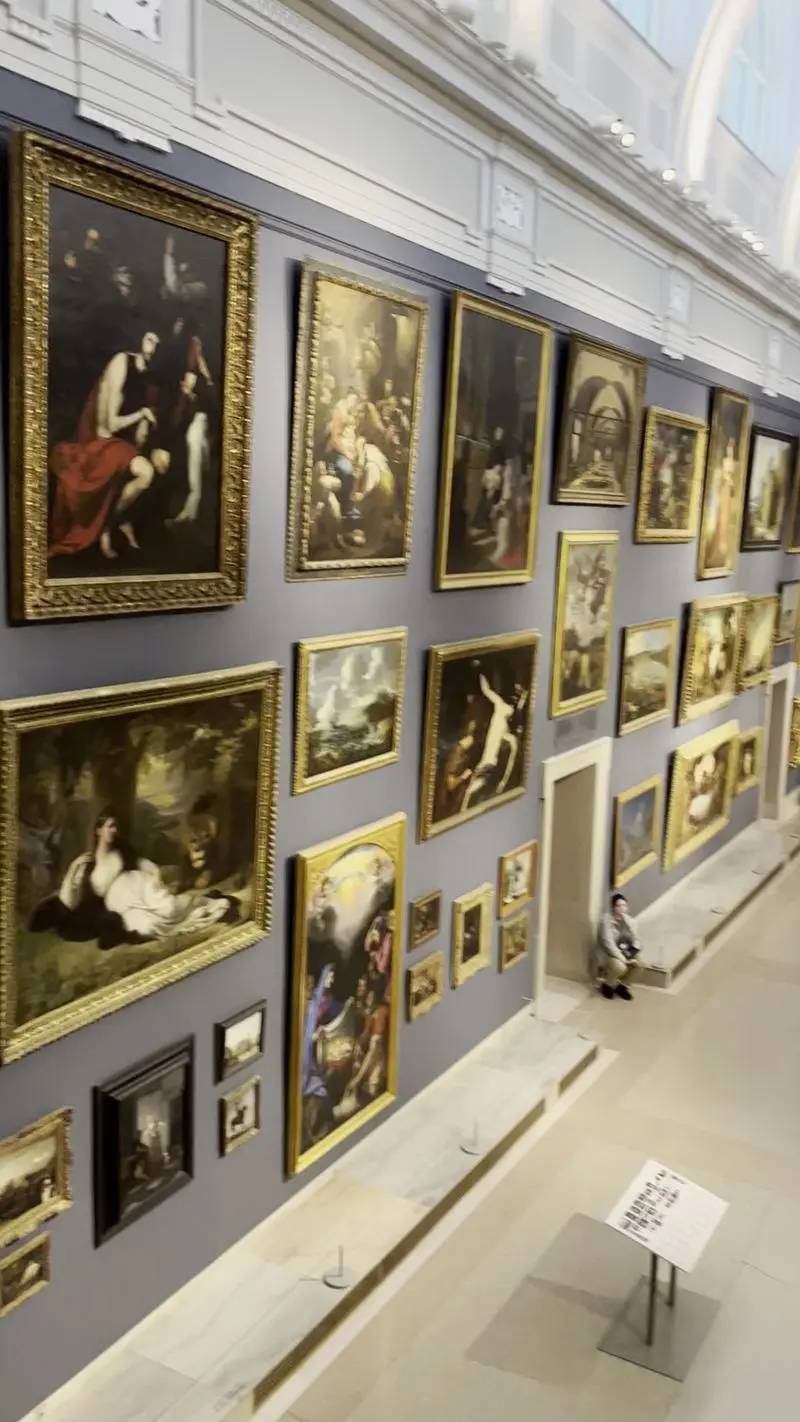
At the Wadsworth Atheneum, Caravaggio’s Saint Francis of Assisi in Ecstasy is a major highlight. The museum acquired it in 1942, making it the first Caravaggio painting purchased by an American art museum.
Its strong contrast between light and darkness helps give the scene its powerful feeling.
Other Italian Baroque works add to the experience, including paintings connected with artists such as Orazio Gentileschi and Bernardo Strozzi. Rather than trying to memorize every name, look for how each artist guides your eye.
A bright face against a dark background can tell you where the story begins.
Give yourself a few minutes here instead of rushing to the next famous work. Start by looking at the whole painting, then move your eyes toward the smallest details.
The visit becomes richer when you notice how an artist makes emotion visible without using a single word.
A Doorway Into Surreal Dreams
What happens when a painting refuses to behave like the real world? Shapes may seem familiar until you look again and realize they do not belong together.
That playful confusion is part of the appeal of Surrealism, and Hartford helped introduce it to American museum visitors.
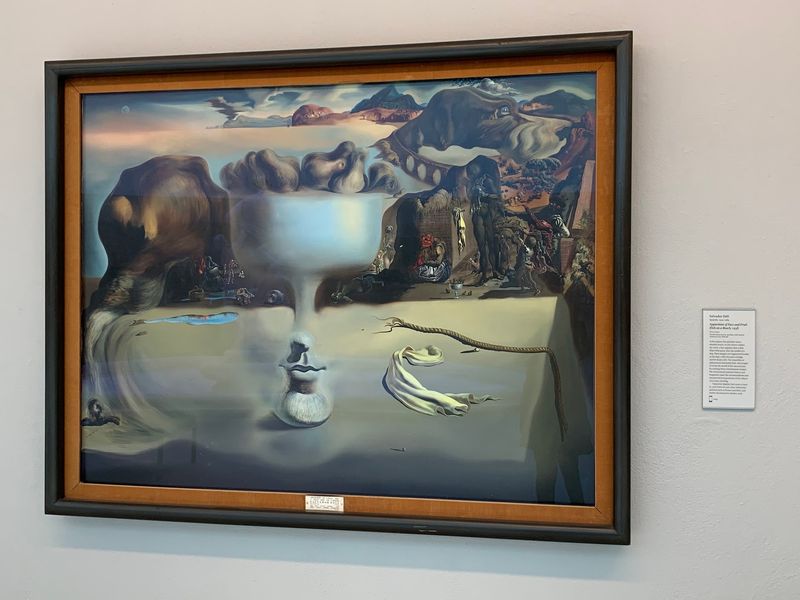
The Wadsworth Atheneum presented a major Surrealist exhibition in 1931, early in the movement’s American museum history. Its collection has included work by artists such as Salvador Dalí, Joan Miró, Max Ernst, and René Magritte.
Their art can feel strange, funny, uneasy, or all three at once.
There is no need to hunt for one correct answer. Pick an image that catches your eye and describe what you can actually see before guessing what it means.
If you are visiting with someone, compare your ideas. The same odd detail may suggest two completely different stories.
Because galleries and displays can change, check the museum’s current information if there is a particular artist you hope to see. Even without a checklist, Surrealist art rewards an open mind.
It offers a welcome break from everyday rules and turns a quiet museum stop into a lively conversation.
Tiny Objects With Long Histories
It is easy to walk past a small object while searching for a giant painting. Then a piece of ancient glass catches the light, and you wonder whose hands once held it.
The museum’s decorative arts and antiquities reward anyone willing to slow down.
The Wadsworth Atheneum received a remarkable group of objects from financier J. Pierpont Morgan.
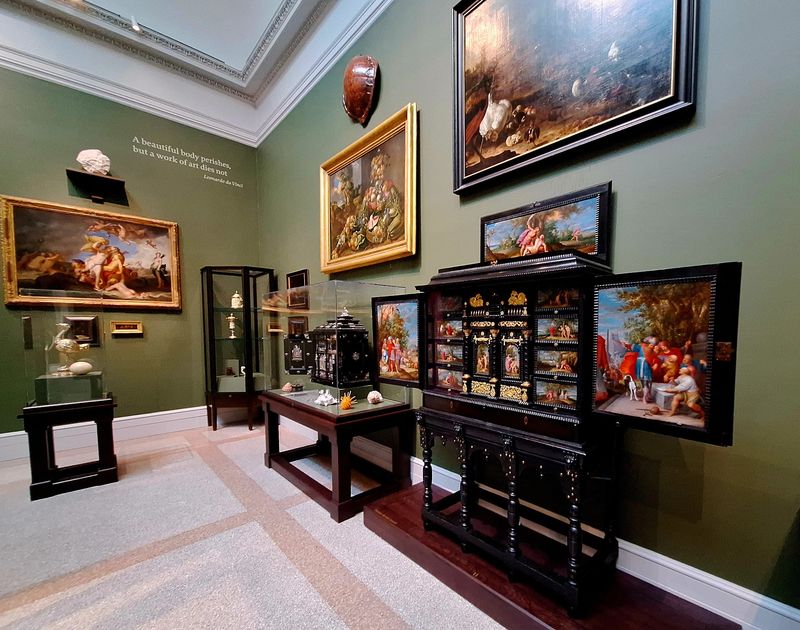
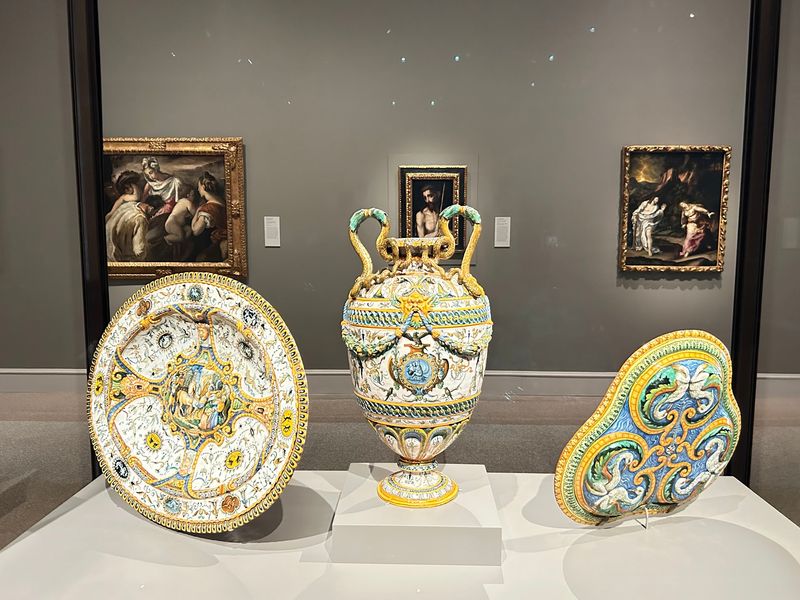
Its holdings include Greek and Roman antiquities, along with European decorative arts. Glass, bronzes, ceramics, and porcelain show many ways that makers turned useful or prized objects into things of beauty.
Look closely at the shape of a vessel or a painted pattern on a plate. How would someone have made it without today’s tools?
That question can make even a modest object feel impressive. Italian maiolica, Venetian glass, and European porcelain offer plenty of details to compare.
Choose one display case rather than trying to study everything at once. Read a label, examine the object, and picture the long trip between its making and its arrival in Hartford.
These pieces give the visit a different pace. Instead of one grand scene, you find many small stories waiting behind the glass.
Hartford Industry in an Art Museum
A finely decorated machine can raise questions that a painting never does. You may admire the care in its design while also thinking about the harm it was made to cause.
That mix of craft and difficult history makes the museum’s Colt material especially thought-provoking.
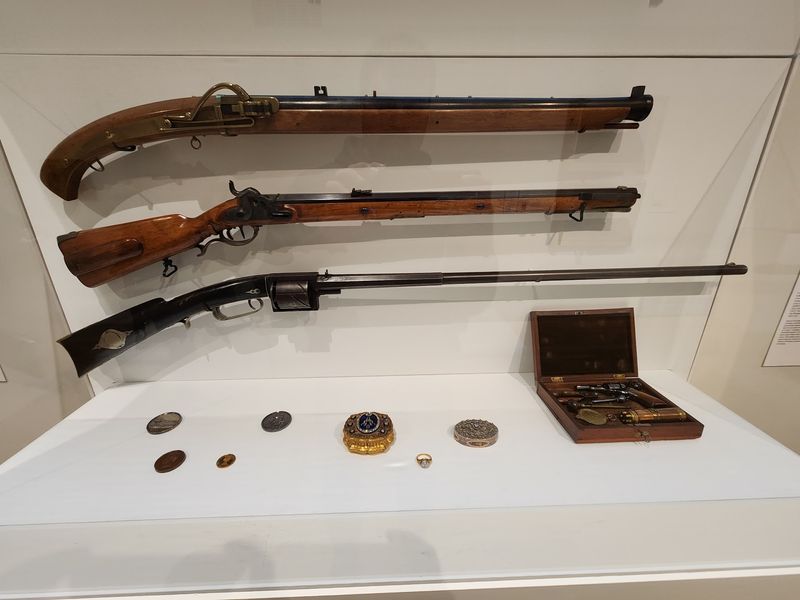
Samuel Colt was a major figure in Hartford’s industrial past, and the Wadsworth Atheneum holds objects connected with Colt firearms. They offer a close look at nineteenth-century manufacturing, metalwork, and decoration.
Some examples show how makers paid attention to appearance as well as function.
Take time with the labels rather than treating these objects as simple displays of invention. Ask what they reveal about workers, business, and the society that produced them.
A museum visit can leave room for admiration, discomfort, and questions at the same time.
For families, this section can lead to an honest conversation suited to a child’s age. Focus on how objects are made and why museums preserve evidence of the past, including parts that are hard to discuss.
Seen alongside paintings and furniture, Colt’s legacy shows that Hartford’s art history is tied to its industrial history too.
Modern Art With Room to Surprise You
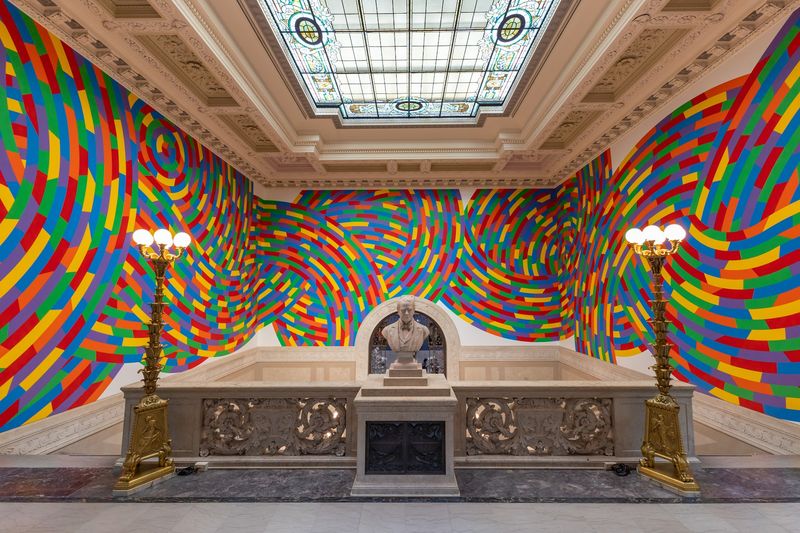
After centuries-old portraits, a splash of color can feel like a sudden change in weather. Modern art at the Wadsworth Atheneum asks you to switch gears and notice fresh ways of making an image.
Some works are bold, while others make their point quietly.
The Hartford museum has collected modern and contemporary art across many movements, including Abstract Expressionism, Pop art, and Conceptual art. Its holdings include a work by Jackson Pollock titled Number 9.
The MATRIX program, begun in 1975, has helped bring new artistic voices into the museum’s changing exhibition spaces.
You do not have to know an art movement’s name to enjoy what is in front of you. Stand near a work, step back, and notice whether the change in distance changes your reaction.
With an abstract piece, you can start with color, size, texture, or the marks left by the artist.
Check current gallery information before going if you hope to see a particular work, since displays may rotate. Otherwise, let yourself be surprised.
The contrast between old and new art is one of the best reasons to wander here without a strict route.
A Museum That Keeps the City Coming Back
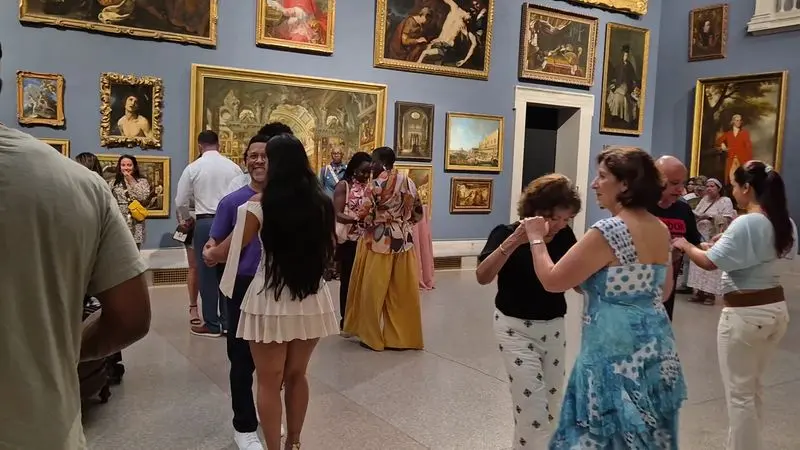
A museum visit does not have to be a silent march past paintings. One afternoon might bring a helpful tour, a family activity, or time to talk about an artwork with someone new.
At the Wadsworth Atheneum, the galleries are only part of the experience.
The museum offers public programs that can help visitors connect with its collection in different ways. Tours, learning activities, and special events provide chances to return even after you have seen the permanent galleries.
Programs and schedules can change, so check the museum’s website before choosing your day.
If this is your first visit, leave more time than you think you need. The connected buildings hold a wide range of art, and it is more enjoyable to follow your interests than to race through every room.
Ask staff for help finding a gallery or a good starting point.
The museum shop and café can offer a pause during a longer outing, but confirm their current hours before counting on them. Whether you come for a program or simply for a quiet afternoon, the place feels like an active part of downtown Hartford.
There is always a reason to look again.