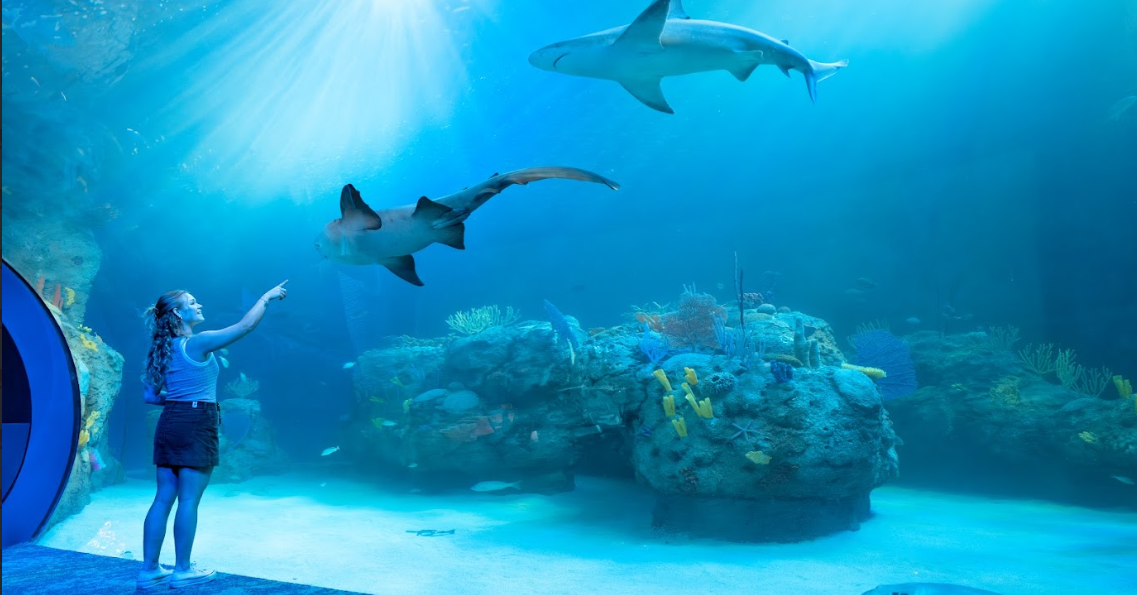
Most aquariums show you fish behind glass, but Mote Science Education Aquarium in Sarasota, Florida, does something far more exciting.
Built right alongside a working marine research laboratory, it gives everyday visitors a front-row seat to real ocean science.
Families can watch researchers in action, explore ecosystems native to Florida’s coastlines, and discover how scientists are fighting to protect the ocean.
If you have ever wondered what happens behind the scenes of ocean conservation, this is the place to find out.
A Next-Generation Aquarium Built Around Real Science
Some places feel like museums. Mote SEA feels like walking into the future of ocean science.
Opened as a brand-new facility, this aquarium was intentionally designed from the ground up to blur the line between public education and active marine research.
Every corner of the building reflects a deliberate choice to connect visitors with the work of Mote Marine Laboratory, one of the most respected independent marine research organizations in the country. The architecture itself supports that mission, with open sightlines, research-adjacent spaces, and exhibit flow that guides guests through real scientific thinking.
Families visiting for the first time often describe a sense of surprise. They expected a traditional aquarium experience but found something closer to stepping inside a working science facility that also happens to be welcoming and fun.
The design makes science feel approachable without dumbing it down. Whether you are eight years old or eighty, the experience challenges you to think differently about the ocean and humanity’s role in protecting it.
Where Research and Public Experience Intersect
© Mote Marine Laboratory & Aquarium
Walk into most aquariums and you see beautiful tanks, maybe a gift shop, and a few informational signs. Mote SEA flips that script entirely.
Here, the exhibits are not just displays of marine life. They are windows into active, ongoing scientific studies happening right now.
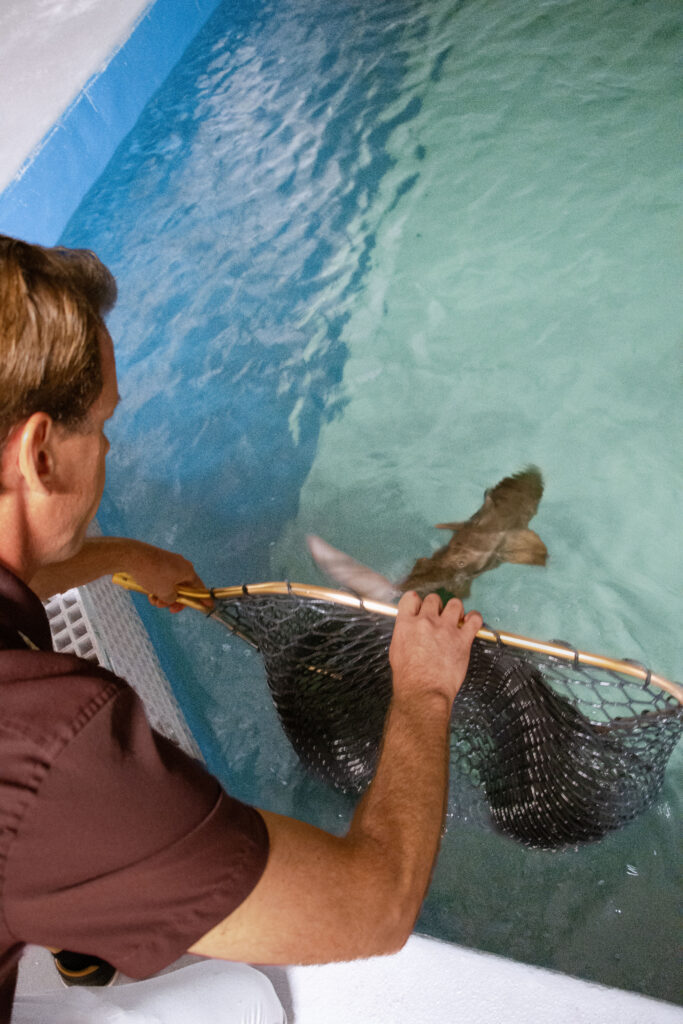
Researchers affiliated with Mote Marine Laboratory conduct studies on species behavior, water quality, coral health, and more. The aquarium is structured so that visitors can observe the outcomes of that research in real time, not just read about findings published years ago.
That freshness makes a real difference in how engaging the experience feels.
For older kids and curious adults, this intersection of research and public access opens up conversations that go far beyond typical aquarium visits. You might find yourself standing in front of a tank and learning about a study that started just months ago.
That kind of immediacy is rare in science education. It reminds visitors that ocean science is not a finished story.
It is a living, evolving field where new questions are being asked and answered every single day.
Visible STEM Labs Integrated Into the Experience
© Mote Marine Laboratory & Aquarium
Imagine walking past a glass wall and seeing actual scientists or students bent over microscopes, examining water samples, or testing equipment. That is exactly what Mote SEA offers through its integrated STEM labs.
These are not staged demonstrations. They are real working spaces built into the visitor experience.
The labs cover a range of disciplines, including marine biology, environmental science, and ocean technology. Guests of all ages can observe the scientific process in action, which is something textbooks simply cannot replicate.
Watching a real researcher troubleshoot an experiment makes science feel human, messy, and genuinely exciting.
For younger visitors, especially students in middle or high school, seeing these labs can spark something powerful. Many kids grow up thinking scientists are distant, mythical figures.
Seeing them at work, in real time, through a window just a few feet away, changes that perception fast. Teachers who bring classes here often report that students ask better, sharper questions afterward.
The STEM lab integration is one of the most quietly powerful features of the entire facility, and it costs nothing extra beyond the price of admission.
Workforce Development in Action
© Mote Marine Laboratory & Aquarium
Not every aquarium is thinking about what happens after the visit. Mote SEA is.
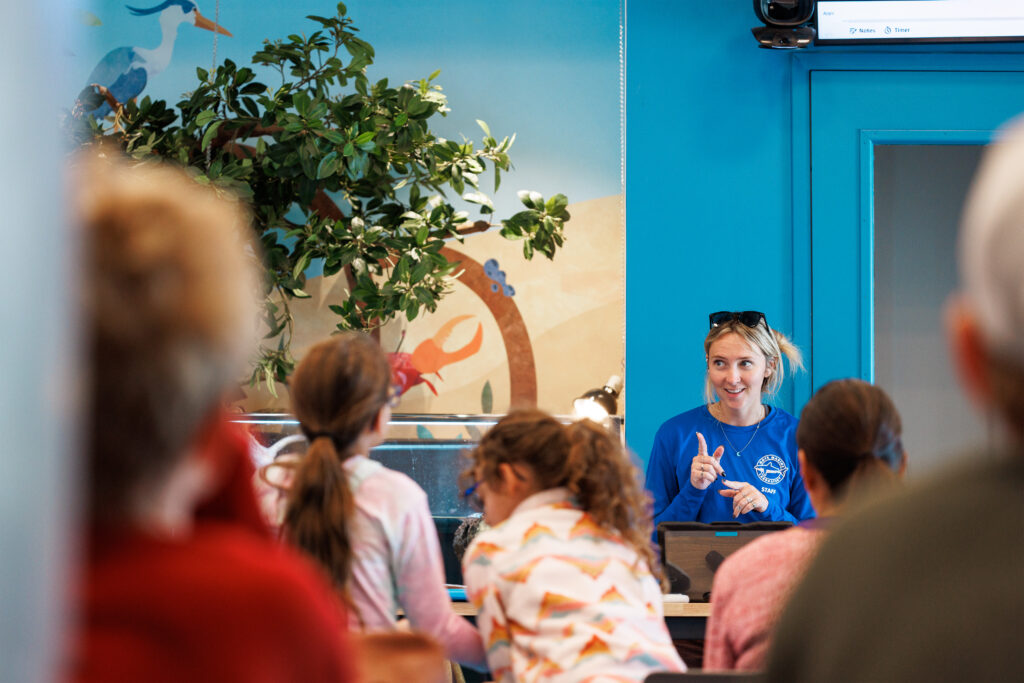
One of the most forward-thinking aspects of this facility is its commitment to workforce development, preparing the next generation of marine scientists, aquaculture specialists, and conservation professionals.
Dedicated spaces within the aquarium are designed for hands-on training programs that go beyond casual learning. Students and young adults can engage with real equipment, real species, and real challenges that mirror what professionals face in careers related to the ocean.
Aquaculture, conservation management, and marine research are all represented in these training-focused areas.
This approach reflects a broader understanding that protecting the ocean long-term requires skilled people, not just awareness campaigns. By building workforce pipelines directly into a public-facing facility, Mote SEA creates a model that other institutions could learn from.
Visitors who tour these spaces often leave with a new appreciation for the careers that exist in marine science. Parents frequently mention that their teenagers became genuinely curious about ocean-related fields after spending time at the aquarium.
Inspiration and practical training, happening side by side, is a combination that is hard to find anywhere else.
Exhibits Organized Around Real Ecosystems
© Mote Marine Laboratory & Aquarium
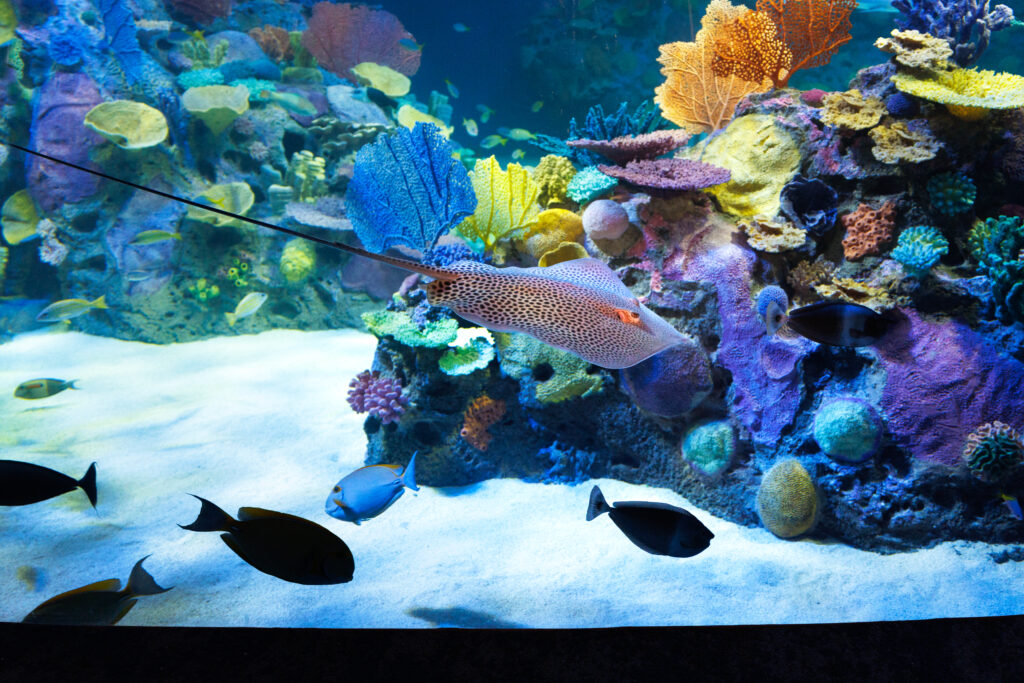
There is something deeply satisfying about seeing an exhibit that mirrors the world outside the walls you are standing in. Mote SEA organizes its displays around actual Florida ecosystems, including coastal waters, seagrass meadows, and coral reefs.
These are not generic ocean scenes. They reflect the specific habitats that Mote scientists study every day.
That specificity matters. When a child learns about a Florida reef fish while standing in Sarasota, the connection to place becomes real.
The animal in the tank is not just an interesting creature. It is a neighbor, part of an ecosystem that exists just offshore.
That local relevance makes the science stickier and more meaningful.
Educators and marine biologists helped shape these exhibits to ensure scientific accuracy without sacrificing accessibility. Each habitat display is accompanied by information about the threats facing that ecosystem, whether from warming waters, pollution, or habitat loss.
Rather than presenting doom and gloom, the exhibits frame these challenges as problems that science is actively working to solve. Visitors leave with a clearer picture of both the beauty and the vulnerability of Florida’s marine environments, and why protecting them matters so much.
Immersive Habitats With Up-Close Viewing
© Mote Marine Laboratory & Aquarium
Forget pressing your nose against a small porthole window. Mote SEA delivers something far more dramatic.
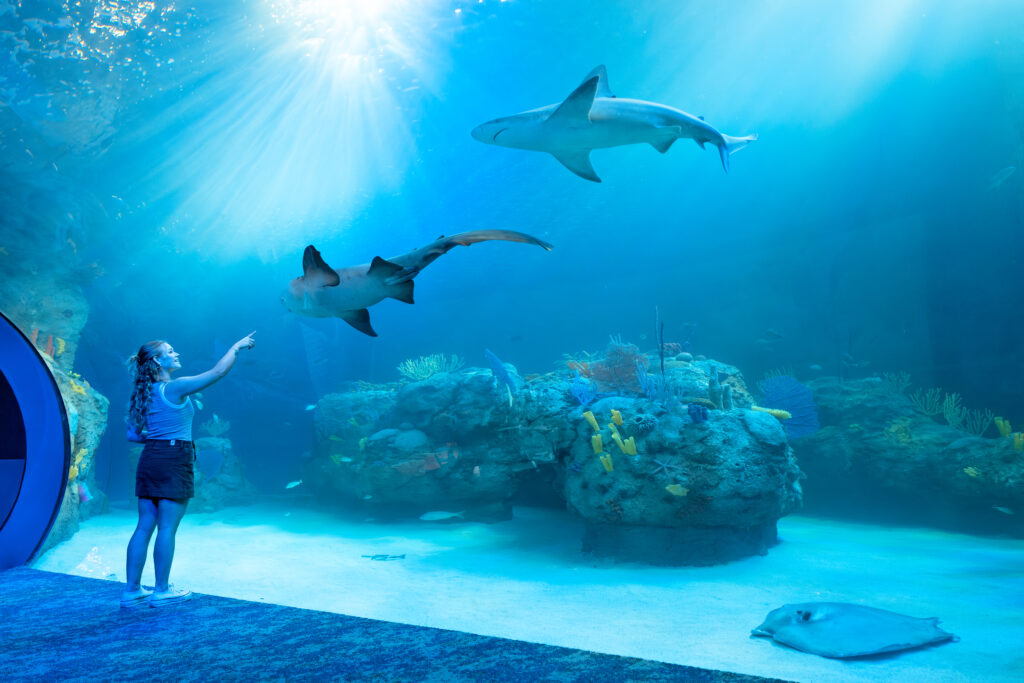
Large-scale tanks and walk-through viewing areas put visitors inside the experience in a way that genuinely takes your breath away. Looking up to see a shark gliding overhead is the kind of moment that stays with you.
The design of these immersive habitats was intentional. Architects and marine educators worked together to create viewing angles that feel cinematic, not clinical.
Overhead panels, floor-level windows, and curved acrylic walls give guests perspectives that even most divers never get. For families with young children, these spaces are nothing short of magical.
Beyond the visual wow factor, these habitats serve an educational purpose. When you can observe an animal from multiple angles, including above and below, you start to understand how it moves, hunts, and interacts with its environment in a much richer way.
Interpretive panels near each tank explain what visitors are seeing and why it matters to ongoing research. The combination of spectacle and substance is what separates Mote SEA from a standard aquarium experience.
It is built to impress, but also built to teach.
100+ Species Connected to Conservation Efforts
© Mote Marine Laboratory & Aquarium
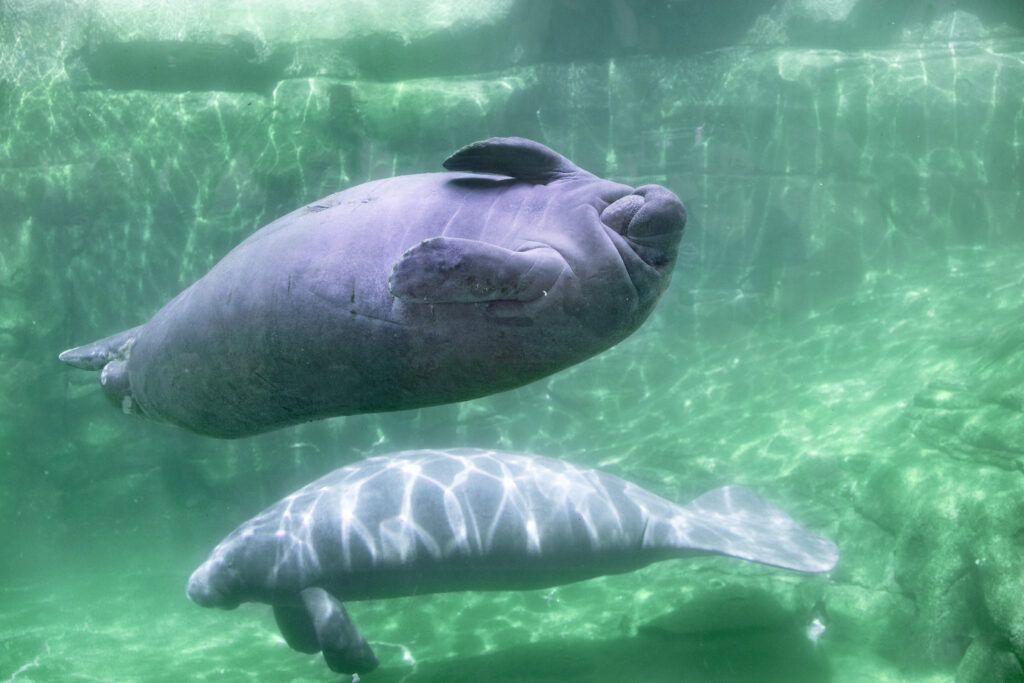
More than 100 marine species call Mote SEA home, and almost every one of them has a story tied to conservation. This is not a collection built purely for spectacle.
Each species on display connects in some way to the research programs that Mote Marine Laboratory runs, from coral restoration to shark biology studies.
That connection gives the animals a different kind of presence. When you learn that the coral in front of you was grown in a research nursery as part of an active reef restoration program, it becomes more than a pretty organism.
It becomes evidence of human effort and scientific persistence. The same goes for species involved in population studies or habitat research.
Mote has long been recognized for its shark research, sea turtle rehabilitation, and pioneering coral restoration work. Seeing species tied to those programs in person adds a layer of meaning that reading about them online simply does not provide.
Kids who visit often ask remarkably specific questions about the animals they see, drawn in by the real-world stakes. Conservation feels abstract until you are face-to-face with the creatures that depend on it.
At Mote SEA, that abstraction disappears quickly.
Interactive Learning for All Ages
© Mote Marine Laboratory & Aquarium
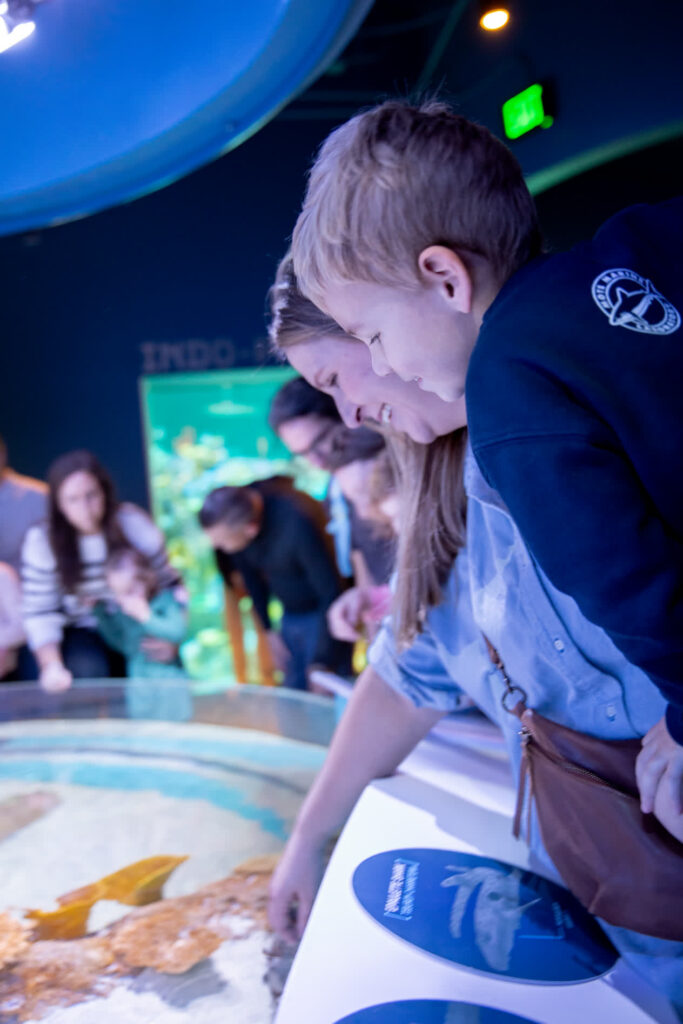
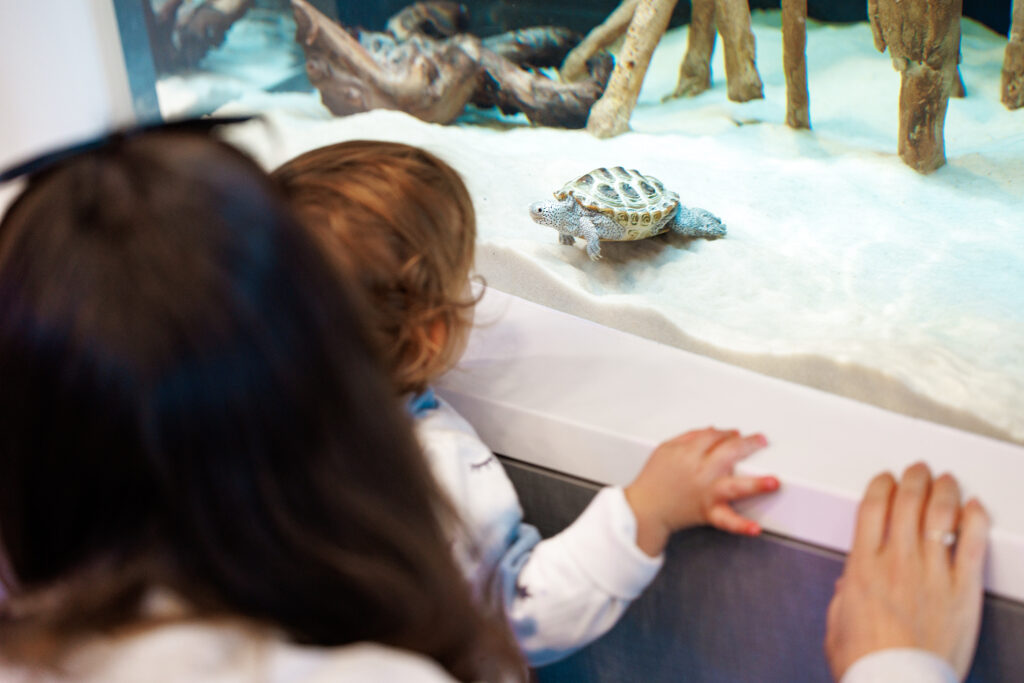
Science sticks better when you can touch it, and Mote SEA clearly understands that. Interactive exhibits are woven throughout the facility, designed to engage visitors of every age without ever feeling childish or condescending.
Touch tanks, hands-on demonstrations, and digital exploration stations make complex marine science feel completely within reach.
Younger children gravitate toward the tactile experiences, crouching over shallow tanks to gently touch sea stars or small rays under the guidance of knowledgeable staff. Older kids and teenagers tend to linger at the more data-driven exhibits, where they can explore ocean temperature maps, track marine species movements, or learn about the tools scientists use in the field.
Adults are not left out either. The programming at Mote SEA includes educational talks, behind-the-scenes opportunities, and curated experiences that cater to genuinely curious grown-ups.
Family visits often turn into unexpected deep conversations about climate, biology, and ocean health. That ripple effect is exactly what good science education is supposed to create.
When learning feels like play, people absorb more, ask better questions, and carry those lessons far beyond the aquarium doors. Mote SEA has figured that out and built it right into the floor plan.
A Multi-Level Space Designed for Exploration
© Mote Marine Laboratory & Aquarium
Some attractions funnel you through a single path and push you toward the exit. Mote SEA takes the opposite approach.
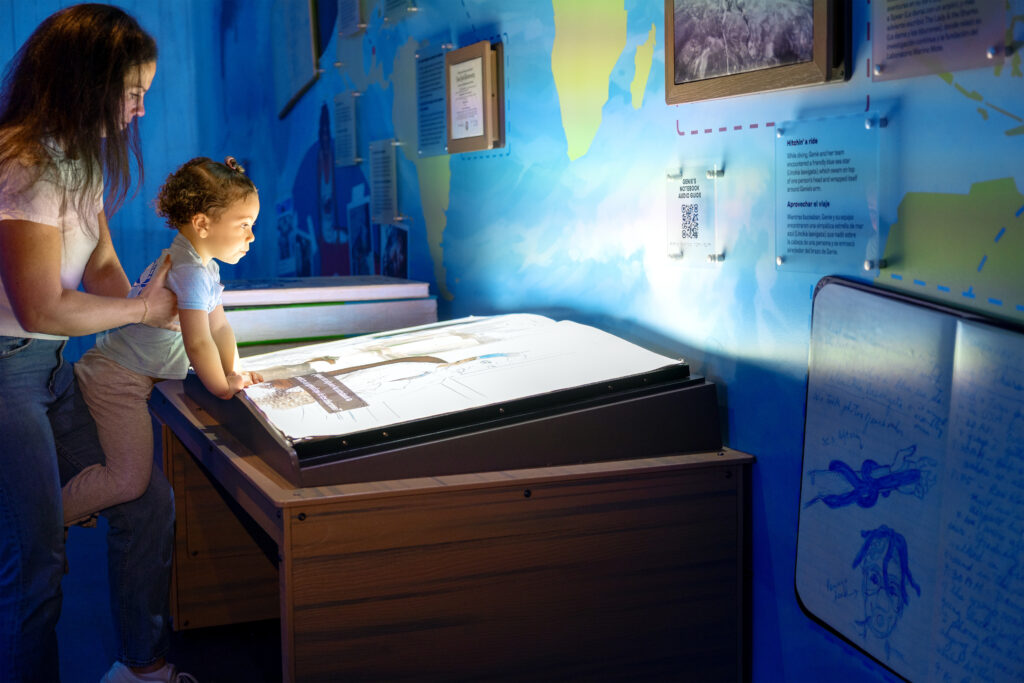
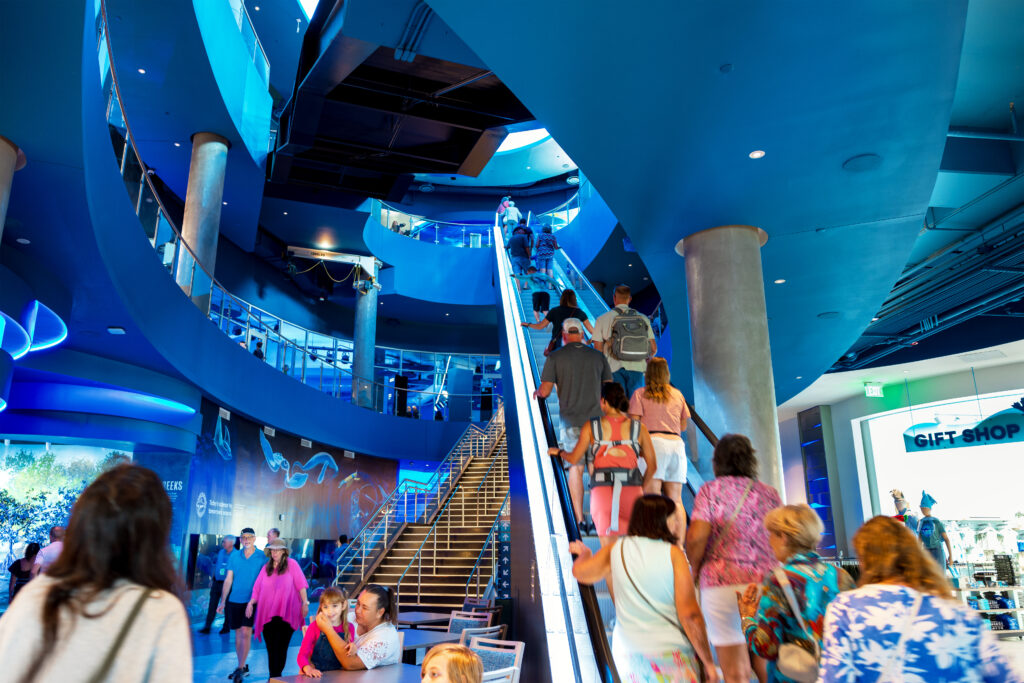
The facility is designed as a multi-level, open-ended space that rewards curiosity and encourages guests to wander, backtrack, and discover things at their own pace.
Different floors house different types of experiences, from large immersive tanks to live science demonstrations to quieter exhibit zones perfect for reading and reflection. The layout avoids the bottlenecks common in older aquarium facilities, so even on busy days, visitors rarely feel crowded or rushed.
That breathing room makes a real difference in the quality of the experience.
Visitor amenities are thoughtfully integrated into the space as well, including seating areas, clear wayfinding, and accessible routes throughout. Families with strollers or guests with mobility needs will find the facility welcoming and easy to navigate.
The overall design philosophy seems to be that exploration should feel effortless, not exhausting. Whether you spend ninety minutes or three hours, the space adapts to your interest level.
First-time visitors often find themselves circling back to exhibits they passed quickly, drawn in by something they noticed on the way by. That is good design doing exactly what it is supposed to do.
Visitor Information
© Mote Marine Laboratory & Aquarium
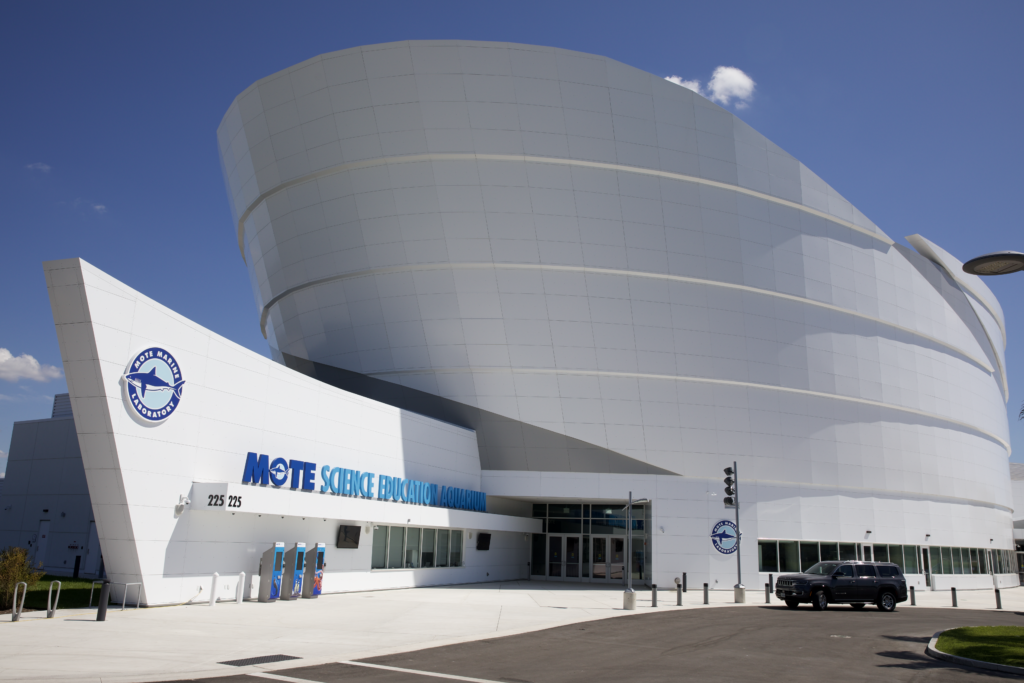
Planning a visit to Mote SEA is straightforward, but a few tips can make the experience even better. The aquarium is located at 225 University Town Center Dr, Sarasota, FL 34243, right near the University Town Center mall.
You can reach them by phone at +1 941-388-6683 if you have questions before you go.
Hours are typically 9:30 a.m. to 5:00 p.m. daily, though it is always smart to check the official website before visiting since holiday hours can vary. Timed entry tickets are strongly recommended, especially on weekends and during school breaks when the facility tends to fill up quickly.
Booking ahead saves you from disappointment at the door.
Budget somewhere between one and three hours for your visit, depending on how deeply you want to explore. Arriving early on weekday mornings tends to offer the quietest, most relaxed experience with better access to interactive exhibits before crowds build.
Parking is generally available nearby given the shopping center location. Bringing a water bottle and comfortable walking shoes will serve you well.
Most visitors agree the experience is well worth the ticket price, especially for families with school-age children who have even a passing interest in the ocean or science.