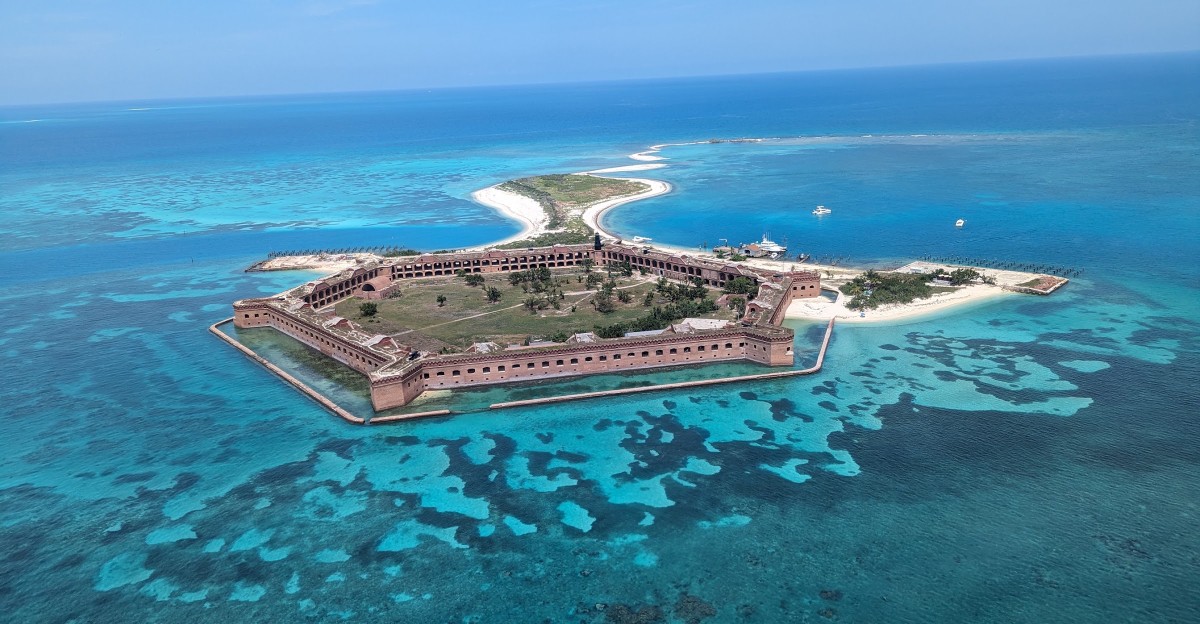
A giant brick fortress is hiding on a tiny island 70 miles beyond Key West.
Fort Jefferson rises from the turquoise waters of Dry Tortugas National Park, surrounded by open sea and little else.
Getting there is an adventure of its own, and the sight of those massive walls appearing on the horizon feels almost unreal.
The fort was built to guard busy shipping routes through the Gulf of Mexico, but its story took some surprising turns.
Soldiers lived here, families called the island home, and prisoners were locked behind its walls.
Today, Fort Jefferson stands as a remarkable reminder of Florida’s distant past.
With its enormous brick walls, sweeping moat, tropical waters, and isolated setting, this is far more than an old fort—it is a place that makes the journey from Key West feel completely worthwhile.
A Fort Nearly 70 Miles From Key West
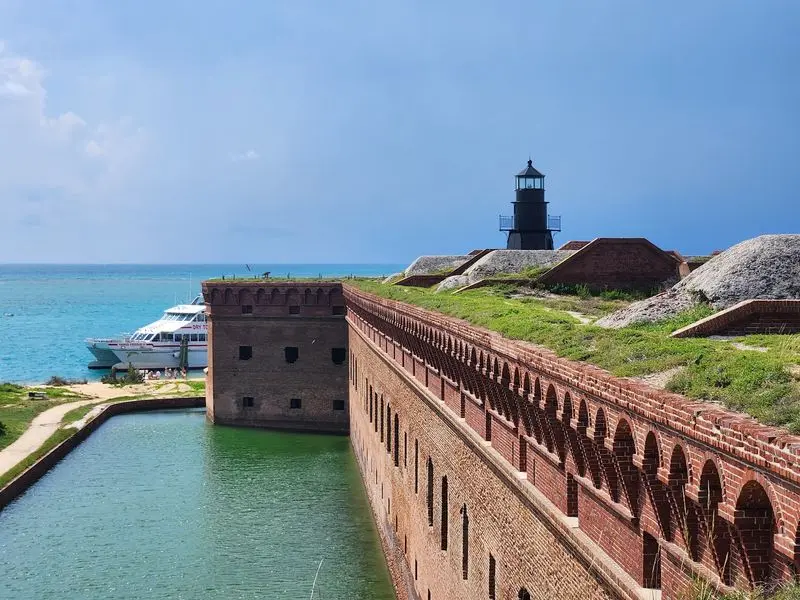
Picture yourself on a boat, watching Key West shrink behind you until nothing but blue water fills every direction. Then, after a couple of hours, a huge six-sided brick fort appears on the horizon.
That moment surprises almost everyone who makes the trip.
Fort Jefferson sits on Garden Key, one of seven small islands that make up the Dry Tortugas. The fort lies roughly 68 to 70 miles west of Key West, which means there are no bridges, no roads, and no nearby towns.
Reefs, sandbars, and open sea surround it on all sides.
The islands got their name from Spanish explorer Juan Ponce de Leon in 1513. He spotted lots of sea turtles, or tortugas, and later sailors added the word dry because the islands had no fresh water.
That lack of water still matters today, since visitors must bring their own.
Being so far away is part of the magic. Few places in Florida feel this wild, quiet, and untouched by modern life.
Guarding the Gulf From a Tiny Key
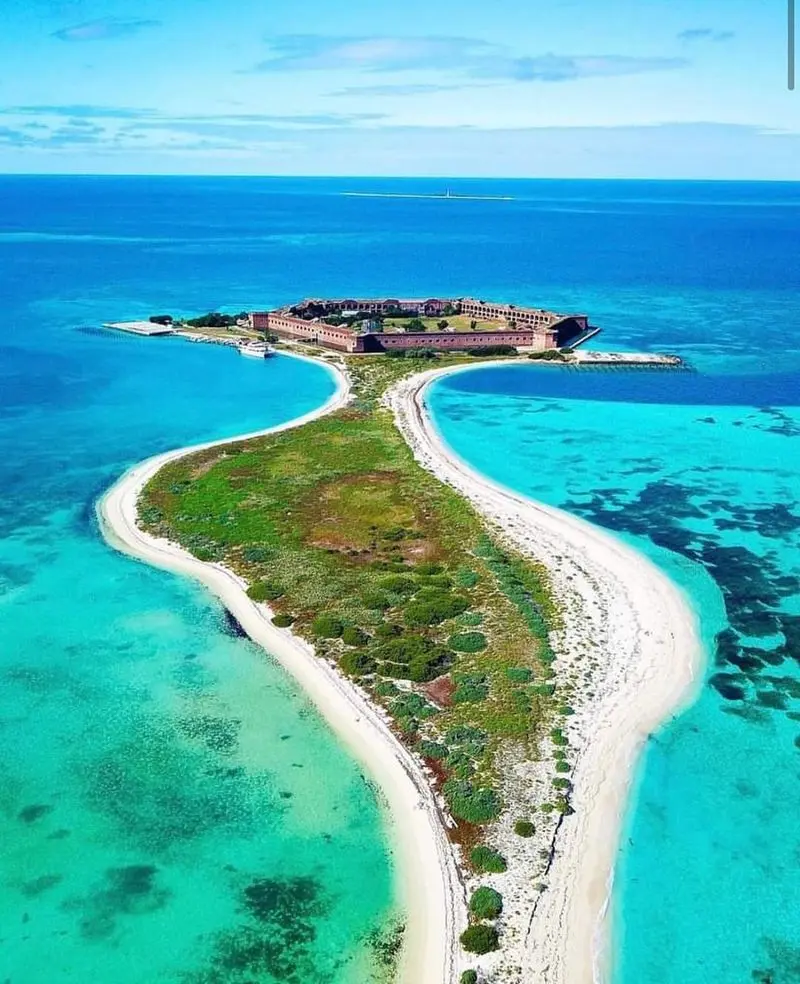
Think of the Dry Tortugas as a doorway. Ships sailing between the Gulf of Mexico, the Atlantic Ocean, and the Caribbean all had to pass nearby, carrying cotton, sugar, and other valuable goods.
Whoever controlled that doorway controlled a lot of trade.
American leaders understood this clearly. In 1846, workers began building Fort Jefferson so the United States could protect its ships and keep enemy navies from taking over the Gulf.
Ports like New Orleans depended on safe passage through these waters.
The plan called for hundreds of heavy cannons pointing out to sea. Warships could also anchor in the deep, protected harbor beside Garden Key, which made the spot even more useful.
A strong fort here could watch over one of the busiest sea routes in North America.
Fun fact: the fort was named after Thomas Jefferson, the third president. When you stand on the top walls and look out at the water, you can easily see why military planners picked this lonely little island.
Thirty Years of Work and Still Unfinished
Imagine working on a school project for thirty years and never turning it in. That is basically what happened at Fort Jefferson.
Builders labored from 1846 into the 1870s, yet the fort was never completed.
So what went wrong? Pretty much everything.
Hurricanes smashed through the island, and yellow fever swept through the workers again and again. Every brick, tool, and barrel of food had to arrive by ship, so bad weather or late deliveries could stop work for weeks.
Money was another headache, since Congress did not always send enough funding. The biggest surprise was underground, though.
Garden Key is made of sand and coral, not solid rock, and the heavy walls slowly began to sink and crack.
Look closely when you visit, and you can spot different shades of brick. Early bricks came from the South, but after the Civil War began, builders switched to bricks from the North.
Those color changes are like rings on a tree, telling the story of a project that just kept going.
Thousands of Arches Turn the Fort Into a Brick Maze
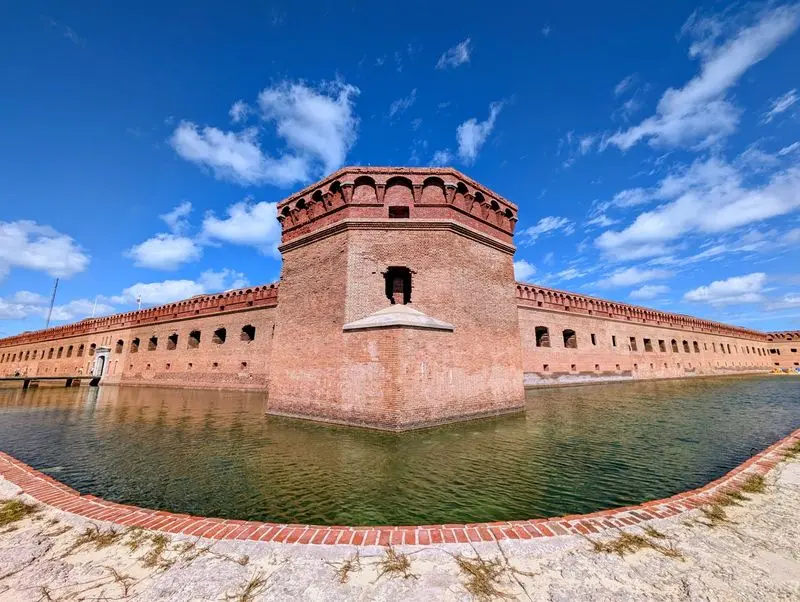
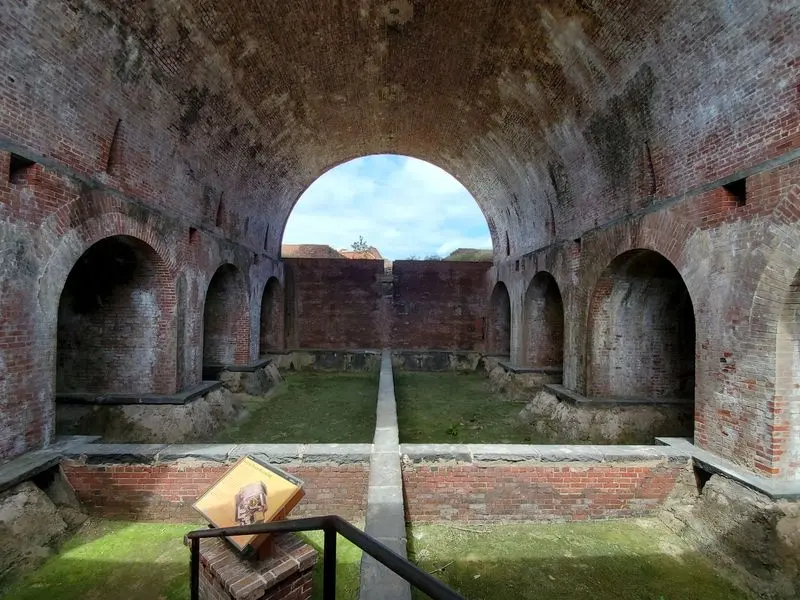
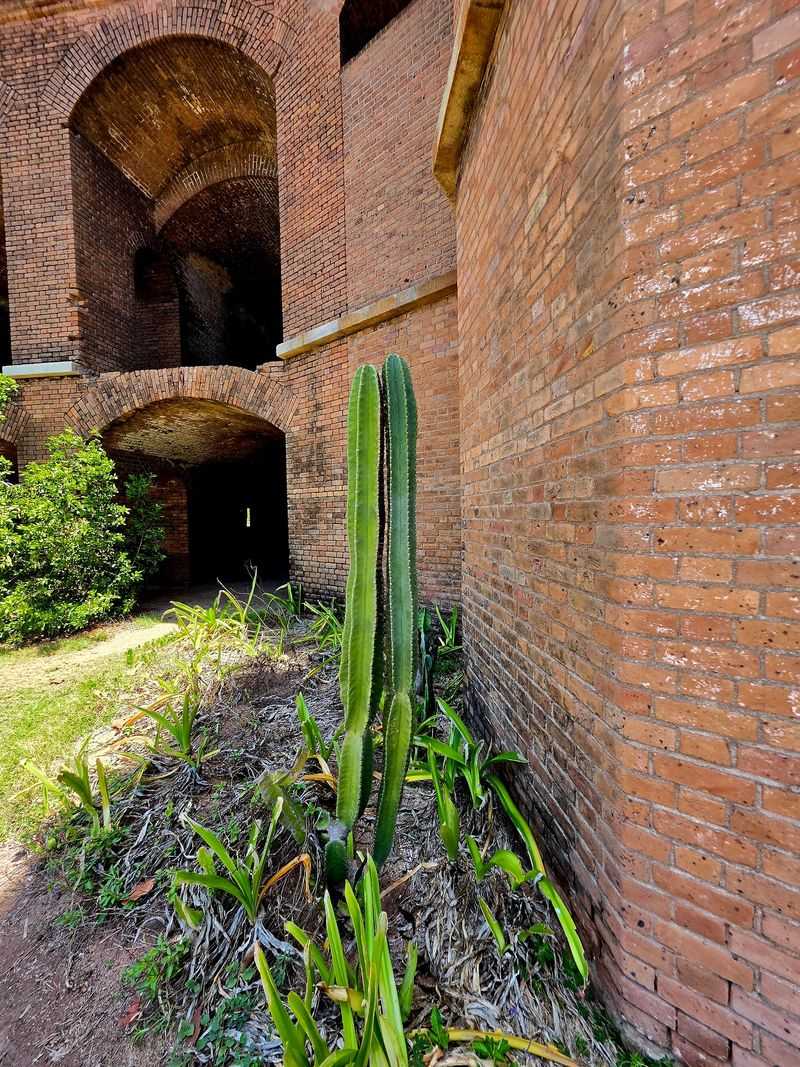
About 2,000 arches. Say that number out loud, then try counting them as you wander the halls.
You will probably lose track before you finish the first wall.
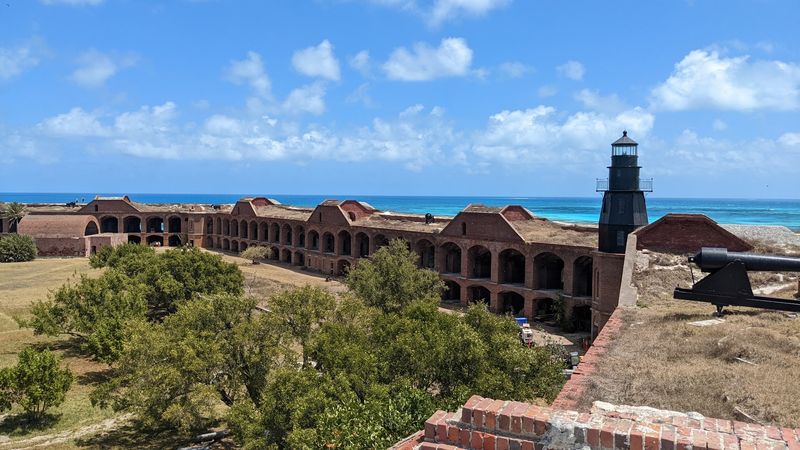
Fort Jefferson is one of the largest brick coastal forts built in the United States during the 1800s. Experts estimate it used more than 16 million bricks.
The arches helped spread out all that weight while creating rooms called casemates, where cannons were meant to sit.
Walking through these long tunnels feels a bit like exploring a giant maze. Sunlight pours in through the openings, making beautiful patterns on the floor, and photographers love lining up the repeating arches for dramatic shots.
Each turn reveals another view of the sea or the inner grounds.
In the center sits the parade ground, a wide open space where soldiers once lived and trained. Here is a tip: take your time and climb the spiral stairs if they are open.
From the top, you can finally see how gigantic this unfinished fortress really is.
A Moat That Makes the Fort Look Like a Castle
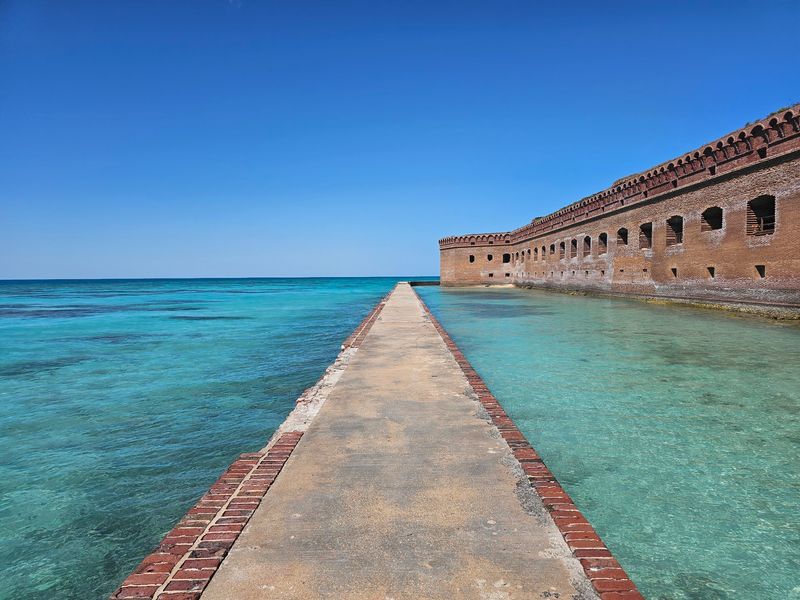
Castles and moats go together like peanut butter and jelly. Fort Jefferson has one too, and it gives the whole place a storybook feel.
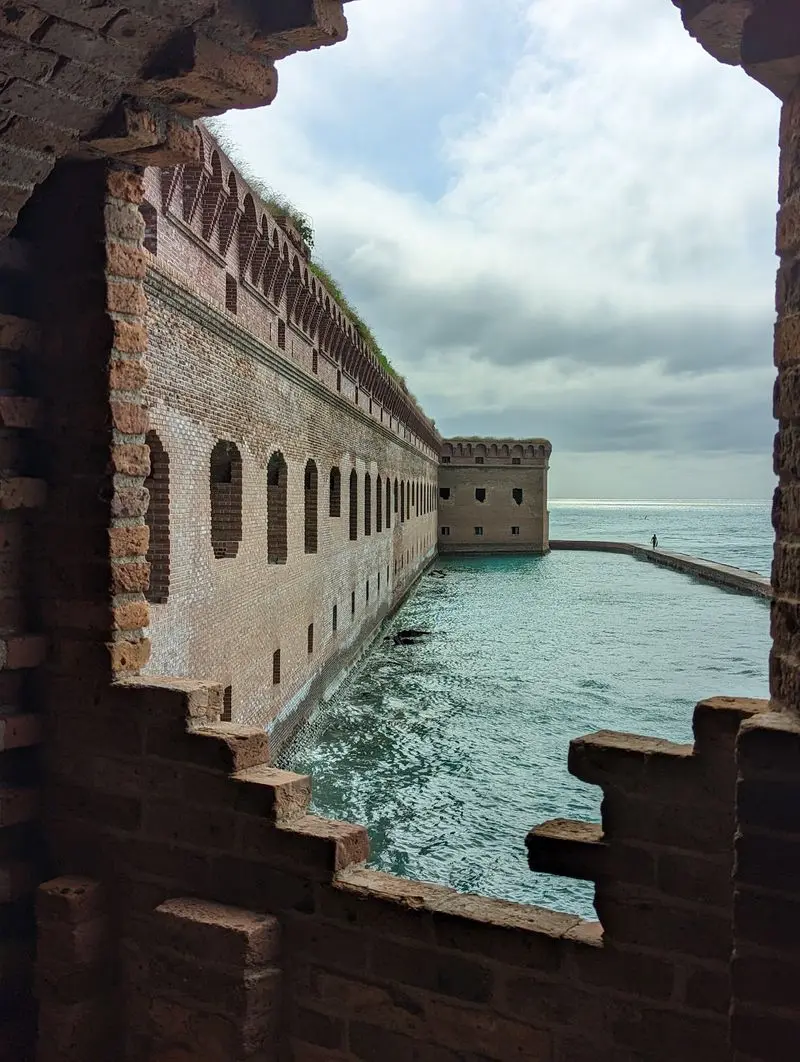
A wide band of water wraps around the brick walls, separating the fort from the rest of Garden Key. It was designed to keep attackers from rolling right up to the walls or digging underneath them.
The outer barrier, called the moat wall or counterscarp, also helped protect the fort from crashing waves.
Today, you can stroll along the top of that moat wall for a stunning loop. It takes about 20 to 30 minutes if you stop for photos, and trust me, you will.
The water is often calm and clear enough to spot small fish, sea urchins, and even an occasional nurse shark.
Bring a hat and good shoes, because there is very little shade. Walk slowly and stay near the middle of the path.
The view of those towering brick walls rising above the water is one of the best in Florida.
Where Dr. Samuel Mudd Served His Sentence
One of history’s most debated prisoners spent years behind these brick walls. His name was Dr. Samuel Mudd, a country doctor from Maryland.
In April 1865, John Wilkes Booth shot President Abraham Lincoln and broke his leg while escaping. Booth stopped at Mudd’s home, and the doctor set the injured leg.
Mudd was later convicted of helping Booth and sent to Fort Jefferson, which had become a military prison during the Civil War.
Life there was harsh, but Mudd’s story took an unexpected turn in 1867. A yellow fever outbreak struck the island, and the fort’s doctor died.
Mudd stepped in and cared for sick soldiers and prisoners, even though he was a prisoner himself.
Many people praised his bravery, and President Andrew Johnson pardoned him in 1869. People still argue about whether Mudd knew who Booth really was.
When you visit, look for the cell area connected to his story and decide for yourself what you think happened.
A Busy Island Town in the Middle of Nowhere
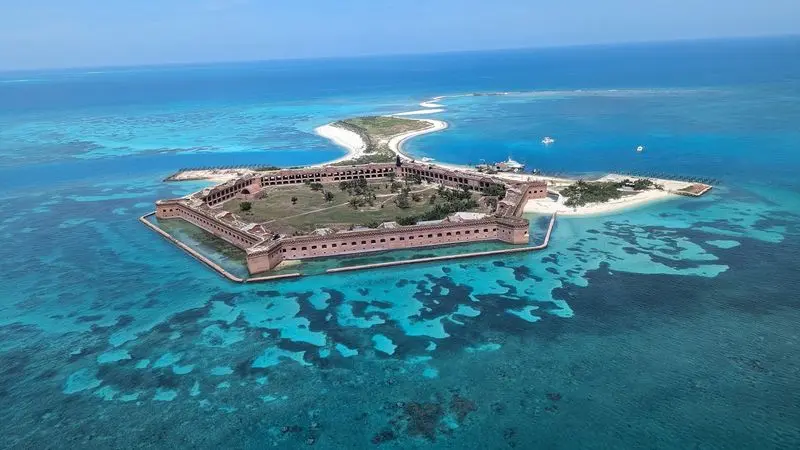
Close your eyes and imagine nearly 2,000 people crammed onto one small island. Soldiers marched, prisoners worked, laborers hauled bricks, and children played in the sand.
Fort Jefferson was not just a fort. It was a whole community.
Officers sometimes brought their wives and kids, so families lived alongside the military. Some workers were enslaved people sent to help with construction before the Civil War ended.
Everyone shared the same hot sun, sticky air, and constant mosquitoes.
Daily life was tough. Fresh food and water arrived only by ship, so a delayed boat meant hungry days.
Storms could tear off roofs, and diseases like yellow fever spread quickly in such tight quarters.
Still, people made it home. They held celebrations, grew small gardens, and collected rainwater in huge underground tanks called cisterns.
Next time you complain about slow Wi-Fi, think about these folks waiting weeks for a letter from home. Their stories make the empty halls feel a lot more alive.
Built for Battle, But Never Attacked
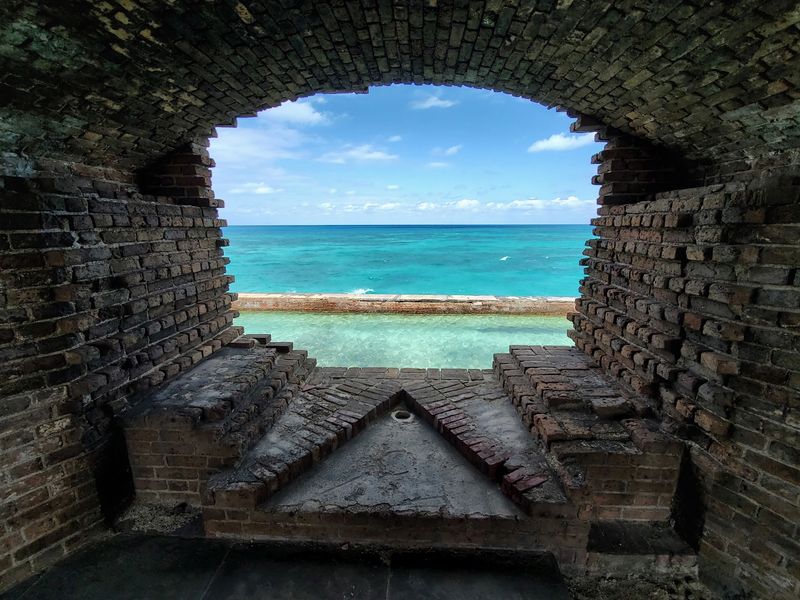
Here is a twist nobody expects. After decades of work, millions of bricks, and space for hundreds of cannons, Fort Jefferson never faced a major enemy attack.
During the Civil War, Union troops held the fort the whole time, and Confederate forces never tried to take it. Its presence alone may have helped scare off trouble.
Sometimes the best defense is simply looking too tough to bother with.
Meanwhile, technology was changing fast. New rifled cannons could fire shells that smashed through brick walls much more easily than older cannonballs could.
By the time construction slowed down, forts like this one were already becoming outdated.
Did you know? Some giant cannons still rest on the fort’s upper level today.
One famous type, the Rodman gun, weighed many tons and could fire heavy shots miles out to sea. Standing beside one, you can almost hear the boom that never came.
It is a strange and peaceful ending for a place made for war.
Shipwrecks, Reefs, and Crystal Clear Water
Grab your snorkel, because the fort is only half the adventure. Dry Tortugas National Park is about 99 percent water, and what lies beneath the surface is amazing.
Coral reefs here are home to parrotfish, angelfish, sea turtles, and lobsters. The water is often so clear that you can see the sandy bottom from the beach.
Snorkeling along the outside of the moat wall is a favorite activity, since corals grow right on the old bricks.
The area also holds hundreds of documented shipwrecks. Those shallow reefs that make snorkeling fun were dangerous for sailors, and many ships ran aground over the centuries.
Most wrecks are protected, so look but never take anything.
Birdwatchers love this spot too. Each spring, thousands of sooty terns nest on nearby Bush Key, filling the air with noise.
Bring reef-safe sunscreen to help protect the corals. Whether you swim, wade, or watch from shore, this underwater world is a big reason people fall in love with the park.
Planning Your Trip to This Remote Fort
Ready to go? Good news first: getting there is part of the fun.
You can only reach Dry Tortugas National Park by boat or seaplane, so some planning goes a long way.
Most visitors ride the Yankee Freedom Dry Tortugas Ferry from Key West. The trip takes a little over two hours each way, and it often sells out, so book early.
Seaplanes are faster and give incredible views, but they usually cost more.
Since there are no stores, restaurants, or fresh water on the island, pack smart. Bring plenty of water, snacks, sunscreen, a hat, sunglasses, and snorkel gear if you have it.
The ferry provides some meals, but private boaters need everything on hand.
Camping is possible on Garden Key with a permit, which means you get to see the stars without city lights. Check the weather before you leave, since rough seas can cancel trips.
For park questions, call +1 305-242-7700. A little prep makes this faraway fort an adventure you will never forget.