More than 1,000 buildings came down in just a few years.
An entire neighborhood of theaters, arcades, and tattoo parlors vanished almost overnight.
The district had been a lively entertainment hub for generations.
Then city leaders decided it had to go, and roughly 20,000 residents were displaced in the process.
I can’t imagine watching familiar streets get erased from the map. Whole roads simply stopped existing.
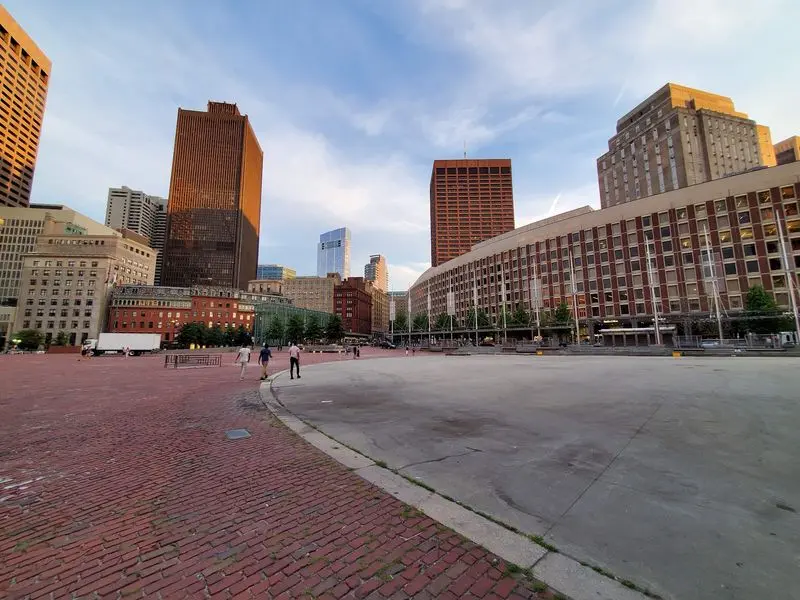
What rose in their place became one of the most debated public spaces in Massachusetts, a vast brick expanse that people still argue about today.
I like how the story keeps twisting, though.
The spot that replaced the old neighborhood recently got a dramatic makeover of its own, with trees, a playground, and fresh energy.
So what exactly was lost, and what did the city gain in return?
A Rowdy Square Once Owned This Exact Spot
Long before anyone said City Hall Plaza, Boston’s downtown had a very different personality. The neighborhood was called Scollay Square, and it was named in 1838 for real estate developer William Scollay.
The square sat where Tremont, Court, and Cambridge Streets met. In its early days, it held upscale homes and boutique shops, drawing comparisons to nearby Beacon Hill.
Then the mood shifted, and not quietly. Over the late 1800s and early 1900s, the area grew into Boston’s go-to entertainment district.
Vaudeville shows, comedy acts, and burlesque theaters lit up the streets. The most famous stage was the Old Howard, a name older Bostonians still mention with a grin.
Penny arcades and tattoo parlors filled the blocks too. Pawn shops added their own gritty flavor to the mix.
The crowd was just as colorful as the storefronts. Locals mingled with sailors on leave and members of the LGBTQ+ community.
The popular saying was that there was always something doing in Scollay Square. That reputation made it famous across Massachusetts.
It also made it a target, which is where this story starts to turn.
Why City Leaders Decided The Old Square Had To Go
Reputations can flip fast. By the 1940s and 1950s, many city officials no longer saw Scollay Square as fun and lively.
Instead, they used words like seedy and dilapidated. Some called it a red light district tied to vice and decay.
Boston itself was struggling during those years. Leaders wanted a big, bold move to reverse the city’s mid-century slide.
The idea of wiping out the square and starting fresh picked up steam in the 1950s. Mayor John Hynes pushed early redevelopment plans for the area.
The goal sounded tidy on paper. Officials wanted something more respectable, plus a modern home for city, state, and federal offices all in one place.
Urban renewal was a popular approach across America at the time. Cities believed clearing old districts would spark new growth and fresh investment.
Of course, the people who lived and worked in Scollay Square had their own opinions. Their voices didn’t stop the plan from moving forward.
The stage was set for one of the most ambitious and controversial projects in Boston history.
Over A Thousand Buildings Vanished In A Few Short Years
Here’s a number that stops people cold. Between 1960 and 1963, more than 1,000 buildings were razed to clear the way.
About 20,000 residents were displaced by the project. That’s an entire small town’s worth of people packing up and moving out.
Streets disappeared right along with the buildings. Brattle Street, once busy with daily life, was simply removed from the city map.
Mayor John Collins and redevelopment chief Edward Logue drove the work forward in the early 1960s.
None of this was a light trim. It was a complete reshaping of the land, with old street patterns wiped out for something entirely new.
Even the subway changed its identity. The Scollay Square station got a major renovation and reopened in 1963 as Government Center.
That renaming says a lot. The old name faded from maps and signs, and a new civic district took its place.
If you ride the T into Government Center today, you’re traveling beneath the ghost of a vanished neighborhood.
Big-Name Architects Drew Up A Whole New Civic Heart
Clearing the land was only step one. Next came a master plan, created in 1961 by I.
M. Pei and Associates.
Pei later became one of the most famous architects in the world. Back then, his firm sketched out a new Government Center for downtown Boston.
The plan grouped government buildings together in one modern district. The John F.
Kennedy Federal Building became part of that complex.
The real star, though, was a new Boston City Hall with a huge plaza out front. A design competition decided who would build it.
The winners were Kallmann McKinnell and Knowles, a young firm at the time. Their 1962 design took on both the building and the surrounding plaza.
The plaza was laid out across about eight acres. It became the central focus of the whole Government Center district.
Designers reportedly drew inspiration from historic European squares, including the Piazza del Campo in Siena, Italy. That famous square slopes and gathers crowds naturally.
The hope was that Boston would get its own grand gathering spot, built for the people of Massachusetts.
Concrete, Brick, And A Building Nobody Forgets
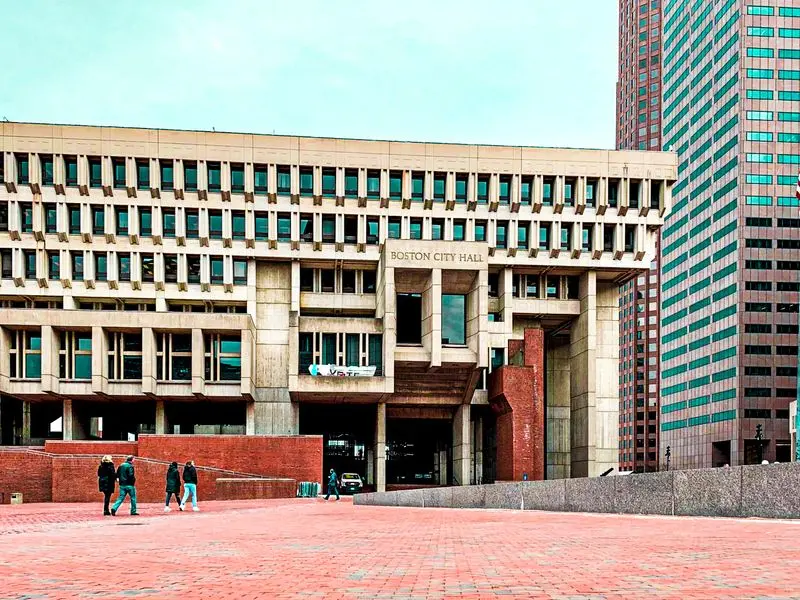
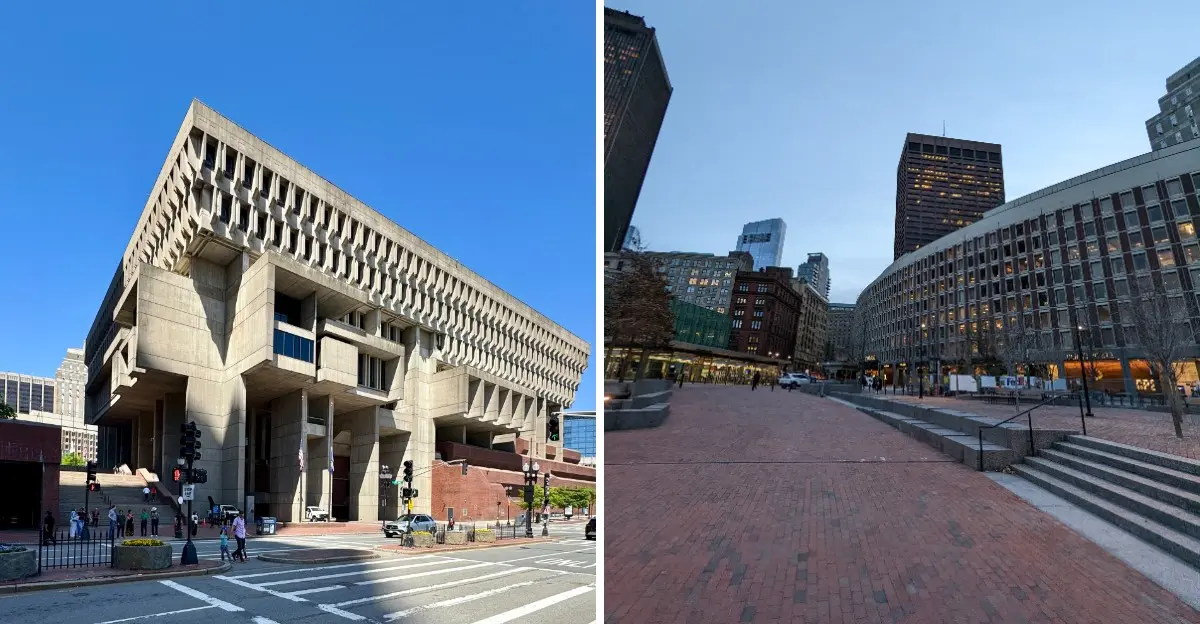
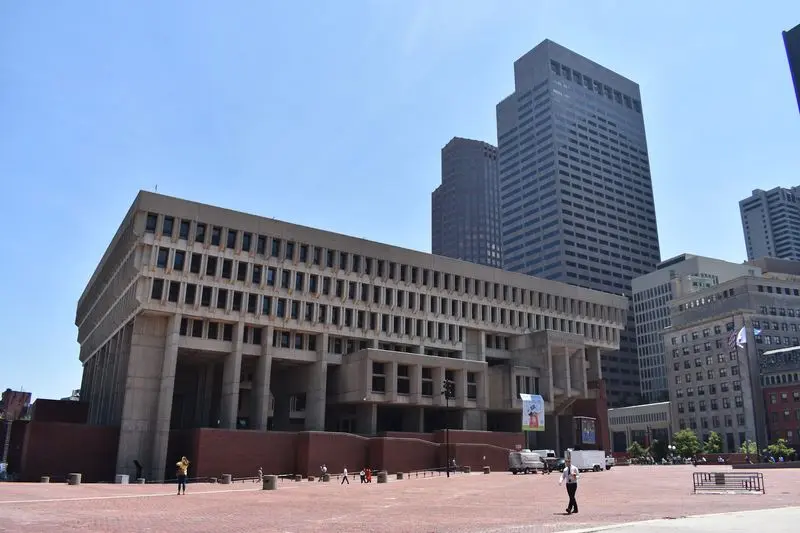
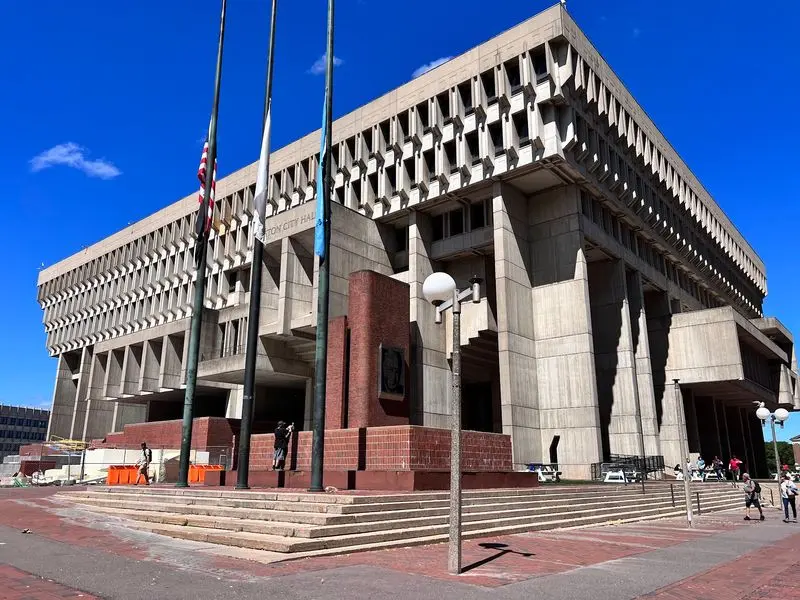
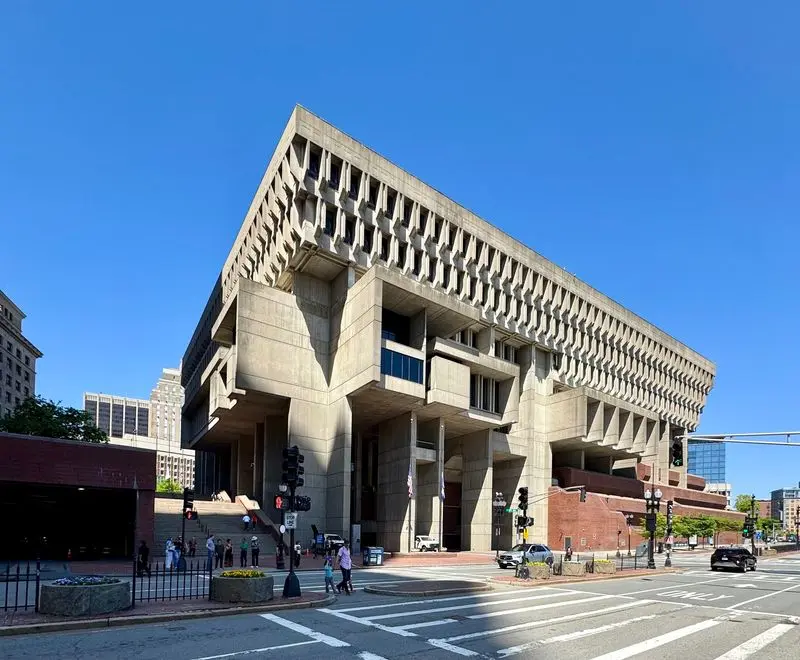
Love it or not, Boston City Hall is impossible to ignore. Built between 1963 and 1968, it’s a famous example of Brutalist architecture.
Brutalism comes from a French phrase about raw concrete. The style uses heavy, chunky shapes and leaves materials exposed instead of hiding them.
The architects wanted the building to feel strong and open to citizens. Its bold forms were meant to show that government belongs to the public.
The plaza matched that big attitude. Red brick and concrete spread across multiple levels in an irregular shape.
It was pitched as a people’s place. Protests, rallies, and celebrations were all supposed to happen right here.
Architecture fans still travel to study the building. Students and design lovers often treat it as a textbook example of the style.
The address today is 1 City Hall Square, Boston, MA 02203, right in the middle of downtown. Standing in front of it, you get a real sense of how bold the 1960s vision was.
Whether that boldness feels inspiring or overwhelming is a question Bostonians have debated for decades.
Critics Gave It A Chilly Nickname That Stuck
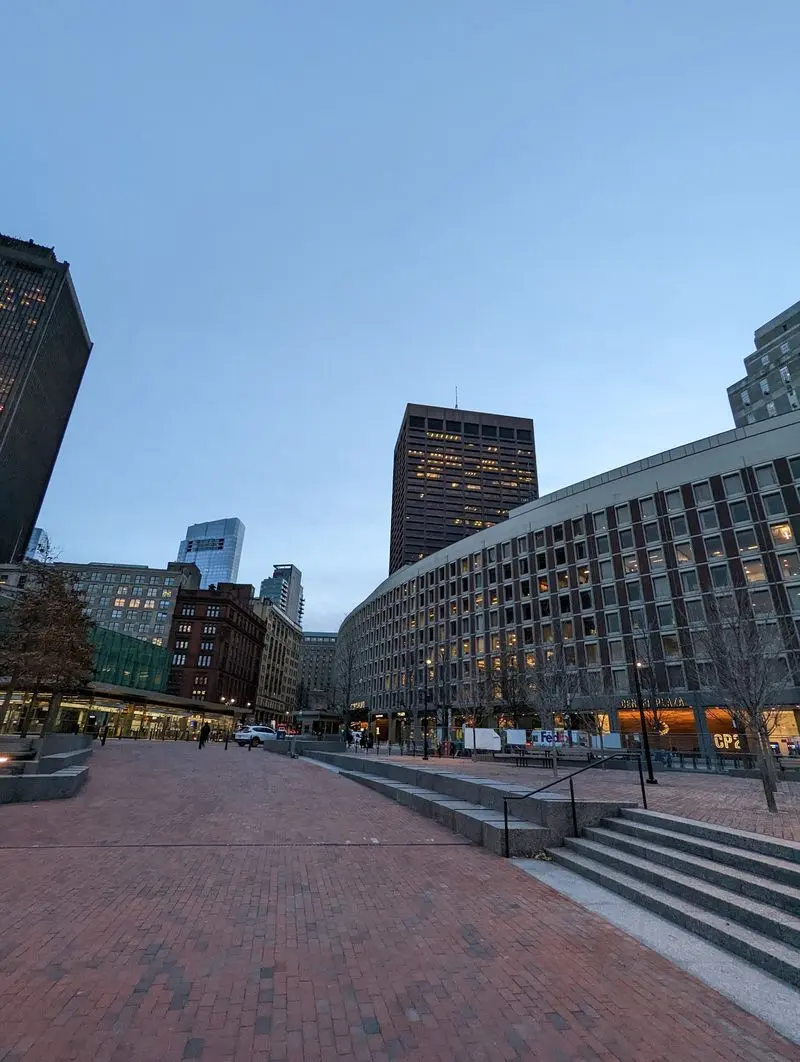
Red tundra. That’s what critics called the old City Hall Plaza, thanks to its wide, treeless sweep of brick.
Plenty of people found the space unwelcoming. They pointed to its massive scale and the way it could feel hard to get around.
The debate went deeper than looks, too. Many Bostonians never forgot the neighborhood that was erased and the thousands of people pushed out.
Supporters pushed back with their own points. They praised the daring Modernist design and the city’s bold attempt to revive downtown.
Here’s the funny part. Even people who disliked the plaza kept showing up there for big moments.
Over the years, it hosted countless rallies, festivals, and public events. It did serve as a major civic gathering space, just as planned.
So the legacy is complicated. It’s a mix of real ambition and real loss, sitting side by side on the same eight acres.
Few public spaces in Massachusetts spark this many strong opinions. That alone tells you how much the place matters to the city.
Trees Finally Showed Up, And They Brought Friends
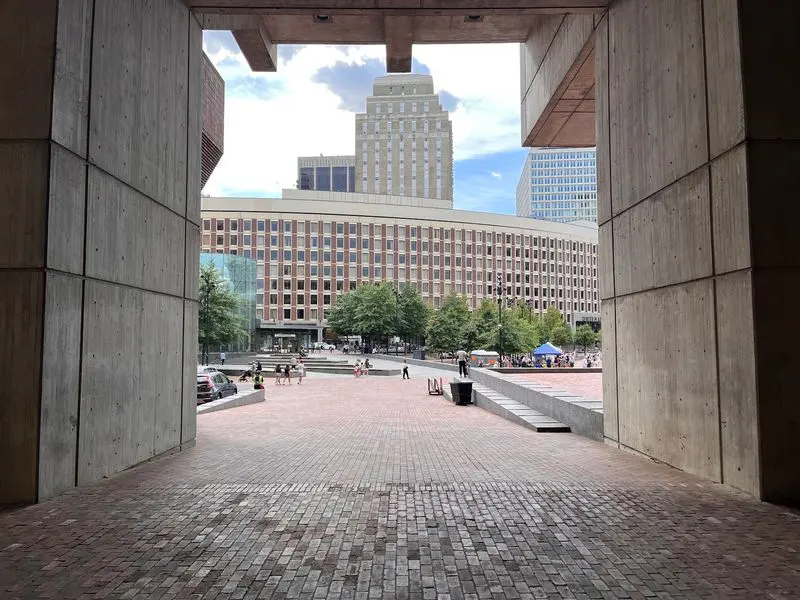
After decades of debate, the city finally gave the plaza a serious refresh. Work began in 2020, and the reopening came in November 2022.
The goal was to make City Hall Plaza more welcoming, accessible, and sustainable. Designers also aimed to honor the original architecture instead of tossing it out.
Greenery was the headline change. More than 250 new trees and thousands of native plants now soften the old sea of brick.
Shaded seating gives people a reason to linger. There’s also a public art space and interactive water features.
Accessibility got real attention this time. New sloped promenades, including one called Hanover Walk, connect the different levels of the plaza.
That matters for strollers, wheelchairs, and anyone tired of awkward steps. Getting across the space feels far less like a puzzle now.
So the red tundra nickname is starting to feel out of date. The plaza still keeps its bold character, but now it has shade, color, and spots to sit.
It’s a second chapter that many longtime critics probably never expected to see.
Kids Get A Brutalist Playground Of Their Very Own
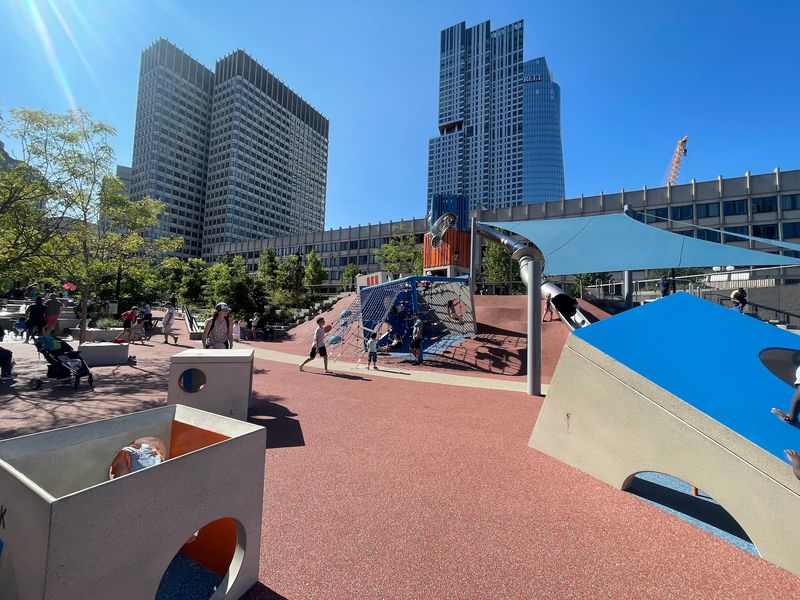
Kinder Brutalism might be the best design phrase ever invented. It describes the 12,000-square-foot playscape added during the plaza renovation.
The idea is clever. The play area borrows the chunky, geometric spirit of City Hall but turns it into something kids can climb.
Families now have a real reason to visit downtown. Slides and climbing spots give young visitors a chance to burn off energy.
Parents get a break too. Shaded benches nearby make it easier to keep an eye on things while sitting down.
Not many playgrounds sit right next to a famous government building. Fewer still are designed to echo its architecture on purpose.
The playscape also helps fix an old complaint. For years, the plaza felt empty when no event was scheduled.
Now there’s everyday life happening even on quiet afternoons. That’s a big shift from the stark plaza of past decades.
If you’re exploring Boston with children, this stop mixes a little history lesson with plenty of play. Just don’t be surprised if the grown-ups try the slide too.
Festivals, Fan Zones, And History Right Next Door
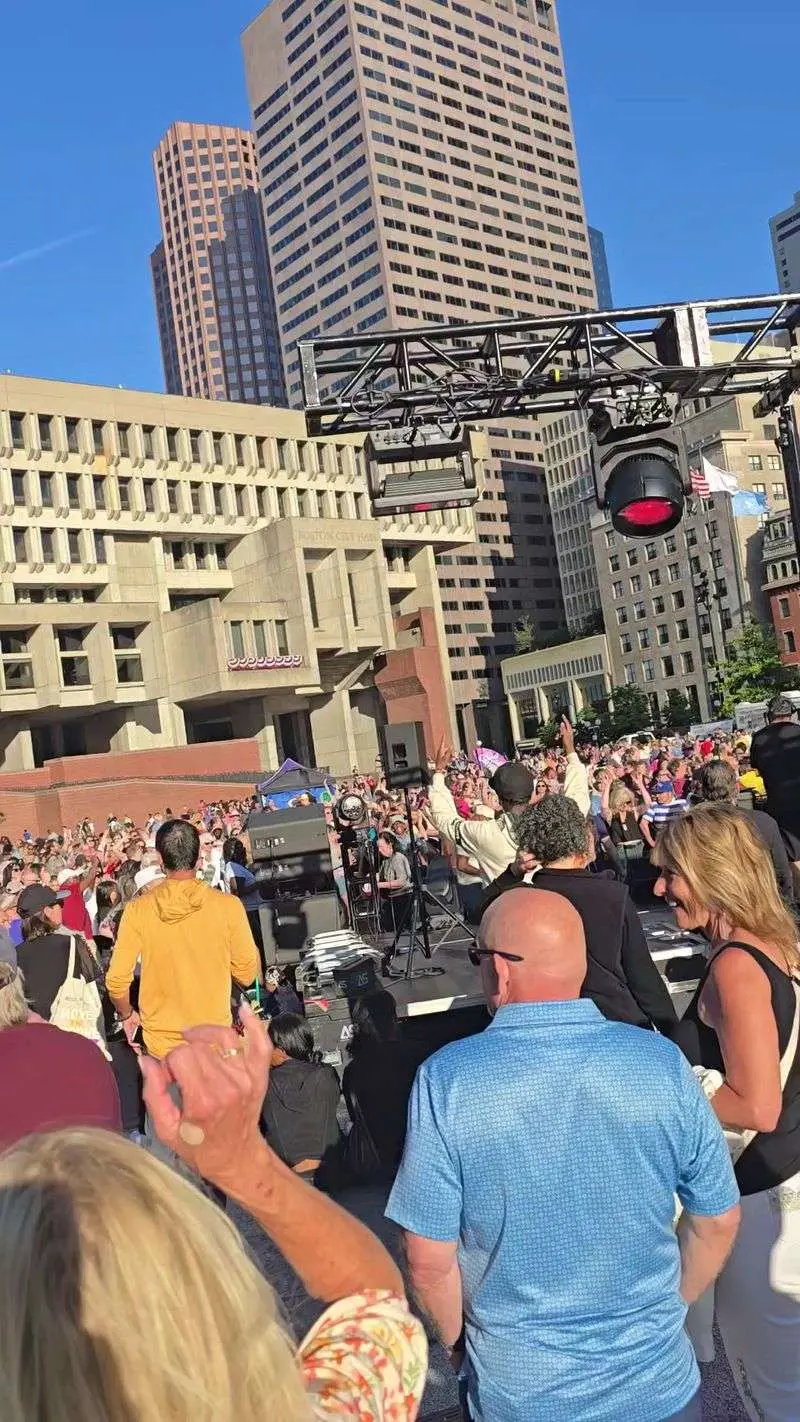
Open 24 hours, City Hall Plaza works as Boston’s big outdoor living room. It regularly hosts concerts, markets, and festivals throughout the year.
Soccer fans recently packed the space for a FIFA Fan Festival during the World Cup. Food trucks and street performers also show up around events.
The location is a major bonus. Government Center station sits right there, so getting in and out is simple.
Faneuil Hall and Quincy Market are just a short walk away. The plaza also sits near stops along the Freedom Trail, so history is everywhere.
That makes it an easy add-on to any downtown Massachusetts day trip. You can explore colonial history and 1960s history within a few blocks.
A smart tip is to check the city’s event calendar before you go. The plaza feels most alive when something is happening.
As you stand there, remember what sits beneath your feet. The streets of Scollay Square once ran through this exact spot.
Theaters, arcades, and crowded sidewalks gave way to a civic space that keeps reinventing itself. Not bad for a former tundra.