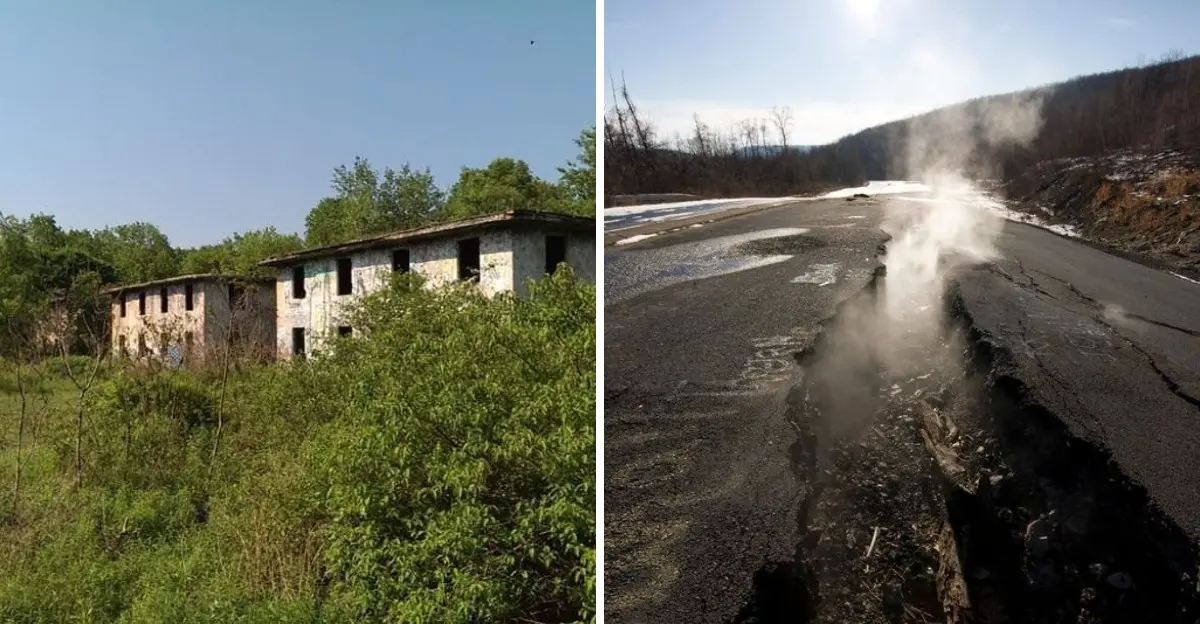
A fire started under this town in May 1962, and it is still burning today.
Experts think it could keep going for another 250 years or more.
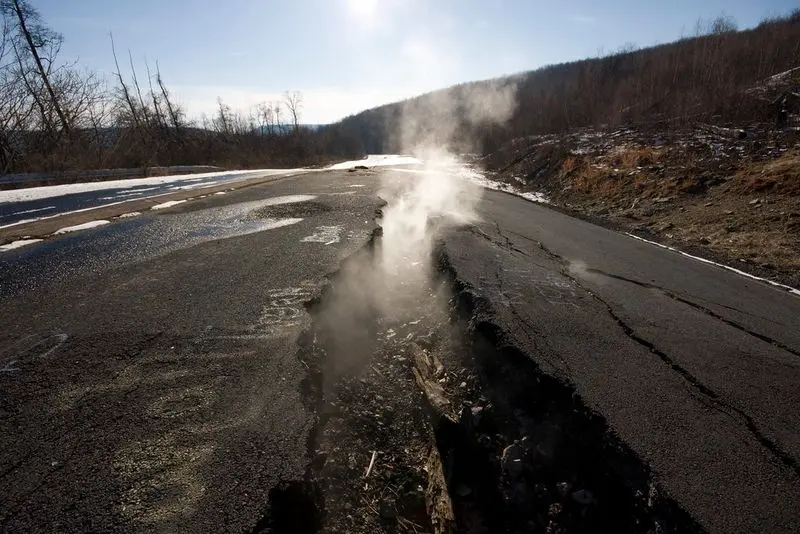
Steam drifts up from cracks in the ground. Smoke has even been spotted rising inside a cemetery.
I can’t imagine packing up a whole life because the dirt under the porch got too hot. Yet that is exactly what happened to hundreds of families in this corner of Pennsylvania.
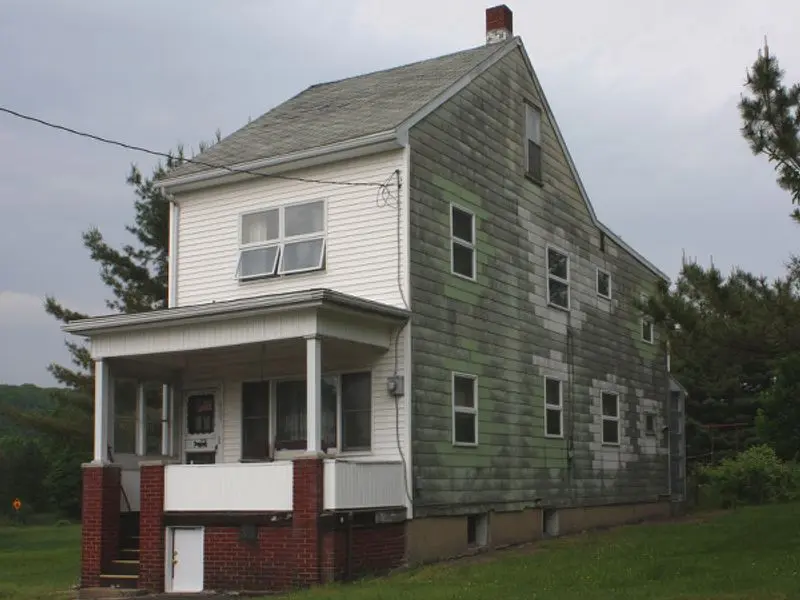
Most of the houses are gone now, leaving quiet streets that lead to empty lots.
I believe it is one of the strangest true stories in America.
It mixes coal, bad luck, and stubborn neighbors who refused to leave.
So how does a trash fire turn into a problem that outlasts generations?
A Memorial Day Cleanup Lit A Fire That Never Went Out
Spring cleaning usually ends with a tidy yard. In Centralia, Pennsylvania, it ended with a fire that has lasted more than sixty years.
The fire was first reported on May 27, 1962. The most widely accepted theory says volunteer firefighters burned a town trash dump to clear it before Memorial Day.
That dump sat inside an old strip-mine pit. Somewhere below, an unsealed coal seam caught the flames and carried them underground.
Crews tried dousing the fire with water. They also tried smothering it with clay, and neither plan worked.
Later efforts over the following decades failed too. Money ran short, and the maze of old mine tunnels was simply enormous.
Coal is the perfect fuel for a fire like this. It sits in long, connected seams that act like a slow-burning fuse stretching in every direction.
Think about that the next time someone says a small mistake won’t matter. One afternoon chore turned into a story studied by scientists, writers, and curious travelers.
The lesson is simple and a little humbling. Some fires are easy to start and nearly impossible to stop.
Bull’s Head Was Once A Busy Coal Town With Thousands Of People
Before the smoke, there was a tavern. Johnathan Faust opened one here in 1832, and the area took the name Bull’s Head.
The name changed to Centreville and then to Centralia. The town became an official borough in 1866.
Coal made the place grow fast. By 1890, Centralia hit its peak population of 2,761 residents.
Families built homes, churches, and businesses on land rich with anthracite. The same fuel that paid the bills would later chase everyone away.
Even in 1980, about 1,000 people still lived in town. That’s a real community, with neighbors, school days, and holiday traditions.
History buffs will love how this one story captures the rise of coal country. It shows how mining built Pennsylvania towns almost overnight.
A small detail tells the rest of the story. The U.S.
Postal Service ended Centralia’s ZIP code, 17927, in 2002.
Mail for the area now goes through Ashland’s ZIP code instead. When a town loses its own ZIP code, you know things have changed a lot.
One Scary Sinkhole Made The Whole Country Pay Attention
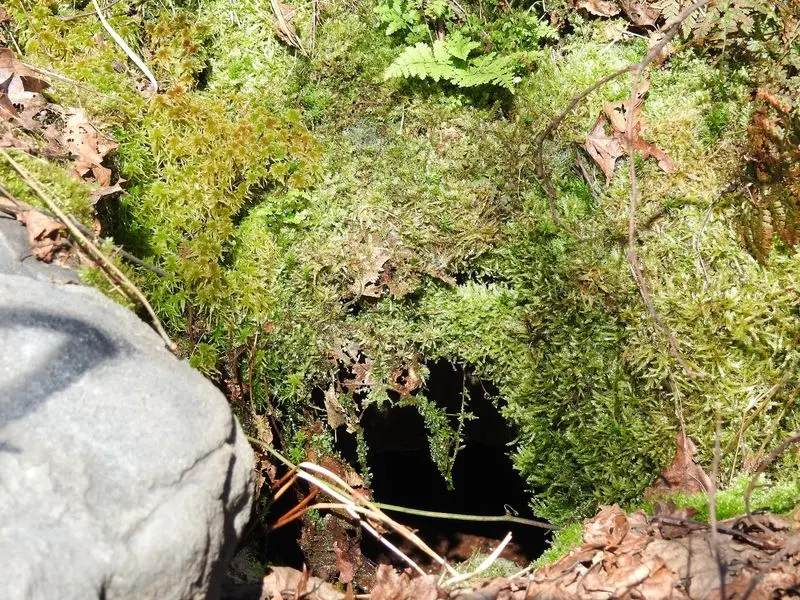
Valentine’s Day 1981 should have been about cards and candy. Instead, a 12-year-old boy named Todd Domboski fell into a sinkhole in his grandmother’s backyard.
The hole was reported to be about 150 feet deep. Thankfully, he was pulled out, but the event shocked people far beyond town.
By then, the fire had already caused trouble. Dangerous carbon monoxide gas was seeping into homes as the burning spread.
Sinkholes kept forming as the ground weakened. Living there started to feel like standing on a giant, unpredictable stovetop.
That close call helped push the problem into the national spotlight. Leaders could no longer treat it as a small local issue.
It’s also a good reminder for anyone curious about the area today. Solid-looking ground isn’t always solid, especially above an active mine fire.
The Pennsylvania Department of Environmental Protection warns about hazardous gases and sudden ground collapse. So admire the landscape with caution and stay on safe, open paths.
Curiosity is great. Respecting the warning signs is even better.
Millions In Relocation Money Emptied The Streets
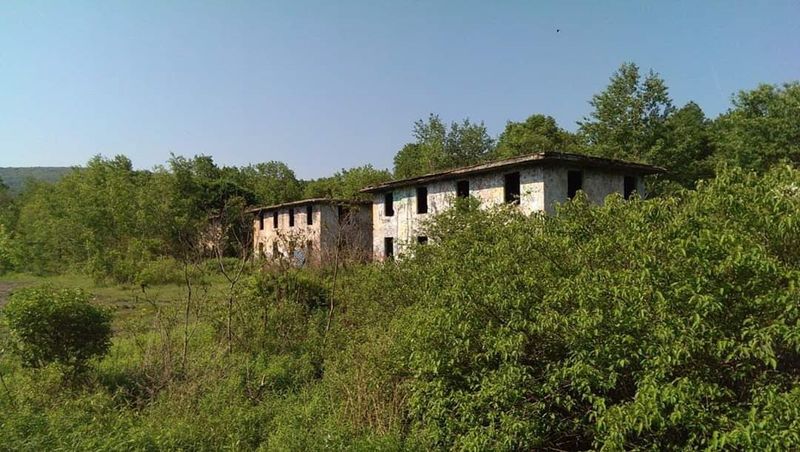
In 1983, Congress stepped in with more than 42 million dollars for relocation. Most residents accepted the offer and moved away.
About 500 structures were torn down after families left. Whole blocks turned from homes into grassy gaps almost overnight.
Not everyone wanted to go. Some people loved their town and didn’t trust that leaving was necessary.
Then came 1992. Pennsylvania’s governor used eminent domain to claim every property in the borough and condemn the buildings.
The fight dragged on for years. In 2013, an agreement finally let the remaining residents stay in their homes for the rest of their lives.
After that, the state takes ownership of each property. It’s a quiet countdown, and it says a lot about how deeply people love home.
Population numbers tell the story fast. The 2020 census counted just five residents, making it the least-populated municipality in Pennsylvania.
Five people where thousands once lived. Honestly, it’s hard to read that number without pausing for a moment.
Steam Rising From The Dirt Is Proof The Fire Still Burns
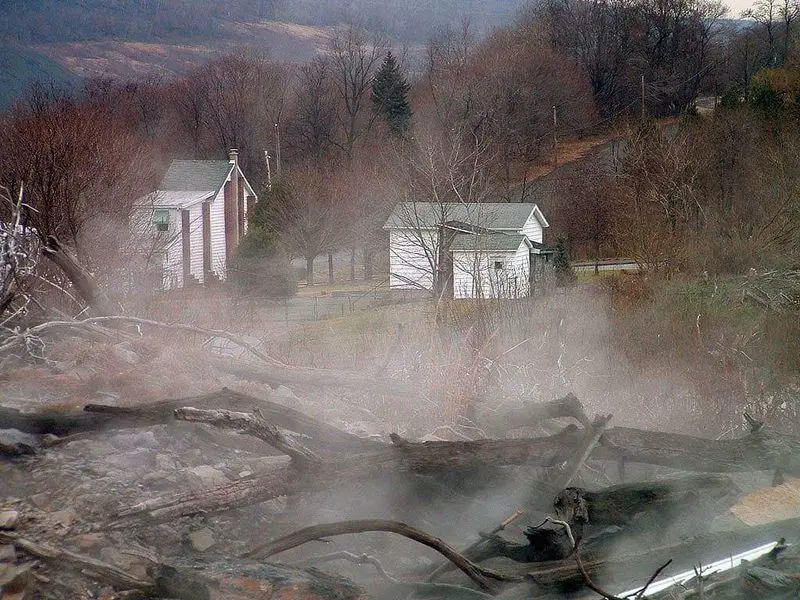
Here’s the part that feels like science fiction. Evidence of the underground fire can still show up in the landscape around Centralia.
Steam can rise from cracks in the earth. Smoke sometimes slips out of fissures, and some patches of ground look scorched.
Cooler weather can make steam easier to notice. Warm air from below meets chilly air above, much like your breath on a winter morning.
The fire’s exact behavior shifts over time. Hot spots can move as the burning coal follows its underground path.
That’s exactly why safety matters here. The Pennsylvania DEP strongly advises against visiting the immediate fire area.
Hazardous gases can collect near vents. The ground can also give way without much warning.
So enjoy the sight from a responsible distance. A camera zoom lens is your best friend in this situation.
Still, seeing steam drift out of ordinary dirt is unforgettable. It turns a history lesson into something you can almost feel in the air.
Graffiti Highway Is Buried, But Its Legend Lives On
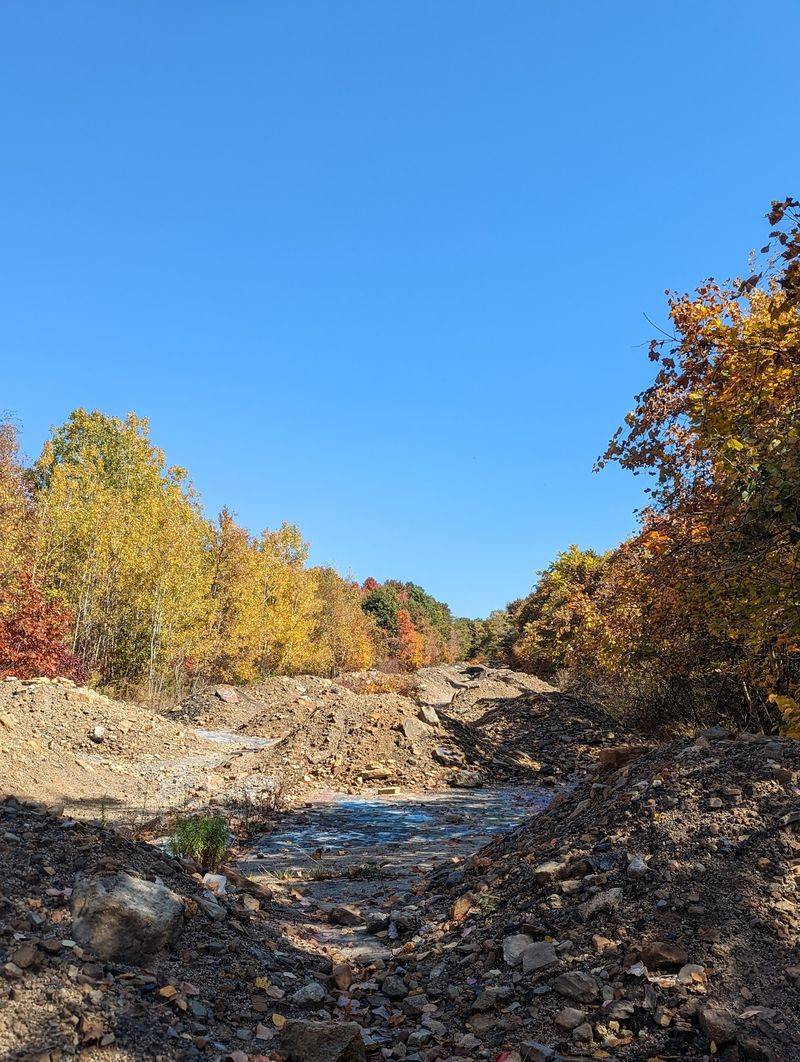
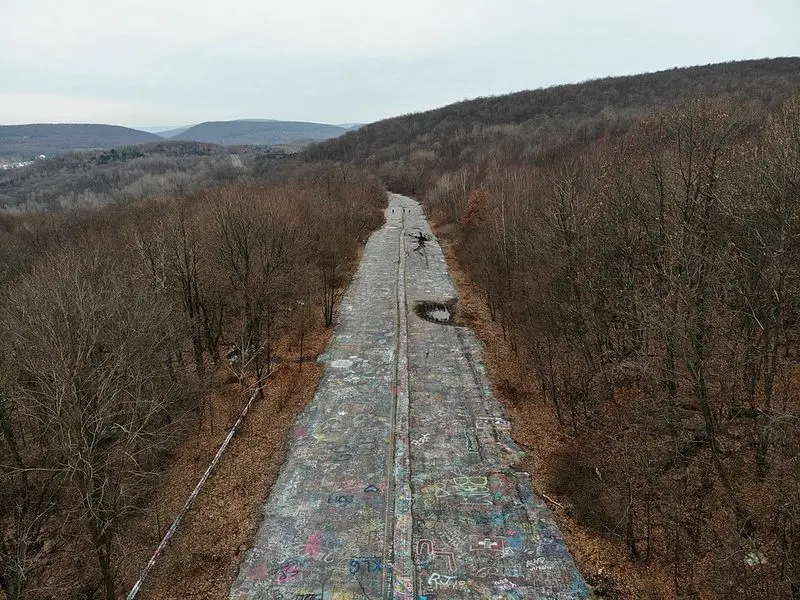
For years, a broken road was the most famous spot in town. Old Route 61 cracked from the heat below and got closed to traffic.
Artists and visitors covered its pavement in spray paint. People started calling it the Graffiti Highway.
It became a magnet for photos, doodles, and messages from around the world. Then everything changed in April 2020.
Crews covered the road with dirt to stop the crowds. Earth mounds now block vehicles from driving onto the old stretch.
Some walkers still find gaps to get through. Even so, the colorful surface that made it famous is mostly hidden now.
Here’s a fun way to think about it. The highway went from fire damage to art gallery to buried time capsule.
Old photos online show what it looked like in its painted prime. Looking at them is a great way to enjoy it without any risk.
If you remember seeing it, you caught a piece of Pennsylvania pop culture. If you missed it, the stories are almost as wild as the road.
Two Cemeteries Still Stand Watch Over The Empty Town
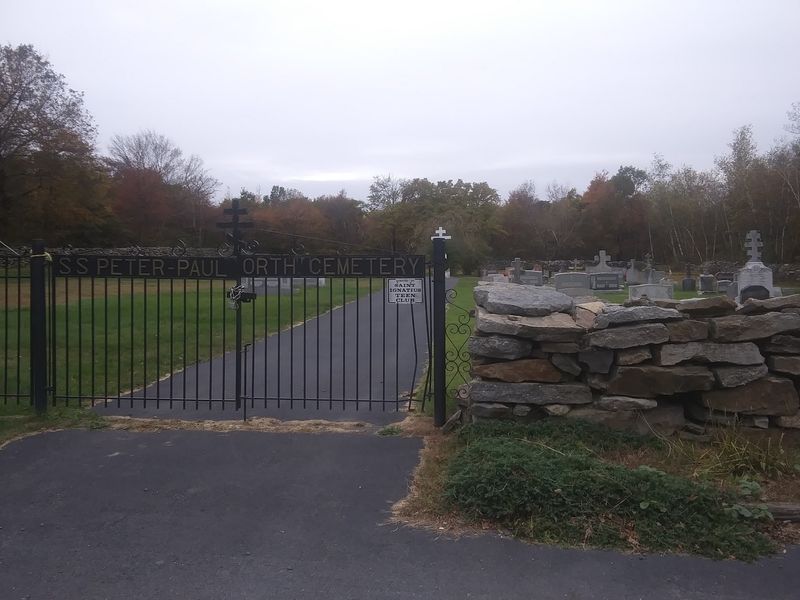
Houses vanished, but the cemeteries stayed. St. Ignatius Cemetery and Odd Fellows Cemetery are still present and cared for.
That care says a lot. Families who moved away still feel connected to the people and the place they left.
Odd Fellows Cemetery has an especially eerie claim to fame. Smoke can occasionally be seen rising from the ground there.
It’s one of the most striking reminders of the fire. Tidy rows of headstones sit near land that can still breathe out steam.
Visiting a cemetery calls for good manners. Walk gently, keep voices low, and leave everything exactly as you found it.
These grounds are meaningful family spaces, not props for spooky photos. A respectful visit honors the town’s history much better.
The St. Ignatius name also carries extra weight. St. Ignatius Church once stood in town, but it was torn down in 1997.
So the cemetery holds a name that the town’s skyline no longer does. Small details like that make the story feel very personal.
A Hilltop Church Still Rings With Weekly Services
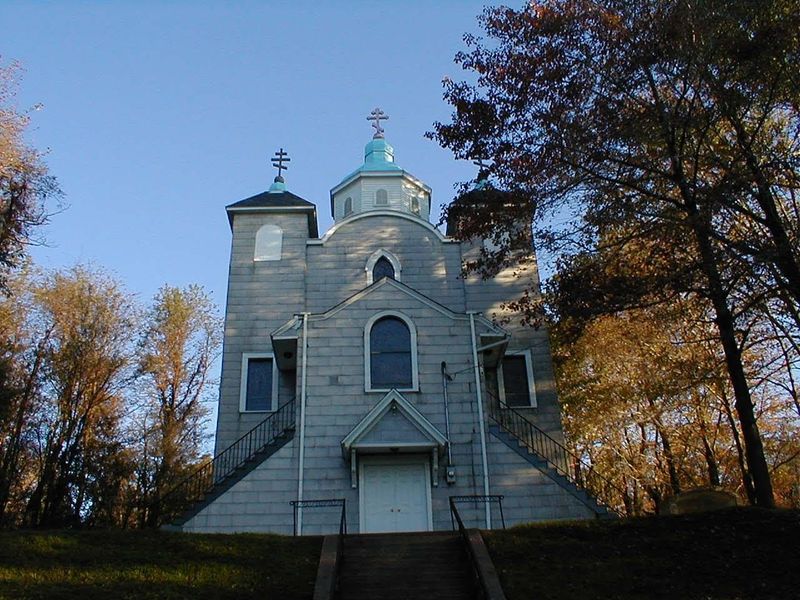
High on a hill, one building refuses to fade into history. The Assumption of the Blessed Virgin Mary Ukrainian Greek-Catholic Church still holds weekly services.
It’s the only remaining church in Centralia doing so. That fact alone makes it a powerful symbol of staying power.
Its spot above town gives it a sense of calm. While streets below sit nearly empty, the church keeps its doors and traditions alive.
Congregations often bring people back to places they once called home. Faith, family, and memory all meet in one spot.
If you see it, treat it as an active place of worship. Be quiet during services, park thoughtfully, and don’t wander where you’re not invited.
Photos from the outside are a respectful choice. The building’s Ukrainian heritage also reflects the immigrant families who shaped coal country.
Many mining towns in eastern Pennsylvania grew with workers from Eastern Europe. Their churches became the heart of neighborhood life.
Seeing one still active here feels hopeful. It proves a community can outlast even a fire that won’t quit.
Ashland Next Door Lets You Go Underground Safely
Curious about what coal country looks like underground? Nearby Ashland has an answer that doesn’t involve dangerous gas or hidden sinkholes.
The Pioneer Coal Mine Tunnel offers tours of an old coal mine. It also features historical displays connected to Centralia and its famous fire.
That makes it a smart pairing for a day of exploring. You get the real feel of a mine in a setting built for visitors.
Kids especially tend to understand the story better after seeing tunnels up close. Suddenly, the idea of coal seams burning underground clicks.
Ashland also has a funny link to Centralia. The old town’s mail now runs through Ashland’s ZIP code, 17921.
So the neighbor quite literally picks up the slack. Both places sit in the heart of Pennsylvania’s anthracite region.
Centralia itself lies in Columbia County, in Northeastern Pennsylvania. There’s no official street address for the abandoned borough, so plan around Ashland and nearby roads.
Check tour schedules before heading out. Then bring a light jacket, since mines stay cool even on warm days.