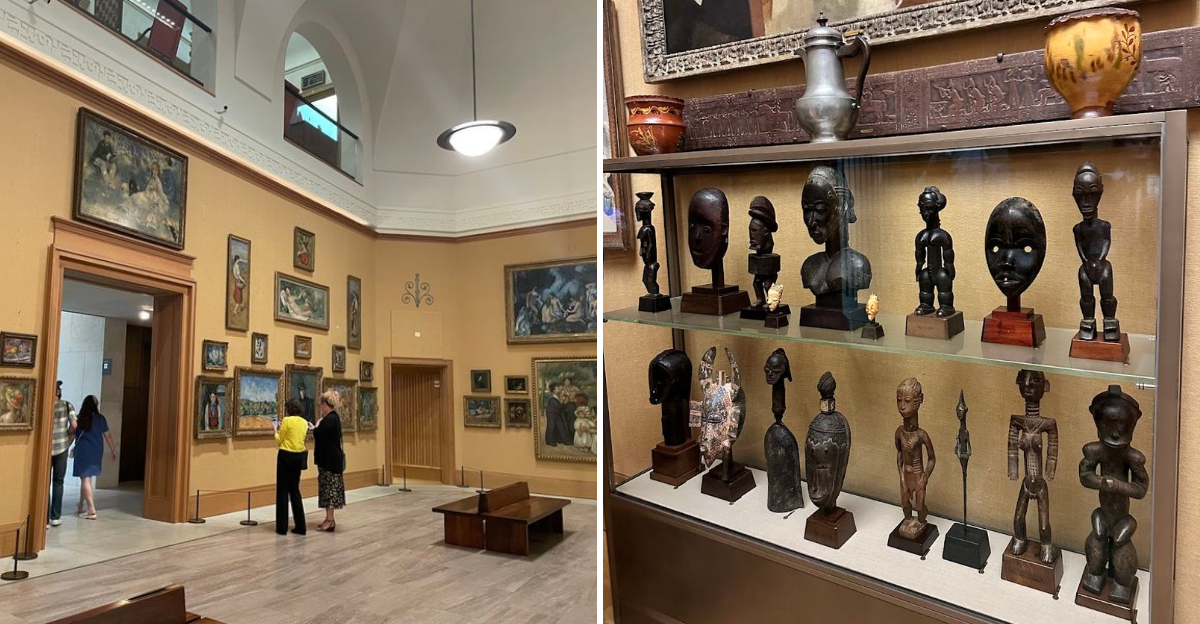
The Barnes Foundation stands as one of Philadelphia’s most remarkable cultural treasures, housing an art collection that rivals the world’s greatest museums. Created by Dr. Albert C.
Barnes in the early 20th century, this institution showcases hundreds of masterpieces by renowned artists like Renoir, Cézanne, and Picasso in a completely unique way. Rather than traditional museum displays, the Barnes arranges paintings alongside decorative arts and sculptures in thoughtful groupings that encourage visitors to see art with fresh eyes.
Whether you’re an art expert or simply curious about beautiful things, this museum offers an unforgettable experience that connects history, culture, and creativity in ways you won’t find anywhere else.
The World’s Largest Renoir Collection
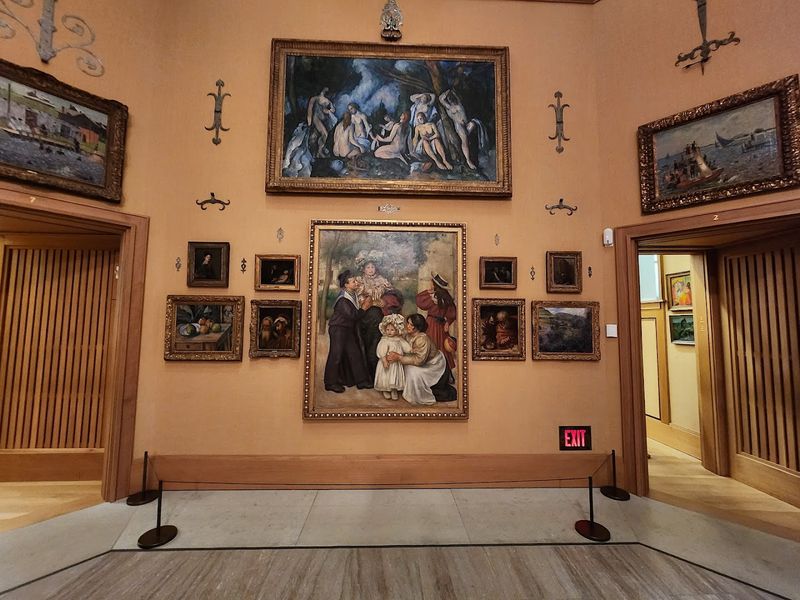
Walking into the Barnes Foundation feels like stepping into Renoir heaven. The museum holds an astonishing 181 paintings by Pierre-Auguste Renoir, making it the largest collection of his work anywhere on Earth.
These aren’t just minor sketches tucked away in storage—they’re vibrant, full-color masterpieces covering entire walls.
Renoir’s warm, glowing scenes of everyday life fill multiple galleries. You’ll see cheerful portraits, sun-dappled landscapes, and intimate family moments that practically radiate joy.
The sheer number of paintings lets you trace the artist’s development across decades, watching his style evolve from crisp detail to softer, dreamier brushstrokes.
What makes this collection special isn’t just quantity. Dr. Barnes personally selected each piece, often buying directly from artists or their families.
He valued emotional connection over fame, choosing paintings that spoke to him rather than following popular trends.
Visitors regularly spend hours just in the Renoir galleries. Each painting reveals new details upon closer inspection—a child’s mischievous smile, light dancing through leaves, the texture of fabric captured in quick brushstrokes.
For anyone who loves Impressionism or simply appreciates beauty, this collection alone justifies the visit.
Dr. Barnes’s Revolutionary Vision
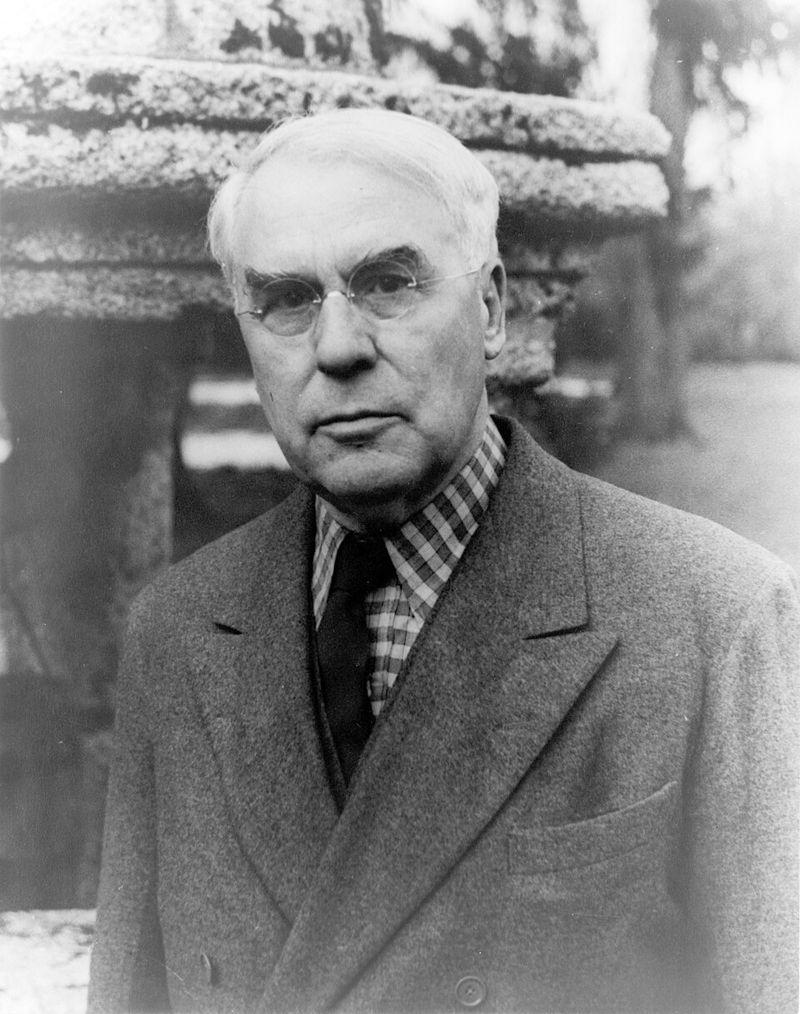
Albert Coombs Barnes wasn’t your typical wealthy art collector. He made his fortune inventing an antiseptic called Argyrol, then dedicated his life to making great art accessible to working-class people.
His mission was radical for the 1920s: he believed everyone, regardless of education or background, deserved to experience masterpieces.
Barnes didn’t just buy art—he studied it obsessively. He developed his own theories about visual relationships, color, and composition.
His ideas challenged traditional art historians, and museums often dismissed him as an eccentric outsider. But Barnes didn’t care about establishment approval.
He opened his original foundation in Merion, Pennsylvania, in 1922 as an educational institution, not a public museum. Workers, students, and everyday citizens received priority access over wealthy socialites.
Barnes personally taught classes, encouraging people to look closely and form their own opinions rather than memorizing facts.
This democratic approach created controversy. Philadelphia’s elite felt snubbed by his policies.
But Barnes remained committed to his principles until his death in 1951. Today, his vision lives on through educational programs that welcome diverse audiences and emphasize looking over lecturing.
The Ensemble Wall Arrangements
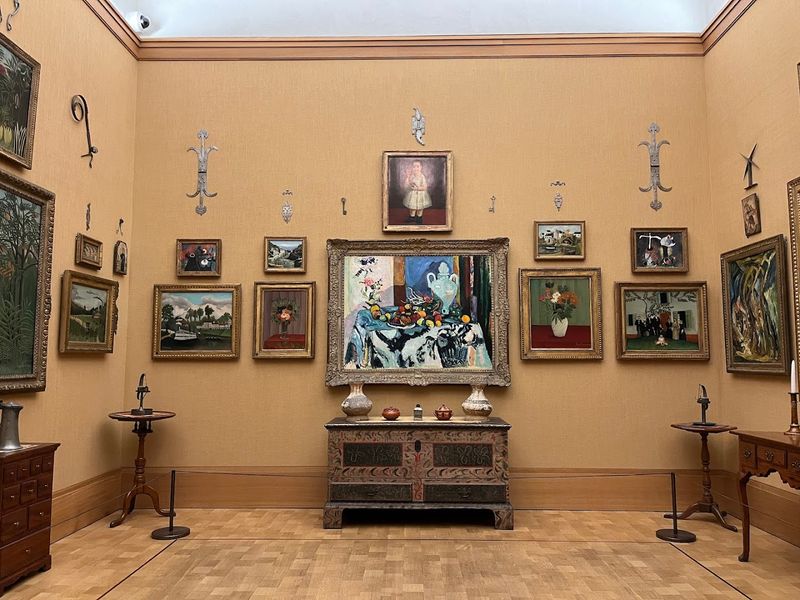
Forget everything you know about typical museum displays. The Barnes Foundation arranges art in dense, symmetrical groupings called ensembles that mix paintings with decorative objects in unexpected ways.
A Cézanne landscape might hang beside an African mask, with ornamental hinges positioned nearby and a Pennsylvania German chest below.
Dr. Barnes designed these arrangements himself, following principles he called “plastic values.” He focused on relationships between colors, lines, and shapes rather than chronology or artist reputation. Each wall creates visual conversations where objects from different cultures and time periods dialogue with each other.
This approach initially confuses some visitors. Where’s the explanatory text?
Why is that furniture there? But once you relax and simply look, something magical happens.
You start noticing how a curve in one painting echoes the arch of a nearby doorway, or how colors repeat across seemingly unrelated objects.
The foundation legally must preserve Barnes’s original arrangements. When the collection moved from Merion to the Parkway location in 2012, workers meticulously photographed and recreated each wall exactly.
This commitment means experiencing the collection as Barnes intended—challenging conventional thinking and discovering beauty through unexpected juxtapositions.
Cézanne’s Post-Impressionist Masterpieces
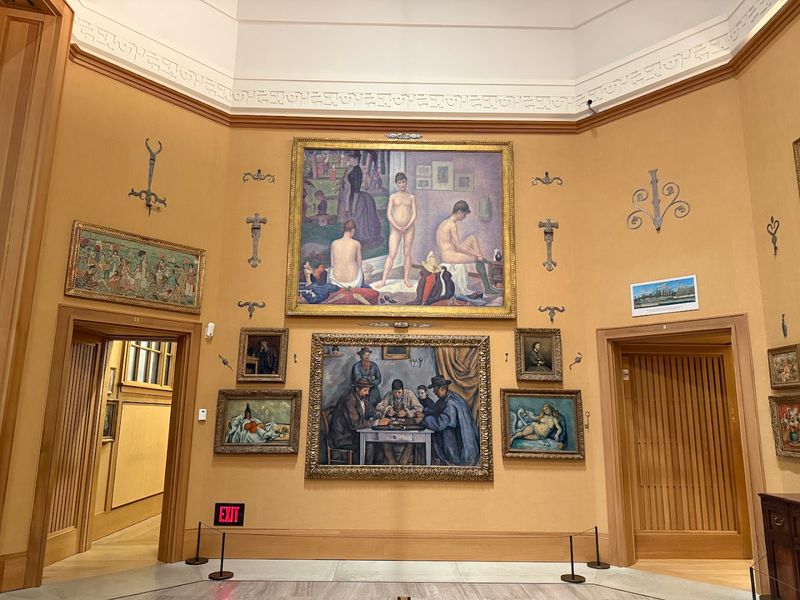
Paul Cézanne often gets overshadowed by flashier names, but the Barnes Foundation treats him as the star he deserves to be. With 60 paintings in the collection, visitors can dive deep into the artist’s groundbreaking approach to form and color.
These works literally changed how modern art developed.
Cézanne painted the same subjects repeatedly—Mont Sainte-Victoire, card players, apples on tables. This repetition wasn’t boring; it was experimental.
He broke objects into geometric shapes and built them back up with methodical brushstrokes, creating depth without traditional perspective tricks.
Standing before a Cézanne at the Barnes feels like watching someone solve a visual puzzle. His landscapes seem to flatten and expand simultaneously.
His still lifes make simple fruit profound. You can trace his influence on Picasso and Matisse in galleries just steps away.
Many visitors initially find Cézanne’s work less immediately appealing than Renoir’s sunny scenes. His paintings demand patience and attention.
But spending time with them reveals their genius—the careful construction, the subtle color shifts, the sense that you’re seeing objects as they truly exist in space rather than as pretty pictures.
Award-Winning Architecture and Gardens
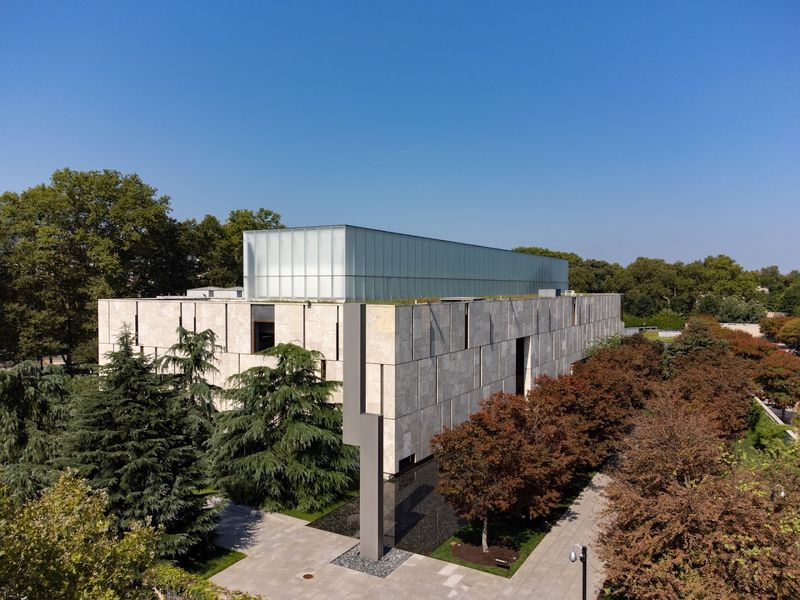
The Barnes Foundation’s current home, designed by architects Tod Williams and Billie Tsien, opened in 2012 on Philadelphia’s Benjamin Franklin Parkway. The building earned widespread acclaim for balancing modern design with respect for the collection’s historic roots.
Warm limestone walls and abundant natural light create an atmosphere that’s both contemporary and timeless.
Floor-to-ceiling windows offer stunning views of surrounding gardens and the city skyline. The architects carefully controlled natural illumination to protect delicate artworks while maintaining a connection to the outdoors.
Walking through feels peaceful rather than clinical, inviting rather than imposing.
Outside, the landscape design transforms a busy urban location into a tranquil retreat. Carefully chosen evergreens frame the entrance, while a reflecting pool creates mirror-like serenity.
Seasonal plantings add color without overwhelming the building’s elegant simplicity. Many visitors arrive early just to stroll the grounds before entering.
The architecture tells its own story about accessibility and welcome. Wide pathways accommodate wheelchairs easily.
Clear sightlines help visitors orient themselves without confusion. Comfortable seating areas throughout encourage people to pause, rest, and absorb what they’ve seen.
The building itself embodies Barnes’s belief that great art should be enjoyed in spaces designed for human comfort and contemplation.
African Art and Global Treasures
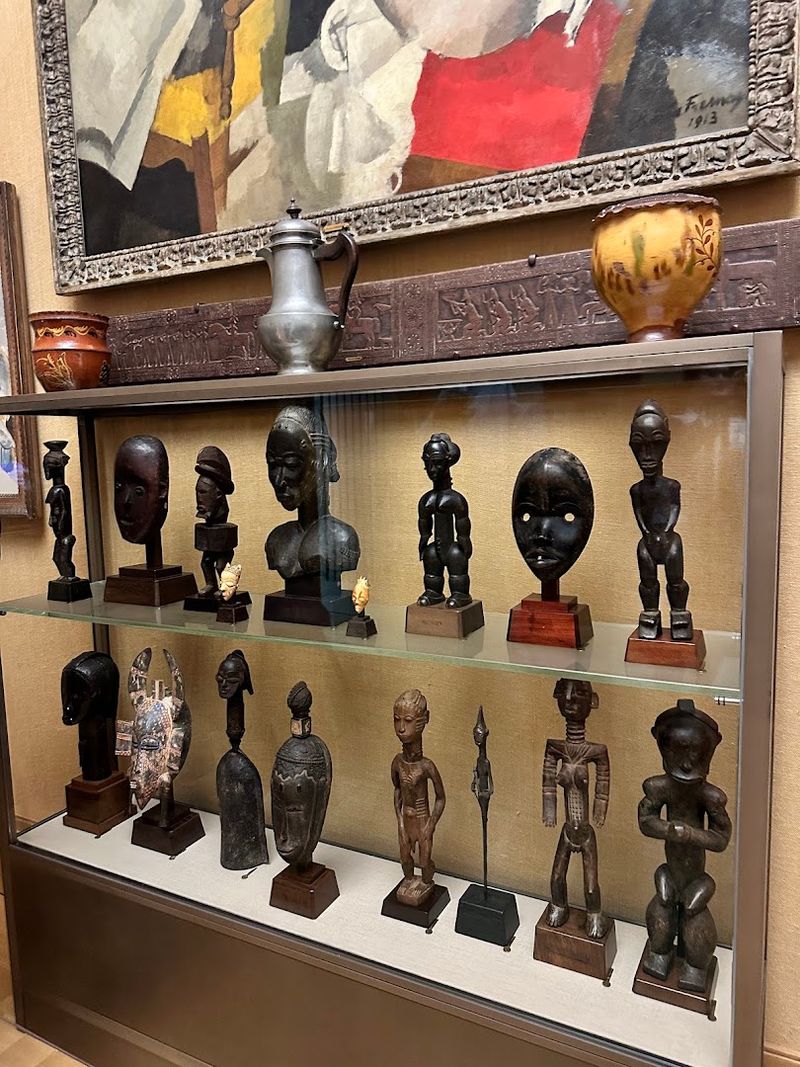
Dr. Barnes collected art from across the globe, not just European paintings. His passion for African sculpture was particularly ahead of its time.
During the 1920s, when many Americans viewed such objects as mere curiosities, Barnes recognized their artistic sophistication and cultural significance. He amassed an impressive collection that he displayed alongside his Impressionist masterworks.
The foundation’s African pieces include masks, figures, and decorative objects from various regions and traditions. Barnes saw visual connections between African sculptors’ approaches to form and the modernist experiments of Picasso and Matisse.
He arranged them together intentionally, showing how artists across continents explored similar aesthetic questions.
Native American textiles add another cultural dimension. Navajo blankets, pottery, and weavings demonstrate the same attention to pattern, color, and craftsmanship that Barnes valued in all art.
These objects aren’t relegated to separate galleries but integrated throughout the collection.
This multicultural approach was revolutionary for its era and remains refreshing today. Rather than segregating “Western” and “non-Western” art, Barnes treated all beautiful objects as worthy of equal attention.
Walking through the galleries, you experience art history as a global conversation rather than a European-dominated narrative.
Exceptional Educational Programs
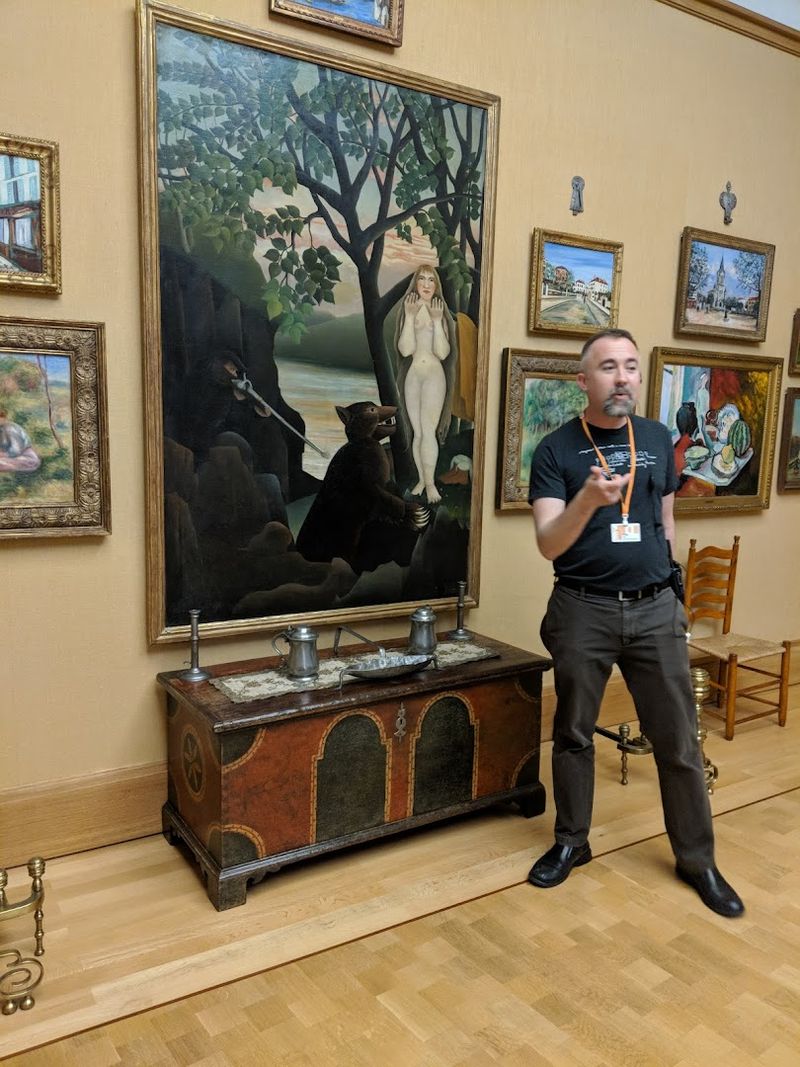
Education isn’t an afterthought at the Barnes Foundation—it’s the entire point. From its founding, this institution prioritized teaching people to see and think about art rather than simply displaying famous names.
That mission continues through outstanding programs designed for all ages and experience levels.
Guided tours led by knowledgeable docents transform the visiting experience. These aren’t dry lectures rattling off dates and artist biographies.
Docents ask questions, encourage observation, and help visitors develop their own insights. Many reviewers mention specific guides by name, praising their storytelling abilities and genuine enthusiasm.
The foundation offers specialized tours focusing on different aspects of the collection—Impressionism, decorative arts, Barnes’s collecting philosophy, or current special exhibitions. Private tours provide even more personalized attention.
Audio guides offer flexibility for independent explorers who prefer setting their own pace.
Educational programs extend beyond tours. Workshops, lectures, family activities, and online resources help people engage more deeply.
The website provides extensive information supporting classroom learning. This comprehensive approach honors Barnes’s belief that art education should be rigorous, accessible, and joyful simultaneously.
Whether you’re a first-time museum visitor or a seasoned art lover, you’ll learn something new.
Matisse, Picasso, and Modern Masters
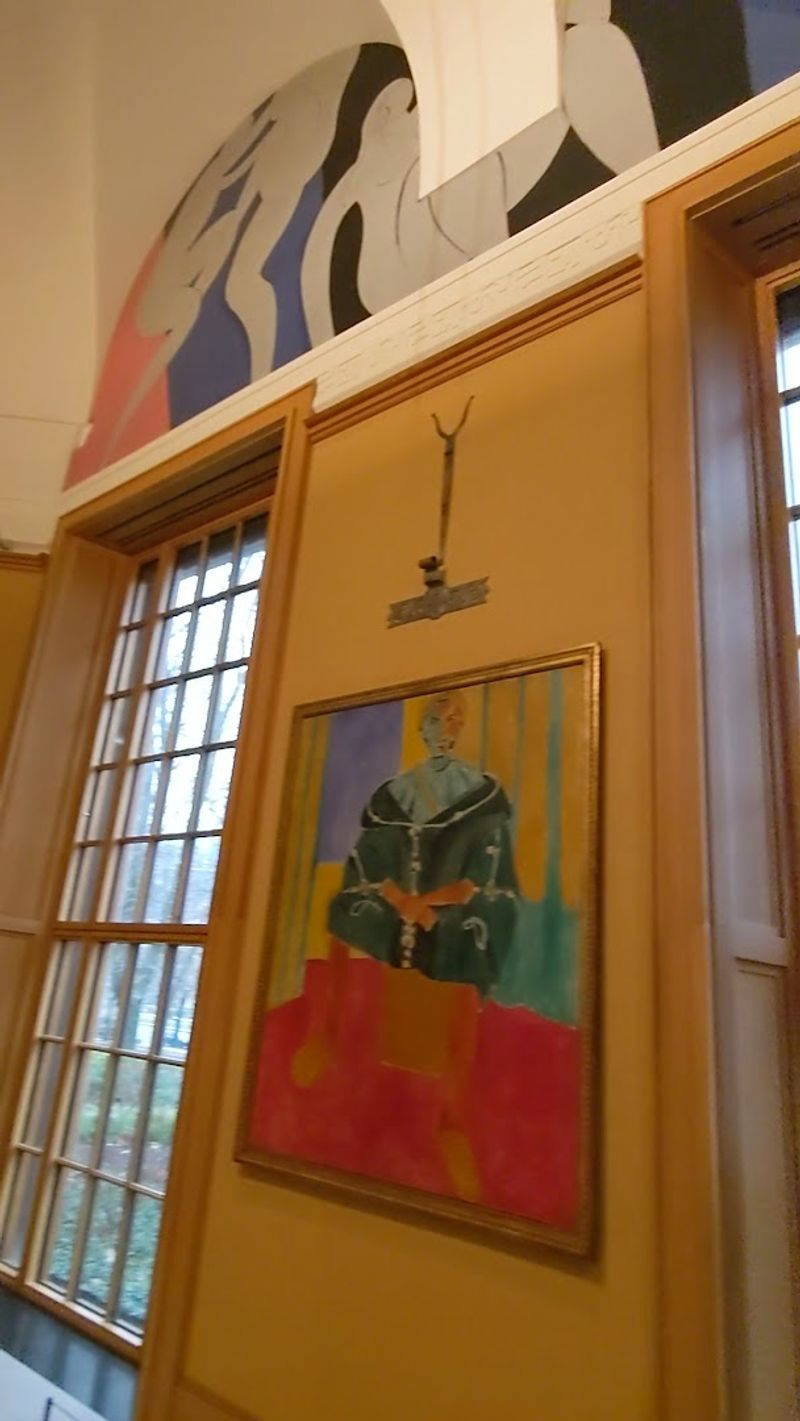
Beyond Renoir and Cézanne, the Barnes Foundation houses exceptional works by artists who revolutionized 20th-century art. Henri Matisse’s bold colors and flowing forms appear in numerous paintings throughout the collection.
His simplified shapes and vibrant palettes demonstrate how he distilled subjects to their emotional essence.
Pablo Picasso’s presence is equally significant. From Blue Period melancholy to Cubist experimentation, the collection spans his stylistic evolution.
Seeing multiple Picassos together helps viewers understand his restless creativity and willingness to constantly reinvent himself. Barnes acquired these works when Picasso was still considered dangerously avant-garde.
Other modern masters include works by Modigliani, whose elongated figures possess haunting elegance, and Chaim Soutine, whose expressionist brushwork feels almost violent in its intensity. Vincent van Gogh’s contributions add their own emotional power.
Georges Seurat’s pointillist technique demonstrates yet another approach to capturing light and color.
What makes this collection remarkable isn’t just individual masterpieces—it’s the concentration of genius in one place. Within a single gallery, you can compare how different artists tackled similar subjects or solved visual problems in radically different ways.
This density of talent creates an educational experience unmatched by larger, more dispersed collections.
Decorative Arts and Metalwork
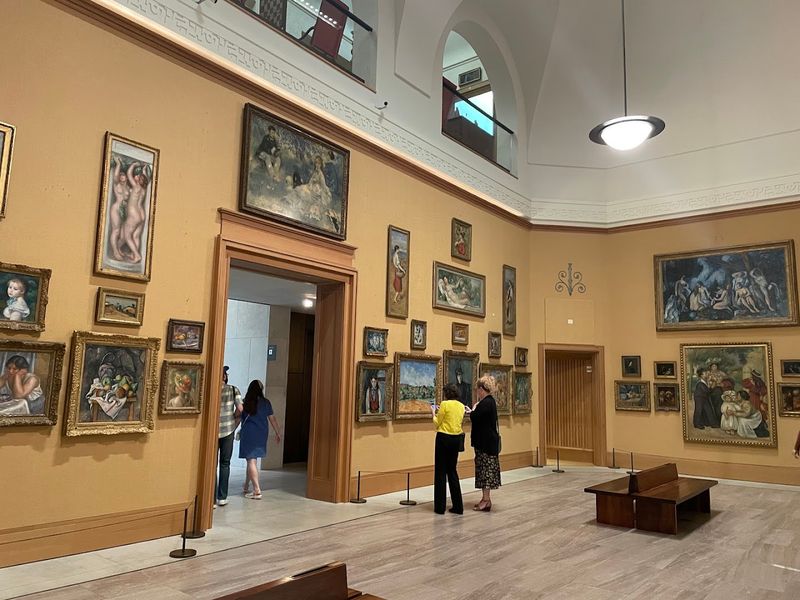
Most museums separate “fine art” from “decorative objects,” but Barnes rejected such hierarchies. He collected ornamental hinges, furniture, pottery, and metalwork with the same passion he brought to acquiring Renoirs.
Throughout the galleries, these objects integrate seamlessly with paintings, creating unexpected visual relationships.
Elaborate door hinges from Pennsylvania German craftsmen hang alongside French Impressionist landscapes. Their curving metalwork echoes organic forms in nearby paintings.
Antique furniture pieces—chairs, tables, chests—stand beneath wall arrangements, their wood grain and carved details contributing to the overall composition.
Barnes particularly loved wrought iron. Decorative grillwork, hinges, and hardware appear throughout the collection, their black silhouettes providing striking contrast against colorful paintings.
He saw these utilitarian objects as sculptural forms worthy of serious attention. Many visitors initially overlook them, focusing on famous paintings, but gradually notice how essential they are to each ensemble’s balance.
This approach challenges our assumptions about what counts as “real art.” Is a beautifully crafted hinge less artistic than a painting? Barnes would argue no. Both demonstrate human creativity, technical skill, and aesthetic sensibility.
By mixing them freely, he encouraged viewers to appreciate beauty wherever it appears—on canvas or in everyday objects transformed by skilled hands.
The Complete Museum Experience
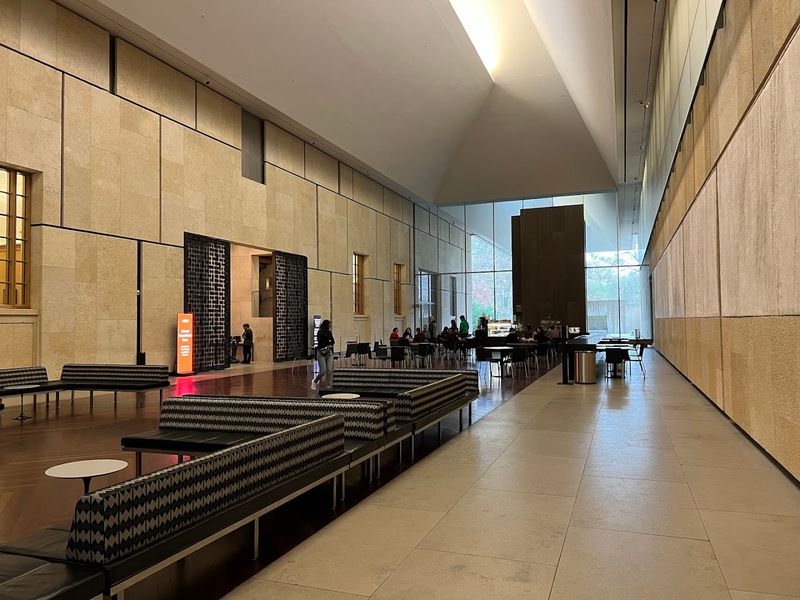
Visiting the Barnes Foundation means more than viewing art—it’s a complete cultural experience thoughtfully designed for comfort and enjoyment. The museum understands that great art requires mental energy, so they’ve created spaces for rest and refreshment throughout your visit.
The on-site café offers a welcome respite when visual overload strikes.
After wandering galleries packed with masterpieces, the café’s garden views and lighter atmosphere help you process everything you’ve seen. The menu features fresh, quality options perfect for lunch or afternoon snacks.
Many visitors recommend taking breaks between gallery visits rather than rushing through everything at once.
The gift shop deserves its own visit. Filled with art books, prints, unique gifts, and design objects, it’s a treasure trove for art lovers.
Items range from affordable postcards to high-quality publications you won’t find elsewhere. The merchandise thoughtfully reflects the collection’s diversity and educational mission.
Practical amenities enhance accessibility for all visitors. Free coat check handles bags and backpacks (required, as large items aren’t allowed in galleries).
Elevators accommodate wheelchairs and anyone unable to use stairs. Clear signage and helpful staff ensure nobody feels lost or confused.
Your admission ticket remains valid for two days, encouraging leisurely exploration across multiple visits.