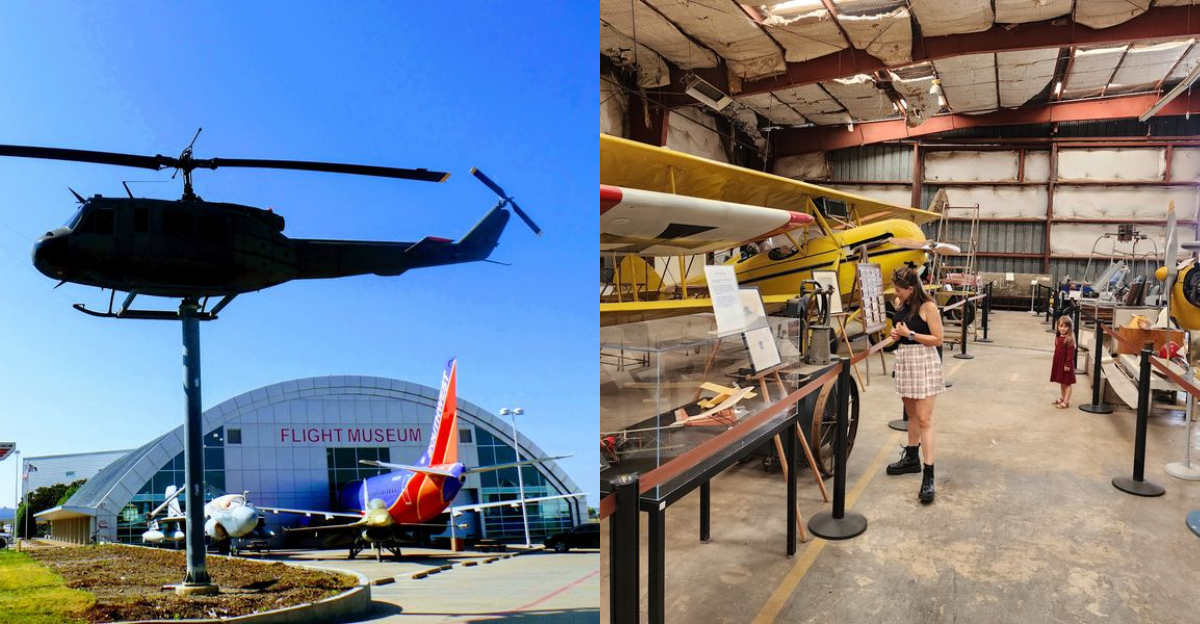
Aviation history can feel surprisingly close when you are standing beside a restored aircraft and looking up at its wings. In Texas, museums preserve that feeling through polished cockpits, massive engines, wartime aircraft, and stories about the people who spent their lives pushing flight forward.
Across the state, Texas aviation museums offer far more than rows of old airplanes. You can peer inside historic aircraft, study instruments that once guided pilots across long distances, and learn how military service, engineering, and local communities shaped aviation.
Some collections focus on legendary machines, while others reveal lesser-known chapters that deserve a closer look.
For anyone who enjoys the sound of an engine overhead or has ever wondered what it feels like inside a vintage cockpit, these museums are worth making time for. Here are 11 Texas aviation museums to consider before your next trip.
Lone Star Flight Museum
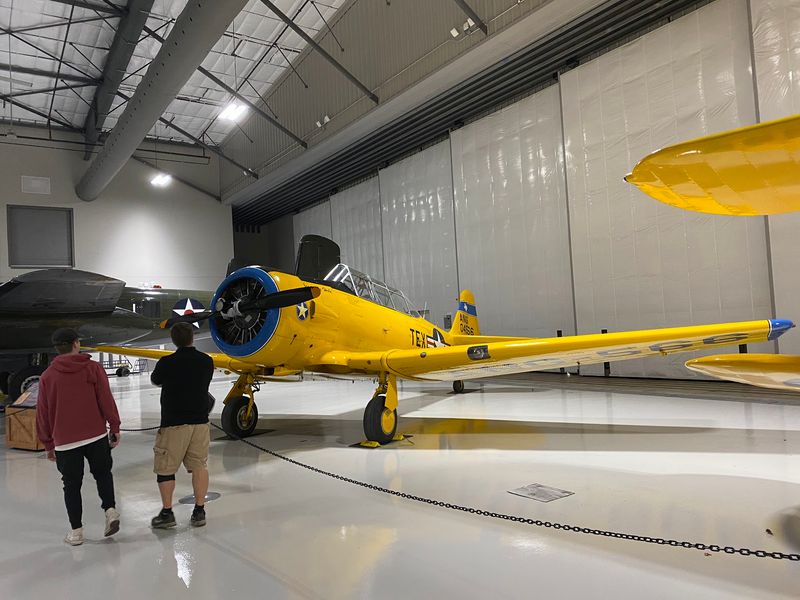
The first thing you notice is the shine. Sunlight slides across polished wings, and the whole hangar feels alive, like the planes might roll forward at any minute.
Even visitors who know a lot about aviation tend to slow down here and take it all in.
Later, as you move through the Lone Star Flight Museum in Houston, the experience becomes more than a walk past old aircraft. Historic planes share space with hands-on exhibits that explain how flight works, why design matters, and how pilots train.
Kids usually head straight for the interactive areas, while adults linger near the warbirds and classic civilian aircraft.
Because it sits near Ellington Airport, the setting adds an extra thrill. You might hear real aircraft outside while learning about the past inside.
That mix makes the museum feel connected to today, not stuck in another era.
Plan enough time for both the aircraft displays and the STEM galleries. A quick visit is possible, but the place is best enjoyed slowly, with room for photos, questions, and a stop at the gift shop before leaving.
Frontiers of Flight Museum
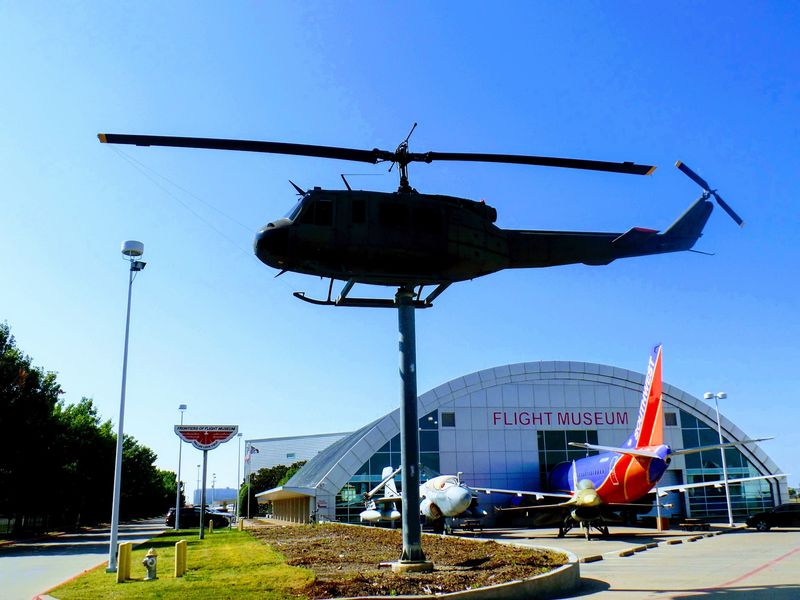
Jet noise in the distance gives this place a fitting soundtrack. Just when Dallas traffic feels loud and busy, the museum opens into a calmer world where early flyers, astronauts, and airline pioneers all seem to share the same roof.
It feels thoughtful rather than overwhelming.
Inside the Frontiers of Flight Museum at Dallas Love Field, galleries move from the earliest days of aviation to modern space exploration. One moment you are studying a Wright Flyer replica, and the next you are standing near artifacts linked to Apollo missions.
The range keeps the visit interesting, even for travelers who usually prefer one era over another.
There is also something special about being so close to an active airport. Looking out toward the runways after seeing historic aircraft helps connect the old story of flight with the one still happening outside.
Aviation history feels less distant that way.
Try to give yourself time for all the galleries instead of rushing to the biggest objects. The smaller cases, airline pieces, and local stories add a lot.
Before heading out, pause and watch a few planes at Love Field for the perfect ending.
Texas Air Museum – Stinson Field
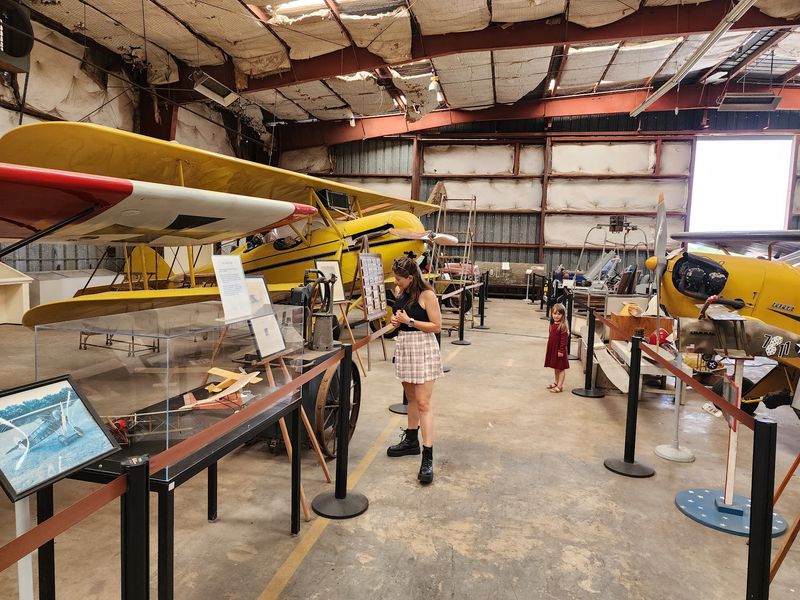
Some airports feel modern and hurried, but this one carries the mood of another century. The air seems filled with old stories, from daring early pilots to wartime training days, and the worn details around the field make the history feel close instead of distant.
That sense of age is exactly why the Texas Air Museum – Stinson Field in San Antonio stands out. Stinson Field is one of the oldest operating airports in the country, and the museum leans into that legacy with exhibits about early Texas aviation, the famous Stinson family, and military flight.
Seeing those stories in the place where so much of them happened gives the visit real weight.
Small details stick with you here. A vintage aircraft display can lead to uniforms, photos, and personal items that show aviation as daily work, not just high drama.
The museum feels grounded, which suits the setting.
Pair your stop with time around San Antonio if you can. Grab tacos afterward and think about how many pilots once passed through this same field.
For travelers who enjoy origins and turning points, this museum offers both in one compact stop.
Texas Air Museum
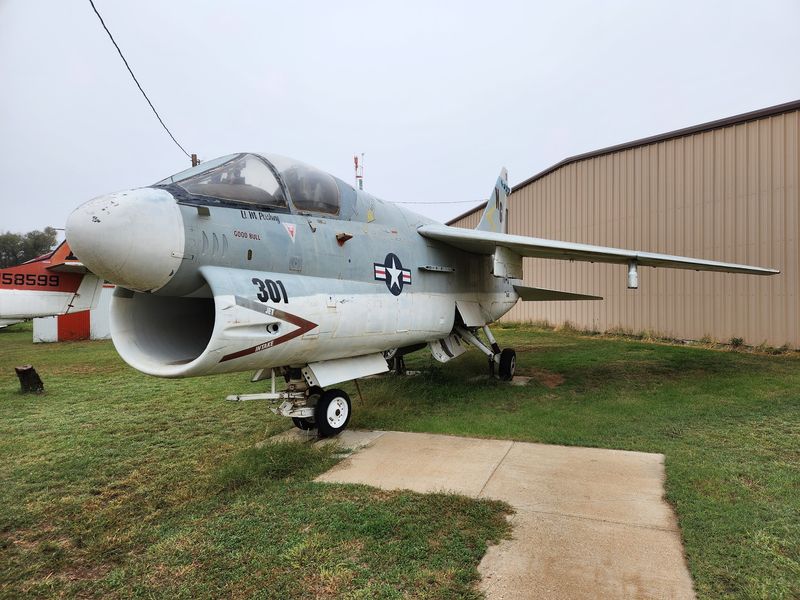
Out on the plains, the quiet can make every airplane shape look even more dramatic. Metal wings, weathered paint, and wide West Texas sky create a scene that feels honest and a little rough around the edges, which is part of the charm.
In Slaton, the Texas Air Museum focuses strongly on military aviation, and that gives the visit a different energy from larger city museums. World War I artifacts, World War II aircraft, and Vietnam-era displays share space in a way that shows how technology changed across decades of conflict.
Instead of flashy presentation, you get a more direct connection to the machines and people behind them.
One of the most exciting things here is the museum’s link to flying aircraft, not just parked ones. Knowing that some historic planes are kept in airworthy condition adds life to the collection, even on a quiet day.
The museum feels active, not frozen.
Because public hours can be limited, planning matters. Bring water, take your time with the displays, and enjoy the slower pace.
For travelers who like hidden gems more than polished tourist stops, this one leaves a strong impression.
Texas Air & Space Museum
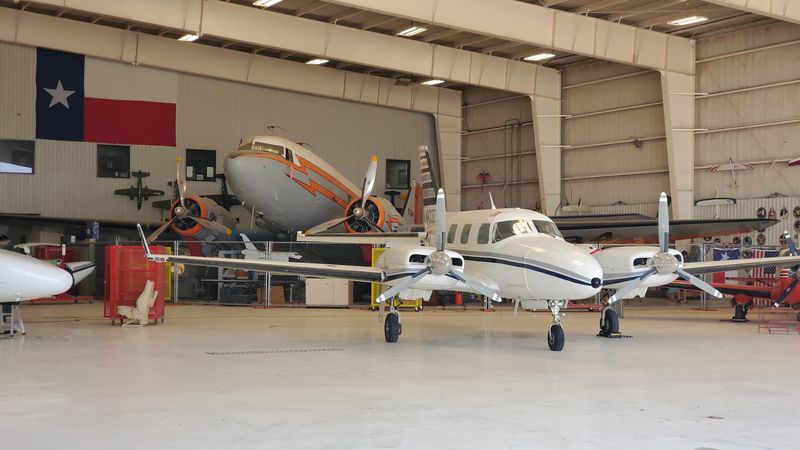
Big sky does some of the storytelling here. In Amarillo, the open horizon makes planes seem even more tied to human ambition, and the museum captures that feeling well.
You arrive thinking about aircraft, then quickly start thinking about astronauts too.
The Texas Air & Space Museum brings together Panhandle aviation history and the region’s surprising connection to space travel. Full-size aircraft give the grounds a strong visual punch, while indoor exhibits explain the people, places, and training that shaped local flight history.
The setting in a former airport terminal adds personality, making the building part of the experience instead of just a container for exhibits.
Several displays stand out for travelers who like specifics. A historic DC-3 and a NASA shuttle training aircraft offer two very different views of progress, from early commercial flying to space-era preparation.
That contrast is memorable without needing fancy presentation.
After your visit, the Amarillo area gives you easy ways to round out the day. You can grab barbecue, look out over the plains, and let the scale of the place sink in.
For aviation fans, it offers both machinery and a real sense of place.
Historic Aviation Memorial Museum
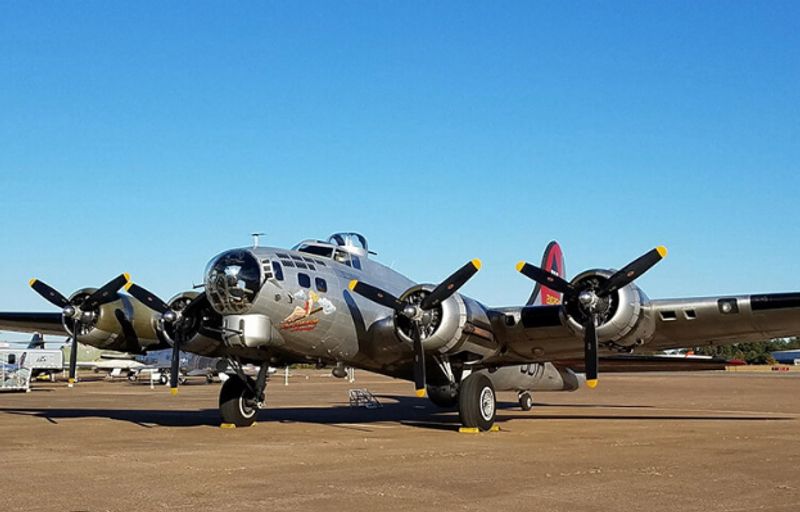
There is a more reflective mood here than some visitors expect. Instead of only admiring aircraft from a distance, you spend time with objects that carry emotion, memory, and sometimes loss.
That shift gives the museum a quieter power.
At the Historic Aviation Memorial Museum in Tyler, the collection moves across many chapters of American aviation, from early flight through modern conflicts and into the space age. Because it sits at Tyler Pounds Regional Airport, the location feels fitting without being distracting.
Exhibits on women in aviation, wartime service, and technological change help build a broad picture rather than a narrow one.
What many people remember most are the personal artifacts. A captured Nazi flag, uniforms, and other wartime items make history feel immediate in a way that engines and wings alone cannot.
There are also flight simulators, which add a practical, hands-on break between heavier moments.
This is a good stop for travelers who enjoy context as much as spectacle. Give yourself time to read the exhibit labels and not just glance at them.
The museum rewards patience, and the airport setting keeps the spirit of flight close the whole time.
Silent Wings Museum
Not every war story begins with roaring engines. Some begin in near silence, with simple wooden aircraft and crews who understood that quiet could be both a tool and a danger.
That unusual idea gives this museum a haunting quality from the start.
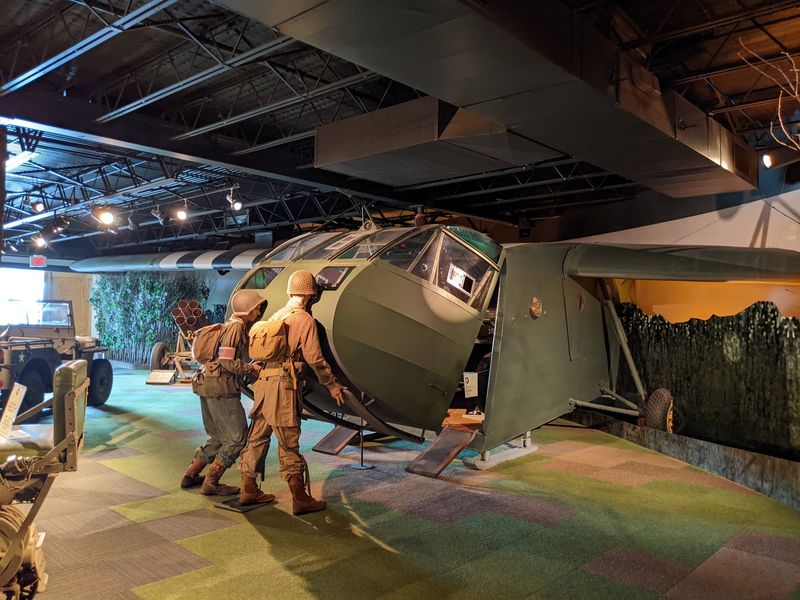
In Lubbock, the Silent Wings Museum focuses on the World War II military glider program, a subject many travelers know little about before they arrive. The centerpiece, a rare CG-4A glider, helps visitors picture how spare and vulnerable these aircraft really were.
Once you see its shape up close, the bravery of glider pilots becomes much easier to understand.
The museum does a strong job with storytelling. Photos, personal accounts, and wartime context explain why gliders mattered and how pilots trained for missions with almost no room for error.
The result feels specific and human, not overly broad.
Because the topic is so focused, this stop works well even on a tight travel schedule. It offers something many bigger museums do not, a deep look at one overlooked part of aviation history.
In a state full of flight museums, that makes it especially memorable.
National WASP WWII Museum
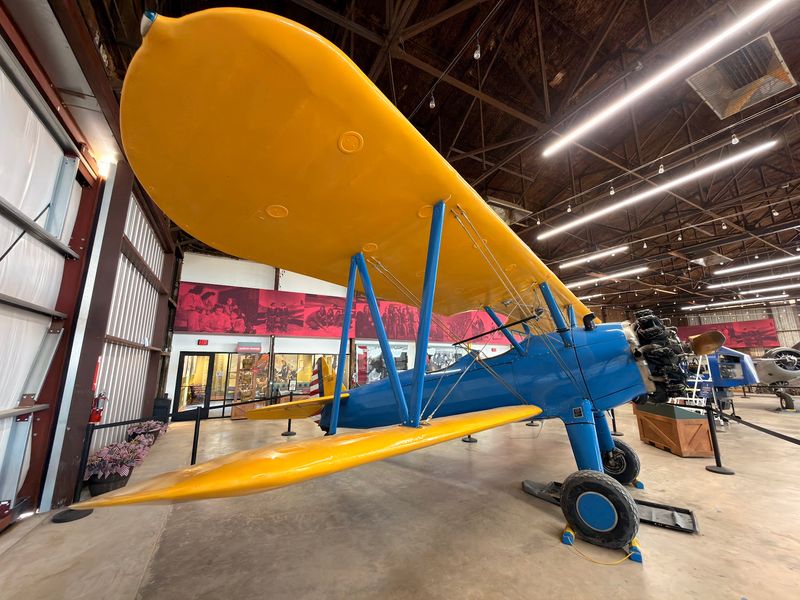
Wind across the plains can make a historic airfield feel almost cinematic. Here, that landscape matters because it frames a story of courage that was overlooked for far too long.
The mood is inspiring, but it is also deeply personal.
The National WASP WWII Museum in Sweetwater tells the story of the Women Airforce Service Pilots, who trained at Avenger Field during World War II. Their work included ferrying aircraft, testing planes, and towing targets, jobs that demanded skill and nerve.
Walking through the museum, you get a clear sense that these women were not symbolic figures. They were serious aviators doing hard, risky work.
Artifacts, photographs, and the hangar setting help the story land. Even small details, like uniforms or mascot imagery, say a lot about the era and the way these pilots built community while proving themselves every day.
The history feels earned rather than decorated.
Sweetwater is not a place most travelers stumble upon by accident, which makes this stop feel even more meaningful. If you care about overlooked chapters of aviation, this museum offers one of the strongest and most moving visits in Texas.
Hangar 25 Air Museum
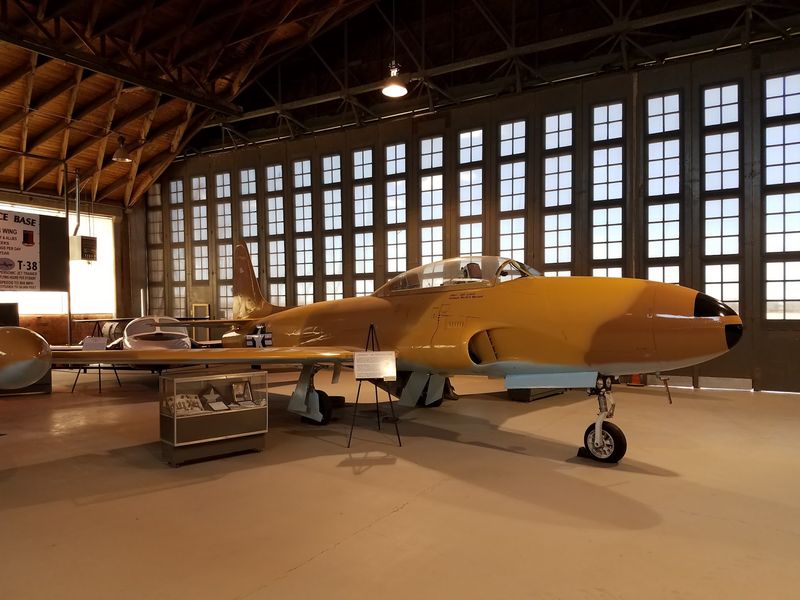
Massive old hangars have a way of making people lower their voices. The scale suggests purpose, discipline, and long days of training, and that feeling settles in quickly here.
It is easy to imagine instructors, cadets, and engines filling the space decades ago.
At Hangar 25 Air Museum in Big Spring, the building itself is one of the main attractions. Housed in a preserved 1942 hangar tied to the former Webb Air Force Base, the museum explores the area’s long role in military flight training.
That history stretches from World War II through the jet age, giving the museum a strong sense of continuity.
What makes the visit work is its connection to place. You are not learning abstract facts about pilot training in some generic room.
You are standing where that training legacy actually unfolded, which gives even simple displays extra weight. Aircraft, photos, and base history all benefit from that setting.
If you enjoy military history with a local anchor, this stop is worth making time for. Big Spring’s wide-open landscape fits the story well, and the museum gives travelers a grounded look at how many aviators got their start in Texas.
Mid America Flight Museum
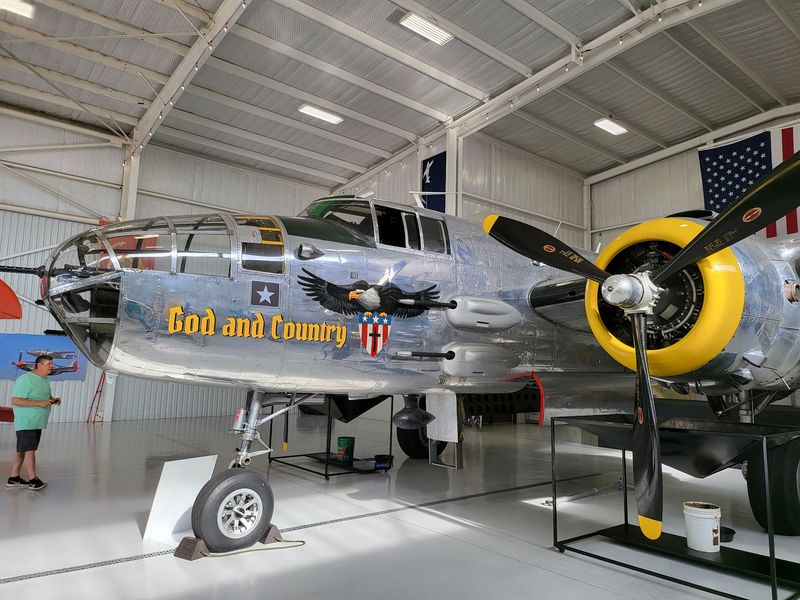
There is a collector’s joy in the air here. You get the feeling that every aircraft has been chosen with care, protected with patience, and kept ready for the next admirer who walks through the door.
That love of old planes shapes the whole experience.
At the Mid America Flight Museum in Mount Pleasant, vintage civilian aircraft and warbirds share the stage in a setting that feels personal rather than corporate. Because the museum sits at a regional airport, the collection has room to breathe.
Visitors can spend real time comparing shapes, paint, eras, and purposes without feeling rushed by crowds.
What makes this stop special is not one famous object so much as the overall range. The museum offers a broad look at aviation through aircraft that often feel beautifully maintained and close at hand.
For enthusiasts, that kind of access can be more satisfying than a single blockbuster exhibit.
Public visiting hours are often limited, so checking ahead is smart. Once there, slow down and enjoy the atmosphere of an airport town where flying still feels tangible.
For travelers who appreciate preservation and craftsmanship, this museum has a steady, lasting appeal.
No. 1 British Flying Training School Museum
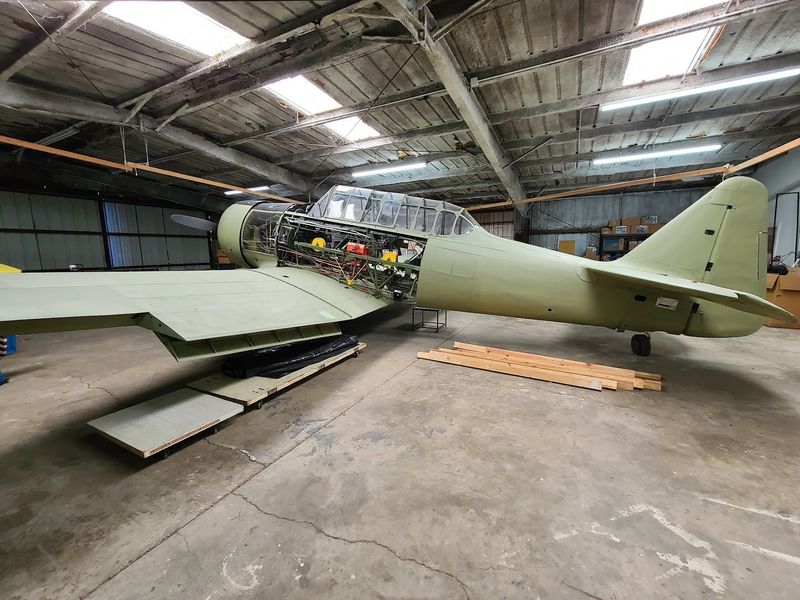
Texas and Britain sound like an unusual pairing until you step into this story. Then the connection feels natural, even moving, because it grew from wartime need, shared training, and friendships formed far from home.
The result is one of the state’s most distinctive aviation visits.
The No. 1 British Flying Training School Museum in Terrell preserves the history of a program that brought Royal Air Force cadets to Texas during World War II. Here, away from the danger and weather of wartime England, young men learned to fly in wide-open skies.
The museum explains that partnership with logbooks, uniforms, training materials, and exhibits that keep the human side front and center.
What lingers after the visit is the warmth of the story. This is not only about aircraft and instruction.
It is also about community, cultural exchange, and the surprising bonds that formed between local Texans and visiting cadets. That emotional layer sets the museum apart.
Terrell makes a thoughtful stop for travelers exploring the Dallas area but wanting something less expected. If you like aviation history with an international angle and a strong sense of place, this museum is easy to remember long after the trip ends.