

Tucked away in Warner Robins, Georgia, the Museum of Aviation is one of the most impressive yet underrated stops in the entire Southeast. Sitting on 51 acres next to Robins Air Force Base, this free museum holds more than 85 historic aircraft, missiles, and cockpits that tell the full story of American air power.
Whether you love military history, massive machines, or just want a jaw-dropping day trip, this place delivers in a big way. Rated 4.9 stars by thousands of visitors, it earns every bit of that praise.
Why the Museum of Aviation Stands Out in Warner Robins
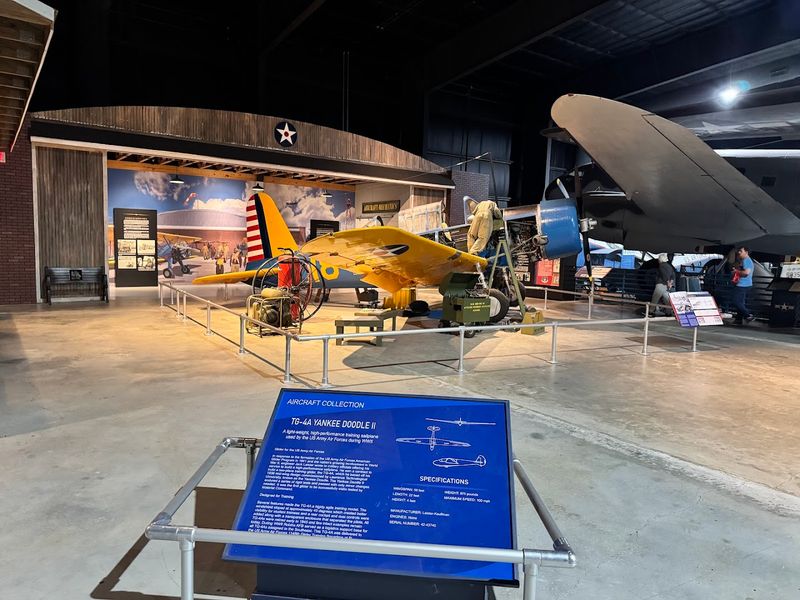
Not every museum can claim to be the second-largest of its kind in the entire United States Air Force system, but the Museum of Aviation in Warner Robins wears that title proudly. Spread across 51 sprawling acres right alongside Robins Air Force Base, this place is built on a scale that most visitors simply do not expect when they first pull into the parking lot.
The collection includes more than 85 historic aircraft, missiles, and cockpits, and every single one of them is a real piece of history, not a replica or a scaled-down model. Visitors who come expecting a modest regional attraction usually leave with their jaws still hanging open.
The sheer number of planes, combined with the quality of the exhibits, puts this museum in a completely different league from most stops along a Georgia road trip.
What makes it even more remarkable is that admission is completely free. The museum runs on donations and community support, which means families, solo travelers, and school groups can all walk in without worrying about the cost.
Located at 1942 Heritage Blvd, it is open Monday through Saturday from 9 a.m. to 5 p.m. and on Sundays from 1 to 5 p.m.
The Outdoor Aircraft Display That Hits You First

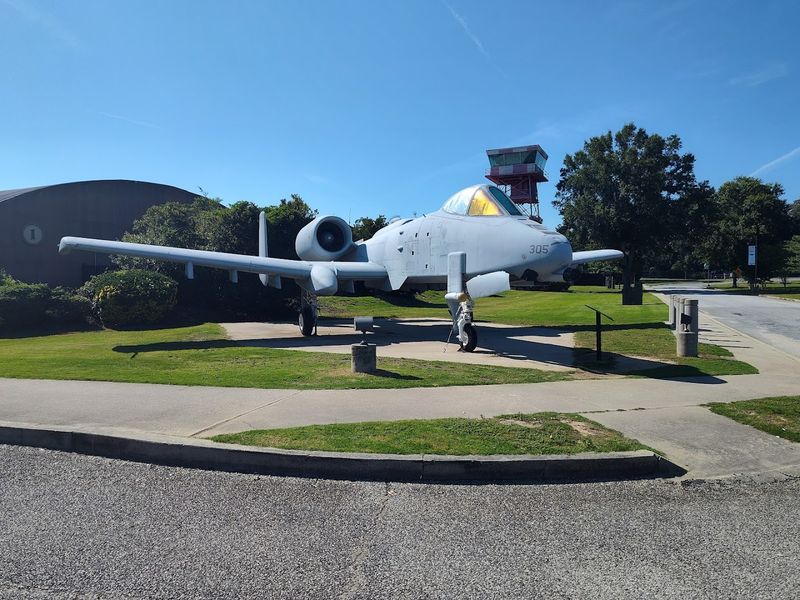
Before you even reach the front doors, the outdoor display is already doing its job. A roughly one-mile loop winds around the museum grounds, and lining that path are full-size aircraft parked in the open air where visitors can walk right up to them.
Drones, jets, propeller planes, and helicopters sit shoulder to shoulder in a lineup that feels more like a working flight line than a museum exhibit.
The effect is immediate and hard to describe without standing there yourself. When you approach a real B-52 Stratofortress from the outside, the wings stretch so far in both directions that your brain almost refuses to process the scale.
The weathered metal, the massive landing gear, the enormous engine pods hanging beneath the wings, all of it adds up to an experience that photographs alone cannot fully capture.
Several visitors recommend arriving early in the day to walk the outdoor loop before the Georgia heat picks up, especially in summer months. The grounds are accessible and easy to navigate, with enough space between aircraft that families with strollers or wheelchair users can move around comfortably.
Starting outside sets a powerful tone for everything you are about to see indoors.
Inside the Hangars Where History Gets Organized
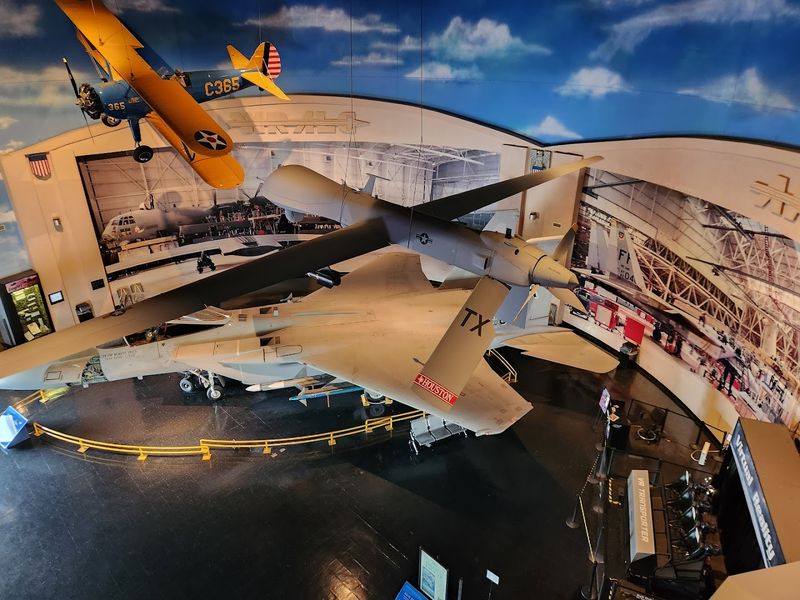
Four massive, climate-controlled hangars form the backbone of the indoor experience at the Museum of Aviation. Each building carries its own theme, walking visitors through different chapters of aviation and military history in a way that feels logical and easy to follow.
Moving from hangar to hangar is like flipping through a well-organized history book, except the pages are full-size aircraft and immersive displays.
One hangar focuses on World War II-era aircraft and the technology that defined that conflict. Another shifts the story forward into the Cold War, where speed, altitude, and intelligence-gathering became the new measures of air superiority.
The progression makes sense even for visitors who are not aviation experts, because the exhibits connect each era to the larger story of why these machines mattered.
Some hangars stretch to multiple stories, with upper-level galleries offering different viewing angles on the aircraft below. There is also a STEM education floor designed specifically for younger visitors, giving kids hands-on ways to engage with science and engineering concepts tied to flight.
Volunteer veterans circulate through the buildings, ready to share personal stories and answer questions. Their presence transforms the hangars from a simple display space into something much more alive and personal.
Massive Aircraft Up Close and Why They Leave You Speechless
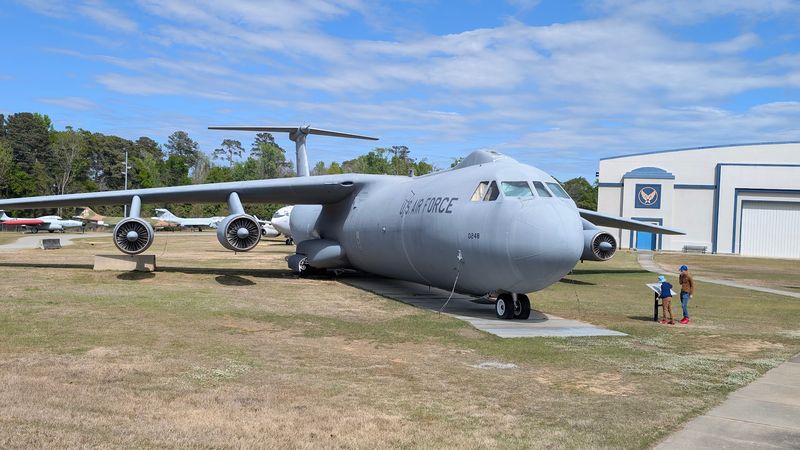
Standing directly beneath the wing of a B-52 Stratofortress is a moment that recalibrates your understanding of what human engineering is capable of. The wingspan of that aircraft stretches 185 feet, and when you are underneath it, looking up at eight massive engines hanging in clusters of four, the word “big” starts to feel completely inadequate.
The Museum of Aviation has several aircraft in this category, where size alone becomes part of the story.
The SR-71 Blackbird is another crowd favorite that earns its reputation the moment you see it in person. Sleek, dark, and impossibly long, it looks like something from a science fiction film rather than a real machine that pilots actually flew at speeds exceeding Mach 3.
The U-2 Dragon Lady, with its glider-like wings, creates a completely different kind of awe, one built on elegance rather than raw power.
Visitors consistently mention that the size of the aircraft gives them a new appreciation for the people who built, maintained, and flew them. One reviewer described the experience as stunning in a way that photos simply cannot replicate.
Plan to spend extra time in the areas where the largest aircraft are displayed, because there is always another angle worth seeing.
Stories Behind the Planes That Make the History Personal
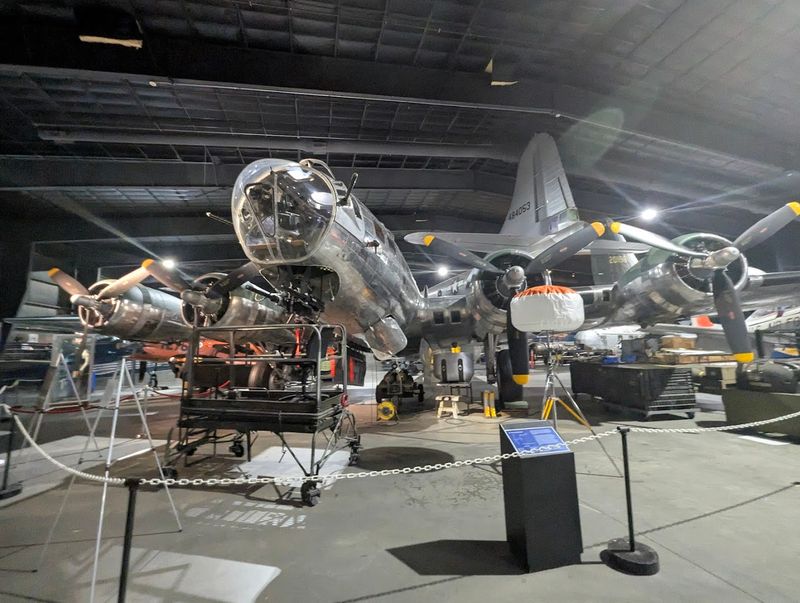
Hardware alone does not make a great museum. What sets the Museum of Aviation apart from a simple parking lot of old planes is the way it connects each aircraft to the people who flew it, maintained it, and sometimes died in it.
The exhibits weave together wartime service records, training stories, reconnaissance missions, and the everyday lives of the men and women who kept American air power moving.
Volunteer veterans are stationed throughout the museum, and their willingness to talk openly about their experiences adds a layer of authenticity that no written placard can match. One visitor described a conversation with a docent as the highlight of the entire day, noting that the personal stories made the history feel immediate and real rather than distant and textbook-dry.
The Georgia Aviation Hall of Fame also calls this museum home, honoring individuals who made significant contributions to aviation within the state. Portraits, citations, and artifacts connected to these honorees give the museum a local pride angle that complements the national military narrative.
Whether the exhibit covers a cargo pilot hauling supplies across the Pacific or a test pilot pushing a new aircraft to its limits, the human element stays front and center throughout the entire visit.
Family-Friendly Learning That Never Feels Like a Classroom

Bringing kids to a military aviation museum sounds like it might be a tough sell, but the Museum of Aviation handles mixed-age groups with surprising skill. The layout is open and easy to follow, which means parents are not constantly redirecting confused children or backtracking through confusing corridors.
Everything flows in a way that keeps younger visitors moving forward and engaged rather than bored and restless.
A dedicated STEM education floor gives children a chance to interact with concepts related to flight, engineering, and physics through hands-on activities rather than passive reading. A virtual reality flight simulator adds another layer of excitement that older kids and adults tend to line up for with equal enthusiasm.
The playground on the museum grounds is fully accessible for children with disabilities, which reviewers frequently call out as a thoughtful and welcome feature.
Clear signage and well-organized displays mean that even visitors with no background in aviation history can follow along without feeling lost. The friendly volunteer staff fills in any gaps with patient, enthusiastic explanations.
Families who plan a full day here consistently report that the time flew by, which feels like an appropriate description for a place surrounded by aircraft. Bring snacks, comfortable shoes, and a willingness to be genuinely surprised by how much there is to explore.
Presidential and Special-Use Aircraft That Broaden the Story
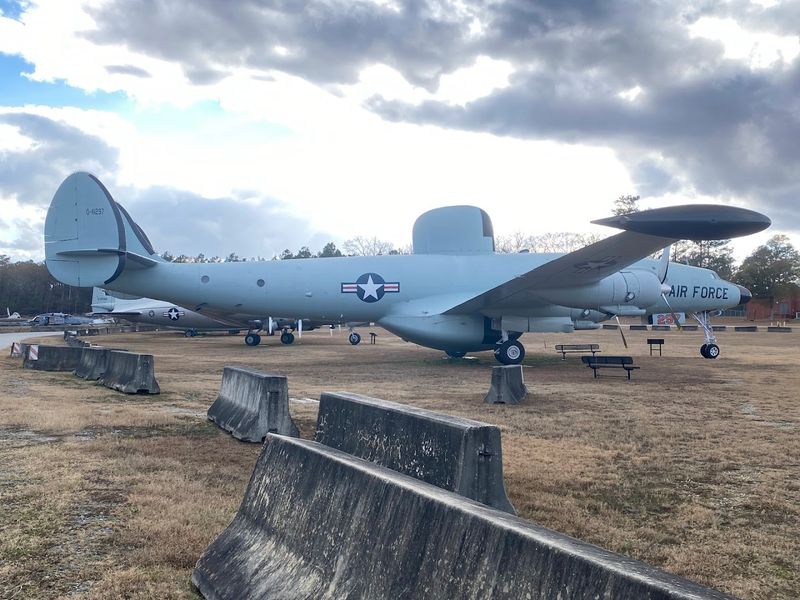
Most people associate military aviation museums with fighter jets and bombers, but the Museum of Aviation pushes the story further by including aircraft that served in very different roles. Special-use planes, including those connected to government transport, high-altitude reconnaissance, and electronic warfare, show visitors how aviation shaped national security in ways that went far beyond combat missions.
The EC-121 Warning Star, a military version of the Lockheed Super G Constellation, is one of the more visually distinctive aircraft in the collection. With its triple tail fins and graceful curved fuselage, it looks nothing like the angular jets nearby, and that contrast alone makes it worth seeking out.
Several visitors specifically mention the EC-121 as an unexpected favorite, drawn in by its unusual silhouette and the fascinating story of its airborne early warning mission during the Cold War.
Aircraft that served in government transport roles add yet another dimension to the collection by showing how aviation supported diplomacy, logistics, and command operations. These planes carried decision-makers, intelligence, and sometimes history itself across oceans and continents.
Seeing them alongside combat aircraft helps visitors understand that air power was never just about weapons, but about reach, speed, and the ability to project presence anywhere in the world at a moment’s notice.
Best Reasons to Add It to a Central Georgia Itinerary
Warner Robins sits in central Georgia, roughly 20 minutes south of Macon, which puts it within easy reach of travelers moving along Interstate 75 or exploring the region by car. The Museum of Aviation makes for an ideal day-trip anchor because it offers enough content to fill six or eight hours without ever feeling rushed or repetitive.
For road-trippers who want something more memorable than a highway rest stop, this museum delivers in a way that stays with you long after you leave.
The calm, roomy atmosphere is a genuine draw. Unlike crowded tourist attractions where you spend half your time navigating crowds, the museum grounds offer space to breathe, walk slowly, and actually absorb what you are seeing.
Photographers especially appreciate the generous room around the aircraft, which makes it possible to frame a shot without someone else’s elbow in the frame.
Admission remains free, though donations are strongly encouraged and genuinely needed to keep the collection maintained. Reviewers repeatedly mention feeling compelled to contribute after seeing how well everything is preserved.
Parking is easy, the staff is welcoming, and the experience scales well whether you have two hours or a full day to spare. Few places in Georgia offer this much history, this much scale, and this much genuine wonder for absolutely no entry cost.