Florida doesn’t do “ordinary” gardens—it builds green worlds that feel like they’ve broken free from reality.
Step inside and the air shifts. Palms arch overhead, vines twist through hidden corners, and the sound of water sneaks through thick layers of greenery like a secret waiting to be followed.
One path might lead you past orchids hanging like floating jewels.
Another pulls you into shaded tunnels where sunlight barely dares to touch the ground.
These are places where time slows down without asking permission.
From quiet rainforest-style walks to wild pockets of tropical beauty, Florida’s botanical gardens turn a simple stroll into something closer to a journey through another world.
Fairchild Tropical Botanic Garden (Coral Gables)
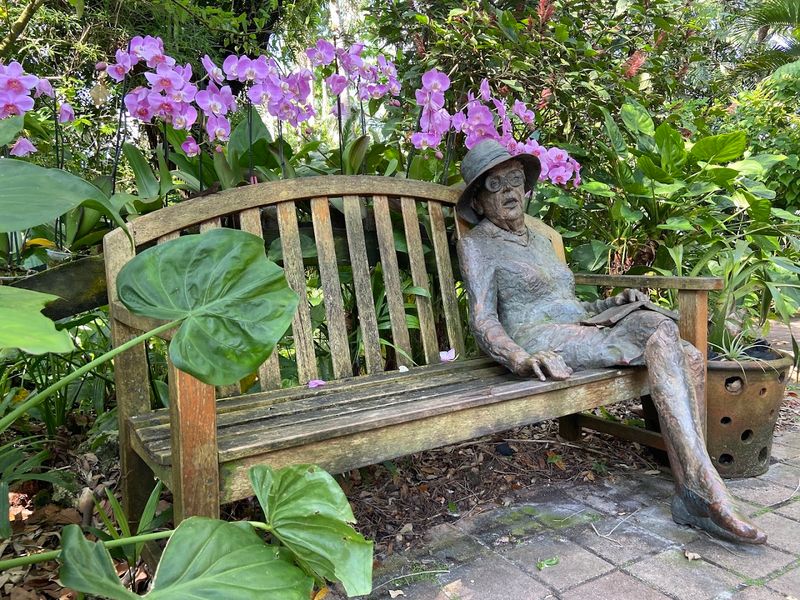
Standing among America’s premier tropical gardens, Fairchild spans 83 acres of pure botanical wonder. This isn’t just a garden—it’s a living museum showcasing rare plant collections you won’t find anywhere else in the country.
The palm collection alone features over 200 species from around the world, creating cathedral-like canopies overhead. Walking through the Wings of the Tropics butterfly exhibit feels like entering a living kaleidoscope where colorful butterflies dance around tropical blooms.
The cycad collection, one of the world’s most extensive, takes you back millions of years to when dinosaurs roamed.
Rainforest-inspired trails wind through dense foliage where massive philodendrons and climbing vines create natural curtains. The tropical fruit pavilion introduces visitors to exotic fruits like starfruit, lychee, and mangosteen growing right before your eyes.
Small streams and ponds dotted throughout add soothing water sounds to your journey.
Every season brings something new to discover. Whether it’s the spectacular blooming orchids or the fragrant flowering trees, Fairchild delivers an authentic tropical experience that rivals any jungle adventure.
Marie Selby Botanical Gardens (Sarasota)
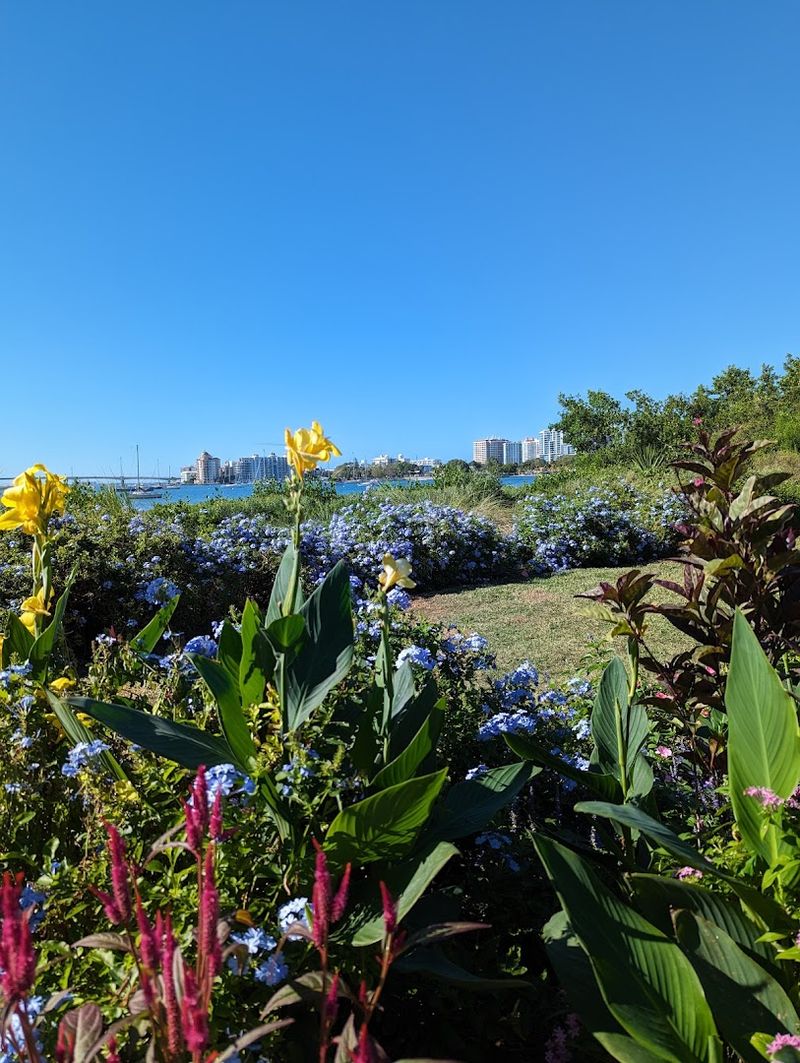
Picture yourself walking through a floating garden where plants grow without touching the ground. Marie Selby specializes in epiphytes—those amazing air plants that cling to trees and absorb moisture from the humid air around them.
The orchid collection here is absolutely breathtaking, with thousands of varieties showcasing every color imaginable. These delicate flowers dangle from trees and wooden structures, creating a ceiling of blooms overhead.
Bromeliads in vibrant reds, oranges, and purples add dramatic splashes of color throughout the pathways.
Elevated boardwalks lift you right into the canopy level where you can observe plants up close as they naturally grow. The waterfront location along Sarasota Bay provides stunning views that blend tropical gardens with sparkling blue waters.
You’ll spot herons and egrets fishing nearby while you explore.
The newly renovated gardens feature a stunning glass conservatory that houses even more tropical treasures. Inside, humidity and temperature are perfectly controlled to mimic rainforest conditions.
The mangrove walkway extends over the water, offering a unique perspective on Florida’s coastal ecosystems and how plants adapt to salty environments.
Harry P. Leu Gardens (Orlando)
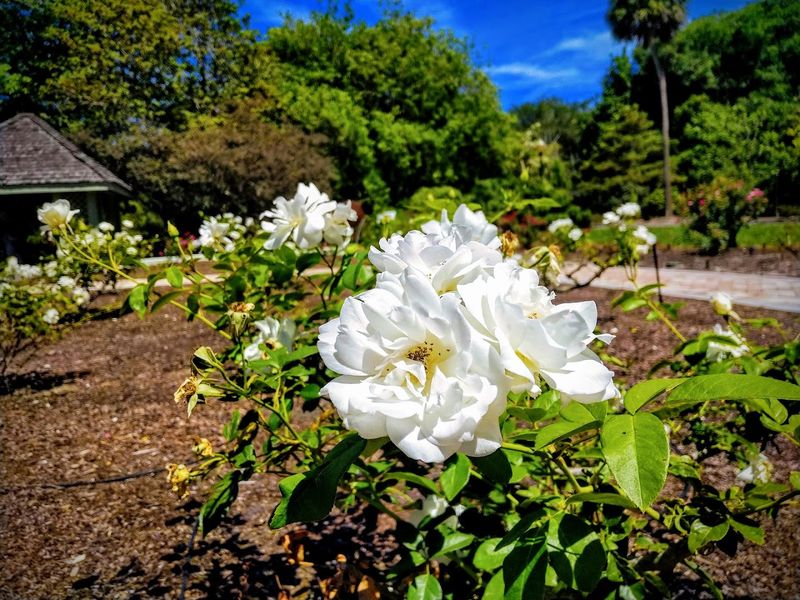
Hidden right in Orlando’s heart lies 50 acres where cultivated beauty meets wild Florida nature. Leu Gardens surprises visitors with its incredible diversity, blending formal gardens with natural forest areas that feel wonderfully untamed.
The Historic Leu House Museum sits gracefully among the gardens, adding a touch of Old Florida charm. But the real stars are the plants themselves—massive bamboo groves tower overhead like natural skyscrapers, their stems swaying gently in the breeze.
The shade they provide creates cool, peaceful corridors perfect for hot Florida days.
Giant philodendrons with leaves bigger than dinner plates climb up oak trees, while colorful bromeliads nestle in tree crevices. The formal rose garden provides beautiful contrast with its organized beds and European styling.
Yet just steps away, you’re back in dense tropical forest where palms, ferns, and vines compete for space.
The garden’s camellias bloom spectacularly in winter, offering color when many northern gardens sleep. Winding paths connect different themed areas, so exploration feels like discovering secret rooms in a living mansion.
Families love the open spaces while plant enthusiasts appreciate the rare species tucked throughout.
Florida Botanical Gardens (Largo)
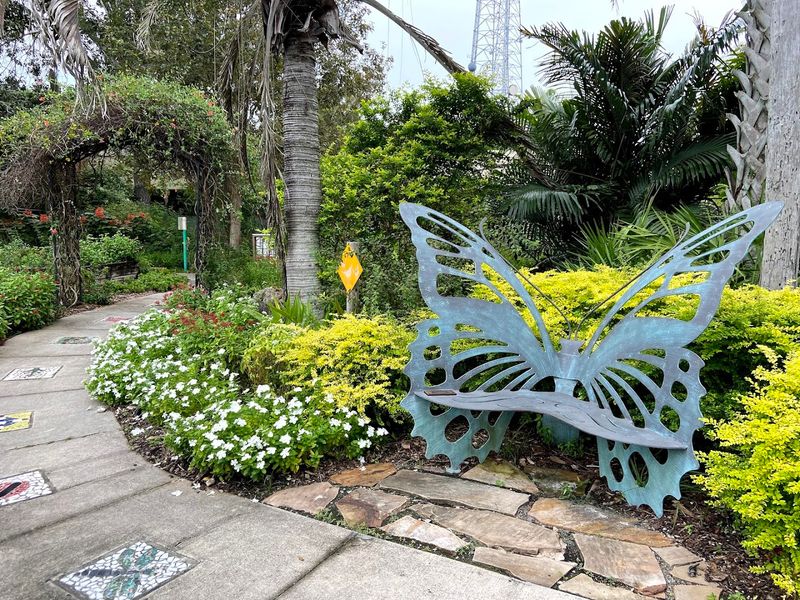
Imagine moving from desert to rainforest in just five minutes. Florida Botanical Gardens accomplishes this amazing feat through cleverly designed themed spaces that showcase plant diversity from around the world.
The Tropical Courtyard serves as your gateway to paradise, bursting with colorful crotons, towering palms, and fragrant flowering shrubs. Water features bubble quietly while hummingbirds zip between blooms searching for nectar.
This central space sets the tropical mood immediately.
From there, the Wetlands Walkway takes you into Florida’s natural aquatic habitats where native plants filter water and provide wildlife homes. Boardwalks keep your feet dry while cypress knees poke up from the water.
The contrast between cultivated tropical gardens and wild wetlands is striking.
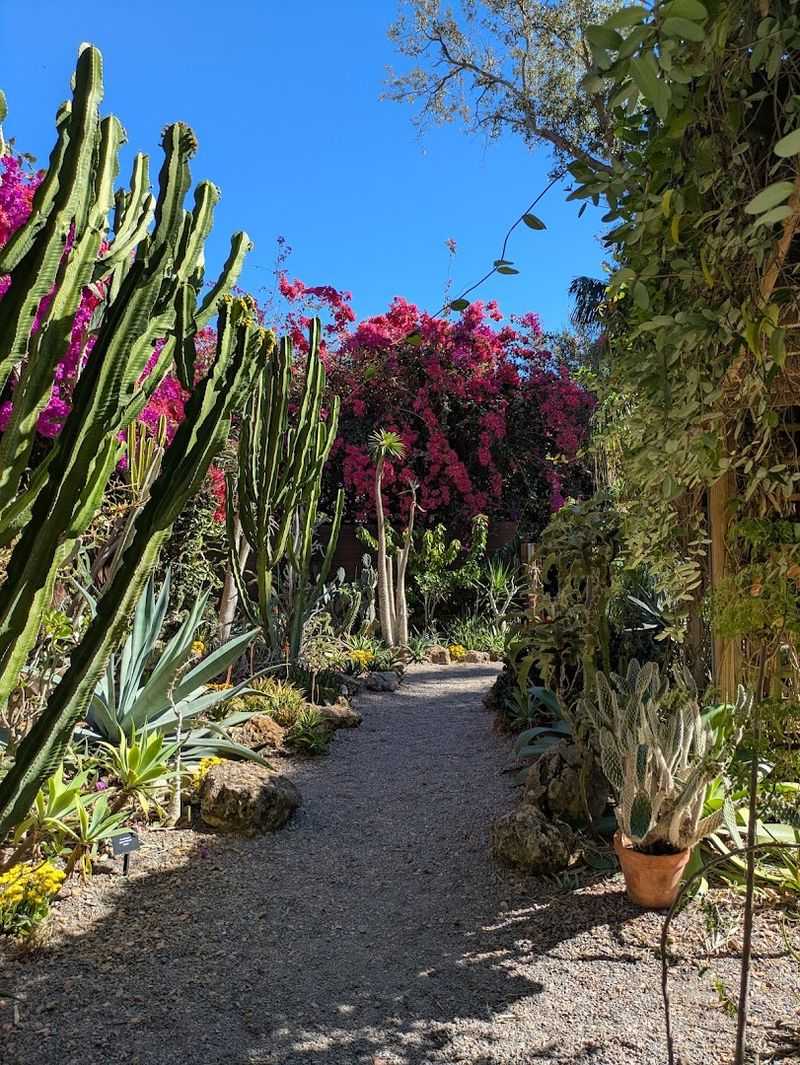
Don’t miss the Heritage Garden showcasing plants Florida’s pioneers would have grown for food and medicine. The cactus and succulent garden demonstrates how plants survive in completely different conditions.
Vine-covered arbors create shady tunnels dripping with flowering plants during summer months.
Because admission is free, locals return regularly to watch seasonal changes. The garden hosts workshops teaching propagation, composting, and sustainable gardening practices.
It’s both beautiful escape and educational resource wrapped into one delightful package.
Sunken Gardens (St. Petersburg)
Step down into this 100-year-old wonder and watch the modern world disappear above you. Sunken Gardens earned its name honestly—the entire four-acre site sits in a natural sinkhole, creating a hidden tropical valley right in downtown St. Petersburg.
The garden’s history dates back to 1903 when a plumber named George Turner drained the sinkhole and planted exotic specimens. Today, those mature trees tower overhead, their massive trunks and spreading canopies creating a jungle canopy that blocks out city noise and views completely.
Cascading waterfalls tumble over rock formations, their constant splashing adding soothing soundtrack to your exploration. Pink flamingos strut along pathways, occasionally stopping to preen their feathers or dip their curved beaks into ponds.
These elegant birds became garden icons decades ago and remain crowd favorites.
Winding brick paths lead through incredibly dense plantings where banana trees, bird of paradise, and massive ferns crowd together. The humidity here feels noticeably higher than surrounding areas—exactly what tropical plants need to thrive.
Koi fish glide through reflecting pools while turtles sun themselves on logs.
Old Florida charm permeates every corner, making this feel like discovering your grandmother’s secret garden that somehow stayed frozen in time while growing even more magnificent.
Mounts Botanical Garden (West Palm Beach)
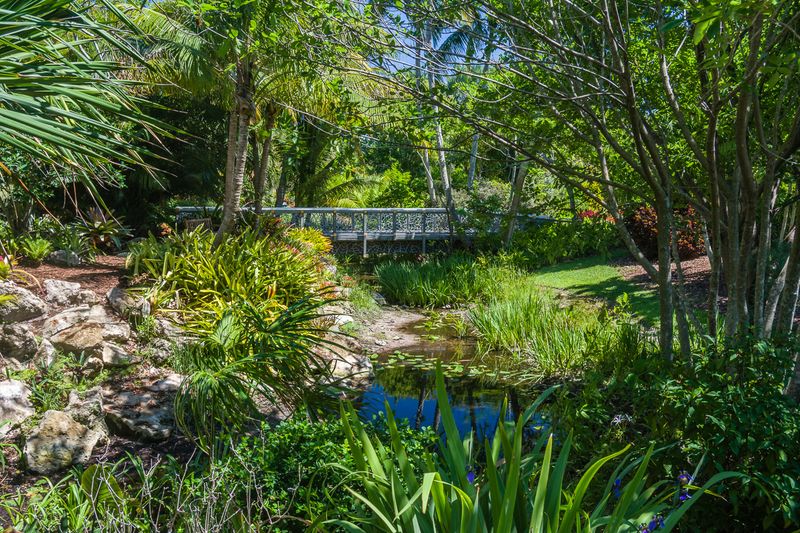
Over 7,000 different plant species call Mounts Botanical Garden home, making it one of the most diverse collections in South Florida. Plant lovers could spend hours here identifying specimens from six continents while casual visitors simply enjoy the overwhelming beauty.
The Edible Garden demonstrates how productive tropical landscapes can be, featuring banana circles, papaya trees, pineapple plants, and strange fruits most Americans have never tasted. Learning signs explain each plant’s origins and uses.
Kids especially love spotting familiar fruits growing in completely unfamiliar ways.
Shaded pathways wind under a canopy of mature trees, providing relief from Florida’s intense sun. The palm collection showcases dozens of species, from towering royal palms to delicate fan palms and spiny date palms.
Each one adapted to different climates and conditions, yet all thriving together here.
The tropical fruit arboretum might be the garden’s crown jewel, with everything from mango and lychee to miracle fruit and star apple. Depending on season, you might see fruits at various stages from tiny flowers to heavy, ripe specimens weighing down branches.
Monthly plant sales offer opportunities to take tropical paradise home with you. Expert volunteers staff the garden, eagerly sharing knowledge about proper care and cultivation techniques for South Florida’s unique growing conditions.
Bok Tower Gardens (Lake Wales)
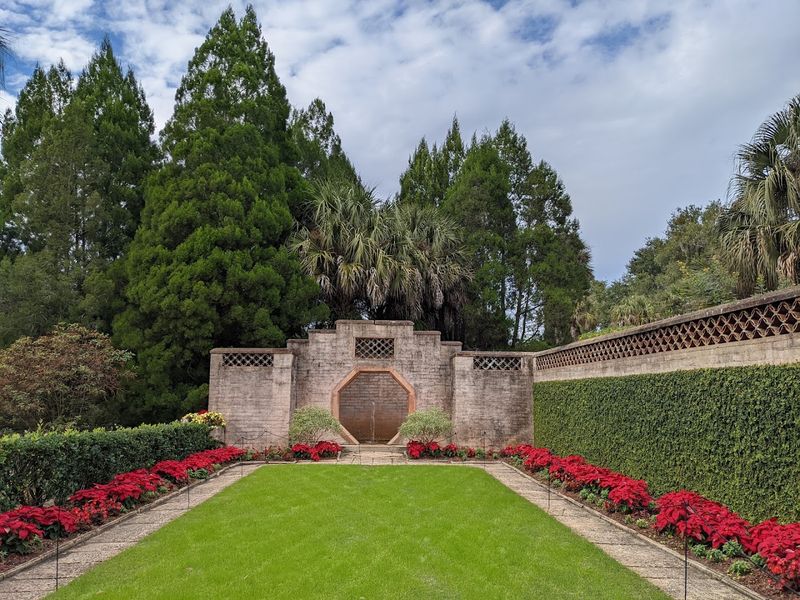
A 205-foot tall singing tower rises above one of Florida’s highest points, but don’t let the architecture steal all your attention. The surrounding gardens create a peaceful subtropical sanctuary that feels removed from modern Florida entirely.
Edward Bok, a Dutch immigrant who became a successful publisher, created this garden as a gift to the American people in the 1920s. His vision was a bird sanctuary and contemplation garden where visitors could reflect in natural beauty.
That vision still thrives today across 250 acres of preserved landscape.
Ancient live oaks draped in Spanish moss create natural cathedral spaces where dappled sunlight filters through. Azaleas and camellias bloom spectacularly in cooler months, painting the understory with pink, red, and white flowers.
The reflecting pool mirrors both tower and sky, doubling the visual impact.
Winding trails take you deeper into pine forests and hammock areas where native plants dominate. Unlike many Florida botanical gardens focusing on tropical imports, Bok celebrates the subtle beauty of native southern landscapes.
The Pinewood Estate, a 1930s Mediterranean-style mansion, adds historical interest to your visit.
Carillon concerts ring out daily at 1 and 3 p.m., filling the gardens with beautiful music. Arriving during a performance adds magical atmosphere to an already enchanting place.
Flamingo Gardens (Davie)
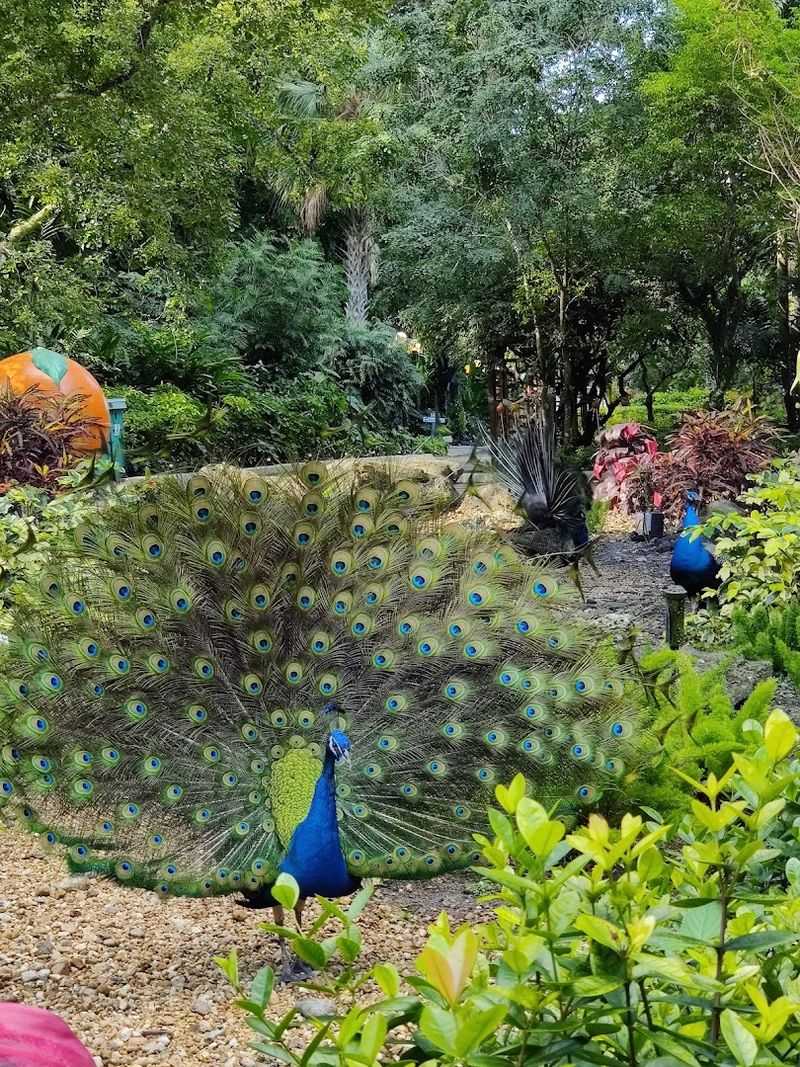
Where else can you spot a panther, walk under a cathedral-like banyan tree, and photograph hundreds of flamingos all in one afternoon? Flamingo Gardens uniquely combines wildlife sanctuary with serious botanical collections, creating an experience that’s both zoo and jungle trek.
The Champion Tree Trail showcases some of Florida’s largest and oldest trees, including a massive banyan with aerial roots cascading down like natural curtains. Standing underneath feels like entering a living temple built by nature itself.
These trees have witnessed generations of Florida history while continuing to grow larger each year.
Towering royal palms line pathways, their smooth gray trunks shooting straight up before exploding into feathery green fronds. Tropical flowering trees bloom in rotation, ensuring colorful displays throughout the year.
Crotons, gingers, and heliconias add vibrant foliage in every shade imaginable.
The wildlife walk-through aviaries house native Florida birds including roseate spoonbills, peacocks, and of course, dozens of flamingos. Watching these pink birds wade through shallow pools while surrounded by lush tropical plants creates Instagram-worthy moments at every turn.
Tram tours narrated by knowledgeable guides help visitors cover more ground while learning about both plants and animals. The botanical emphasis on Florida natives and historical tropical imports makes this educational as well as beautiful.
Heathcote Botanical Gardens (Fort Pierce)
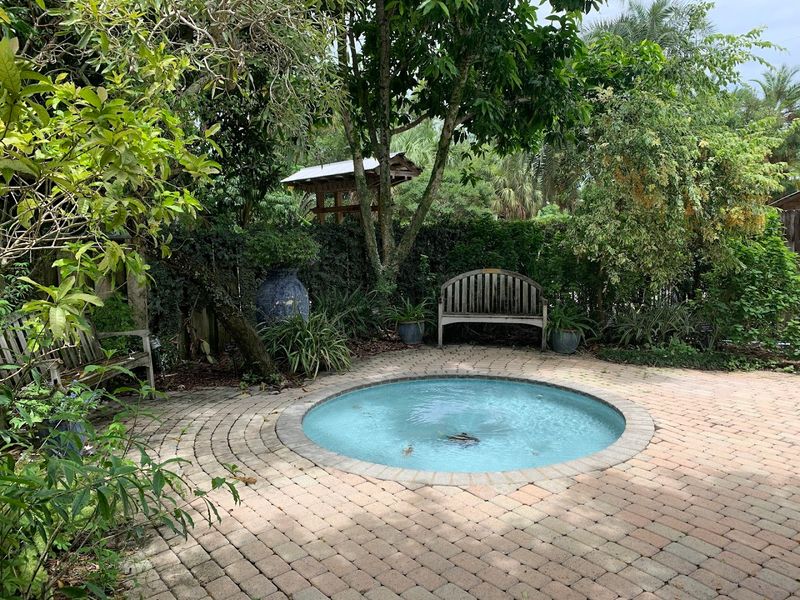
Sometimes the most memorable gardens aren’t the biggest. Heathcote Botanical Gardens proves that thoughtful design and plant selection matter more than acreage, packing impressive diversity into just 3.5 beautifully maintained acres.
The bamboo collection stands out immediately—dozens of varieties demonstrate this plant’s amazing diversity. Some bamboos reach skyward forming golden-stemmed forests, while others stay compact with striped or black culms.
Walking through the bamboo groves on breezy days, you’ll hear stems clicking together creating nature’s own wind chimes.
Japanese-inspired garden areas bring Zen sensibility to tropical Florida. Carefully pruned shrubs, stone lanterns, and a koi pond create peaceful meditation spaces.
The contrast between Japanese minimalism and Florida’s exuberant tropical growth creates interesting visual tension that somehow works perfectly.
Dense plantings throughout create intimate spaces and shaded corridors even on the hottest days. Ferns cascade over pathways, gingers bloom in deep shade, and orchids grow mounted on trees.
The garden feels much larger than its actual size because winding paths and strategic plantings prevent you from seeing everything at once.
Heathcote operates entirely through volunteers and donations, giving it a charming community garden atmosphere. Monthly garden talks and workshops share expertise with local gardeners wanting to recreate tropical paradise at home.
Key West Tropical Forest & Botanical Garden (Key West)
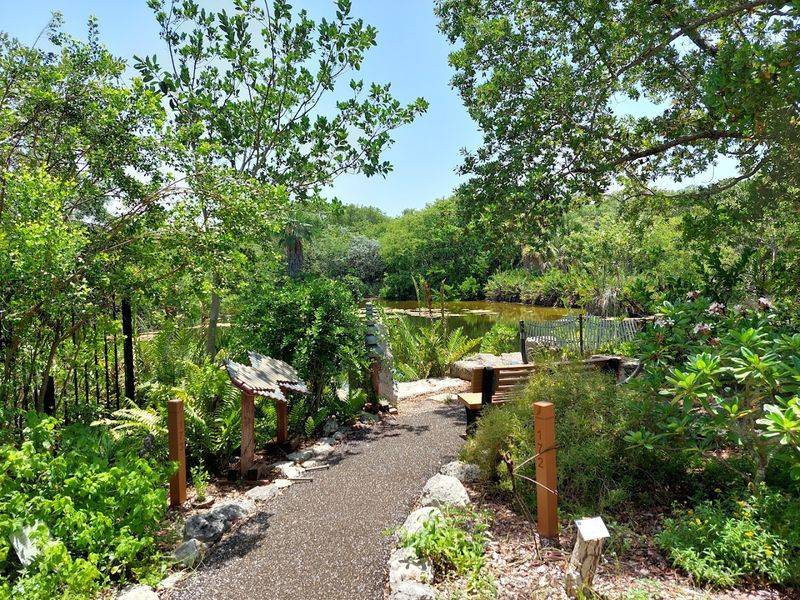
This is Florida at its most authentic and untamed. As the only frost-free botanical garden in the continental United States, Key West Tropical Forest & Botanical Garden showcases plants that simply cannot survive anywhere else in the country.
Native hardwood hammocks dominate the landscape—these rare plant communities once covered much of the Florida Keys but now survive only in protected fragments. Walking through feels like stepping back centuries before development changed the islands.
Giant mahogany, gumbo limbo with peeling red bark, and poisonwood trees create dense canopy overhead.
Champion trees—the largest known specimens of their species—grow throughout the 15-acre preserve. Some trees here are the biggest examples left in existence.
The butterfly garden attracts rare tropical species that use the Keys as their only mainland habitat.
Coastal vegetation adapted to salt spray and hurricane winds shows how tough tropical plants can be. Unlike manicured botanical gardens with perfect lawns, this space embraces wildness.
Fallen leaves carpet trails, vines sprawl naturally, and plants seed themselves wherever conditions suit them.
The Caribbean influence is unmistakable—many plants here have more in common with Cuban and Bahamian flora than mainland Florida species. This garden represents what Key West looked like before humans arrived, offering rare glimpses into Florida’s wild past.