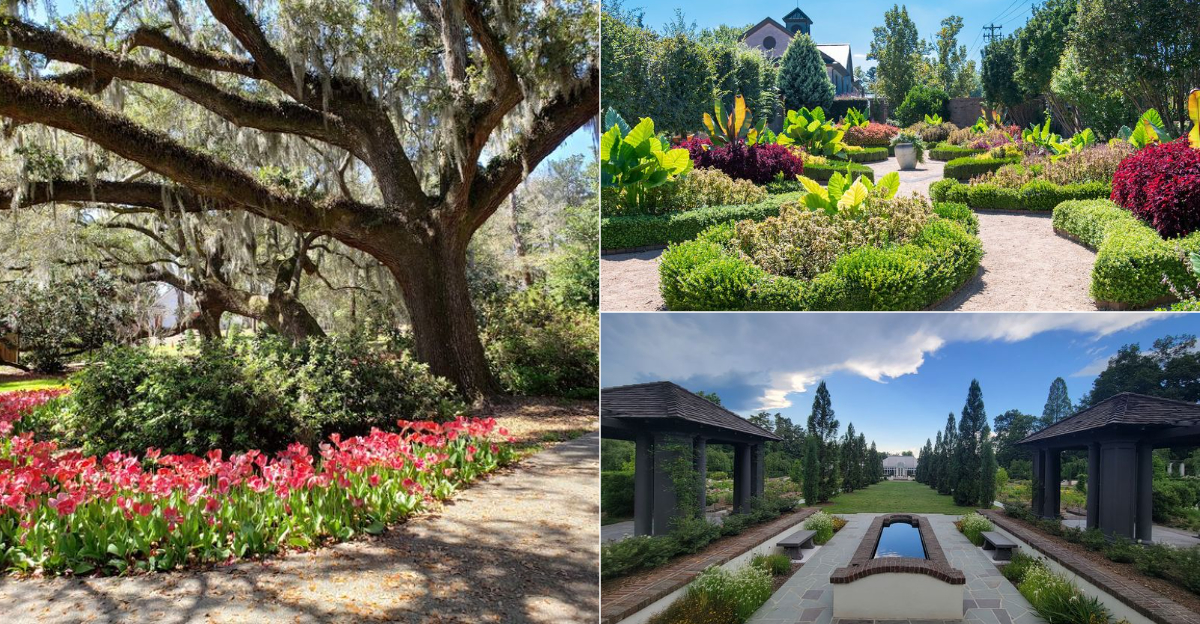
Spring in North Carolina begins almost quietly before suddenly unfolding into an explosion of color and scent.
As dogwoods brighten the edges of the forests and tulips push through the cool soil, fresh greenery catches the softest rays of morning light.
A walk through a garden at this time of year becomes an invitation to pause longer and breathe more deeply, as the landscape’s beauty returns in rich layers of gold and purple.
These eleven gardens represent some of the most striking places in the state to witness nature awakening in its purest form.
Sarah P. Duke Gardens – Durham
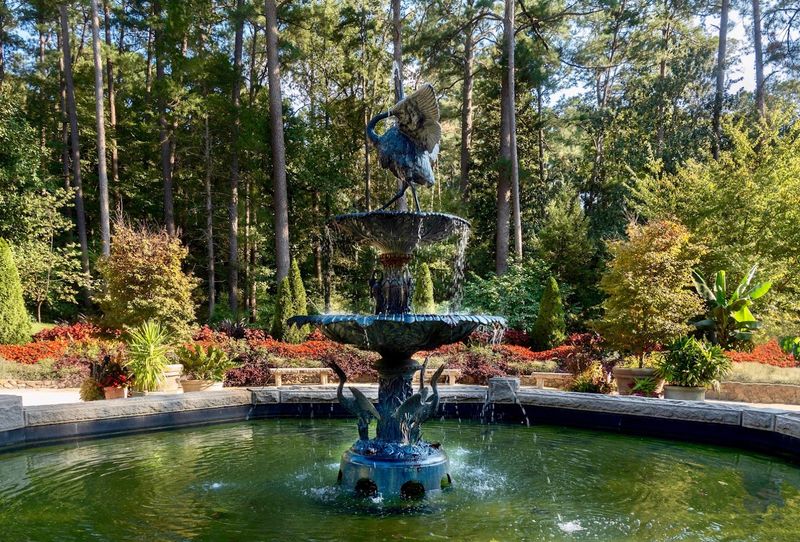
Spring settles beautifully across these terraced grounds, where formal structure meets a loose, painterly abundance of bloom.
Long borders fill with tulips, pansies, and flowering trees, while clipped hedges give the season’s brightness a graceful frame.
The effect is especially striking in gentle morning light, when petals glow against deep lawns and still water catches pale reflections.
Walking here feels like moving through a sequence of outdoor rooms, each with its own mood and rhythm. Broad paths open onto quiet vistas, then narrow near intimate plantings where fragrance lingers close to the air.
Stonework, steps, and carefully shaped beds create a sense of balance that makes every burst of color seem even richer.
There is also a softness beneath the polish, particularly where woodland edges begin to leaf out in fresh greens.
Birds move through the canopy, fountains murmur lightly, and benches invite an unhurried stop.
The whole landscape seems composed for slow looking, with every turn offering another arrangement of texture, water, blossom, and light.
JC Raulston Arboretum – Raleigh
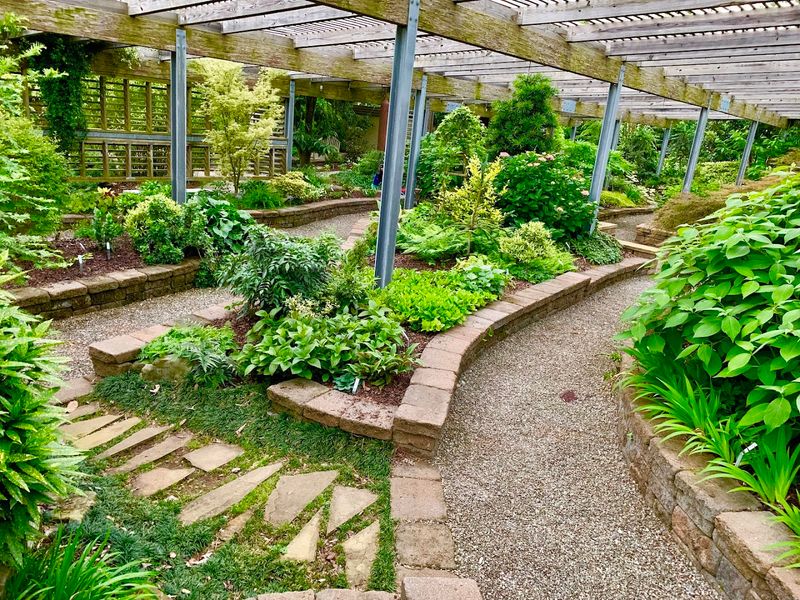
Color and texture shift constantly here, with one plant collection flowing quickly into another and each turn revealing a completely different palette.
Flowering shrubs, uncommon perennials, and carefully chosen annuals create layers of color that shift from hot, saturated tones to delicate pastels.
Nothing appears static, which gives the season a lively, almost conversational energy.
The paths encourage curiosity rather than formality, inviting slow detours through beds where texture matters as much as bloom.
Fine foliage, broad leaves, airy grasses, and tightly packed flowers create contrast at every step.
It is the kind of place where attention keeps sharpening, because unusual combinations reward even a second or third glance.
Light plays a major role in the experience, especially when sun moves across fresh foliage and makes chartreuse, burgundy, and silver tones stand out.
Bees thread through blossoms, branches sway lightly, and warm earth adds its own scent after a cool morning.
By the time the walk ends, spring seems larger and more imaginative than it did at the gate.
Daniel Stowe Botanical Gardens – Belmont
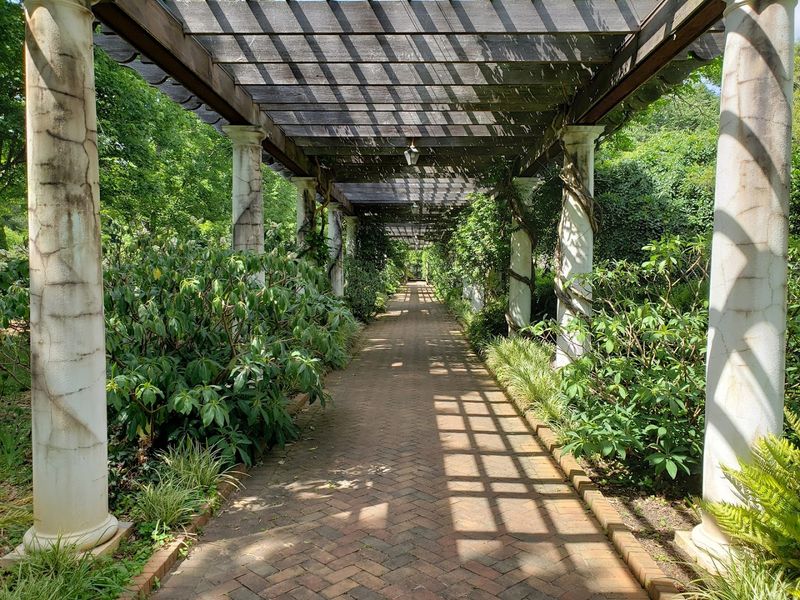
Wide lawns, long reflecting pools, and carefully arranged seasonal beds give these gardens a polished, almost estate-like atmosphere from the very beginning.
Seasonal plantings bring waves of tulips, snapdragons, and cool-toned annuals beside fountains and long water features.
The brightness feels airy rather than dense, with broad skies lending everything a polished clarity.
Walking along the central axis creates a calm, measured rhythm, the kind that makes each detail stand out more sharply.
Reflections shimmer in narrow canals, while clipped plantings and symmetrical beds provide structure around softer masses of bloom.
Nearby glass conservatory spaces add another layer, offering humid bursts of orchid color against the spring freshness outdoors.
What lingers most is the dialogue between stillness and display.
Water catches drifting petals, breezes ripple through young leaves, and the fragrance of flowers seems to gather near sheltered corners.
As afternoon light warms the stone and deepens the color of the beds, the landscape feels composed yet welcoming, ideal for a slow circuit that ends with the season feeling fully opened.
North Carolina Arboretum – Asheville
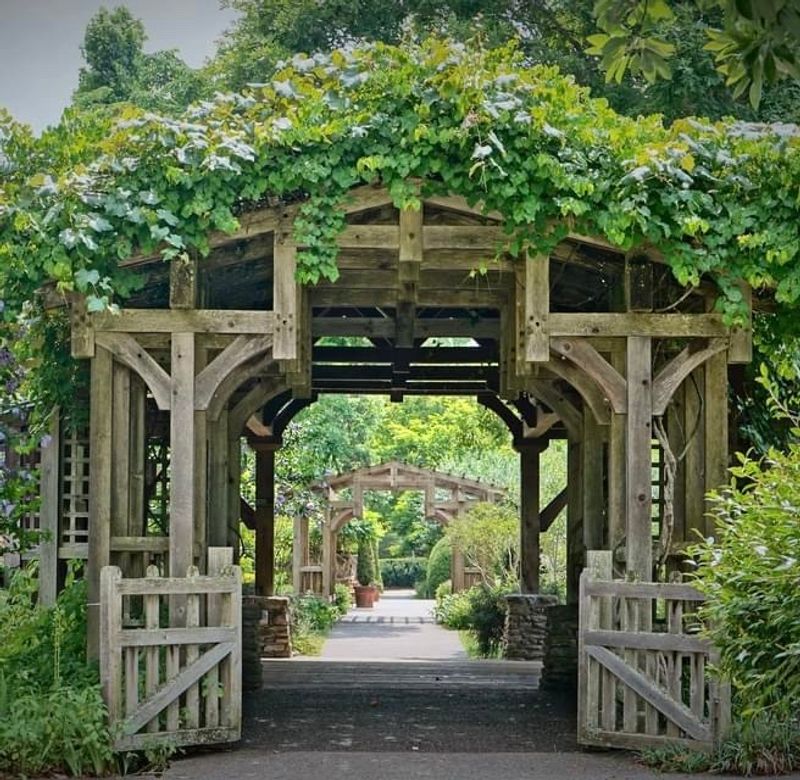
Bonsai displays, quilt gardens, and long stretches of forested trails give this place a very different personality from a traditional botanical garden.
Color appears gradually beside mountain paths and wooded slopes, where native azaleas, rhododendrons, and wildflowers emerge between towering trees instead of sitting in perfectly formal arrangements.
Rather than feeling designed around flower beds alone, the landscape stays closely connected to the Blue Ridge surroundings, with gardens blending almost seamlessly into the larger forest.
The changing elevation makes the experience especially memorable.
One section may feel open and carefully maintained, while the next turns cooler, quieter, and shaded beneath dense woodland canopies.
Stone paths curve past streams, moss-covered edges, and carefully placed overlooks where fresh green mountain scenery stretches far beyond the cultivated spaces themselves.
Mist often drifts through the gardens in the morning, softening colors and making flowering branches appear almost suspended against the hillsides.
Instead of delivering constant bursts of bright color, the beauty comes through atmosphere, mountain air, and the feeling of walking through a landscape that never fully separates itself from nature around it.
UNC Charlotte Botanical Gardens – Charlotte
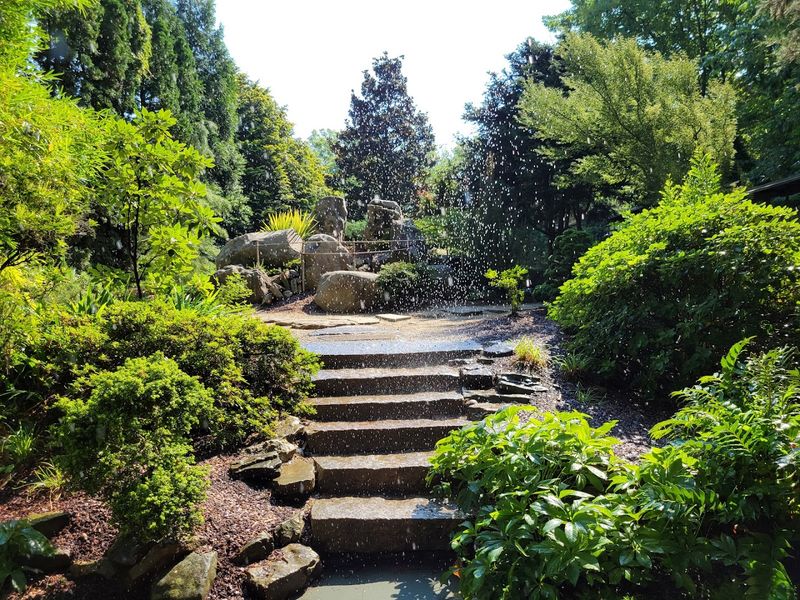
Shaded woodland trails and greenhouse collections give these gardens a much more intimate and educational feel than many larger botanical spaces.
Camellias, flowering trees, ferns, and native woodland species create layers of soft color beneath the tree canopy, while plant labels and curated collections encourage visitors to slow down and notice smaller botanical details that might otherwise go overlooked.
Instead of dramatic open landscapes, the experience feels centered on texture, shade, and careful observation.
One of the most distinctive features is the contrast between the outdoor gardens and the tropical conservatory spaces nearby.
Cool walking paths lined with seasonal blooms suddenly transition into warm, humid interiors filled with dense foliage, exotic plants, and glossy leaves that create an entirely different atmosphere within only a few steps.
That shift makes the visit feel surprisingly immersive for a garden of this scale.
Filtered sunlight moves gently across fresh greenery, petals collect along the edges of pathways, and quiet corners make the entire landscape feel calm and reflective.
Rather than relying on spectacle, the setting stands out through variety, botanical depth, and the sense that every section was designed for people who genuinely enjoy looking closely at plants.
Paul J. Ciener Botanical Gardens – Kernersville
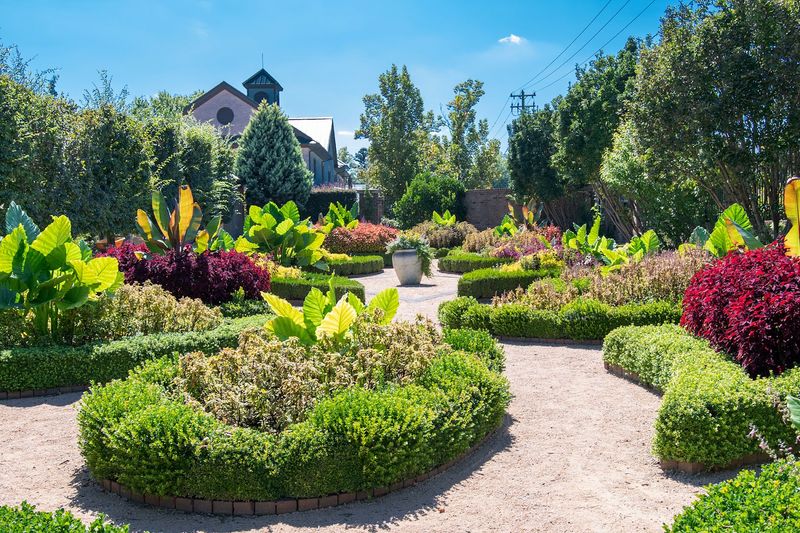
The gardens feel intentionally composed, with each pathway, flower bed, and focal point arranged to guide attention in a very deliberate way.
Long sightlines, clipped hedges, decorative urns, fountains, and precisely arranged flower beds create an atmosphere that feels elegant without becoming overly grand or intimidating.
Rows of tulips and seasonal blooms bring strong bursts of red, yellow, violet, and white into the carefully organized landscape, making every section appear intentionally composed from a distance.
The experience here is shaped by symmetry and balance.
Straight pathways guide visitors from one focal point to another, while benches, courtyards, and framed garden views encourage pauses in very specific places throughout the grounds.
Water features reflect both flowers and stonework, adding movement to spaces that might otherwise feel too formal or still.
Bright sunlight sharpens the contrast between gravel paths, trimmed greenery, and colorful plantings, giving the gardens an especially polished appearance during peak bloom periods.
Rather than feeling natural or woodland-like, the setting stands out for its refinement, structure, and the sense that every detail was positioned with purpose.
Airlie Gardens – Wilmington
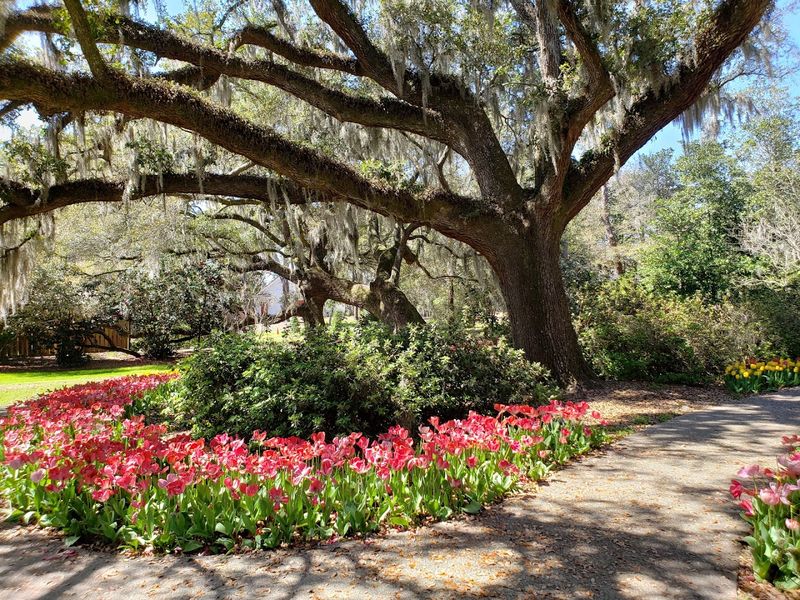
Massive live oaks draped in Spanish moss give this garden a distinctly coastal Southern atmosphere from the very beginning.
Wide water views, shaded walking paths, and blooming azaleas create scenery that feels softer and more humid than the mountain or woodland gardens elsewhere in North Carolina.
Color comes not only from flowers but from reflections spreading across ponds and lakes, where pinks, whites, and greens seem to double across the water.
The landscape moves at an unhurried pace.
Paths curve naturally around lakeshores, quiet corners, and open lawns instead of guiding visitors through rigid garden layouts.
One stretch may feel breezy and sunlit beside the water, while the next slips beneath dense tree canopies where moss hangs low over damp ground and scattered petals.
The historic character of the property also changes the mood completely.
Centuries-old trees create a sense of permanence that makes newer blooms feel even more vivid by contrast.
Rather than standing out through formal floral displays alone, the setting becomes memorable because of its coastal atmosphere, moving water, and heavy greenery.
Walking beneath massive oaks and drifting Spanish moss makes the entire landscape feel shaped by both nature and history.
Cape Fear Botanical Gardens – Fayetteville
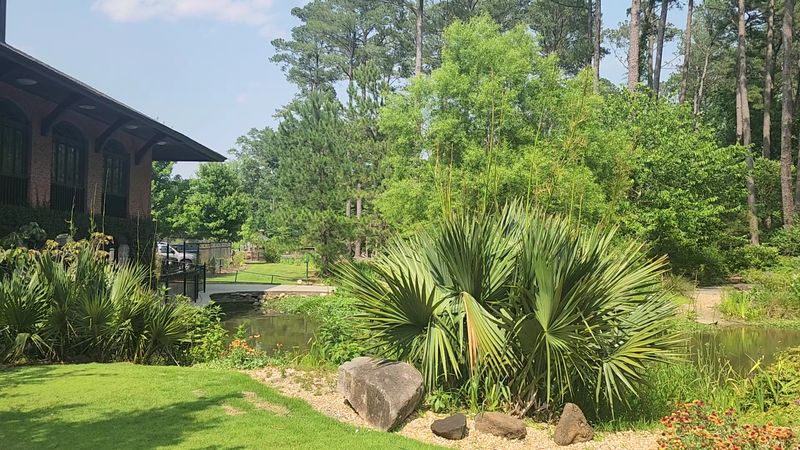
Color appears gradually here instead of all at once.
Bright dogwoods and seasonal flowers emerge beside wooded trails, while large stretches of greenery keep the gardens feeling calm and connected to the surrounding landscape.
Open lawns, riverfront scenery, and shaded paths create a setting that feels far more spacious and natural than a tightly arranged botanical display.
Some of the most memorable sections are the elevated boardwalks crossing through low, damp areas near the water.
The sound of birds, rustling leaves, and hidden movement from the river replaces the busy atmosphere often found in more crowded gardens.
Sunlight shifts constantly between open spaces and tree cover, making certain flowers suddenly stand out against darker woodland backgrounds.
Nothing feels overly designed or decorative.
The appeal comes from the balance between cultivated color and the quieter beauty of forests, wetlands, and riverside scenery woven naturally into the walk.
Reynolda Gardens – Winston-Salem
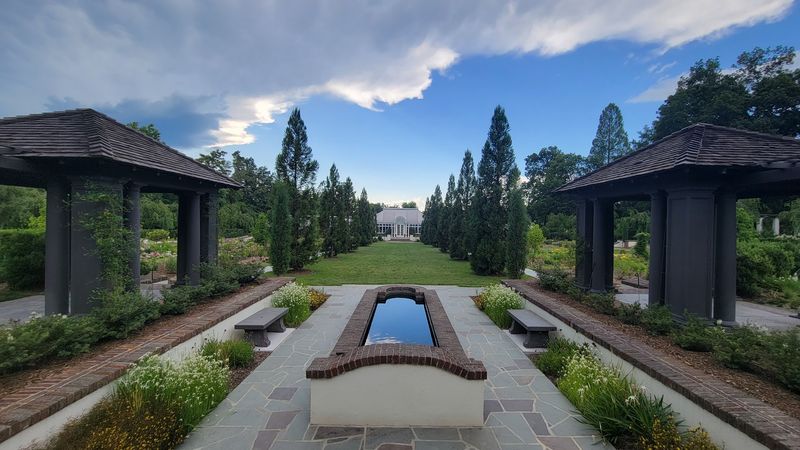
Spring carries a graceful historic hush across these estate grounds, where old walls, formal beds, and mature trees hold the season with understated confidence.
Flowering bulbs and carefully arranged annuals brighten the structure, while vines and flowering shrubs soften its edges.
The colors feel cultivated in the best sense, chosen to complement brick, stone, and long-established greenery.
A walk here is shaped by architectural details as much as by plants.
Paths lead past terraces and enclosed spaces that make each view feel composed, yet never overly staged. There is a quiet pleasure in how blossoms appear beside worn surfaces, with fresh petals and new leaves bringing tenderness to places marked by time.
Spring light suits the setting especially well.
It catches greenhouse glass, warms old masonry, and gives pale flowers a luminous quality against darker evergreens.
The atmosphere encourages a slower pace, not because it demands reverence, but because details keep drawing attention, a drift of bulbs near a border, a branch leaning into view, a bench positioned for afternoon sun. The season feels poised here, elegant and deeply settled.
Elizabethan Gardens – Manteo
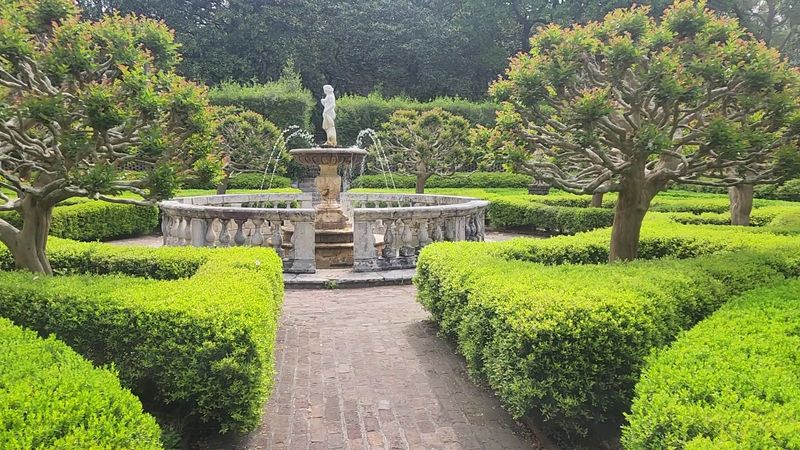
Brick walkways, Renaissance-style statues, and carefully shaped hedges give these gardens a personality that feels far more historical and dramatic than most coastal botanical spaces.
Instead of blending quietly into the landscape, the design creates framed views, formal symmetry, and striking focal points that make each section feel almost staged for a period film or outdoor performance.
Bright tulips, azaleas, and seasonal flowers soften the structure with color, while open coastal light keeps everything from feeling too heavy or enclosed.
Some of the most memorable areas center around the elaborate Sunken Garden and the waterfront overlooks facing Roanoke Sound.
Fountains, arched holly walkways, old brick walls, and statuary create layers of detail that constantly pull attention in different directions.
Sea breezes move through the gardens almost constantly, making petals tremble, tree branches sway, and sunlight flicker across stone paths throughout the day.
The connection to Roanoke Island’s colonial history also gives the entire setting a different emotional tone from a typical spring garden.
The atmosphere feels suspended somewhere between a coastal garden, a historic estate, and a storybook setting shaped by sea air, old traditions, and centuries of local history.
Nature Preserve Gardens Latta Plantation – Huntersville
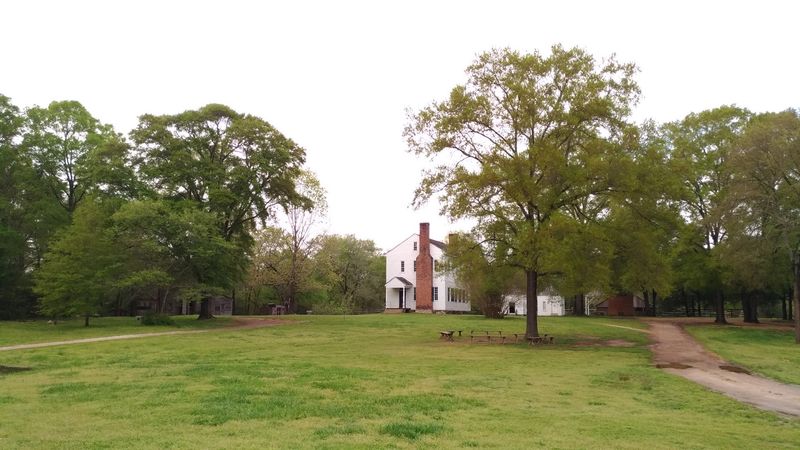
Wide riding trails, open woodland, and views near Mountain Island Lake give this landscape a far more rugged and outdoorsy character than a traditional botanical garden.
Wildflowers appear beside hiking paths, old fencing, and grassy clearings instead of carefully bordered flower beds, creating a spring atmosphere that feels closely tied to the preserve itself.
The setting carries traces of old farm and plantation history, but the stronger impression comes from space, quiet, and the feeling of being surrounded by protected North Carolina countryside.
Rather than guiding visitors through formal garden rooms, the paths move through forests, lakeside scenery, and broad natural areas where birdsong and moving branches become part of the experience.
Horseback riders, hikers, and families often share the same trails, giving the preserve a more active and lived-in energy than quieter ornamental gardens.
Fresh green growth spreads naturally across the landscape in spring, softening weathered wood, rustic structures, and shaded woodland edges.
The beauty here comes less from dramatic floral displays and more from immersion in nature, open air, and the calm rhythm of the preserve.