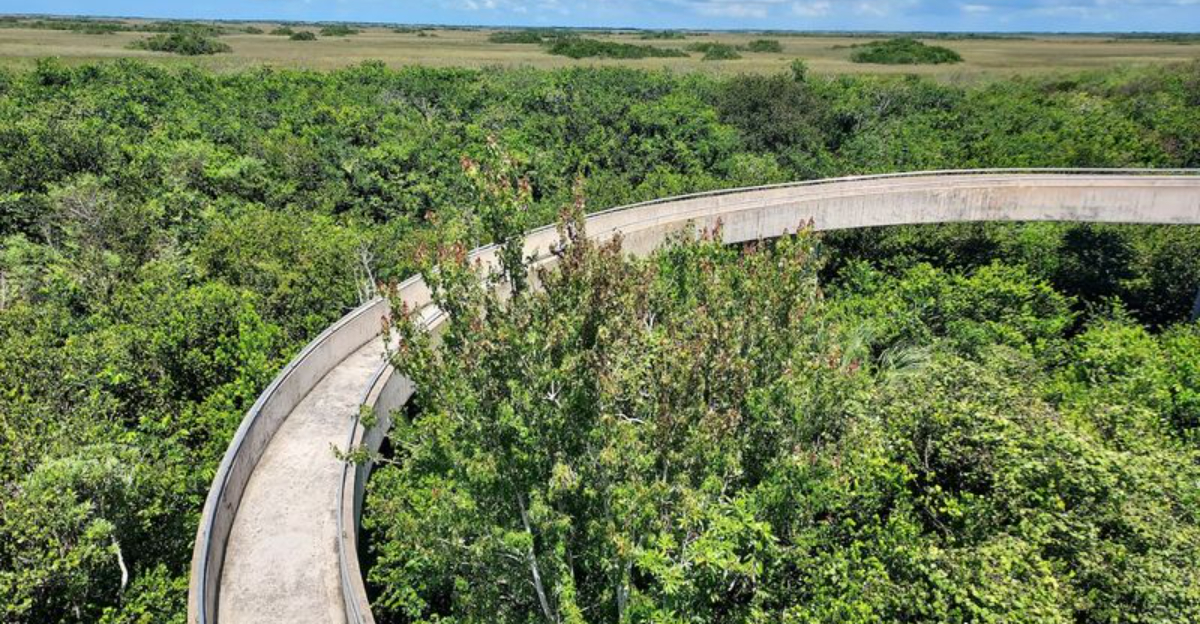
Florida might be famous for its beaches and theme parks, but the state hides some truly incredible hiking trails waiting to be explored.
From easy boardwalk strolls through alligator-filled wetlands to rugged backcountry treks through flooded cypress swamps, there is something for every type of adventurer here.
Whether you are a casual walker looking for a quick nature fix or a serious backpacker craving a real wilderness challenge, Florida delivers more variety than most people expect.
This list ranks 14 of the best hikes from the most relaxed to the most demanding, so you can find the perfect trail for your next outdoor adventure.
Anhinga Trail
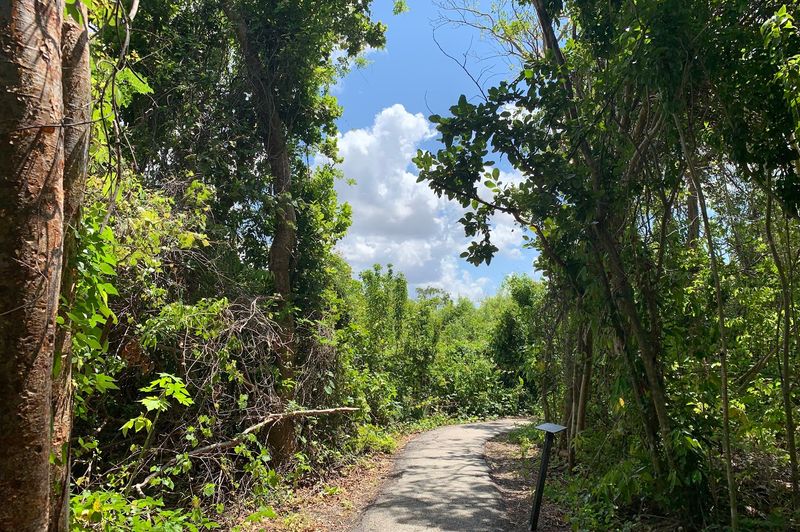
Some trails make you work for the wildlife, but the Anhinga Trail practically puts it on a silver platter. Located inside Everglades National Park, this flat half-mile boardwalk is one of the most rewarding short walks in the entire country.
You will spot alligators lounging just feet away, great blue herons standing perfectly still, and turtles sunning themselves without a care in the world.
The trail is fully paved and accessible for strollers and wheelchairs, making it a fantastic option for families with young kids or anyone who wants big nature rewards without sore legs. The best time to visit is during the dry season, roughly November through April, when wildlife concentrates near the remaining water sources.
Morning walks offer the most animal activity and the best lighting for photos.
Named after the anhinga bird, which spreads its wings dramatically to dry them in the sun, this trail has a personality all its own. Even seasoned hikers who have covered hundreds of miles across Florida consistently list it as a must-do stop.
Plan to spend at least an hour here, because you will keep stopping every few steps to watch something amazing unfold right in front of you.
Shark Valley Tram Trail
Imagine cruising past hundreds of alligators like you are on the world’s wildest nature safari, except you are on foot or a rented bicycle. Shark Valley’s 15-mile paved loop sits deep inside Everglades National Park and delivers some of the most jaw-dropping wildlife encounters Florida has to offer.
Alligators line the road so casually that first-time visitors often stop dead in their tracks just to make sure what they are seeing is real.
You do not have to complete the full 15 miles to enjoy this trail. Many visitors bike or walk as far as they feel comfortable and turn back whenever they like.
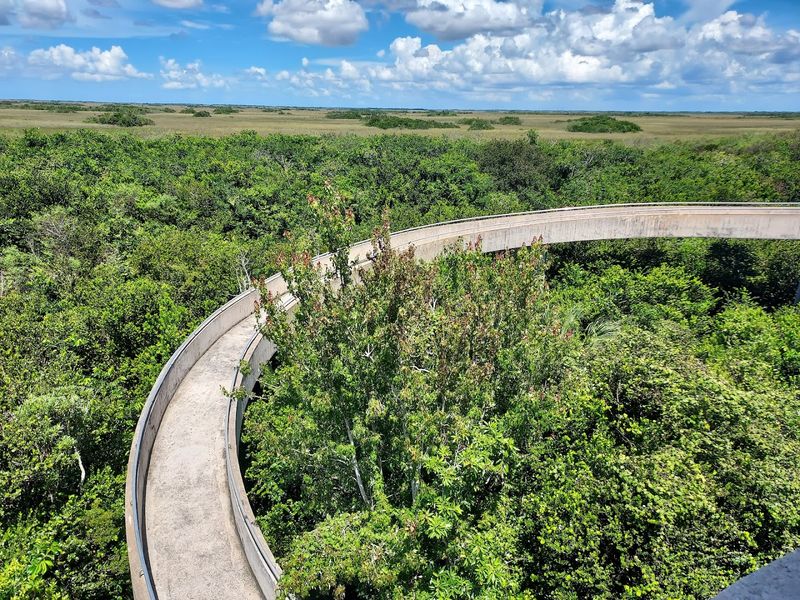
The highlight of the full loop is a tall observation tower at the halfway point, where a winding ramp leads you above the sawgrass for sweeping panoramic views of the Everglades stretching endlessly in every direction.
Rangers lead tram tours for those who prefer a guided experience, which is a great way to learn the ecology and history of this unique landscape. Bring plenty of water and sunscreen because shade is nearly nonexistent out here.
Early morning visits reward you with cooler temperatures and the most active wildlife behavior, making the experience even more unforgettable than you imagined it would be.
Falling Waters Trail
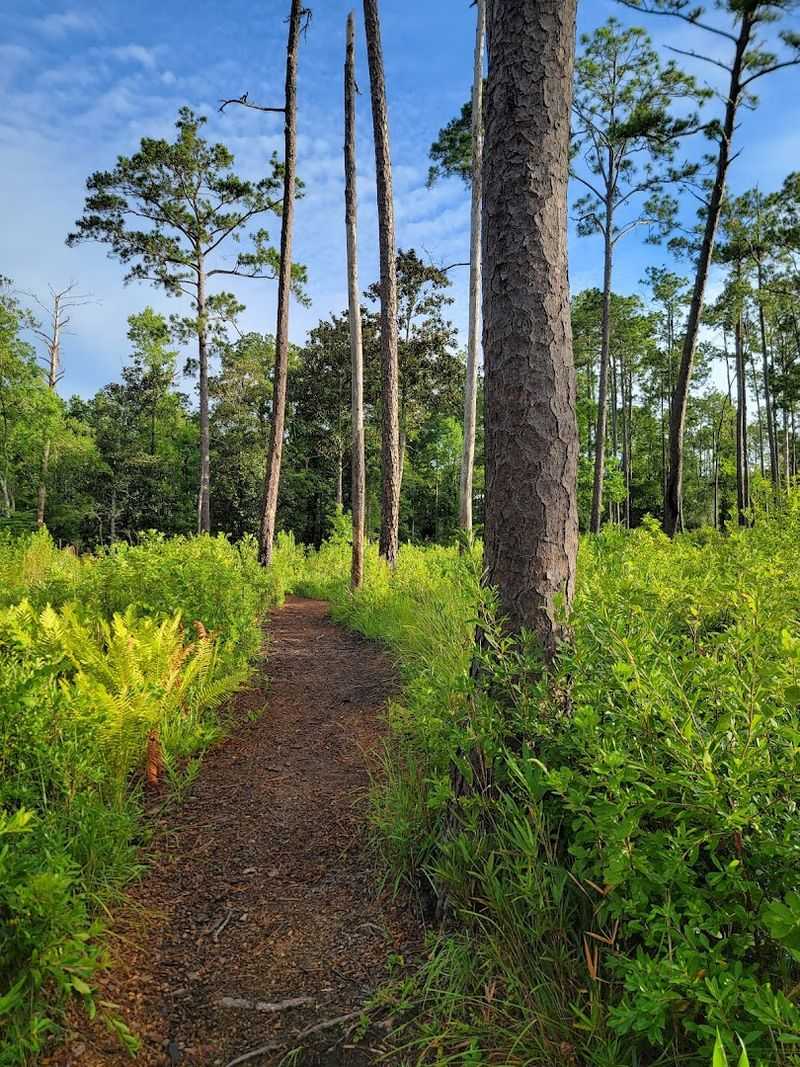
Florida is not exactly known for waterfalls, which is exactly what makes Falling Waters State Park such a delightful surprise. A short and easy trail winds through a shaded forest before delivering you to the edge of a 73-foot waterfall, the tallest in the state, crashing down into a narrow sinkhole so deep that scientists have never been able to find the bottom.
It feels like a scene from another world entirely.
The hike itself is brief, covering less than a mile round trip, so this is more of a scenic stop than a full day of exercise. But the payoff is genuinely spectacular, especially after recent rainfall when the falls are running strong and the mist drifts up from the sinkhole in cool, refreshing waves.
A viewing platform lets you get close without any safety concerns.
Located in the Florida Panhandle near Chipley, this park is often overlooked by travelers heading to beach destinations, which means crowds are refreshingly light on most days. Combine it with nearby Florida Caverns State Park for a full day of exploring the region’s surprisingly dramatic geology.
Bring a camera, because the waterfall framed by tropical greenery makes for one of the most photogenic spots in the entire state park system.
Island Trail
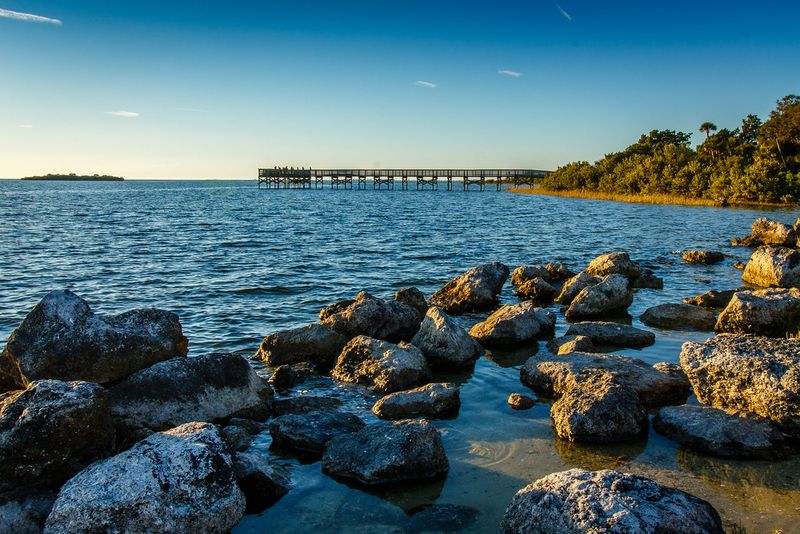
Few short hikes in Florida pack as much ecological variety into a single outing as the Island Trail at Gulf Islands National Seashore. Crossing wind-sculpted sand dunes, threading through dense maritime forest, and skirting the edges of quiet salt marsh, this trail delivers a mini tour of coastal Florida ecosystems in just a few leisurely miles.
The contrast between environments keeps the walk interesting from start to finish.
Located near Pensacola in the Florida Panhandle, this area is recognized as one of the most biologically diverse coastal regions in North America. Shorebirds patrol the dune edges, osprey circle overhead, and the salt marsh hums with fiddler crabs and wading birds at low tide.
The trail surface ranges from packed sand to boardwalk sections, keeping it manageable for most fitness levels without requiring any special gear.
Sunset walks here are particularly magical, with warm golden light washing over the dunes and reflecting off the still waters of the marsh. Visiting in spring or fall puts you in the middle of songbird migration season, when the maritime forest practically buzzes with warblers and other small birds passing through.
Wear comfortable walking shoes with some ankle support since the sandy sections can shift underfoot on windier days along the coast.
Cypress Swamp Trail
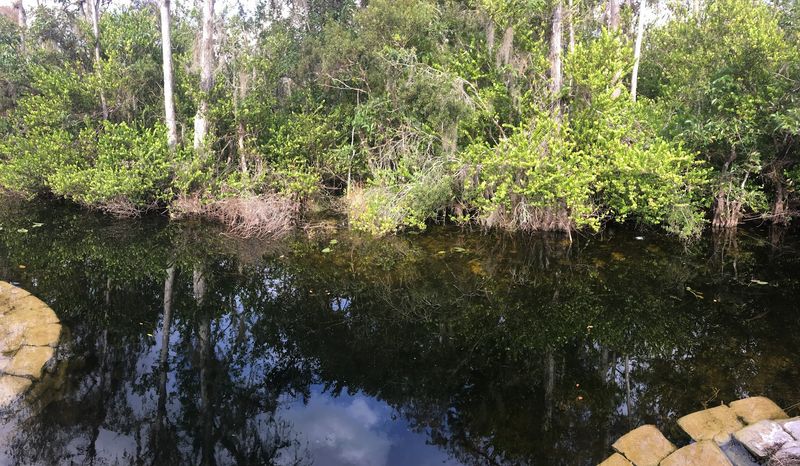
Walking through an ancient cypress swamp feels like stepping back in time by several million years. The Cypress Swamp Trail at Fakahatchee Strand Preserve State Park features an elevated boardwalk that carries you directly over the dark, mirror-still water of one of Florida’s most impressive old-growth wetlands.
Massive bald cypress trees, some hundreds of years old, rise from the water around you like cathedral pillars draped in Spanish moss.
Because the boardwalk keeps your feet dry and the path is short and flat, this trail is genuinely accessible to almost anyone. Photographers absolutely love the soft filtered light that filters through the dense canopy, creating an almost dreamlike atmosphere at any time of day.
Keep your eyes open for rare ghost orchids clinging to cypress trunks, because Fakahatchee is home to the largest population of these mysterious plants in North America.
Wildlife sightings here lean toward the subtle and intimate rather than the dramatic. You might spot a barred owl watching you silently from a branch just overhead, or a water moccasin gliding effortlessly between cypress knees below the boardwalk.
The quiet is profound and almost meditative, making this one of those rare trails that leaves you feeling genuinely refreshed and reconnected with the natural world long after you leave.
La Chua Trail
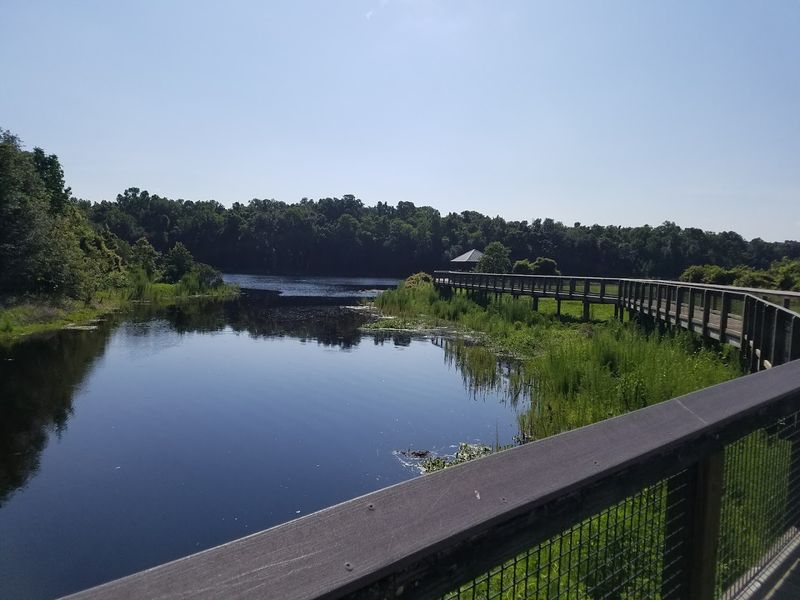
There is a moment on the La Chua Trail when you round a bend and suddenly realize the field in front of you is filled with bison. Real, full-sized American bison, grazing peacefully on the open prairie of Paynes Prairie Preserve State Park just outside Gainesville.
Add wild horses roaming freely in the distance and alligators lounging within arm’s reach of the trail, and you start to wonder if you accidentally wandered onto a wildlife documentary set.
The trail itself is flat and straightforward, running about three miles round trip to a raised observation platform overlooking the prairie basin. The platform offers sweeping views of one of Florida’s most historically significant landscapes, a place where naturalist William Bartram famously described enormous alligator battles during his 18th-century travels through the region.
That history adds an extra layer of wonder to every step you take.
Morning visits are strongly recommended because wildlife activity peaks in the early hours before the Florida heat builds. Bring binoculars to spot sandhill cranes, Florida scrub jays, and dozens of other bird species that call this preserve home throughout the year.
The trail can be muddy after rain, so waterproof shoes or boots make the experience much more comfortable when conditions are less than ideal.
Ravine Trail
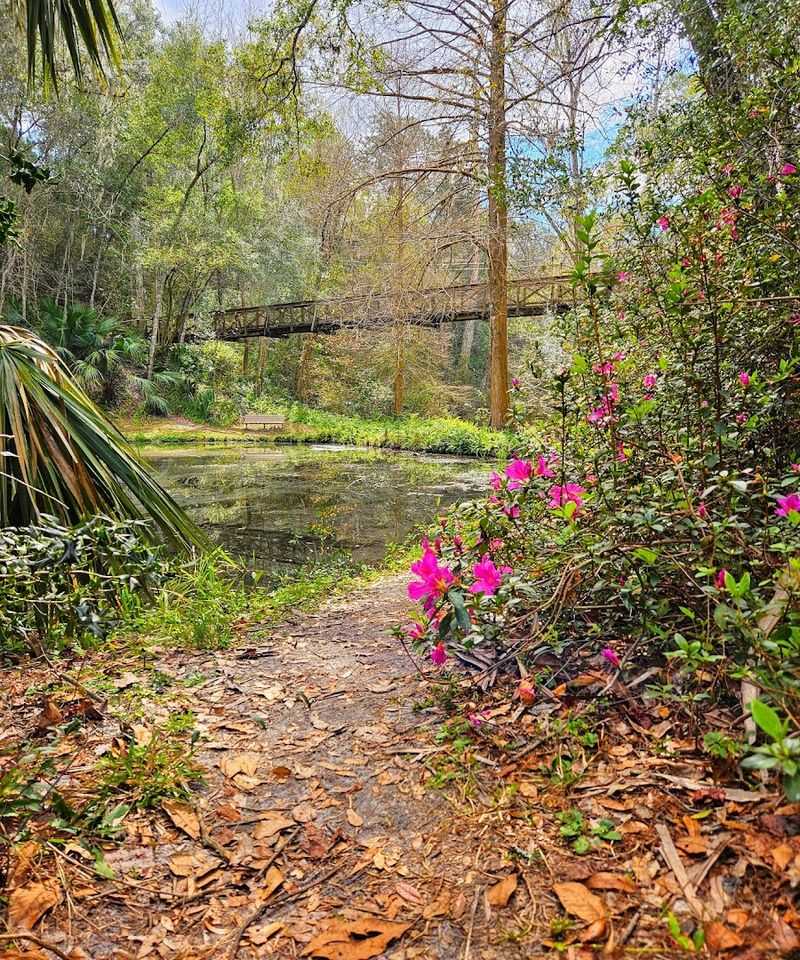
Most of Florida sits flat as a pancake, so discovering a trail with actual ravines, steep slopes, and elevation changes feels genuinely startling. Ravine Gardens State Park in Palatka protects a pair of dramatic ravines carved by ancient springs, and the trails winding through them feel unlike anything else in the state.
Towering hardwoods, cascading ferns, and the sound of trickling water create an atmosphere that belongs more in the Appalachian foothills than in Florida.
The park is legendary for its spring azalea blooms, when the ravine slopes explode in shades of pink, red, and white from late January through March. Even outside of bloom season, the deep shade and lush greenery keep the ravine cool and inviting when the rest of Florida is baking.
A suspension bridge crossing one of the ravines adds a fun element that kids especially love.
Trail distances here are moderate, with several interconnected paths allowing you to customize your route based on energy and time available. The sinkhole lake at the head of the ravine system adds another striking visual element to the hike.
Serious birders visit regularly because the varied habitat attracts an impressive mix of woodland species not commonly found in Florida’s more typical flatwood environments throughout the year.
Juniper Springs Trail
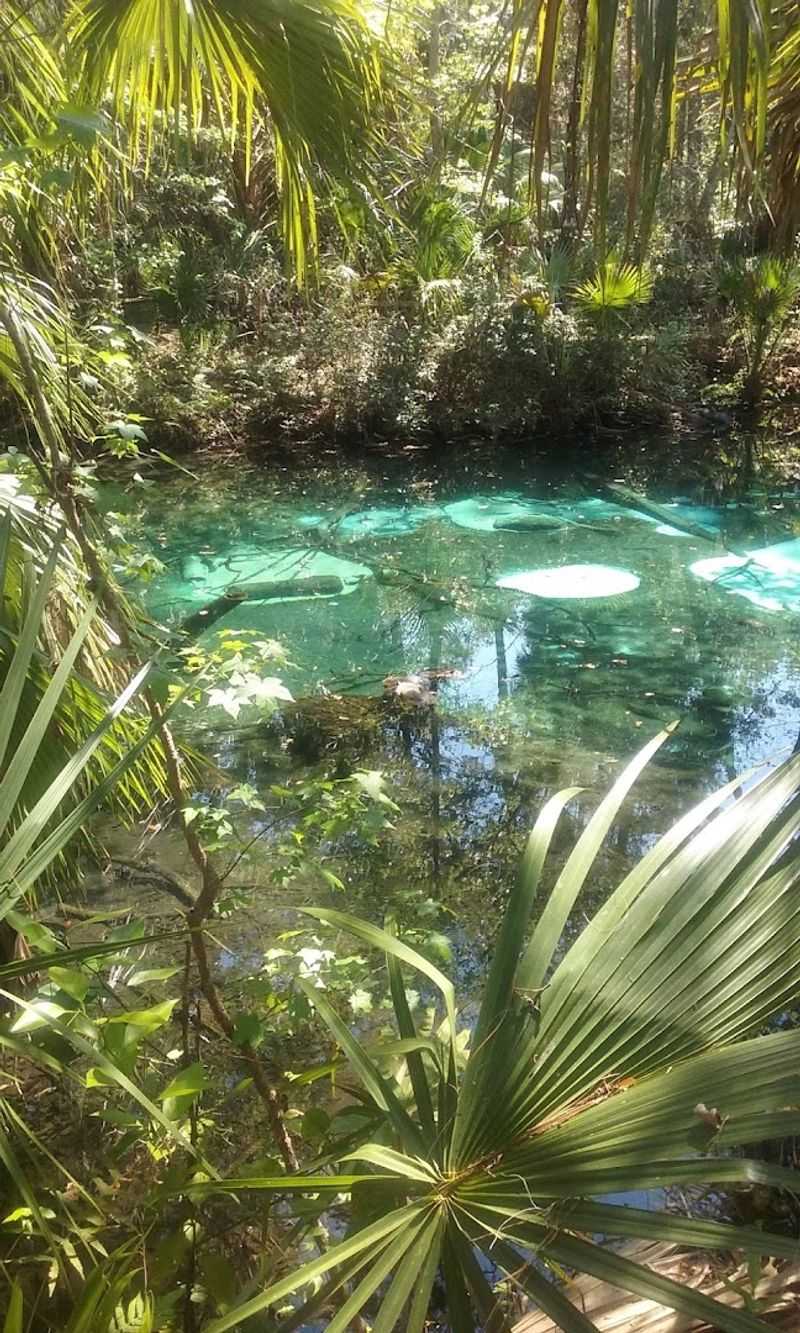
Ocala National Forest holds some of Florida’s most underrated hiking, and the Juniper Springs Trail stands out as one of its finest offerings. Running roughly seven miles out and back through dense subtropical forest alongside a crystal-clear spring run, this trail rewards hikers who want something more immersive than a quick boardwalk stroll without committing to a multi-day expedition.
The forest here feels genuinely wild and unhurried.
Twisted oaks, towering palms, and thick undergrowth press close on both sides of the trail, creating a tunnel-like atmosphere that feels almost prehistoric in places. The spring run beside the trail carries impossibly clear blue-green water over white sand, and you will spot turtles, alligators, and schools of fish with almost no effort.
Canoeists sometimes drift past on the same waterway, adding a pleasant visual contrast between land and water travel.
Because this trail sits within a national forest rather than a heavily marketed state park, visitor numbers stay refreshingly manageable even on weekends. Wear sturdy shoes because roots and uneven ground appear regularly along the path.
Carrying at least two liters of water per person is a smart move since the Florida humidity can drain your energy faster than the trail difficulty alone would suggest, especially during the warmer months from May through September.
Myakka Canopy Walkway and Trail Loop
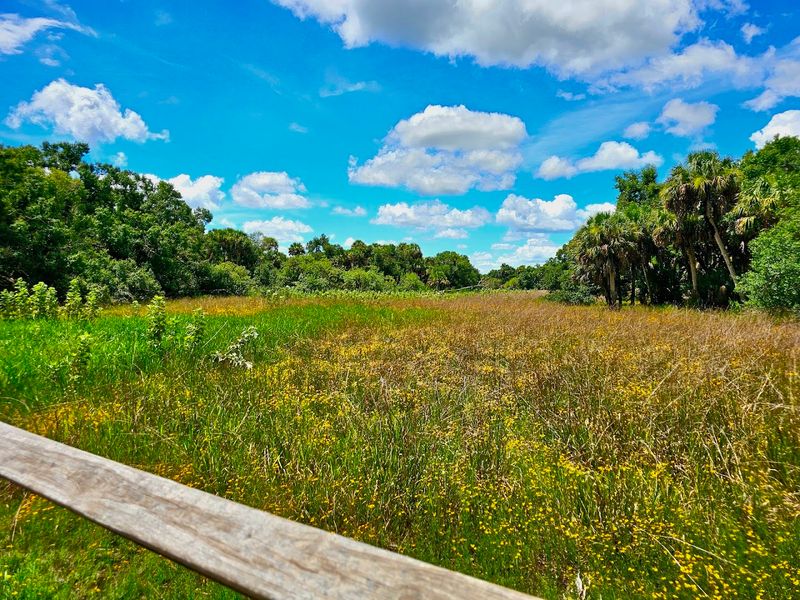
Myakka River State Park near Sarasota is one of Florida’s oldest and largest state parks, and its combination of a canopy walkway with longer trail loops makes it one of the most complete hiking experiences in the state. The famous canopy walkway suspends you 25 feet above the forest floor among the treetops, offering a bird’s-eye perspective on the oak and palm forest that feels completely different from any ground-level trail experience.
Beyond the walkway, the park’s trail system winds through open prairie, wetland edges, and hammock forest for miles in every direction. Wildlife here is prolific, including alligators, sandhill cranes, roseate spoonbills, and the occasional bobcat crossing a trail opening at dusk.
Birders consider Myakka one of the top spots in the entire southeastern United States, particularly during winter months when migratory species swell the already impressive resident bird population.
Plan for at least half a day if you want to combine the canopy walkway with a meaningful trail loop. The park also offers boat tours on Myakka Lake for those who want to mix hiking with water-based wildlife viewing.
Bring insect repellent because the park’s wetland habitats can produce impressive mosquito populations during the rainy season, roughly June through September, when afternoon thunderstorms roll through almost daily.
Black Bear Wilderness Loop Trail
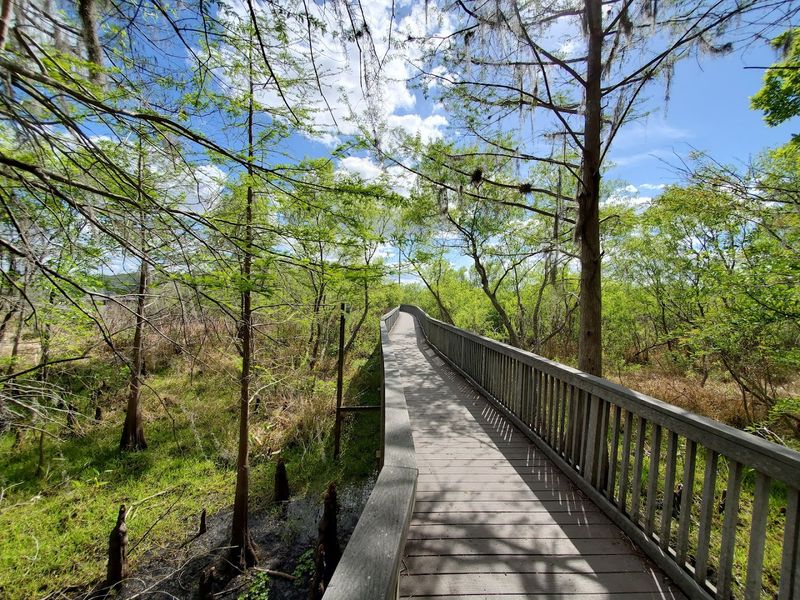
Fair warning: the Black Bear Wilderness Loop Trail is not for hikers who mind getting their feet wet. Located along the St. Johns River floodplain near Sanford, this roughly seven-mile loop earns its reputation as one of central Florida’s most physically demanding day hikes through sheer relentlessness.
Roots, mud, standing water, and rickety boardwalks over swamp make every mile feel genuinely earned.
The reward for pushing through the discomfort is access to some of the most untouched-feeling forest in the greater Orlando area. Ancient live oaks draped in moss, towering bald cypresses, and a tangle of native vegetation create a landscape that feels completely disconnected from the suburban sprawl just a few miles away.
Black bears, river otters, and barred owls have all been spotted here by regular visitors who know the trail well.
Waterproof boots are not optional here, they are essential. The trail floods seasonally, and even in dry conditions certain sections hold standing water year-round.
Start early in the morning to beat the heat and to maximize wildlife activity along the river corridor. This trail does not have a lot of trail markers, so downloading an offline map before you arrive is a genuinely smart preparation step that prevents unnecessary confusion mid-hike.
Big Shoals Trail
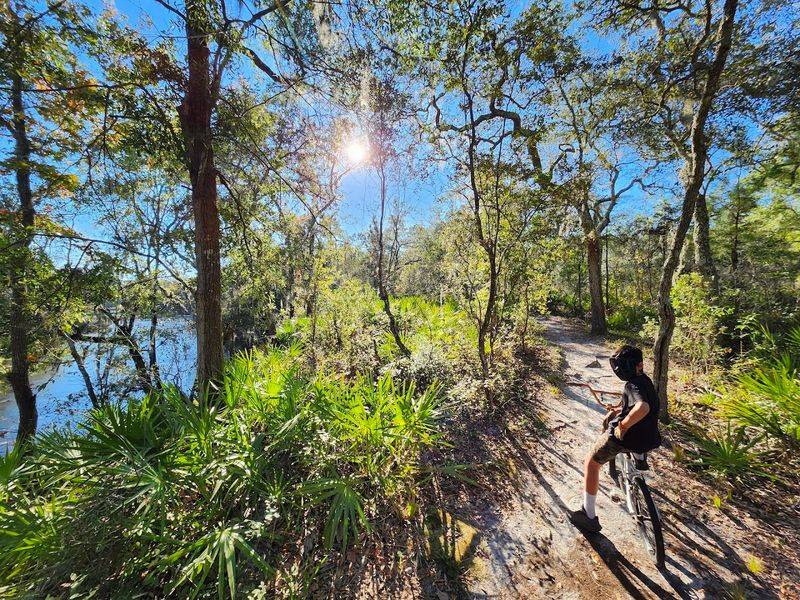
Florida and whitewater rapids do not usually belong in the same sentence, which is precisely what makes Big Shoals State Park such a compelling destination for hikers who crave something genuinely different. Located near White Springs along the Suwannee River, the trail here winds along limestone bluffs before delivering you to an overlook above Florida’s only Class III whitewater rapids, a sight so unexpected that first-time visitors often stand in disbelief for a solid minute.
The trail covers roughly four miles round trip with moderate terrain that includes some genuine elevation changes by Florida standards. Limestone outcroppings, hardwood forest, and river views combine to create a hiking experience that feels more like Georgia or Tennessee than anything typically associated with the Sunshine State.
Wildflowers bloom prolifically along the bluffs during spring, adding bursts of color to the already scenic route.
Kayakers and canoeists running the rapids below add an exciting visual element when water levels are right for paddling. The park is rarely crowded, offering a quiet, contemplative atmosphere that feels increasingly rare in a state with Florida’s tourism numbers.
Combining this hike with a visit to the nearby Stephen Foster Folk Culture Center makes for a culturally rich full day in one of north Florida’s most overlooked and genuinely rewarding natural regions.
Citrus Hiking Trail Loop
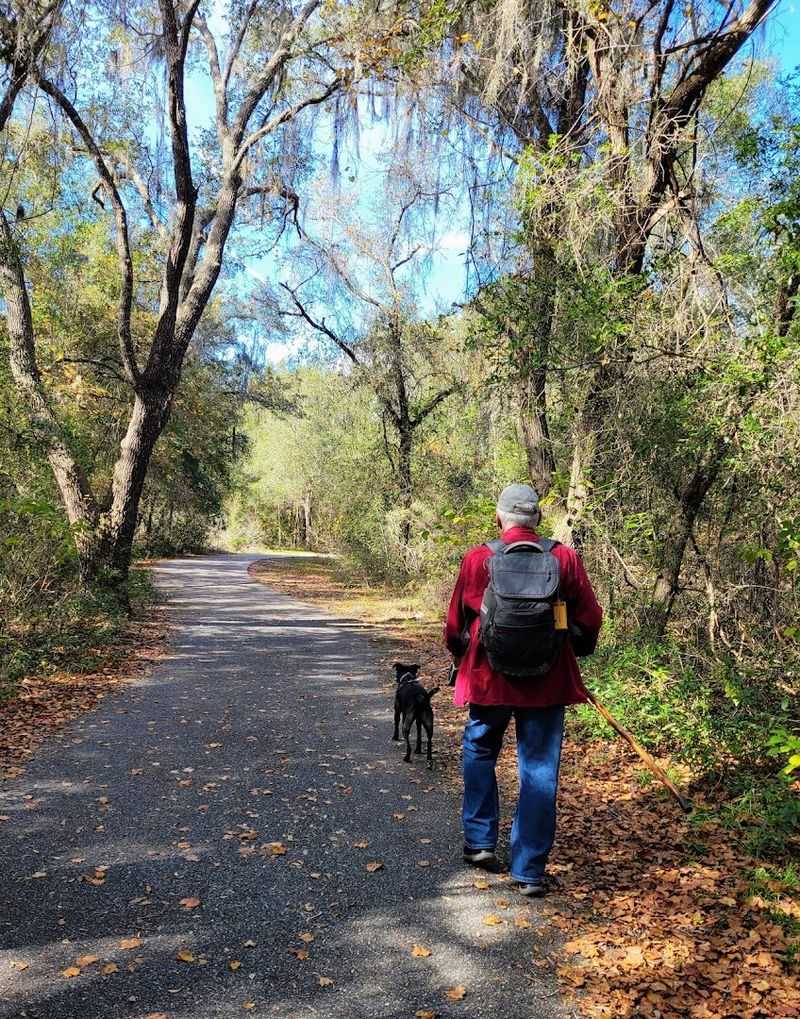
Central Florida does not often get credit for serious backpacking terrain, but the Citrus Hiking Trail Loop inside Withlacoochee State Forest quietly challenges that assumption. Stretching over 40 miles through rolling sandhills, pine flatwoods, and dense hardwood forest, this trail system offers one of the most legitimate multi-day backpacking experiences available anywhere in the state.
The terrain rolls more than most people expect from Florida, and the remoteness feels genuine.
Primitive campsites are scattered along the route, making it well-suited for overnight trips where you carry everything you need and sleep under a canopy of longleaf pines. Day hikers can access shorter sections of the loop without committing to the full distance, which makes the trail flexible enough for casual visitors and serious trekkers alike.
Wildlife sightings include white-tailed deer, wild turkey, gopher tortoises, and red-headed woodpeckers working the pine trunks with impressive determination.
The trail is blazed in orange and generally well-maintained, though some sections can become overgrown after periods of heavy rainfall. Carrying a detailed paper map alongside any digital navigation tool is a smart habit here because cell coverage drops significantly in the forest’s interior.
Fall and winter months offer the most comfortable hiking temperatures and the clearest visibility through the forest understory for spotting wildlife moving between feeding areas.
Florida National Scenic Trail Blackwater Section
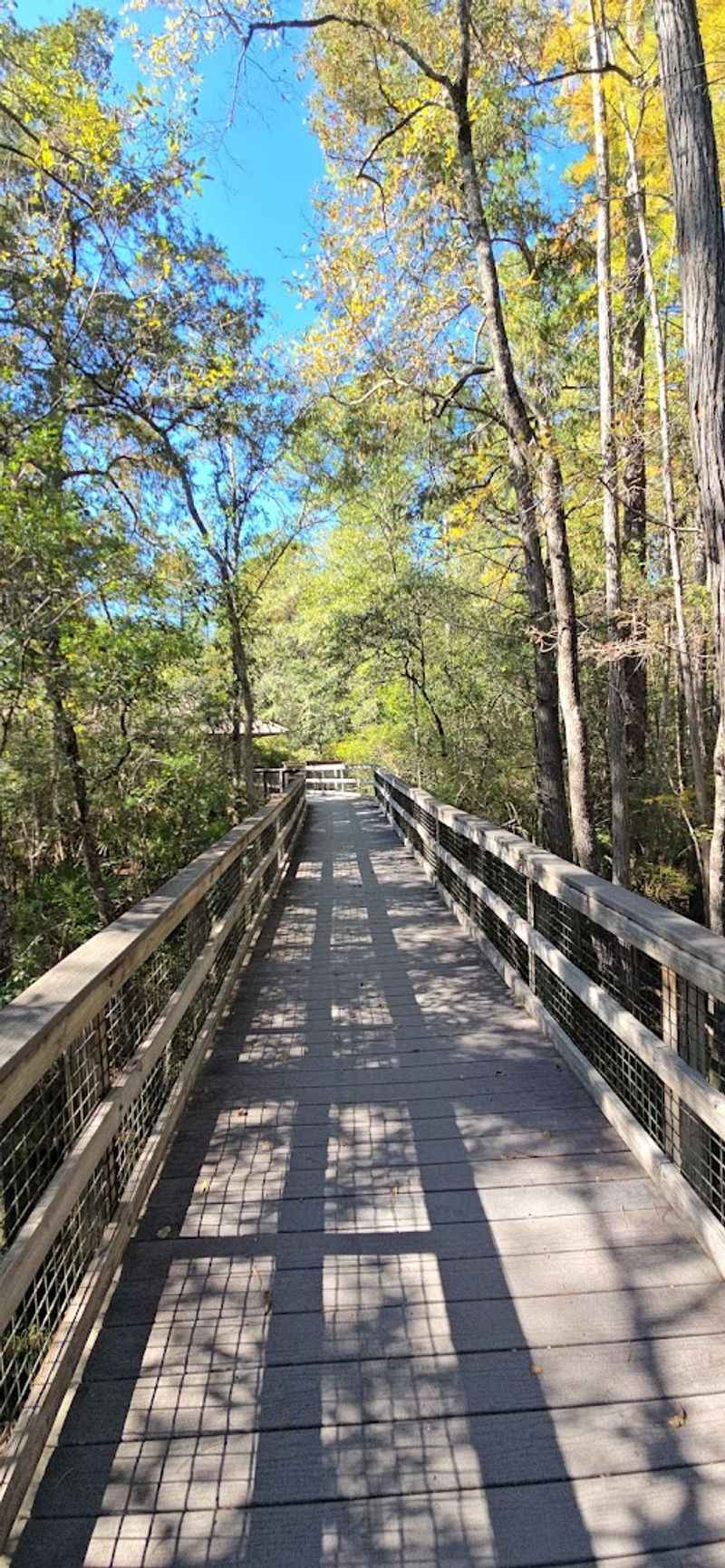
Solitude is genuinely hard to find in Florida, but the Blackwater Section of the Florida National Scenic Trail delivers it in generous portions. Winding through the sandhills and longleaf pine forests of Blackwater River State Forest in the Panhandle, this remote stretch of Florida’s longest trail sees a fraction of the foot traffic found on more popular routes.
Some days you can hike for hours without seeing another person, which feels like a rare gift in a state of 22 million residents.
The landscape here is characterized by open, park-like longleaf pine forest with a wiregrass understory, a habitat type that once covered much of the southeastern United States but now exists only in scattered fragments. Gopher tortoises dig their burrows along the sandy trail edges, and red-cockaded woodpeckers, a federally protected species, nest in the older pine trees throughout the forest.
The ecological significance of this place adds a layer of meaning to every mile you walk.
Overnight trips on this section require a backcountry permit and proper planning around water sources, which are spaced out enough to require carrying larger quantities than shorter day hikes demand. The trail connects to other sections of the Florida Trail, giving ambitious hikers the option of linking multiple days of remote walking through some of the state’s most pristine and least-visited natural landscapes.
Florida Trail in Big Cypress National Preserve
Nothing else in Florida comes close to preparing you for the Florida Trail through Big Cypress National Preserve. This is wet hiking in its most extreme and unfiltered form, where the trail disappears under knee-deep water for miles at a stretch and navigation demands constant attention.
Hikers who have completed this section describe it as one of the most physically and mentally challenging multi-day experiences available anywhere in the eastern United States.
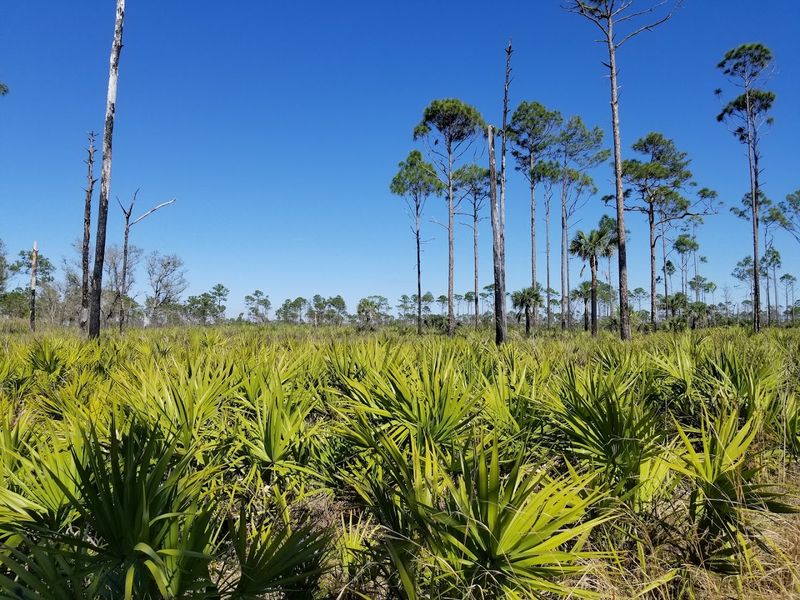
The preserve covers more than 700,000 acres of subtropical wilderness, and the trail cuts straight through its heart, crossing open prairies, dense cypress strands, and tangled wet hammocks where the sky nearly disappears overhead. Wildlife encounters feel raw and immediate here in a way that no maintained trail can replicate.
Florida panthers, black bears, and Everglades mink inhabit this landscape, and the sense of being genuinely deep in wild country is not manufactured or exaggerated.
Preparation for this section requires serious planning, including waterproof gear, snakebite awareness, navigation skills, and realistic expectations about daily mileage in wet terrain. Most hikers complete it during the dry season between November and April when water levels drop enough to make the crossing manageable.
Anyone who finishes the Big Cypress section earns a story worth telling for the rest of their life, because very few hikes anywhere deliver this level of raw, unfiltered wilderness immersion.