
America is full of forgotten places where history quietly crumbles away, waiting for curious visitors to show up and look around.
From gold-rush ghost towns in the West to ancient pueblo settlements in the Southwest, these sites tell stories that no museum can fully capture.
Many people drive right past them without ever knowing they can stop, explore, and step back in time.
Whether you love history, adventure, or just a really good photo opportunity, these 14 open-to-the-public ruins deserve a spot on your travel list.
Bodie Ghost Town, California
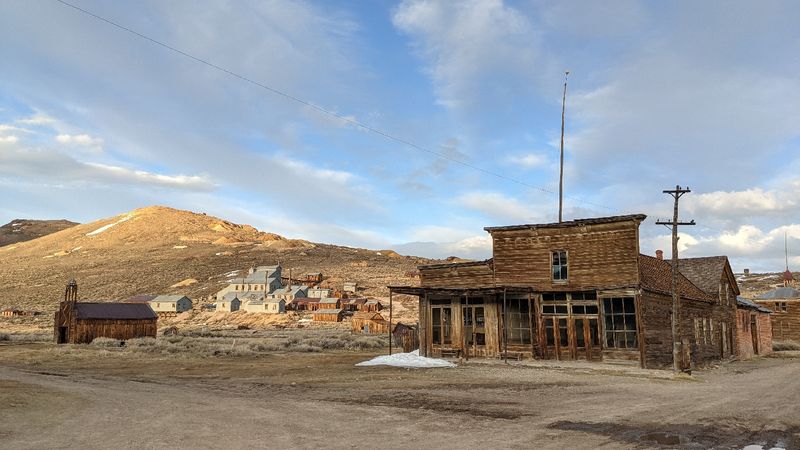
Walking into Bodie feels like stepping through a time machine that nobody remembered to turn off. Gold was discovered here in 1859, and at its peak, Bodie was home to nearly 10,000 people chasing fortune in the California hills.
Today, around 100 original structures still stand in what historians call “arrested decay” — a deliberate effort to preserve the town exactly as it was found, without full restoration.
California State Parks manages the site, and visitors are welcome to walk the dirt roads, peer through dusty windows, and imagine the roar of saloons that once packed these streets. You can see the old schoolhouse, a church, and even a stamp mill where gold ore was processed.
The buildings creak and lean, but they hold.
Bodie sits at 8,375 feet elevation in the Eastern Sierra Nevada, so summers are short and winters are brutal. The best time to visit is between late spring and early fall.
Admission is under $10, making it one of the most affordable and genuinely atmospheric ghost towns in the entire country. Bring a jacket — even summer afternoons can turn chilly fast up here.
Rhyolite Ghost Town, Nevada
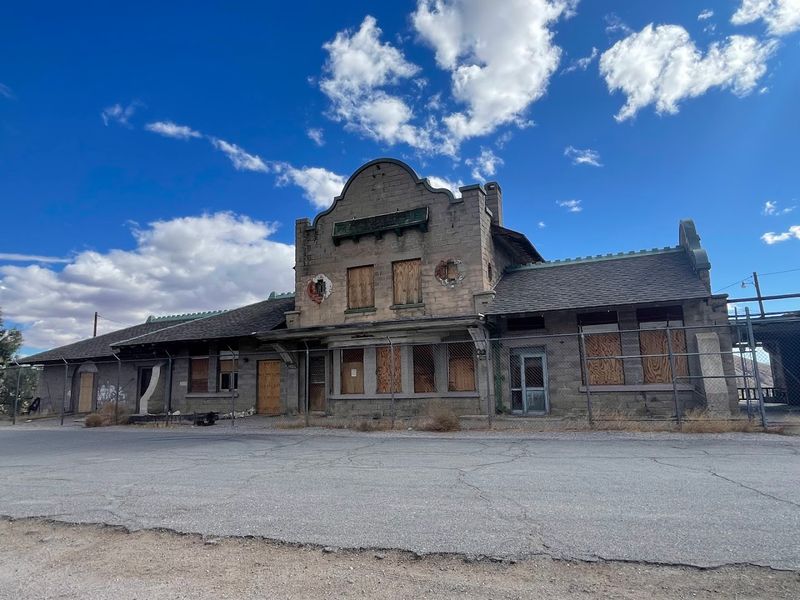
Just a short drive from Death Valley National Park, Rhyolite is the kind of place that makes you stop the car and stare. At its height around 1907, this Nevada mining town had electric lights, a stock exchange, an opera house, and a population pushing 5,000.
Then the gold ran out, and within a decade, nearly everyone was gone.
What remains today is a haunting collection of skeletal walls, including the shell of the three-story Cook Bank building, a crumbling train depot, and a handful of roofless homes slowly being swallowed by the Mojave Desert. One of the most photographed spots is the “Bottle House,” built from 50,000 beer and liquor bottles by a miner named Tom Kelly in 1906.
The Bureau of Land Management oversees the site, and admission is completely free. There are no fences keeping you back from most structures, which gives the whole experience a wonderfully raw, unfiltered feel.
Rhyolite is just outside Beatty, Nevada, and makes a perfect detour if you are already heading toward Death Valley. Go early in the morning when the light hits those stone walls at a golden angle — the photos practically take themselves.
Eastern State Penitentiary, Pennsylvania
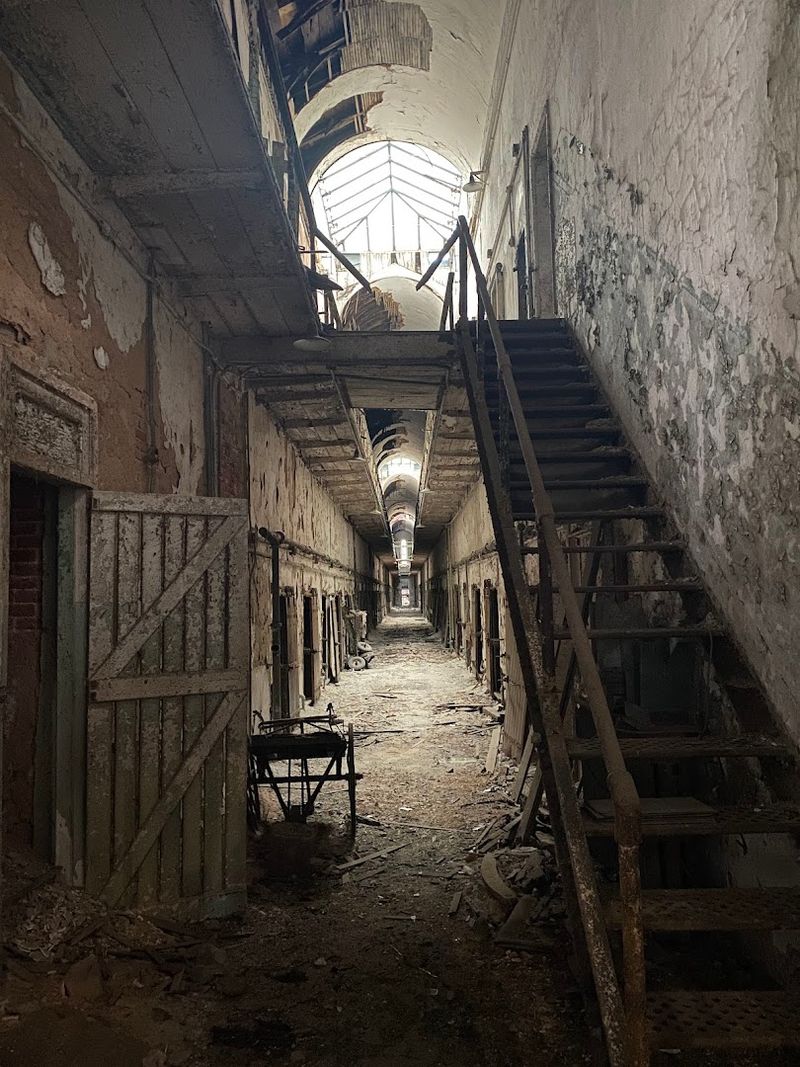
Eastern State Penitentiary opened in 1829 and was once the most famous prison in the world. Its radical design — based on total solitary confinement — was studied and debated by governments across Europe.
Famous inmates included Al Capone, who reportedly lived in a furnished cell with rugs and artwork. The prison closed in 1971, and for years it sat completely abandoned, nature slowly pulling it apart from the inside out.
Today, visitors can walk through the crumbling cellblocks on self-guided audio tours narrated by actor Steve Buscemi. Collapsed roofs, rusted cell doors, and peeling paint create an atmosphere that feels genuinely unsettling in the best possible way.
The penitentiary is located right in the Fairmount neighborhood of Philadelphia, which surprises a lot of first-time visitors who expect it to be tucked away somewhere remote.
Tickets cost around $19 for adults, and the site also hosts one of the most popular Halloween events in the country each fall. Even outside of October, the tours are thoughtful, historically rich, and genuinely moving.
The penitentiary does not shy away from difficult conversations about the failures of solitary confinement — making it educational as much as it is atmospheric and deeply memorable.
St. Elmo Ghost Town, Colorado
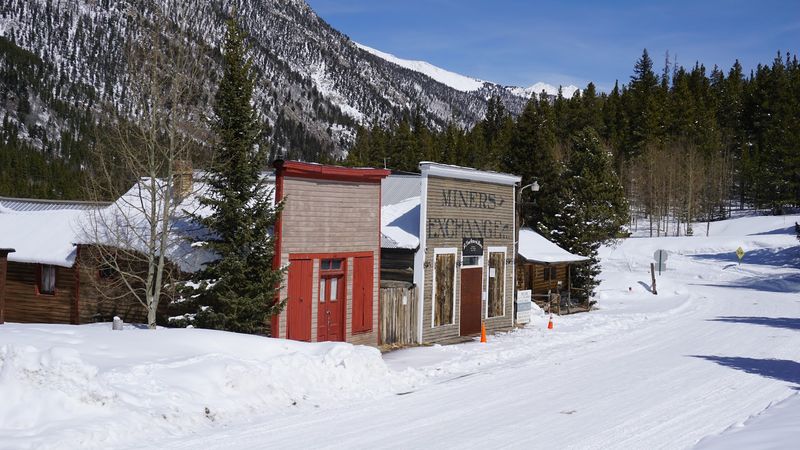
Tucked into a narrow valley in the heart of the Colorado Rockies, St. Elmo is one of the best-preserved ghost towns in the entire state. Silver and gold were discovered here in the 1870s, and the town grew quickly into a bustling community with hotels, saloons, and even a school.
At its peak, roughly 2,000 people called this high-altitude valley home.
Unlike many ghost towns where only foundations remain, St. Elmo still has dozens of original wooden buildings standing along its main street. You can walk right up to them, and in some cases, peer through warped glass windows at furniture and fixtures left behind.
The surrounding scenery — pine forests, jagged peaks, and clear mountain streams — makes the whole place feel almost impossibly picturesque.
St. Elmo sits at about 10,000 feet elevation in Chaffee County, accessible via a well-maintained dirt road from Nathrop. The town is technically on public land, so there is no admission fee.
A small general store nearby is occasionally open during summer months. The site is popular with ATV riders and hikers, so weekends can get busy.
Arriving on a quiet weekday morning gives you the best chance of having those creaky wooden boardwalks almost entirely to yourself.
Kennecott Mines, Alaska
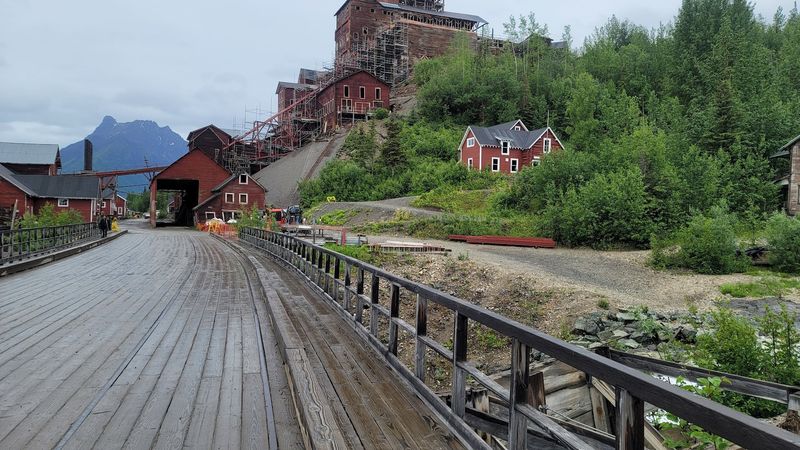
Few ruins in America feel as remote or as staggering in scale as Kennecott. Buried deep inside Wrangell-St. Elias National Park — the largest national park in the United States — these towering red mill buildings once processed millions of pounds of copper ore pulled from the surrounding mountains.
Operations ran from 1903 to 1938, and when the ore ran out, workers simply walked away, leaving almost everything behind.
Getting there requires a 60-mile drive down the notoriously rough McCarthy Road, which itself is part of the adventure. Once you arrive, the scale of the ruins is staggering.
Multi-story processing mills cling to a steep hillside, connected by wooden trams and ore chutes. The National Park Service offers ranger-led tours of the mill buildings, which are otherwise off-limits for safety reasons.
The surrounding landscape is jaw-dropping — glaciers, alpine meadows, and peaks stretching in every direction. The nearby town of McCarthy has a handful of lodges and restaurants, making it possible to spend a few days exploring the area.
Summer is the only practical season to visit, as the road becomes impassable in winter. If you enjoy a destination that genuinely feels like the edge of the world, Kennecott absolutely delivers that feeling.
Bannerman’s Castle, New York
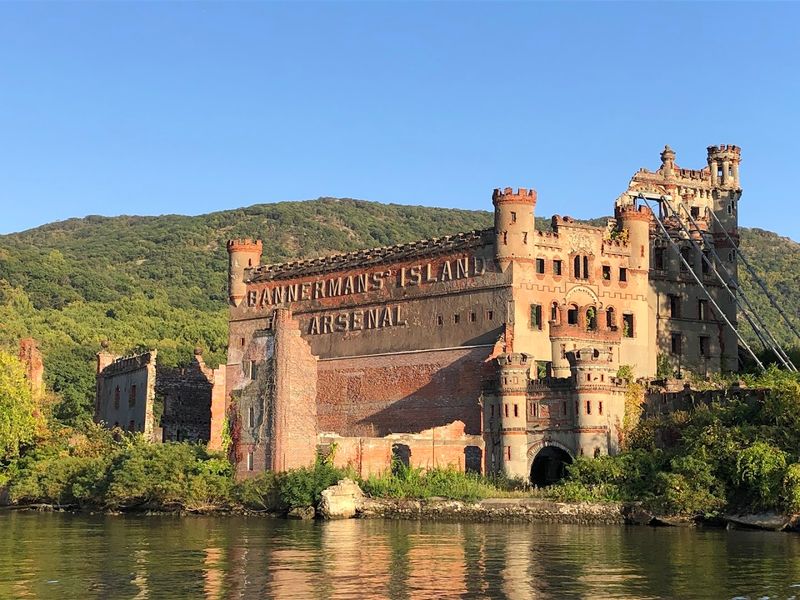
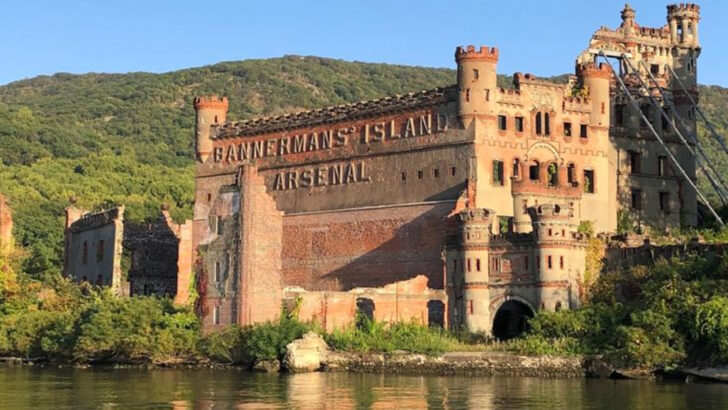
Pollepel Island sits quietly in the middle of the Hudson River, and for most people driving along Route 9D, the crumbling castle on its shore barely registers as real. Francis Bannerman VI built this fortress-like warehouse starting in 1901 to store the enormous military surplus stockpile his Brooklyn business had accumulated after the Spanish-American War.
The island was chosen specifically because New York City officials were not thrilled about tons of ammunition being stored within city limits.
An explosion in 1920 damaged much of the structure, and a fire in 1969 accelerated the decay. Today the Bannerman Castle Trust runs guided tours by boat from Beacon, New York, typically from May through October.
Visitors land on the island, walk through the overgrown grounds, and get up close to the remarkably dramatic stone walls and archways still standing along the riverbank.
The combination of Gothic-inspired architecture, river views, and wild overgrowth makes Bannerman’s Castle one of the most visually striking ruins in the entire Northeast. Tours sell out quickly, especially on fall weekends when the surrounding foliage is at peak color.
Booking well in advance is strongly recommended. Even kayakers occasionally paddle past for a closer look, though landing without a tour is not officially permitted.
Old Cahawba Archaeological Park, Alabama
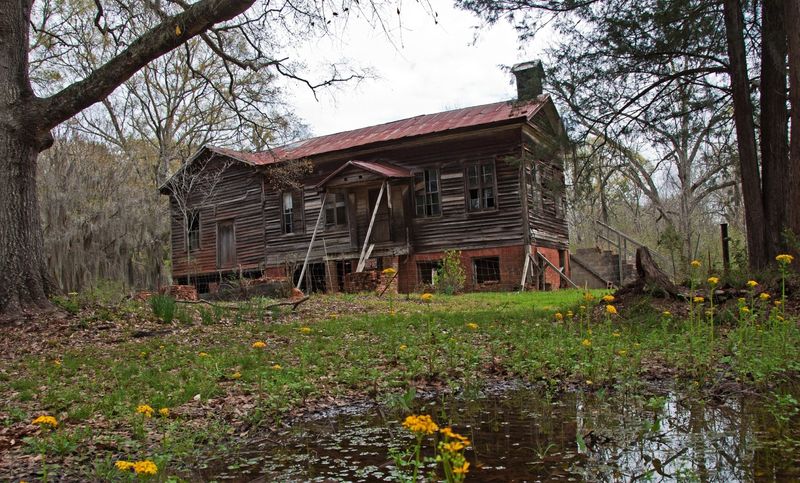
Alabama’s very first state capital has been swallowed almost entirely by the surrounding floodplain, and honestly, that makes it even more fascinating to visit. Cahawba served as the state capital from 1820 to 1826 before flooding and political disputes pushed the government to Tuscaloosa.
The town lingered on for decades, even serving as a Confederate prison during the Civil War, before the floods finally won and residents gave up entirely around 1900.
Today, the Alabama Historical Commission manages the site as a free, publicly accessible archaeological park. Visitors can walk well-maintained trails past crumbling brick foundations, old cisterns, artesian wells, and cemetery markers.
Interpretive signs help explain what stood where, giving a clear picture of a once-thriving civic center now returned to the earth.
The setting is genuinely beautiful in a melancholy way — Spanish moss drapes over old oaks, and the Cahaba River winds quietly nearby. Spring brings wildflowers blooming among the ruins, and the park hosts an annual festival celebrating the town’s history.
The site is located near Selma, Alabama, adding the option to combine the visit with other historically significant landmarks in the region. Admission is free, and the trails are easy enough for visitors of all ages and fitness levels.
Glenrio Ghost Town, New Mexico/Texas
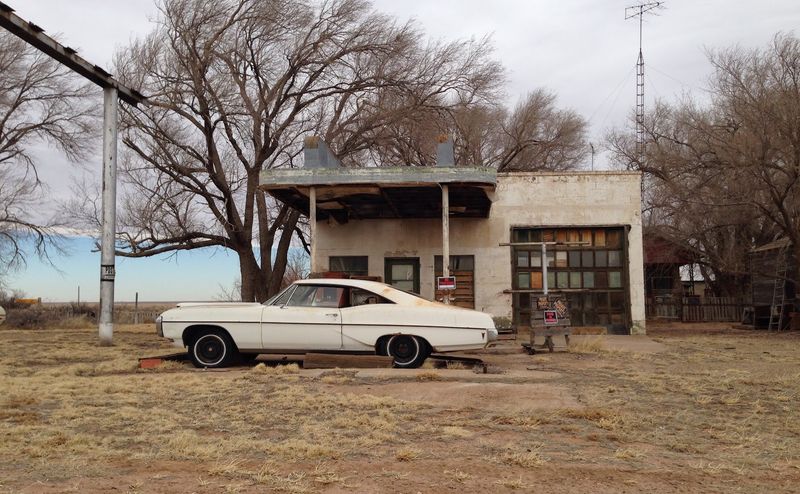
Right on the state line between New Mexico and Texas, Glenrio is one of the most evocative stops along the entire length of historic Route 66. The town was born in 1903 as a railroad stop and grew through the mid-20th century as a service town for travelers heading west.
Motels, diners, and gas stations lined the highway, catering to families chasing the California dream during the Dust Bowl era and beyond.
When Interstate 40 bypassed Glenrio in 1975, the town died almost overnight. Today, the crumbling shells of those roadside businesses still stand exactly where they were abandoned, slowly dissolving under the relentless West Texas sun.
Walking among them feels like flipping through an old postcard collection that nobody ever bothered to put away.
Glenrio is listed on the National Register of Historic Places, and there are no fences or fees — just open access to a haunting slice of American road culture. The “First in Texas / Last in Texas” motel sign, long since faded, is one of the most photographed spots along this stretch of Route 66.
The nearest services are in Adrian, Texas, about 20 miles east, so bring water and a full tank of gas before making the detour. Sunset here is absolutely worth staying for.
Tusayan Pueblo Ruins, Arizona
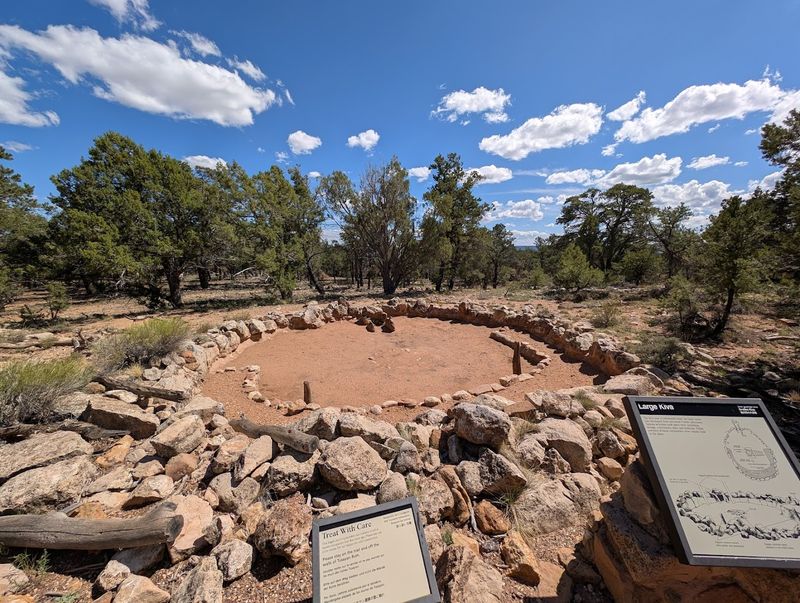
Most visitors to Grand Canyon National Park spend their entire trip staring into the canyon and never notice the 800-year-old pueblo ruins sitting quietly on the South Rim. Tusayan Pueblo was occupied by ancestral Puebloan people around 1185 CE and housed roughly 30 people at its peak.
It was abandoned after just about 20 years, likely due to drought and resource pressures that pushed communities to relocate.
The ruins include the low stone walls of living quarters, storage rooms, and two kivas — circular ceremonial chambers that were central to Puebloan religious life. A small on-site museum displays pottery, tools, and other artifacts recovered from the site, providing helpful context for what you are seeing.
Ranger-led tours run during summer months and are free with park admission.
What makes Tusayan especially meaningful is its location. Standing among these ancient walls with the Grand Canyon just a short walk away creates a powerful sense of deep time — layers of human and geological history stacked on top of each other.
The site is located about three miles east of Grand Canyon Village on Desert View Drive, making it an easy addition to any South Rim itinerary. Children tend to find the kivas particularly fascinating, and the short trail is accessible for most visitors.
Colden Mansion Ruins, New York
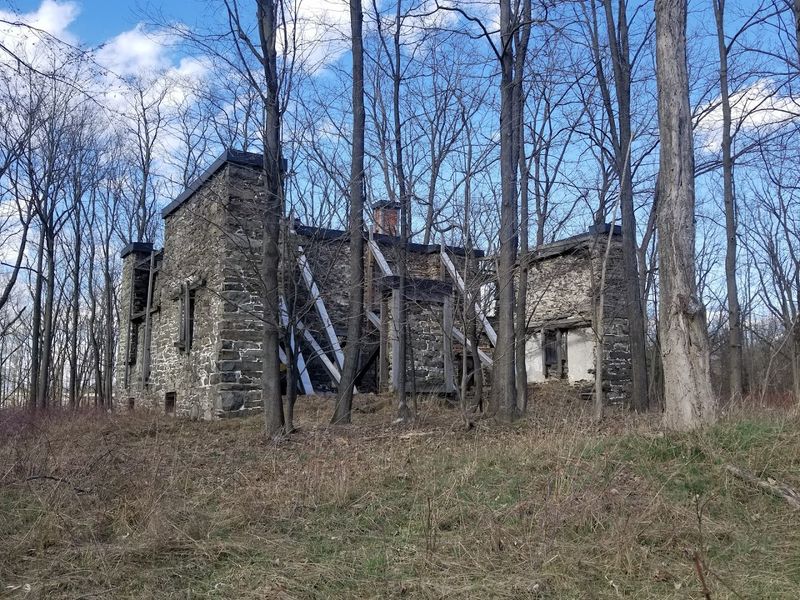
Hidden in the forests of Orange County, New York, the stone ruins of the Colden Mansion feel like a secret that the Hudson Valley has been keeping for centuries. Cadwallader Colden II built the mansion in the late 18th century, and the family held considerable political and social influence in colonial and early American society.
The estate eventually fell into disuse, and by the 20th century, the forest had quietly reclaimed most of it.
Today, the crumbling stone walls and foundation remnants sit on land that is accessible to hikers exploring the trail networks in the area. The ruins are not heavily marked or promoted, which is part of what makes finding them feel so rewarding.
History enthusiasts and photographers who know where to look are often the only visitors on any given day.
The surrounding forest adds to the atmosphere considerably — old oaks and maples grow right up against the stonework, their roots slowly prying the walls apart. Moss covers nearly every surface, giving the ruins a soft, painterly quality that photographs beautifully in any season.
If you enjoy combining a woodland hike with a genuine historical discovery, the Colden Mansion ruins offer exactly that kind of quiet, unhurried experience that is increasingly hard to find near New York City.
Nuttallburg Coal Town, West Virginia
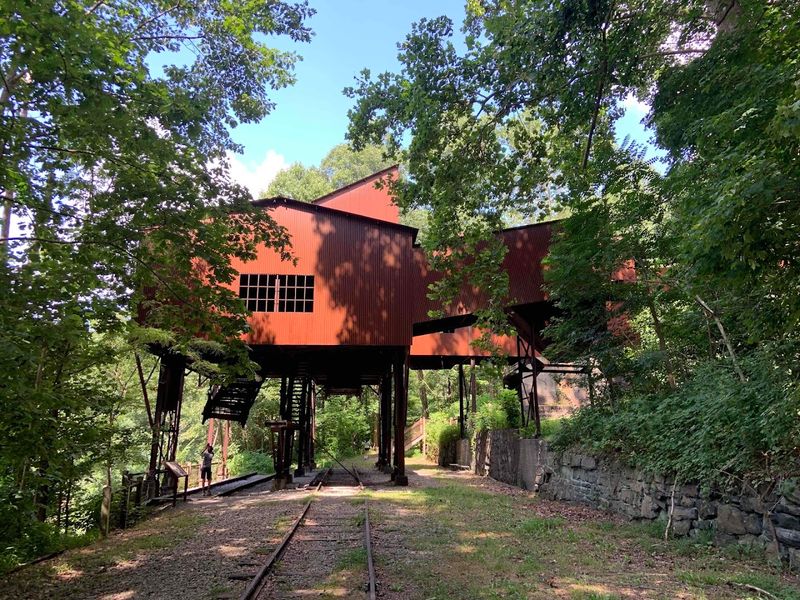
New River Gorge became a national park in 2020, but Nuttallburg has been quietly waiting for visitors long before that upgrade in status. This former coal town was established in the 1870s and operated until 1958, making it one of the longer-lived industrial communities along the New River.
At its peak, Nuttallburg had a processing tipple, rows of coke ovens, company housing, and a rail connection that carried coal out of the gorge.
The ruins that remain are genuinely atmospheric. A long row of stone coke ovens lines the hillside like a series of ancient arched doorways, and the skeletal wooden tipple structure still clings to the steep slope above the river.
Park trails wind through the site, and interpretive panels explain how each structure functioned within the coal operation.
The hike down into the gorge to reach Nuttallburg is moderately challenging — the terrain is steep and can be slippery when wet — but the payoff is absolutely worth the effort. Few places in Appalachia so vividly illustrate the rise and fall of the coal industry and the human communities built around it.
The National Park Service has done excellent work making the site accessible while preserving its raw, weathered character. Admission to New River Gorge National Park is free.
Fort Dade Ruins, Egmont Key, Florida
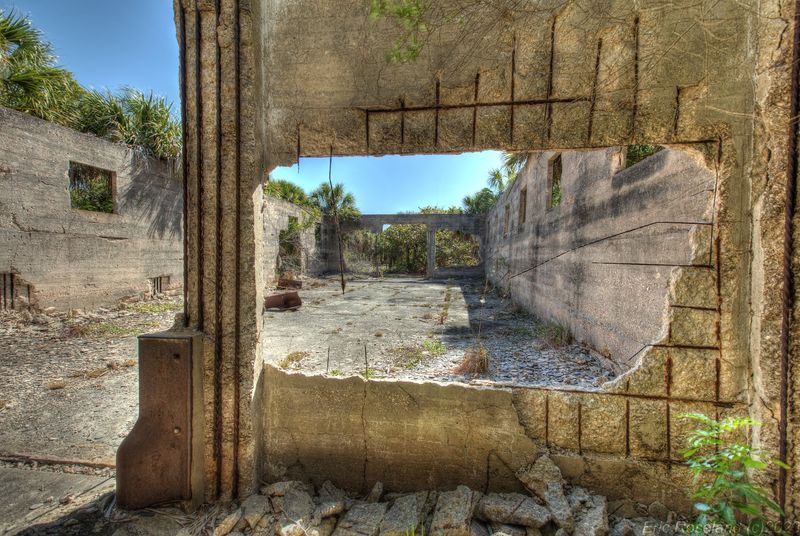
Getting to Egmont Key requires a boat, and that short journey across Tampa Bay is honestly part of what makes the experience feel like a real adventure. The island was fortified during the Spanish-American War in the late 1890s, and Fort Dade grew into a substantial military installation with batteries, barracks, a post office, a bowling alley, and even a trolley system connecting its various structures.
At its peak, over 300 soldiers were stationed here.
The fort was decommissioned after World War I, and the island has been slowly dissolving into the Gulf ever since. Today, the brick and concrete ruins are scattered across the island’s interior, half-buried in sand and wrapped in tropical vegetation.
Gopher tortoises wander among the crumbling walls, completely unbothered by the occasional visitor.
Egmont Key is now a National Wildlife Refuge and state park, accessible by ferry from Fort De Soto Park or by private boat. The ferry runs seasonally, so checking current schedules before planning your trip is important.
There are no food vendors or facilities on the island, so bringing your own water and snacks is essential. The combination of wildlife, warm Gulf breezes, crumbling military history, and total isolation from the mainland makes Egmont Key one of the most genuinely unique day trips available anywhere in Florida.
Sutro Baths Ruins (California)
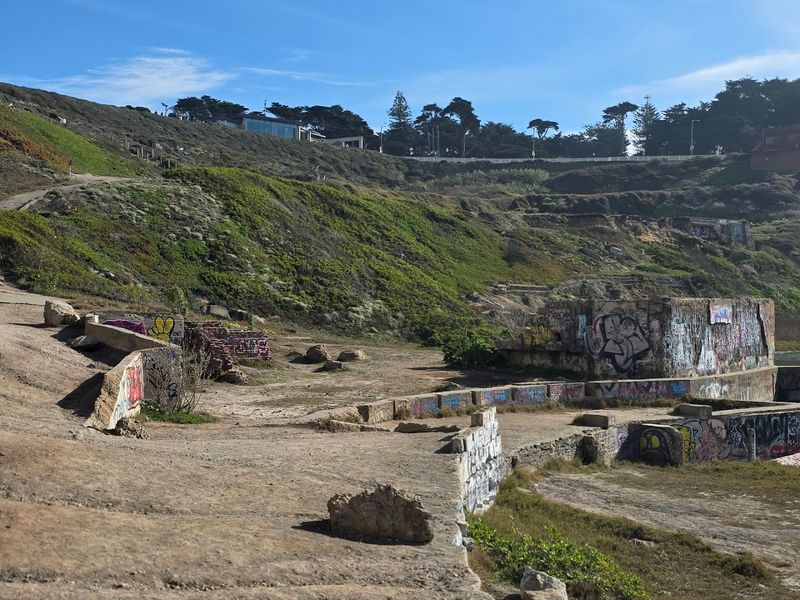
Perched on the rugged cliffs of San Francisco’s Lands End, the Sutro Baths Ruins are a haunting reminder of ambition, leisure, and the relentless power of the Pacific Ocean. Built in 1896 by millionaire Adolph Sutro, the complex was once the world’s largest indoor saltwater bathing facility, boasting multiple swimming pools, slides, and even an ice rink.
At its peak, tens of thousands of visitors flocked to this coastal playground, marveling at its scale and opulence.
Today, only concrete foundations, fragmented walls, and rusted staircases remain, creating an otherworldly landscape where history and nature collide. Visitors can wander among the ruins, imagining the hustle and bustle of swimmers, vendors, and families who once filled the space, while waves crash dramatically against the nearby rocks.
The surrounding cliffs and trails add a layer of natural beauty, offering sweeping views of the Pacific and the Golden Gate.
Accessible as part of the Golden Gate National Recreation Area, the Sutro Baths Ruins are free to explore and provide a unique combination of history, adventure, and coastal scenery. Photographers, history enthusiasts, and casual hikers alike find the site irresistible, drawn by the eerie charm of crumbling walls against the backdrop of the ocean.
Visiting the ruins is a chance to step into San Francisco’s past while experiencing one of its most striking and unexpected coastal landscapes.
Elkmont Historic District (Tennessee)
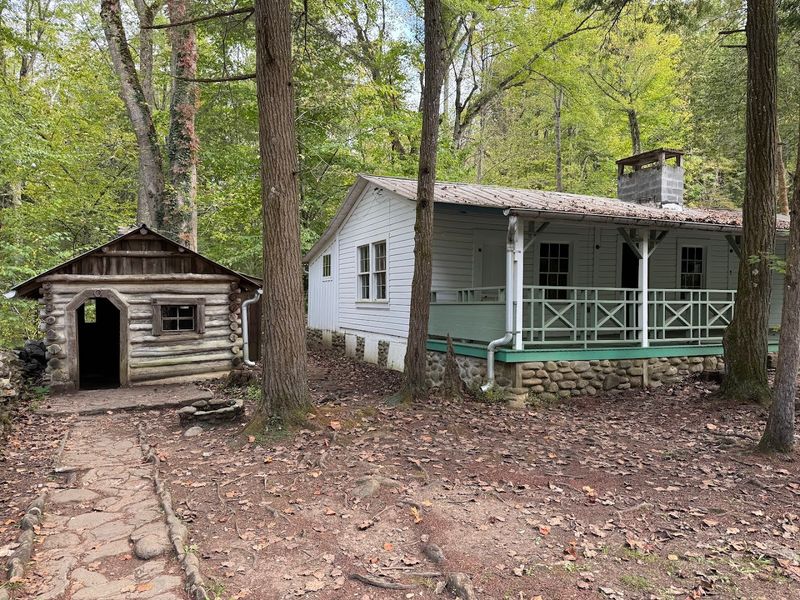
Nestled deep in the lush forests of Great Smoky Mountains National Park, Elkmont was once a thriving early‑20th‑century resort town where wealthy families built summer cabins and social clubs amid mossy trees and mountain air. Over decades, as tourism patterns changed and the park service took over the land, many of these wooden structures were left to decay.
What remained was a fascinating cluster of weather‑worn cabins, stone chimneys, and porches that seemed suspended in time — quietly surrendering to nature’s reclamation.
Today, thanks to efforts by the National Park Service and volunteers, parts of Elkmont have been stabilized and opened to visitors, allowing history lovers to wander through the historic district’s atmospheric remnants. A handful of cabins have been preserved with interpretive signage, and trails link the site to broader park paths that offer sweeping views and peaceful forest scenery.
Elkmont blends haunting decay with a sense of serenity and nostalgia: you can envision early vacationers gathering on porches, children running along paths, and music drifting through the trees — all while the mountains slowly reclaim what once belonged to them.