Some church bells stay put for centuries. A set of eight historic bells in Charleston did the opposite, crossing the Atlantic at least five times through a remarkable history of wartime theft, damage, repairs, and restoration.
They were cast in London, carried off during a war, shipped home, sent back for repairs, and returned again.
Along the way they survived fires, an earthquake, a hurricane, and two wars.
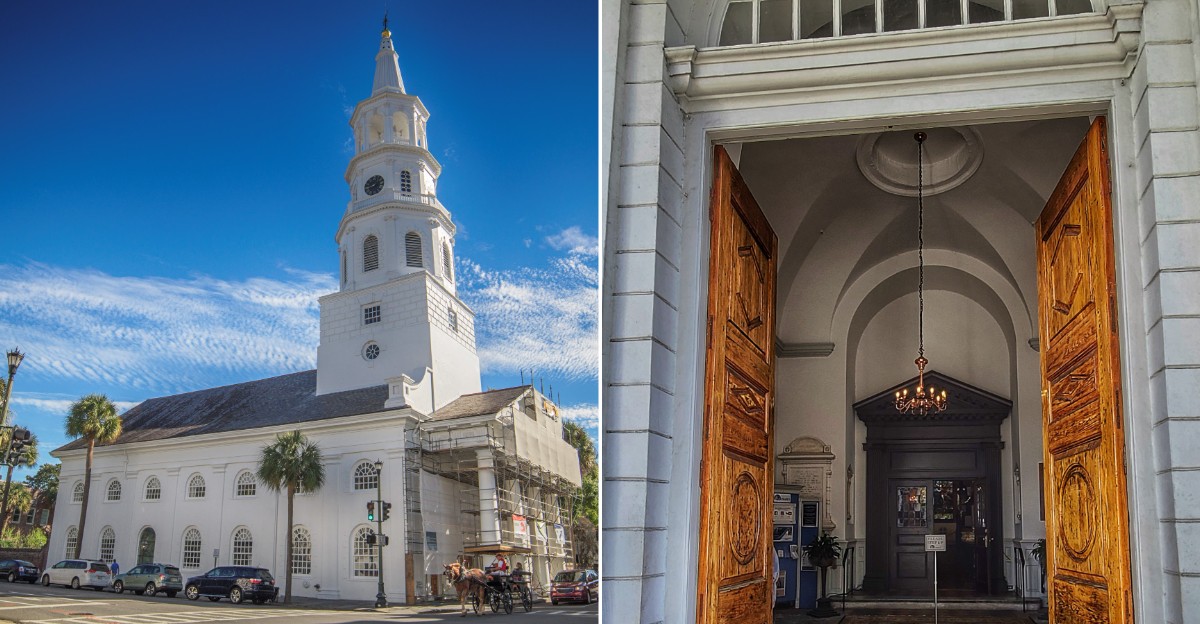
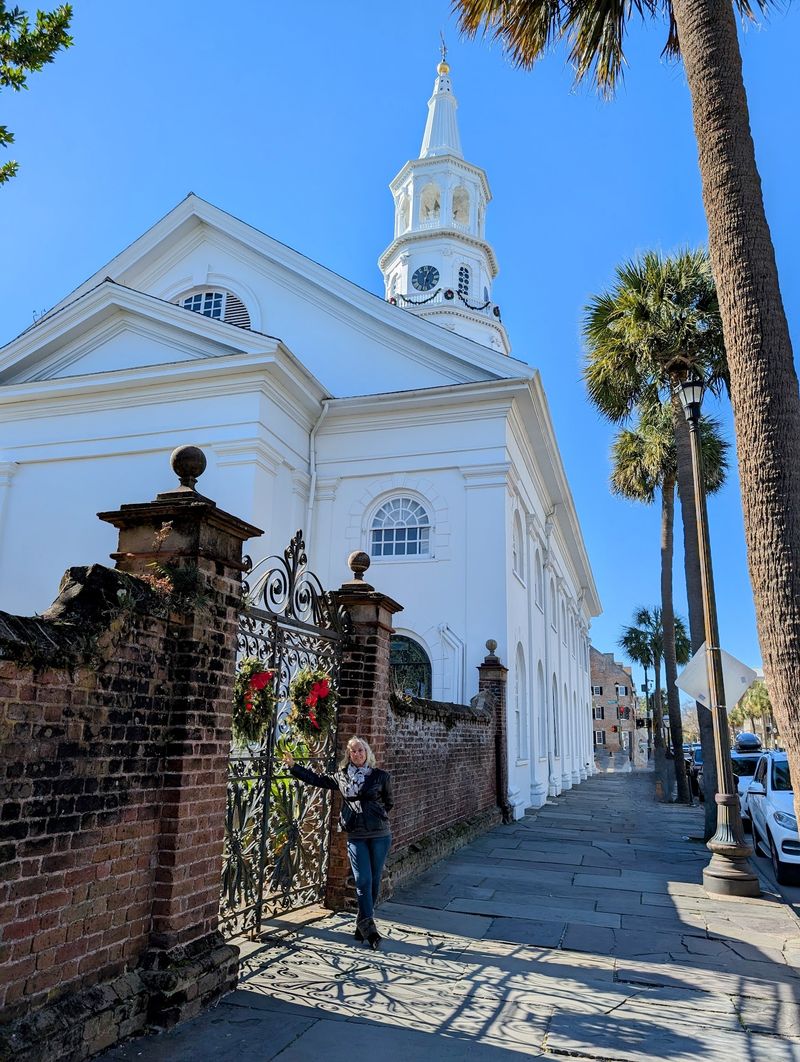
Their home is the oldest church building in the city, a white steeple that has guided ships into the harbor since the 1760s.
George Washington once sat in one of its pews, and two signers of the U.S. Constitution rest in its churchyard.
From their extraordinary journeys across the ocean to the centuries of history preserved inside the church, these remarkable bells tell a story unlike any other in Charleston.
A Corner Where History Rings
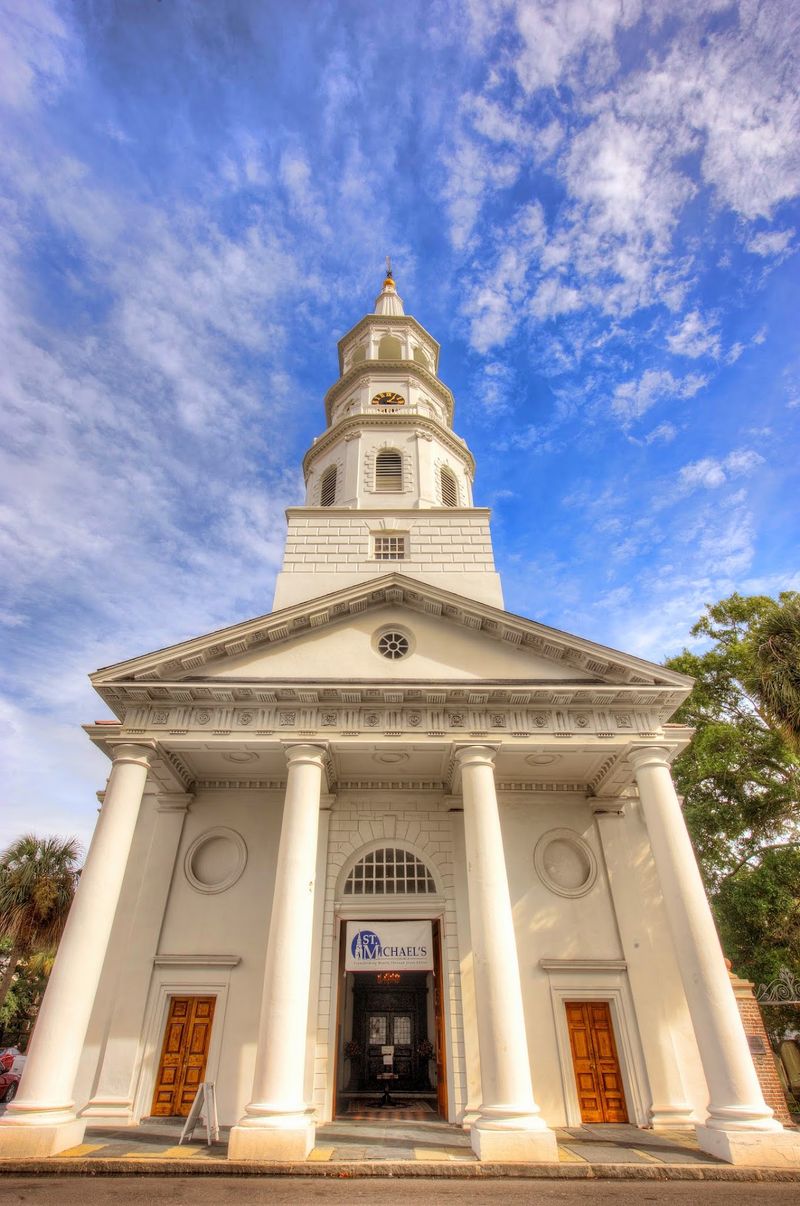
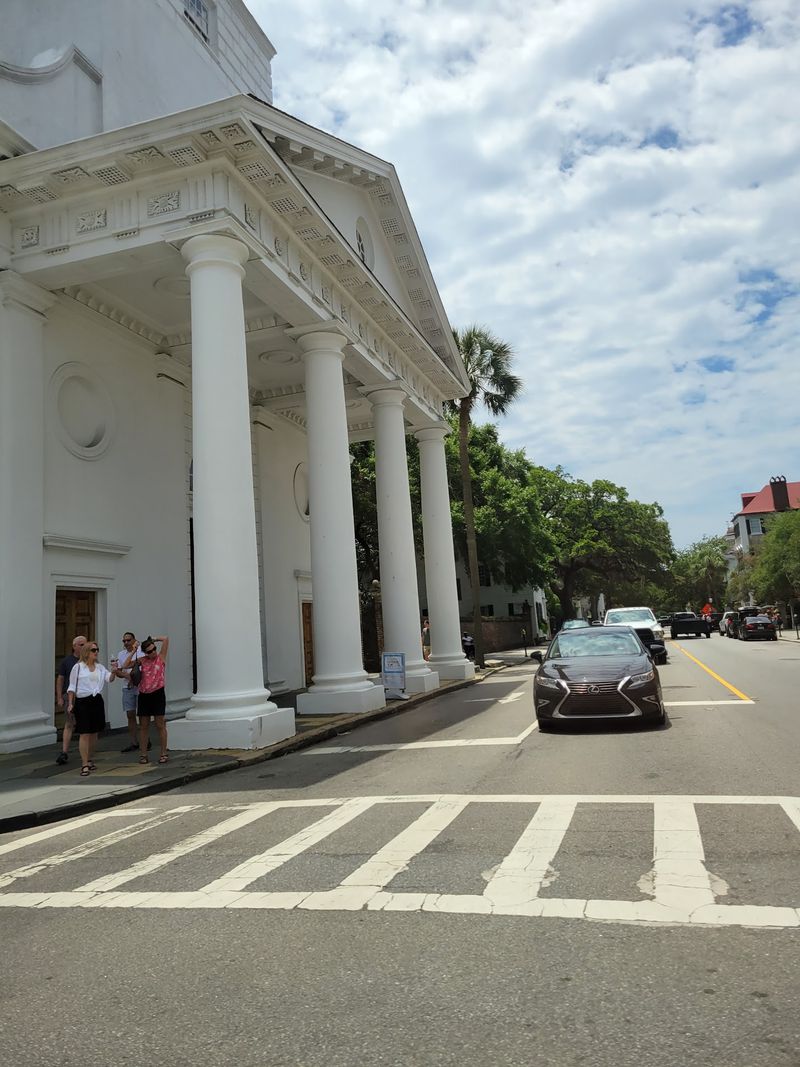
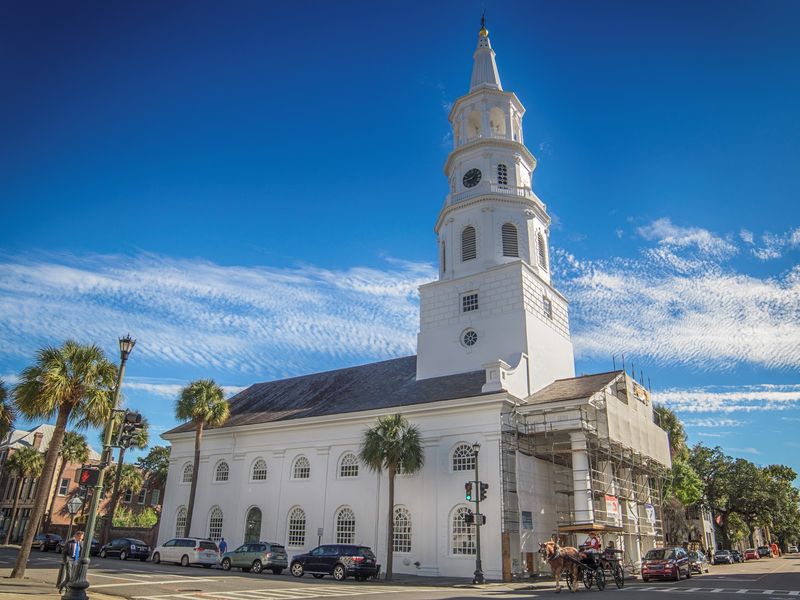
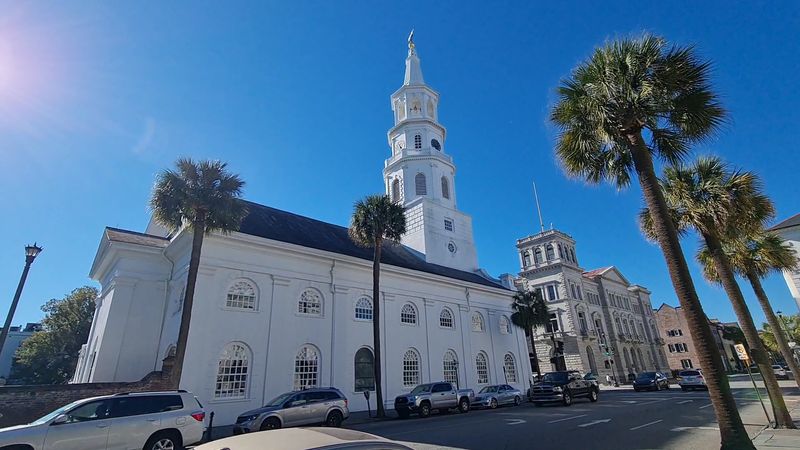
Four famous buildings share one intersection in downtown Charleston, and one of them rings. St. Michael’s Church stands at 71 Broad St, Charleston, SC 29401, at the corner of Meeting and Broad Streets.
Locals call this spot the Four Corners of Law. The church represents the law of God, while the other corners hold buildings for city, county, and federal law.
Construction on the church began in 1751. The building opened for services in 1761, which makes it the oldest surviving church building in Charleston.
It is also a National Historic Landmark, a title given only to places that matter to the whole country. That is a big honor for a building on a city street corner.
Horse carriages roll past here all day long. Drivers often slow down so passengers can hear stories about what happened at this intersection.
Today the church is Anglican. Its steeple still rises high above Broad Street, so finding it is easy.
Just look up, and the white tower points the way like a giant arrow.
Trip One: Made in London
Back in 1764, eight bells left England on a long ocean voyage. They had been cast at the Whitechapel Bell Foundry in London, one of the most famous bell makers in the world.
That first sailing counts as trip number one across the Atlantic. Back then, crossing the ocean took weeks, and heavy bronze bells were tricky cargo.
The bells arrived safely and were hung in the tall steeple of St. Michael’s. For the first time, the people of colonial Charleston heard a full ring of church bells.
Bells like these were not just pretty sounds. They marked the time, called people to services, and announced big news across town.
Here is a fun fact. The same London foundry also produced the famous Liberty Bell, originally cast in 1752 for the Pennsylvania State House in Philadelphia.
That gives Charleston’s bells a remarkable connection to another important piece of American history.
So the Charleston bells have a famous cousin up north. Unlike that cousin, though, these bells were just getting started on their travels.
Their passports, so to speak, were about to get a lot of stamps.
Trip Two: Taken During the Revolution
War changed everything in 1782. British troops had occupied Charleston during the American Revolution, and when they left, they took the bells of St. Michael’s with them.
Bronze was valuable, and the bells were seen as a prize. They were loaded onto a ship and carried back to England.
That marked trip number two across the ocean. The church steeple sat silent, and the people of Charleston missed their bells.
For a city that had grown used to hearing them every day, the quiet must have felt strange. Losing a famous landmark sound is a bit like a town clock suddenly going blank.
The story did not end there, thankfully. The bells were not melted down, which happened to many metal objects during wartime.
Instead, they waited in England for someone to bring them home. That waiting period set up one of the most surprising rescues in the history of the bells.
A businessman was about to step in with a smart plan.
Trip Three: Bought Back and Sailing Home
Good news traveled slowly in the 1700s, but it did arrive. A merchant in London found the bells and bought them, then shipped them back to Charleston.
This was trip number three. The bells returned to the city in 1783, the same year the Revolutionary War officially ended.
When they reached town, they went right back up into the steeple. People celebrated having their familiar ring again.
History books say the bells were brought back as a business deal, not a free gift. Even so, the people of Charleston were happy to pay to have them home.
Here is a takeaway for anyone who loves history. Objects that seem lost can sometimes come back, as long as someone cares enough to track them down.
Nobody in town expected the bells to leave again. For several decades, they rang over Broad Street without any drama at all.
The calm, sadly, would not last forever, because another war was waiting on the horizon.
A Civil War Hiding Spot
Charleston faced heavy shelling during the Civil War. To protect the bells, church leaders took them down and sent them inland to Columbia, South Carolina.
It seemed like a safe choice at the time. Columbia was far from the coast and away from the ships firing on Charleston.
Unfortunately, Columbia burned in 1865. The fire badly damaged the bells, cracking and warping the metal.
The steeple of St. Michael’s, meanwhile, made it through the war. It was painted black for a time so it would be harder to spot from the water.
Here is a lesson the bells teach well. Even the best plan cannot control everything, and sometimes the safe spot turns out to be the risky one.
After the war, the damaged metal pieces were gathered up. Church members were not ready to give up on their beloved bells.
They had a bold idea, and it involved another long ocean trip back to the very place where the bells were born.
Trips Four and Five: Recast and Returned
Broken pieces of bronze crossed the ocean in 1866. That was trip number four, heading back to the Whitechapel Bell Foundry in London.
The foundry recast the bells using the original molds and patterns. They also used the old metal, so the new bells kept a real piece of their history.
The recast bells returned to Charleston in 1868, bringing their long journey through war and destruction to a hopeful conclusion.
Workers hung them in the steeple again, and the city welcomed back its ring. After a war, a fire, and many years of trouble, the sound returned to Broad Street.
Many people consider this the most moving chapter of the whole tale. The bells came back made from their own original material.
Five crossings of the Atlantic is a big number for objects that weigh hundreds of pounds each. Most travelers today grumble about one long flight.
These bells handled five ocean voyages without a single complaint.
Survivors of Storms and Shakes
Few buildings anywhere have faced a list of trouble this long. St. Michael’s has made it through hurricanes, fires, an earthquake, and two wars.
The 1886 Charleston earthquake was one of the strongest ever recorded on the East Coast. The church steeple sank several inches and cracked, but it stayed standing.
Repairs followed, and the bells kept ringing. In 1989, Hurricane Hugo hit Charleston hard and damaged the steeple again.
After that storm, the bells went in for more care. They were sent back to the same London foundry for tuning and new fittings in the 1990s, adding even more ocean miles to their record.
Here is a practical point for travelers. When you look at the steeple today, you are seeing the result of many rounds of careful repair work.
Every crack fixed and every bell rehung shows how much this community values the building. The church does not just stand.
It keeps getting back up, again and again.
The Art of Change Ringing
Most church bells simply swing and ring. The bells at St. Michael’s are rung in a special English style called change ringing.
In change ringing, each ringer pulls a rope connected to one bell. The team rings the bells in different orders, following patterns instead of a regular song.
It takes practice, teamwork, and a good memory. Ringers have to count carefully and watch each other closely.
Charleston has a group of volunteer ringers who keep this tradition alive. Their work turns a set of old bells into a living piece of history.
Here is a cool detail. Change ringing patterns are based on math, so some ringers think of it as a puzzle as much as music.
Hearing the bells on a Sunday morning near Broad Street is a treat for anyone downtown. Plan a walk nearby around service time for your best chance.
You might find yourself counting along and wondering how the ringers keep track of it all.
Where Washington Sat
On May 8, 1791, the most famous man in America came to church here. President George Washington attended a service at St. Michael’s during his tour of the South.
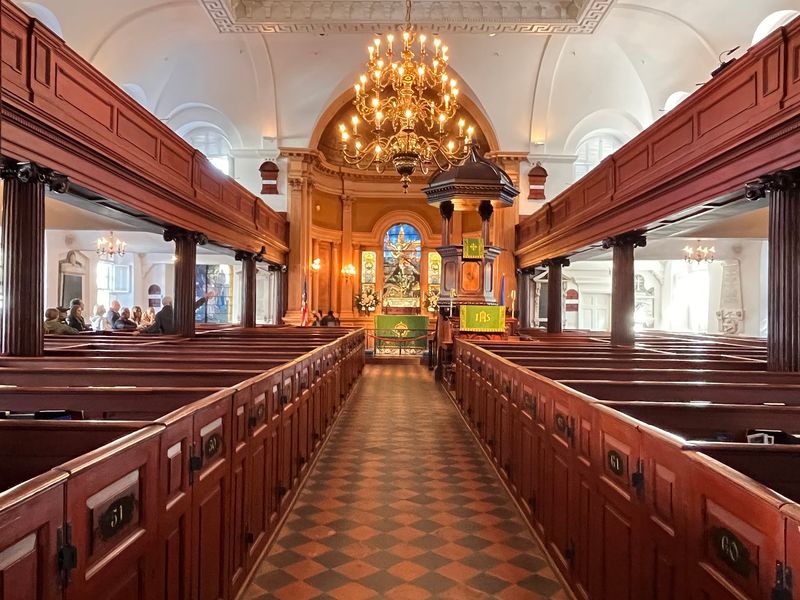
He sat in a cedar box pew near the front. That pew is still in the church today, and people love seeing it in person.
Box pews were common in colonial churches. Families rented or owned them, and the walls around each pew helped block drafts.
Washington was not the only notable guest. The Marquis de Lafayette and Robert E.
Lee also worshipped in this building over the years.
Here is a tip for history fans. Ask a guide or church helper to point out the Washington pew, since it can be easy to miss among all the others.
Standing near it is a quiet thrill. It connects a simple wooden seat to one of the biggest names in American history.
Not bad for a piece of furniture that is more than two centuries old.
Windows Worth the Detour
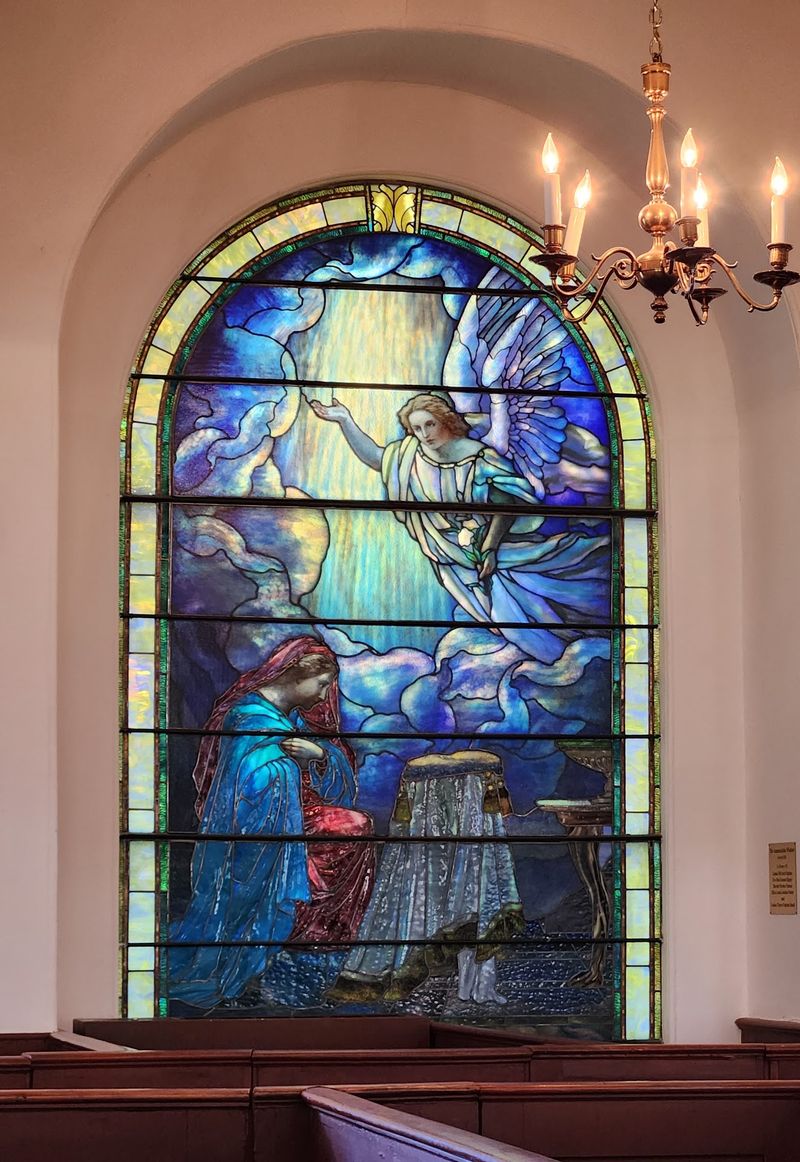
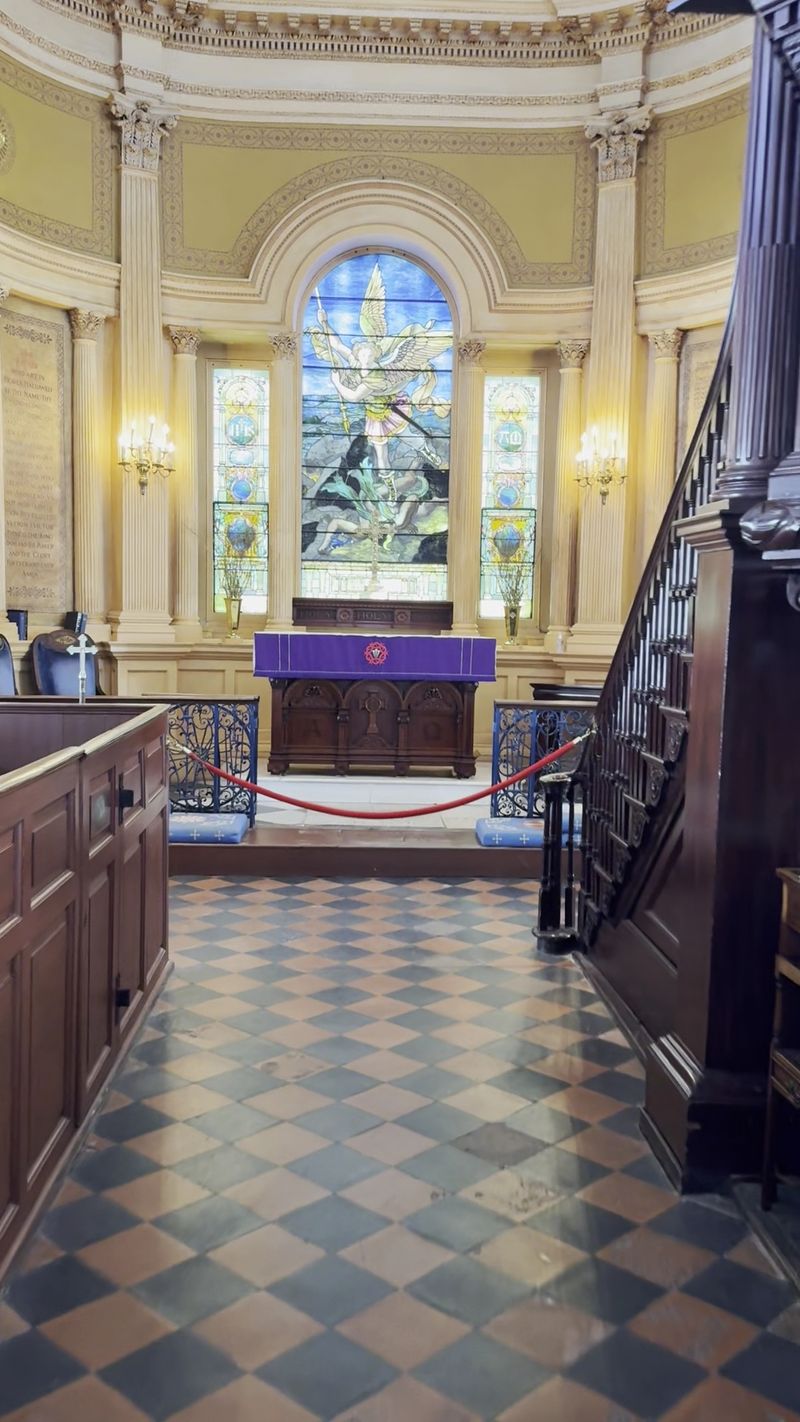
Art lovers have a special reason to step inside. The church holds four stained glass windows made by the Tiffany company of New York.
Tiffany windows are famous for their rich colors and detailed glass work. One of the most well known windows here shows Saint Michael, the church’s namesake.
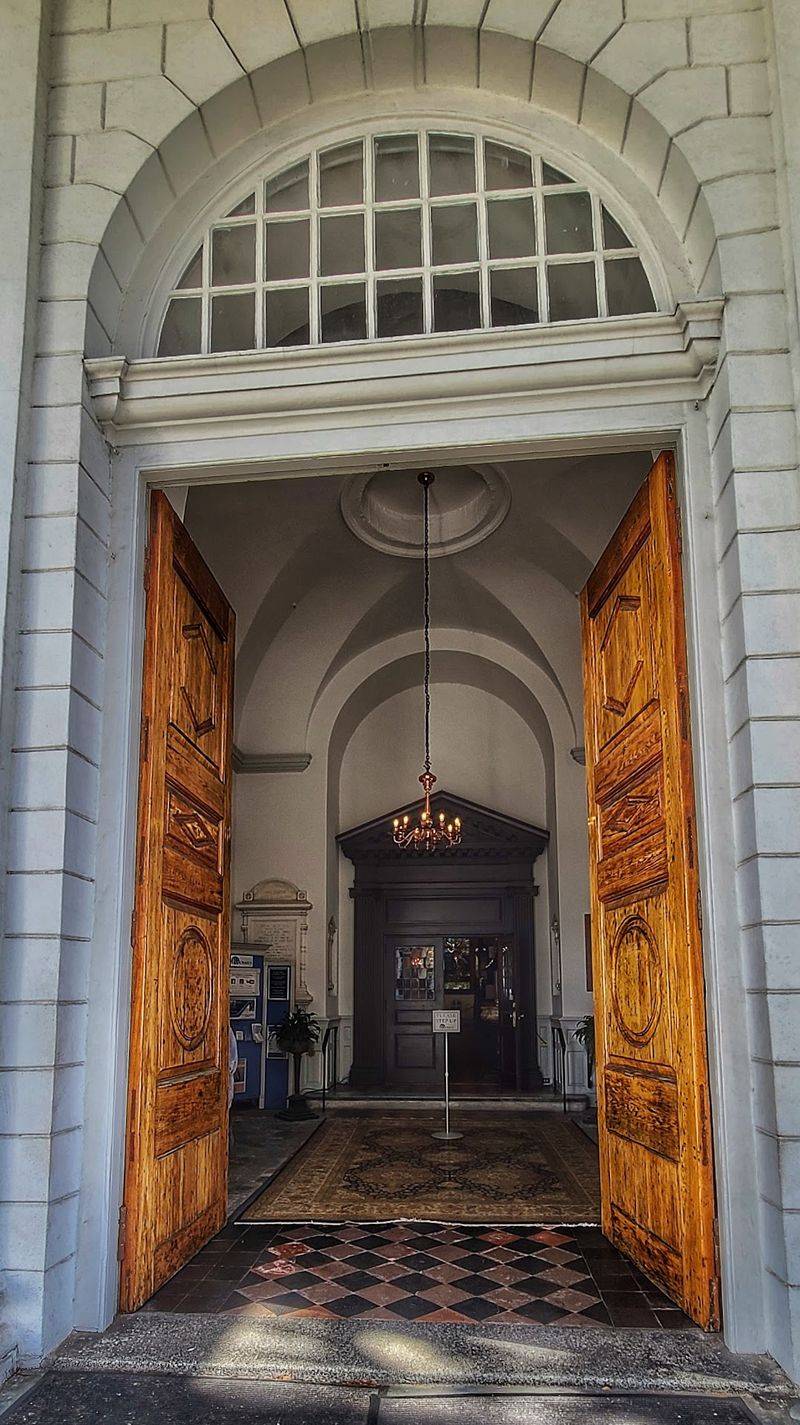
The sanctuary also features a classic colonial design. White walls, tall windows, and a raised pulpit give the space a calm and orderly look.
A large pipe organ fills the back of the church as well. Sometimes an organist is practicing during the day, which is a lucky bonus for anyone touring.
Here is some practical advice. Bring a camera or phone, but be respectful if a service or event is happening.
The building feels like a museum that still works as a church. People come for the history and often stay longer for the beauty of the details.
Give yourself enough time to look closely, because the small touches tell their own stories.
A Churchyard of Founders
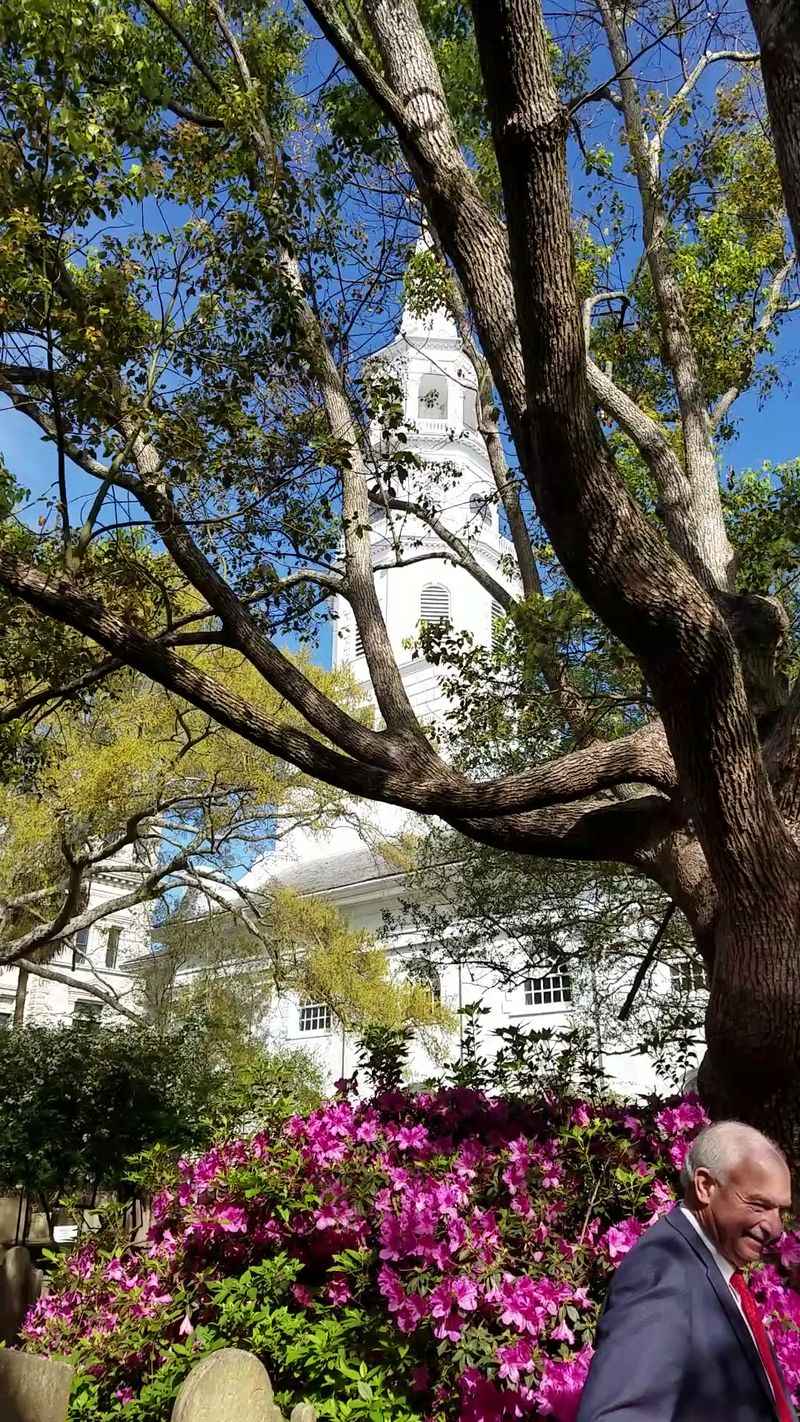
Two men who signed the U.S. Constitution rest just outside the church walls.
Charles Cotesworth Pinckney and John Rutledge are both buried in the St. Michael’s churchyard.
Rutledge served as governor of South Carolina and as a Chief Justice of the United States. Pinckney was a general, a diplomat to France, and a presidential candidate.
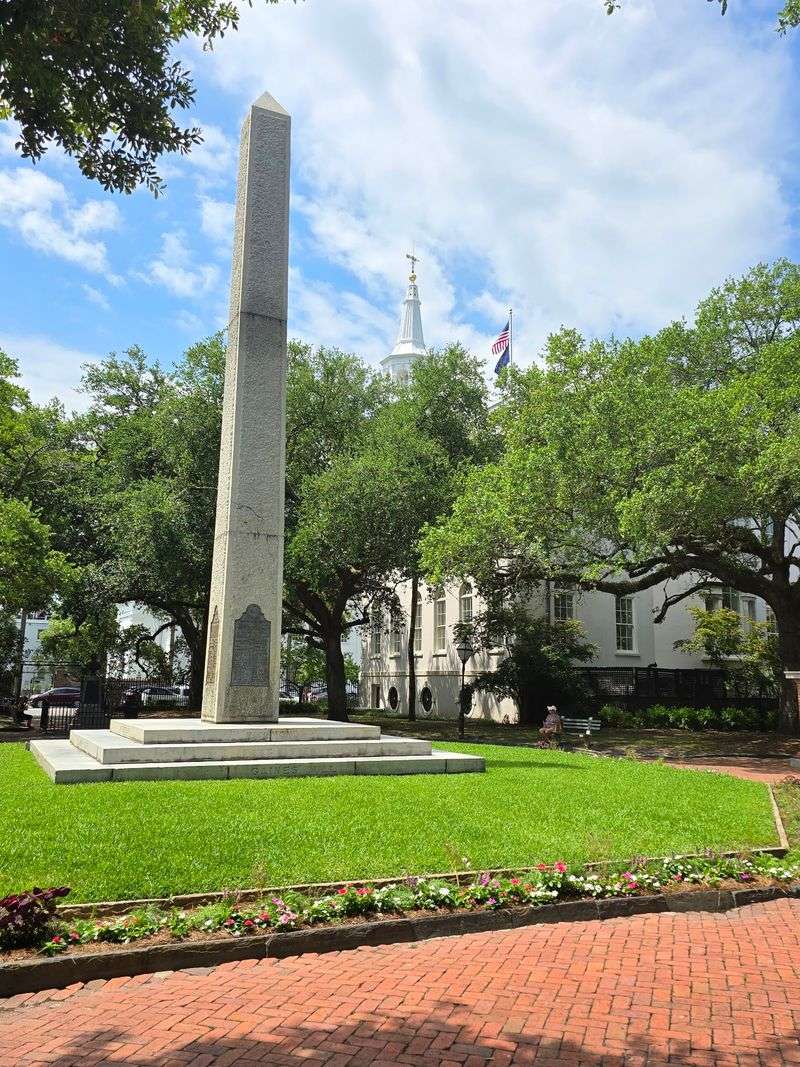
The churchyard sits beside the building with brick paths winding between old stones. Some markers stand right up against the church walls.
The grounds are well kept, with plants growing along the walkways. It is a peaceful place for quiet reflection in the middle of a busy city.
Here is an important tip. Stay on the paths and avoid stepping on the graves, since this is a respected place.
Many of the old stones carry heartfelt messages from families. Reading them gives a real sense of Charleston’s past.
Enter through the iron gate off Meeting Street, and take your time exploring the history tucked between the walls.