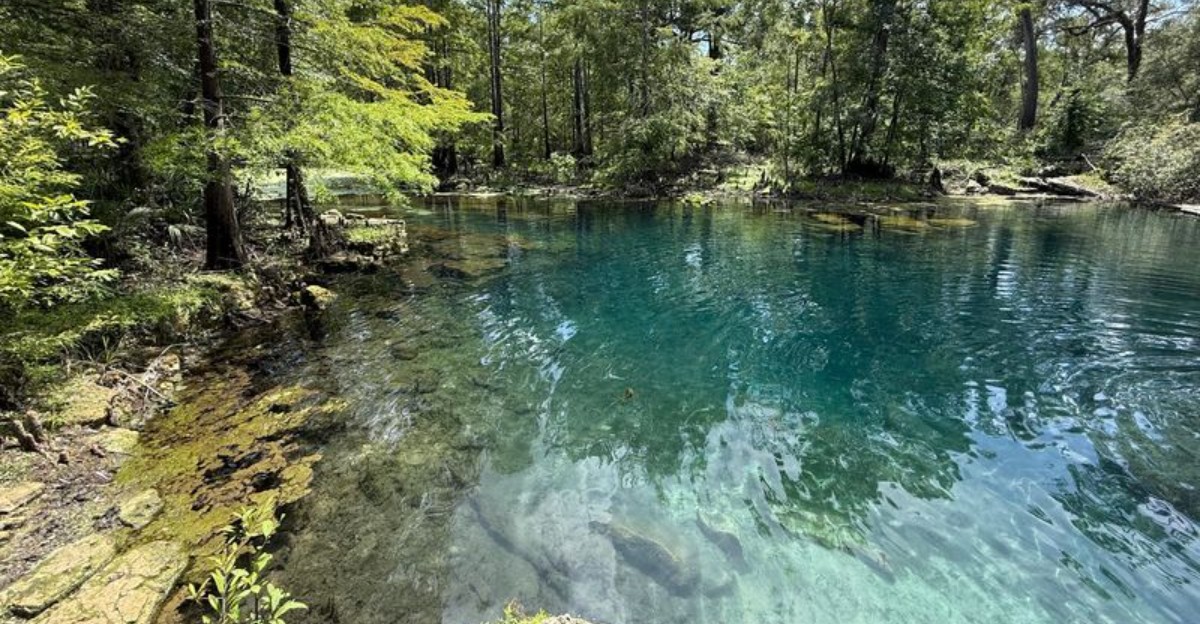
Far from Florida’s busy beaches, a quiet forest near Live Oak hides a world that feels almost secret.
Wes Skiles Peacock Springs State Park draws trained cave divers from many places because its underwater passages form one of the longest mapped cave systems in the state.
Above the water, visitors find clear springs, short trails, wildlife, picnic spots, and a calm Old Florida feeling that is getting harder to find.
Whether you come to watch divers prepare their gear, swim where conditions allow, or walk among sinkholes and trees, this park shows how amazing and fragile Florida’s springs really are.
A Hidden Maze Beneath the Trees
Under the quiet woods, Peacock hides a watery puzzle that pulls expert cave divers from far beyond Florida.
The park protects a huge underwater cave system, with passages that twist through limestone like secret hallways below the forest floor.
That hidden world is the reason many visitors know the name Wes Skiles Peacock Springs State Park.
The site sits at 18532 180th St, Live Oak, FL 32060, and it is a Florida state park with a strong reputation among trained divers.
It is rated 4.7 stars on Google from hundreds of reviews, which says a lot for a place with limited facilities and a very natural feel.
The park is usually open from 8 AM to 8 PM, but calling ahead at +1 386-776-2194 is smart before a long trip.
Non-divers can still enjoy watching the careful routine of cave divers from safe areas.
Gear checks, maps, lights, and air plans show how serious this sport is.
Bring patience, respect posted rules, and remember that the best views may be above water, where the forest gives the springs their quiet stage.
Why Cave Divers Treat Peacock Like a Bucket List Stop
Ask a cave diver about Peacock, and you may see their face light up before they answer.
The park is famous because its underwater passages are long, complex, and tied to Florida’s great aquifer system.
For certified cave divers, that combination offers challenge, beauty, and a serious lesson in planning.
Cave diving here is not casual swimming with tanks.
Divers need special training, proper lights, backup gear, guide lines, and strong knowledge of safety rules.
Open water scuba certification alone is not enough for the cave areas, and that rule protects people from danger.
The passages can be dark, tight, and confusing if someone enters without the right skills.
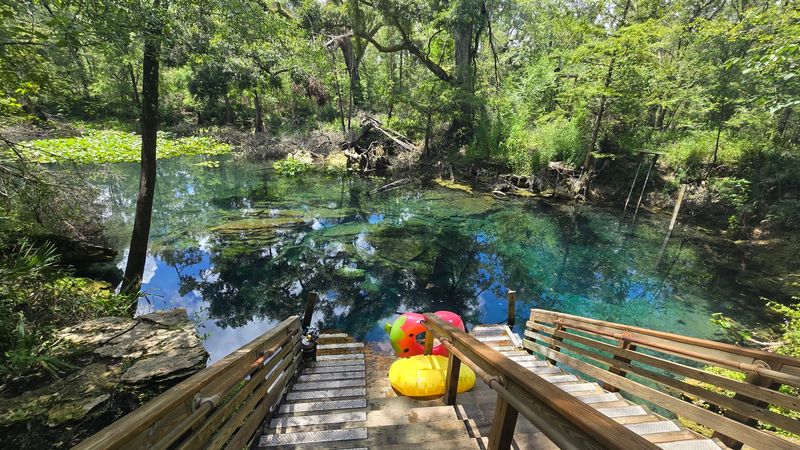
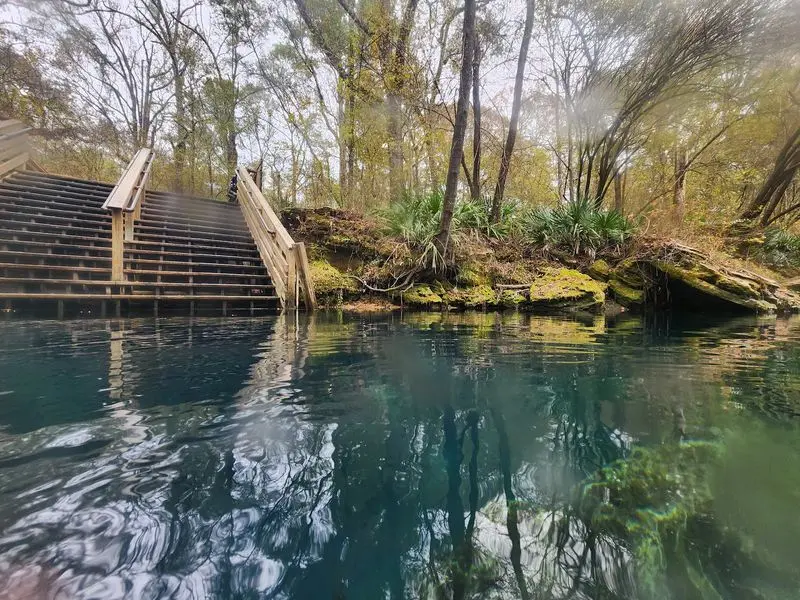
Visitors often notice benches, tables, changing space, steps to the springs, and pavilions that help divers organize heavy equipment.
Reviews mention that the park is especially popular with cave divers, so parking can feel tight on busy days.
Arrive early, give divers room to work, and never touch staged gear.
Watching the preparation can be almost as interesting as the caves themselves.
Cold Spring Water and Changing Conditions
That first toe in the water can wake you up faster than a loud alarm clock.
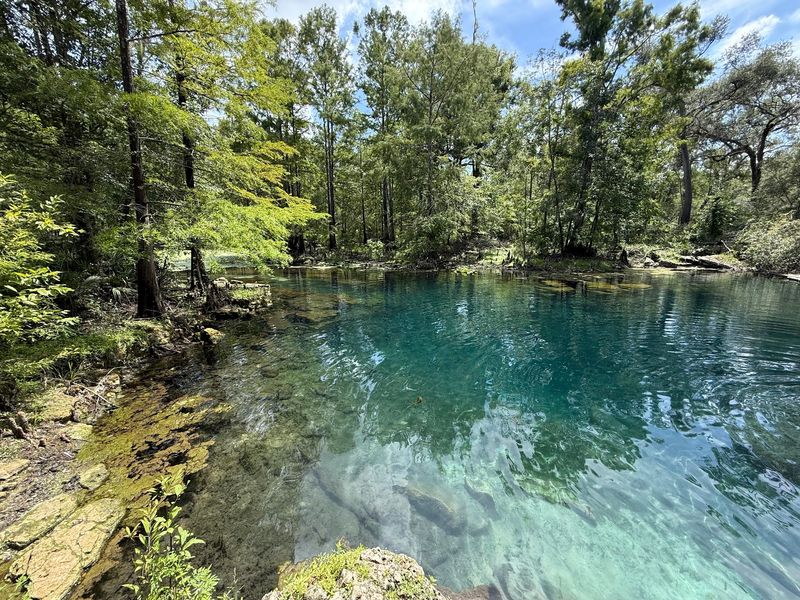
Peacock’s spring water stays cool, and many visitors describe it as refreshing, chilly, and perfect after a warm walk.
On clear days, fish glide through the blue-green water like tiny silver arrows.
Swimming and snorkeling can be wonderful, but conditions change often.
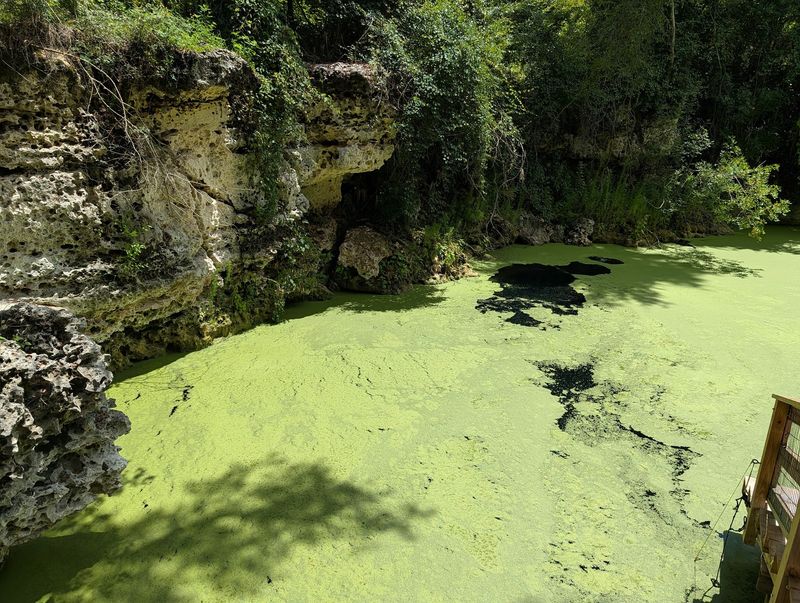
Reviews mention duckweed, dark water, low water, murky days, and times when the Suwannee River can affect spring visibility.
A pool that looks inviting in photos may look different after rain, drought, or river rise.
Before packing masks and towels, call the park or check the official Florida State Parks website for current updates.
Only certain spring areas are meant for swimming, while other areas require cave diving certification.
Respect every sign, even if the water looks calm.
Wear water shoes because entries can be rocky or slippery, and bring goggles if swimming is allowed.
A small waterproof bag helps keep keys and phones safe.
The springs are beautiful, but they are also natural, wild, and always changing.
Trails, Sinkholes, and an Old Florida Walk
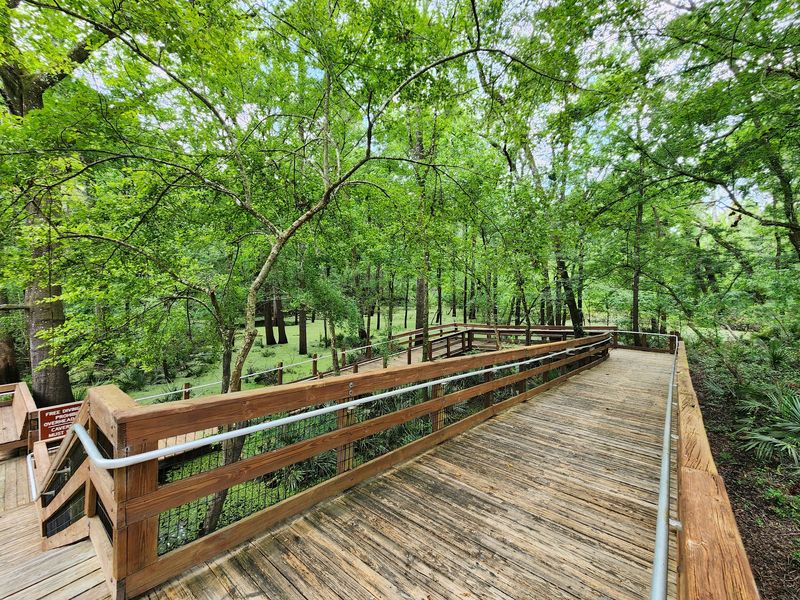
Not every adventure at Peacock needs fins, tanks, or a mask.
The trails give walkers a slower way to understand the land above the caves.
Forest paths lead past sinkholes, spring basins, signs about geology, and pockets of shade that feel far from town.
The interpretive trail is a favorite for visitors who want a short hike with meaning.
Signs explain how water moves through limestone and helps form the aquifer below.
That matters because these springs connect to Florida’s drinking water supply.
When you stand beside a sinkhole, you are looking at part of a much larger natural system.
Trail conditions can vary, especially after storms or hurricane cleanup.
Some reviewers mention clear paths, while others note debris, narrow spots, or fewer markers farther from the trailhead.
Wear sturdy shoes, carry water, and bring bug spray because mosquitoes can be bold here.
A slow walk is best.
Look for armadillos, birds, turtles, and unusual trees.
The quiet is part of the fun, and the trail turns the park into an outdoor classroom.
Wildlife Makes the Springs Feel Alive
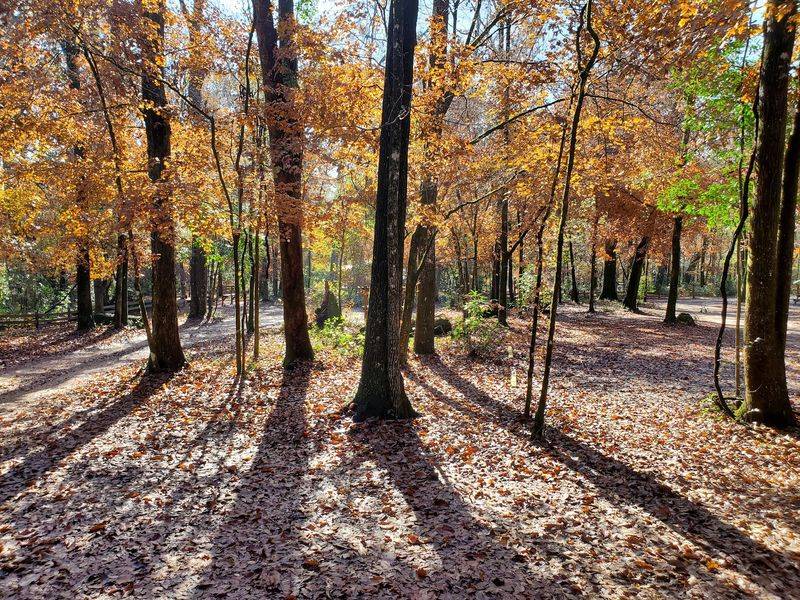
A rustle in the leaves may be your first clue that Peacock has more residents than visitors.
Armadillos, birds, fish, turtles, insects, and sometimes alligators share this watery home.
The park feels alive because the forest and springs work together like one busy neighborhood.
Wildlife viewing is best when people stay quiet and move slowly.
Fish are easy to spot when the water is clear, and shaded trails can reveal animals crossing the path.
One visitor review even mentioned a small gator near a swimming area, which is a good reminder that Florida waters are natural habitats.
Give every animal space, never feed wildlife, and leave if an animal is too close for comfort.
Vegetation also shapes the experience.
Duckweed may cover parts of the surface, trees cool the trails, and plant life helps protect the banks from erosion.
Bring binoculars if you enjoy birds, and keep snacks sealed so ants and raccoons do not join your picnic.
The best wildlife moments usually happen when you are patient, observant, and willing to pause.
Simple Facilities, Smart Planning
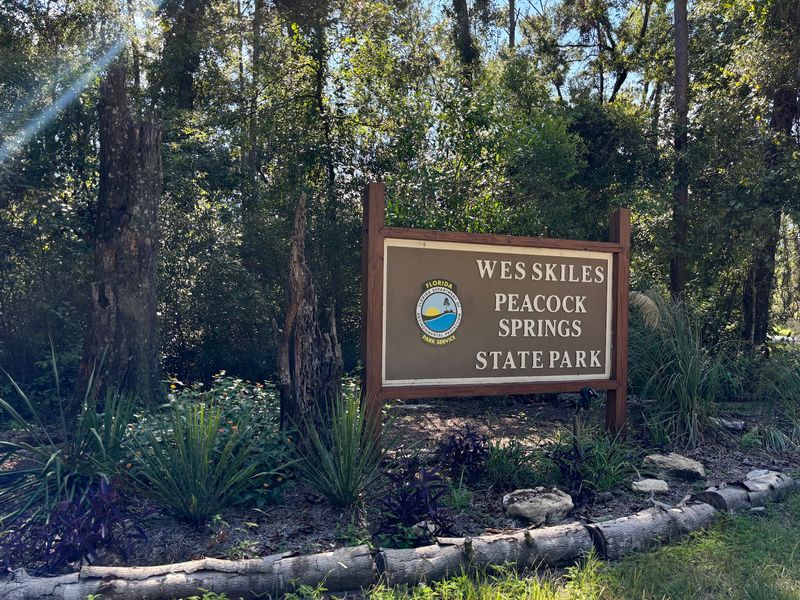
Peacock feels wonderfully low-key, but that also means visitors should plan like pros.
Facilities are simple compared with larger parks, and the natural setting is part of its charm.
You come here for springs, caves, trails, and quiet, not a resort-style setup.
Reviews mention picnic tables, covered areas, diver prep benches, changing space, steps to the water, and portable toilets.
Some visitors also mention an honor payment system or QR code, but bringing cash is a wise backup.
Parking can be limited, especially when cave divers arrive with trucks, tanks, and gear.
Getting there early helps, and patience goes a long way on narrow roads.
Pack bug spray, drinking water, towels, water shoes, sunscreen, snacks, and a small trash bag.
Cell service may not be perfect, so save directions before you leave town.
Some mapping apps have caused confusion for visitors, so follow brown state park signs when you get close.
Check the official website for alerts about water clarity, closures, or storm damage.
A prepared visitor has a much better day.
The Wes Skiles Name Adds Meaning
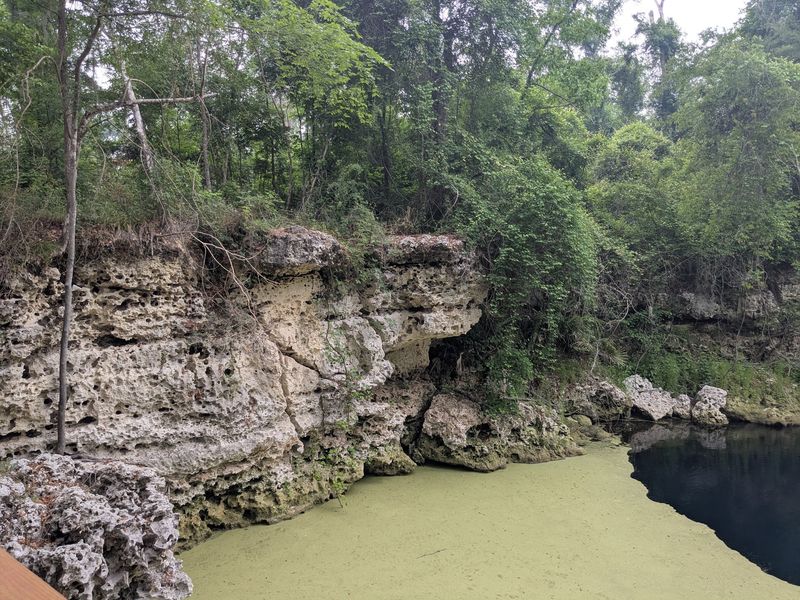
Names can turn a pretty place into a story, and this park carries a meaningful one.
Wes Skiles was a noted Florida cave diver, explorer, photographer, and filmmaker who helped people understand underwater caves.
His work brought attention to springs, aquifers, and the hidden places most people never see.
Renaming the park for him connects the landscape to a real person who cared deeply about it.
That matters because cave systems are not just thrilling playgrounds.
They are parts of a water network that supports people, wildlife, farms, and towns.
When visitors learn that link, the springs feel less like scenery and more like a shared responsibility.
A good visit includes curiosity and care.
Read signs, stay on marked paths, and avoid stirring up banks or damaging plants.
Never leave trash, fishing line, food wrappers, or broken gear behind.
Reviews from locals remind visitors that springs help recharge water systems and deserve respect.
The park’s beauty is powerful, but its message is simple.
Enjoy the wonder, then help keep it clean.
Best Tips for a Smooth Peacock Springs Visit
Here is the friendly truth: bug spray may become your best travel buddy at Peacock.
Several visitors joke about mosquitoes, and they are not wrong.
A small can in your bag can turn a rushed hike into a relaxed afternoon.
Start by checking conditions before you go.
Water level, duckweed, river backup, and visibility can change the experience for swimmers, snorkelers, and divers.
If you are not cave certified, stay out of restricted cave areas.
If you plan to swim, bring goggles or a snorkel mask so you can enjoy the fish and spring colors when the water is clear.
Water shoes help on rocky steps and slick edges.
Arrive early for easier parking, especially on weekends or holidays.
Bring cash, snacks, plenty of water, and a bag for your trash.
Keep your group small and calm near the water because divers need space and wildlife needs peace.
Take photos, but do not block steps or prep tables.
Leave with everything you brought, plus a good story about one of Florida’s most unusual hidden worlds.