The cozy cabins at this park started life as U.S. Army barracks.
Young workers in the 1930s turned them into rustic getaways, and folks still book them today.
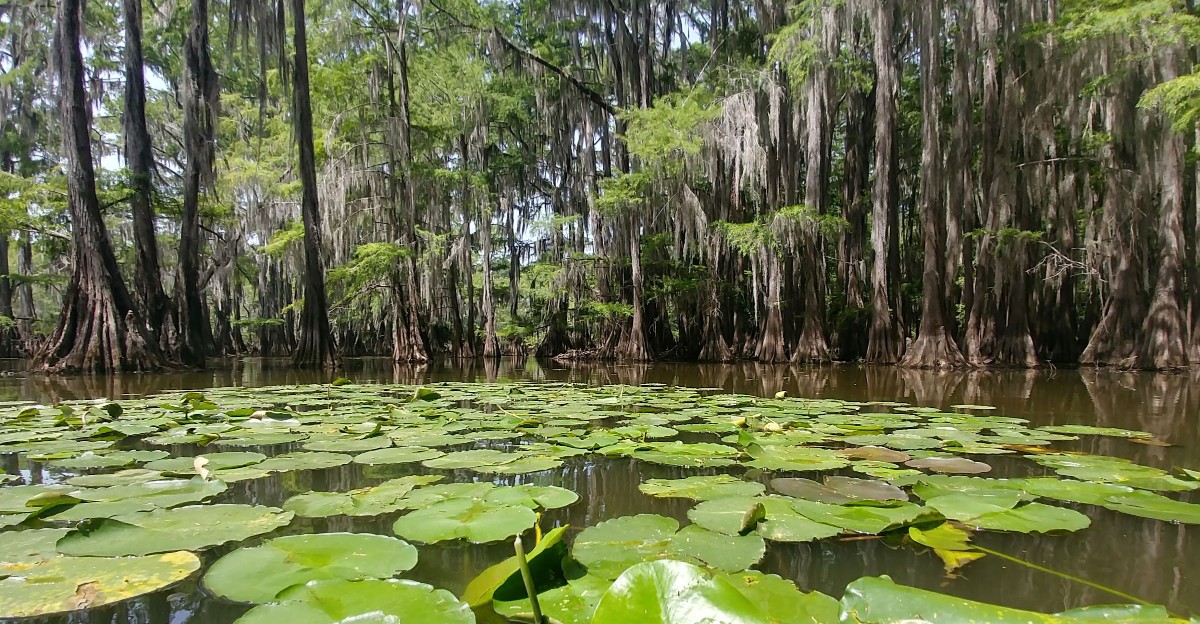
That detail alone hooked me. Then I learned the water outside is a maze of bayous lined with bald cypress trees.
Spanish moss hangs from the branches like gray curtains.
This corner of East Texas feels wildly different from the rest of the state.
Alligators share the backwaters with herons and turtles.
Paddling trails twist through it all for miles.
I like how the whole place seems to ignore the modern world.
Old stone work, quiet ponds, and ancient trees set the mood.
So how does a swamp this strange end up a short drive from a regular highway?
Those Moss-Draped Cypress Trees Steal The Show Instantly
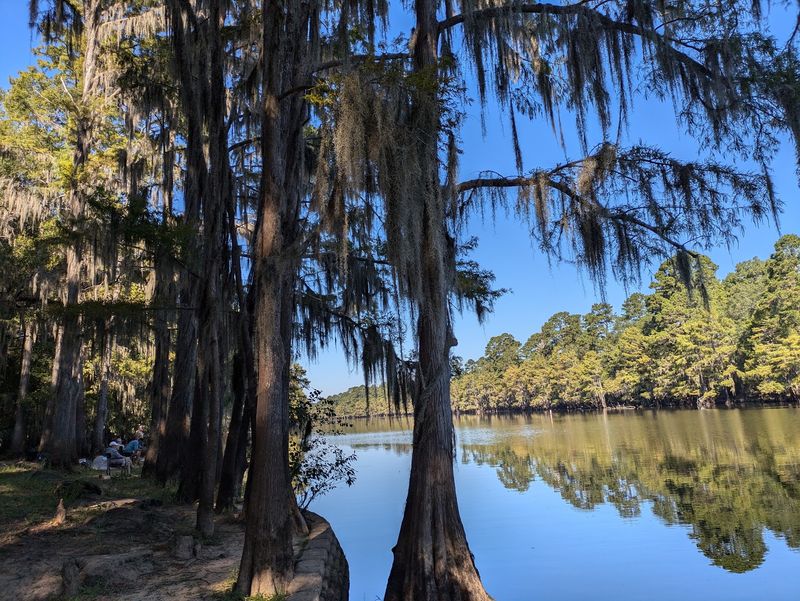
Spanish moss drips from towering bald cypress trees at Caddo Lake State Park. The scene looks borrowed from an old storybook, and it hits you fast.
The park sits along Big Cypress Bayou in East Texas. Its waters form a maze of bayous, wetlands, and quiet backwaters.
Cypress trees grow right out of the water here. Their wide, flared trunks look sturdy enough to hold up the sky.
The moss isn’t actually moss, by the way. It’s a plant that hangs from branches and soaks up moisture from the air.
Together, the trees and moss create a shady, hushed world. Sunlight filters through in thin beams that shift across the dark water.
Bring a camera, even if you never take photos. You’ll want proof that a place like this exists in Texas.
Early mornings can be especially pretty for pictures. The light is softer, and the water often stays calm and glassy.
Seasons change the look too. Spring and summer bring bright green needles, while fall turns the cypress a rusty orange-brown.
Every visit can feel a little different. That’s a big reason folks keep coming back to see it again.
Grab A Paddle And Get Happily Lost In A Watery Maze
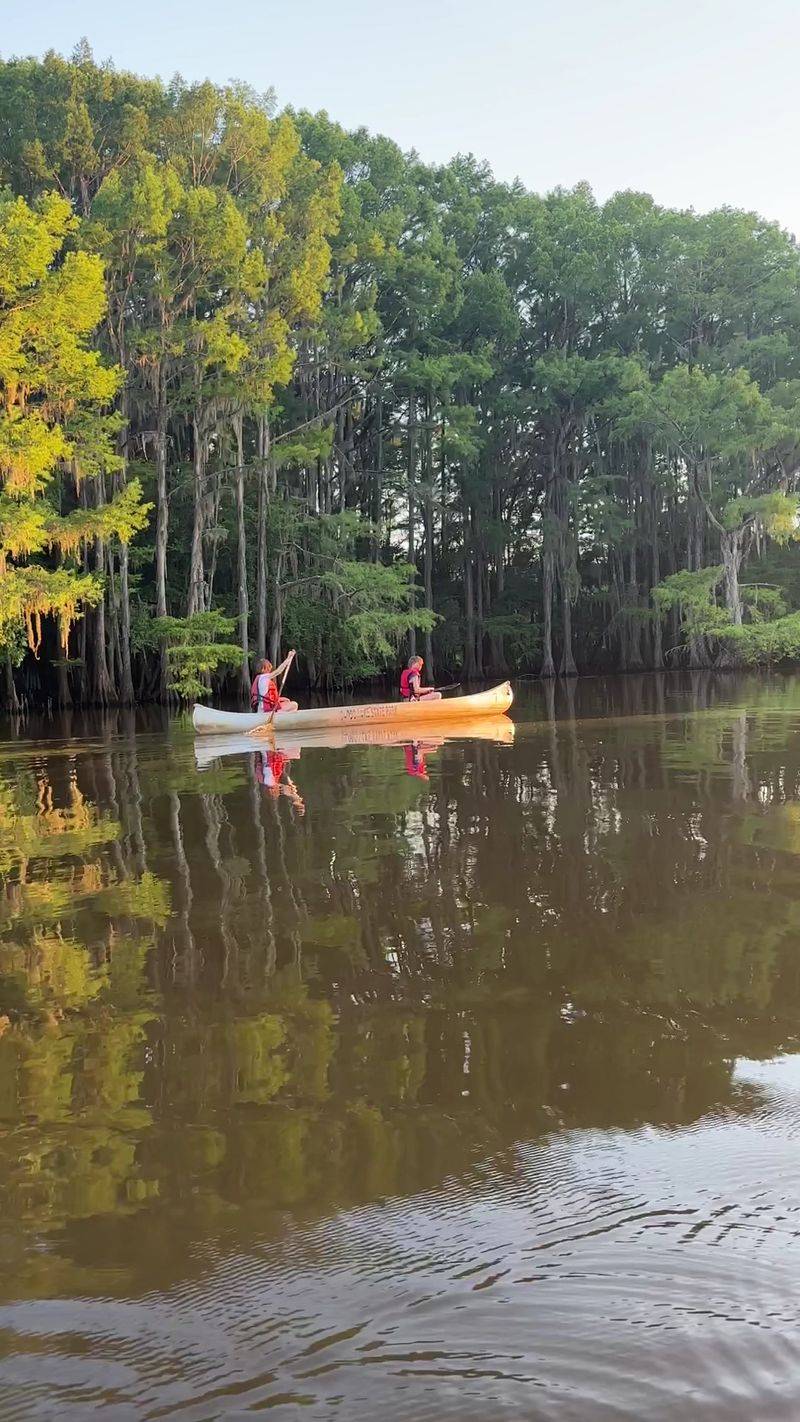
Over 50 miles of marked paddling trails wind through the Caddo Lake area. That’s a lot of bayou for one canoe.
Canoes and kayaks are the best way to feel this swamp up close. You can rent them at the park office, which makes planning simple.
Saw Mill Pond is a calm starting point for beginners. The water there is sheltered, so new paddlers can find their rhythm.
Feeling bolder? The famous Hell’s Half Acre Paddling Trail is one of the area’s well-known routes.
Despite the dramatic name, it’s a marked path through gorgeous cypress-lined water.
Bring a map before you push off. Cell service can be spotty out on the water, and every cypress starts looking like its twin.
Sunscreen, water, and bug spray belong in your boat too. The swamp is lovely, but mosquitoes clearly agree.
Rangers sometimes lead guided paddles through the park. Joining one helps you learn what you’re seeing while someone else handles directions.
Paddle slowly and keep your eyes on the banks. Turtles, birds, and other critters often appear when you stop rushing and let the boat drift.
Sleep Inside A Piece Of 1930s Handiwork
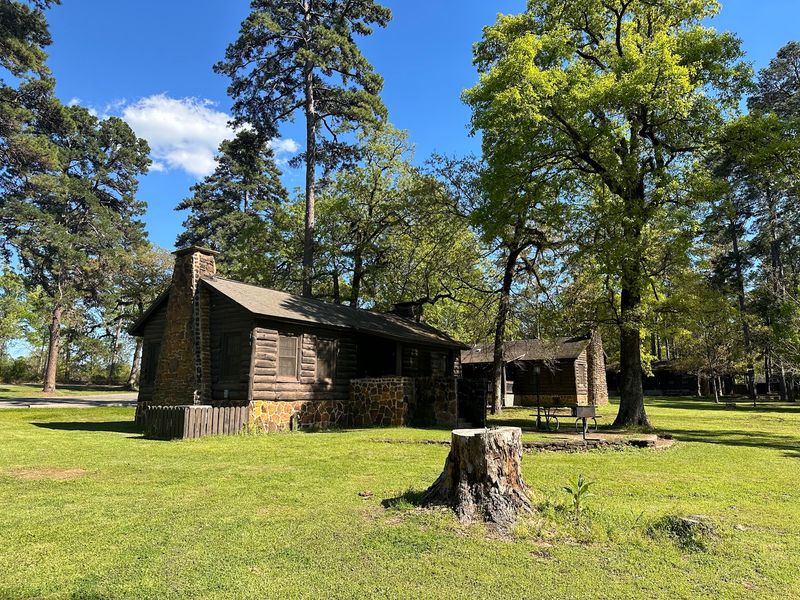
Nine historic cabins wait in the woods here, and each one carries a story. The Civilian Conservation Corps built them during the 1930s.
Here’s the twist. Workers converted the cabins from former U.S.
Army barracks, giving old buildings a brand-new purpose.
CCC Companies 889 and 857 developed Caddo Lake State Park between 1933 and 1937. Their crews also built trails, bridges, entrance portals, and Park Road 2 itself.
Staying in one of these cabins feels like sleeping inside a history lesson. Just a much comfier lesson, with a bed instead of a desk.
Two of the cabins are ADA accessible. That’s helpful news for families who need easier access during their stay.
Plan ahead if a cabin is your goal. Reservations are highly recommended, and these spots are a popular pick.
One date to keep in mind is Christmas Day. The cabins and the group recreation hall close annually on that holiday.
The rest of the year, the cabins offer a peaceful base camp. Wake up, grab coffee, and the cypress swamp is only a short stroll away.
Tents, RVs, And Screened Shelters All Get A Spot Here
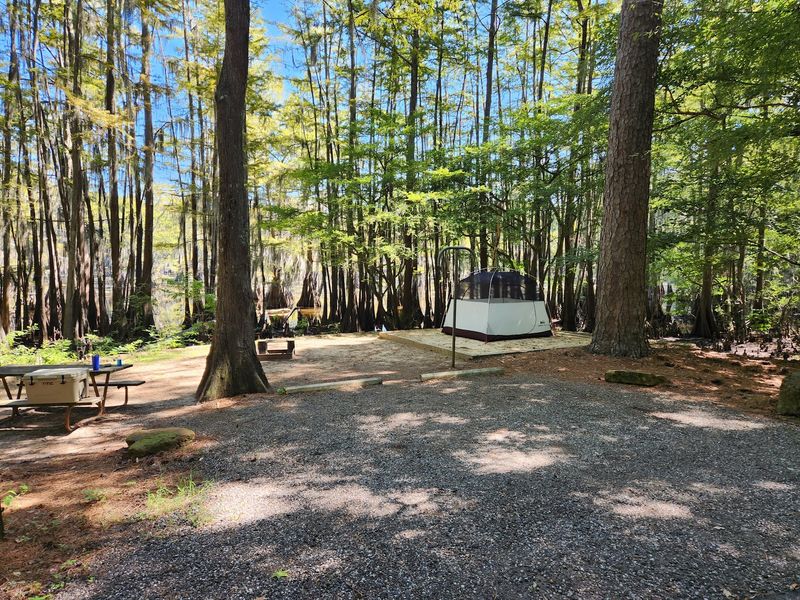
Campers get plenty of choices at this swampy getaway. The park offers 46 campsites ranging from water-only sites to full hookups.
RV travelers can settle onto sites with more utilities. Tent campers can keep things simple and closer to the ground.
Screened shelters sit somewhere in the middle. They give you walls of mesh, which feels very wise in mosquito country.
The park lives at 245 Park Road 2, Karnack, TX 75661. Write that down, because there’s no entrance gate to guide you in.
Office hours usually run from 8:15 a.m. to 4:45 p.m. daily, though times can vary. Arriving late?
Call the park by 4:45 p.m. on your arrival day.
Pay attention to fire rules before you pack. A burn ban prohibits wood and charcoal fires, allowing containerized fuel stoves for cooking only.
Harrison County also has an emerald ash borer quarantine. That means you shouldn’t haul firewood in from elsewhere.
Buy firewood near where you’ll burn it, when fires are allowed. Your future campfire and the local trees will both thank you.
Leashed pets are welcome in the park, but they are not allowed in or around the cabins or group recreation hall.
Short Trails Lead Straight Into The Forest’s Best Secrets
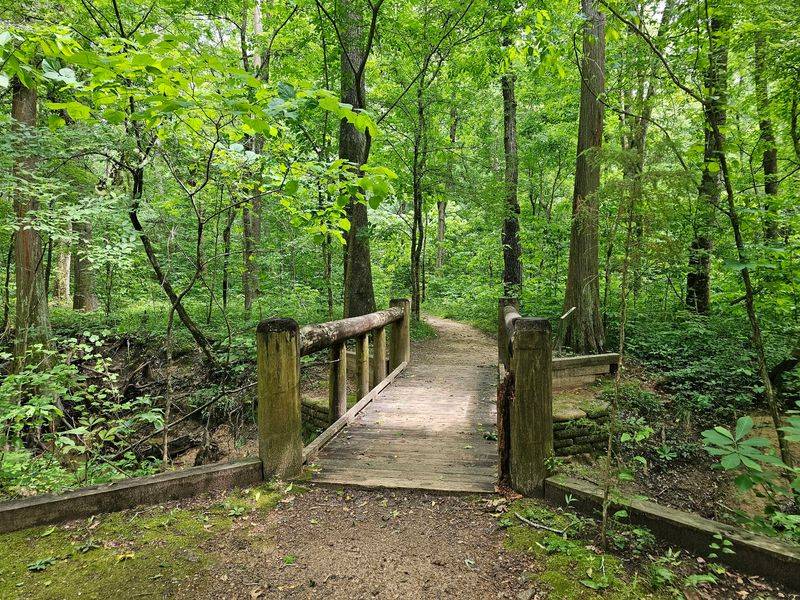
About 2.5 miles of trails loop through the park. That’s short enough for little legs and sweet enough for anyone.
The Caddo Forest Trail is a favorite for good reason. It leads to a historic CCC pavilion built during the park’s early days.
Other paths include the Nature Trail, Pine Ridge Trail, Cypress Swamp Trail, and Lakeshore Connector Trail. Each one shows off a slightly different slice of the landscape.
You’ll move between swampy lowlands and taller pine woods. The change in scenery happens quickly, which keeps walks interesting.
Trails here won’t take all day. That leaves plenty of time for paddling, fishing, or simply sitting under a shady tree.
Wear shoes that can handle a little dirt. Pack bug spray too, since forest shade attracts more than hikers.
Geocaching is another fun option around the park. Hunting for hidden containers turns a simple walk into a treasure game.
Families with kids can mix trails with the on-site playground. Burn some energy in the woods, then let the swings finish the job.
Over 70 Kinds Of Fish Are Waiting Under That Dark Water
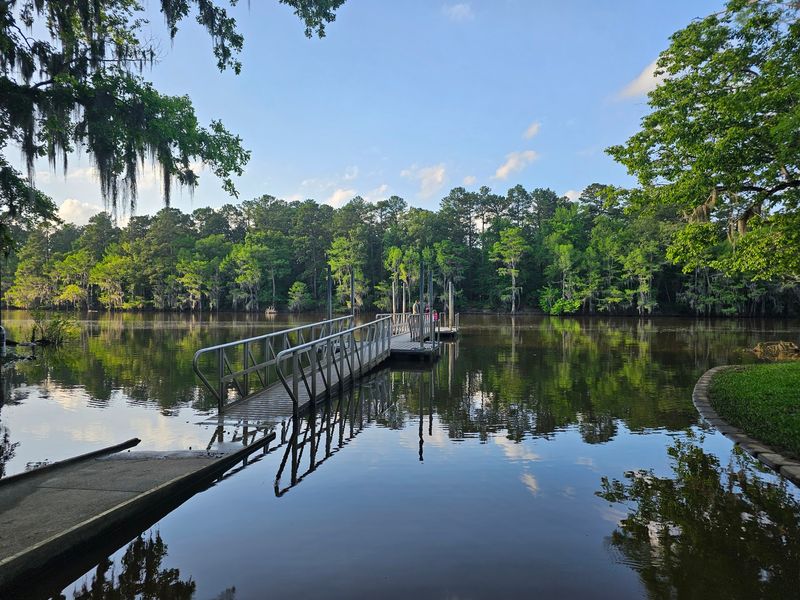
More than 70 species of fish live in Caddo Lake. With odds like that, something is bound to be curious about your bait.
The park has a fishing pier for easy casting. It’s a handy spot for beginners or anyone who prefers solid boards underfoot.
Good news for budget-minded anglers. You don’t need a fishing license to fish from shore within a Texas state park.
Forgot your gear? You can borrow fishing equipment at park headquarters, which makes a spur-of-the-moment try easy.
Bring your own bait, though. Picking some up before you arrive saves a frustrating trip back out.
Keep an eye on water conditions before you plan a boat day. The boat ramp recently closed due to low water levels.
Checking the latest park alerts before your trip is a smart move. Conditions on the lake can change with the weather.
Even a slow fishing day pays off here. You’re surrounded by cypress, birds, and quiet water, which beats staring at a screen any afternoon.
Keep Your Eyes Peeled, Because Gators Live Here Too
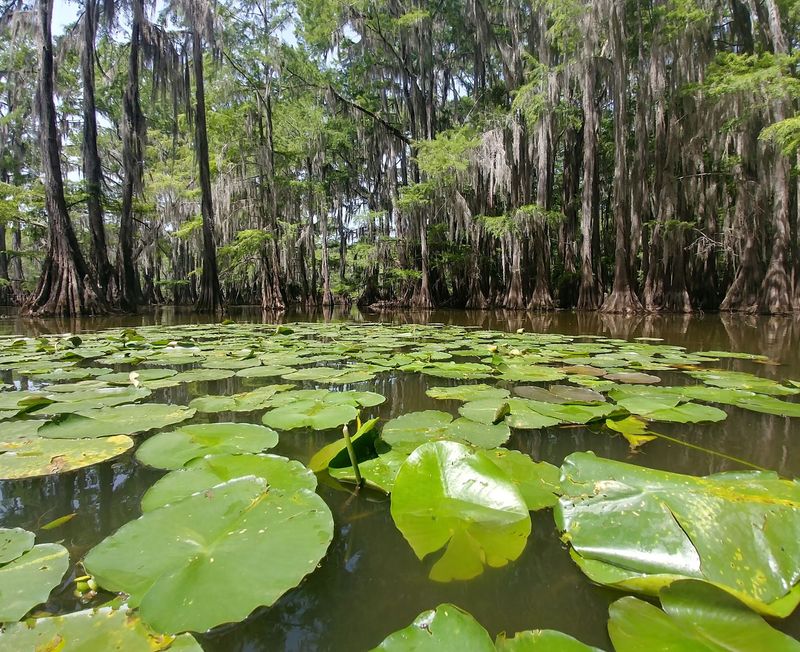
Alligators call this swamp home. Seeing one glide through the bayou is a thrill, as long as you stay a respectful distance away.
The park encourages visitors to review alligator safety tips. Keep pets leashed, never feed wildlife, and give gators plenty of space.
Birds are another big draw at Caddo Lake State Park. The wetlands and forests support a wide variety of species.
Herons may stalk the shallows, looking for a snack. Turtles often stack up on logs to soak up the sun.
Binoculars are a smart thing to pack. They let you study critters closely without disturbing their day.
Quiet helps a lot here. The calmer you move, the more likely animals will carry on as normal around you.
Rangers lead nature programs that explain what lives in these habitats. Joining one can turn a random sighting into a real learning moment.
Next door, the Caddo Lake National Wildlife Refuge protects about 8,500 acres. That extra wild land gives animals even more room to roam.
A Lake Story Packed With Log Jams And Legends
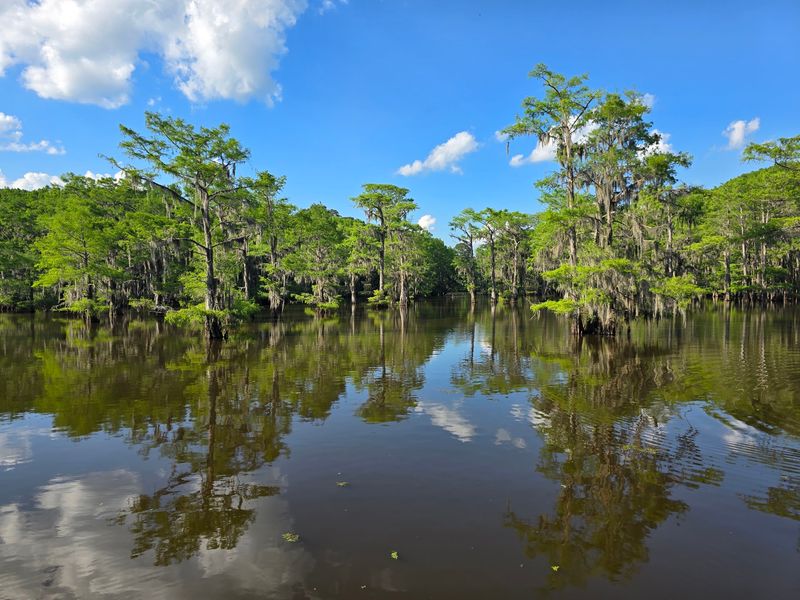
Nobody agrees exactly how Caddo Lake was born. That mystery makes the place even more fun to explore.
One popular theory points to the Great Raft. That was a massive log jam on the Red River that may have backed up water in the early 1800s.
A Caddo legend offers another answer. It says an earthquake created the lake.
People lived around this area for roughly 12,000 years. Caddo settlements appeared around 800 AD and grew into farming communities by 1200 AD.
Captain Henry Miller Shreve oversaw removal of the Great Raft between 1832 and 1839. Later, a dam near Mooringsport, Louisiana, was finished in 1914.
Public parkland here was dedicated in 1931. The park officially opened in 1934, thanks largely to CCC crews.
In 1993, Caddo Lake earned recognition as an international wetlands site. It was the thirteenth such site in the United States.
Exhibits at park headquarters dig deeper into this history. Stop by before hitting the trails, and the whole swamp starts making more sense.
Stretch Your Trip With Antiques And Historic Homes Nearby
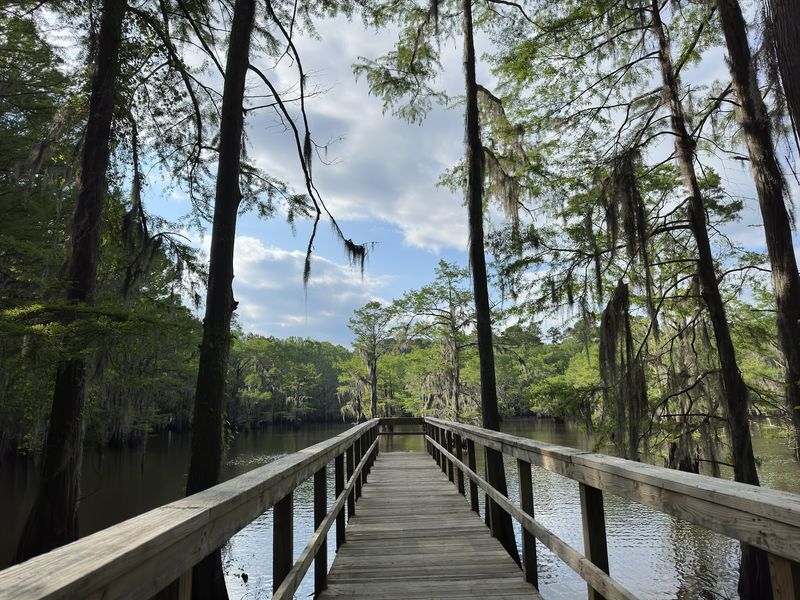
Swamp days pair nicely with small-town wandering. Two charming towns sit within easy reach of the park.
Jefferson is about 18 miles away. It’s known for antique shops, so leave a little room in the car.
Marshall sits roughly 15 miles from the park. There you’ll find the Starr Family State Historic Site, another fun stop for history fans.
Back at Caddo Lake State Park, the park store sells souvenirs. Grab a little keepsake that proves you braved the bayou.
The group recreation hall can also be rented for events. It started as the CCC’s concession building, so even your party gets some history.
Picnic areas around the park make easy lunch spots. Pack sandwiches and enjoy them with a cypress-framed view.
Day-use visitors should plan ahead too. Reservations for both camping and day use are highly recommended, especially on busy weekends.
Kids 12 and under get in free, which helps family budgets. Pack snacks, sunscreen, and patience, then let this corner of East Texas work its quiet magic.