One of the rarest conifers in North America grows wild almost nowhere except a short stretch of river bluffs in Florida.
I still can’t get over that. It’s a tree most people have never heard of, hiding in a state best known for beaches.
That surprise sets the tone for autumn here. The Sunshine State actually has maples that turn red, a waterfall that drops 73 feet, and prairies where sandhill cranes gather when the air cools.
Bald cypress trees even turn a rusty orange before dropping their needles.
I love that fall in Florida doesn’t announce itself loudly.
You have to know where to look. Once you do, the season feels like a secret the locals forgot to mention.
So grab a light jacket, maybe. Which of these spots will tempt you to swap your flip-flops for hiking shoes first?
Torreya State Park
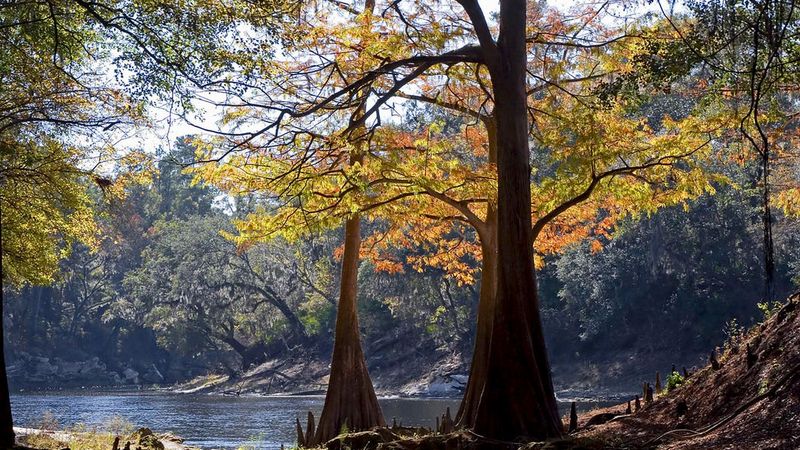
Florida isn’t supposed to do autumn, but nobody told these bluffs. The park sits high above the Apalachicola River, and its hardwood forest puts on one of the state’s best displays of fall color.
Maples, hickories, and oaks shift into shades of red, orange, and gold. November can be an excellent time to catch these autumn colors, although the timing and intensity of the display vary with seasonal weather conditions.
The park takes its name from the Florida torreya, a critically endangered tree. It grows wild only along this river corridor in Florida and a sliver of nearby Georgia, which makes spotting one feel like a small victory.
Hiking here might surprise your legs. Trails dip into steep ravines and climb back up, which is not the flat Florida terrain most visitors expect.
History fans should look for the Gregory House, built in 1849 on the other side of the river. The Civilian Conservation Corps moved it to its current spot in the 1930s, piece by piece.
Pack water and good shoes. Those hills will remind you that Florida has a few tricks up its sleeve.
Address: 2576 NW Torreya Park Road, Bristol, FL 32321
Falling Waters State Park
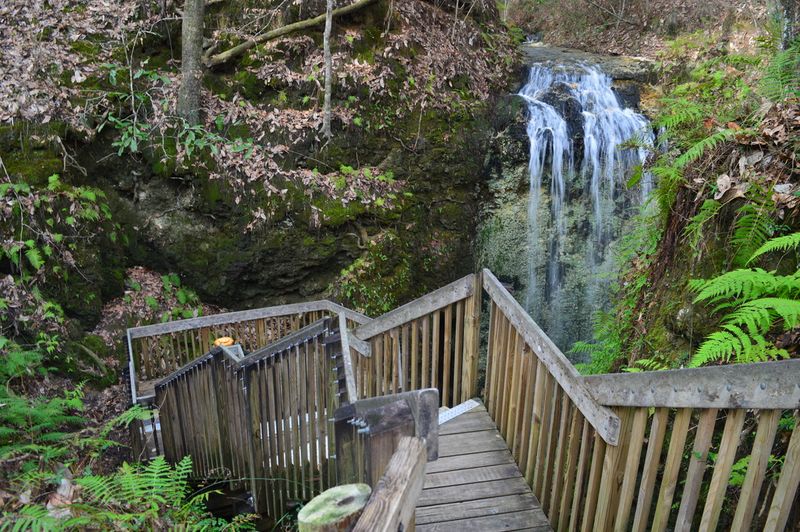
Yes, Florida has a waterfall, and it’s taller than a six-story building. The water here drops about 73 feet into a deep, round sinkhole, making it the tallest waterfall in the state.
A boardwalk leads you right to the viewing area. You can peer down into the sinkhole and watch the water vanish into the earth below, which is a strange and wonderful sight.
Flow depends on rainfall, so the falls can look mighty one month and shy the next. Checking recent rain before you go is a smart move if you want the full splash.
Fall adds a bonus layer. The surrounding hardwoods pick up autumn tones, and the cooler air makes the trails far more pleasant than a sticky summer walk.
Other sinkholes dot the park too, some lined with ferns and moss. The Sinkhole Trail lets you explore these fascinating geological formations without a long, tiring hike.
There’s also a small lake for a quiet break. Bring a snack, find a bench, and enjoy the idea that you found a waterfall in Florida.
Address: 1130 State Park Road, Chipley, FL 32428
Florida Caverns State Park
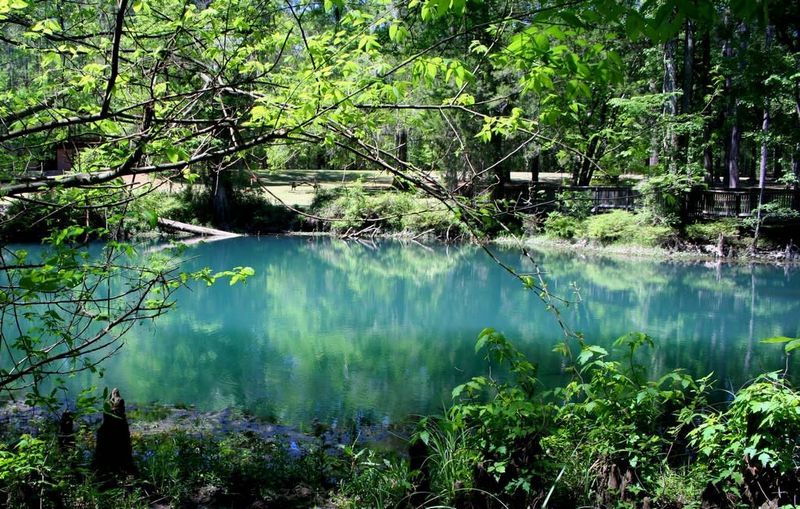
Two worlds sit stacked on top of each other here, and both look great in fall. Above ground, hardwood trees change color, while below ground, limestone formations stay the same year-round.
The park offers guided cave tours, which are the only way inside the main cavern. You’ll see stalactites, stalagmites, soda straws, and flowstones that formed slowly over a very long time.
Cave tours can sell out, so arriving early or reserving a ticket online is a smart move. Check the official schedule for occasional maintenance closures before visiting.
Back in the daylight, the Chipola River winds through the park. Paddling it in autumn means calmer temperatures and a chance to see turtles sunning on logs along the banks.
Hiking and horse trails cross the property too. Some pass by limestone outcrops and small caves, so keep your eyes open as you walk.
Here’s a fun detail for history fans. The Civilian Conservation Corps helped develop the park in the 1930s, including work on the cave paths and the visitor center building.
Address: 3345 Caverns Road, Marianna, FL 32446
Paynes Prairie Preserve State Park
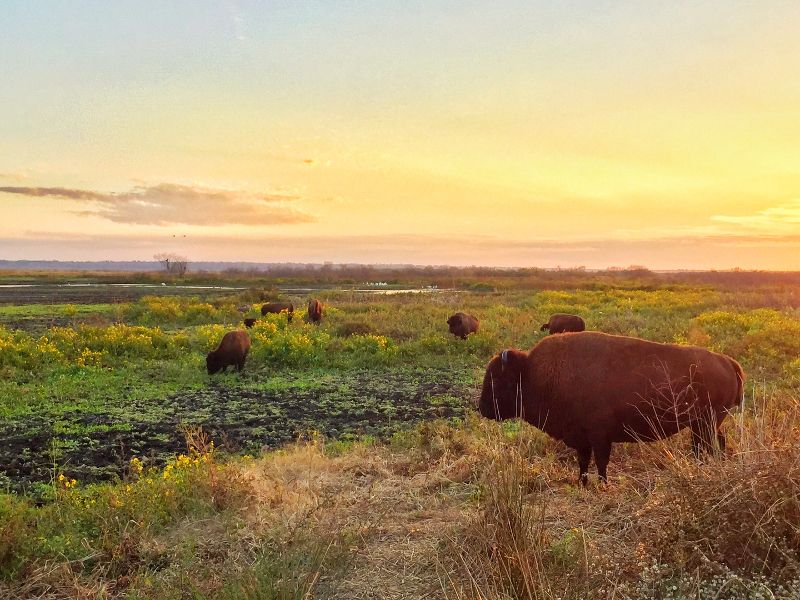
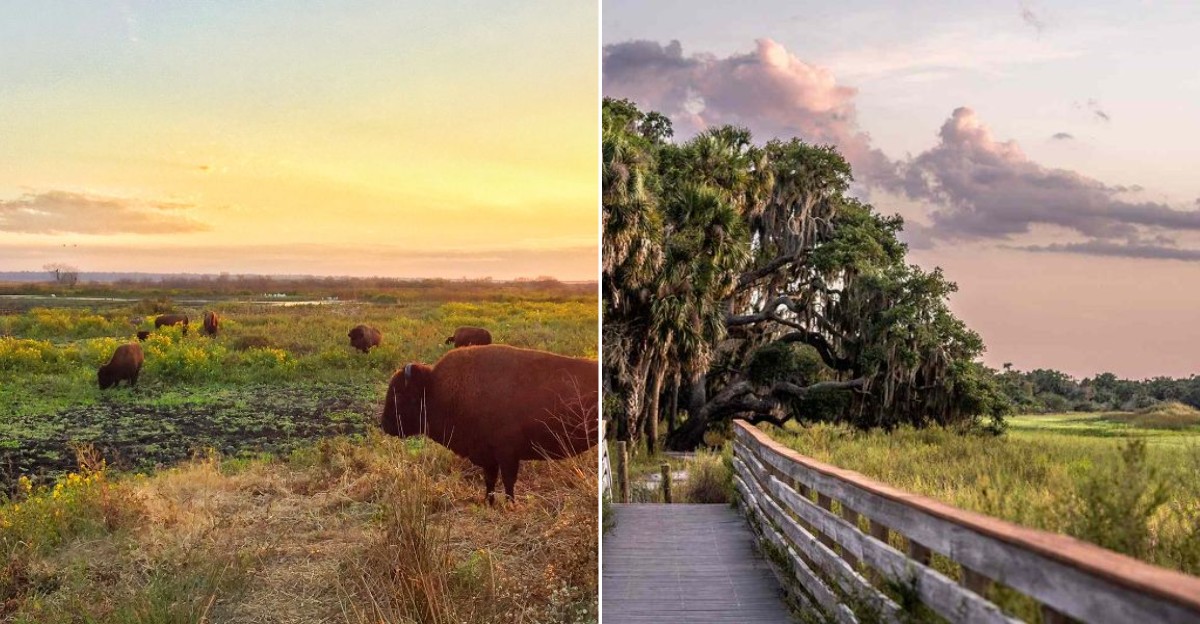
Bison in Florida sounds like a joke, but the herd here is very real. Paynes Prairie is home to wild bison and wild horses roaming a huge open savanna south of Gainesville.
Fall is when things get lively in the sky. Sandhill cranes start arriving for the cooler months, and their rattling calls carry across the grassland.
The La Chua Trail, accessed separately from the main park entrance at 4270 SE 15th Street in Gainesville, is a popular spot for enjoying wetland scenery and observing wildlife.
Keep a respectful gap between you and the wildlife. Those bison are big, and the gators are not interested in posing for close-ups.
For a wider view, climb the observation tower near the visitor center. From up there, the prairie stretches out like a golden sea in the autumn light.
Binoculars make a big difference here. So does patience, since the animals keep their own schedule and seldom check yours.
Address: 100 Savannah Boulevard, Micanopy, FL 32667
Ichetucknee Springs State Park
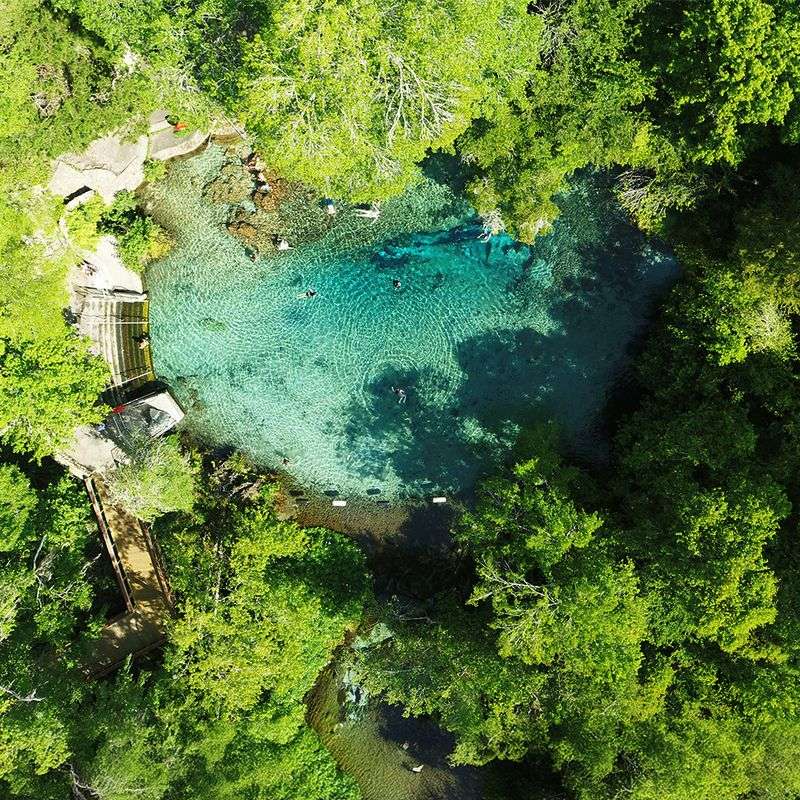
Summer belongs to the tubing crowds, but autumn hands this river back to the quiet folks. Once the busy season winds down, the clear water and shady banks feel calmer.
The Ichetucknee River is fed by a chain of springs. Its water is so clear that you can often see fish, turtles, and swaying eelgrass right below the surface.
Bald cypress trees line parts of the river. In fall, their needles turn a rusty orange before dropping, which gives the banks a coppery glow.
Kayaking and canoeing are great ways to enjoy the scenery. Check the park’s current rules first, since activities on the river can change with the season.
On land, short trails lead through the woods to spring areas. The Blue Hole spring is a popular spot, with a deep blue color that looks almost painted.
Bring a camera with a good zoom. Between the clear water and the changing cypress, you’ll want proof that Florida really does fall color its own way.
Address: 12087 SW US Highway 27, Fort White, FL 32038
Myakka River State Park
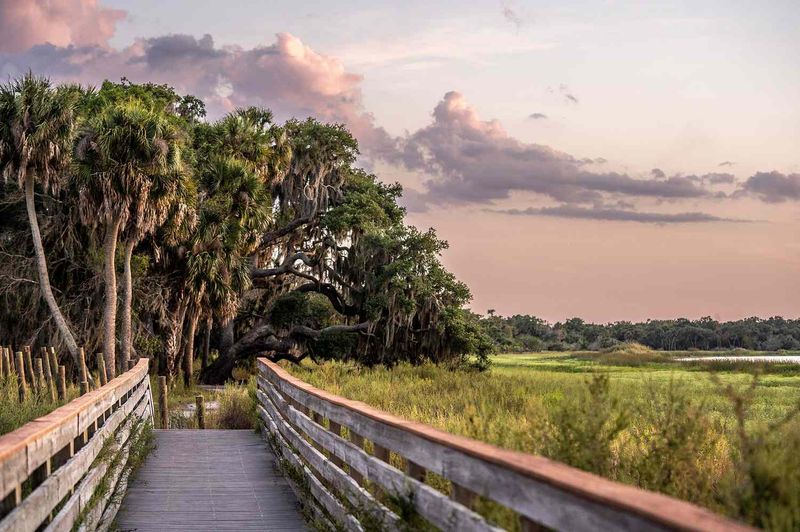
How often do you get to walk above the treetops? At Myakka, a canopy walkway lifts you into the branches, and a tower climbs even higher for sweeping views.
Fall marks the start of Florida’s drier season in this area. Cooler days make hiking and wildlife watching more comfortable, and the bugs tend to ease up.
Upper Myakka Lake is a big draw. Alligators are common here, along with herons, egrets, and other wading birds that love the shallow wetlands.
Want to see more without wearing out your feet? Boat tours and tram tours have run on the lake and through the park, so check what’s available during your visit.
The park covers a huge area of wetlands, prairies, and hammocks. It’s one of Florida’s oldest and largest state parks, and it feels wonderfully wild for being near Sarasota.
Bike paths and hiking trails wind through the scenery too. Pick one, slow down, and let the river do the talking.
Address: 13208 State Road 72, Sarasota, FL 34241
Big Shoals State Park
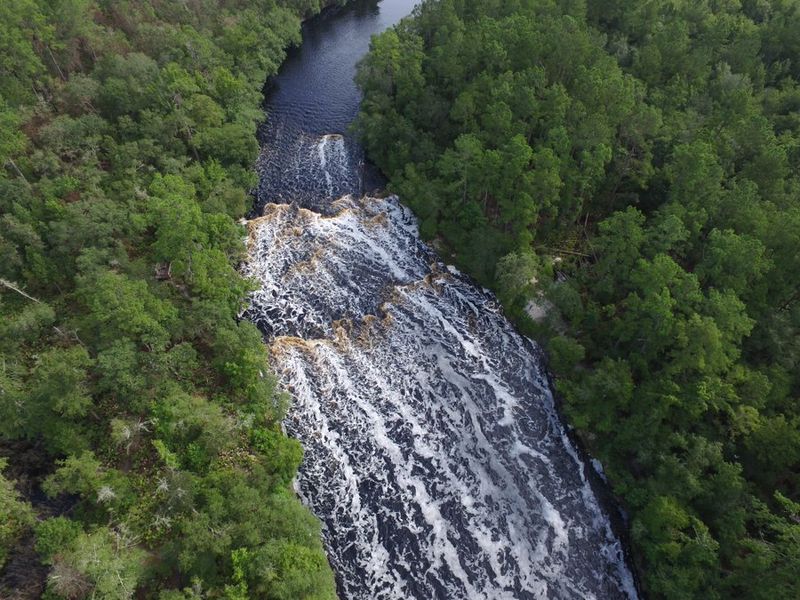
Whitewater rapids in Florida? It’s true, and they live on the Suwannee River.
Big Shoals is known for having the largest whitewater rapids in the state.
When water levels cooperate, the shoals can reach Class III. That’s serious paddling, so only experienced paddlers should try them, and portaging around is always an option.
Not into rapids? You can enjoy the view from the shore instead, which is plenty dramatic on its own.
The park also has limestone bluffs that rise high above the river. Some of them stand among the tallest river bluffs in Florida, giving you great lookout points.
Fall brings comfy weather for the trails here. Miles of paths wind through hardwood forest, and the cooler air makes longer walks or bike rides feel easy.
Little Shoals sits nearby too, offering a gentler look at the river. Together, the two areas make a fun day trip for anyone craving a wilder side of Florida.
Address: 11330 SE County Road 135, White Springs, FL 32096
Alfred B. Maclay Gardens State Park
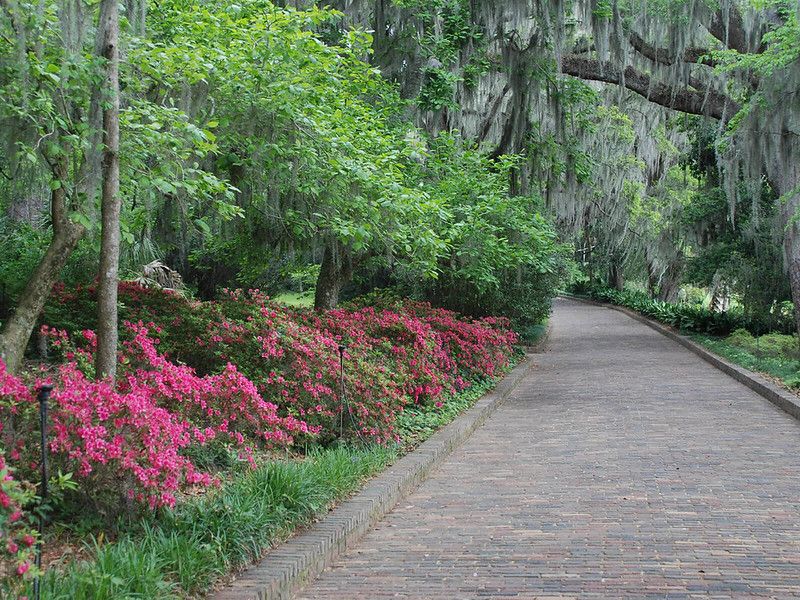
Some gardens are planted for one season, and this one was designed with the cooler months in mind. Alfred B.
Maclay and his wife, Louise, created the gardens as part of their winter home.
Louise later donated the property to the state. Today, the gardens feature brick paths, a reflecting pool, and flowering plants framed by tall trees.
Late autumn visitors may catch early camellia blooms, although the gardens reach their most spectacular flowering season between January and April.
Lake Hall sits right next to the gardens. You can paddle, fish, or swim there during the right season, depending on current park rules.
Beyond the formal gardens, trails loop through the woods. Hikers and bikers can explore paths that wind through hardwood forest and past small ravines.
The Maclay House is open seasonally for tours. If it’s open when you visit, step inside to see how this winter retreat once looked.
Address: 3540 Thomasville Road, Tallahassee, FL 32309
Everglades National Park
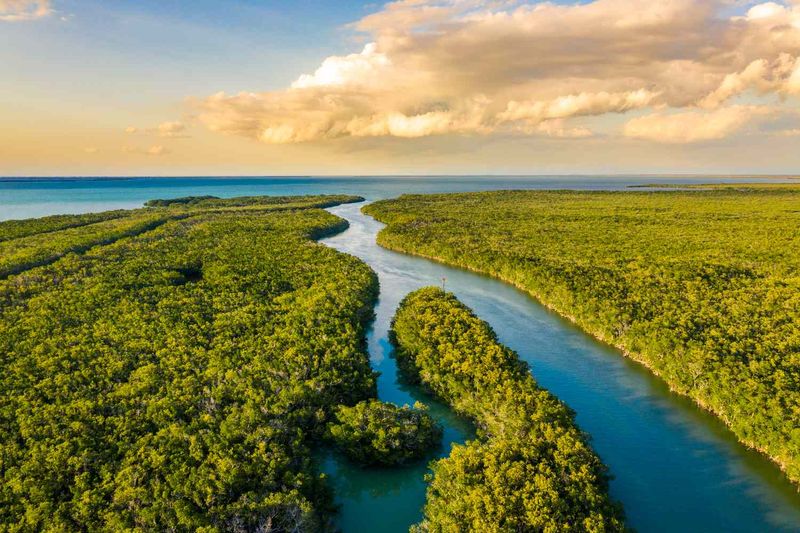
Fall is when the Everglades starts showing off its wildlife. As the dry season begins, water levels drop, and animals gather around the remaining pools.
That makes animal spotting much easier. You might see alligators, turtles, anhingas, herons, and many other birds without much effort.
The Anhinga Trail near the Royal Palm area is a famous place to start. Its short boardwalk passes over sawgrass marsh, where wildlife often hangs out close to the path.
Cooler, less humid weather helps too. Mosquitoes usually become less of a problem once the dry season settles in, though bug spray is still a smart idea.
The park is huge, so pick a starting point. The Ernest F.
Coe Visitor Center is a good gateway, with exhibits and helpful rangers to point you in the right direction.
Don’t rush it. The Everglades rewards slow walkers, quiet watchers, and anyone willing to let a heron take its time.
Address: 40001 State Road 9336, Homestead, FL 33034