
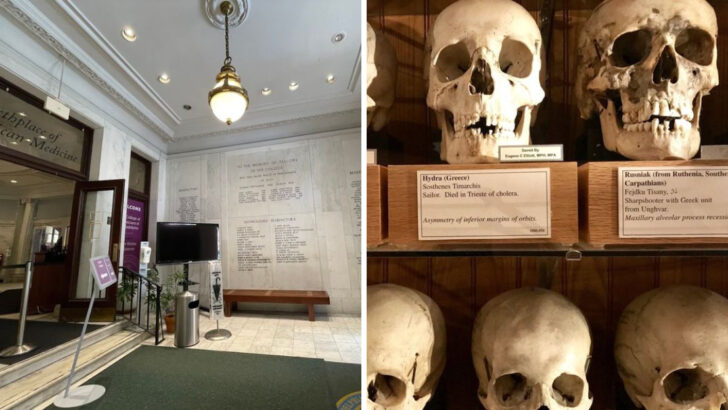
Tucked away in Philadelphia, Pennsylvania, the Mütter Museum is one of the most extraordinary and thought-provoking museums in the entire country.
Part medical history archive, part anatomical wonder, it challenges visitors to look at the human body in ways they never expected.
Whether you are a science lover, a history buff, or simply someone who appreciates the unusual, this museum has something that will leave a lasting impression.
A Museum Unlike Any Other
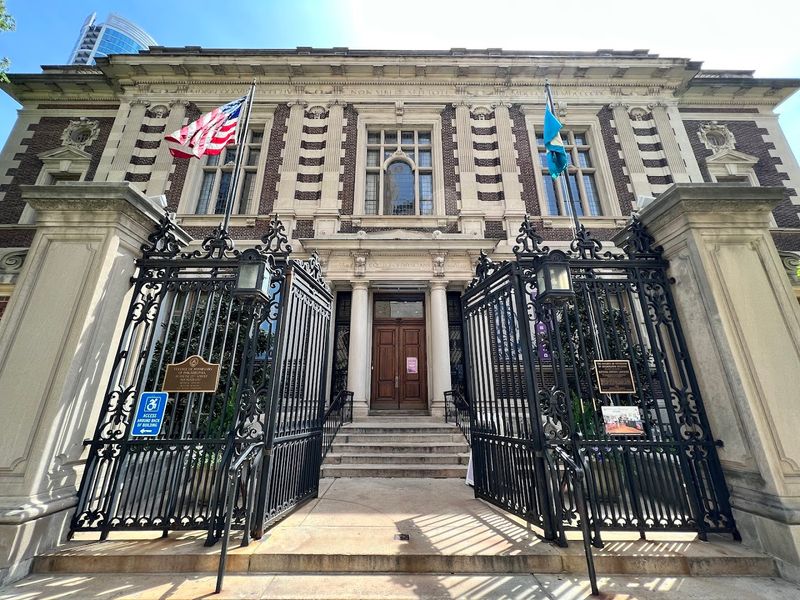
Walking into the Mütter Museum feels like stepping through a portal into a world where medicine, mystery, and history all collide at once. Most museums show you art or ancient artifacts, but this one shows you the raw reality of the human body — and that makes all the difference.
Founded as part of the College of Physicians of Philadelphia, the museum has been fascinating visitors since the 1800s. Its mission has always been to educate, not to shock, even though the collections can certainly catch you off guard.
What sets this place apart is its ability to connect science and storytelling in a deeply personal way. Every specimen, tool, and display case represents a real person or a real medical challenge that doctors once faced.
You are not just looking at objects — you are witnessing history through the lens of the human experience.
Families, students, medical professionals, and curious travelers all find something meaningful here. The museum asks big questions about life, death, illness, and healing without ever feeling cold or clinical.
Visiting is less like touring a gallery and more like having a conversation with the past.
Founded to Transform Medical Education
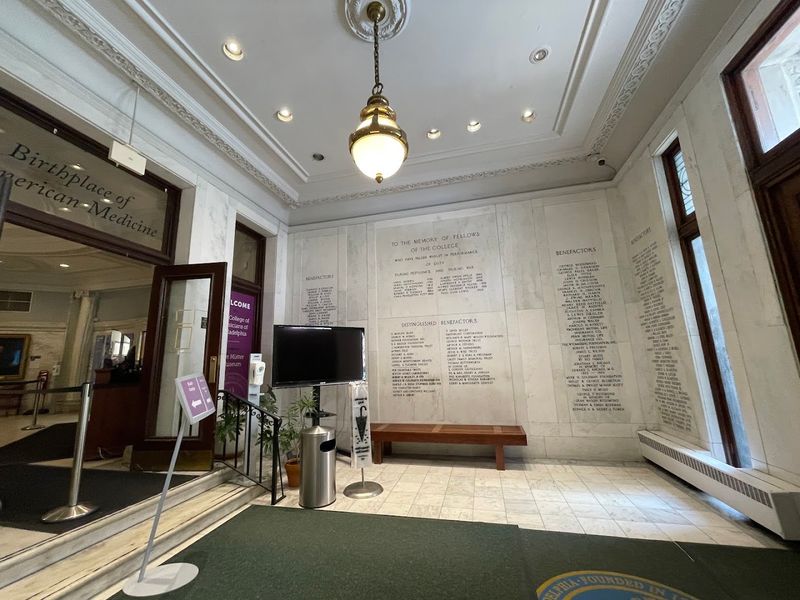
Back in the mid-1800s, medical education was a rough and inconsistent field. Students often learned from outdated books, limited hands-on practice, and very few real anatomical examples.
One surgeon decided that was not good enough, and his decision changed medical history forever.
Thomas Dent Mütter was a pioneering Philadelphia surgeon known for his reconstructive techniques and his passion for teaching. In 1858, just before his death, he donated his personal collection of over 1,700 medical specimens and $30,000 to the College of Physicians of Philadelphia.
His goal was simple: give future doctors better tools to understand the human body.
The museum officially opened in 1863, and Mütter’s original vision has guided it ever since. His belief was that seeing real examples of disease, injury, and anatomical variation would make doctors more empathetic and more skilled at the same time.
That idea still holds up today. Medical schools and healthcare professionals continue to visit the museum for educational purposes.
Mütter’s legacy is proof that one person’s passion and generosity can reshape an entire field — and that the best classrooms are sometimes the ones that make you a little uncomfortable.
A 19th-Century Cabinet Museum Experience
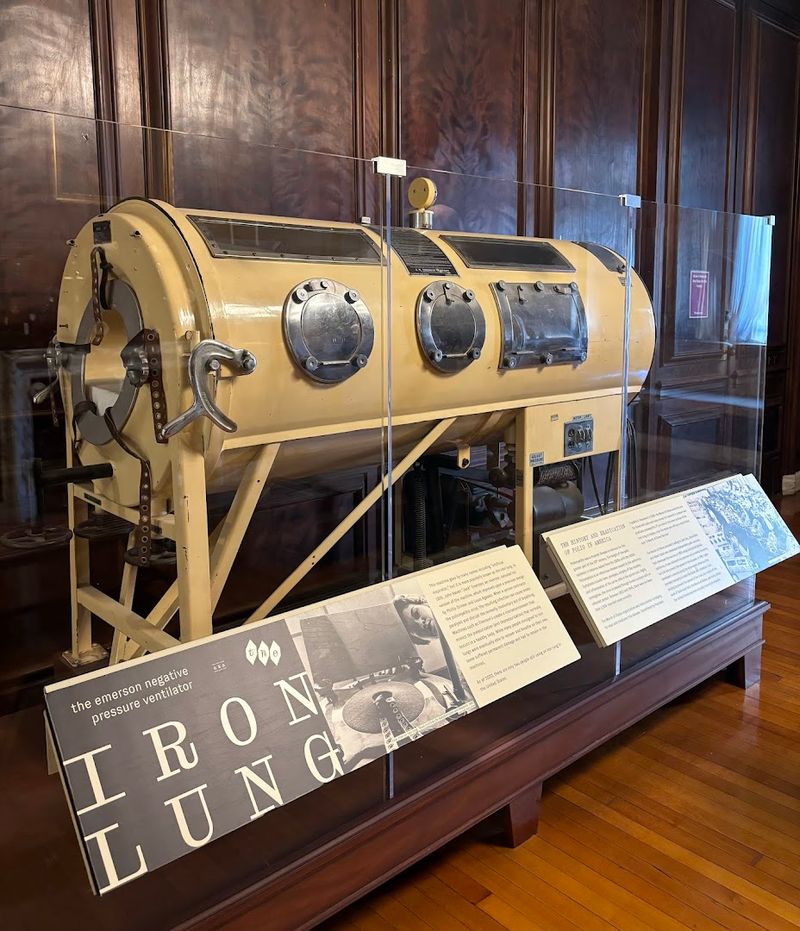
Imagine walking into a museum that looks almost exactly the same as it did 150 years ago. That is exactly what happens when you enter the main hall of the Mütter Museum, where towering wooden cabinets line the walls and glass jars filled with preserved specimens stretch as far as the eye can see.
This style of display is called a cabinet museum, and it was the standard way to show scientific collections in the 1800s. Everything is organized, labeled, and arranged with the kind of meticulous care that reflects a different era of scholarship.
There are no flashy digital screens or interactive touchpads — just wood, glass, and history.
For modern visitors, this format creates an almost theatrical atmosphere. You feel like a medical student from another century, peering into cases that hold the secrets of human anatomy.
It is both humbling and oddly thrilling.
The museum has made a deliberate choice to preserve this aesthetic rather than modernize it. That decision honors the original spirit of Mütter’s donation while giving visitors an authentic window into how science was practiced and displayed in the Victorian age.
Few museums offer this kind of time-travel experience quite so convincingly.
Thousands of Anatomical Specimens
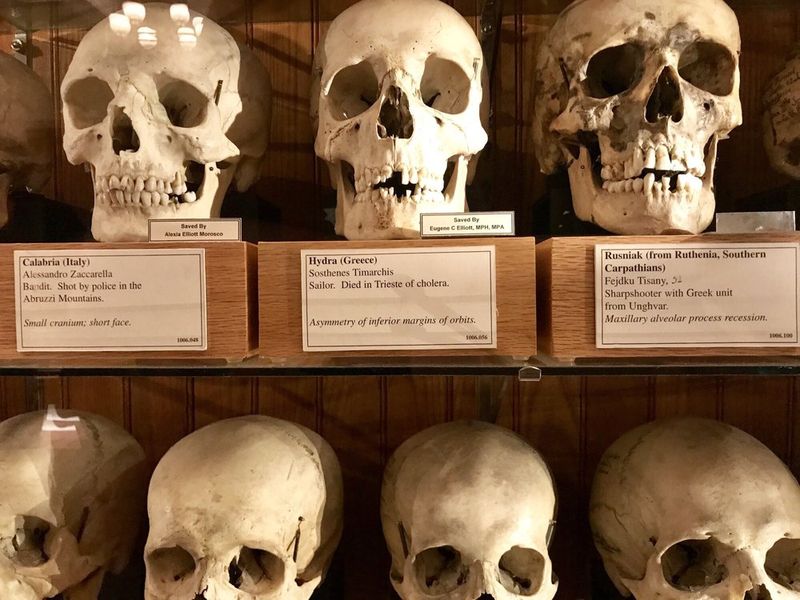
Numbers can be hard to picture, but consider this: the Mütter Museum holds more than 25,000 objects in its collection. That is not a typo.
Bones, organs, fluid-preserved specimens, wax models, and antique medical instruments fill nearly every corner of the building.
The collection covers an enormous range of topics, from rare skeletal deformities to specimens illustrating common diseases that ravaged populations in earlier centuries. Each item was collected with an educational purpose in mind, meant to help doctors recognize and understand conditions they might encounter in real patients.
What makes the collection especially powerful is its sheer variety. You might stand in front of a jar holding a human colon that expanded to an unbelievable size, then turn around to find a display of surgical tools used before anesthesia existed.
The contrast is both jarring and deeply informative.
Pathology, anatomy, and medical history all come together here in a way that no textbook can fully replicate. For anyone curious about how the human body works — and how dramatically it can go wrong — this collection offers answers that are impossible to forget.
Seeing is truly believing when it comes to the Mütter’s remarkable holdings.
Famous and Fascinating Highlights
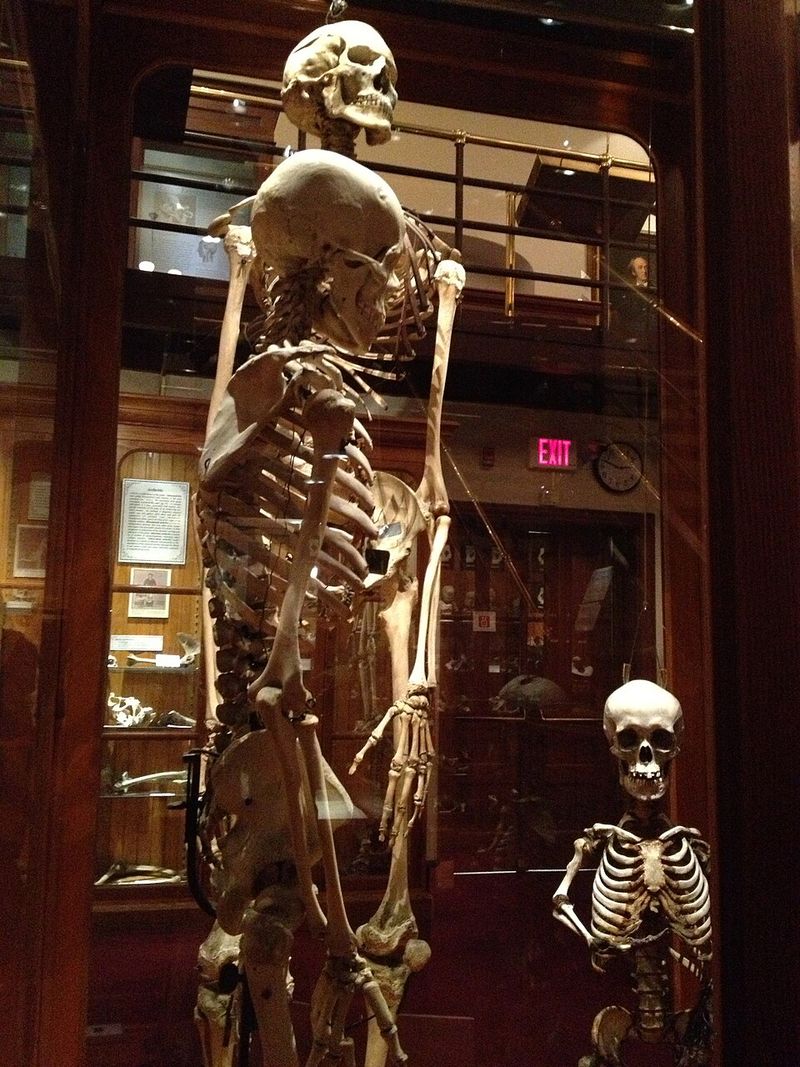
Some museums have one or two standout pieces that draw crowds. The Mütter Museum has an entire roster of jaw-dropping highlights that make it nearly impossible to decide where to look first.
Among the most talked-about items are microscope slides containing fragments of Albert Einstein’s brain, donated after his death in 1955. Nearby, the skeleton of a man who stood over seven feet tall towers above visitors, offering a striking example of gigantism.
These are not replicas — they are the real thing, which makes standing in front of them feel genuinely surreal.
The preserved liver shared by Chang and Eng Bunker, the famous conjoined twins who inspired the term “Siamese twins,” is another centerpiece of the collection. Their story is documented alongside the specimen, giving important human context to what could otherwise feel like mere curiosity.
Each of these highlights carries a story that goes far beyond the physical object. They connect visitors to real lives, real science, and real moments in history.
Whether you are drawn in by the famous names or the medical significance, these exhibits deliver the kind of wonder that stays with you long after you leave the building.
The Hyrtl Skull Collection
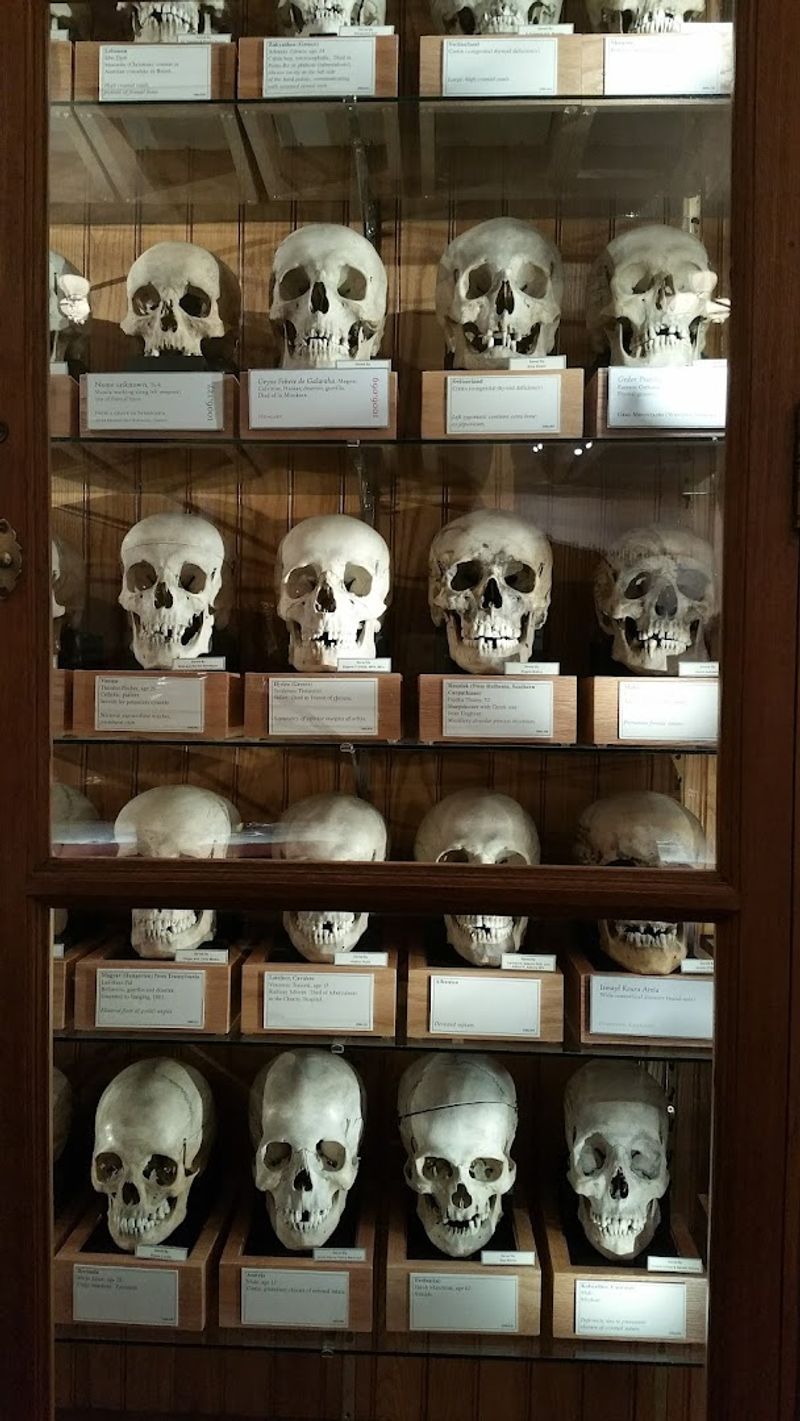
Row after row of human skulls, each one carefully labeled with a name, an age, a cause of death, and a place of origin — the Hyrtl Skull Collection is one of the most visually arresting and intellectually rich exhibits in the entire museum. At first glance, it might seem morbid.
Look closer, and it becomes something entirely different.
Austrian anatomist Josef Hyrtl assembled these 139 skulls in the mid-1800s with a very specific purpose: to prove that skull shape does not determine intelligence or character. At the time, a pseudoscience called phrenology was gaining popularity, claiming that you could measure a person’s personality and mental ability by the bumps on their skull.
Hyrtl used his collection to challenge that dangerous idea directly.
Each skull in the collection comes from a real person — criminals, soldiers, laborers, and ordinary citizens from across Europe. The biographical details beneath each one remind visitors that these were human beings with full lives, not just scientific objects.
Today, the collection stands as both a scientific document and a moral lesson about the dangers of using biology to justify prejudice. It is one of the most quietly powerful exhibits in the building, and it lingers in the mind long after you have walked away.
Medical Tools, Diseases, and Human Stories
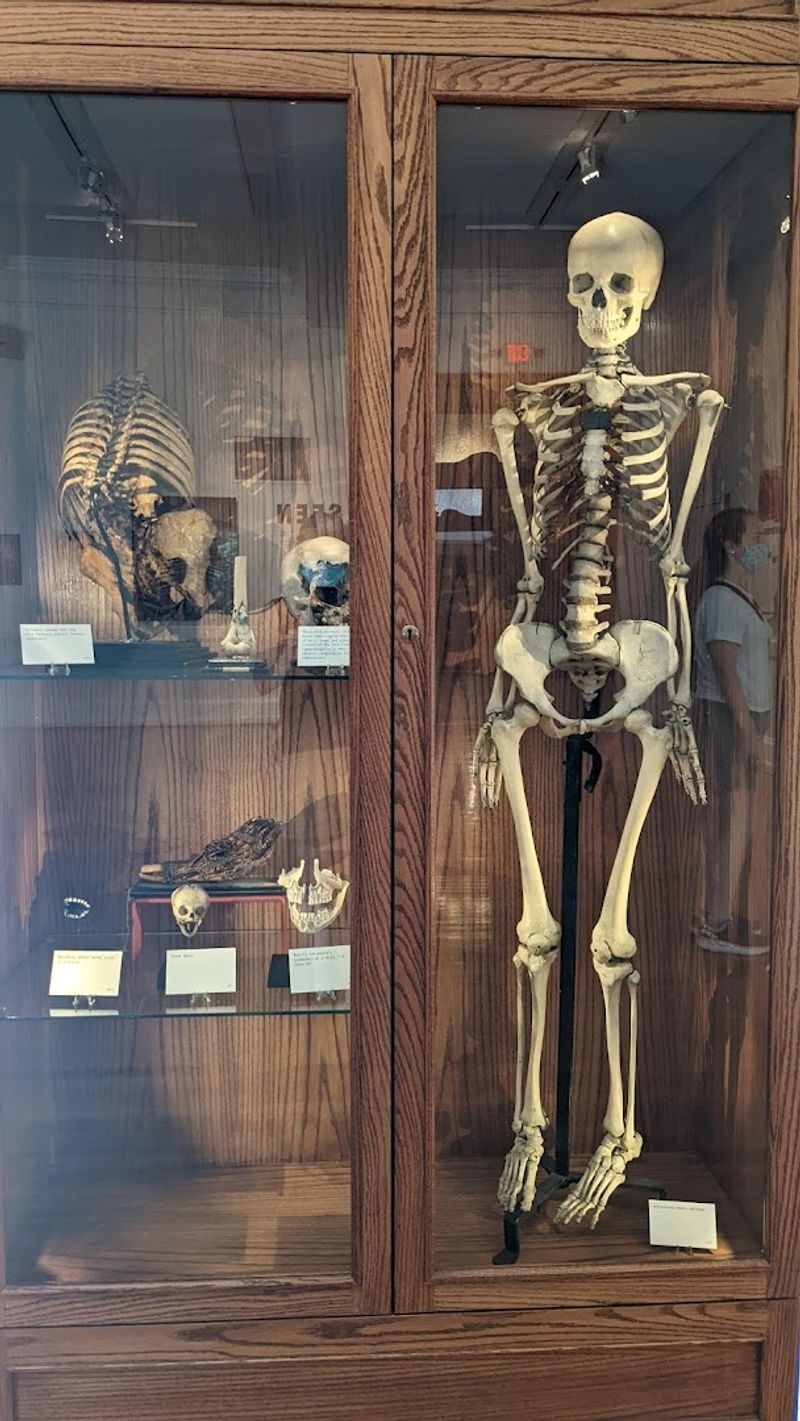
Before antibiotics, before sterile operating rooms, and before modern anesthesia, doctors worked with tools that look almost unrecognizable today. The Mütter Museum holds a remarkable collection of historical medical instruments that make the progress of modern medicine feel both staggering and deeply earned.
Civil War-era surgical kits are among the most striking items on display. These compact wooden cases held everything a battlefield surgeon needed to amputate a limb in under a minute — because speed was survival when anesthesia was unreliable and infection was nearly certain.
Seeing these tools up close is a powerful reminder of how much medicine has changed in just 150 years.
Beyond the instruments, the museum connects its artifacts to real disease outbreaks that shaped American history. Specimens from cholera epidemics, tuberculosis cases, and other devastating illnesses are displayed alongside patient records and historical context that transform statistics into human stories.
This is where the museum truly shines — not just showing what happened, but helping visitors feel why it mattered. Every rusted scalpel and preserved tissue sample represents a doctor trying their best with what they had.
That combination of humility and innovation is what makes medical history so worth understanding today.
Ethics, Education, and Modern Perspective
Holding a collection of human remains in a public museum is not without controversy, and the Mütter Museum knows it. In recent years, the institution has taken significant steps to address the ethical questions that surround displaying real human bodies, particularly those of people who could not consent to being exhibited.
The museum has updated many of its exhibit labels to include more biographical context, treating the individuals in the collection as people rather than specimens. Staff members and curators regularly discuss questions of consent, dignity, and the responsibilities that come with preserving human remains for educational purposes.
These conversations are not just happening behind closed doors. The museum actively engages visitors in thinking critically about what it means to display a human body, who benefits from that display, and what obligations exist toward those whose remains are held.
That kind of transparency is rare and genuinely admirable.
At the same time, the museum remains committed to its core educational mission. The goal has never been to sensationalize or exploit — it has always been to illuminate.
Balancing those values in the modern era takes ongoing effort, and the Mütter Museum’s willingness to do that work openly is one of its most important qualities today.
Essential Visitor Information
Planning a trip to the Mütter Museum is straightforward, but there are a few things worth knowing before you go. The museum is located at 19 S 22nd Street in Philadelphia, Pennsylvania 19103, right on the campus of the College of Physicians of Philadelphia.
It is easily accessible by public transit and sits in a walkable neighborhood with plenty of nearby dining and parking options.
General hours are Wednesday through Monday from 10 AM to 5 PM, with the museum closed on Tuesdays. Hours can occasionally change around holidays, so checking the official website before your visit is always a smart move.
Admission fees apply, and tickets can typically be purchased online in advance to avoid long lines.
One thing to keep in mind: the museum is best suited for mature audiences. The exhibits include graphic depictions of disease, deformity, and human remains that may be unsettling for younger children or sensitive visitors.
The museum itself recommends it for ages 13 and up, though parental discretion always applies.
Photography policies are generally relaxed, allowing visitors to capture their experience. Whether you come as a curious traveler, a student, or a medical professional, the Mütter Museum delivers an experience that is genuinely unlike anything else in Pennsylvania.