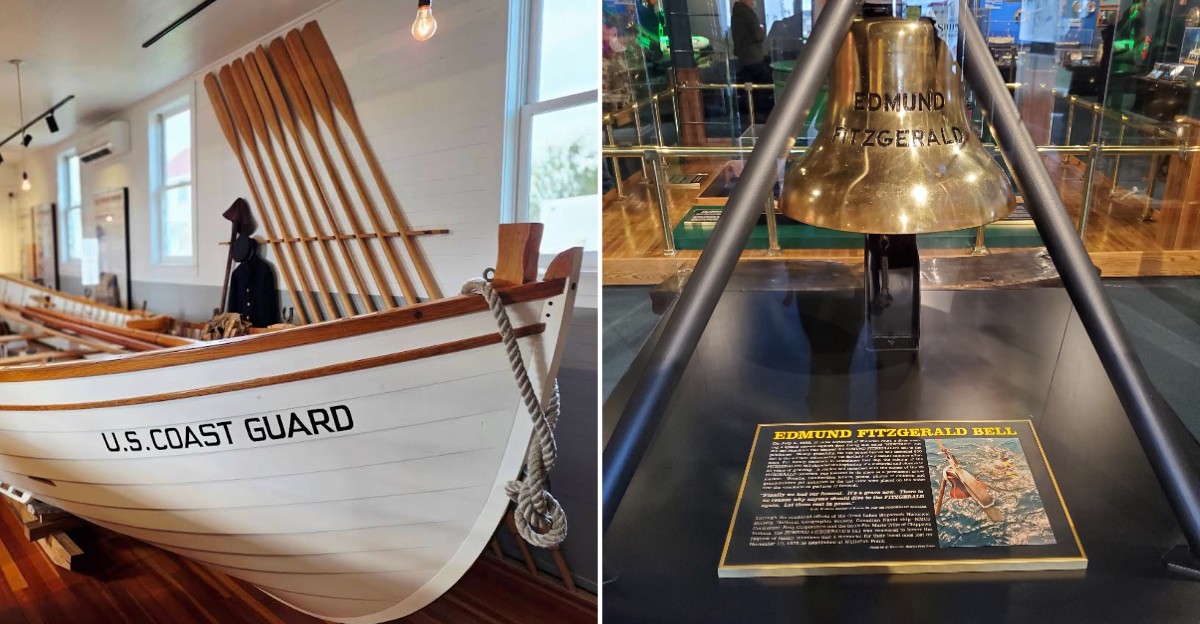
A 200-pound bronze bell pulled from the bottom of Lake Superior now sits on display along a quiet stretch of Michigan shoreline. It once hung on the Edmund Fitzgerald, the largest ship ever lost on the Great Lakes.
Divers brought it up on July 4, 1995. Today it serves as a memorial to the 29 crew members who never made it home.
The bell is only one piece of the story. More than 200 shipwrecks rest in the waters near this rocky point, which earned the nickname Graveyard of the Great Lakes.
I like how the whole place blends sad history with stunning, wide-open lake views. A working lighthouse from 1861 still shines nearby as giant ore ships glide past.
How many people drive right by without knowing what lies offshore?
The Lake Floor Out Front Holds More Wrecks Than You Would Ever Guess
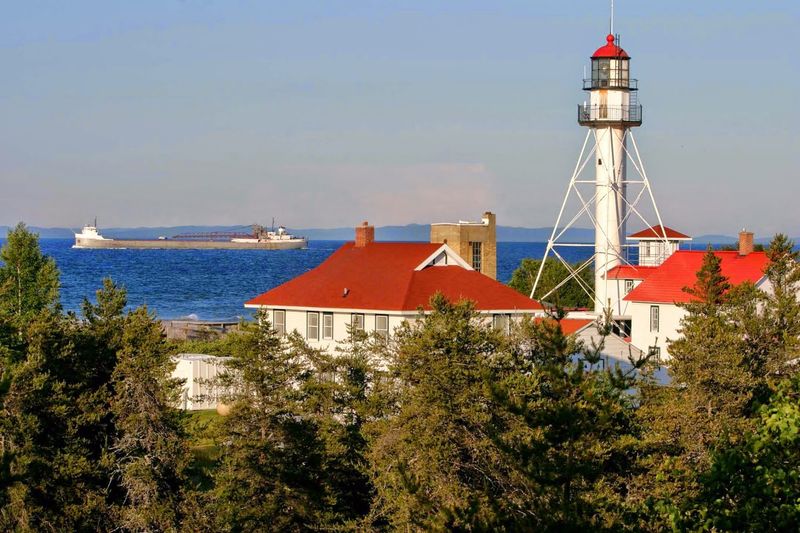
Lake Superior has about 550 known shipwrecks, and more than 200 of them sit near one single point of land. That spot is home to the Great Lakes Shipwreck Museum, a sprawling lakefront complex at the Whitefish Point Light Station.
So why do so many ships end up here? Whitefish Point is the key turning spot for every vessel entering or leaving Lake Superior.
Picture a busy highway corner with no shoulder and no rest stops. West of Whitefish Bay, natural harbors are scarce, so ships caught in storms have nowhere safe to hide.
Toss in howling winds and powerful rogue waves, and you get a stretch called the Shipwreck Coast. Sailors had another nickname for it too, the Graveyard of the Great Lakes.
The museum exists because a group of teachers, divers, and shipwreck fans cared deeply about these stories. They founded the Great Lakes Shipwreck Historical Society in 1978.
By 1983, the group had leased the old station from the U.S. Coast Guard.
The first exhibits opened in 1985, and the main museum building followed in 1987.
That’s a lot of passion packed onto one windy point in Michigan. Honestly, you can feel it in every building.
One Famous Bell Will Stop You In Your Tracks
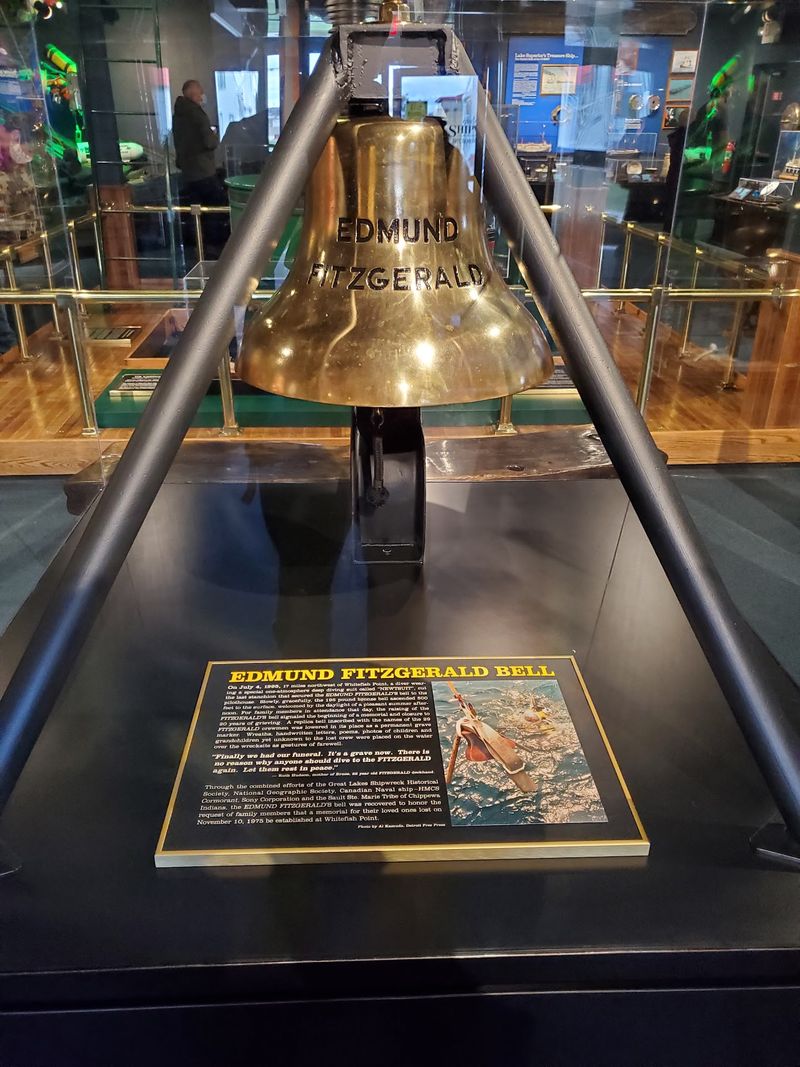
Most museum stars are paintings or old coins. Here, the headliner is a 200-pound bronze bell from the SS Edmund Fitzgerald.
The Fitzgerald went down on November 10, 1975, about 17 miles north-northwest of Whitefish Point. All 29 crew members were lost, and she remains the largest ship ever wrecked on the Great Lakes.
Twenty years later, a joint expedition brought the bell up from the lake. The recovery happened on July 4, 1995, a fitting date for such a careful, respectful mission.
Today the bell sits prominently inside the museum as a memorial to the crew. It isn’t flashy or loud, and it doesn’t need to be.
Standing near it, you start to grasp how big and serious Lake Superior really is. A song made the ship famous, but the bell makes the story feel personal.
My advice is simple. Give yourself a few quiet minutes here instead of rushing to snap a photo and move on.
Read the names and let the moment sink in. I believe that small pause turns a museum stop into something you will remember for years.
Lifelike Figures And Real Artifacts Make Old Legends Feel Close
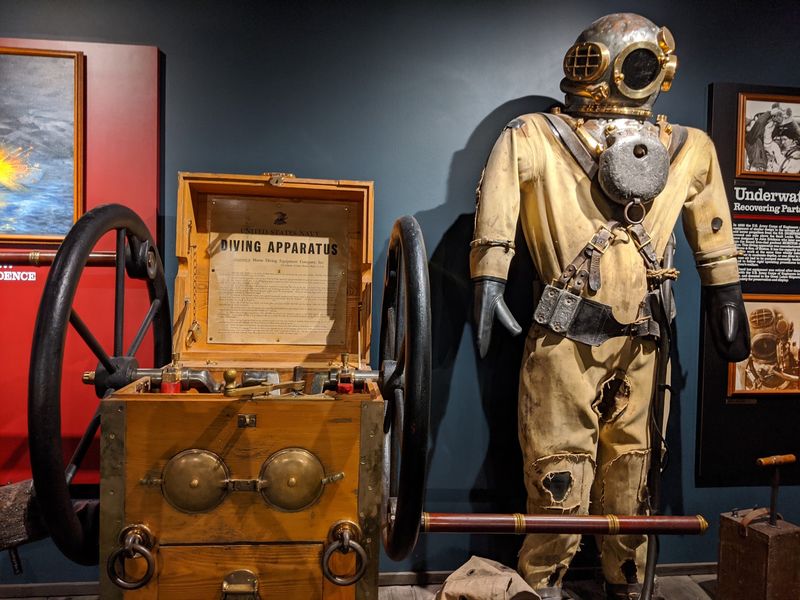
Shipwreck stories can feel distant when they live only in books. The main Shipwreck Museum Gallery fixes that problem fast.
Inside, real artifacts share space with artwork, detailed shipwreck models, and lifelike mannequins. Together they turn dramatic legends into scenes you can actually walk around.
Every display connects to a ship or crew that met trouble on Lake Superior. You’ll learn about vessels big and small, plus the storms that shaped their final trips.
Kids who usually groan at museums may perk up here. Models and figures give young eyes something solid to study besides plaques.
Grown-ups get plenty too, from ship routes to the reasons certain waters turned so tricky. It’s history with a pulse, not a dusty timeline taped to a wall.
Plan to read slowly in this room. The details reward patience, and each wreck has its own surprising twist.
Fun tip for families is to pick one ship each and report back on its story later. You might be shocked how competitive a car ride home can get over Great Lakes trivia.
Abraham Lincoln Was President When This Light First Shined
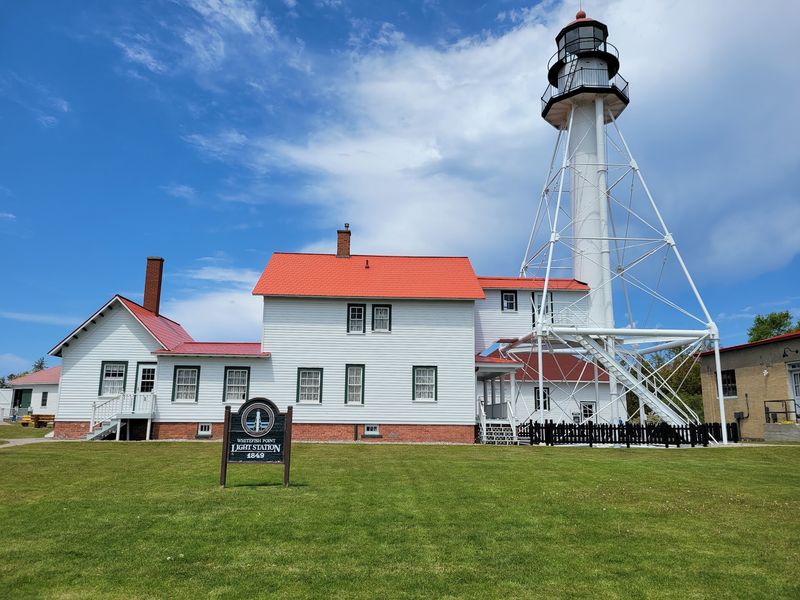
Talk about job security. The Whitefish Point Light Tower has been working nonstop since 1861.
That makes it the oldest operating lighthouse on Lake Superior. It was built during Abraham Lincoln’s administration, which is a fun fact to drop on any history buff in your group.
The light station itself goes back even further. Congress established it in 1849, when shipping traffic on the big lake was growing quickly.
Think about how many captains have watched this beam guide them around the point. Generations of sailors trusted it on nights when the lake turned rough.
For visitors, the tower makes a striking backdrop against open water and sky. It’s easily one of the most photographed spots on the whole property.
Bring a camera with decent zoom if you have one. Passing freighters sometimes line up with the tower, and the shot practically frames itself.
Even without a perfect photo, the tower is worth a long look. A light that has done the same job for over 160 years deserves a little applause, or at least a respectful nod.
Peek Into The Home Where Keepers Lived Every Day
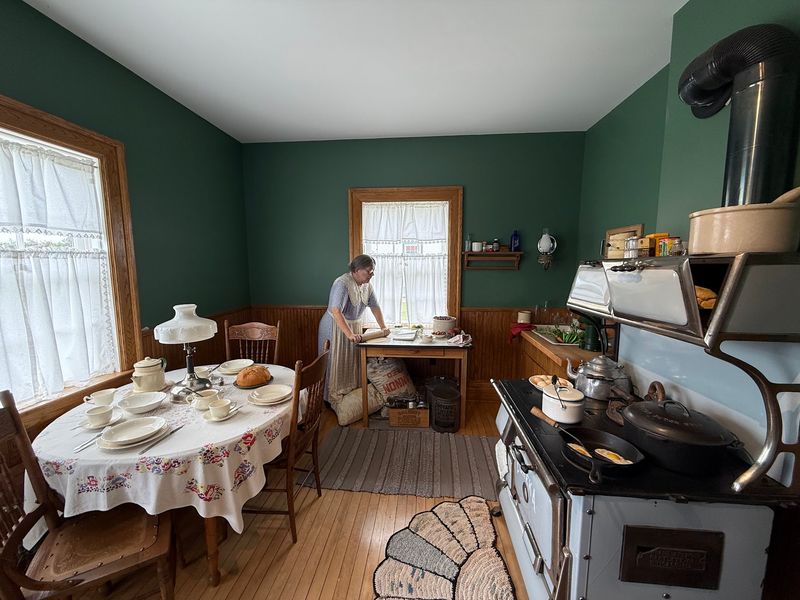
Keeping a lighthouse running wasn’t a nine-to-five gig. The keepers lived right on site, and their restored home tells that story beautifully.
The 1861 USLHS Lightkeeper’s Quarters offer a self-guided tour at your own pace. Rooms are filled with period furnishings and exhibits that show daily life at the station.
You’ll get a sense of how families handled long winters, wild storms, and serious responsibility. It’s part house tour, part time machine.
Look closely at the household details as you wander. Simple objects can say a lot about how people cooked, worked, and stayed warm on this remote point.
Self-guided tours are great for curious types who like to linger. Nobody hurries you along, so you can study a room as long as you want.
Families with younger kids might turn it into a game. Ask them which chore they would hate least as a keeper’s kid, and watch the debate begin.
I can’t imagine trimming wicks during a November gale. Seeing this home makes that tough lifestyle feel very real.
Brave Rescuers Rowed Straight Into The Storms
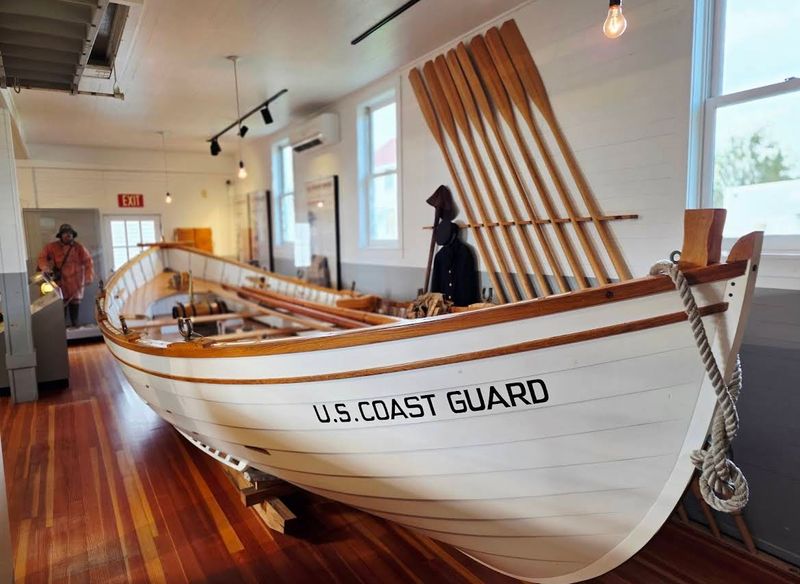
Heroes come in many forms, and some of them wore oilskins and gripped oars. The United States Life-Saving Service started working on the Shipwreck Coast in 1876.
Their story lives in the 1923 Surfboat House, a preserved and restored building on the grounds. Inside sits a full-size replica of a 26-foot Beebe-McClellan surfboat.
Seeing the boat up close is eye-opening. Rescuers launched craft like this into rough water to reach ships in trouble.
Exhibits explain how these crews trained and what they faced. The courage on display is the kind that makes your own Monday problems look tiny.
This building is a nice change of pace from the shipwreck tales. Instead of focusing on what went wrong, it celebrates the people who rushed to help.
Kids especially love sizing themselves up against a real-scale boat. It’s one thing to read about a rescue and another to stand beside the actual size of one.
Take a moment to imagine pulling those oars through freezing waves. Then go thank anyone you know who works in rescue.
Grab A Seat For A Film That Brings Goosebumps
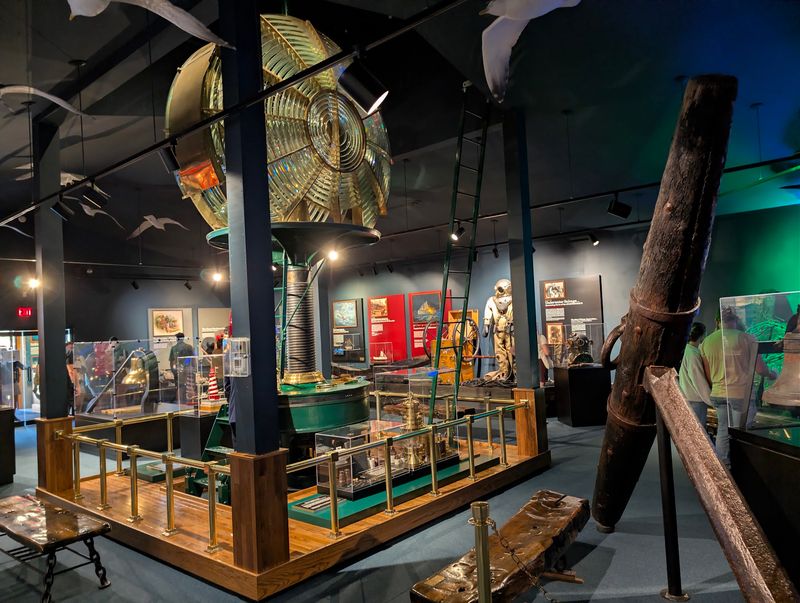
Here’s a building that does double duty. The 1923 USCG Motor Lifeboat House holds both a real rescue boat and a small video theater.
The boat is Motor Lifeboat CG 36381, a sturdy reminder of how rescue work changed once engines replaced oars. Comparing it to the surfboat next door shows a big leap in technology.
Then there’s the theater. A 14-minute documentary about the Edmund Fitzgerald plays here, and it adds serious depth to everything else you see.
The film helps connect the bell, the gallery, and the lake outside your window. Suddenly the whole complex clicks together like puzzle pieces.
Tissues might be smart if you’re the sensitive type. The story is handled with care, but it carries real emotional weight.
Timing tip for planners is to catch the film early in your visit. Watching it first gives the remaining exhibits even more meaning.
Fourteen minutes goes by quickly. Still, the feelings it stirs may hang around a lot longer, especially when you step back outside and see Lake Superior rolling in.
An Old Navy Radio Building Joined The Lineup
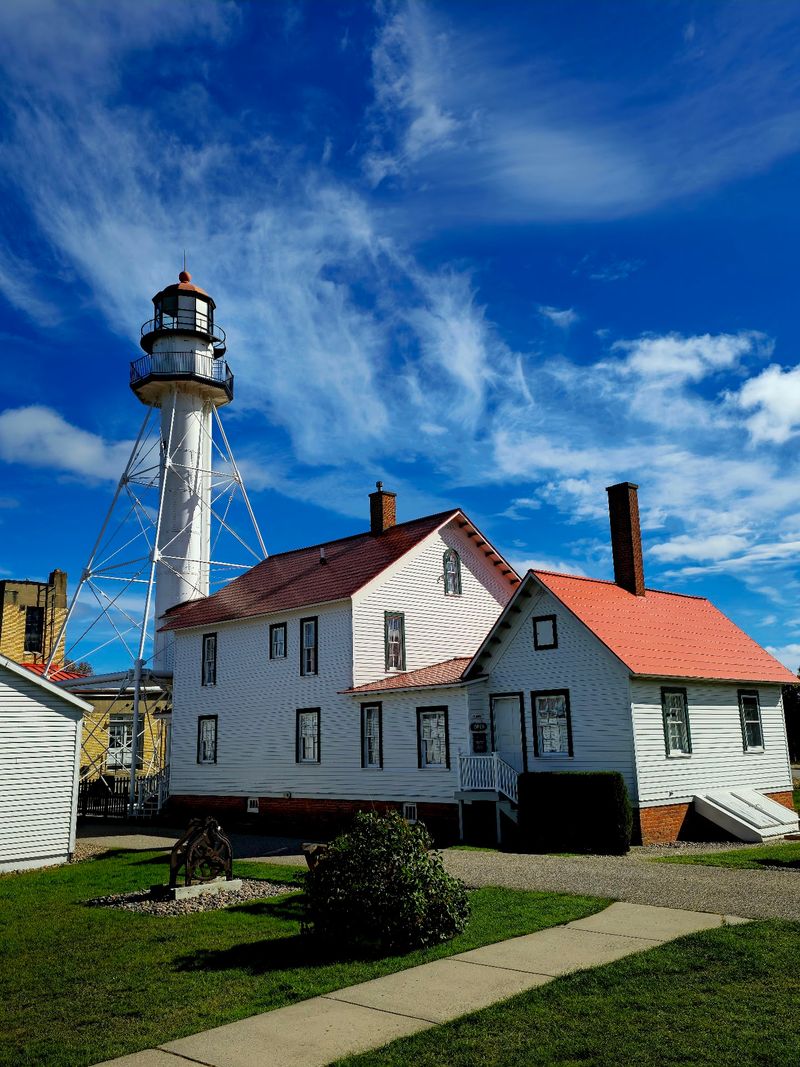
Long before smartphones, ships relied on radio signals to stay connected. Whitefish Point played a part in that story, too.
The restored 1920 U.S. Navy Radio Building is a recent addition to the museum’s lineup.
Its exhibit was scheduled to open in summer 2024, giving repeat visitors something new to explore.
Communication could mean the difference between a safe arrival and a missing ship. This building highlights the behind-the-scenes role of radio operators in Great Lakes maritime history.
It also rounds out the station’s history nicely. You can explore the stories of lighthouse keepers, lifesaving crews, and radio operators all on one campus.
If you visited years ago, the radio building gives you another reason to return. The familiar exhibits remain, while this building adds another chapter to the site’s history.
Tech-loving kids and teens might find it the coolest stop of all. Ask them to imagine sending an urgent message without Wi-Fi or texting.
The experience can spark plenty of curiosity. You’ll also gain a greater appreciation for the people who kept ships and shore stations connected across Lake Superior.
Free Grounds And A Boardwalk With Views Of Canada
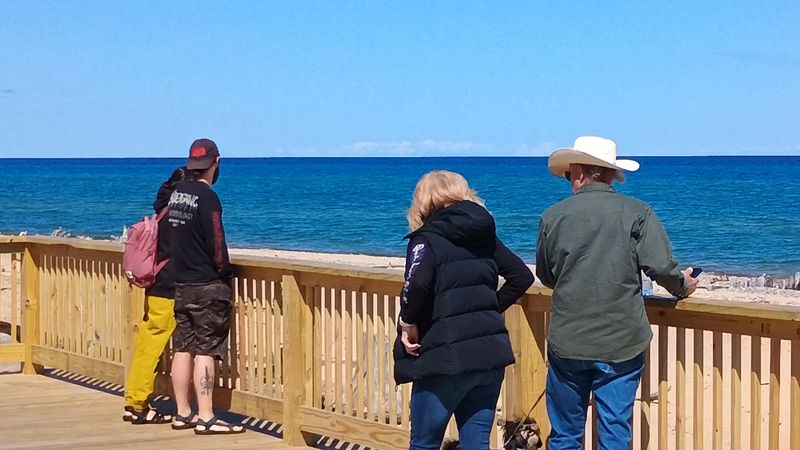
Good news for budget travelers. Walking the grounds of this museum complex costs nothing at all.
You’ll find the Great Lakes Shipwreck Museum at 18335 N. Whitefish Point Road, Paradise, MI 49768.
Once there, a barrier-free boardwalk built in 1998 leads toward the water.
The views are the real prize. Wide stretches of Lake Superior spread out ahead, and big freighters often cruise past the point.
On clear days, you can even spot the Laurentian Mountains near Coppermine Point, Ontario. Yes, that’s Canada waving at you from across the lake.
Because the boardwalk is barrier-free, more people can enjoy the shoreline comfortably. Strollers and wheelchairs can make the trip too.
Bring layers no matter the month. Lake Superior air can stay chilly, and the wind at the point tends to have opinions.
A pair of binoculars is a smart packing choice for ship spotting. Watching a massive freighter round the same corner where so many vessels struggled feels pretty powerful.
This is easily one of my favorite free views in Michigan.
Plan Your Trip Around These Smart Timing Tips
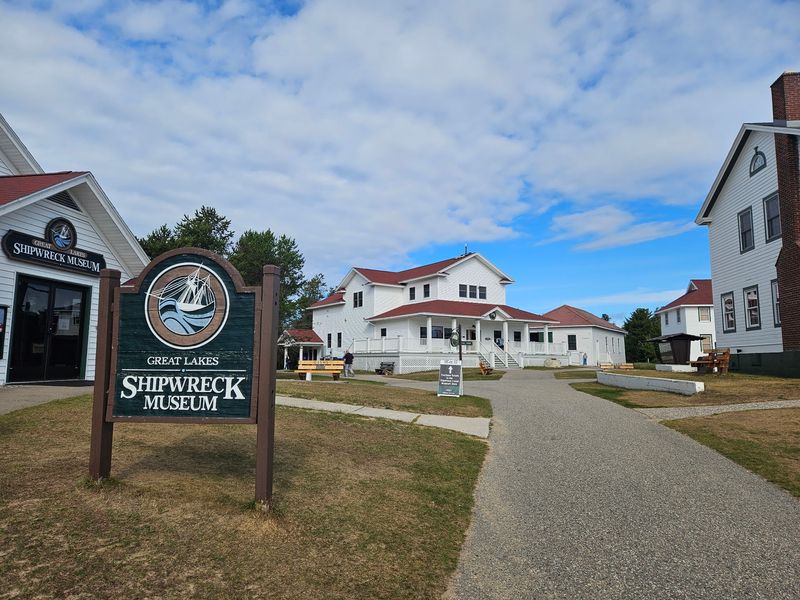
Timing matters on the Shipwreck Coast. The museum runs seasonally, open daily from May 1 through October 31, from 9 AM to 5 PM.
Summer and early fall are prime months for a visit. Mild weather makes it easier to bounce between buildings and linger outside by the lake.
One date deserves special mention. Every November 10, the buildings close for the annual Edmund Fitzgerald memorial ceremony, which streams online at 7 PM Eastern.
Watching it from home is a meaningful way to connect even when you can’t make the drive. It honors the 29 crew members in a thoughtful, respectful way.
Before leaving, swing by the Shipwreck Coast Museum Store. It carries maritime clothing, books, DVDs, artwork, models, and souvenirs, with restrooms in the same building.
Packing a picnic is a smart move for a full afternoon. The lakeside setting makes lunch feel like part of the adventure.
This corner of Michigan’s Upper Peninsula is remote, so plan your route and fill your tank ahead of time. Trust me, the journey ends somewhere truly unforgettable.